| (19) |
 |
|
(11) |
EP 1 344 499 B1 |
| (12) |
EUROPEAN PATENT SPECIFICATION |
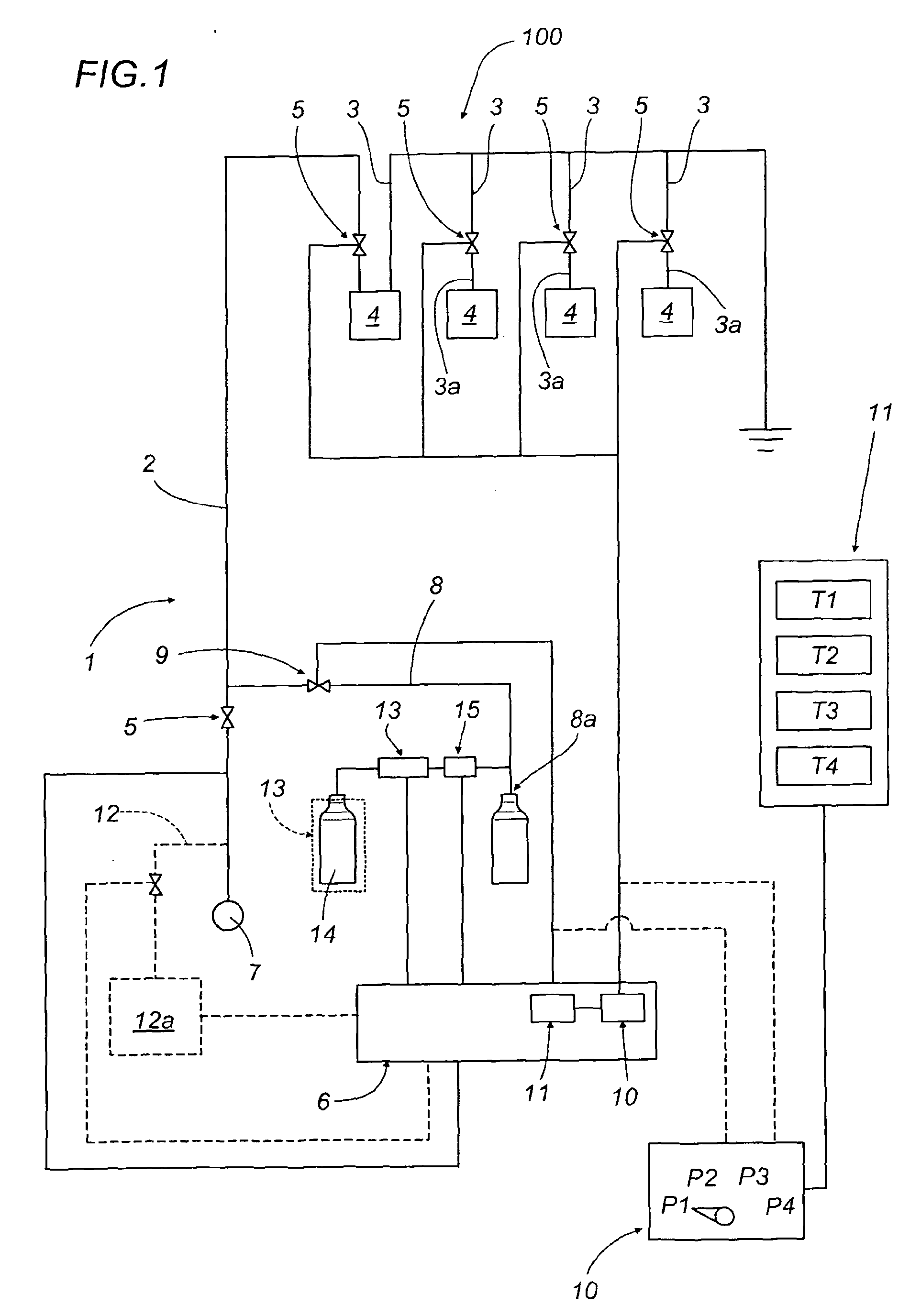
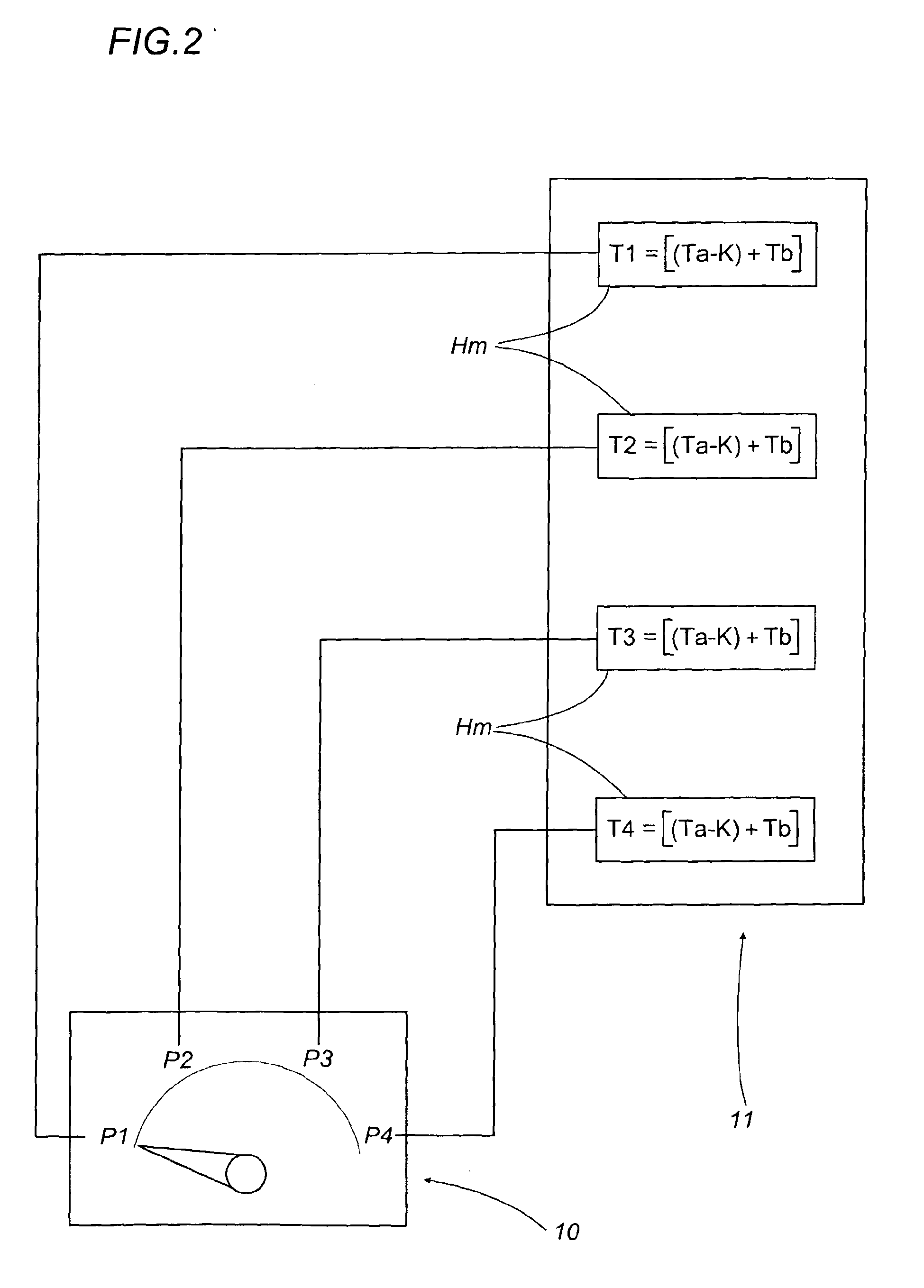
| (45) |
Mention of the grant of the patent: |
|
20.06.2007 Bulletin 2007/25 |
| (22) |
Date of filing: 06.03.2003 |
|
| (51) |
International Patent Classification (IPC):
|
|
| (54) |
A method for cleaning / disinfecting / sterilising the water circuits of dental units
and a dental unit implementing the method
Verfahren zur Reinigung / Desinfizierung / Sterilisierung der Wasserleitungen einer
zahnärztlichen Einheit, sowie gemäss diesem Verfahren ausgerüstete zahnärztliche Einheit
Méthode pour nettoyer / désinfecter / stériliser les conduits d'eau d'unités dentaires
et unité dentaire mettant en oeuvre cette méthode
|
| (84) |
Designated Contracting States: |
|
AT BE BG CH CY CZ DE DK EE ES FI FR GB GR HU IE IT LI LU MC NL PT RO SE SI SK TR |
| (30) |
Priority: |
12.03.2002 IT BO20020124
|
| (43) |
Date of publication of application: |
|
17.09.2003 Bulletin 2003/38 |
| (73) |
Proprietor: CASTELLINI S.p.A. |
|
40013 Castel Maggiore (Bologna) (IT) |
|
| (72) |
Inventor: |
|
- Castellini, Franco
40124 Bologna (IT)
|
| (74) |
Representative: Lanzoni, Luciano |
|
c/o BUGNION S.p.A.
Via Goito, 18
40126 Bologna
40126 Bologna (IT) |
| (56) |
References cited: :
EP-A- 1 161 959
US-B1- 6 250 920
|
US-A- 4 545 956
|
|
| |
|
|
|
|
| |
|
| Note: Within nine months from the publication of the mention of the grant of the European
patent, any person may give notice to the European Patent Office of opposition to
the European patent
granted. Notice of opposition shall be filed in a written reasoned statement. It shall
not be deemed to
have been filed until the opposition fee has been paid. (Art. 99(1) European Patent
Convention).
|
[0001] The present invention relates to a method for cleaning / disinfecting / sterilising
the water circuits of dental units and to a dental unit implementing the method, as
in
US 4545956.
[0002] As is by now well within the knowledge of experts in the trade, the water circuits
of dental units of the latest generation can be subjected to different types of cleaning
/ disinfecting / sterilising cycles depending on requirements: a long or night cycle
for aggressive treatment of the water circuit to thoroughly destroy contaminating
agents, and a short cycle for quick disinfection of the circuit during the day, for
example, between patients or during the lunch break.
[0003] In practice, the water circuit, which usually consists of a main fluid supply conduit
and a series of branches leading to the handpieces, is supplied with cleaning / disinfecting
/ sterilising fluid from an appropriate supply line until the main conduit and the
handpiece branches, which are closed by suitable valves, is completely full.
[0004] After a predetermined length of time, the cleaning / disinfecting / sterilising fluid
is
discharged out and the circuit is filled with rinsing or user fluid.
[0005] The Applicant, in line with a policy of continual improvement of dental unit hygiene
and safety and with a view to extending the capabilities of cleaning / disinfecting
/ sterilising cycles, has conducted much research aimed at developing a method, and
a dental unit to implement the method, for cleaning / disinfecting / sterilising the
water circuit of the dental unit where the cycle times can be selected from a wide
range of programmed times in accordance with the desired degree of aggressiveness
on the contaminating agents in the circuit branches and in accordance with the time
of day in which the cycle must be carried out.
[0006] The above mentioned aim is accomplished by a method for cleaning / disinfecting /
sterilising the water circuits of dental units
as described in claim 1.
[0007] The technical characteristics of the invention, with reference to the above aims,
are clearly described in the claims below and its advantages are apparent from the
detailed description which follows, with reference to the accompanying drawings which
illustrate a preferred embodiment of the invention provided merely by way of example
without restricting the scope of the inventive concept, and in which:
- Figure 1 is a diagram of the water circuit implementing the cleaning / disinfecting
/ sterilising method according to the present invention;
- Figure 2 is a diagram representing a part of the dental unit implementing the method
according to the invention.
[0008] With reference to the accompanying drawings, in particular Figure 1, the method according
to the invention is used to clean / disinfect / sterilise the water circuit 1 of a
dental unit.
[0009] The dental unit, labelled 100, is of the type comprising, at least insofar as is
relevant to the present invention, the aforementioned water circuit 1 consisting at
least of a main conduit 2 for feeding a user fluid (usually water) from a main supply
7 to a plurality of branches 3 that feed medical instruments 4 (customary handpieces)
and equipped with shutoff means 5 (customary valves).
[0010] The method according to the invention comprises at least the following steps:
- introducing a cleaning / disinfecting / sterilising fluid into the water circuit 1;
- holding the cleaning / disinfecting / sterilising fluid in the water circuit 1 for
a predetermined length of time;
- discharging the cleaning / disinfecting / sterilising fluid out of the circuit 1 through endpieces
3a of the supply branches 3, which are usually placed in a suitable container (not
illustrated).
[0011] The method further comprises a step of programming / selecting the contact time periods
T of the steps of introducing and holding the fluid in the water circuit 1, this step
preceding the step of introducing the fluid.
[0012] This step can be activated by selecting from a plurality of contact time periods,
labelled T1, T2, T3....Tn, each of which consists at least of a fraction of a time
period Ta of the step of introducing the fluid in the water circuit 1 added to the
time period Tb of the holding step, according to a desired parameter - level P1, P2,
P3....Pn of cleaning / disinfection / sterilisation and/or of predetermined or predeterminable
events on the dental unit 100.
[0013] The fraction of the time period Ta is defined as Ta - K where K is a constant filling
time during which the surfaces of the water circuit 1 cannot be considered as being
in contact with the cleaning fluid.
[0014] This programming step precedes the step of introducing the fluid and may be performed
manually on the dental unit 100 (as described below), or, if the dental unit 100 is
fitted with a microprocessor unit 6 for activating and controlling its primary and
accessory functions, it may be performed automatically by the microprocessor unit
6 itself before the step of introducing the fluid and according to predetermined or
predeterminable events on the dental unit 100.
[0015] For example, on the basis of tests and experiments, this programming step consists
preferably, but not exclusively, of at least three or four different selections corresponding
to the aforementioned cleaning parameter - levels P and/or to the predetermined or
predeterminable events on the dental unit 100.
[0016] Besides this programming step, the method may comprise, both before the step of introducing
the cleaning / disinfecting / sterilising fluid and after the step of holding the
fluid in the water circuit 1, further steps of emptying the user fluid and the cleaning
/ disinfecting / sterilising fluid by introducing a gaseous fluid in the water circuit
1 for a predetermined length of time required to completely empty the water circuit
1.
[0017] A further addition to the method might be to divide the aforementioned step of introducing
the cleaning / disinfecting / sterilising fluid into two or more sub-steps, each consisting
of an inflow of a predetermined quantity or dose of the cleaning / disinfecting /
sterilising fluid alternated with steps of waiting for the next inflow according to
the aforementioned contact time periods T selected during the programming step.
[0018] More specifically, each of these sub-steps of cleaning / disinfecting / sterilising
fluid inflow is such that the predetermined quantity or dose of the fluid is sufficient
to fill and renew the fluid in the water circuit 1, and the waiting time periods between
one inflow and the next must be such that an active product is maintained in the circuit
at an effective concentration according to the selected contact time periods T.
[0019] The method according to the invention comprises a further step of heating the cleaning
/ disinfecting / sterilising fluid to a predetermined temperature that is higher than
ambient temperature.
[0020] This heating step may be carried out during the step of introducing the cleaning
/ disinfecting / sterilising fluid, that is to say, inside the water circuit 1, or
immediately before the step of introducing the fluid, that is to say, upstream of
the water circuit 1.
[0021] The dental unit 100 that implements the method described above comprises, in addition
to the water circuit 1, an independent sub-circuit 8 for supplying the alternative
cleaning / disinfecting / sterilising fluid to the main conduit 2 and to the aforementioned
branches 3, this sub-circuit being equipped with second shutoff means 9 to stop and
start the flow of the alternative fluid.
[0022] As shown in Figure 1, the independent sub-circuit 8 has a branch 8a used to supply
an alternative user fluid instead of water.
[0023] The dental unit 100 comprises programming / selection means 10 acting on the first
and second shutoff means 5 and 9 in order to provide a plurality of independent levels
P enabling a choice at least of the aforementioned contact time periods T1, T2, T3...Tn
of the alternative fluid in the water circuit 1.
[0024] The programming / selection means 10 may be equipped with timing means 11 (see also
Figure 2) having a plurality of memory banks Hm, each of which stores a value of a
contact time period T1, T2, T3...Tn corresponding to a selectable level P for introducing
and holding the alternative fluid in the water circuit 1.
[0025] As already mentioned, if the dental unit 100 is equipped with a microprocessor unit
6 for activating and controlling its primary and accessory functions, the programming
/ selection means 10 may be placed under the control of the microprocessor unit 6
which drives the first and second shutoff means 5 and 9 according to the cleaning
level P selected using the memory banks Hm and stored in the microprocessor unit 6.
[0026] Ideally, on the basis of test results, there are at least four memory banks Hm: a
first contact time period T1 for selecting a rapid cleaning cycle P1 corresponding
to at least one minute; a second contact time period T2 for selecting a short cleaning
cycle P2 corresponding to at least five minutes; a third contact time period T3 for
selecting a full cleaning cycle P3 corresponding to at least ten minutes; and a fourth
contact time period T4 for selecting a night cleaning cycle P4 of undefined duration.
[0027] Therefore, on the basis of the dentist's requirements, the selected level may correspond
to a very rapid or a very long cleaning cycle or, in the event of automatic control,
may be associated with specific functions of the dental unit: for example, when the
position of the dental chair (not illustrated) is reset at the end of a session with
one patient, the microprocessor unit 6 may start a rapid cycle P1 or a short cycle
P2 to sanitise the water circuit 1 before a session with the next patient starts.
[0028] To keep the total time of the cleaning cycles (especially the medium and short cycles)
under control to a high degree of accuracy, the main conduit 2 may have leading into
it a conduit 12 (represented by a broken line) for supplying a gaseous fluid generated
by a compressor 12a or directly by the dental unit 100, in such a way as to enable
the water circuit 1 to be emptied of fluid (first the user fluid and then the cleaning
fluid) in a rapid and controlled manner in a predetermined length of time.
[0029] The numeral 13 denotes means for heating the cleaning / disinfecting / sterilising
fluid to a temperature higher than ambient temperature, as already mentioned above.
[0030] In the embodiment illustrated, the heating means 13 may be located either on the
independent sub-circuit 8 so that the cleaning / disinfecting / sterilising fluid
is heated while it is flowing in, or, since the independent sub-circuit 8 is supplied
by an alternative fluid container 14 that can be removed from the dental unit 100,
the heating means 13 may be located on the container 14 itself and may be turned on
just before the inflow of fluid into the sub-circuit 8 and into the water circuit
1.
[0031] The dental unit 100 may further comprise means 15 for the controlled inflow of cleaning
/ disinfecting / sterilising fluid (for example a check valve controlled by the microprocessor
unit 6 acting on the independent sub-circuit 8 in order to allow the inflow, in succession,
of a plurality of predetermined doses of cleaning / disinfecting / sterilising fluid.
[0032] These elements make it possible to keep the total cycle time within well defined
time intervals.
[0033] For example, a rapid cycle P1 may consist of the following: a first time period of
approximately 60 seconds in which the user fluid is emptied out of the circuit; a
contact time period T1 [(Ta - K)+Tb, that is to say, fluid inflow + hold) of 60 to
90 seconds and a further time period 60 to 90 seconds to empty the cleaning fluid
out of the circuit. The duration of the rapid cleaning cycle is therefore around 180
to 240 seconds.
[0034] The method as described above and the dental unit that implements it thus achieve
the aims of the invention thanks to an extremely simple yet effective cleaning / disinfecting
/ sterilising structure which keeps the water circuit at a high level of hygiene at
all times.
[0035] The procedures may be performed very rapidly and do not require onerous and time-consuming
programming or preparation, thus enabling the dentist to carry out these important
procedures regularly without encroaching on the time required for patient treatment.
[0036] The choice of the contact time period depends on the type of treatment that the last
patient has undergone or that the next patient will undergo and on the level of hygiene
required.
[0037] The invention described can be subject to modifications and variations without thereby
departing from the scope of the inventive concept.
1. A method for cleaning / disinfecting / sterilising the water circuits (1) of dental
units (100), where the water circuit (1) of the dental unit (100) consists at least
of a main conduit (2) for supplying a user fluid from a mains supply (7) to a plurality
of branches (3) for supplying corresponding medical instruments (4) equipped with
shutoff means (5); the method comprising at least the following steps:
- introducing a cleaning / disinfecting / sterilising fluid into the water circuit
(1);
- holding the cleaning / disinfecting / sterilising fluid in the water circuit (1)
for a predetermined length of time;
- discharging the cleaning / disinfecting / sterilising fluid out of the circuit (1) through endpieces
(3a) of the supply branches (3) ; programming / selecting the contact time periods
(T) of the steps of introducing and holding the fluid in the water circuit (1), this
step preceding the step of introducing the fluid and being activated by selecting
from a plurality of contact time periods (T1, T2, T3....Tn) characterised in that each of said contact time periods consists at least of a fraction of a time period (Ta) of the step of introducing
fluid in the water circuit (1), added to a time period (Tb) of the holding step, according
to a desired parameter - level (P1, P2, P3....Pn) of cleaning / disinfection / sterilisation
and/or of predetermined or predeterminable events on the dental unit (100); where said fraction of the time period (Ta) is defined by subtracting from Ta a constant
(K) filling time during which the surfaces of the water circuit cannot be considered
as being in contact with the cleaning fluid.
2. The method according to claim 1, characterised in that at least after the step of holding the cleaning / disinfecting / sterilising fluid
in the water circuit (1) there is a further step of emptying the fluid by introducing
a gaseous fluid in the water circuit (1) for a predetermined length of time.
3. The method according to claim 1, characterised in that after the programming step and before the step of introducing the cleaning / disinfecting
/ sterilising fluid there is a further step of emptying the water circuit (1) by introducing
a gaseous fluid in the water circuit (1) for a predetermined length of time in order
to expel all the user fluid.
4. The method according to claim 1, characterised in that the step of introducing the cleaning / disinfecting / sterilising fluid is divided
into two or more sub-steps, each consisting of an inflow of a predetermined quantity
or dose of the cleaning / disinfecting / sterilising fluid alternated with steps of
waiting for the next inflow according to the aforementioned contact time periods (T)
selected during the programming step.
5. The method according to claim 4, characterised in that the quantity or dose of cleaning / disinfecting / sterilising fluid flowing in during
each of the sub-steps is predetermined and the waiting time periods between one inflow
and the next are such that an active product is maintained in the water circuit at
an effective concentration according to the selected contact time periods (T).
6. The method according to claim 1, characterised in that the step of introducing the cleaning / disinfecting / sterilising fluid is accompanied
by a step of heating the fluid to a predetermined temperature higher than ambient
temperature.
7. The method according to claim 6, characterised in that the heating step is carried out during the step of introducing the cleaning / disinfecting
/ sterilising fluid, that is to say, inside the water circuit (1).
8. The method according to claim 6, characterised in that the step of heating the cleaning / disinfecting / sterilising fluid is carried out
just before the step of introducing it, that is to say, upstream of the water circuit
(1).
9. The method according to claim 1, characterised in that the programming step precedes the step of introducing the fluid and is performed
manually on the dental unit (100).
10. The method according to claim 1, where the dental unit (100) is equipped with a microprocessor
unit (6) to control the main and auxiliary functions of the dental unit (100), characterised in that the programming step is performed automatically by the microprocessor unit (6) before
the step of introducing the fluid and according to predetermined or predeterminable
events on the dental unit (100).
11. The method according to claim 1, characterised in that the programming step consists of at least three different selections corresponding
to the aforementioned cleaning parameter - levels (P) and/or to the predetermined
or predeterminable events on the dental unit (100).
12. The method according to claim 1, characterised in that the programming step consists of at least four different selections corresponding
to the aforementioned cleaning parameter - levels (P) and/or to the predetermined
or predeterminable events on the dental unit (100).
13. A dental unit comprising: at least one water circuit (1) consisting at least of a
main conduit (2) for feeding a user fluid from a main supply (7) to a plurality of
branches (3) that feed medical instruments (4) and equipped with shutoff means (5);
an independent sub-circuit (8) designed to supply at least one alternative cleaning
/ disinfecting / sterilising fluid to the main conduit (2) and to the branches (3)
and equipped with second shutoff means (9) to stop and start the flow of the alternative
fluid; and a programming / selection means (10) acting on the first and second shutoff
means (5, 9) in order to provide a plurality of independent levels (P) enabling a
choice at least of the contact time periods (T1, T2, T3...Tn), according to claim
1, of the alternative fluid in the water circuit (1), characterised in that each of said contact time periods consists at least of a fraction of a time period (Ta) of the step of introducing fluid in
the water circuit (1) added to a time period (Tb) of the step of holding the alternative
fluid in the water circuit (1); where said fraction of the time period (Ta) is defined by subtracting from Ta a constant
(K) filling time during which the surfaces of the water circuit cannot be considered
as being in contact with the cleaning fluid.
14. The dental unit according to claim 13, characterised in that the programming / selection means (10) are equipped with timing means (11) having
a plurality of memory banks (Hm), each of which stores a value of a contact time period
(T1, T2, T3...Tn) corresponding to a selectable level (P) for introducing and holding
the alternative fluid in the water circuit (1).
15. The dental unit according to claim 14, where the dental unit (100) has a microprocessor
unit (6) to control the main and auxiliary functions of the dental unit (100), characterised in that the programming / selection means (10) are placed under the control of the microprocessor
unit (6) which drives the first and second shutoff means (5, 9) according to the cleaning
level (P) selected using the memory banks (Hm), each of the latter having stored in
it a value of a contact time period (T1, T2, T3...Tn) corresponding to a selectable
level (P) for introducing and holding the alternative fluid in the water circuit (1).
16. The dental unit according to claim 14 or 15, characterised in that there are at least three memory banks (Hm) comprising: a first contact time period
(T1) for selecting a rapid cleaning cycle (P1) corresponding to at least one minute;
a second contact time period (T2) for selecting a short cleaning cycle (P2) corresponding
to at least five minutes; a third contact time period (T3) for selecting a night cleaning
cycle (P3) of undefined duration, in which the fluid is held in the water circuit
(1) for an unspecified time.
17. The dental unit according to claim 14 or 15, characterised in that there are at least four memory banks (Hm) comprising: a first contact time period
(T1) for selecting a rapid cleaning cycle (P1) corresponding to at least one minute;
a second contact time period (T2) for selecting a short cleaning cycle (P2) corresponding
to at least five minutes; a third contact time period (T3) for selecting a full cleaning
cycle (P3) corresponding to at least ten minutes; and a fourth contact time period
(T4) for selecting a night cleaning cycle (P4) of undefined duration, in which the
fluid is held in the water circuit (1) for an unspecified time.
18. The dental unit according to claim 13, characterised in that the main conduit (2) has leading into it a conduit (12) for supplying a gaseous fluid
that enables the water circuit (1) to be emptied of fluid in a predetermined length
of time.
19. The dental unit according to claim 13, characterised in that it comprises means (13) for heating the cleaning / disinfecting / sterilising fluid
to a predetermined temperature higher than ambient temperature.
20. The dental unit according to claim 13, characterised in that it comprises heating means (13) located on the independent sub-circuit (8) and designed
to heat the cleaning / disinfecting / sterilising fluid to a predetermined temperature
higher than ambient temperature.
21. The dental unit according to claim 13, where the independent sub-circuit (8) is supplied
with alternative fluid from a container (14) that can be removed from the dental unit
(100), characterised in that it comprises heating means (13) located at the container (14) and designed to heat
the cleaning / disinfecting / sterilising fluid to a predetermined temperature higher
than ambient temperature.
22. The dental unit according to claim 13, characterised in that it comprises means (15) for the controlled inflow of cleaning / disinfecting / sterilising
fluid, acting on the independent sub-circuit (8) in order to allow the inflow, in
succession, of a plurality of predetermined doses of cleaning / disinfecting / sterilising
fluid.
1. Verfahren zum Reinigen / Desinfizieren / Sterilisieren der Wasserleitungen (1) von
zahnärztlichen Einheiten (100), wo die Wasserleitung (1) der zahnärztlichen Einheit
(100) wenigstens aus einer Hauptleitung (2) für die Zufuhr einer Verbraucherflüssigkeit
von einer Netzleitung (7) an eine Anzahl von Zweigleitungen (3) zum Speisen entsprechender
medizinischer Instrumente (4) besteht, versehen mit Absperrmitteln (5); wobei das
Verfahren wenigstens die folgenden Phasen enthält:
- Einführen einer Reinigungs-/Desinfizier-/Sterilisierflüssigkeit in die Wasserleitung
(1);
- Verbleiben der Reinigungs-/Desinfizier-/Sterilisierflüssigkeit in der Wasserleitung
(1) für eine vorgegebene Zeitspanne;
- Ablassen der Reinigungs-/Desinfizier-/Sterilisierflüssigkeit aus der Leitung (1)
durch die Endstücke (3a) der Zweigleitungen (3);
- Programmierung/Wahl der Kontaktzeitspanne (T) der Phasen des Einführens und Verbleibens
der Flüssigkeit in der Wasserleitung (1), wobei diese Phase der Phase des Einführens
der Flüssigkeit vorausgeht und durch die Wahl aus einer Anzahl von Kontaktzeitspannen
(1, T2, T3...... Tn) aktiviert wird, dadurch gekennzeichnet, dass jede der genannten Kontaktzeitspannen aus einem Bruchteil einer Zeitspanne (Ta) besteht,
hinzugefügt einer Zeitspanne (Tb) der Verbleibphase je nach einem gewünschten Parameter
- Grad (P1, P2, P3....Pn) der Reinigung/ Desinfektion/Sterilisation und/oder bestimmten
oder bestimmbaren Ereignissen an der zahnärztlichen Einheit (100); wo der genannte
Bruchteil der Zeitspanne (Ta) durch die Subtraktion von Ta einer konstanten (K) Fülldauer
bestimmt ist, während welcher die Oberflächen der Wasserleitung als nicht im Kontakt
mit der Reinigungsflüssigkeit berücksichtigt werden können.
2. Verfahren nach Patentanspruch 1, dadurch gekennzeichnet, dass wenigstens nach der Verbleibphase der Reinigungs-/Desinfizier-/Sterilisierflüssigkeit
in der Wasserleitung (1) eine weitere Phase des Ablassens der Flüssigkeit durchgeführt
wird, und zwar durch Einführen eines gasförmigen Fluids in die Wasserleitung (1) für
eine bestimmte Dauer.
3. Verfahren nach Patentanspruch 1, dadurch gekennzeichnet, dass nach der Programmierphase und vor der Phase des Einführens der Reinigungs-/Desinfizier-/Sterilisierflüssigkeit
eine weitere Phase des Entleerens der Wasserleitung (1) durchgeführt wird, und zwar
durch Einführen eines gasförmigen Fluids in die Wasserleitung (1) für eine vorgegebene
Dauer, um alle Verbraucherflüssigkeit zu entfernen.
4. Verfahren nach Patentanspruch 1, dadurch gekennzeichnet, dass die Phase des Einführens der Reinigungs-/ Desinfizier-/Sterilisierflüssigkeit in
zwei oder mehrere Unterphasen unterteilt ist, jede bestehend aus dem Zufluss einer
bestimmten Menge oder Dosis der Reinigungs-/Desinfizier-/Sterilisierflüssigkeit, abwechselnd
mit den Phasen des Wartens auf den nächsten Zufluss, je nach den vorgenannten Kontaktzeitspannen
(T), die in der Programmierphase gewählt wurden.
5. Verfahren nach Patentanspruch 4, dadurch gekennzeichnet, dass die Menge oder Dosis der Reinigungs-/ Desinfizier-/Sterilisierflüssigkeit, die während
einer jeden der Unterphasen einfliesst, vorgegeben ist, und dass die Wartezeiten zwischen
einem Zufluss und dem nächsten solche sind, dass ein aktives Produkt in einer wirkungsvollen
Konzentration je nach den gewählten Kontaktzeitspannen (T) in der Wasserleitung gehalten
wird.
6. Verfahren nach Patentanspruch 1, dadurch gekennzeichnet, dass die Phase des Einführens der Reinigungs-/ Desinfizier-/Sterilisierflüssigkeit von
einer Phase des Erwärmens der Flüssigkeit auf eine vorgegebene Temperatur begleitet
wird, die höher ist als die Raumtemperatur.
7. Verfahren nach Patentanspruch 6, dadurch gekennzeichnet, dass die Phase des Erwärmens während der Phase des Einführens der Reinigungs-/Desinfizier/Sterilisierphase
durchgeführt wird, das heisst im Inneren der Wasserleitung (1).
8. Verfahren nach Patentanspruch 6, dadurch gekennzeichnet, dass die Phase des Erwärmens der Reinigungs-/ Desinfizier-/Sterilisierflüssigkeit kurz
vor dem Einführen derselben ausgeführt wird, das heisst stromaufwärts der Wasserleitung
(1).
9. Verfahren nach Patentanspruch 1, dadurch gekennzeichnet, dass die Programmierphase der Phase des Einführens der Flüssigkeit vorausgeht und von
Hand an der zahnärztlichen Einheit (100) ausgeführt wird.
10. Verfahren nach Patentanspruch 1, bei welchem die zahnärztliche Einheit (100) mit einer
Mikroprozessoreinheit (6) ausgestattet ist, um die Haupt- und Hilfsfunktionen der
zahnärztlichen Einheit (100) zu steuern, dadurch gekennzeichnet, dass die Programmierphase automatisch durch die Mikroprozessoreinheit (6) ausgeführt wird,
vor der Phase des Einführens der Flüssigkeit und je nach den bestimmten oder bestimmbaren
Ereignissen an der zahnärztlichen Einheit (100).
11. Verfahren nach Patentanspruch 1, dadurch gekennzeichnet, dass die Programmierphase aus wenigstens drei verschiedenen Wahlen besteht, entsprechend
den vorgenannten Reinigungsparametern /graden (P) und/oder den bestimmten oder bestimmbaren
Ereignissen an der zahnärztlichen Einheit (100).
12. Verfahren nach Patentanspruch 1, dadurch gekennzeichnet, dass die Programmierphase aus wenigstens vier verschiedenen Wahlen besteht, entsprechend
den vorgenannten Reinigungsparametern /graden (P) und/oder den bestimmten oder bestimmbaren
Ereignissen an der zahnärztlichen Einheit (100).
13. Zahnärztliche Einheit, enthaltend: wenigstens eine Wasserleitung (1), bestehend aus
wenigstens einer Hauptleitung (2) zum Zuführen einer Verbraucherflüssigkeit von einer
Netzleitung (7) an eine Anzahl von Zweigleitungen (3), welche die medizinischen Instrumente
(4) speisen und mit Absperrmitteln (5) versehen sind; eine unabhängige Unterleitung
(8), dazu bestimmt, wenigstens eine alternative Reinigungs-/Desinfizier-/Sterilisierflüssigkeit
an die Hauptleitung (2) und an die Zweigleitungen (3) zu führen, versehen mit zweiten
Absperrmitteln (9) zum Anhalten und Starten des Flusses der alternativen Flüssigkeit;
Programmier-/Wahlmittel (10), die auf die ersten und zweiten Absperrmittel (5, 9)
wirken, um eine Anzahl von unabhängigen Graden (P) vorzusehen, wodurch eine Wahl wenigstens
der Kontaktzeitspannen (T1, T2, T3....Tn) nach Patentanspruch 1 der alternativen Flüssigkeit
in der Wasserleitung (1) ermöglicht wird, dadurch gekennzeichnet, dass jede der genannten Kontaktzeitspannen aus wenigstens einem Bruchteil einer Zeitspanne
(Ta) der Phase des Einführens der Flüssigkeit besteht, hinzugefügt einer Zeitspanne
(Tb) der Phase des Verbleibs der alternativen Flüssigkeit in der Wasserleitung (1);
wo der genannte Bruchteil der Zeitspanne (Ta) durch die Subtraktion von Ta einer konstanten
(K) Fülldauer bestimmt ist, während welcher die Oberflächen der Wasserleitung als
nicht im Kontakt mit der Reinigungsflüssigkeit berücksichtigt werden können.
14. Zahnärztliche Einheit nach Patentanspruch 13, dadurch gekennzeichnet, dass die Programmier-/Wahlmittel (10) mit Zeitgebermitteln (11) ausgestattet sind, die
eine Anzahl von Speicherbanken (Hm) haben, von welchen jede einen Wert einer Kontaktzeitspanne
(T1, T2, T3....Tn) speichert, entsprechend einem wählbaren Grad (P) für das Einführen
in die und den Verbleib der alternativen Flüssigkeit in der Wasserleitung (1).
15. Zahnärztliche Einheit nach Patentanspruch 14, bei welcher die zahnärztliche Einheit
(100) eine Mikroprozessoreinheit (6) hat, um die Haupt- und Hilfsfunktionen der zahnärztlichen
Einheit (100) zu steuern, dadurch gekennzeichnet, dass die Programmier-/Wahlmittel (10) der Steuerung durch die Mikroprozessoreinheit (6)
unterliegen, welche die ersten und zweiten Absperrmittel (5, 9) betätigt, je nach
dem gewählten Grad (P) der Reinigung unter Nutzung der Speicherbanken (Hm), wobei
jede letztere einen Wert einer Kontaktzeitspanne (T1, T2, T3.... Tn) in sich gespeichert
hat, entsprechend einem wählbaren Grad (P) für das Einführen in die und den Verbleib
der alternativen Flüssigkeit in der Wasserleitung (1).
16. Zahnärztliche Einheit nach Patentanspruch 14 oder 15, dadurch gekennzeichnet, dass wenigstens drei Speicherbanken (Hm) vorhanden sind, enthaltend: eine erste Kontaktzeitspanne
(T1) zum Wählen eines schnellen Reinigungszyklus (P1), entsprechend wenigstens einer
Minute; eine zweite Kontaktzeitspanne (T2) zum Wählen eines kurzen Reinigungszyklus
(P2), entsprechend wenigstens fünf Minuten; eine dritte Kontaktzeitspanne (T3) zum
Wählen eines Nacht-Reinigungszyklus (P3) von unbestimmter Dauer, in welchem die Flüssigkeit
für eine nicht festgelegte Zeit in der Wasserleitung (1) gehalten wird.
17. Zahnärztliche Einheit nach Patentanspruch 14 oder 15, dadurch gekennzeichnet, dass wenigstens vier Speicherbanken (Hm) vorhanden sind, enthaltend: eine erste Kontaktzeitspanne
(T1) zum Wählen eines schnellen Reinigungszyklus (P1), entsprechend wenigstens einer
Minute; eine zweite Kontaktzeitspanne (T2) zum Wählen eines kurzen Reinigungszyklus
(P2), entsprechend wenigstens fünf Minuten; eine dritte Kontaktzeitspanne (T3) zum
Wählen eines vollständigen Reinigungszyklus (P3), entsprechend wenigstens zehn Minuten;
und eine vierte Kontaktzeitspanne (T4) zum Wählen eines Nacht-Reinigungszyklus (P4)
von unbestimmter Dauer, in welchem die Flüssigkeit für eine nicht festgelegte Zeit
in der Wasserleitung (1) gehalten wird.
18. Zahnärztliche Einheit nach Patentanspruch 13, dadurch gekennzeichnet, dass die Hauptleitung (2) in eine Leitung (12) zum Zuführen eines gasförmigen Fluids mündet,
dass es ermöglicht, die Wasserleitung (1) nach einer vorgegebenen Zeit von der Flüssigkeit
zu entleeren.
19. Zahnärztliche Einheit nach Patentanspruch 13, dadurch gekennzeichnet, dass sie Mittel (13) zum Erwärmen der Reinigungs-/Desinfizier-/Sterilisierflüssigkeit
bis auf eine vorgegebene Temperatur enthält, die höher ist als die Raumtemperatur.
20. Zahnärztliche Einheit nach Patentanspruch 13, dadurch gekennzeichnet, dass sie Mittel (13) zum Erwärmen enthält, angeordnet an der unabhängigen Unterleitung
(8) und dazu bestimmt, die Reinigungs-/Desinfizier-/Sterilisierflüssigkeit bis auf
eine vorgegebene Temperatur zu erwärmen, die höher ist als die Raumtemperatur.
21. Zahnärztliche Einheit nach Patentanspruch 13, bei welcher die unabhängige Unterleitung
(8) mit einer alternativen Flüssigkeit aus einem Behälter (14) gespeist wird, der
von der zahnärztlichen Einheit (100) abgenommen werden kann, dadurch gekennzeichnet, dass sie Mittel (13) zum Erwärmen hat, angeordnet an dem Behälter (14) und dazu bestimmt,
die Reinigungs-/Desinfizier-/Sterilisierflüssigkeit bis auf eine vorgegebene Temperatur
zu erwärmen, die höher ist als die Raumtemperatur.
22. Zahnärztliche Einheit nach Patentanspruch 13, dadurch gekennzeichnet, dass sie Mittel (15) für den gesteuerten Zufluss der Reinigungs-/Desinfizier-/Sterilisierflüssigkeit
enthält, die so auf die unabhängige Unterleitung (8) wirken, dass ein Zufluss von
aufeinanderfolgenden Dosierungen der Reinigungs-/Desinfizier-/Sterilisierflüssigkeit
erlaubt ist.
1. Une méthode pour nettoyer / désinfecter / stériliser les circuits d'eau (1) d'unités
dentaires (100), où le circuit d'eau (1) de l'unité dentaire (100) consiste au moins
en un conduit principal (2) destiné à alimenter un fluide d'utilisation provenant
d'une alimentation de réseau (7) à une pluralité de branches (3) alimentant des instruments
médicaux (4) correspondants équipés de moyens d'arrêt (5) ; la méthode comprenant
au moins les phases suivantes :
- introduction d'un fluide de nettoyage / désinfection / stérilisation dans le circuit
d'eau (1) ;
- maintien du fluide de nettoyage / désinfection / stérilisation dans le circuit d'eau
(1) pendant un intervalle de temps prédéfini ;
- évacuation du fluide de nettoyage / désinfection / stérilisation hors du circuit
d'eau (1) à travers des embouts (3a) des branches d'alimentation (3) ;
- programmation / sélection des temps de contact (T) des phases d'introduction et
de maintien du fluide dans le circuit d'eau (1), cette phase précédant la phase d'introduction
du fluide et étant activée par la sélection d'un temps parmi une pluralité de temps
de contact (T1, T2, T3 ... Tn), ladite méthode étant caractérisée en ce que chacun desdits temps de contact consiste au moins en une fraction d'un temps (Ta)
de la phase d'introduction du fluide dans le circuit d'eau (1), additionnée à un temps
(Tb) de la phase de maintien, en fonction d'un paramètre - niveau voulu (P1, P2, P3
... Pn) de nettoyage / désinfection / stérilisation et/ou d'événements prédéfinis
ou pouvant être prédéfinis sur l'unité dentaire (100) ; où ladite fraction du temps
(Ta) est définie en soustrayant de (Ta) un temps de remplissage (K) constant pendant
lequel les surfaces du circuit d'eau sont considérées comme n'étant pas en contact
avec le fluide de nettoyage.
2. La méthode selon la revendication 1, caractérisée en ce qu'elle prévoit, au moins après la phase de maintien du fluide de nettoyage / désinfection
/ stérilisation dans le circuit d'eau (1), une phase de vidage du fluide par introduction
d'un fluide gazeux dans le circuit d'eau (1) pendant un intervalle de temps prédéfini.
3. La méthode selon la revendication 1, caractérisée en ce qu'elle prévoit, après la phase de programmation et avant la phase d'introduction du
fluide de nettoyage / désinfection / stérilisation, une phase de vidage du circuit
d'eau (1) par introduction d'un fluide gazeux dans le circuit d'eau (1) pendant un
intervalle de temps prédéfini afin de chasser tout le fluide d'utilisation.
4. La méthode selon la revendication 1, caractérisée en ce que la phase d'introduction du fluide de nettoyage / désinfection / stérilisation est
subdivisée en deux sous-phases ou plus, consistant chacune en un afflux d'une quantité
ou dose prédéfinie de fluide de nettoyage / désinfection / stérilisation, alternées
avec des phases d'attente de l'afflux suivant en fonction des temps de contact (T)
susmentionnés sélectionnés lors de la phase de programmation.
5. La méthode selon la revendication 4, caractérisée en ce que la quantité ou dose de fluide de nettoyage / désinfection / stérilisation affluant
pendant chacune desdites sous-phases est prédéfinie et en ce que les temps d'attente entre un afflux et le suivant sont tels qu'un produit actif est
maintenu dans le circuit d'eau à une concentration efficace en fonction des temps
de contact (T) sélectionnés.
6. La méthode selon la revendication 1, caractérisée en ce que la phase d'introduction du fluide de nettoyage / désinfection / stérilisation est
accompagnée d'une phase de chauffage du fluide à une température prédéfinie supérieure
à la température ambiante.
7. La méthode selon la revendication 6, caractérisée en ce que la phase de chauffage est effectuée pendant la phase d'introduction du fluide de
nettoyage / désinfection / stérilisation, c'est-à-dire à l'intérieur du circuit d'eau
(1).
8. La méthode selon la revendication 6, caractérisée en ce que la phase de chauffage du fluide de nettoyage / désinfection / stérilisation est effectuée
juste avant la phase d'introduction dudit fluide, c'est-à-dire en amont du circuit
d'eau (1).
9. La méthode selon la revendication 1, caractérisée en ce que la phase de programmation précède la phase d'introduction du fluide et est effectuée
manuellement sur l'unité dentaire (100).
10. La méthode selon la revendication 1, où l'unité dentaire (100) est équipée d'une unité
à microprocesseur (6) de commande des fonctions principales et auxiliaires de l'unité
dentaire (100) elle-même, caractérisée en ce que la phase de programmation est effectuée automatiquement par l'unité à microprocesseur
(6) avant la phase d'introduction du fluide et en fonction d'événements prédéfinis
ou pouvant être prédéfinis sur l'unité dentaire (100).
11. La méthode selon la revendication 1,
caractérisée en ce que la phase de programmation consiste en au moins trois sélections distinctes correspondant
aux paramètres
- niveaux (P) susmentionnés de nettoyage et/ou aux événements prédéfinis ou pouvant
être prédéfinis sur l'unité dentaire (100).
12. La méthode selon la revendication 1,
caractérisée en ce que la phase de programmation consiste en au moins quatre sélections distinctes correspondant
aux paramètres
- niveaux (P) susmentionnés de nettoyage et/ou aux événements prédéfinis ou pouvant
être prédéfinis sur l'unité dentaire (100).
13. Une unité dentaire comprenant : au moins un circuit d'eau (1) consistant au moins
en un conduit principal (2) destiné à alimenter un fluide d'utilisation provenant
d'une alimentation principale (7) à une pluralité de branches (3) qui alimentent des
instruments médicaux (4) et sont équipées de moyens d'arrêt (5) ; un sous-circuit
indépendant (8) destiné à alimenter au moins un fluide alternatif de nettoyage / désinfection
/ stérilisation dans le conduit principal (2) et dans les branches (3) et équipé de
deuxièmes moyens d'arrêt (9) pour le passage ou l'interruption du flux de fluide alternatif
; et des moyens de programmation / sélection (10) agissant sur les premiers et deuxièmes
moyens d'arrêt (5, 9) afin de fournir une pluralité de niveaux indépendants (P) pour
la sélection d'au moins les temps de contact (T1, T2, T3 ... Tn), selon la revendication
1, du fluide alternatif dans le circuit d'eau (1), ladite unité dentaire étant caractérisée en ce que chacun desdits temps de contact consiste au moins en une fraction d'un temps (Ta)
de la phase d'introduction du fluide dans le circuit d'eau (1), additionnée à un temps
(Tb) de la phase de maintien du fluide alternatif dans le circuit d'eau (1) ; où ladite
fraction du temps (Ta) est définie en soustrayant de (Ta) un temps de remplissage
(K) constant pendant lequel les surfaces du circuit d'eau sont considérées comme n'étant
pas en contact avec le fluide de nettoyage.
14. L'unité dentaire selon la revendication 13, caractérisée en ce que les moyens de programmation / sélection (10) sont équipés de moyens de temporisation
(11) ayant une pluralité de banques de mémoire (Hm) mémorisant chacune une valeur
d'un temps de contact (T1, T2, T3 ... Tn) correspondant à un niveau (P) sélectionnable
pour l'introduction et le maintien du fluide alternatif dans le circuit d'eau (1).
15. L'unité dentaire selon la revendication 14, où l'unité dentaire (100) comprend une
unité à microprocesseur (6) de commande des fonctions principales et auxiliaires de
l'unité dentaire (100) elle-même, caractérisée en ce que les moyens de programmation / sélection (10) sont asservis à l'unité à microprocesseur
(6) qui pilote les premiers et deuxièmes moyens d'arrêt (5, 9) en fonction du niveau
(P) de nettoyage sélectionné par l'intermédiaire des banques de mémoire (Hm), chacune
de ces dernières ayant en mémoire une valeur d'un temps de contact (T1, T2, T3 ...
Tn) correspondant à un niveau (P) sélectionnable pour l'introduction et le maintien
du fluide alternatif dans le circuit d'eau (1).
16. L'unité dentaire selon la revendication 14 ou 15, caractérisée en ce que les banques de mémoire (Hm) sont au moins au nombre de trois et comprennent : un
premier temps de contact (T1) pour la sélection d'un cycle de nettoyage rapide (P1)
correspondant à au moins une minute ; un deuxième temps de contact (T2) pour la sélection
d'un cycle de nettoyage court (P2) correspondant à au moins cinq minutes ; un troisième
temps de contact (T3) pour la sélection d'un cycle de nettoyage nocturne (P3) de durée
non définie, où le fluide est maintenu dans le circuit d'eau (1) pendant un temps
non spécifié.
17. L'unité dentaire selon la revendication 14 ou 15, caractérisée en ce que les banques de mémoire (Hm) sont au moins au nombre de quatre et comprennent : un
premier temps de contact (T1) pour la sélection d'un cycle de nettoyage rapide (P1)
correspondant à au moins une minute ; un deuxième temps de contact (T2) pour la sélection
d'un cycle de nettoyage court (P2) correspondant à au moins cinq minutes ; un troisième
temps de contact (T3) pour la sélection d'un cycle de nettoyage complet (P3) correspondant
à au moins dix minutes ; et un quatrième temps de contact (T4) pour la sélection d'un
cycle de nettoyage nocturne (P4) de durée non définie, où le fluide est maintenu dans
le circuit d'eau (1) pendant un temps non spécifié.
18. L'unité dentaire selon la revendication 13, caractérisée en ce qu'un conduit (12) débouche dans le conduit principal (2) pour alimenter un fluide gazeux
servant à chasser le fluide du circuit d'eau (1) pendant un intervalle de temps prédéfini.
19. L'unité dentaire selon la revendication 13, caractérisée en ce qu'elle comprend des moyens (13) destinés à chauffer le fluide de nettoyage / désinfection
/ stérilisation à une température prédéfinie supérieure à la température ambiante.
20. L'unité dentaire selon la revendication 13, caractérisée en ce qu'elle comprend des moyens de chauffage (13) situés sur le sous-circuit indépendant
(8) et destinés à chauffer le fluide de nettoyage / désinfection / stérilisation à
une température prédéfinie supérieure à la température ambiante.
21. L'unité dentaire selon la revendication 13, où le sous-circuit indépendant (8) est
alimenté avec un fluide alternatif provenant d'un récipient (14) qui peut être enlevé
de l'unité dentaire (100), caractérisée en ce qu'elle comprend des moyens de chauffage (13) situés au niveau du récipient (14) en question
et destinés à chauffer le fluide de nettoyage / désinfection / stérilisation à une
température prédéfinie supérieure à la température ambiante.
22. L'unité dentaire selon la revendication 13, caractérisée en ce qu'elle comprend des moyens (15) pour l'afflux contrôlé de fluide de nettoyage / désinfection
/ stérilisation qui agissent sur le sous-circuit indépendant (8) afin de permettre
l'afflux, en succession, d'une pluralité de doses prédéfinies de fluide de nettoyage
/ désinfection / stérilisation.
REFERENCES CITED IN THE DESCRIPTION
This list of references cited by the applicant is for the reader's convenience only.
It does not form part of the European patent document. Even though great care has
been taken in compiling the references, errors or omissions cannot be excluded and
the EPO disclaims all liability in this regard.
Patent documents cited in the description