|
(11) | EP 1 453 863 B1 |

| (12) | EUROPEAN PATENT SPECIFICATION |
|
|
| (54) |
PROCESS FOR THE MANUFACTURE OF METHYL CELLULOSE ETHER VERFAHREN ZUR HERSTELLUNG VON METHYLCELLULOSEETHER PROCEDE DE FABRICATION D'ETHER DE METHYLCELLULOSE |
|
|
|||||||||||||||||||||||||||||||
| Note: Within nine months from the publication of the mention of the grant of the European patent, any person may give notice to the European Patent Office of opposition to the European patent granted. Notice of opposition shall be filed in a written reasoned statement. It shall not be deemed to have been filed until the opposition fee has been paid. (Art. 99(1) European Patent Convention). |
[0001] The present invention relates to a process for the manufacture of a methyl cellulose ether by performing the methylation in the presence of C2-C3 alkyl chloride as a reaction medium.
[0002] Methyl cellulose ethers are very common cellulose ethers and they can besides the methyl substitution also contain other substituents, for instance hydroxyethyl, hydroxypropyl and higher alkyl substituents. In general, the water-soluble methyl cellulose ethers have excellent water-retaining properties and are suitable to use for example in cement and gypsum formulations in water-based paint formulations and in wallpaper pastes. Methyl celluloses of low viscosities are also used as a protection colloid in emulsion polymerisation of vinyl chloride.
[0003] The methylation is normally performed by reacting cellulose activated with aqueous concentrated NaOH and liquid methyl chloride at a temperature of about 70°C. The vapor pressure of methyl chloride results in a reactor pressure of about 20 bar or more. During the reaction the methyl chloride also reacts with NaOH and water and forms NaCl, methanol and dimethylether. To reduce the reaction pressure and to improve the control of the methylation, the reaction can be performed in the presence of a large amount of an inert water-soluble organic reaction medium, such as acetone, alkyl-blocked polyethylene glycols, ethylene glycol diethyl ether, isopropanol, tert. butanol or dimethoxyethane or mixtures thereof. After the reaction, the reaction medium has to be removed from the methyl cellulose ether by processes that often are complex and costly, such as extraction processes. For instance, US patent 4,501,887 discloses the use of an inert organic reaction medium, which is an admixture of dimethoxyethane and at least one further organic solvent selected from the group consisting of alkanol, alkane diol and alkoxy alkanol. The amount used of the admixture in the working examples for preparation of methyl cellulose ethers is in relationship to the amount of cellulose very high, which has a negative influence on the yield. Furthermore, dimethoxyethane has a boiling point of about 86°C and forms an azeotrope with water at about 80°C.
[0004] It is an aim of the present invention to provide a method, which simplifies the methylation and other steps in the production of methyl cellulose ethers. According to the invention this can be achieved by reacting methyl chloride and cellulose activated by treatment with alkali in the presence of a reaction medium containing an alkyl chloride, where the alkyl group is ethyl and/or a propyl group, at a reaction temperature of 65-90°C and a pressure of 3-15 bar, preferably less than 10 bar. The weight ratio between the cellulose and the reaction medium is from 1:1 to 1:5, preferably from 1:1.3 to 1:2.5. The presence of a C2-C3 alkyl chloride and the limited reaction temperature and low pressure makes it easy to control the methylation. Ethyl chloride and propyl chloride have a boiling point of about 12°C and about 47°C respectively, and they are easy to evaporate from the reaction mixture after completion of the reaction. Furthermore, the ethyl chloride and propyl chloride are inert towards methyl chloride and have a limited solubility in water. It has also been found that the methylation degree is high in comparison with the added amount of methyl chloride, which also means that the formation of by-products, such as dimethyl ether and methanol are low. Furthermore, the clarity of the aqueous solutions of methyl cellulose ethers produced is excellent.
[0005] Besides the methyl groups it is also possible according to the present invention to introduce other substituents. Example of suitable other substituents are hydroxyethyl, hydroxypropyl, hydroxybutyl, ethyl, propyl and groups containing larger hydrocarbon groups, for example substituents of the formula RO(C2H4O)nCH2CH(OH)CH2-, where R is a hydrocarbon group with 4 to 24 carbon atoms and n is a number from 0 to 7. Also ionic groups, such as carboxymethyl and groups containing primary, secondary and/or tertiary amine or ammonium groups and quaternary ammonium groups can be present. Suitable reactants to introduce the groups mentioned above are ethylene oxide, propylene oxide, butylene oxide, ethyl chloride, propyl chloride,
RO(C2H4O)nCH2CH(OH)CH2Cl (Formula I)
or
where R and n have the meanings mentioned above, 2-chloroacetic acid; 3-chloro-2-hydroxypropyl trialkylammonium chloride and glycidyl trialkylammonium chlorides, where alkyl is an alkyl with 1-22 carbon atoms with the proviso that at most one of the alkyl groups contains 1-22 carbon atoms; and the corresponding primary, secondary or tertiary ammonium and amine compounds. The reaction medium of the present invention may be used for all these reactants.
[0006] The activation of the cellulose can be achieved by mercerisation of shredded cellulose with an aqueous concentrated NaOH solution containing 40 to 55%, preferably 48 to 52%, by weight of NaOH. During the reaction NaOH is consumed by halogen-containing reactants such as methyl chloride and ethyl chloride. Normally, the amount of NaOH is between 1.0 and 5.0 moles per mole saccharide unit. The addition of the C2-C3 alkyl chloride can take place before the mercerisation, during the mercerisation or in direct connection with the addition of methyl chloride but preferably not after the addition of methyl chloride. The addition of C2-C3 alkyl chloride before mercerisation may facilitate the activation of the cellulose. The methyl chloride can be added continuously, semicontinuously or in one step. Preferably the methyl chloride is added gradually and the temperature raised to the reaction temperature of 65 to 90°C, preferably 70 to 80°C. When the temperature has reached the desired reaction temperature the remaining methyl chloride can be added at such a rate that the pressure in the reactor is maintained at a constant level.
[0007] As said above, the present invention also includes the possibility to introduce other substituents in the methyl cellulose ether. Thus, the activated cellulose may suitably be reacted with ethylene oxide and/or propylene oxide before the addition of methyl chloride, or together with methyl chloride for example in the initial phase of the addition of methyl chloride. The ethoxylation and propoxylation reaction will readily take place between 50 to 80°C and 60 to 80°C respectively. Even a minor molecular substitution (MS) of hydroxyethyl and/or hydroxypropyl groups often has a positive effect on the yield in the associated methylation as well as on the clarity of the methyl cellulose ether solutions. The presence of hydroxyethyl substituents also increases the flocculation temperature and balances the decreasing of flocculation temperature caused by a high substitution degree of methyl groups of the methyl cellulose ether. It may also be convenient to introduce substitution of an ethyl or propyl group. This can easily be done when the reaction with methyl chloride is nearly finalised by increasing the temperature to above 85°C, suitable to 95 to 110°C. The increased temperature accelerates the methylation and at the same time minor amounts of the reaction medium can react with the methyl cellulose ether, whereby_ethyl and/or propyl substituents are also introduced. The substitution degree mainly depends on the activation of the cellulose and the temperature and reaction time. The ethyl and propyl substituents are rather hydrophobic and even a low degree of substitution of these substituents evidently reduces the flocculation temperature of the methyl cellulose. This reduction in flocculation temperature may be of importance e.g. when the methyl cellulose ether is washed with hot water. The reactant, chloro acetic acid, is normally reacted with the activated cellulose at a temperature from 45°C to 65°C, while reactions with a 3-chloro-2-hydroxypropyl trialkylammonium compound, a glycidyl trialkylammonium compound and the corresponding primary, secondary and tertiary ammonium and amine compounds, and the reactants or formulae I and II are suitably performed at temperatures from 45°C to 110°C, depending on the size of the reactants. The general rule is, the smaller the reactant, the lower the reaction temperature.
[0008] After completion of the reaction, the pressure is lowered and the reaction medium and other volatile components are driven off due to the heat of the reaction mixture. The obtained cellulose ether may be washed with hot water above the flocculation temperature and cleaned from water-soluble salts and by-products in a conventional manner. The solid phase can be separated by centrifugation, dried to a desired moisture content (e.g. <3%) and grounded to a desired particle size (e.g. <1 mm).
[0009] The methyl cellulose ether of the present invention has normally a DSmethyl between 0.6 and 2.5, preferably between 1.0 and 2.0, a DSethyl between 0 and 0.8, a DSpropyl between 0 and 0.2, a DScarboxymethyl between 0 and 0.2, a DSammonium or amine containing substituents between 0 and 1.0, a DSRO(C2H4O)nCH2CH(OH)CH2, where R and n have the meaning mentioned above, between 0 and 0.5, a MShydroxyethyl between 0 and 1.6 and a MShydroxypropyl between 0 and 0.9 and a MShydroxybutyl between 0 and 0.3. A methyl cellulose ether having no other types of substituents than methyl has suitably a DSmetyl between 1.0 and 2.0, preferably from 1.2 to 1.8. Examples of mixed cellulose ethers are a methyl hydroxyethyl cellulose ether having a DSmetyl from 1.2 to 2.0 and a MShydroxyethyl from 0.05 to 1.3, preferably from 0.1 to 0.7; a methyl hydroxypropyl cellulose ether having a DSmethyl from 1.0 to 2.0 and a MShydroxypropyl from 0.1 to 1.0 ; a methyl ethyl hydroxyethyl cellulose ether having a DSmethyl from 1.0 to 2.0, a DSethyl from 0.1 to 0.6 and a MShydroxyethyl from 0.05 to 1.0; and a carboxymethyl cellulose ether having a DSmethyl from 1.0 to 2.0 and a DScarboxymethyl from 0.05 to 0.2.
Example 1
[0011] In a reactor having a volume of 130 litre, 5.0 kg of milled cotton linter was added, whereupon the gas phase of the reactor was evacuated to 0.05 bar and filled with nitrogen gas. The evacuation and refill with nitrogen gas was repeated once and finally the reactor was evacuated to 0.05 bar. At room temperature, 7.5 kg of ethyl chloride was then added to the reactor during stirring and the mixture obtained was sprayed with 6.17 kg of a water solution containing 50% by weight of NaOH (2.5 mol) to transfer the cellulose to alkali cellulose. During the mercerisation the temperature raised to about 30°C. After 15 minutes of mercerisation 0.27 kg of ethylene oxide (0.2 mol) was added followed by an addition of 1.56 kg methyl chloride (1.0 mol).
[0012] The temperature was then gradually increased up to 75°C during 30 minutes, after which ethylene oxide and the essential part of methyl chloride had reacted. Thereupon, at 75°C, an additional amount of 1.95 kg methyl chloride (1.25 mol) was continuously introduced into the reactor in such a rate that the reactor pressure was kept on 8.5 bar. Without the presence of ethyl chloride the reaction pressure would have been above 19 bar.
[0013] After the addition of all methyl chloride the temperature was further increased to 100°C and a final reaction between ethyl chloride and remaining alkali was performed. The presence of ethyl groups in the cellulose ether leads to a decrease in the flocculation temperature and to improved dewatering ability.
[0014] After the reaction was completed the volatile components (including the reaction medium) were driven off and the rest of the reaction product was washed by hot water about 95°C to remove the salt formed during the reaction. The solid phase was separated by centrifugation and dried to a moisture content of less than 3% by weight. Finally the cellulose ether was milled to a particle size less than 1 mm.
[0015] The cellulose ether was analysed with regard to its MS/DS: methyl, ethyl and hydroxyethyl substitution by gas chromatography after cleavage by hydrogen bromide. The flocculation temperature was determined by use of a spectrophotometer under a continuous temperature increase. The viscosity was measured by a Brookfield viscometer, type LV, at a temperature of 20°C in a 1% buffered solution at pH 7.0, while the clarity was measured by light transmission in comparison with water at 20°C.
[0016] The degree of substitution of the different substituents and the properties of cellulose ether are shown in the Table I below.
Example 2
[0017] A cellulose ether was produced in a process similar to the one described in Example 1, but with the differences that 7.41 kg of the water solution containing 50% by weight of NaOH (3 mol), 1.36 kg ethylene oxide and 2.34 kg methyl chloride (1.5 mol continuously) were added. The degree of substitutions and the properties of the cellulose ether obtained are shown in Table I below.
Example 3
[0018] A cellulose ether was produced in a process similar to the one described in Example 1, but with the difference that 1.56 kg of methyl chloride was continuously added. The degree of substitutions and the properties of the cellulose ether obtained are shown in Table I below.
Example 4
[0019] A cellulose ether was produced in a process similar to the one described in Example 1, but with the differences that no ethylation was carried out and that 7.41 kg of the water solution containing 50% by weight of NaOH (3 mol) and 3.12 kg of methyl chloride (2 mol) in the continuous step were added. The degree of substitutions and the properties of the celulose ether obtained are shown in Table I below.
Example 5
[0020] A cellulose ether was produced in a process similar to the one described in Example 3, but with the difference that no ethylene oxide was added. The degree of substitution and the properties of the cellulose ether obtained are shown in Table I below.
Example 6
[0021] A methyl cellulose ether was produced by a process similar to the one disclosed in Example 1 by adding 2.34 kg methyl chloride (1.5 mol, continuously). No addition of ethylene oxide was made and no increase of the temperature to 100°C was performed. The degree of substitution and the properties of the cellulose ether obtained are shown in Table I below.
Example 7
[0022] In a reactor having a volume of 130 litre 5.0 kg of milled cotton linter was added, whereupon the gas phase of the reactor was evacuated to 0.05 bar and filled with nitrogen gas. The evacuation and refill with nitrogen gas were repeated once. After evacuation to 0.05 bar, 7.5 kg of ethyl chloride and 4.94 kg of a water solution containing 50% by weight of NaOH (2 mol) were added into the reactor during stirring at room temperature. After 15 minutes of mercerisation at 30°C, 1.36 kg of ethylene oxide (1 mol) was charged and the temperature was increased to 60°C, whereupon 1.36 kg ethylene oxide (1 mol) was continuously introduced during stirring for 20 minutes. The temperature was then kept for 10 minutes at 60°C, and the temperature was then raised to 75°C followed by the addition of 2.34 kg methyl chloride in such a rate that the reactor pressure was 8.5 bar. After the addition of all methyl chloride the temperature was raised to 100°C and ethyl chloride was allowed to react with remaining NaOH. After completion of the ethylation the reactor content was worked up as described in Example 1 and the cellulose ether analysed accordingly. The results are shown in Table I below.
Table I
| Example | 1 | 2 | 3 | 4 | 5 | 6 | 7 |
| Additions mole su1) | |||||||
| NaOH | 2.5 | 3.0 | 2.5 | 3.0 | 2.5 | 2.5 | 2.0 |
| Ethylene | 0.2 | 1.0 | 0.2 | 0.2 | - | - | 1.0+ |
| oxide | 1.0 | ||||||
| Methyl | 1.0+ | 1.0+ | 1.0+ | 1.0+ | 1.0+ | 1.0+ | 1.5 |
| chloride | 1.25 | 1.5 | 1.0 | 2.0 | 1.0 | 1.5 |
| Substitutions | |||||||
| DS ethyl | 0.15 | 0.25 | 0.25 | - | 0.3 | - | 0.25 |
| MS hydroxyethyl | 0.12 | 0.60 | 0.12 | 0.12 | - | - | 1.20 |
| DS methyl | 1.3 | 1.5 | 1.2 | 1.7 | 1.2 | 1.35 | 0.85 |
| Properties | |||||||
| Viscosity, mPa·s | 12200 | 8830 | 8350 | 15900 | 14600 | 8900 | 5730 |
| Clarity, % | 92.6 | 95.9 | 88.4 | 90.4 | 77.5 | 81.2 | 96.1 |
| Flocculation, °C | 67.6 | 67.9 | 66.4 | 64.6 | 65.8 | 67.3 | 72.1 |
| 1) su = saccharide unit |
[0023] From the results it is evident that methyl cellulose ether with different types of substitutions can be produced according to the invention at a low reaction pressure and low amounts of the reaction medium. The cellulose ethers have good clarity and clarities above 90% are excellent. Further, the yield of methyl chloride is high in comparison with the results obtained in US 4,501,887.
1. A process for the manufacture of a water-soluble methyl cellulose ether, having a
flocculation point below 100°C by reacting methyl chloride and a cellulose activated
by mercerising the cellulose with aqueous alkali, characterised in that the reaction is performed in the presence of a C2-C3 alkyl chloride as a reaction medium at a reaction temperature from 65°C to 90°C and
at a pressure from 3 to 15 bar.
2. A process according to claim 1, characterised in that the weight ratio between the cellulose and the C2-C3 alkyl chloride is from 1:1 to 1:5.
3. A process according to claim 1, characterised in that the weight ratio between the cellulose and the C2-C3 alkyl chloride is from 1:1.3 to 1:2.5 and the pressure below 10 bar.
4. A method according to claim 1,2 or 3, characterised in that the C2-C3 alkyl chloride is added to the cellulose before the activation of the cellulose and/or
during the mercerisation of the cellulose.
5. A method according to any one of claims 1 to 4, characterised in that a portion of the methyl chloride is added while the temperature is raised to the
reaction temperature, whereupon the remaining methyl chloride is added in such a rate
that the temperature and the reactor pressure is maintained.
6. A method according to any one of claims 1 to 5, characterised in that the methyl chloride is added in an amount from 0.9 to 4.9 moles per mole saccharide
unit of the cellulose.
7. A method according to any one of claims 1 to 6, characterised in that the activated cellulose is reacted with ethylene oxide and/or propylene oxide at
a temperature from 50°C to 80°C and 60°C to 80°C respectively before the addition
of methyl chloride and/or together with methyl chloride.
8. A method according to any one of claims 1 to 7, characterised in that the activated cellulose is also reacted with reactants chosen from the group consisting
ethyl chloride; propyl chloride; butylene oxide; 2-chloro acetic acid; RO(C2H4O)nCH2CH(OH)CH2Cl and
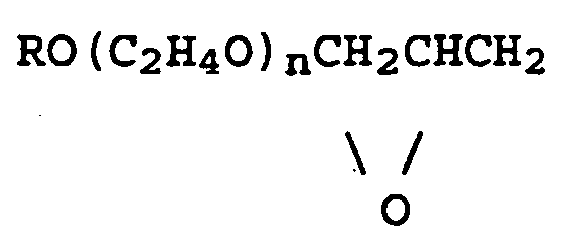
where R is a hydrocarbon having 4 to 22 carbon atoms and n is a number from 0 to 7; 3-chloro-2-hydroxypropyl trialkylammonium chloride and glycidyl trialkylammonium chloride where alkyl is an alkyl with 1 to 22 carbon atoms with the proviso that at most one of the alkyl groups have more than 2 carbon atoms; and the corresponding primary, secondary or tertiary ammonium and amine compounds.
where R is a hydrocarbon having 4 to 22 carbon atoms and n is a number from 0 to 7; 3-chloro-2-hydroxypropyl trialkylammonium chloride and glycidyl trialkylammonium chloride where alkyl is an alkyl with 1 to 22 carbon atoms with the proviso that at most one of the alkyl groups have more than 2 carbon atoms; and the corresponding primary, secondary or tertiary ammonium and amine compounds.
9. A method according to any one of claims 1 to 8, characterised in that methyl chloride and the other etherifying reactants are added in such amounts that
a methyl cellulose ether is obtained having a DSmethyl from 0.6 to 2.5, a DSethyl from 0 to 0.8, a DSpropyl from 0 to 0.2, a DScarboxymethyl from 0 to 0.2, a DSammonium containing substituents from 0 to 1.0, DSRO(C2H40)n CH2CH(OH)CH2, where R and n have the meanings mentioned above from 0 to 0.3, a MShydroxyethyl from 0 to 1.6, a MS hydroxypropyl from 0 to 0.9 and a MS hydroxybutyl from 0 to 0.3.
10. A method according to claim 9, characterised in that the methyl cellulose produced is a methyl cellulose having a DS methyl from 1.0 to
2.0; a methyl hydroxyethyl cellulose having a DSmethyl from 1.2 to 2.0 and a MShydroxyethyl from 0.05 to 1.2; a methyl hydroxypropyl cellulose having a DSmethyl from 1.0 to 2.0 and a MShydroxypropyl from 0.1 to 1.0; a methyl ethyl hydroxyethyl cellulose having a DSmethyl from 1.0 to 2.0, a DSethyl from 0.1 to 0.6 and a MShydroxyethyl from 0.05 to 1.2; and a methyl carboxymethyl cellulose having a DSmethyl from 1.0 to 2.0 and a DScarboxymethyl from 0.05 to 0.2.
1. Verfahren zur Herstellung eines wasserlöslichen Methylcelluloseethers mit einem Flockpunkt
unterhalb von 100 °C durch die Umsetzung von Methylchlorid mit einer Cellulose, die
durch ein Merzerisieren der Cellulose mit wässrigem Alkali aktiviert ist, dadurch gekennzeichnet, dass die Reaktion in Gegenwart eines C2-C3-Alkylchlorids als Reaktionsmedium bei einer Reaktionstemperatur von 65 °C bis 90
°C und bei einem Druck von 3 bis 15 bar durchgeführt wird.
2. Verfahren nach Anspruch 1, dadurch gekennzeichnet, dass das Gewichtsverhältnis zwischen der Cellulose und dem C2-C3-Alkylchlorid von 1:1 bis 1:5 beträgt.
3. Verfahren nach Anspruch 1, dadurch gekennzeichnet, dass das Gewichtsverhältnis zwischen der Cellulose und dem C2-C3-Alkylchlorid von 1:1,3 bis 1:2,5 und der Druck weniger als 10 bar betragen.
4. Verfahren nach Anspruch 1, 2 oder 3, dadurch gekennzeichnet, dass das C2-C3-Alkylchlorid vor der Aktivierung der Cellulose und/oder während des Merzerisierens
der Cellulose zur Cellulose gegeben wird.
5. Verfahren nach einem der Ansprüche 1 bis 4, dadurch gekennzeichnet, dass ein Teil des Methylchlorids zugegeben wird, während die Temperatur bis auf die Reaktionstemperatur
erhöht wird, woraufhin das verbleibende Methylchlorid mit einer solchen Geschwindigkeit
zugegeben wird, dass die Temperatur und der Reaktordruck aufrecht erhalten werden.
6. Verfahren nach einem der Ansprüche 1 bis 5, dadurch gekennzeichnet, dass das Methylchlorid in einer Menge von 0,9 bis 4,9 mol/mol Saccharideinheit der Cellulose
zugegeben wird.
7. Verfahren nach einem der Ansprüche 1 bis 6, dadurch gekennzeichnet, dass die aktivierte Cellulose mit Ethylenoxid und/oder Propylenoxid vor der Zugabe von
Methylchlorid und/oder zusammen mit Methylchlorid bei einer Temperatur von 50 °C bis
80 °C bzw. 60 °C bis 80 °C umgesetzt wird.
8. Verfahren nach einem der Ansprüche 1 bis 7, dadurch gekennzeichnet, dass die aktivierte Cellulose auch mit Reaktanden umgesetzt wird, die aus der Gruppe ausgewählt
sind bestehend aus Ethylchlorid, Propylchlorid, Butylenoxid, 2-Chloressigsäure, RO(C2H4O)nCH2CH(OH)CH2Cl und
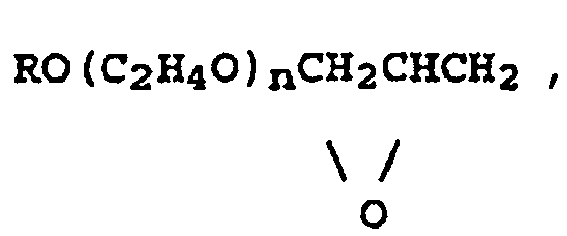
wobei R ein Kohlenwasserstoff mit 4 bis 22 Kohlenstoffatomen ist und n eine Zahl von 0 bis 7 ist, 3-Chlor-2-hydroxypropyltrialkylammoniumchlorid und Glycidyltrialkylammoniumchlorid, wobei das Alkyl ein Alkyl mit 1 bis 22 Kohlenstoffatomen ist, mit der Maßgabe, dass die meisten Alkylgruppen mehr als 2 Kohlenstoffatome haben, und den entsprechenden primären, sekundären oder tertiären Ammonium- und Aminverbindungen.
wobei R ein Kohlenwasserstoff mit 4 bis 22 Kohlenstoffatomen ist und n eine Zahl von 0 bis 7 ist, 3-Chlor-2-hydroxypropyltrialkylammoniumchlorid und Glycidyltrialkylammoniumchlorid, wobei das Alkyl ein Alkyl mit 1 bis 22 Kohlenstoffatomen ist, mit der Maßgabe, dass die meisten Alkylgruppen mehr als 2 Kohlenstoffatome haben, und den entsprechenden primären, sekundären oder tertiären Ammonium- und Aminverbindungen.
9. Verfahren nach einem der Ansprüche 1 bis 8, dadurch gekennzeichnet, dass Methylchlorid und die anderen Veretherungsreagenzien in solchen Mengen zugegeben
werden, dass ein Methylcelluloseether mit einer DSMethyl von 0,6 bis 2,5, einer DSEthyl von 0 bis 0,8, einer DSPropyl von 0 bis 0,2, einer DSCarboxymethyl von 0 bis 0,2, einer DSammoniumhaltige Substituenten von 0 bis 1,0 einer DSRO(C2H4O)nCH2CH(OH)CH2, wobei R und n die oben erwähnten Bedeutungen haben, von 0 bis 0,3, einer MSHydroxyethyl von 0 bis 1,6, einer MSHydroxypropyl von 0 bis 0,9 und einer MSHydroxybutyl von 0 bis 0,3 erhalten wird.
10. Verfahren nach Anspruch 9, dadurch gekennzeichnet, dass die erzeugte Methylcellulose eine Methylcellulose mit einer DSMethyl von 1,0 bis 2,0, eine Methylhydroxyethylcellulose mit einer DSmethyl von 1,2 bis 2,0 und einer MSHydroxyethyl von 0,05 bis 1,2, eine Methylhydroxypropylcellulose mit einer DSmethyl von 1,0 bis 2,0 und einer MSHydroxypropyl von 0,1 bis 1,0, eine Methylethylhydroxyethylcellulose mit einer DSmethyl von 1,0 bis 2,0, einer DSEthyl von 0,1 bis 0,6 und einer MSHydroxyethyl von 0,05 bis 1,2 und eine Methylcarboxymethylcellulose mit einer DSmethyl von 1,0 bis 2,0 und einer DSCarboxymethyl von 0,05 bis 0,2 ist.
1. Procédé de fabrication d'un éther de méthylcellulose soluble dans l'eau, ayant un
point de floculation inférieur à 100 °C, en faisant réagir du chlorure de méthyle
et une cellulose activée par mercerisation de la cellulose avec un alcali aqueux,
caractérisé en ce que la réaction est réalisée en présence d'un chlorure d'alkyle en C2-C3 comme milieu réactionnel à une température réactionnelle de 65 °C à 90 °C et à une
pression de 3 à 15 bars.
2. Procédé selon la revendication 1, caractérisé en ce que le rapport en poids de la cellulose au chlorure d'alkyle en C2-C3 est de 1:1 à 1:5.
3. Procédé selon la revendication 1, caractérisé en ce que le rapport en poids de la cellulose au chlorure d'alkyle en C2-C3 est de 1:1,3 à 1:2,5 et la pression est inférieure à 10 bars.
4. Procédé selon la revendication 1, 2 ou 3, caractérisé en ce que le chlorure d'alkyle en C2-C3 est ajouté à la cellulose avant l'activation de la cellulose et/ou pendant la mercerisation
de la cellulose.
5. Procédé selon l'une quelconque des revendications 1 à 4, caractérisé en ce qu'une portion du chlorure de méthyle est ajoutée tandis que la température est augmentée
à la température réactionnelle, puis le chlorure de méthyle restant est ajouté à un
taux tel que la température et la pression du réacteur restent inchangées.
6. Procédé selon l'une quelconque des revendications 1 à 5, caractérisé en ce que le chlorure de méthyle est ajouté en une quantité de 0,9 à 4,9 moles par mole de
motif saccharide de la cellulose.
7. Procédé selon l'une quelconque des revendications 1 à 6, caractérisé en ce que la cellulose activée est mise à réagir avec de l'oxyde d'éthylène et/ou de l'oxyde
de propylène à une température de 50 °C à 80 °C et de 60 °C à 80 °C respectivement
avant l'ajout du chlorure de méthyle et/ou avec du chlorure de méthyle.
8. Procédé selon l'une quelconque des revendications 1 à 7, caractérisé en ce que la cellulose activée est également mise à réagir avec des réactifs choisis dans le
groupe constitué par le chlorure d'éthyle, le chlorure de propyle, l'oxyde de butylène,
l'acide 2-chloroacétique, RO (C2H4O)nCH2CH (OH) CH2Cl et
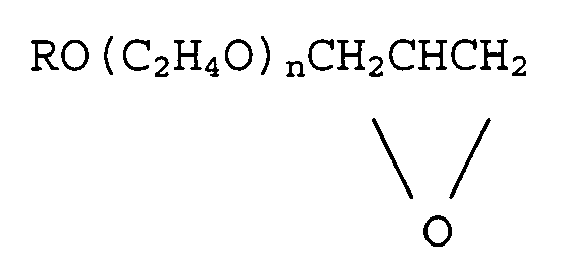
où R est un hydrocarbure ayant de 4 à 22 atomes de carbone et n est un nombre de 0 à 7, le chlorure de 3-chloro-2-hydroxypropyltrialkylammonium et le chlorure de glycidyltrialkylammonium où le groupe alkyle est un groupe alkyle de 1 à 22 atomes de carbone à condition qu'au plus un des groupes alkyles ait plus de 2 atomes de carbone, et les composés amines et ammonium primaires, secondaires ou tertiaires correspondants.
où R est un hydrocarbure ayant de 4 à 22 atomes de carbone et n est un nombre de 0 à 7, le chlorure de 3-chloro-2-hydroxypropyltrialkylammonium et le chlorure de glycidyltrialkylammonium où le groupe alkyle est un groupe alkyle de 1 à 22 atomes de carbone à condition qu'au plus un des groupes alkyles ait plus de 2 atomes de carbone, et les composés amines et ammonium primaires, secondaires ou tertiaires correspondants.
9. Procédé selon l'une quelconque des revendications 1 à 8, caractérisé en ce que le chlorure de méthyle et les autres réactifs d'éthérification sont ajoutés en des
quantités telles que l'éther de méthylcellulose est obtenu avec un DSméthyle de 0,6 à 2,5, un DSéthyle de 0 à 0 , 8 , un DSpropyle de 0 à 0 , 2 , un DScarboxyméthyle de 0 à 0, 2 , Un DSammonium contenant des substituants de 0 à 1,0, un DSRO(C2H4O)nCH2CH(OH)CH2, où R et n ont les significations mentionnées ci-dessus de 0 à 0,3, un MShydroxyéthyle de 0 à 1,6, un MShydroxypropyle de 0 à 0,9 et un MShydroxybutyle de 0 à 0,3.
10. Procédé selon la revendication 9, caractérisé en ce que la méthylcellulose produite est une méthylcellulose ayant un DSméthyle de 1,0 à 2 , 0 ; une méthylhydroxyéthylcellulose ayant un DSméthyle de 1,2 à 2, 0 et un MShydroxyéthyle de 0,05 à 1,2 ; une méthylhydroxypropylcellulose ayant un DSméthyle de 1, 0 à 2,0 et un MShydroxypropyle de 0,1 à 1,0 ; une méthyléthylhydroxyéthylcellulose ayant un DSméthyle de 1, 0 à 2,0, un DSéthyle de 0,1 à 0,6 et un MShydroxyéthyle de 0,05 à 1,2 ; et une méthylcarboxyméthylcellulose ayant un DSméthyle de 1, 0 à 2 , 0 et un DShcarboxyméthyle de 0, 05 à 0, 2 .