|
(11) | EP 1 454 893 B1 |

| (12) | EUROPEAN PATENT SPECIFICATION |
|
|
| (54) |
Illudin analogs useful as antitumor agents Illudin Analoge verwendet als Antitumormittel Analogues d' illudine utiles en tant qu' agents antitumoraux |
|
|
|||||||||||||||||||||||||||||||||||
|
||||||||||||||||||||||||||||||||||||
| Note: Within nine months from the publication of the mention of the grant of the European patent, any person may give notice to the European Patent Office of opposition to the European patent granted. Notice of opposition shall be filed in a written reasoned statement. It shall not be deemed to have been filed until the opposition fee has been paid. (Art. 99(1) European Patent Convention). |
Background of the Invention
[0001] A listing of human cancers for which chemotherapy has exerted a predominant role in increasing life span, approaching normal life expectancy, includes Burkitt's lymphoma, acute lymphocytic leukemia and Hodgkin's disease, along with about 10-15 other tumor types. For example, see A. Golden et al., Eur, J. Cancer. 17, 129 (1981) (Table 1). While the cure rate of these cancers illustrates the level of success of screening systems in selecting antitumor agents that are effective in man, these responsive tumors represent only a small fraction of the various types of cancer and, notably, there are relatively few drugs highly active against clinical solid tumors. Such drugs include cyclophosphamide, adriamycin, 5-FU, hexamethylmelamine and the like. Thus, patients with many types of malignancies remain at significant risk for relapse and mortality.
[0002] After relapse, some patients can be reinduced into remission with their initial treatment regimen. However, higher doses of the initial chemotherapeutic agent or the use of additional agents are frequently required, indicating the development of at least partial drug resistance. Recent evidence indicates drug resistance can develop simultaneously to several agents, including ones to which the patient was not exposed. The development of multiple-drug resistant (mdr) tumors may be a function of tumor mass and constitutes a major cause of treatment failure. To overcome this drug resistance, high-dose chemotherapy with or without radiation and allogenic or autologous bone marrow transplantation can be employed. The high-dose chemotherapy may employ the original drug(s) or be altered to include additional agents. The development of new drugs non-cross resistant with mdr phenotypes is required to further the curative potential of current regimens and to facilitate curative interventions in previously treated patients.
[0003] Recently, the in vitro anti-tumor activity of a novel class of natural products called illudins was examined by Kelner, M. et al., Cancer Res., 47, 3186 (1987). Illudin M was purified and submitted for evaluation to the National Cancer Institute Division of Cancer Treatment (NCI DC1) in vivo drug screening program. Illudin M significantly increased the life span of rats with Dunning leukemia, but had a low therapeutic index in solid tumor systems. The extreme toxicity of illudins has prevented any applications in human tumor therapy. Recently, synthetic analogs of the illudins have been developed which exhibit promising antitumor activity, including U.S. Patent Nos. 5,439,936 and 5,523490, and McMorris et al. Experientia 52(1996):75-80.
[0004] However, there exists a continuing need for chemotherapeutic agents which inhibit tumor growth, especially solid tumor growth, and which have an adequate therapeutic index to be effective for in vivo treatment.
Summary of the Invention
[0005] The present invention provides illudin analogs of the general formula (I):
where R1 is (CH2)n(Y);
where n is 0 to 4; and
Y is CHO, NH2, COOH, -(C2-C4)alkenyl-CHO, -CH(O(C1-C4)alkyl)2, cyclo(C3-C6)alkyl or 5-membered heteroaryl comprising one or more heteroatoms selected from N, S, or non-peroxide O, where the cycloalkyl or heteroaryl is optionally substituted with 1-2 (C1-C4)alkyl, CHO, OH or halo;
R3 is (C1-C4)alkyl or H;
R4 is SCH2CO2(C1-C4)alkyl or H;
R5 is H, OH or absent;
R6 is (C1-C4)alkyl or H;
R7 is OH;
R6 and R7 together are ethylenedioxy;
R8 is (C1-C4)alkyl optionally substituted with OH or halo; and the bond represented by ----- is present or absent;
and
the pharmaceutically acceptable salts thereof.
[0007] These compounds are useful as antineoplastic agents, i.e., to inhibit tumor cell growth in vitro or in vivo, in mammalian hosts, such as humans or domestic animals, and are particularly effective against solid tumors and multidrug resistant tumors.
[0008] Thus, the present invention provides a therapeutic method to treat cancer, i.e., to inhibit tumor cell growth in vitro, or preferably, in vivo, by administration to a mammal, such as a human cancer patient, of an amount of a compound of formula 1 effective to inhibit the growth of said cancer cells, i.e., tumor cells. The present compounds may be particularly useful for the treatment of solid tumors for which relatively few treatments are available. Such tumors include epidermoid and myeloid tumors, acute (AML) or chronic (CML), as well as lung, ovarian, breast and colon carcinoma. The present compounds can also be used against endometrial tumors, bladder cancer, pancreatic cancer, lymphoma, Hodgkin's disease, prostate cancer, sarcomas and testicular cancer as well as against tumors of the central nervous system, such as brain tumors, neuroblastomas and hematopoietic cell cancers such as B-cell leukemia/lymphomas, myelomas, T-cell leukemia/lymphomas, and small cell leukemia/lymphomas. These leukemia/lymphomas could be either acute (ALL) or chronic (CLL).
[0009] The present compounds may also be targeted to a particular tumor by attaching the compound to a reagent which is capable of binding to a tumor-associated antigen. The antigen may be located on a tumor or in the tumor cell area. Suitable reagents include polyclonal and monoclonal antibodies. The compound-reagent complex may further comprise a linker for attaching the compound to the reagent.
[0010] The present invention also provides pharmaceutical compositions, such as pharmaceutical unit dosage forms, comprising an effective anti-neoplastic amount of one or more of the present illudin analogs in combination with a pharmaceutically acceptable carrier.
[0011] As used herein, with respect to the present method, the term "inhibit" means either decreasing the tumor cell growth rate from the rate which would occur without treatment, or causing the tumor cell mass to decrease in size. Inhibiting also includes causing a complete regression of the tumor. Thus, the present analogs can either be cytostatic or cytotoxic to the tumor cells.
[0012] The subject can be any mammal having a susceptible cancer, i.e., a malignant cell population or tumor. The analogs are effective on human tumors in vivo as well as on human tumor cell lines in vitro.
Brief Description of the Drawings
Detailed Description of the Invention
[0014] The present invention provides illudin analogs of the general formula (I):
where R1 is (CH2)n(Y);
where n is 0 to 4; preferably n is 2-4; and
Y is CHO, NH2, COOH, -(C2-C4)alkenyl-CHO, -CH(O(C1-C4)alkyl)2, cyclo(C3-C6)alkyl or 5-membered heteroaryl comprising one or more heteroatoms selected from N, S, or non-peroxide O, where the cycloalkyl or heteroaryl is optionally substituted with 1-2 (C1-C4)alkyl, CHO, OH or halo;
R3 is (C1-C4)alkyl or H;
R4 is SCH2CO2(C1-C4)alkyl or H;
R5 is H, OH or absent;
R6 is (C1-C4)alkyl or H;
R7 is OH;
R6 and R7 together are ethylenedioxy;
R8 is (C1-C4) alkyl optionally substituted with OH or halo; and the bond represented by ----- is present or absent.
[0020] The compounds of the present invention may be derived from illudin S, 6-hydroxymethyl acylfulvene (HMAF, i.e., the compound of formula (I) wherein R1 is CH2OH, R3 is CH3, R4 is H, R5 is absent, R6 is CH3, R7 is OH and R8 is CH3) and fulvene (i.e. the compound of formula (I) wherein R1 is H, R3 is CH3, R4 is H, R5 is absent, R6 is CH3, R7 is OH and R8 is CH3) the syntheses of which are known in the art (see e.g., WO 91/04754; WO 94/18151).
[0021] Compounds of formula (I) may be prepared as follows. Compounds where n is 2 and Y is CHO, i.e., compound 10, may be obtained by adding acrolein to an acidic solution offulvene. Compound 11, where n is 1 and Y is CHO, was prepared via oxidation of HMAF with Dess Martin reagent.
[0022] Compounds where Y is CH(O(C1-C4)alkyl)2 may be obtained by reduction of compound 10 in appropriate solvent. For example, compound 39 where Y is CH(OMe)2 was obtained by reacting compound 10 with sodium borohydride in methanol. Compound 40 where Y is CH(OEt)2 was prepared by reacting compound 10 with sodium borohydride in ethanol.
[0023] Compounds where Y is -(C2-C4)alkenyl-CHO may be obtained by adding the appropriate alkynyl aldehyde to an acidic solution of HMAF. For example, compound 41 where Y is -CH=CHCH(O) was obtained by treating an acidic solution ofHMAF with propargyl aldehyde.
[0024] Compounds where Y is cyclo(C3-C6)alkyl may be prepared by methods known in the art. For example, compound 13 was prepared in the synthesis of compound 10.
[0025] Where Y is heteroaryl, the appropriately substituted aryl or heteroaryl reagent is added to acidic, basic or neutral HMAF. For example, compound 36 where Y is an imidazole group, as prepared by treating a neutral solution of HMAF in THF with imidazole.
[0027] Pharmaceutically acceptable salts include, where applicable, salts such as amine acid addition salts and the mono-, di- and triphosphates of free hydroxyl groups. Amine salts include salts of inorganic and organic acids, including hydrochlorides, sulfates, phosphates, citrates, tartarates, malates, maleates, bicarbonates, and the like. Alkali metal amine or ammonium salts can be formed by reacting hydroxyaryl groups with metal hydroxides, amines or ammonium.
[0028] The compounds of the present invention can be formulated as pharmaceutical compositions and administered to a mammalian host, such as a human cancer patient, in a variety of forms adapted to the chosen route of administration, i.e., orally or parenterally, by intravenous, intraperitoneal, intramuscular or subcutaneous routes.
[0029] Thus, the present compounds may be orally administered, for example, in combination with a pharmaceutically acceptable vehicle such as an inert diluent or an assimilable edible carrier. They may be enclosed in hard or soft shell gelatin capsules, may be compressed into tablets, or may be incorporated directly with the food of the patient's diet. For oral therapeutic administration, the active compound may be combined with one or more excipients and used in the form of ingestible tablets, buccal tablets, troches, capsules, elixirs, suspensions, syrups, wafers, and the like. Such compositions and preparations should contain at least 0.1 % of active compound. The percentage of the compositions and preparations may, of course, be varied and may conveniently be between 2 to about 60% of the weight of a given unit dosage form. The amount of active compound in such therapeutically useful compositions is such that an effective dosage level will be obtained.
[0030] The tablets, troches, pills, capsules and the like may also contain the following: A binder such as gum tragacanth, acacia, corn starch or gelatin; excipients such as dicalcium phosphate; a disintegrating agent such as corn starch, potato starch, alginic acid and the like; a lubricant such as magnesium stearate; and a sweetening agent such as sucrose, lactose, or saccharin or a flavoring agent such as peppermint, oil of wintergreen, or cherry flavoring may be added. When the unit dosage form is a capsule, it may contain, in addition to materials of the above type, a liquid carrier, such as a vegetable oil or a polyethylene glycol. Various other materials may be present as coatings or to otherwise modify the physical form of the solid unit dosage form. For instance, tablets, pills, or capsules may be coated with gelatin, wax, shellac or sugar and the like. A syrup or elixir may contain the active compound, sucrose as a sweetening agent, methyl and propylparabens as preservatives, a dye and flavoring such as cherry or orange flavor. Of course, any material used in preparing any unit dosage form should be pharmaceutically acceptable and substantially non-toxic in the amounts employed. In addition, the active compound may be incorporated into sustained-release preparations and devices.
[0031] The active compound may also be administered intravenously or intraperitoneally by infusion or injection. Solutions of the active compound can be prepared in water, optionally mixed with a nontoxic surfactant. Dispersions can also be prepared in glycerol, liquid polyethylene glycols, triacetin, and mixtures thereof and in oils. Under ordinary conditions of storage and use, these preparations contain a preservative to prevent the growth of microorganisms.
[0032] The pharmaceutical dosage forms suitable for injection or infusion use can include sterile aqueous solutions or dispersions or sterile powders comprising the active ingredient which are adapted for the extemporaneous preparation of sterile injectable of infusible solutions or dispersions. In all cases, the ultimate dosage form must be sterile, fluid and stable under the conditions of manufacture and storage. The liquid carrier or vehicle can be a solvent or liquid dispersion medium comprising, for example, water, ethanol, a polyol (for example, glycerol, propylene glycol, liquid polyethylene glycols, and the like), vegetable oils, nontoxic glyceryl esters, and suitable mixtures thereof. The proper fluidity can be maintained, for example, by the formation of liposomes, by the maintenance of the required particle size in the case of dispersion or by the use of surfactants. The prevention of the action of microorganisms can be brought about by various antibacterial and antifungal agents, or example, parabens, chlorobutanol, phenol, sorbic acid, thimerosal, and the like. In many cases, it will be preferable to include isotonic agents, for example, sugars, buffers or sodium chloride. Prolonged absorption of the injectable compositions can be brought about by the use in the compositions of agents delaying absorption, for example, aluminum monostearate and gelatin. Sterile injectable solutions are prepared by incorporating the active compound in the required amount in the appropriate solvent with various of the other ingredients enumerated above, as required, followed by filter sterilization. In the case of sterile powders for the preparation of sterile injectable solutions, the preferred methods of preparation are vacuum drying and the freeze drying techniques, which yield a powder of the active ingredient plus any additional desired ingredient present in the previously sterile-filtered solutions.
[0033] Useful dosages of the compounds of Figure (I) can be determined by correlating their in vitro activity, and in vivo activity in animal models, such as murine or dog models as taught for illudin analogs such as those of U.S. Patent Nos. 5,439,936 and 5,523,490, to activity in higher mammals, such as children and adult humans as taught, e.g., in Borch et al. (U.S. Patent No. 4,938,949).
[0034] The therapeutically effective amount of analog necessarily varies with the subject and the tumor to be treated. However, it has been found that relatively high doses of the analogs can be administered due to the decreased toxicity compared to illudin S and M. A therapeutic amount between 30 to 112,000 µg per kg of body weight is especially effective for intravenous administration while 300 to 112,000 µg per kg of body weight is effective if administered intraperitoneally. As one skilled in the art would recognize, the amount can be varied depending on the method of administration.
EXAMPLES
EXAMPLE 1- Synthesis of illudin analogs
[0036] General. Melting points are uncorrected. 1H and 13C NMR spectra were measured at 300 and 75 MHz High resolution mass spectra were determined at the University of Minnesota Mass Spectrometry Service Laboratory. All chromatography used silica gel (Davisil 230-425 mesh, Fisher Scientific) and solvent was ethyl acetate and hexanes except being mentioned specifically. Analytical TLC was carried out on Whatman 4420 222 silica gel plates. Reactions were routinely monitored by TLC.
[0037] Synthesis of illudin S, hydroxymethylacylfulvene (HMAF) and fulvene are known in the art (see, e.g., WO 91/04754; WO 94/18151).
[0038] Compound 11. To a stirred solution 103.5 mg HMAF (MW 246, 0.406 mmol) in 15 ml CH2Cl2 was added 327 mg Dess-Martin reagent. The mixture was stirred at room temperature for 1 h and was partitioned between ethyl ether and saturated NaHSO4 and NaHCO, solution (1:1). The organic extracts were washed with saline until neutral. After being dried by MgSO4, the solution was concentrated and chromatographed to give 65.7 mg 11 (64.0%). 11 is a yellow gum: 1H NMR (CDCl3,) δ 0.83 (m, 1H), 1.19 (m, 1H), 1.41 (s, 3H), 1.45 (m, 1H), 1.67 (m, 1H), 2.31 (s, 3H), 2.50 (s, 3H), 3.80 (s, 1H), 7.08 (s, 1H), 10.25 (s, 1H); MS m/z 244 (M+); UV λmax 241 nm (∈ 14000), 293 nm (∈ 12000).
[0039] Compound 10 & 13. To the solution of 1 g fulvene (MW 216,4.63 mmol) in 5 ml acetone and 2.5 ml 2 M H2SO4 solution was added 2.5 ml acrolein. The mixture was stirred at room temperature for 7 h and was partitioned between ethyl acetate and water. The organic extracts were washed by saturated NaHCO3 and saline respectively to neutral. After being dried by MgSO4, the solution was concentrated and chromatographed to give 378 mg 10 (30.0%) and 241 mg 13 (13.6%). 10 is a yellow gum: 0.68 (m, 1H), 1.07 (m, 1H), 1.32 (m, 1H), 1.36 (s, 3H), 1.46 (m, 1H), 2.01 (s, 3H), 2.06 (s, 3H), 2.65 (t, J = 7.8 Hz, 2H), 3.00 (m, 2H), 3.93 (s, 1H), 7.12 (s, 1H), 9.83 (s, 1H); 13C NMR (CDCl3) δ 200.4, 196.3, 157.3, 139.4, 138.3, 135.4, 133.7, 125.3, 75.4, 43.5, 36.9.27.0. 19.5, 15.4, 13.4, 12.4, 8.6; MS m/z 272 (M+), 244, 215, 201; HRMS for C17H20O3) calcd 272.1413, found 272.1416; UV λmax (methanol) 332 nm (∈ 8500). 13 is also a yellow gum (mixture): HRMS for C23H28O5 calcd 384.1937, found 384.1947; UV λmax (methanol) 329 nm (∈ 6000).
[0040] Compound 38. Compound 10 was oxidized by Jones Reagent to give 38 as yellow gum: 1H NMR (CDCl3) δ 0.69 (m, 1H), 0.88 (m, 1H), 1.05 (m, 1H), 1.36 (s. 3H), 1.47 (m, 1H), 2.06 (s, 3H), 2.07 (s, 3H), 2.52 (m, 2H), 3.03 (m, 2H), 7.13 (s, 1H).
[0041] Compound 39. 39 was obtained in small quantity when compound 10 was treated with sodium borohydride in methanol. 39 is a yellow gum: 1H NMR (CDCl3) δ 0.67 (m, 1H), 1.06 (m, 1H), 1.32 (m, 1H), 1.36 (s, 3H), 1.46 (m, 1H), 1.78 (m, 2H), 2.05 (s, 3H), 2.06 (s, 3H), 2.70 (m, 2H), 3.33 (s, 3H), 3.34 (s, 3H), 3.95 (s, 1H), 4.35 (t, J = 2.4 Hz, 1H), 7.14 (s, 1H).
[0042] Compound 40. 40 was obtained in small quantity when compound 10 was treated with sodium borohydride in ethanol. 40 is a yellow gum: 1H NMR (CDCl3) δ 0.67 (m, 1H), 1.04 (m, 1H), 1.21 (m, 6H), 1.29 (m, 1H), 1.36 (s, 3H), 1.46 (m, 1H), 1.77 (m, 2H), 2.05 (s, 3H), 2.06 (s, 3H), 2.71 (m, 2H), 3.50 (q, 2H), 3.65 (q, 2H), 3.95 (s, 1H), 4.48 (t, J = 5.4 Hz, 2H), 7.13 (s, 1H).
[0043] Compound 41. When HMAF was treated with propargyl aldehyde in acetone and 1 M H2SO4(1:1), 41 was obtained as a yellow gum: 1H NMR (CDCl3) δ 0.72 (m, 1H), 1.14 (m, 1H), 1.31 (m, 1H), 1.38 (s, 3H), 1.42 (m, 1H), 2.05 (s, 3H), 2.13 (s, 3H), 3.96 (s, 1H), 6.55 (s, 1H), 7.16 (s, 1H), 7.17 (s, 1H), 9.68 (d, 1H).
[0044] Compound 36. HMAF was treated with imidazole in THF at room temperature to give 36 as a yellow gum: 1H NMR (CD3OD) δ 0.65 (m, 1H), 1.06 (m, 1H). 1.23 (m, 1H). 1.34 (s, 3H), 1.49 (m, 1H), 1.74 (s, 3H), 2.05 (s, 3H), 5.08 (d, 2H), 6.78-7.47 (m, 4H).
EXAMPLE II - In Vitro Studies
[0045] To assess cytotoxic effects, various concentrations of illudins were added to cultures of MV522 (human lung carcinoma cell line) and 8392 (B-cell leukemia/lymphoma) cells for 48 hours, then cell growth/viability was determined by trypan blue exclusion. As an alternative to 48 hour continuous exposure studies, cells were plated in liquid culture in 96 well plates, exposed to various concentrations of illudins for 2 hours, pulsed with [3H]-thymidine for one to two hours and harvested onto glass filters. The filter papers were added to vials containing scintillation fluid and residual radioactivity determined in a beta (scintillation) counter.
| 2 hour IC50 (nm/l) | 48 hour IC50 (nm/l) | |||
| Compound | MV522 | 8392 | MV522 | 8392 |
| 10 | 8900 ±1500 | 29400 ± 1600 | 165 ± 55 | 14450 ± 1650 |
| 13 | 5120 ± 650 | 11900 ± 1300 | 270 ±130 | 4200 ± 400 |
| 11 | 4900 ± 900 | >100000 | 1200a | 40400 ± 6700 |
| aN=2 due to instability |
EXAMPLE III - In Vivo Studies
[0047] Several analogs were chosen for in vivo studies. The anticancer agent mitomycin C was used as a pharmaceutical control. Drug therapy was started 10 days after inoculation on a daily basis via IP route for 5 consecutive days. The animals were monitored for 3 weeks after start of therapy. With regard to all analogs administered, the maximum tolerated dose (MTD) was not achieved.
[0048] BALB/c nu/nu 4-week old female mice weighing 18-22 g were obtained from Simonsen, Inc. (Gilroy, CA) and maintained in the athymic mouse colony of the University of California (San Diego, CA) under pathogen free conditions using HEPA filter hoods. Animals were provided with sterilized food and water ad libitum in groups of 5 in plastic cages vented with polyester fiber filter covers. Clean, sterilized gowns, glove, face masks, and shoe and hood covers were worn by all personnel handling the animals. All studies were conducted in accordance with guidelines of the NIH "Guide for Care and Use of Animals" and approved by the University Institutional Animal Care and Use Committee (Protocol 3-006-2)
[0049] The MV522 lung carcinoma line used for xenograft studies was derived as described by Kelner et al. (Anticancer Res., 15: 867-872; 873-878 (1995)) and maintained in antibiotic-free RPMI 1640 (Mediatech, Herndon, VA) supplemented with 10% fetal bovine serum and 2 mM glutamine in 37°C humidified carbon dioxide incubator.
[0050] Mice were randomized into treatment groups of five animals each for initial studies and groups of 16-20 animals for confirming analogue efficacy. Each animal was earmarked and followed individually throughout the experiments. Mice received s.c. injections of the parental cell line MV522 using 10 million cells/inoculation over the shoulder. Ten days after s.c. implantation of the MV522 cells, when s.c. tumors were approximately 3 x 3 mm in size, animals received the desired drug and dosage. The effect of the drug on life span was calculated from median survival.
[0051] Although MV522 cells kill mice by metastases, primary s.c. tumor growth over the shoulder was monitored starting on the first day of treatment and at weekly intervals thereafter. Tumor size was measured in two perpendicular diameters. Tumor weights were estimated according to the formula w = (width)2 x length/2). Relative weights (RW) were calculated to standardized variability in tumor size among test groups at initiation of treatment using the formula RW = Wt/wi, where Wi is the tumor weight for a given animal at beginning of drug treatment and Wt is tumor weight at a subsequent time. Animals were necropsied, and organs were examined for evidence of metastases.
[0052] Comparison of survival curves between groups of animals was by the method of Kaplan and Meir. For comparison of relative tumor weights between multiple groups of animals, ordinary ANOVA followed by Tukey-Kramer multiple Comparison post ANOVA analysis was performed (Kelner et al. (Anticancer Res., 15:867-872; 873-878 (1995)). Probability values (p) less than 0.05 were considered statistically significant.
| Compound | dose (mg/kg) | p value (tumor weight) |
| HMAF | 6 | <0.01 |
| 8 | <0.01 | |
| 10 | <0.001 | |
| 10 | 3 | <0.001 |
| 6 | <0.001 | |
| 11 | 1.2 | <0.001 |
| mitomycin C | 1.6 | >0.05 |
| 2.0 | toxic |
1. A compound of the formula
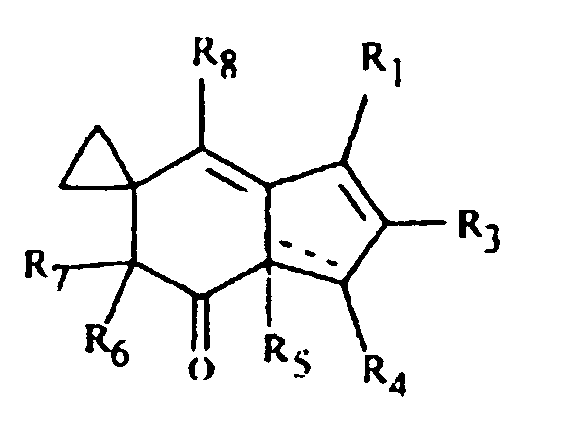
where R1 is (CH2)n(Y);
where n is 0 to 4; and
Y is CHO, NH2, COOH, -(C2-C4)alkenyl-CHO, -CH(O(C1-C4)alkyl)2, cyclo(C3-C6)alkyl or 5-membered heteroaryl comprising one or more heteroatoms selected from N, S, or non-peroxide O where the cycloalkyl or heteroaryl is optionally substituted with 1-2 (C1-C4)alkyl, CHO, OH or halo;
R3 is (C1-C4)alkyl or H;
R4 is SCH2CO2(C1-C4)alkyl or H;
R5 is H, OH or absent;
R6 is (C1-C4)alkyl or H;
R7 is OH;
R6 and R7 together are ethylenedioxy;
R8 is (C1-C4)alkyl optionally substituted with OH or halo; and
the bond represented by ----- is present or absent; or
a pharmaceutically acceptable salt thereof.
where R1 is (CH2)n(Y);
where n is 0 to 4; and
Y is CHO, NH2, COOH, -(C2-C4)alkenyl-CHO, -CH(O(C1-C4)alkyl)2, cyclo(C3-C6)alkyl or 5-membered heteroaryl comprising one or more heteroatoms selected from N, S, or non-peroxide O where the cycloalkyl or heteroaryl is optionally substituted with 1-2 (C1-C4)alkyl, CHO, OH or halo;
R3 is (C1-C4)alkyl or H;
R4 is SCH2CO2(C1-C4)alkyl or H;
R5 is H, OH or absent;
R6 is (C1-C4)alkyl or H;
R7 is OH;
R6 and R7 together are ethylenedioxy;
R8 is (C1-C4)alkyl optionally substituted with OH or halo; and
the bond represented by ----- is present or absent; or
a pharmaceutically acceptable salt thereof.
2. A compound of claim 1 wherein the bond represented by ----- is present.
3. A compound of claim 1 or claim 2 wherein R3 is CH3; R4 is H; R6 is CH3, R7 is OH and R8 is CH3.
4. A compound of any one of claims 1 to 3 wherein n is 1.
5. A compound of claim 4 wherein Y is CHO.
6. A compound of claim 4 wherein Y is cyclohexyl.
7. A compound of claim 3 wherein n is 2 and Y is CHO.
8. A pharmaceutical unit dosage form comprising an effective tumor growth inhibiting
amount of the compound of any one of claims 1 to 7 in combination with a pharmaceutically-acceptable
carrier.
9. The pharmaceutical unit dosage form of claim 8 wherein the carrier is a liquid vehicle.
10. The pharmaceutical unit dosage form of claim 9 wherein the carrier is adapted for
parenteral administration.
11. The pharmaceutical unit dosage form of claim 10 wherein the carrier is adapted for
intravenous administration.
12. The pharmaceutical unit dosage form of claim 8 wherein the carrier is adapted for
oral administration.
13. The pharmaceutical unit dosage form of claim 12, which is a tablet or a capsule.
14. Use of a therapeutic amount of the compound of any one of claims 1 to 7 in the manufacture
of a medicament for inhibiting tumor cell growth in a subject in need of such therapy.
15. The use of claim 14 wherein the subject is a human cancer patient.
16. The use of claim 14 or claim 15 wherein the patient is afflicted with a solid tumor.
1. Verbindung der Formel
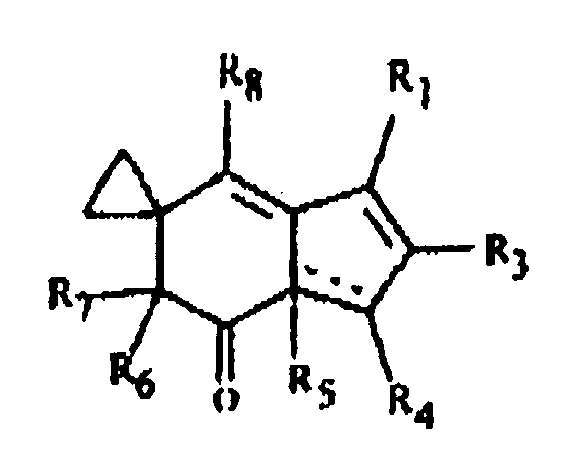
wobei R1 (CH2)n(Y) ist;
wobei n gleich 0 bis 4 ist; und
Y CHO, NH2, COOH, (C2-C4)Alkenyl-CHO, -CH(O(C1-C4)Alkyl)2, Cyclo(C3-C6)Alkyl oder 5-gliedriges Heteroaryl, das eines oder mehrere Heteroatome ausgewählt aus N, S oder nichtperoxidischem O umfasst, ist, wobei das Cycloalkyl oder Heteroaryl optional mit 1-2(C1-C4)Alkyl, CHO, OH oder Halogenid substituiert ist;
R3 (C1-C4)Alkyl oder H ist;
R4 SCH2CO2(C1-C4)Alkyl oder H ist;
R5 H, OH oder nicht vorhanden ist;
R6 (C1-C4)Alkyl oder H ist;
R7 OH ist;
R6 und R7 zusammen Ethylendioxy sind;
R8 (C1-C4)Alkyl, wahlweise substituiert mit OH oder Halogenid, ist; und
die durch ----- dargestellte Bindung vorhanden oder abwesend ist; oder
ein pharmazeutisch verträgliches Salz davon.
wobei R1 (CH2)n(Y) ist;
wobei n gleich 0 bis 4 ist; und
Y CHO, NH2, COOH, (C2-C4)Alkenyl-CHO, -CH(O(C1-C4)Alkyl)2, Cyclo(C3-C6)Alkyl oder 5-gliedriges Heteroaryl, das eines oder mehrere Heteroatome ausgewählt aus N, S oder nichtperoxidischem O umfasst, ist, wobei das Cycloalkyl oder Heteroaryl optional mit 1-2(C1-C4)Alkyl, CHO, OH oder Halogenid substituiert ist;
R3 (C1-C4)Alkyl oder H ist;
R4 SCH2CO2(C1-C4)Alkyl oder H ist;
R5 H, OH oder nicht vorhanden ist;
R6 (C1-C4)Alkyl oder H ist;
R7 OH ist;
R6 und R7 zusammen Ethylendioxy sind;
R8 (C1-C4)Alkyl, wahlweise substituiert mit OH oder Halogenid, ist; und
die durch ----- dargestellte Bindung vorhanden oder abwesend ist; oder
ein pharmazeutisch verträgliches Salz davon.
2. Verbindung nach Anspruch 1, wobei die durch ----- dargestellte Bindung vorhanden ist.
3. Verbindung nach Anspruch 1 oder 2, wobei R3 CH3 ist; R4 H ist; R6 CH3 ist; R7 OH ist und R8 CH3 ist .
4. Verbindung nach einem der Ansprüche 1 bis 3, wobei n gleich 1 ist.
5. Verbindung nach Anspruch 4, wobei Y CHO ist.
6. Verbindung nach Anspruch 4, wobei Y Cyclohexyl ist.
7. Verbindung nach Anspruch 3, wobei n gleich 2 ist und Y CHO ist.
8. Pharmazeutische Einheitsdosierungeform mit einer effektiven Tumorwachstum-inhibierenden
Menge der Verbindung nach einem der Ansprüche 1 bis 7 in Kombination mit einem pharmazeutisch
verträglichen Träger.
9. Pharmazeutische Einheitsdosierungsform nach Anspruch 8, wobei der Träger ein flüssiger
Träger ist.
10. Pharmazeutische Einheitsdosierungsform nach Anspruch 9, wobei der Träger zur parenteralen
Verabreichung angepasst ist.
11. Pharmazeutische Einheitsdosierungsform nach Anspruch 10, wobei der Träger zur intravenösen
Verabreichung angepasst ist.
12. Pharmazeutische Einheitsdosierungsform nach Anspruch 8, wobei der Träger zur oralen
Verabreichung angepasst ist.
13. Pharmazeutische Einheitsdosierungsform nach Anspruch 12, die eine Tablette oder Kapsel
ist.
14. Verwendung einer therapeutischen Menge der Verbindung nach einem der Ansprüche 1 bis
7 bei der Herstellung eines Medikaments zur Inhibierung von Tumorzellenwachstum in
einem eine derartige Therapie benötigenden Probanden.
15. Verwendung nach Anspruch 14, wobei der Proband ein menschlicher Krebspatient ist.
16. Verwendung nach Anspruch 14 oder 15, wobei der Patient von einem festen Tumor befallen
ist.
1. Composé de formule
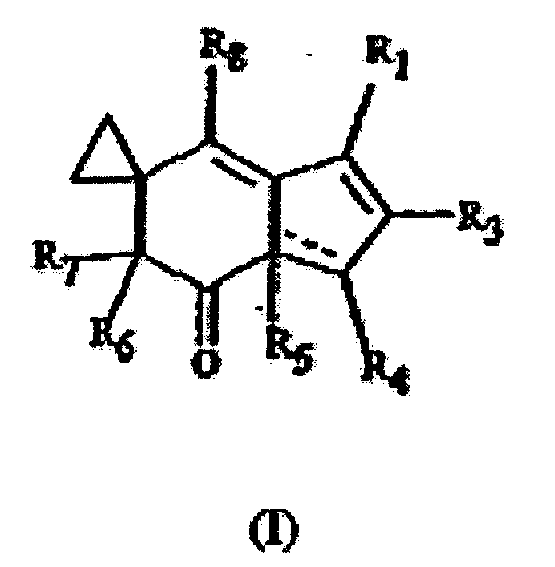
dans laquelle R1 est (CH2)n-X-Y,
où n est de 0 à 4;
X est 0 ou S ou NH; et
Y est CHO, NH2, COOH, -(calcényl en C2-C4)CHO, -CH(O-alkyl en C1-C4)2, cycloalkyle en C3-C6 ou hétéroaryle à 5 chaînons comprenant un ou plusieurs hétéroatomes choisis entre N, S et O non-peroxyde, où les groupes cycloalkyle et hétéroaryle sotn éventuellement substitués par 1-2 radicaux alkyle en C1-C4, CHO, OH ou halo ;
R3 est alkyle en C1-C4 ou H ;
R4 est SCH2CO2,(alkyle en C1-C4), ou H;
R5 est H, OH ou absent;
R6 est alkyle en C1-C4 ou H;
R7 est OH; ou
R6 et R7 ensemble sont un éthylènedioxy;
R8 est un alkyle en C1-C4 éventuellement substitué par OH ou halo;
la liaison représentée par ----- est présente ou absente;
ou
un de ses sels pharmaceutiquement acceptables.
dans laquelle R1 est (CH2)n-X-Y,
où n est de 0 à 4;
X est 0 ou S ou NH; et
Y est CHO, NH2, COOH, -(calcényl en C2-C4)CHO, -CH(O-alkyl en C1-C4)2, cycloalkyle en C3-C6 ou hétéroaryle à 5 chaînons comprenant un ou plusieurs hétéroatomes choisis entre N, S et O non-peroxyde, où les groupes cycloalkyle et hétéroaryle sotn éventuellement substitués par 1-2 radicaux alkyle en C1-C4, CHO, OH ou halo ;
R3 est alkyle en C1-C4 ou H ;
R4 est SCH2CO2,(alkyle en C1-C4), ou H;
R5 est H, OH ou absent;
R6 est alkyle en C1-C4 ou H;
R7 est OH; ou
R6 et R7 ensemble sont un éthylènedioxy;
R8 est un alkyle en C1-C4 éventuellement substitué par OH ou halo;
la liaison représentée par ----- est présente ou absente;
ou
un de ses sels pharmaceutiquement acceptables.
2. Composé selon la revendication 1, dans lequel n est 1, la liaison représentée par
----- est présente.
3. Composé selon la revendication 1 ou 2, dans lequel R3 est CH3, R4 est H, R6 est CH3, R7 est OH et R8 est CH3.
4. Composé selon l'une quelconque des revendications 1 à 3, dans lequel n est 1.
5. Composé selon la revendication 4, dans lequel Y est CHO.
6. Composé selon la revendication 4, dans lequel Y est cyclohexyle.
7. Composé selon la revendication 3, dans lequel n est 2 et Y est CHO.
8. Forme posologique unitaire pharmaceutique comprenant une quantité efficace contre
la croissance des tumeurs du composé selon l'une quelconque des revendications 1 à
7 en combinaison avec un support pharmaceutiquement acceptable.
9. Forme posologique unitaire pharmaceutique selon la revendication 8, dans laquelle
le support est un véhicule liquide.
10. Forme posologique unitaire pharmaceutique selon la revendication 9, dans laquelle
le support est adapté à une administration parentérale.
11. Forme posologique unitaire pharmaceutique selon la revendication 10, dans lequelle
le support est adapté à une administration intraveineuse.
12. Forme posologique unitaire pharmaceutique selon la revendication 8, dans laquelle
le support est adapté à une administration orale.
13. Forme posologique unitaire pharmaceutique selon la revendication 12, qui est un comprimé
ou une capsule.
14. Utilisation d'une quantité thérapeutique du composé selon l'une quelconque des revendications
1 à 7 dans la préparation d'un médicament pour inhiber la croissance de cellules tumorales
chez un sujet ayant besoin d'une telle thérapie.
15. Utilisation selon la revendication 14, dans laquelle le sujet est un patient humain
atteint de cancer.
16. Utilisation selon la revendication 14 ou 15, dans laquelle le patient est atteint
d'une tumeur solide.
REFERENCES CITED IN THE DESCRIPTION
This list of references cited by the applicant is for the reader's convenience only. It does not form part of the European patent document. Even though great care has been taken in compiling the references, errors or omissions cannot be excluded and the EPO disclaims all liability in this regard.
Patent documents cited in the description
- US5439936A [0003] [0033]
- US5523490A [0003] [0033]
- WO9104754A [0020] [0037]
- WO9418151A [0020] [0037]
- US4938949A [0033]
Non-patent literature cited in the description
- A. GOLDEN et al.Eur, J. Cancer., 1981, vol. 17, 129- [0001]
- KELNER, M. et al.Cancer Res., 1987, vol. 47, 3186- [0003]
- MCMORRIS et al.Experientia, 1996, vol. 52, 75-80 [0003]
- KELNER et al.Anticancer Res., 1995, vol. 15, 867-872 873878- [0049] [0052]