|
(11) | EP 1 470 753 B1 |

| (12) | EUROPEAN PATENT SPECIFICATION |
|
|
| (54) |
HERBICIDE COMPOSITION HERBIZIDZUSAMMENSETZUNG COMPOSITION HERBICIDE |
|
|
|||||||||||||||||||||||||||||||
| Note: Within nine months from the publication of the mention of the grant of the European patent, any person may give notice to the European Patent Office of opposition to the European patent granted. Notice of opposition shall be filed in a written reasoned statement. It shall not be deemed to have been filed until the opposition fee has been paid. (Art. 99(1) European Patent Convention). |
[0001] The present invention relates to an herbicide composition, particularly to an herbicide composition suitable to control weeds in orchards and non-crop lands.
[0002] While numerous herbicides are currently marketed and used, weeds to be controlled are varied in kind and their emergence continues over a long term. Herbicides with a higher activity and a broader spectrum of weeds and without a phytotoxicity problem on crops have been demanded.
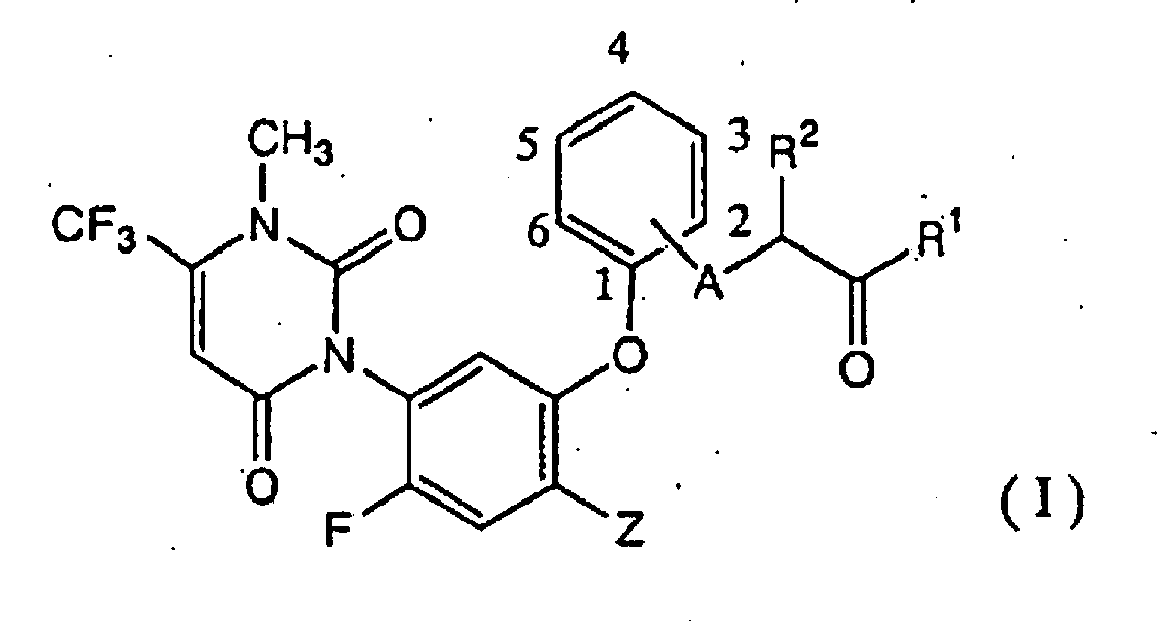
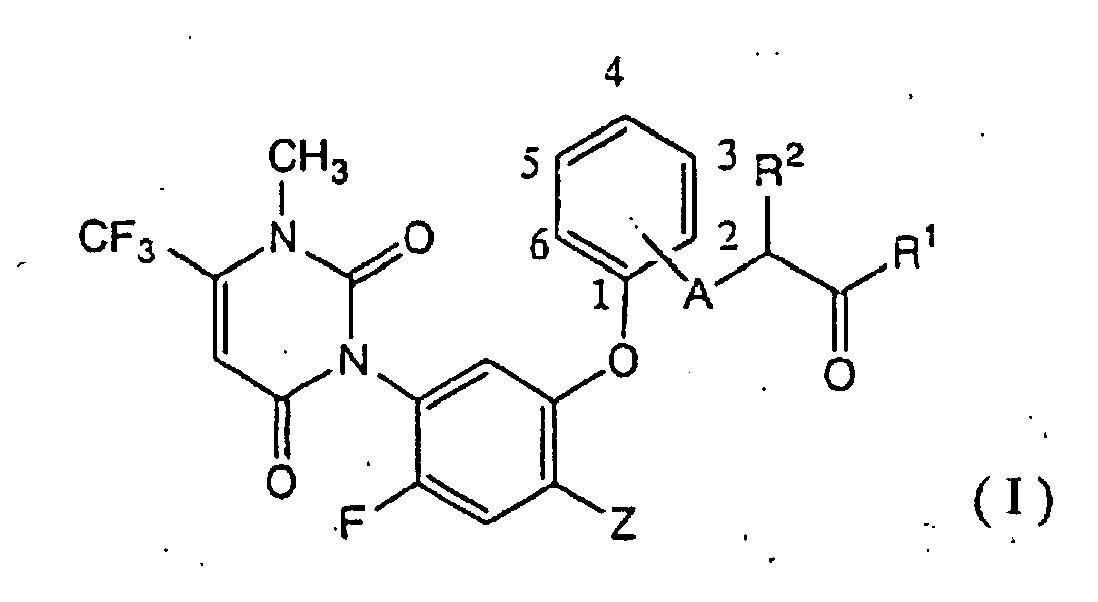
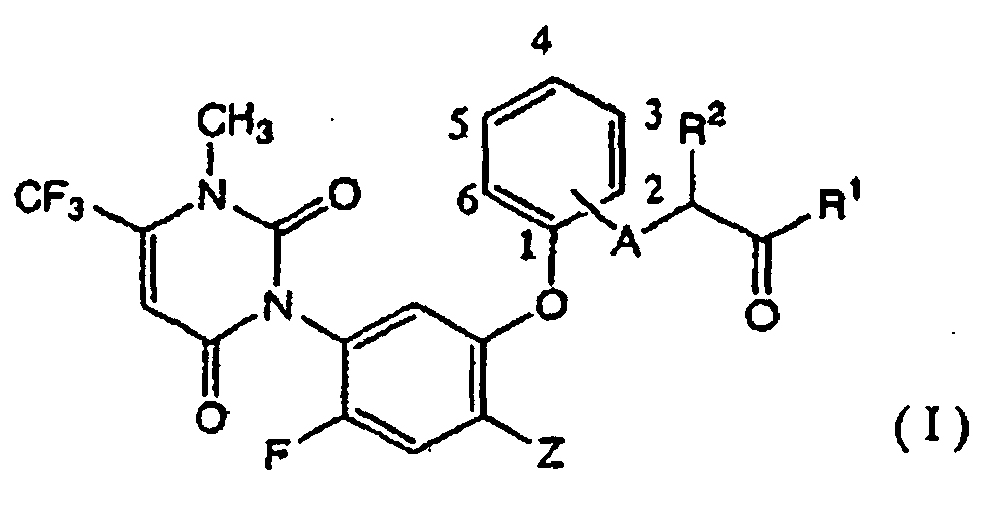
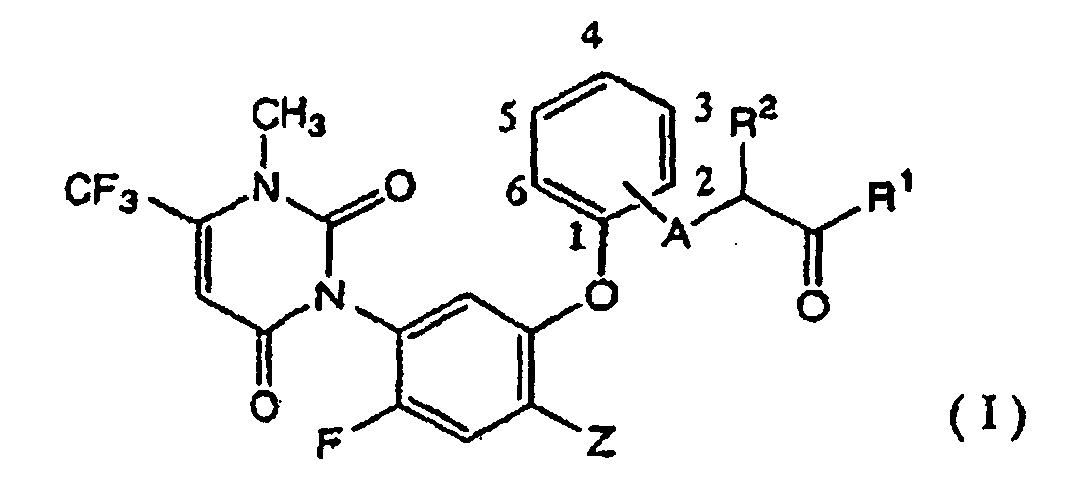
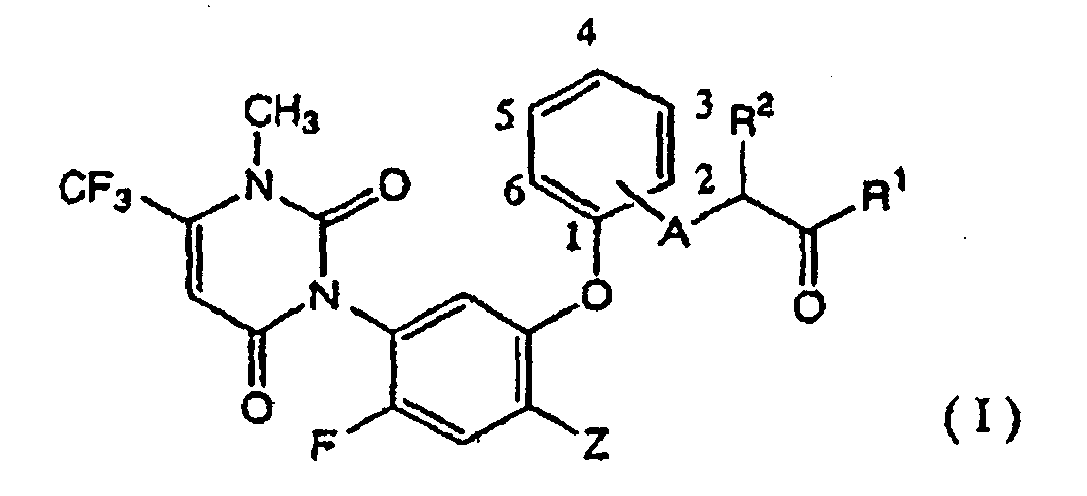
[0003] As a result of extensive studies searching for an excellent herbicide, the present inventor has found facts that a combined use of a uracil compound (hereinafter referred to as the present uracil compound) represented by the following formula (I):
wherein Z represents a halogen atom or cyano; A represents an oxygen atom, sulfur atom or NH; R1 represents hydroxyl, C1-C7 alkoxy, C3-C7 alkenyloxy, C3-C7 alkynyloxy, C5-C7 cycloalkoxy, {(C1-C7 alkoxy)carbonyl}C1-C3 alkoxy, (C1-C7 alkylamino)oxy, {di(C1-C7 alkyl)aminoloxy, (C3-C7 alkylideneamino)oxy, C1-C7 alkylamino, di(C1-C7 alkyl)amino, C3-C7 alkenylamino, C3-C7 alkynylamino, C5-C7 cycloalkylamino, {(C1-C7 alkoxy)carbonyl} C1-C3 alkylamino or (C1-C7 alkoxy)amino, and R2 represents a hydrogen atom or methyl,
and one or more compounds (hereinafter, referred to as Chlorimuron compound) selected from the group consisting of 2-(4-chloro-6-methoxypyrimidin-2-ylcarbamoylsulfamoyl) benzoic acid (generic name: chlorimuron; hereinafter referred to as Chlorimuron), agriculturally acceptable salts of Chlorimuron and lower-alkyl esters of Chlorimuron can effective control various weeds and that the herbicidal effect with the combined use is synergistically increases when compared with single uses of them, and thus they completed the present invention. When a composition comprising the present uracil compound and Chlorimuron compound is used as an herbicide, the application can be carried out at a lowered dose, the herbicidal spectrum can be broadened, and particularly, a wide variety of weeds can be controlled in orchards and soybean fields.
Therefore, the invention provides:
- 1. an herbicide composition (hereinafter, referred to as the present composition) comprising, as the active ingredients, the present uracil compound and Chlorimuron compound;
- 2. the herbicide composition according to above 1, wherein, in the present uracil compound, A is an oxygen atom and R1 is C1-C7 alkoxy;
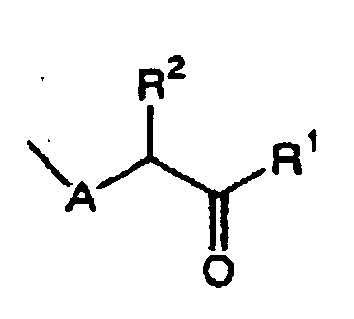
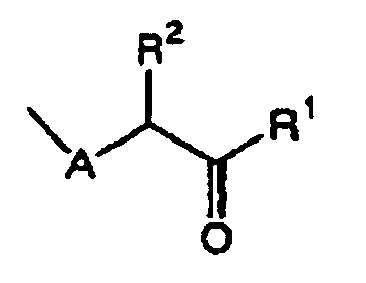
- 3. the herbicide composition according to above 1, wherein, in the present uracil
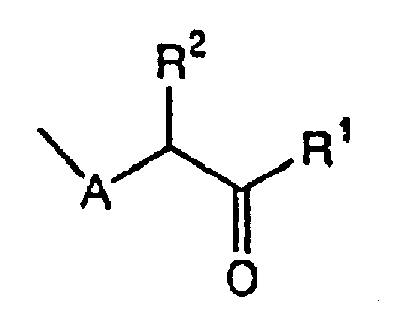
compound, the substituent represented by the following formula:
wherein R1, R2 and A represent the same meaning as above, is attached to the 2-position as defined in the formula (I); - 4. the herbicide composition according to above 1, wherein, in the present uracil
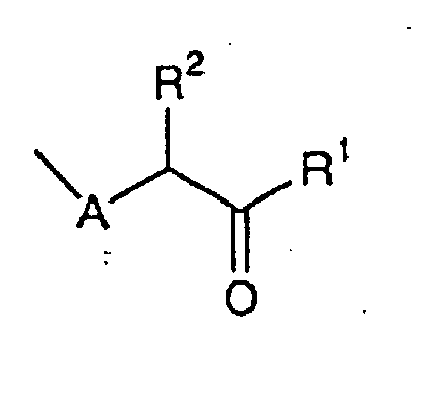
compound, the substituent represented by the following formula:
wherein R1, R2 and A represent the same meaning as above, is attached to the 3-position or 4-position as defined in the formula (I); - 5. the herbicide composition according to above 1, wherein, in the present uracil compound, Z is a halogen atom and R2 is a hydrogen atom;
- 6. the herbicide composition according to above 1, wherein, in the present uracil compound, Z is cyano;
- 7. the herbicide composition according to above 1, wherein the mixing ratio of the present uracil compound to Chlorimuron compound is 1:0.1 to 1:100 in weight ratio;
- 8. a method for controlling weeds (hereinafter referred to as the present process) comprising applying effective amounts of the present uracil compound and Chlorimuron compound to weeds;
- 9. the method for controlling weeds according to above 8, wherein the weeds are weeds in an orchard;
- 10. the method for controlling weeds according to above 8, wherein the weeds are weeds in a soybean field;
- 11. the method for controlling weeds according to above 8, wherein the weeds are weeds in a non-crop land;
- 12. a use of a composition comprising the present uracil compound and Chlorimuron compound as an herbicide
- 13. the use according to above 11, wherein the herbicide is an herbicide for an orchard;
- 14. the use according to above 11, wherein the herbicide is an herbicide for an orchard;
- 15. the use according to above 11, wherein the herbicide is an herbicide for a non-crop land.
[0004] In the present invention, a halogen atom represented by Z in the formula (I) means a fluorine atom, chlorine atom, bromine atom or iodine atom; C1-C7 alkoxy represented by R1 includes methoxy, ethoxy, propoxy, isopropoxy, butoxy, 1-methylpropoxy, 2-methylpropoxy, pentyloxy, 1-methylbutoxy, 2-methylbutoxy, 3-methylbutoxy, 2,2-dimethylpropoxy, hexyloxy, 1-methylpentyloxy, 2-methylpentyloxy, 3-methylpentyloxy, 4-methylpentyloxy, 1,2-dimethylbutoxy, 1,3-dimethylbutoxy, 2,3-dimethylbutoxy, 3,3-dimethylbutoxy, heptyloxy and the like; C3-C7 alkenyloxy represented by R1 includes 2-propynyloxy, 3-butenyloxy, 4-pentenyloxy, 3-methyl-3-butenyloxy, 3-methyl-2-butenyloxy and the like; C3-C7 alkynyloxy represented by R1 includes 2-propynyloxy and the like; C5-C7 cycloalkoxy represented by R1 includes cyclopentyloxy, cyclohexyloxy and the like; {(C1-C7 alkoxy)carbonyl} C1-C3 alkoxy represented by R1 includes methoxycarbonylmethoxy, ethoxycarbonylmethoxy, 1-(methoxycarbonyl)-1-methylethoxy and the like; (C1-C7 alkylamino)oxy represented by R1 includes (methylamino)oxy, (ethylamino)oxy and the like; {di(C1-C7 alkyl)amino}oxy represented by R1 includes (dimethylamino)oxy, (methylethylamino)oxy and the like; (C3-C7 alkylideneamino)oxy represented by R1 (isopropylideneamino)oxy and the like; C1-C7 alkylamino represented by R1 includes methylamino, ethylamino, propylamino, isopropylamino, butylamino, 1-methylpropylamino, 2-methylpropylamino, pentylamino, 1-methylbutylamino, 2-methylbutylamino, 3-methylbutylamino, 2,2-dimethylpropylamino, hexylamino and the like; di(C1-C7 alkyl)amino represented by R1 includes dimethylamino, diethylamino and the like; C3-C7 alkenylamino represented by R1 2-propenylamino and the like; C3-C7 alkynylamino represented by R1 includes 2-propynylamino and the like; C5-C7 cycloalkylamino represented by R1 includes cyclopentylamino, cyclohexylamino and the like; {(C1-C7 alkoxy)carbonyl}C1-C3 alkylamino represented by R1 includes methoxycarbonylmethylamino and the like; (C1-C7 alkoxy)amino represented by R1 includes methoxyamino, ethoxyamino, isopropoxyamino and the like.
Chlorimuron compound is a compound described in FARM CHEMICALS HANDBOOK 2001 (published by MEISTER PUBLISHING COMPANY in 2001), pages C87, and can be prepared by known processes. The agriculturally acceptable salts of Chlorimuron means salts such as an ammonium salt, trimesium salt, isopropylamine salt, sodium salt, potassium salt, dimethylamine salt and the like, and the lower-alkyl ester of Chlorimuron means esters such as methyl ester, ethyl ester, propyl ester, isopropyl ester and the like. Ethyl ester of Chlorimuron, namely ethyl 2-(4-chloro-6-methoxypyrimidin-2-ylcarbamoylsulfamoyl)benzoate (generic name: chlorimuron-ethyl; hereinafter, referred to as Chrorimuron-ethyl) or formulations thereof are commercially available.
[0005] The present composition is excellent as an herbicide because it has an herbicide activity against a wide variety of weeds, and exhibits an excellent herbicide activity in ordinary crop lands such as plowing cultivation crop fields, non-tilled cropping fields, orchards and the like, and non-crop land such as sports grounds, vacant lands, forest lands, railroad sides and the like. The present composition is particularly effective in controlling a wide variety of weeds emerging in orchards, and does not cause troublesome phytotoxicity in fruit trees. In addition, the present composition is particularly effective in controlling a wide variety of weeds emerging in soybean fields from winter season to spring season before seeding of soybean, and does not cause troublesome phytotoxicity in seeded soybean after treatment.
The present composition has especially an herbicide activity against various weeds, listed below, causing trouble in orchards, soybean fields, non-crop land and the like.
Polygonaceae weeds: wild buckwheat (Polygonum convolvulus), pale smartweed (Polygonum lapathifolium), Pensylvania smartweed (Polygonum pensylvanicum), ladysthumb (Polygonum persicaria), curly dock (Rumex crispus), bitter dock(Rumex obtusifolius), Japanese knotweed (Poligonum cuspidatum).
Portulaceae weeds: common purslane (Portulaca oleracea).
Caryophyllaceae weeds: common chickweed (Stellaria media).
Chenopodiaceae weeds: common lambsquarters (Chenopodium album), summer cypress (Kochia scoparia).
Amaranthaceae weeds: redroot pigweed (Amaranthus retroflexus), smooth pigweed (Amaranthus hybridus)
Cruciferae weeds: wild radish (Raphanus raphanistrum), wild mustard (Sinapis arvensis), shepherds purse (Capsella bursa-pastoris).
Legminosae weeds: hemp sesbania (Sesbania exaltata), sickle pod (Cassia obtusifolia), Florida beggarweed (Desmodium tortuosum), white clover (Trifolium repens).
Malvaceae weeds: velvetleaf (Abutilon theophrasti), pricky sida (Sida spinosa).
Violaceae weeds: field pansy (Viola arvensis), wildpansy (Viola tricolor).
Rubiaceae weeds: bedstraw (Galium aparine).
Convolvulaceae weeds: ivyleaf morningglory (Ipomoea hederacea), tall morningglory (Ipomoea purpurea), entireleaf morningglory (Ipomoea hederacea var integriuscula), whitestar (Ipomoea lacunosa), field bindweed (Convolvulus arvensis).
Labiatae weeds: purple deadnettle (Lamium purpureum), henbit (Lamium amplexicaule).
Solanaceae weeds: jimsonweed (Datura stramonium), black nightshade (Solanum nigrum).
Scrophulariaceae weeds: persian speedwell (Veronica persica), ivyleaf speedwell (Veronica hederaefolia).
Compositae weeds: common cocklebur (Xanthium pensylvanicum), wild sunflower (Helianthus annuus), scentless chamomile (Matricaria perforata or inodora), corn marigold (Chrysanthemum segetum), pineapple weed (Matricaria matricarioides), common ragweed (Ambrosia artemisiifolia), giant ragweed (Ambrosia trifida), horseweed (Erigeron canadensis), Japanese mugwort (Artemisia princeps), tall goldenrod (Solidago altissima).
Boraginaceae weeds: forget-me-not (Myosotis arvensis).
Asslepiadaceae weeds: milkweed (Asclepias syriaca).
Euphorbiaceae weeds: sun spurge (Euphorbia helioscopia), spurge (Euphorbia maculata).
Gramineae weeds: barnyard grass (Echinochloa crus-galli), green foxtail (Setaria viridis), giant foxtail (Setaria faberi), southern crabgrass (Digitaria sanguinalis), goose grass (Eleusine indica), annual bluegrass (Poa annua), black grass (Alopecurus myosuroides), wild oats (Avena fatua), Johnson grass (Sorghum halepense), quack grass (Agropyron repens), downy brome (Bromus tectorum), Bermuda grass (Cynodone dactylon), fall panicum (Panicum dichotomiflorum), Texas panicum (Panicum texanum), shatter cane (Sorghum vulgare), broadleaf signalgrass (Brachiaria platyphylla).
Commelinaceae weeds: asiatic dayflower (Commelina communis).
Equisetaceae weeds: field horsetail (Equisetum arvense).
Cryperaceae weeds: rice flatsedge (Cyperus iria), purple nutsedge (Cyperus rotundus), yellow nutsedge (Cyperus esculentus).
[0006] In the present composition, the mixing ratio of the uracil compound to Chlorimuron compound may vary depending on targeted kind of weeds, application locus, application conditions and the like, and usually it is a ratio showing a synergistic effect, specifically 1:0.05 to 1:500, preferably 1:0.1 to 1:100, and more preferably 1:0.5 to 1:10.
The present composition may contain other ingredients in addition to the present uracil compound and Chlorimuron compound, and it is usually in the form of a formulation such as emulsion, wettable powder, suspension, granule and the like obtainable by mixing the present uracil compound and Chlorimuron compound as the active ingredients together with a solid carrier, liquid carrier or the like and, if necessary, adding a surfactant, other formulation auxiliaries and the like. These formulations contain usually 0.5 to 90% by weight, preferably 1 to 80% by weight in total of the present uracil compound and Chlorimuron compound.
In formulation, usable solid carriers include, for example, fine powders and granules such as clays (kaolinite, diatomaceous earth, synthetic hydrous silicon oxide, Fubasami clay, bentonite, acid clay and the like), talc, other inorganic minerals (sericite, quarts powder, sulfur powder, activated carbon, calcium carbonate and the like), chemical fertilizers (ammonium sulfate, ammonium phosphate, ammonium nitrate, ammonium chloride, urea and the like) and so on; and liquid carriers include, for example, water, alcohols (methanol, ethanol and the like), ketones (acetone, methyl ethyl ketone, cyclohexanone and the like), aromatic hydrocarbons (toluene, xylene, ethylbenzene, methylnaphthalene and the like), non-aromatic hydrocarbons (hexane, cyclohexane, kerosene and the like), esters (ethyl acetate, butyl acetate and the like), nitriles (acetonitrile, isobutyronitrile and the like), ethers (dioxane, diisopropyl ether and the like), acid amides (dimethylformamide, dimethylacetamide and the like), halogenated hydrocarbons (dichloroethane, trichloroethylene and the like) and so on.
Surfactants include, for example, alkyl sulfate esters, alkyl sulfonate salts, alkyl aryl sulfonate salts, alkyl aryl ethers and their polyoxyethylene compounds, polyoxyethylene glycol ethers, polyhydric alcohol esters, sugar alcohol derivatives and the like.
Other formulation auxiliaries include, for example, sticking agents and dispersing agents such as casein, gelatin, polysaccharides (starch, gum Arabic, cellulose derivatives, alginic acid and the like), lignin derivatives, bentonite, synthetic water-soluble high molecules (polyvinyl alcohol, polyvinyl pyrrolidone, polyacrylic acid and the like) and the like, stabilizing agents such as PAP (acidic isopropyl phosphate), BHT (2,6-tert-butyl-4-methylphenol), BHA (2-/3-tert-butyl-4-methoxyphenol), vegetable oils, mineral oils, fatty acids, fatty acid esters and the like.
[0007] The present composition can also be obtained by separately formulating the present uracil compound and Chlorimuron compound as the active ingredients according to the above described formulation process and then mixing both of the formulations.
The present composition is applied as it is or, if necessary, after dilution onto leaves and stems of weeds. Sometimes, enhancement of herbicide activity can be expected by using the present composition with another herbicide. In addition, it may be concurrently used together with an insecticide, fungicide, plant growth regulator, phytotoxicity reducing agent (safener) and the like.
Amount to be applied of the present composition may vary depending on the mixing ratio of the present uracil compound to Chlorimuron compound as the active ingredients, meteorological conditions, formulation forms, time of application, method of application, locus of application, a kind of weed to be controlled, a kind of crop to be protected and the like; the total amount of the present uracil compound and Chlorimuron compound per hectare is usually 1 g to 500 g, preferably 5 g to 200 g. Emulsions, wettable powders, suspensions and the like of the present composition are applied in a predetermined amount usually diluted with 100 to 1,000 liters of water per hectare. Enhancement of the effect to weeds can be expected by adding adjuvant to aqueous diluent.
The present process is usually carried out by applying an effective amount of the present composition to weeds; it can also be carried out by applying effective amounts of the present uracil compound and Chlorimuron compound independently but at the same stage according to the above described amount, manner of use and the like.
Some examples of the present uracil compound are specifically described in the following.
[0008] Compounds represented by the formula (I-a):
Table 1
|
|
| Compound No. | A | Z | R2 | R1 |
| A-1 | O | Cl | H | OCH3 |
| A-2 | O | Cl | H | OC2H5 |
| A-3 | O | Cl | CH3 | OCH3 |
| A-4 | O | Cl | CH3 | OC2H5 |
| A-5 | O | CN | H | OCH3 |
| A-6 | O | CN | CH3 | OC2H5 |
| A-7 | O | Br | H | OCH3 |
[0009] Compounds represented by the formula (I-b):
Table 2
|
|
| Compound No. | A | Z | R2 | R1 |
| B-1 | O | Cl | H | OCH3 |
| B-2 | O | Cl | CH3 | OCH3 |
| B-3 | O | CN | H | OCH3 |
| B-4 | O | CN | CH3 | OC2H5 |
[0010] Compounds represented by the formula (I-c):
Table 3
|
|
| Compound No. | A | Z | R2 | R1 |
| C-1 | O | Cl | H | OCH3 |
| C-2 | O | Cl | CH3 | OCH3 |
| C-3 | O | CN | H | OCH3 |
| C-4 | O | CN | CH3 | OC2H5 |
[0011] The present uracil compounds can be produced, for example, according to the process described in EP 1,106,607. For example, Compound A-3 can be produced by the following process:
Into 10 ml of dimethylsulfoxide was dissolved 1.77 g of 2,4,5-trifluoronitrobenzene and 1.94 g of 3-methyl-2,6-dioxo-4-(trifluoromethyl)-1,2,3,6-tetrahydro pyrimidine. After adding 1.52 g of anhydrous potassium carbonate at room temperature, the mixture was stirred at 80°C for 1 hour. The reaction solution was cooled to room temperature, and then the solution was poured into ice-water and extracted with ethyl acetate. The organic layer was washed with saturated aqueous sodium chloride solution, dried over anhydrous magnesium sulfate and concentrated. The residue was subjected to silica-gel column chromatography to give 1.51 g of 2,5-difluoro-4-[3-methyl-2,6-dioxo-4-(trifluoromethyl)-1,2,3,6-tetrahydropyrimidin-1-yl]nitrobenzene.
Mp: 150°C
A mixture of 4.05 g of 2-benzyloxyphenol and 9.5 ml of N,N-dimethylformamide was added dropwise to a mixture of 0.80 g of sodium hydride and 20 ml of N,N-dimethylformamide under ice cooling and the mixture was stirred for 30 minutes. A mixture of 7.1 g of 2,5-difluoro-4-[3-methyl-2,6-dioxo-4-(trifluoromethyl)-1,2,3,6-tetrahydropyrimidin-1-yl]nitrobenzene and 17 ml of N,N-dimethylformamide was added dropwise at the same temperature and the mixture was stirred for 1 hour. The reaction solution was poured into ice-water and extracted with ethyl acetate. The organic layer was washed successively once with 1N-HCl and once with saturated aqueous sodium chloride solution, dried over anhydrous magnesium sulfate and concentrated. The residue was subjected to silica-gel column chromatography to give 8.6 g of 2-(2-benzyloxyphenoxy)-5-fluoro-4-[3-methyl-2,6-dioxo-4-(trifluoromethyl)-1,2,3,6-tetrahydropyrimidin-1-yl]nitrobenzene.
1H-NMR (CDCl3/250MHz), δ (ppm): 3.52 (q,3H, J=1.1Hz), 5.01 (s,2H), 6.31 (s,1H), 6.81 (d,1H,J=6.0Hz), 6.9-7.1 (m,2H), 7.1-7.4 (m,7H), 7.78 (d,1H,J=8.7Hz).
To a mixture of 8.6 g of iron powder, 27 ml of acetic acid and 2.7 ml of water was added dropwise a solution of 8.6 g of 2-(2-benzyloxyphenoxy)-5-fluoro-4-[3-methyl-2,6-dioxo-4-(trifluoromethyl)-1,2,3,6-tetrahydropyrimidin-1-yl]nitrobenzene in 23 ml of acetic acid while keeping the temperature of the reaction solution at or below 35°C. After the addition was finished, the stirring was continued for 2 hours and then the reaction solution was filtered through celite and diluted with ethyl acetate. The mixture was neutralized with saturated aqueous sodium hydrogen carbonate solution and the organic layer was washed with saturated aqueous sodium chloride solution, dried over anhydrous magnesium sulfate and concentrated. The obtained residue was subjected to silica-gel column chromatography to give 6.46 g of 2-(2-benzyloxyphenoxy)-5-fluoro-4-[3-methyl-2,6-dioxo-4-(trifluoromethyl)-1,2,3,6-tetrahydropyrimidin-1-yl]aniline.
1H-NMR (CDCl3/250MHz), δ (ppm): 3.50 (q, 3H, J=1.2Hz), 5.06 (s,2H), 6.29 (s,1H), 6.57 (dd, 1H,J=8.5,1.6Hz), 6.9-7.0 (m, 1H), 7.0-7.1 (m,3H), 7.2-7.4 (m,6H)
To a mixture of 6.46 g of 2-(2-benzyloxyphenoxy)-5-fluoro-4-[3-methyl-2,6-dioxo-4-(trifluoiomethyl)-1,2,3,6-tetrahydropyrimidin-1-yl]aniline, 2.45 g of copper chloride (I), 5.04 g of copper chloride (II) and 90ml of acetonitrile was added dropwise 4.46.g of isoamyl nitrite at room temperature, and the mixture was stirred for 1 hour. The reaction solution was poured into 2% hydrochloric acid and extracted with ethyl acetate. The organic layer was washed with saturated aqueous sodium chloride solution, dried over anhydrous magnesium sulfate and concentrated. The obtained residue was subjected to silica-gel column chromatography to give 4.6 g of ([2-{2-chloro-4-fluoro-5-[3-thethyl-2,6-dioxo-4-(trifluoromethyl)-1,2,3,6-tetrahydropyrimidin-1-yl]phenoxy}phenoxy]methyl)benzene.
Mp: 50.8°C.
To 4.5 g of ([2-{2-chloro-4-fluoro-5-[3-methyl-2,6-dioxo-4-(trifluoromethyl)-1,2,3,6-tetrahydropyrimidin-1-yl]phenoxy}phenoxy]methyl)benzene were added 230 ml of ethyl acetate and 0.46 g of 10% palladium-on-carbon, and the mixture was stirred under hydrogen atmosphere at room temperature for 5 hours. After replacing the reaction system by nitrogen, the reaction solution was filtered over celite and the filtrate was concentrated to give 3.57 g of 2-{2-chloro-4-fluoro-5-[3-methyl-2,6-dioxo-4-(trifluoromethyl) - 1,2,3,6-tetrahydropyrimidin-1-yl]phenoxy}phenol.
Mp: 55.4°C.
Into 6 ml of N,N-dimethylformamide was dissolved 0.23 g of 2-(2-chlord-4-fluoro-5-[3-methyl-2,6-dioxo-4-(trifluoromethyl)-1,2,3,6-tetrahydropyrimidin-1-yl] phenoxy}phenol. After adding 0.22 g of anhydrous potassium carbonate, 0.13 g of methyl 2-bromopropionate was added at room temperature with stirring and then the mixture was stirred at 80°C for 3 hours. After cooling the reaction solution to room temperature, the reaction solution was poured into ice-water and extracted with ethyl acetate. The organic layer was washed with saturated aqueous sodium chloride solution, dried over anhydrous magnesium sulfate and concentrated. The residue was subjected to silica-gel column chromatography to give 0.23 g of methyl 2-[2-{2-chloro-4-fluoro-5-[3-methyl-2,6-dioxo-4-(trifluoromethyl) -1,2,3,6-tetrahydropyrimidin-1-yl]phenoxy}phenoxy] propionate [Compound A-3].
1H-NMR (CDCl3/250MHz) δ (ppm): 1.47 (d,3H,J=6.8Hz), 3.50 (q,3H,J=0.7Hz), 3.6-3.8 (m,3H), 4.6-4.8 (m, 1H), 6.28 (s,1H), 6.7-6.8 (m,1H), 6.8-6.9 (m,1H), 6.9-7.1 (m,1H), 7.1-7.2 (m,2H), 7.3-7.4 (m,1H).
[0012] Formulation examples are shown in the following. In the following formulation examples and test examples, compounds represented by compound numbers are the compounds in Table 1 to 3 and part means part by weight. Formulation Example 1
Each of wettable powders is obtained by sufficiently pulverizing and mixing 42.5 parts of Compound A-1, A-2, A-3, A-4, A-5, A-6, A-7, B-1, B-2, B-3, B-4, C-1, C-2, C-3 or C-4, 42.5 parts of Chlorimuron-ethyl, 3 parts of calcium ligninsulfonate, 2 parts of sodium lauryl sulfate, and 10 parts of synthetic hydrous silicon oxide.
Formulation Example 2
[0013] Each of wettable powders is obtained by sufficiently pulverizing and mixing 0.8 part of Compound A-1, A-2, A-3, A-4, A-5, A-6, A-7, B-1, B-2, B-3, B-4, C-1, C-2, C-3 or C-4, 80 parts of Chlorimuron-ethyl, 3 parts of calcium ligninsulfonate, 2 parts of sodium lauryl sulfate, and 14.2 parts of synthetic hydrous silicon oxide.
Formulation Example 3
[0014] Each of wettable powders is obtained by sufficiently pulverizing and mixing 45 parts of Compound A-1, A-2, A-3, A-4, A-5, A-6, A-7, B-1, B-2, B-3, B-4, C-1, C-2, C-3 or C-4, 5 parts of Chlorimuron-ethyl, 3 parts of calcium ligninsulfonate, 2 parts of sodium lauryl sulfate, and 45 parts of synthetic hydrous silicon oxide.
Formulation Example 4
[0015] Each of suspensions is obtained by wet-grinding 24 parts of Compound A-1, A-2, A-3, A-4, A-5, A-6, A-7, B-1, B-2, B-3, B-4, C-1, C-2, C-3 or C-4, 24 parts of Chlorimuron-ethyl, 3 parts of polyoxyethylenesorbitan monooleate, 3 parts of CMC (carboxymethylcellulose), and 46 parts of water; and wet-grinding until the particle size was 5 micron or lower.
Formulation Example 5
[0016] Each of suspensions is obtained by wet-grinding 0.4 part of Compound A-1, A-2, A-3, A-4, A-5, A-6, A-7, B-1, B-2, B-3, B-4, C-1, C-2, C-3 or C-4, 40 parts of Chlorimuron-ethyl, 3 parts of polyoxyethylenesorbitan monooleate, 3 parts of CMC (carboxymethylcellulose), and 53.6 parts of water; and wet-grinding until the particle size was 5 micron or lower. Formulation Example 6
[0017] Each of suspensions is obtained by wet-grinding 2 parts of Compound A-1, A-2, A-3, A-4, A-5, A-6, A-7, B-1, B-2, B-3, B-4, C-1, C-2, C-3 or C-4, 18 parts of Chlorimuron-ethyl, 3 parts of polyoxyethylenesorbitan monooleate, 3 parts of CMC (carboxymethylcellulose), and 74 parts of water; and wet-grinding until the particle size was 5 micron or lower.
Evaluation Criterions:
[0019] Evaluation of the herbicide activity is divided into 11 levels and shown by 0, 1, 2, 3, 4, 5, 6, 7, 8, 9 or 10, wherein a level was taken "0" when completely or almost no difference was observed between the growth behavior of a test weed at the time of observation and that of untreated weed and a level was taken "10" when a test weed completely died or the growth of that was completely inhibited. Evaluation of phytotoxicity against a crop was shown by "no" when almost no phytotoxicity was observed, "low" when a low level phytotoxicity was observed, "medium" when a medium level phytotoxicity was observed and "high" when a high level phytotoxicity was observed.
Test example 1
[0020] A plastic pot of 11 cm in diameter and 8 cm in depth was filled with field soil. A tuber of yellow nutsedge (Cyperus esculentus) was planted and grown in a greenhouse for 21 days.
An emulsion of Compound A-1 was prepared by sufficiently mixing 5 parts of Compound A-1, 6 parts of Sorpol 3005X (surfactant, produced by Toho Chemical) and 89 parts of xylene.
Each of single use of an emulsion of Compound A-1, single use of an formulation of Chlorimuron-ethyl (commercial name: Classic, produced by Du Pont, containing 25% of Chlorimuron-ethyl), and
a mixed composition of an emulsion of Compound A-1 and an formulation of Chlorimuron-ethyl, were diluted with water containing 1% Agri-dex (produced by Helena). Respective dilutions were uniformly sprayed from upper side onto foliages of yellow nutsedge grown as described above with a small sprayer such that the amounts of the active ingredients were the amounts shown in Table 4. Immediately after the treatment with the test compounds, seeds of soybean were sown.
After the treatment, they were raised in a greenhouse for 25 days and the effect against weeds was evaluated. In addition, after 14 days of the treatment, the phytotoxicity to soybean was evaluated. The results are shown in Table 4.
Table 4
| Test Compound | Amount of Active Ingredient (g/ha) | Herbicide Effect | Phytotoxicity | |
| yellow nutsedge | soybean | |||
| Compound A-1 | 5 | 2 | no | |
| Chlorimuron-ethyl | 5 | 1 | no | |
| Chlorimuron-ethyl | 20 | 2 | no | |
| Compound A-1 | 5 | no | ||
| + | + | 10 | ||
| Chlorimuron-ethyl | 5 | |||
| Compound A-1 | 5 | no | ||
| + | + | 10 | ||
| Chlorimuron-ethyl | 20 | |||
1. An herbicide composition comprising, as the active ingredients, a uracil compound
represented by the following formula (I):
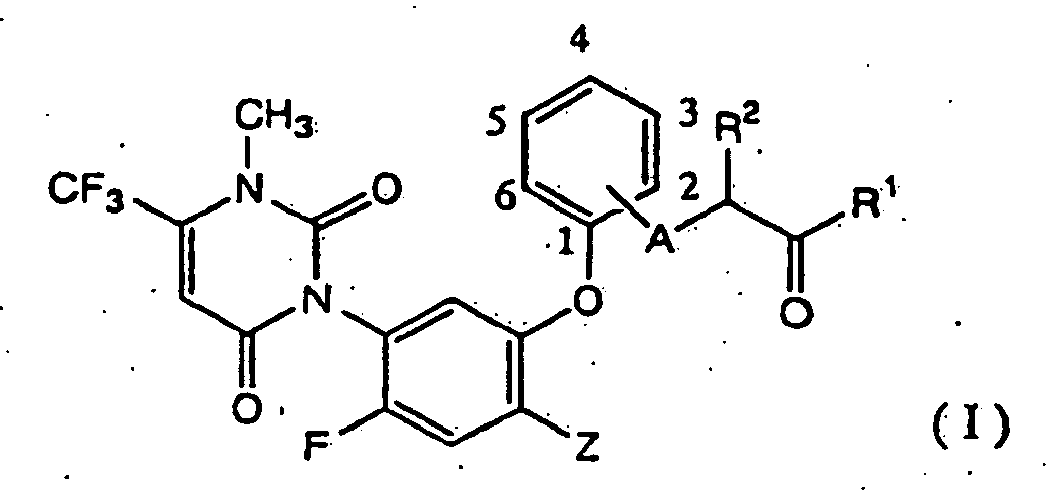
wherein Z represents a halogen atom or cyano; A represents an oxygen atom, sulfur atom or NH; R1 represents hydroxyl, C1-C7 alkoxy, C3-C7 alkenyloxy, C3-C7 alkynyloxy, C5-C7,cycloalkoxy, {(C1-C7 alkoxy)carbonyl} C1-C3 alkoxy, (C1-C7 alkylamino)oxy, {di(C1-C7 alkyl)amino}oxy, (C3-C7 alkylideneamino)oxy, C1-C7 alkylamino, di(C1-C7 alkyl)amino, C3-C7 alkenylamino, C3-C7 alkynylamino, C5-C7 cycloalkylamino, {(C1-C7 alkoxy)carbonyl}C1-C3 alkylamino or (C1-C7 alkoxy)amino, and R2 represents a hydrogen atom or methyl,
and one or more compounds selected from the group consisting of 2-(4-chloro-6-methoxypyrimidin-2-ylcarbamoylsulfamoyl) benzoic acid, agriculturally acceptable salts of 2-(4-chloro-6-methoxypyrimidin-2-ylcarbamoylsulfamoyl) benzoic acid and lower-alkyl esters of 2-(4-chloro-6-methoxypyrimidin-2-ylcarbamoylsulfamoyl) benzoic acid.
wherein Z represents a halogen atom or cyano; A represents an oxygen atom, sulfur atom or NH; R1 represents hydroxyl, C1-C7 alkoxy, C3-C7 alkenyloxy, C3-C7 alkynyloxy, C5-C7,cycloalkoxy, {(C1-C7 alkoxy)carbonyl} C1-C3 alkoxy, (C1-C7 alkylamino)oxy, {di(C1-C7 alkyl)amino}oxy, (C3-C7 alkylideneamino)oxy, C1-C7 alkylamino, di(C1-C7 alkyl)amino, C3-C7 alkenylamino, C3-C7 alkynylamino, C5-C7 cycloalkylamino, {(C1-C7 alkoxy)carbonyl}C1-C3 alkylamino or (C1-C7 alkoxy)amino, and R2 represents a hydrogen atom or methyl,
and one or more compounds selected from the group consisting of 2-(4-chloro-6-methoxypyrimidin-2-ylcarbamoylsulfamoyl) benzoic acid, agriculturally acceptable salts of 2-(4-chloro-6-methoxypyrimidin-2-ylcarbamoylsulfamoyl) benzoic acid and lower-alkyl esters of 2-(4-chloro-6-methoxypyrimidin-2-ylcarbamoylsulfamoyl) benzoic acid.
2. The herbicide composition according to claim 1, wherein, in the uracil compound represented
by the formula (I), A is an oxygen atom and R1 is C1-C7 alkoxy.
3. The herbicide composition according to claim 1, wherein, in the present uracil compound
represented by the formula (I), the substituent represented by the following formula:
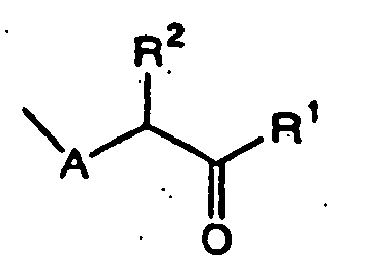
wherein R1, R2 and A represent the same meaning as above, is attached to the 2-position as defined in the formula (I).
wherein R1, R2 and A represent the same meaning as above, is attached to the 2-position as defined in the formula (I).
4. The herbicide composition according to claim 1, wherein, in the present uracil compound
represented by the formula (I), the substituent represented by the following formula:
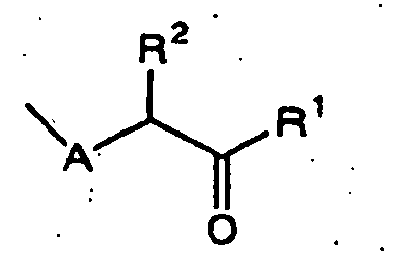
wherein R1, R2 and A represent the same meaning as above, is attached to the 3- or 4-position as defined in the formule (I).
wherein R1, R2 and A represent the same meaning as above, is attached to the 3- or 4-position as defined in the formule (I).
5. The herbicide composition according to claim 1, wherein, in the present uracil compound
represented by the formula (I), Z is a halogen atom and R2 is hydrogen.
6. The herbicide composition according to claim 1, wherein, in the present uracil compound
represented by the formula (I), Z is cyano.
7. The herbicide composition according to claim 1, wherein the mixing ratio of the uracil
compound represented by the formula (I) to one or more compounds selected from the
group consisting of
2-(4-chloro-6-methoxypyrimidin-2-ylcarbamoylsulfamoyl) benzoic acid, agriculturally acceptable salts of 2- (4-chloro-6-methoxypyrimidin-2-ylcarbamoylsulfamoyl) benzoic acid and lower-alkyl esters of 2-(4-chloro-6-methoxypyrimidin-2-ylcarbamoylsulfamoyl) benzoic acid is 1:0.1 to 1:100 in weight ratio
2-(4-chloro-6-methoxypyrimidin-2-ylcarbamoylsulfamoyl) benzoic acid, agriculturally acceptable salts of 2- (4-chloro-6-methoxypyrimidin-2-ylcarbamoylsulfamoyl) benzoic acid and lower-alkyl esters of 2-(4-chloro-6-methoxypyrimidin-2-ylcarbamoylsulfamoyl) benzoic acid is 1:0.1 to 1:100 in weight ratio
8. A method for controlling weeds comprising applying effective amounts of a uracil compound
represented by the following formula (I):
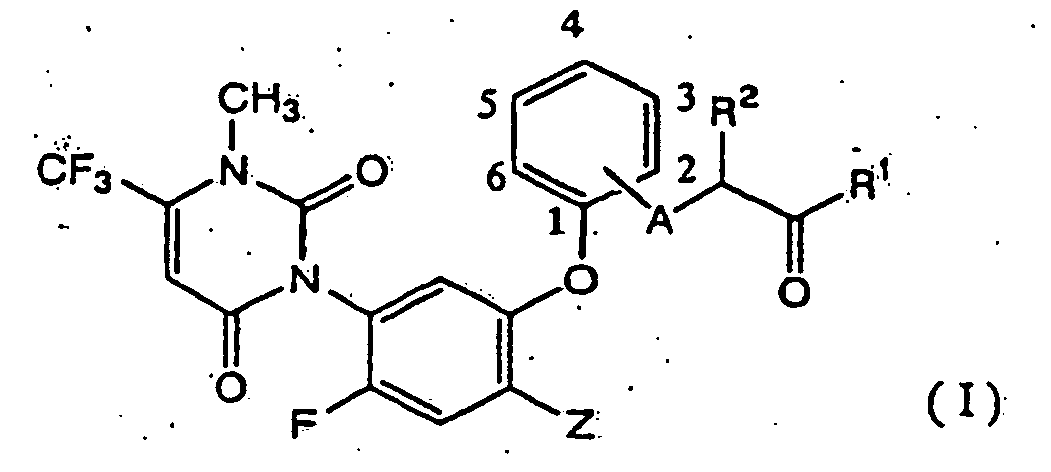
wherein Z represents a halogen atom or cyano; A represents an oxygen atom, sulfur atom or NH ;R1 represents hydroxyl, C1-C7 alkoxy, C3-C7 alkenyloxy, C3-C7 alkynyloxy, C5-C7 cycloalkoxy, {(C1-C7 alkoxy)carbonyl} C1-C3 alkoxy, (C1-C7 alkylamino)oxy, {di(C1-C7 alkyl)amino}oxy, (C3-C7 alkylideneamino)oxy, C1-C7 alkylamino; di(C1-C7 alkyl)amino, C3-C7 alkenylamino, C3-C7 alkynylamino, C5-C7 cycloalkylamino, {(C1-C7 alkoxy)carbonyl} C1-C3 alkylamino or (C1-C7 alkoxy)amino, and R2 represents a hydrogen atom or methyl,
and one or more compounds selected from the group consisting of 2-(4-chloro-6-methoxypyrimidin-2-yicarbamoylsulfamoyl) benzoic acid, agriculturally acceptable salts of 2-(4-chloro-6-methoxypyrimidin-2-ylcarbamoylsulfamoyl) benzoic acid and lower-alkyl esters of 2-(4-chloro-6-methoxypyrimidin-2-ylcarbamoylsulfamoyl) benzoic acid to weeds.
wherein Z represents a halogen atom or cyano; A represents an oxygen atom, sulfur atom or NH ;R1 represents hydroxyl, C1-C7 alkoxy, C3-C7 alkenyloxy, C3-C7 alkynyloxy, C5-C7 cycloalkoxy, {(C1-C7 alkoxy)carbonyl} C1-C3 alkoxy, (C1-C7 alkylamino)oxy, {di(C1-C7 alkyl)amino}oxy, (C3-C7 alkylideneamino)oxy, C1-C7 alkylamino; di(C1-C7 alkyl)amino, C3-C7 alkenylamino, C3-C7 alkynylamino, C5-C7 cycloalkylamino, {(C1-C7 alkoxy)carbonyl} C1-C3 alkylamino or (C1-C7 alkoxy)amino, and R2 represents a hydrogen atom or methyl,
and one or more compounds selected from the group consisting of 2-(4-chloro-6-methoxypyrimidin-2-yicarbamoylsulfamoyl) benzoic acid, agriculturally acceptable salts of 2-(4-chloro-6-methoxypyrimidin-2-ylcarbamoylsulfamoyl) benzoic acid and lower-alkyl esters of 2-(4-chloro-6-methoxypyrimidin-2-ylcarbamoylsulfamoyl) benzoic acid to weeds.
9. The method for controlling weeds according to claim 8, wherein the weeds are weeds
in an orchard.
10. The method for controlling weeds according to claim 8, wherein the weeds are weeds
in a soybean field.
11. The method for controlling weeds according to claim 8, wherein the weeds are weeds
in a non-crop land.
12. A use of a composition comprising a uracil compound represented by the following formula
(I):
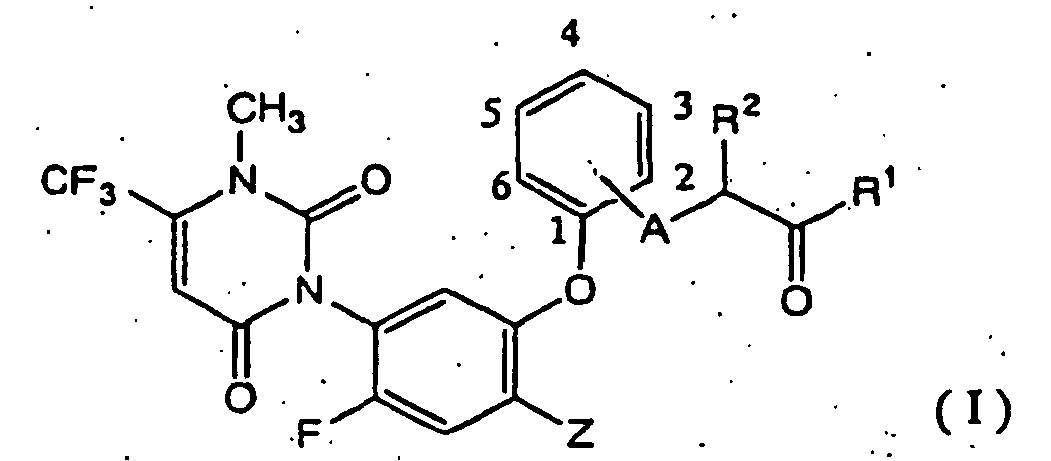
wherein Z represents a halogen atom or cyano; A represents an oxygen atom, sulfur atom or NH; R1 represents hydroxyl, C1-C7 alkoxy, C3-C7 alkenyloxy, C3-C7 alkynyloxy, C5-C7 cycloalkoxy, {(C1-C7 alkoxy)carbonyl}C1-C3 alkoxy, (C1-C7 alkylamino)oxy, {di(C1-C7 alkyl)amino}oxy, (C3-C7 alkylideneamino)oxy, C1-C7 alkylamino, di(C1-C7 alkyl)amino, C3-C7 alkenylamino, C3-C7 alkynylamino, C5-C7 cycloalkylamino, {(C1-C7 alkoxy)carbonyl}C1-C3 alkylamino or (C1-C7 alkoxy)amino, and R2 represents a hydrogen atom or methyl,
and one or more compounds selected from the group consisting of 2-(4'-chloro-6-methoxypyrimidin-2-ylcarbamoysulfamoyl) benzoic acid, agriculturally acceptable salts of 2- (4-chloro-6-methoxypyrimidin-2-ylcarbamoylsulfamoyl) benzoic acid and lower-alkyl esters of 2-(4-chloro-6-methoxypyrimidin-2-ylcarbamoylsulfamoyl) benzoic acid to weeds.
wherein Z represents a halogen atom or cyano; A represents an oxygen atom, sulfur atom or NH; R1 represents hydroxyl, C1-C7 alkoxy, C3-C7 alkenyloxy, C3-C7 alkynyloxy, C5-C7 cycloalkoxy, {(C1-C7 alkoxy)carbonyl}C1-C3 alkoxy, (C1-C7 alkylamino)oxy, {di(C1-C7 alkyl)amino}oxy, (C3-C7 alkylideneamino)oxy, C1-C7 alkylamino, di(C1-C7 alkyl)amino, C3-C7 alkenylamino, C3-C7 alkynylamino, C5-C7 cycloalkylamino, {(C1-C7 alkoxy)carbonyl}C1-C3 alkylamino or (C1-C7 alkoxy)amino, and R2 represents a hydrogen atom or methyl,
and one or more compounds selected from the group consisting of 2-(4'-chloro-6-methoxypyrimidin-2-ylcarbamoysulfamoyl) benzoic acid, agriculturally acceptable salts of 2- (4-chloro-6-methoxypyrimidin-2-ylcarbamoylsulfamoyl) benzoic acid and lower-alkyl esters of 2-(4-chloro-6-methoxypyrimidin-2-ylcarbamoylsulfamoyl) benzoic acid to weeds.
13. The use according to claim 12, wherein the herbicide is an herbicide for an orchards.
14. The use according to claim 12, wherein the herbicide is an herbicide for a soybean
field.
15. The use according to claim 12, wherein the herbicide is an herbicide for a non-crop
land.
1. Herbizidzusammensetzung, umfassend, als Wirkstoffe, eine Uracilverbindung der folgenden
Formel (I):
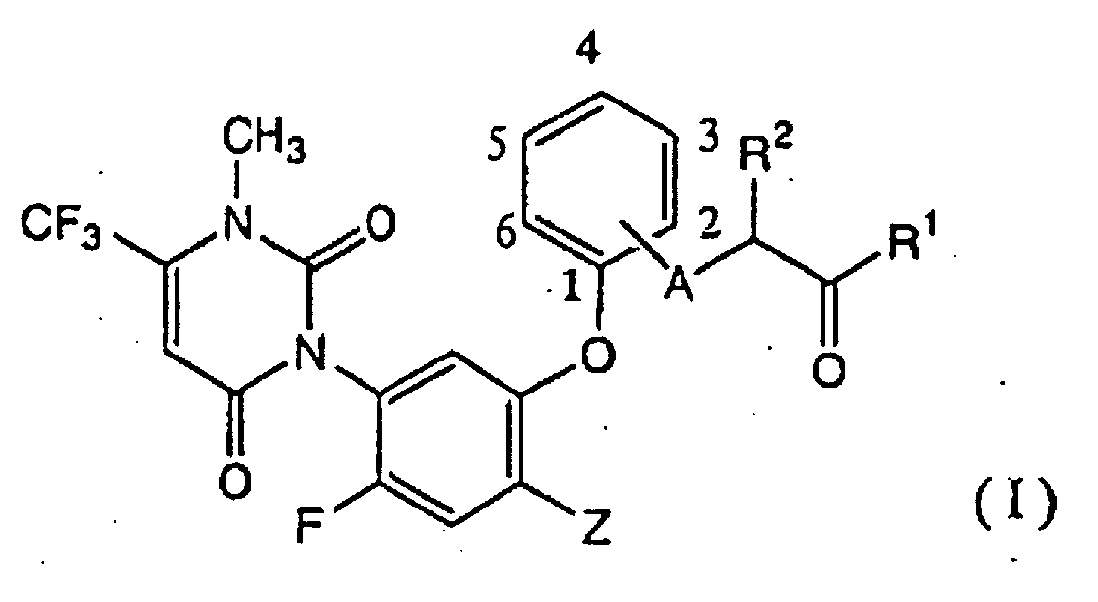
wobei Z ein Halogenatom oder Cyano darstellt; A ein Sauerstoffatom, Schwefelatom oder NH darstellt; R1 Hydroxyl, C1-C7-Alkoxy, C3-C7-Alkenyloxy, C3-C7-Alkinyloxy, C5-C7-Cycloalkoxy, {(C1-C7-Alkoxy)carbonyl}-C1-C3-alkoxy, (C1-C7-Alkylamino)-oxy, {Di-(C1-C7-Alkyl)amino}oxy, (C3-C7-Alkylidenamino)oxy, C1-C7-Alkylamino, Di-(C1-C7-alkyl)amino, C3-C7-Alkenylamino, C3-C7-Alkinylamino, C5-C7-Cycloalkylamino, {(C1-C7-Alkoxy)carbony}-C1-C3-alkylamino oder (C1-C7-Alkoxy)amino darstellt und R2 ein Wasserstoffatom oder Methyl darstellt;
und eine oder mehrere Verbindungen, ausgewählt aus 2-(4-Chlor-6-methoxypyrimidin-2-ylcarbamoylsulfamoyl)benzoesäure, landwirtschaftlich verträglichen Salzen von 2-(4-Chlor-6-methoxypyrimidin-2-ylcarbamoylsulfamoyl)benzoesäure und Niederalkylester von 2-(4-Chlor-6-methoxypyrimidin-2-ylcarbamoylsulfamoyl)benzoesäure.
wobei Z ein Halogenatom oder Cyano darstellt; A ein Sauerstoffatom, Schwefelatom oder NH darstellt; R1 Hydroxyl, C1-C7-Alkoxy, C3-C7-Alkenyloxy, C3-C7-Alkinyloxy, C5-C7-Cycloalkoxy, {(C1-C7-Alkoxy)carbonyl}-C1-C3-alkoxy, (C1-C7-Alkylamino)-oxy, {Di-(C1-C7-Alkyl)amino}oxy, (C3-C7-Alkylidenamino)oxy, C1-C7-Alkylamino, Di-(C1-C7-alkyl)amino, C3-C7-Alkenylamino, C3-C7-Alkinylamino, C5-C7-Cycloalkylamino, {(C1-C7-Alkoxy)carbony}-C1-C3-alkylamino oder (C1-C7-Alkoxy)amino darstellt und R2 ein Wasserstoffatom oder Methyl darstellt;
und eine oder mehrere Verbindungen, ausgewählt aus 2-(4-Chlor-6-methoxypyrimidin-2-ylcarbamoylsulfamoyl)benzoesäure, landwirtschaftlich verträglichen Salzen von 2-(4-Chlor-6-methoxypyrimidin-2-ylcarbamoylsulfamoyl)benzoesäure und Niederalkylester von 2-(4-Chlor-6-methoxypyrimidin-2-ylcarbamoylsulfamoyl)benzoesäure.
2. Herbizidzusammensetzung gemäß Anspruch 1, wobei in der Uracilverbindung der Formel
(I) A ein Sauerstoffatom ist und R1 C1-C7-Alkoxy ist.
3. Herbizidzusammensetzung gemäß Anspruch 1, wobei in der Uracilverbindung der Formel
(I) der Substituent der folgenden Formel:
wobei R1, R2 und A die gleiche Bedeutung wie vorstehend aufweisen, an der Position 2, wie in Formel (I) definiert, gebunden ist.
wobei R1, R2 und A die gleiche Bedeutung wie vorstehend aufweisen, an der Position 2, wie in Formel (I) definiert, gebunden ist.
4. Herbizidzusammensetzung gemäß Anspruch 1, wobei in der Uracilverbindung der Formel
(I) der Substituent der folgenden Formel
wobei R1, R2 und A die gleiche Bedeutung wie vorstehend aufweisen, an der Position 3 oder 4, wie in Formel (I) definiert, gebunden ist.
wobei R1, R2 und A die gleiche Bedeutung wie vorstehend aufweisen, an der Position 3 oder 4, wie in Formel (I) definiert, gebunden ist.
5. Herbizidzusammensetzung gemäß Anspruch 1, wobei in der Uracilverbindung der Formel
(I) Z ein Halogenatom ist und R2 Wasserstoff ist.
6. Herbizidzusammensetzung gemäß Anspruch 1, wobei in der Uracilverbindung der Formel
(I) Z Cyano ist.
7. Herbizidzusammensetzung gemäß Anspruch 1, wobei das Mischungsverhältnis der Uracilverbindung
der Formel (I) zu der einen oder mehreren Verbindungen, ausgewählt aus 2-(4-Chlor-6-methoxypyrimidin-2-ylcarbamoylsulfamoyl)benzoesäure,
landwirtschaftlich verträglichen Salzen von 2-(4-Chlor-6-methoxypyrimidin-2-ylcarbamoylsulfamoyl)benzoesäure
und Niederalkylestern von 2-(4-Chlor-6-methoxypyrimidin-2-ylcarbamoylsulfamoyl)benzoesäure
1:0,1 bis 1:100, ausgedrückt als Gewichtsverhältnis, beträgt.
8. Verfahren zur Unkrautbekämpfung, umfassend das Auftragen wirksamer Mengen einer Uracilverbindung
der folgenden Formel (I):
wobei Z ein Halogenatom oder Cyano darstellt; A ein Sauerstoffatom, Schwefelatom oder NH darstellt; R1 Hydroxyl, C1-C7-Alkoxy, C3-C7-Alkenyloxy, C3-C7-Alkinyloxy, C5-C7-Cycloalkoxy, {(C1-C7-Alkoxy)carbonyl}-C1-C3-alkoxy, (C1-C7-Alkylamino)-oxy, {Di-(C1-C7-Alkyl)amino}oxy, (C3-C7-Alkylidenamino)oxy, C1-C7-Alkylamino, Di-(C1-C7-alkyl)amino, C3-C7-Alkenylamino, C3-C7-Alkinylamino, C5-C7-Cycloalkylamino, {(C1-C7-Alkoxy)carbony}-C1-C3-alkylamino oder (C1-C7-Alkoxy)amino darstellt und R2 ein Wasserstoffatom oder Methyl darstellt;
und einer oder mehrerer Verbindungen, ausgewählt aus 2-(4-Chlor-6-methoxypyrimidin-2-ylcarbamoylsulfamoyl)benzoesäure, landwirtschaftlich verträglichen Salzen von 2-(4-Chlor-6-methoxypyrimidin-2-ylcarbamoylsulfamoyl)benzoesäure und Niederalkylester von 2-(4-Chlor-6-methoxypyrimidin-2-ylcarbamoylsulfainoyl)-benzoesäure auf Unkraut.
wobei Z ein Halogenatom oder Cyano darstellt; A ein Sauerstoffatom, Schwefelatom oder NH darstellt; R1 Hydroxyl, C1-C7-Alkoxy, C3-C7-Alkenyloxy, C3-C7-Alkinyloxy, C5-C7-Cycloalkoxy, {(C1-C7-Alkoxy)carbonyl}-C1-C3-alkoxy, (C1-C7-Alkylamino)-oxy, {Di-(C1-C7-Alkyl)amino}oxy, (C3-C7-Alkylidenamino)oxy, C1-C7-Alkylamino, Di-(C1-C7-alkyl)amino, C3-C7-Alkenylamino, C3-C7-Alkinylamino, C5-C7-Cycloalkylamino, {(C1-C7-Alkoxy)carbony}-C1-C3-alkylamino oder (C1-C7-Alkoxy)amino darstellt und R2 ein Wasserstoffatom oder Methyl darstellt;
und einer oder mehrerer Verbindungen, ausgewählt aus 2-(4-Chlor-6-methoxypyrimidin-2-ylcarbamoylsulfamoyl)benzoesäure, landwirtschaftlich verträglichen Salzen von 2-(4-Chlor-6-methoxypyrimidin-2-ylcarbamoylsulfamoyl)benzoesäure und Niederalkylester von 2-(4-Chlor-6-methoxypyrimidin-2-ylcarbamoylsulfainoyl)-benzoesäure auf Unkraut.
9. Verfahren zur Unkrautbekämpfung gemäß Anspruch 8, wobei das Unkraut Unkraut in einem
Garten ist.
10. Verfahren zur Unkrautbekämpfung gemäß Anspruch 8, wobei das Unkraut Unkraut in einem
Sojabohnenfeld ist.
11. Verfahren zur Unkrautbekämpfung gemäß Anspruch 8, wobei das Unkraut Unkraut auf einem
Land ohne Feldfrüchte ist.
12. Verwendung einer Zusammensetzung, umfassend eine Uracilverbindung der folgenden Formel
(I):
wobei Z ein Halogenatom oder Cyano darstellt; A ein Sauerstoffatom, Schwefelatom oder NH darstellt; R1 Hydroxyl, C1-C7-Alkoxy, C3-C7-Alkenyloxy, C3-C7-Alkinyloxy, C5-C7-Cycloalkoxy, {(C1-C7-Alkoxy)carbonyl}-C1-C3-alkoxy, (C1-C7-Alkylamino)-oxy, {Di-(C1-C7-Alkyl)amino}oxy, (C3-C7-Alkylidenamino)oxy, C1-C7-Alkylamino, Di-(C1-C7-alkyl)amino, C3-C7-Alkenylamino, C3-C7-Alkinylamino, C5-C7-Cycloalkylamino, {(C1-C7-Alkoxy)carbony}-C1-C3-alkylamino oder (C1-C7-Alkoxy)amino darstellt und R2 ein Wasserstoffatom oder Methyl darstellt;
und eine oder mehrere Verbindungen, ausgewählt aus 2-(4-Chlor-6-methoxypyrimidin-2-ylcarbamoylsulfamoyl)benzoesäure, landwirtschaftlich verträglichen Salzen von 2-(4-Chlor-6-methoxypyrimidin-2-ylcarbamoylsulfamoyl)benzoesäure und Niederalkylester von 2-(4-Chlor-6-methoxypyrimidin-2-ylcarbamoylsulfamoyl)-benzoesäure, auf Unkraut.
wobei Z ein Halogenatom oder Cyano darstellt; A ein Sauerstoffatom, Schwefelatom oder NH darstellt; R1 Hydroxyl, C1-C7-Alkoxy, C3-C7-Alkenyloxy, C3-C7-Alkinyloxy, C5-C7-Cycloalkoxy, {(C1-C7-Alkoxy)carbonyl}-C1-C3-alkoxy, (C1-C7-Alkylamino)-oxy, {Di-(C1-C7-Alkyl)amino}oxy, (C3-C7-Alkylidenamino)oxy, C1-C7-Alkylamino, Di-(C1-C7-alkyl)amino, C3-C7-Alkenylamino, C3-C7-Alkinylamino, C5-C7-Cycloalkylamino, {(C1-C7-Alkoxy)carbony}-C1-C3-alkylamino oder (C1-C7-Alkoxy)amino darstellt und R2 ein Wasserstoffatom oder Methyl darstellt;
und eine oder mehrere Verbindungen, ausgewählt aus 2-(4-Chlor-6-methoxypyrimidin-2-ylcarbamoylsulfamoyl)benzoesäure, landwirtschaftlich verträglichen Salzen von 2-(4-Chlor-6-methoxypyrimidin-2-ylcarbamoylsulfamoyl)benzoesäure und Niederalkylester von 2-(4-Chlor-6-methoxypyrimidin-2-ylcarbamoylsulfamoyl)-benzoesäure, auf Unkraut.
13. Verwendung gemäß Anspruch 12, wobei das Herbizid ein Herbizid für einen Garten ist.
14. Verwendung gemäß Anspruch 12, wobei das Herbizid ein Herbizid für ein Sojabohnenfeld
ist.
15. Verwendung gemäß Anspruch 12, wobei das Herbizid ein Herbizid für ein Land ohne Feldfrüchte
ist.
1. Composition d'herbicide comprenant, comme ingrédients actifs, un composé uracile représenté
par la formule (I) suivante :
dans laquelle Z représente un atome d'halogène ou un groupe cyano ; A représente un atome d'oxygène, un atome de soufre ou NH ; R1 représente un groupe hydroxyle, alcoxy en C1 à C7, alcényloxy en C3 à C7, alcynyloxy en C3 à C7, cycloalcoxy en C5 à C7, {alcoxy (en C1 à C7) carbonyl}alcoxy en C1 à C3, alkylamino (en C1 à C7)oxy, {dialkyl (en C1 à C7)amino}oxy, alkylidèneamino (en C3 à C7)oxy, alkylamino en C1 à C7, dialkyl (en C1 à C7)amino, alcénylamino en C3 à C7, alcynylamino en C3 à C7, cycloalkylamino en C5 à C7, {alcoxy (en C1 à C7)carbonyl}alkylamino en C1 à C3 ou alcoxy (en C1 à C7)amino, et R2 représente un atome d'hydrogène ou un groupe méthyle,
et un ou plusieurs composés choisis dans le groupe constitué de l'acide 2-(4-chloro-6-méthoxypyrimidin-2-ylcarbamoylsulfamoyl)benzoïque, des sels acceptables en agriculture d'acide 2-(4-chloro-6-méthoxypyrimidin-2-ylcarbainoylsulfamoyl)benzoïque et d'esters d'alkyle inférieur d'acide 2-(4-chloro-6-méthoxypyrimidin-2-ylcarbamoylsulfamoyl)benzoïque.
dans laquelle Z représente un atome d'halogène ou un groupe cyano ; A représente un atome d'oxygène, un atome de soufre ou NH ; R1 représente un groupe hydroxyle, alcoxy en C1 à C7, alcényloxy en C3 à C7, alcynyloxy en C3 à C7, cycloalcoxy en C5 à C7, {alcoxy (en C1 à C7) carbonyl}alcoxy en C1 à C3, alkylamino (en C1 à C7)oxy, {dialkyl (en C1 à C7)amino}oxy, alkylidèneamino (en C3 à C7)oxy, alkylamino en C1 à C7, dialkyl (en C1 à C7)amino, alcénylamino en C3 à C7, alcynylamino en C3 à C7, cycloalkylamino en C5 à C7, {alcoxy (en C1 à C7)carbonyl}alkylamino en C1 à C3 ou alcoxy (en C1 à C7)amino, et R2 représente un atome d'hydrogène ou un groupe méthyle,
et un ou plusieurs composés choisis dans le groupe constitué de l'acide 2-(4-chloro-6-méthoxypyrimidin-2-ylcarbamoylsulfamoyl)benzoïque, des sels acceptables en agriculture d'acide 2-(4-chloro-6-méthoxypyrimidin-2-ylcarbainoylsulfamoyl)benzoïque et d'esters d'alkyle inférieur d'acide 2-(4-chloro-6-méthoxypyrimidin-2-ylcarbamoylsulfamoyl)benzoïque.
2. Composition d'herbicide selon la revendication 1, dans laquelle, dans le composé uracile
représenté par la formule (1), A est un atome d'oxygène et R1 est un groupe alcoxy en C1 à C7.
3. Composition d'herbicide selon la revendication 1, dans laquelle, dans le présent composé
uracile représenté par la formule (I), le substituant représenté par la formule suivante
:
dans laquelle R1, R2 et A représentent la même signification que ci-dessus, est attaché à la position 2 comme défini dans la formule (I).
dans laquelle R1, R2 et A représentent la même signification que ci-dessus, est attaché à la position 2 comme défini dans la formule (I).
4. Composition d'herbicide selon la revendication 1, dans laquelle, dans le présent composé
uracile représenté par la formule (I), le substituant représenté par la formule suivante
:
dans laquelle R1, R2 et A représentent la même signification que ci-dessus, est attaché à la position 3 ou 4 comme défini dans la formule (I).
dans laquelle R1, R2 et A représentent la même signification que ci-dessus, est attaché à la position 3 ou 4 comme défini dans la formule (I).
5. Composition d'herbicide selon la revendication 1, dans laquelle, dans le présent composé
uracile représenté par la formule (I), Z est un atome d'halogène et R2 est un atome d'hydrogène.
6. Composition d'herbicide selon la revendication 1, dans laquelle, dans le présent composé
uracile représenté par la formule (I), Z est un groupe cyano.
7. Composition d'herbicide selon la revendication 1, dans laquelle le rapport de mélange
du composé uracile représenté par la formule (I) sur un ou plusieurs composés choisis
dans le groupe constitué de l'acide 2-(4-chloro-6-méthoxypyrimidin-2-ylcarbamoylsulfamoyl)benzoïque,
de sels acceptables en agriculture d'acide 2-(4-chloro-6-méthoxypyrimidin-2-ylcarbamoylsulfamoyl)benzoïque
et d'esters d'alkyle inférieur d'acide 2-(4-chloro-6-méthoxypyrimidin-2-ylcarbamoylsulfamoyl)benzoïque
est de 1 : 0,1 à 1 : 100 en rapport en masse.
8. Procédé de lutte contre les nuisibles comprenant l'application de quantités efficaces
d'un composé uracile représenté par la formule (I) suivante:
dans laquelle Z représente un atome d'halogène ou un groupe cyano ; A représente un atome d'oxygène, un atome de soufre ou NH ; R1 représente un groupe hydroxyle, alcoxy en C1 à C7, alcényloxy en C3 à C7, alcynyloxy en C3 à C7, cycloalcoxy en C5 à C7, {alcoxy (en C1 à C7)carbonyl}alcoxy en C1 à C3, alkylamino (en C1 à C7)oxy, {dialkyl(en C1 à C7)amino}oxy, alkylidèneamino (en C3 à C7)oxy, alkylamino en C1 à C7, dialkyl (en C1 à C7)amino, alcénylamino en C3 à C7, alcynylamino en C3 à C7, cycloalkylamino en C5 à C7, {alcoxy (en C1 à C7)carbonyl}alkylamino en C1 à C3 ou alcoxy (en C1 à C7)amino, et R2 représente un atome d'hydrogène ou un groupe méthyle,
et un ou plusieurs composés choisis dans le groupe constitué de l'acide 2-(4-chloro-6-méthoxypyrimidin-2-ylcarbamoylsulfamoyl)benzoïque, des sels acceptables en agriculture d'acide 2-(4-chloro-6-méthoxypyrimidin-2-ylcarbamoylsulfamoyl)benzoïque et d'esters d'alkyle inférieur d'acide 2-(4-chloro-6-méthoxypyrimidin-2-ylcarbamoylsulfamoyl)benzoïque aux nuisibles.
dans laquelle Z représente un atome d'halogène ou un groupe cyano ; A représente un atome d'oxygène, un atome de soufre ou NH ; R1 représente un groupe hydroxyle, alcoxy en C1 à C7, alcényloxy en C3 à C7, alcynyloxy en C3 à C7, cycloalcoxy en C5 à C7, {alcoxy (en C1 à C7)carbonyl}alcoxy en C1 à C3, alkylamino (en C1 à C7)oxy, {dialkyl(en C1 à C7)amino}oxy, alkylidèneamino (en C3 à C7)oxy, alkylamino en C1 à C7, dialkyl (en C1 à C7)amino, alcénylamino en C3 à C7, alcynylamino en C3 à C7, cycloalkylamino en C5 à C7, {alcoxy (en C1 à C7)carbonyl}alkylamino en C1 à C3 ou alcoxy (en C1 à C7)amino, et R2 représente un atome d'hydrogène ou un groupe méthyle,
et un ou plusieurs composés choisis dans le groupe constitué de l'acide 2-(4-chloro-6-méthoxypyrimidin-2-ylcarbamoylsulfamoyl)benzoïque, des sels acceptables en agriculture d'acide 2-(4-chloro-6-méthoxypyrimidin-2-ylcarbamoylsulfamoyl)benzoïque et d'esters d'alkyle inférieur d'acide 2-(4-chloro-6-méthoxypyrimidin-2-ylcarbamoylsulfamoyl)benzoïque aux nuisibles.
9. Procédé de lutte contre les nuisibles selon la revendication 8, dans lequel les nuisibles
sont des nuisibles dans un verger.
10. Procédé de lutte contre les nuisibles selon la revendication 8, dans lequel les nuisibles
sont des nuisibles dans un champ de soja.
11. Procédé de lutte contre les nuisibles selon la revendication 8, dans lequel les nuisibles
sont des nuisibles dans une terre non assolée.
12. Utilisation d'une composition comprenant un composé d'uracile représenté par la formule
(I) suivante :
dans laquelle Z représente un atome d'halogène ou un groupe cyano ; A représente un atome d'oxygène, un atome de soufre ou NH ; R1 représente un groupe hydroxyle, alcoxy en C1 à C7, alcényloxy en C3 à C7, alcynyloxy en C3 à C7, cycloalcoxy en C5 à C7, {alcoxy (en C1 à C7)carbonyl}alcoxy en C1 à C3, alkylamino (en C1 à C7)oxy, {dialkyl(en C1 à C7)amino}oxy, alkylidèneamino (en C3 à C7)oxy, alkylamino en C1 à C7, dialkyl (en C1 à C7)amino, alcénylamino en C3 à C7, alcynylamino en C3 à C7, cycloalkylamino en C5 à C7, {alcoxy (en C1 à C7)carbonyl}alkylamino en C1 à C3 ou alcoxy (en C1 à C7)amino, et R2 représente un atome d'hydrogène ou un groupe méthyle,
et un ou plusieurs composés choisis dans le groupe constitué de l'acide 2-(4-chloro-6-méthoxypyrimidin-2-ylcarbamoylsulfamoyl)benzoïque, des sels acceptables en agriculture d'acide 2-(4-chloro-6-méthoxypyrimidin-2-ylcarbamoylsulfamoyl)benzoïque et d'esters d'alkyle inférieur d'acide 2-(4-chloro-6-méthoxypyrimidin-2-ylcarbamoylsulfamoyl)benzoïque aux nuisibles.
dans laquelle Z représente un atome d'halogène ou un groupe cyano ; A représente un atome d'oxygène, un atome de soufre ou NH ; R1 représente un groupe hydroxyle, alcoxy en C1 à C7, alcényloxy en C3 à C7, alcynyloxy en C3 à C7, cycloalcoxy en C5 à C7, {alcoxy (en C1 à C7)carbonyl}alcoxy en C1 à C3, alkylamino (en C1 à C7)oxy, {dialkyl(en C1 à C7)amino}oxy, alkylidèneamino (en C3 à C7)oxy, alkylamino en C1 à C7, dialkyl (en C1 à C7)amino, alcénylamino en C3 à C7, alcynylamino en C3 à C7, cycloalkylamino en C5 à C7, {alcoxy (en C1 à C7)carbonyl}alkylamino en C1 à C3 ou alcoxy (en C1 à C7)amino, et R2 représente un atome d'hydrogène ou un groupe méthyle,
et un ou plusieurs composés choisis dans le groupe constitué de l'acide 2-(4-chloro-6-méthoxypyrimidin-2-ylcarbamoylsulfamoyl)benzoïque, des sels acceptables en agriculture d'acide 2-(4-chloro-6-méthoxypyrimidin-2-ylcarbamoylsulfamoyl)benzoïque et d'esters d'alkyle inférieur d'acide 2-(4-chloro-6-méthoxypyrimidin-2-ylcarbamoylsulfamoyl)benzoïque aux nuisibles.
13. Utilisation selon la revendication 12, dans laquelle l'herbicide est un herbicide
pour un verger.
14. Utilisation selon la revendication 12, dans laquelle l'herbicide est un herbicide
pour un champ de soja.
15. Utilisation selon la revendication 12, dans laquelle l'herbicide est un herbicide
pour une terre non assolée.
REFERENCES CITED IN THE DESCRIPTION
This list of references cited by the applicant is for the reader's convenience only. It does not form part of the European patent document. Even though great care has been taken in compiling the references, errors or omissions cannot be excluded and the EPO disclaims all liability in this regard.
Patent documents cited in the description
Non-patent literature cited in the description
- FARM CHEMICALS HANDBOOK 2001MEISTER PUBLISHING COMPANY2001000087- [0004]