|
(11) | EP 1 474 008 B2 |

| (12) | NEW EUROPEAN PATENT SPECIFICATION |
| After opposition procedure |
|
|
| (54) |
CIGARETTE FILTER WITH BEADED CARBON ZIGARETTENFILTER MIT GEPERLTER AKTIVKOHLE FILTRE DE CIGARETTE A BILLES DE CARBONE |
|
|
|||||||||||||||||||||||||||||||||||
Field of the Invention
[0001] The present invention relates to filter-tipped smoking articles such as filtered cigarettes, and in particular, to cigarette filters containing a carbon material.
Background of the Invention
[0002] Filter-tipped smoking articles, particularly cigarettes, generally comprise a tobacco rod, a filter and a band of tipping paper attaching the filter to tobacco rod. The tobacco rod generally comprises a column of shredded tobacco (e.g., in form of cut filler) that is wrapped within a cigarette paper or wrapper. Typically, the filter includes a plug of fibrous material (a "filter plug"), preferably made of a cellulose acetate tow. Ventilation of mainstream smoke is achieved by provision of a row or rows of perforations through the tipping paper at a location along the filter plug. Ventilation provides dilution of drawn mainstream smoke with ambient air to reduce the delivery level of tar per puff.
[0003] During smoking, a smoker draws mainstream smoke from the coal at the lit end of the cigarette. The drawn cigarette smoke first enters the upstream filter portion of the filter and then passes through the downstream portion adjacent to the buccal end of the cigarette filter.
[0004] Certain cigarettes have filter segments which incorporate materials such as granules of carbon, silica gel, zeolite and the like. Exemplary cigarettes and filters are described in U.S. Pat. Nos. 2,881,770 to Tovey; 3,353, 543 to Sproull et al.; 3,101,723 to Seligman et al.; and 4,481,958 to Ranier et al. and European Patent Application Nos. 532,329 and 608,047. Certain commercially available filters have particles or granules of carbon (e.g., an activated carbon material) alone or dispersed within a cellulose acetate tow; other commercially available filters have carbon threads dispersed therein; while still other commercially available filters have so-called □cavity filter□ or □triple filter□ designs. Exemplary, commercially available filters include SCS IV Dual Solid Charcoal Filter and Triple Solid Charcoal Filter from Filtrona International, Ltd.; Triple Cavity Filter from Baumgartner; and ACT from Filtrona International, Ltd. See also, Clarke et al., World Tobacco, p.55 (November 1992). Detailed discussion of the properties and composition of cigarettes and filters is found in U.S. Pat. Nos. 5,404,890 to Gentry et al. and 5,568,819 to Gentry et al.
[0005] Examples of concentric filter layouts that include granular carbon are disclosed in European Patent Application No. 579,410 and U.S. Pat. No. 3,894,545 to Crellin et al.
[0006] The plug-space-plug design typically comprises a pair of spaced-apart filter plugs and a bed of granulated, activated carbon in the cavity or space therebetween. In their manufacture, a procession of spaced-apart filter plugs is established along a continuous ribbon of plug wrap. The plug wrap is then partially folded about a portion of the plug precession and granulated carbon material is poured or otherwise introduced into the spaces defined between the partially enwrapped filter plugs. The plug wrap is then glued and closed, and the resultant continuous rod is then cut in well-defined locations according to a desired length, usually in the form of multiples of the filter element actually utilized on the filter-tipped cigarette itself.
[0007] Cavity filling apparatus known in the art may be utilized in the manufacture of filter components such as shown in Figures 1 and 2. U.S. Pat. Nos. 4,214,508, 5,221,247, 5,322,459, 5,542,901 and 5,875,824 illustrate and describe such cavity filling apparatus.
[0008] With machines and carbon materials of the prior art, process control usually suffered at high machine speeds from inconsistent metering, scattering and pulverization of the granular material. Consistency amongst filter rods would suffer, and some cavities would be less filled than others.
[0009] For example, certain prior "charcoal" metering devices contain a supply of granular carbon in a hopper and allowed the rim of a rotating metering wheel to rotate through the relatively stationary collection of granular carbon. Such an arrangement created a pulverizing action upon the granular carbon, which action generally increased with machine speed. Ricochet and escape of particulate matter during manufacturing operations with prior machines and materials often created unacceptable deficiencies in the final product (such as smears or incomplete fillings) and precipitate undesirable machine "down-times" to effect clean-up of the machine and the surrounding work environment.
[0010] Granulated carbon, being a collection of irregularly shaped and variously sized particles, tends to pack into a given volume of space inconsistently from one filling operation to the next. Accordingly, heretofore incomplete and inconsistent filling of cavities would plague automated filter rod making. The irregular packing would also create undesirable channels through the bed that would allow passage of substantial portions of mainstream smoke through or around the bed such that interaction between the mainstream smoke and the granular carbon would be lessened.
[0011] It has been known to include granulated, activated carbon materials in cigarette filters to promote removal of constituents from mainstream smoke. As used heretofore in cigarette filters, these granular forms of carbon have been constructed by carbonizing an organic material such as nut shells or a wood material, and "activating" the carbonized material by subjecting it to a heat treatment at approximately 800 to 1000 degrees Celsius with steam or carbon dioxide. The activation treatment of the material results in a porous (honeycomb-like) internal structure and a very large specific surface area, typically in the range of 300 to 2500 square meters per gram as measured by the Brunauer, Emmett & Teller ("BET") method for activated carbon.
[0012] However, such granulated, activated carbon materials have surface roughness and shapes which are irregular and inconsistent from granule to granule. These irregularities and inconsistencies of granulated carbon materials create problems in the commercial production of carbon-bearing cigarette filter rods and cigarettes. For example, the irregular shapes exacerbate ricochet of the particles as they are fed through filter rod making machines, which event dirties the product with errant carbon particles, puts dust into the work environment and creates a need for a shut-down to clean the rod making machine and leads to inconsistent and less complete filling of the cavities in the plug-space-plug filter rods.
[0013] Granulated, activated carbon materials also are known to have a significant impact on the taste of a cigarette, in that their randomly broad range of pore size distribution tends to capture not only gas phase components of a mainstream tobacco smoke, but also portions of the particulate phase, i.e., some or a great number of tar constituents that contribute taste and flavor to the cigarette smoke. Granular activated carbons that are constructed from nut shells or wood are also known to include impurities, which are believed to be another possible cause of off-tastes attributed to the use of granulated carbon in cigarettes.
[0014] It is also understood that the process of activating granular carbon tends to weaken the granule body, such that it is less robust and more prone to fracture, pulverization and dusting when fed through metering devices of filter rod making machines. It is also understood that the activation treatment adds cost to the manufacture of granulated material.
Summary of the Invention
[0015] Accordingly, an object of the present invention is to provide a cigarette having a cigarette filter incorporating a form of carbon capable of efficiently and effectively adsorbing gas phase components present in mainstream cigarette tobacco smoke with a lesser impact on the perceived taste of the cigarette when smoked.
[0016] Accordingly, another object of the present invention is to provide a cigarette having a cigarette filter incorporating a form of carbon and/or other materials capable of efficiently and effectively adsorbing gas phase components of mainstream smoke, yet is physically robust to withstand automated filter rod making operations and does not require excessive activation treatment and associated costs thereof.
[0017] Yet another object of the present invention is to improve automated production of carbon-bearing filter rods.
[0018] Yet another object of the present invention is to promote a more complete and consistent filling of cavities in plug-space-plug filter manufacturing.
[0019] Still another object of the present invention is to obviate (lessen) material scatter and ricochet in the manufacture of filter plugs so as to lessen the occurrence of smeared product or dusting and the need to clean filter rod making machinery.
[0020] These and other objects are achieved with the present invention in which a filter of a smoking article is constructed of activated carbon beads of consistent spherical form according to claim 1 and preferably of a pre-selected range of pore size distribution and activity level. With the present invention, there is achieved a carbon-bearing cigarette filter that offers uniformity of product formation, uniformity of product performance, ease of achieving uniformity for both of these, and improved absolute performance.
[0021] In a preferred embodiment, there is provided a plug-space-plug filter whose cavity is filled with beaded carbon of a consistent spherical shape and preferably of about the same size, in the range of 0.2 to 0.7 millimeter in diameter, more preferably in the range of 0.2 to 0.4 millimeters at or about 0.35 mm diameter. At such sizes, sufficient and effective gas phase removal is achieved at moderate to lower activation levels, which are in the range of 1000 to 1600 square meters per gram or less (as measured by the Brunauer, Emmett & Teller ("BET") method). Accordingly, the robustness or hardness of the carbon beads is preserved so as to enhance their resistance to fracture and formation of undesirable dust during automated manufacture of filter rods.
[0022] Maintaining bead size at or about a preselected diameter promotes a smoother flow and more consistent packing of the beads during manufacturing processes.
[0023] Activated beaded carbon is found to have a preponderance (greatest portion) of its pore size distribution in the micropore range (less than 20 angstroms), which is believed to be optimal for the removal of gas phase constituents. It has also been found that activated beaded carbon (particularly pitch-based beaded carbon) has a smaller population of macropores (greater than 500 angstroms) compared to wood or coconut based (granular) activated carbons.
[0024] Preferably, the beaded carbon is manufactured to have a pore size distribution predominantly in the range of micropores or small mesopores (50 angstrom diameter or less), with much fewer of the pores in the range of macropores (500 angstroms or greater), with the remainder of the pores lying within the range defined therebetween.
[0025] Beaded carbon may also be adapted to carry flavorants in a manner such that they are releasable to mainstream smoke.
Brief Description of the Drawings
[0026] Novel features and advantages of the present invention in addition to those mentioned above will become apparent to persons of ordinary skill in the art from a reading of the following detailed description in conjunction with the accompanying drawings wherein similar referenced characters refer to similar parts and in which:
[0027] Figure 1 is a side elevational view of a cigarette comprising a tobacco rod and a multi-component filter, according to the present invention, with portions thereof broken away to illustrate internal details;
[0028] Figure 2 is a side elevational view similar to Figure 1, but showing a cavity filled with spherical beaded carbon of two different sizes;
[0029] Figure 3 is a cross sectional view of a single spherical bead optionally comprising a core and a surface coating of flavorant;
[0030] Figure 4 is an enlarged partial cross sectional view of a filter cavity filled with spherical beaded carbon, showing point-to-point contact between the beads;
[0031] Figure 5 is a side elevational view of another embodiment of the present invention comprising a tobacco rod and a multi-component filter with portions broken away to illustrate internal details;
[0032] Figure 6 is a side elevational view of still another embodiment of the present invention comprising a tobacco rod and a multi-component filter with portions thereof broken away to illustrate interior details;
[0033] Figure 7 is a graph of puff-by-puff percent delivery of 1,3-butadiene for several different size beaded carbons;
[0034] Figure 8 is a graph of puff-by-puff delivery of 1,3-butadiene as a function of different PICA and beaded carbons, as well as delivery of 1,3-butadiene from the control, a 1 R4F standard cigarette; and
[0035] Figure 9 is a bar graph showing the effect of carbon and non-adsorbent diluents on the percent delivery of 1,3-butadiene.
Detail Description of the Invention
[0036] Referring to Figure 1, a preferred embodiment of the present invention provides a cigarette 10 comprising a tobacco rod 12 and a multi-component filter 14 attached to the rod with tipping paper 16. The filter 14 is in the form of a plug-space-plug design with spaced apart cellulose acetate plugs 18, 20 and a cavity 22 therebetween filled with a beaded carbon 24 of a spherical form.
[0037] The spherical beaded carbon material 24 comprises individual beads of a pre-selected uniform diameter that have the advantageous tendency to contact each other at single points of contact when established as a bed within a cavity of a plug-space-plug cigarette filter. Such single-point contact produces a bed of the carbon material with minimal channeling or short-circuiting of tobacco smoke drawn through the cavity 22. Accordingly, maximum contact is achieved between the gas phase of the cigarette smoke and the carbon surface of the beads for extremely efficient adsorption of the targeted gas phase components.
[0038] The filter cavity 22 is preferably filled with spherical carbon beads of the same size or in the alternative, comprise beads having two different sizes, one larger than the other. Smaller size beads pack uniformly between larger beads, as shown in Figure 2. Specifically, Figure 2 is a side elevational view similar to Figure 1 with filter cavity 22 filled with a combination of large beads 26 and smaller beads 28 packed uniformly between the larger beads. The two sizes of beads may be selected mathematically to maximize filing of the cavity 22 and thereby minimize bypass channeling at the outer edges of the cavity. In selecting the maximum bead diameter to be used, the diameter of the cylindrical filter cavity 22 is taken into consideration and optimal performance is achieved by utilizing beads having diameters in the range of 1/10 to 1/40 that of the cavity diameter. When smaller beads 28 are also included in combination with the larger beads 26, the smaller beads generally have a diameter of about 22% that of the larger beads. A preferred mathematical relationship is a ratio of
for the radius of the smaller beads 28 relative to the radius of the larger beads 26.
[0039] As a further alternative, beaded material may also be selected to provide flavorants to the smoke stream after other filter components have removed much of the gas phase components targeted for removal. In one particular embodiment, the filter component may be similar to the one shown in Figure 1 with an additional downstream cavity filled with flavored beaded material.
[0040] The tendency for single point contact between the spherical beaded carbon 24 minimizes friction between the beads and allows them to flow rapidly during the manufacturing process in a manner similar to liquids so as to self-assemble into a close packed array within filter cavity 22. Such free flowability enables rapid and efficient filling of cavity 22 with little or almost no wasted scatter of the carbon beads.
[0041] The carbon materials may be formulated into beaded configurations by techniques known in the art. Moreover, when activated carbon is selected as the spherical beaded carbon material, the carbons disclosed in U.S. Pat. Nos. 4,917,835, 5,456,868 and 6,033,506 may be utilized as well as other carbon formulations known in the art. Beaded carbon of a consistent and true spherical form may be obtained from the Kureha Chemical Industry Co., Ltd. of Japan or Mast Carbon Ltd, Henley Park, Guilford GU3 2AF,United Kingdom.
[0042] As noted above, spherical beaded carbon material 24 immediately packs into a close-packed array with minimal formation of channels which might otherwise reduce the efficiency of the filter bed within the filter cavity 22. This is a direct result of the point-to-point contact between the smooth surfaced beads of material. Such uniform packing promotes less variation in the filters produced as well as less variation in their overall performance. Unlike granular bed packings which often settle thereby producing formation of bypass channels or other void spaces, filter cavity 22 is substantially completely filled with spherical beaded carbon material during the manufacturing process with no appreciable settling thereafter.
[0043] Referring to Figure 5, another preferred embodiment of the present invention provides a cigarette 10A comprising a rod of smokable material 12 such as shredded tobacco and a multi-component filter 14 attached to the rod 12 with a tipping paper 16. Upon lighting of the cigarette 10A, mainstream smoke is generated by and drawn from the tobacco rod 12 and through the filter 14.
[0044] Herein, the "upstream" and "downstream" relative positions between filter segments and other features are described in relation to the direction of mainstream smoke as it is drawn from the tobacco rod 12 and through the multi-component filter 14.
[0045] Preferably, the filter 14 comprises a first, upstream carbon-bearing segment 50 and a mouth end (mouthpiece) component 52. In this embodiment, the carbon-bearing segment 50 comprises a plug-space-plug filter sub-assembly that includes a central filter component 54, a tobacco end component 56 in spaced apart relation to the central filter component 54 so as to define a cavity 58 therebetween filled with spherical beaded carbon material 24, such as activated beaded carbon. The tobacco end component 56 is located adjacent to the tobacco rod 12 and preferably, comprises a plug of cellulose acetate tow of low resistance to draw ("RTD").
[0046] As discussed above, the spherical beaded carbon material 24 comprises individual beads that contact each other at single points. Such single-point contact produces a bed of the carbon material with minimal channeling or short-circuiting of tobacco smoke drawn through the cavity 58. Accordingly, maximum contact is achieved between the gas phase of the cigarette smoke and the carbon surface of the beads for extremely efficient adsorption of the targeted gas phase components.
[0047] Moreover, as noted above, the carbon materials may be formulated into beaded configurations by techniques known in the art. When activated carbon is selected as the spherical beaded carbon material, the carbons disclosed in U.S. Pat. Nos. 4,917,835, 5,456,868 and 6,033,506 may be utilized as well as other carbon formulations known in the art.
[0048] The mouth end (buccal) component 52 is preferably in the form of a cellulose acetate plug or other suitable fibrous or webbed material of moderate to low particulate removal efficiency. Preferably, the particulate removal efficiency is low, with the denier and grand total denier being selected such that the desired total RTD of the multi-component filter 14 is achieved.
[0049] Preferably at least some, if not all of the carbon bed 24 is flavor-bearing or otherwise impregnated with a flavor.
[0050] Still referring to Figure 5, the central filter component 54 of the multi-component filter 14 preferably comprises a plug 60 of fibrous filter material, preferably cellulose acetate tow of a moderate to low particulate efficiency and RTD, together with one or more flavor-bearing yarns 62. As mainstream tobacco smoke is drawn through the central filter component 54 and along the yarn 62, flavoring is released into the stream of mainstream smoke. Flavor-thread bearing filter plugs may be obtained from the American Filtrona Company, 8410 Jefferson Davis Highway, Richmond, Virginia 23237-1341 and a suitable construction for the central filter component 54 is described in U.S. Patent No. 4,281,671.
[0051] Preferably one or more circumferential rows of perforations 64 are formed through the tipping paper 16 at a location along the central component 54 and downstream of the bed of flavored beaded carbon 20, preferably at the upstream end portion of the central component 54 adjacent to the bed 24. The preferred placement maximizes distance between the buccal end 66 of the cigarette and the perforations 64, which preferably is at least 12 mm (millimeters) or more so that a smoker's lips do not occlude the perforations 64. Preferably, the level of ventilation is in the range of 40 to 60% and more preferably approximately 45 to 55 % in a 6 mg FTC tar delivery cigarette.
[0052] The beaded carbon bed may comprise at least 70 to 120 mg (milligrams) or greater of carbon in a fully filled condition or 160 to 180 mg or greater of beaded carbon in a 85% filled condition or better in the cavity 58.
[0053] By way of example, the length of tobacco rod 12 is preferably 49 mm, and the length of the multi-component filter 14 is preferably 34 mm. The length of the four filter components of cigarette 10A is as follows: the tobacco end component 56 is preferably 6 mm; the length of the beaded carbon bed 24 is preferably 12 mm for carbon loading of 180 mg; the central component 54 is preferably 8 mm; and mouth end component 52 is preferably 8 mm.
[0054] Tobacco rod 12 may be wrapped with a conventional cigarette wrapper or banded paper may be used for this purpose. Banded cigarette paper has spaced-apart integrated cellulose bands 68 that encircle the finished tobacco rod of cigarette 10 to modify the mass burn rate of the cigarette so as to reduce risk of igniting a substrate if the cigarette 10A is left smoldering thereon. U.S. Patent Nos. 5,263,999 and 5,997,691 describe banded cigarette paper.
[0055] Referring now to Figure 6 another preferred embodiment provides a modified cigarette 10B with the same filter segments as cigarette 10A of Figure 6, but with a slightly different mutual arrangement of the segments, and similar reference characters are used to identify similar parts. In cigarette 10B the flavor-releasing yarn element 62 is located in the mouth end component 52 at the buccal (mouth) end of the cigarette 10B, downstream from the flavored beaded carbon bed 24 and spaced therefrom by the central component 54. In this embodiment, a plasticizer such as triacetin may be applied to the flavor yarn 62 to hold the yarn in place within component 52 and prevent the yarn from being draw out of the filter during smoking. Alternatively, the flavor yarn 62 may be braided together to achieve the same result. As in the embodiment of Figure 5, ventilation 64 is provided at a location along the central filter component 54 adjacent to but downstream of the flavored beaded carbon bed 24.
[0056] Activated beaded carbon material for use in the above described cigarette filters may be manufactured by many known bead making procedures such as described in US patents 3,909,449 and 4,045,368, and GB patent 1,383,085, for example. In many instances the starting materials comprise pitch from petroleum and coal processing. Fundamentally, any meltable carbon-bearing substance (or carbon precursor) is sufficient if it can be suspended in a fluid so as to establish a spherical shape and solidified and thereafter carbonized and activated.
[0057] There are great advantages in machine operation with beaded carbon over more traditional particulate or granulated carbon (such granulated carbon as manufactured and sold by PICA USA Inc, 432 McCormick Boulevard, Columbus, Ohio 43213-1585). It has been discovered that, with a filter rod making machine set to provide a loading of 180 mg of granular carbon in a 12 mm cavity of a cigarette filter at an average 86% fill level, the rod making machine without adjustment of machine settings and at the same amount of carbon and the same length cavity, beaded carbon on average achieved an approximately 91 % fill by volume at satisfactory factory machine speeds, for example 1500 plugs per minute. Furthermore, it was discovered that operation of the beaded machine with beaded carbon produced considerably less dust and that the extraneous carbon collected by the machine was reusable and not fractured as is often the case with granular carbon.
[0058] Another aspect of the present invention is the improved taste of a cigarette that includes beaded carbon in the filter instead of granular carbon. As explained more fully below, it has been found that based on 1 to 7 point preference scale, American smokers rated a preference level of a control cigarette with no carbon at a highest level (consistent with their preference for carbon-free filters) and the same smokers rendered a preference level for a granular carbon cigarette at a lower level, but when they smoked the same cigarette model with beaded carbon, their preference level rose to a level intermediate to the other two ratings. Such results evidence a significant enhancement in the liking score with beaded carbon over the granular carbon model.
[0059] Activated beaded carbon is found to have a significant portion of its pore size distribution in the micropore and mesopore range (less than 50 angstroms) with a relatively small distribution in the macropore range of greater than 500 angstroms. Not wishing to be bound by theory, it is believed that with the smaller count of macropores, beaded carbon has less tendency to capture elements of tar from mainstream smoke and instead lets flavor components of the smoke pass through the bed of carbon beads. In contrast, granular (PICA) carbon has a large portion of pore size distribution in the macropore size range (a size range at or greater than 500 angstroms), which tends to capture larger particles comprising tar and flavor.
[0060] Additionally, granular carbon is constructed from organic materials such as coconut shells, nut shells or wood, and its natural origin is believed to contribute a far higher ash count and presence of various metals and other materials and impurities, which are not found in beaded carbon. This aspect is also believed to contribute to beaded carbon having a favorable subjective impact over granular carbon.
[0061] There are three central concerns with respect to machinability and the selection of a carbon material for cigarette filter applications. One concern is the tendency of the rod making machine itself to produce dust during cigarette manufacturing operations. Dust can continue to be a problem in the handling of the products. Another concern is the cost of executing the heat treatment for activating carbon. The greater the burn off, the greater the weight of starting material that is wasted. Additionally, at higher activity levels, as a result of the carbon losing mass and density, the carbon becomes more friable. Furthermore, there are limitations on how short a cavity can be established and filled in plug-space-plug filter rod making operations. Presently, with filter rod making machines, at least approximately 4 to 6 mm of cavity length is preferred. Cavities of lengths less than 4 mm create manufacturing difficulties and are not preferred.
[0062] Gas phase removal efficiency is impacted by particle size and bead diameter, the smaller beads being the more efficient. Additionally, as a general matter, the more a given carbon is activated, the more efficient it is at gas phase removal, however, machinability (dusting factor) and cost of the activation treatment are countervailing considerations as to how much activation is desirable. Balance is struck by reducing bead diameter to a range of bead diameter of approximately 0.2 mm to 0.7 mm, more preferably 0.2 to 0.4 mm, at an activation level equivalent to a specific surface area in the range of 1000 to 1600 square meters per gram BET (as measured by the Brunauer, Emmet & Teller method, hereinafter "m2/g BET"), more preferably in the range of 1100 to 1300 m2/g BET. However, extremely small beads tend to pack so closely in a filter cavity that they impose an extra amount of pressure drop across the cavity to an extent which may not be desired. In some applications such as the preferred embodiments, excessive pressure drop is preferably to be avoided. Accordingly, the more preferred spherical beaded size is approximately 0.35 mm in diameter. The preferred ranges of size also promote proper and clean operation of the filter rod making machine.
[0063] The smaller the carbon bead, the more closely packed become the beads, which elevates pressure drop. Accordingly, the tendency toward an ever small bead diameter to capture gas phase removal efficiency is countered by the need to stay within the predetermined boundaries on pressure drop across the filter so as to say within expectations of smokers with respect to resistance to draw (RTD) upon smoking a cigarette.
[0064] Figure 7 is a graphical representation of puff-by-puff delivery of 1,3-butadiene from the mouth end of a cigarette for different carbon bead-size diameters. The given beaded carbon materials comprise 75 mg of 0.7 mm-diameter activated beaded carbon in a 2.7 mm bed length (curve 100 in Figure 7), 75 mg of 0.5 mm diameter activated beaded carbon in a 2.6 mm bed length (curve 102), and 75 mg of 0.35 mm diameter activated beaded carbon in a 2.5 mm bed length (curve 104). Each cavity was in a completely-filled condition.
[0065] Still referring to Figure 7, it has been found that smaller bead diameter increases performance in the removal of 1,3-butadine, and is fully effective throughout all puffs. In particular, it has been found that 75 mg of beads supplied by the Kureha Chemical Industry Co., Ltd. of Japan at 0.35 mm diameter with a fully filled 2.5 mm cavity length will capture essentially all of the 1,3-butadiene of the cigarette throughout all eight of its puffs, even at relatively low surface area-to-mass values.
[0066] The surface area activity level of the beaded material in Figure 7 is in the range of 1000 to 1600 m2/g BET, preferably, 1100 to 1300 m2/g BET. It should be noted that the result represented by line 104 is an almost complete removal of 1,3 butadiene and that line 102 represents a significant (near 90%) reduction in 1,3 butadiene.
[0067] Figure 8 is a graphical representation of puff-by-puff delivery from the mouth end of a cigarette of 1,3-butadiene for different diameters of beaded carbon: 75 mg of 0.35 mm diameter carbon beads in a 2.5 mm length cavity (curve 108 in Figure 8), 48 mg of 40 x 60 mesh granular (PICA) carbon in a 2.5 mm length cavity (curve 110), 46 mg of 20 x 50 mesh granular (PICA) carbon in a 2.5 mm length cavity (curve 112), 180 mg of 20 x 50 mesh granular (PICA) carbon in a 12 mm length cavity (curve 114), and a 1 R4F cigarette standard control (curve 116).
[0068] Comparing Figures 7 and 8 one finds that 40 x 60 mesh granular carbon with a 48 mg loading in a 2.5 mm cavity (curve 110 in Figure 8) presents essentially the same result as from a 0.35 mm diameter beaded carbon (curve 108 in Figure 7). However, the 40 x 60 mesh PICA carbon is known to be extremely difficult to handle in filter rod making machine operations (significant and confounding dusting). However, 0.35 mm diameter beaded carbon, at a 75 mg loading is readily handled without significant dusting in machine operations both because of the favorable general flow characteristics of beaded carbon and its greater density and hardness, (being at a lower to moderate level of activation). Accordingly, the beaded carbon achieves the same performance as super fine granular (PICA) carbon, yet at a size readily handled by cigarette manufacturing machinery. Such is a significant advantage.
[0069] Generally, the carbon beads are denser and harder material than PICA particulate carbon. Accordingly, there is less dusting in manufacturing and handling of cigarette filters with beaded carbon and it tends to fill cavities in more orderly fashion and more completely than granular carbon does.
[0070] With 0.35 mm diameter beaded carbon at a 75 mg loading level at a filled cavity condition, excellent gas phase removal efficiency is achieved, such as that represented by line 104 in Figure 7. However, such carbon loading fully fills a 2.5 mm long cavity at a standard cigarette circumference (24 millimeter), which cavity length is difficult to manufacture. Accordingly, it may be preferred to include with the activated beaded carbon other beads of similar or preferably the same size, but with little or no activity to save costs and to enhance machinability. Experiments combining 75 mg of beaded carbon with glass beads at a volumetric split of 1/3 beaded carbon and 2/3 beaded glass showed essentially the same performance in gas phase removal as with the same 75 mg loading acting by itself. Accordingly, it may be preferred to mix a 75 mg loading of activated beaded carbon with additional beads of unactivated carbon, preferably of the same size in diameter of sufficient mass to fill a 6 mm long cavity or such additional amount that may be required to fill the cavity traditionally employed by the cigarette manufacturer. Such combination of activated and non-activated carbon beads produces the same results at a lesser cost since it is not necessary to entirely fill the cavity with the more expensive activated carbon beads. A further advantage of this discovery is that a cigarette manufacturer can preselect a cavity size for his spectrum of cigarette brands and have a freedom to select different amounts of carbon for different bands or packings and fill any remainder of space in the preselected cavity with inactivated (or less activated) beaded material, beaded material flavor carriers, or other suitable filler material. As smoker preferences change or in response to other circumstances, the proportion of activated beaded carbon in the filter may be changed without complications such as having to change the cavity size in the cigarette layout or size changing the filter and cigarette production machinery. Such is a significant advantage in cigarette operations
[0071] Figure 9 is a bar chart that illustrates relatively similar results on the total percent delivery of 1,3-butadine for filters with beaded carbon alone and beaded carbon dispersed with a non-adsorbent diluent. Bar 120 in Figure 9 is for a 1 R4F cigarette standard control and shows about 86% delivery of 1,3-butadiene from the mouth end of the cigarette after about eight puffs during the smoking process. Bar 122 and 124 represent a cigarette construction similar to Figure 5, but with cellulose acetate and no carbon (bar 122) and 380 mg of glass beads and no carbon (bar 124). After about eight puffs the total percent delivery of 1,3-butadiene from the mouth end of each cigarette is high, approximately 91 % for bar 122 and 82% for bar 124. Bars 126, 128 and 130 each represent cigarette constructions similar to Figure 5, but in each instance the filter cavity is filled with different materials. The cigarette represented by bar 126 includes a cavity filled with 75 mg of 0.35 mm diameter activated carbon beads. Approximately only 1 % of delivery of 1,3-butadiene passes through the mouth end of the cigarette of bar 122 after eight puffs, and similar results are achieved with the cigarettes represented by bars 128 and 130 where the filter cavities are filled with 75 mg of 0.35 mm diameter activated carbon beads, but in combination with non-adsorbent diluents. The cigarette of bar 128 includes 190 mg of glass beads dispersed with the carbon beads and the cigarette of bar 130 includes 380 mg of glass beads dispersed with the carbon beads. In each instance the total percent delivery of 1,3-butadiene from the mouth end of the cigarette after eight puffs is about 2%. In summary, filters that include activated carbon beads in combination with non-adsorbent diluents produce approximately the same results as filters with an equivalent weight of activated carbon beads in undiluted form.
[0072] The following Table 1 shows pore size distribution of activated carbons including PICA carbon 20 x 50 mesh per inch and 40 x 60 mesh per inch as well as beaded carbons having diameters of 0.7 mm, 0.5 mm and 0.35 mm from two different batches.
TABLE 1
| * DFT Pore Volumes | ||||
| Sample | Bulk Density (g/cc) | BET S.A. (m2/g) | Micro Vol. (cm3/g) | Total Vol. (cm3/g) |
| PICA 20 x 50 mesh | 0.37 | 1587 | 0.5459 | 0.5983 |
| PICA 40 x 60 mesh | 0.39 | 1468 | 0.5566 | 0.5967 |
| Beads Batch 1 0.7 mm diameter | 0.57 | 1129 | 0.4614 | 0.4849 |
| Beads Batch 1 0.5 mm diameter | 0.58 | 1247 | 0.4791 | 0.4906 |
| Beads Batch 1 0.35 mm diameter | 0.59 | 1289 | 0.4821 | 0.5154 |
| Beads Batch 2 0.5 mm diameter | 0.58 | 1150 | 0.4562 | 0.4618 |
| Beads Batch 2 0.35 mm diameter | 0.58 | 1244 | 0.4750 | 0.5030 |
[0073] * DFT: as calculated by Density Functional Theory which is a molecular-based statistical thermodynamic theory that allows relating the adsorption isotherm to the microscopic properties of the system. (Reference: P.A. Webb and C. Orr, Analytical Methods in Fine Particle Technology, Micrometrics Instrument Corporation, Norcross, GA, 1977, page 81.)
[0074] PICA carbon has a bulk density of approximately 0.37 grams per cubic centimeters whereas activated beaded carbon of the invention has a bulk density greater than 0.5, more preferably in the range of 0.55 to 0.6 g/cm3.
[0075] It is to be realized that the beaded , activated carbons of the preferred embodiments may be mixed, combined or otherwise cooperating with other adsorbants such as zeolites, molecular sieves, composite or layered materials, clays, alumina, other metal oxides, metal silicates, and metal phosphates, silica gels, and modified silica gels, such as 3-aminopropylsilyl (APS) silica gel beads.
[0076] The following Table 2 shows the percent total delivery of the indicated gas phase components versus a control 1 R4F standard cigarette for cigarette filter constructions where a filter cavity such as shown in Figure 5 is filled with the indicated materials.
TABLE 2
| 1R4F: Control | 75 mg of 0.35 mm diameter carbon beads | 75 mg of 0.35 mm diameter carbon beads and 190 mg glass beads (blended) | 75 mg of 0.35 mm diameter carbon beads and 380 mg glass beads (blended) | 380 mg glass beads | 30 mg of 0.35 mm diameter carbon beads and 70 mg silica | 40 mg of 0.35 mm diameter carbon beads and 60 mg silica | 40 mg of 0.35 mm diameter carbon beads and 60 mg silica (blended) | 50 mg of 0.35 mm diameter carbon beads and 50 mg silica | 46 mg 20X50 PICA | 48 mg 40X60 PICA | 75 mg of 0.7 mm diameter carbon beads | 75 mg of 0.5 mm diameter carbon beads | |
| Carbon Dioxide | 101 | 96 | 99 | 103 | 98 | 90 | 96 | 101 | 117 | 100 | 103 | 108 | 98 |
| Propene | 95 | 18 | 23 | 23 | 80 | 33 | 28 | 37 | 26 | 46 | 25 | 59 | 36 |
| Hydrogen Cyanide | 86 | 7 | 11 | 12 | 57 | 24 | 18 | 10 | 9 | 11 | 2 | 37 | 17 |
| Ethane | 90 | 76 | 78 | 79 | 77 | 72 | 70 | 71 | 88 | 75 | 75 | 89 | 76 |
| Propadiene | 100 | 18 | 34 | 32 | 122 | 47 | 45 | 59 | 43 | 80 | 51 | 76 | 43 |
| 1,3-butadiene | 86 | 1 | 2 | 2 | 82 | 7 | 4 | 5 | 0 | 8 | 0 | 43 | 11 |
| Isoprene | 94 | 3 | 2 | 2 | 97 | 4 | 4 | 3 | 1 | 4 | 0 | 34 | 7 |
| cyclopentadiene | 94 | 3 | 3 | 2 | 59 | 6 | 4 | 3 | 2 | 5 | 0 | 39 | 9 |
| 1,3-cyclohexadiene | 99 | 3 | 1 | 1 | 104 | 4 | 3 | 1 | 1 | 2 | 0 | 39 | 6 |
| me-cyclopentadiene | 87 | 2 | 1 | 1 | 116 | 3 | 2 | 1 | 1 | 2 | 0 | 50 | 5 |
| formaldehyde | 87 | 21 | 18 | 20 | 137 | 15 | 12 | 20 | 22 | 11 | 4 | 32 | 20 |
| acetaldehyde | 95 | 4 | 4 | 5 | 81 | 4 | 3 | 3 | 2 | 19 | 4 | 37 | 10 |
| Acrolein | 102 | 1 | 1 | 2 | 70 | 4 | 2 | 2 | 1 | 3 | 0 | 36 | 8 |
| Acetone | 99 | 1 | 0 | 0 | 86 | 0 | 0 | 0 | 0 | 1 | 0 | 22 | 2 |
| Diacetyl | 84 | 1 | 1 | 0 | 79 | 1 | 0 | 0 | 0 | 1 | 0 | 15 | 3 |
| methyl ethyl ketone | 101 | 1 | 0 | 0 | 98 | 0 | 0 | 0 | 0 | 1 | 0 | 27 | 3 |
| isovaleraldehyde | 84 | 3 | 3 | 2 | 75 | 2 | 2 | 2 | 1 | 5 | 3 | 27 | 6 |
| Benzene | 96 | 2 | 1 | 1 | 96 | 5 | 3 | 1 | 1 | 2 | 0 | 29 | 5 |
| Toluene | 86 | 2 | 1 | 0 | 85 | 2 | 1 | 1 | 0 | 2 | 0 | 23 | 4 |
| isobutryonitrile | 78 | 0 | 0 | 0 | 62 | 0 | 0 | 0 | 0 | 1 | 0 | 11 | 2 |
| methyl furan | 90 | 2 | 2 | 1 | 122 | 6 | 3 | 2 | 1 | 3 | 0 | 41 | 9 |
| 2,5-dimethyl furan | 88 | 3 | 1 | 1 | 180 | 4 | 2 | 1 | 1 | 3 | 0 | 58 | 8 |
| hydrogen sulfide | 91 | 13 | 19 | 18 | 51 | 23 | 21 | 20 | 15 | 12 | 1 | 38 | 22 |
| carbonyl sulfide | 89 | 45 | 51 | 51 | 89 | 55 | 53 | 64 | 58 | 79 | 70 | 82 | 57 |
| methyl mercaptan | 93 | 29 | 28 | 31 | 108 | 33 | 33 | 40 | 37 | 42 | 29 | 77 | 40 |
| 1-methyl pyrrole | 90 | 0 | 0 | 0 | 69 | 0 | 0 | 0 | 0 | 0 | 0 | 17 | 1 |
| Ketene | 77 | 2 | 1 | 0 | 89 | 5 | 3 | 5 | 2 | 0 | 0 | 19 | 5 |
| acetylene | 99 | 113 | 113 | 121 | 114 | 94 | 95 | 108 | 119 | 92 | 102 | 121 | 108 |
[0077] Preferably, flavor is added to the carbon beads by spraying flavorant upon a batch of activated carbon in a mixing (tumbling) drum or alternatively in a fluidized bed with nitrogen as the fluidizing agent, wherein flavorant may then be sprayed onto the carbon in the bed. Also, it is within contemplation of the present invention to locate flavorants on other filter components or the bed of carbon beads, standing alone, or any of the above with addition of flavorants being carried along one or more plug wraps and/or the tipping paper.
[0078] One skilled in the art will appreciate the present invention can be practiced by other than the described embodiments, which are presented for purposes of illustration and not of limitation. For example, cigarette filters may include beaded carbon entrained within a fibrous mass such as cellulose acetate tow. Also, optionally the spherical beads may each comprise a core and a surface coating of flavorant. The present invention is limited only by the claims that follow.
1. A cigarette filter including a beaded, activated carbon of a spherical form and of
a diameter within the range of 0.2mm to 0.7mm, wherein the beaded, activated carbon
has a bulk density greater than 0.5 g/cm3 and a specific surface area in the range of 1000 to 1600 m2/g BET.
2. A cigarette filter according to claim 1 wherein the beaded carbon of spherical form
has a diameter within the range of 0.2mm to 0.4mm.
3. A cigarette filter according to claim 2 wherein the beaded carbon of spherical form
has a diameter of 0.35mm
4. A cigarette filter according to claim 1 wherein at least a portion of the beaded carbon
material has a specific surface area in the range of 1100 to 1300 m2/g BET.
5. A cigarette filter according to any preceding claim wherein at least a portion of
the beaded carbon as determined by DFT specific micropore volume is at least 0.4 cm3/gm and the total pore volume is not greater than 0.6 cm3/gm.
6. A cigarette filter according to any preceding claim including a cavity, wherein the
beaded carbon substantially completely fills the cavity.
7. A cigarette filter according to any of claims 1 to 6 including a cavity, wherein the
spherical beaded carbon fills approximately 80 to 95 percent of the cavity.
8. A cigarette filter according to any preceding claim wherein the activated beaded carbon
is of a predetermined amount sufficient to reduce at least one smoke constituent by
a desired amount.
9. A cigarette filter according to any preceding claim wherein the activated beaded carbon
is of a predetermined amount sufficient to reduce 1,3-butadiene by approximately 90%
or more.
10. A cigarette filter according to any preceding claim wherein the beaded carbon is present
in an amount of approximately 70 to 180 milligrams.
11. A cigarette filter according to any preceding claim including a second beaded material
of lesser or no activation when compared to the activated beaded carbon.
12. A cigarette filter according to claim 11 wherein the second beaded material comprises
a beaded carbon of substantially the same diameter as the activated beaded carbon.
13. A cigarette filter according to any preceding claim wherein the spherical beaded carbon
comprises a first group of individual beads of substantially the same diameter and
a second group of individual beads of substantially the same diameter but smaller
than the diameter of the beads of the first group.
14. A cigarette filter according to claim 13 wherein the spherical beads of the second
group have a radius which is approximately
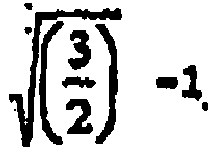
that of the radius of the beads of the first group.
that of the radius of the beads of the first group.
15. A cigarette filter according to any preceding claim including a cylindrical cavity,
wherein the spherical beaded carbon comprises beads with diameters in the range of
1/10 to 1/40 of the diameter of the cylindrical cavity.
16. A cigarette filter according to any preceding claim wherein at least a portion of
the spherical beaded carbon is flavored.
17. A cigarette filter according to claim 16 including at least one additional flavor-releasing
segment located downstream from the flavored spherical beaded carbon.
18. A cigarette filter according to claim 17 wherein the additional flavor-releasing segment
includes yarn with flavorant thereon.
19. A cigarette filter according to any preceding claim including a flavor-releasing segment
downstream from the spherical beaded carbon.
20. A cigarette filter according to any preceding claim wherein the spherical form of
the beaded carbon results from suspending a meltable carbon precursor in a fluid and
thereafter solidifying and carbonizing the precursor.
21. A cigarette filter according to any preceding claim wherein the carbon cooperates
with zeolite, silica gel, modified silica gel, an inorganic polymer, clay, a metal
oxide, a metal silicate, an aluminophosphate and/or a metal phosphate.
22. A cigarette filter according to any preceding claim which is cylindrical and in which
the cavity has a diameter approximately equal to the diameter of the filter and the
cavity length is approximately 2.5 mm to 12 mm.
23. A cigarette comprising a tobacco rod and a cigarette filter according to any of claims
1 to 22 including a beaded, activated carbon of a spherical form.
1. Zigarettenfilter mit körniger Aktivkohle in Form von Kügelchen und mit einem Durchmesser
im Bereich von 0,2 mm bis 0,7 mm, wobei die körnige Aktivkohle eine Schüttdichte von
mehr als 0,5 g/cm3 und eine BET-Oberfläche im Bereich von 1000 bis 1600 m2/g hat.
2. Zigarettenfilter nach Anspruch 1, bei dem die körnige Kohle in Form von Kügelchen
einen Durchmesser im Bereich von 0,2 mm bis 0,4 mm hat.
3. Zigarettenfilter nach Anspruch 2, bei dem die körnige Kohle in Form von Kügelchen
einen Durchmesser von 0,35 mm hat.
4. Zigarettenfilter nach Anspruch 4, bei dem wenigstens ein Teil des körnigen Kohlematerials
eine BET-Oberfläche im Bereich von 1100 bis 1300 m2/g hat.
5. Zigarettenfilter nach einem der vorhergehenden Ansprüche, bei dem wenigstens ein Teil
der körnigen Kohle ein mit der DFT-Methode ermitteltes Mikroporenvolumen von wenigstens
0,4 cm3/g hat und das Gesamtporenvolumen höchstens 0,6 cm3/g beträgt.
6. Zigarettenfilter nach einem der vorhergehenden Ansprüche mit einem Hohlraum, bei dem
die körnige Kohle den Hohlraum im Wesentlichen vollständig ausfüllt.
7. Zigarettenfilter nach einem der Ansprüche 1 bis 6 mit einem Hohlraum, bei dem die
Kohlekügelchen etwa 80 bis 95 Prozent des Hohlraums füllen.
8. Zigarettenfilter nach einem der vorhergehenden Ansprüche, bei dem die körnige Aktivkohle
eine vorbestimmte Menge hat, die ausreicht, um wenigstens einen Rauchbestandteil um
einen gewünschten Betrag zu verringern.
9. Zigarettenfilter nach Anspruch 9, bei dem die körnige Aktivkohle eine vorbestimmte
Menge hat, die ausreicht, um 1,3-Butadien um etwa 90 % oder mehr zu verringern.
10. Zigarettenfilter nach einem der vorhergehenden Ansprüche, bei dem die körnige Kohle
in einer Menge von etwa 70 bis 180 Milligramm vorhanden ist.
11. Zigarettenfilter nach einem der vorhergehenden Ansprüche mit einem zweiten körnigen
Material, das verglichen mit der körnigen Aktivkohle eine geringere oder keine Aktivierung
aufweist.
12. Zigarettenfilter nach Anspruch 11, bei dem das zweite körnige Material körnige Kohle
mit im Wesentlichen dem gleichen Durchmesser wie die körnige Aktivkohle umfasst.
13. Zigarettenfilter nach einem der vorhergehenden Ansprüche, bei dem die Kohlekügelchen
eine erste Gruppe einzelner Kügelchen mit im Wesentlichen dem gleichen Durchmesser
und eine zweite Gruppe einzelner Kügelchen mit im Wesentlichen dem gleichen Durchmesser,
der aber kleiner ist als der Durchmesser der Kügelchen der ersten Gruppe, umfasst.
14. Zigarettenfilter nach Anspruch 13, bei dem die Kügelchen der zweiten Gruppe einen
Radius haben, der etwa
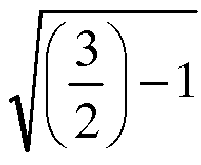
des Radius der Kügelchen der ersten Gruppe beträgt.
des Radius der Kügelchen der ersten Gruppe beträgt.
15. Zigarettenfilter nach einem der vorhergehenden Ansprüche mit einem zylindrischen Hohlraum,
bei dem die Kohlekügelchen Kügelchen mit Durchmessern im Bereich von 1/10 bis 1/40
des Durchmessers des zylindrischen Hohlraums umfassen.
16. Zigarettenfilter nach einem der vorhergehenden Ansprüche, bei dem wenigstens ein Teil
der Kohlekügelchen aromatisiert ist.
17. Zigarettenfilter nach Anspruch 16, bei dem sich stromabwärts von den aromatisierten
Kohlekügelchen wenigstens ein zusätzliches aromafreisetzendes Segment befindet.
18. Zigarettenfilter nach Anspruch 17, bei dem das zusätzliche aromafreisetzende Segment
Garn mit daran befindlichem Aromastoff aufweist.
19. Zigarettenfilter nach einem der vorhergehenden Ansprüche, der ein aromafreisetzendes
Segment stromabwärts von den Kohlekügelchen aufweist.
20. Zigarettenfilter nach einem der vorhergehenden Ansprüche, bei dem die Kügelchenform
der körnigen Kohle daher rührt, dass ein schmelzfähiger Kohlevorläufer in einem Fluid
suspendiert wird und der Vorläufer danach erhärtet und karbonisiert wird.
21. Zigarettenfilter nach einem der vorhergehenden Ansprüche, bei dem die Kohle mit Zeolith,
Silikagel, modifiziertem Silikagel, einem anorganischen Polymer, Ton, einem Metalloxid,
einem Metallsilikat, einem Aluminiumphosphat und/oder einem Metallphosphat zusammenwirkt.
22. Zigarettenfilter nach einem der vorhergehenden Ansprüche, der zylindrisch ist und
bei dem der Hohlraum einen Durchmesser hat, der etwa gleich dem Durchmesser des Filters
ist, und die Hohlraumlänge etwa 2,5 mm bis 12 mm beträgt.
23. Zigarette, die einen Tabakstock und einen Zigarettenfilter nach einem der Ansprüche
1 bis 22 mit einer körnigen Aktivkohle in Kügelchenform umfasst.
1. Filtre de cigarette comportant des billes de carbone activé de forme sphérique et
d'un diamètre compris dans la gamme de 0,2 mm à 0,7 mm, les billes de carbone activé
ayant une densité massique supérieure à 0,5 g/cm3 et une surface spécifique dans la gamme de 1000 à 1600 m2/g BET.
2. Filtre de cigarette selon la revendication 1, dans lequel les billes de carbone de
forme sphérique ont un diamètre compris dans la gamme de 0,2 mm à 0,4 mm.
3. Filtre de cigarette selon la revendication 2, dans lequel les billes de carbone de
forme sphérique ont un diamètre de 0,35 mm.
4. Filtre de cigarette selon la revendication 1, dans lequel au moins une partie de la
matière de billes de carbone a une surface spécifique dans la gamme de 1100 à 1300
m2/g BET.
5. Filtre de cigarette selon l'une quelconque des revendications précédentes, dans lequel
au moins une partie des billes de carbone telle que déterminée par le volume de micropores
spécifique DFT est au moins de 0,4 cm3/g et le volume de pores total ne dépasse pas 0,6 cm3/g.
6. Filtre de cigarette selon l'une quelconque des revendications précédentes, comportant
une cavité, dans lequel les billes de carbone remplissent sensiblement complètement
la cavité.
7. Filtre de cigarette selon l'une quelconque des revendications 1 à 6, comportant une
cavité, dans lequel les billes de carbone sphériques remplissent approximativement
80 à 95 pour cent de la cavité.
8. Filtre de cigarette selon l'une quelconque des revendications précédentes, dans lequel
les billes de carbone activé sont présentes dans une quantité prédéterminée suffisante
pour réduire au moins un constituant de fumée par une quantité désirée.
9. Filtre de cigarette selon l'une quelconque des revendications précédentes, dans lequel
les billes de carbone activé sont présentes dans une quantité prédéterminée suffisante
pour réduire le 1,3-butadiène par approximativement 90% ou plus.
10. Filtre de cigarette selon l'une quelconque des revendications précédentes, dans lequel
les billes de carbone activé sont présentes dans une quantité d'approximativement
70 à 180 milligrammes.
11. Filtre de cigarette selon l'une quelconque des revendications précédentes, comportant
une deuxième matière de billes d'une activation moindre ou inexistante en comparaison
aux billes de carbone activé.
12. Filtre de cigarette selon la revendication 11, dans lequel la deuxième matière de
billes comprend des billes de carbone ayant sensiblement le même diamètre que les
billes de carbone activé.
13. Filtre de cigarette selon l'une quelconque des revendications précédentes, dans lequel
les billes de carbone activé comprennent un premier groupe de billes individuelles
ayant sensiblement le même diamètre et un deuxième groupe de billes individuelles
sensiblement de même diamètre mais ayant un diamètre inférieur à celui des billes
du premier groupe.
14. Filtre de cigarette selon la revendication 13, dans lequel les billes sphériques du
deuxième groupe ont un rayon qui est approximativement
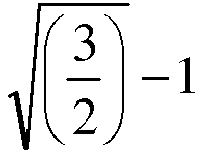
du rayon des billes du premier groupe.
du rayon des billes du premier groupe.
15. Filtre de cigarette selon l'une quelconque des revendications précédentes, comportant
une cavité cylindrique, dans lequel les billes de carbone activé comprennent des billes
ayant des diamètres compris dans la gamme de 1/10 à 1/40ème du diamètre de la cavité cylindrique.
16. Filtre de cigarette selon l'une quelconque des revendications précédentes, dans lequel
au moins une partie des billes de carbone sphériques est aromatisée.
17. Filtre de cigarette selon la revendication 16, comportant au moins un segment supplémentaire
diffuseur d'arôme en aval des billes de carbone sphériques aromatisées.
18. Filtre de cigarette selon la revendication 17, dans lequel le segment supplémentaire
diffuseur d'arôme comporte un fil sur lequel est déposée une essence.
19. Filtre de cigarette selon l'une quelconque des revendications précédentes, comportant
un segment diffuseur d'arôme en aval des billes de carbone sphériques.
20. Filtre de cigarette selon l'une quelconque des revendications précédentes, dans lequel
la forme sphérique des billes de carbone résulte de la mise en suspension d'un précurseur
de carbone fusible dans un fluide puis de la solidification et la carbonisation du
précurseur.
21. Filtre de cigarette selon l'une quelconque des revendications précédentes, dans lequel
le carbone coopère avec de la zéolite, du gel de silice, du gel de silice modifié,
un polymère inorganique, de l'argile, un oxyde métallique, un silicate métallique,
un aluminophosphate et/ou un phosphate métallique.
22. Filtre de cigarette selon l'une quelconque des revendications précédentes, lequel
est cylindrique et dans lequel la cavité a un diamètre approximativement égal au diamètre
du filtre et la longueur de cavité est approximativement de 2,5 mm à 12 mm.
23. Cigarette comprenant un bâtonnet de tabac et un filtre de cigarette selon l'une quelconque
des revendications 1 à 22 comportant des billes de carbone activé de forme sphérique.
REFERENCES CITED IN THE DESCRIPTION
This list of references cited by the applicant is for the reader's convenience only. It does not form part of the European patent document. Even though great care has been taken in compiling the references, errors or omissions cannot be excluded and the EPO disclaims all liability in this regard.
Patent documents cited in the description
- US2881770A [0004]
- US3353543A [0004]
- US3101723A [0004]
- US4481958A [0004]
- EP532329A [0004]
- EP608047A [0004]
- US5404890A [0004]
- US5568819A [0004]
- EP579410A [0005]
- US3894545A [0005]
- US4214508A [0007]
- US5221247A [0007]
- US5322459A [0007]
- US5542901A [0007]
- US5875824A [0007]
- US4917835A [0041] [0047]
- US5456868A [0041] [0047]
- US6033506A [0041] [0047]
- US4281671A [0050]
- US5263999A [0054]
- US5997691A [0054]
- US3909449A [0056]
- US4045368A [0056]
- GB1383085A [0056]
Non-patent literature cited in the description
- CLARKE et al.World Tobacco, 1992, 55- [0004]