|
(11) | EP 1 489 072 B1 |

| (12) | EUROPEAN PATENT SPECIFICATION |
|
|
| (54) |
PROCESS FOR ASYMMETRIC INTRAMOLECULAR (3+2) CYCLO-ADDITION OF HYDRAZONES VERFAHREN ZUR ASYMMETRISCHEN INTRAMOLEKULAREN 3+2-CYCLOADDITION VON HYDRAZONEN PROCEDE DE CYCLOADDITION ASYMETRIQUE INTRAMOLECULAIRE (3+2) D'HYDRAZONES |
|
|
|||||||||||||||||||||||||||||||
| Note: Within nine months from the publication of the mention of the grant of the European patent, any person may give notice to the European Patent Office of opposition to the European patent granted. Notice of opposition shall be filed in a written reasoned statement. It shall not be deemed to have been filed until the opposition fee has been paid. (Art. 99(1) European Patent Convention). |
[0001] The invention of this application relates to an asymmetric intramolecular [3+2] cycloaddition reaction of a hydrazone derivative. More particularly, the invention of this application relates to a process for an asymmetric intramolecular [3+2] cyclization of a hydrazone derivative under a mild condition with ease and high efficiency.
[0002] In nature, many substances including proteins and the like are optically active substances, and it is known that a specific bioactivity is expressed according to the stereostructure thereof. Also compounds containing a nitrogen atom are found in great number in natural products. Among them, many of the compounds containing a nitrogen atom in the five-membered ring skeleton are considered to largely contribute to the expression of molecular function.
[0003] Therefore, it can be said that establishing a stereoselective synthetic method of a nitrogen- containing compound is important in a total synthesis of a bioactive substance, which is the object in the field of medicine, agricultural chemical, flavor or the like.
[0004] As one of the useful processes for constructing a nitrogen-containing five-membered ring skeleton, there is a [3+2] cycloaddition reaction, which has been studied since long time ago. Among them, a cycloaddition reaction using a 1,3-dipole with a high reactivity such as a nitrone has been widely studied, and an example of a catalytic asymmetric reaction using an asymmetric Lewis acid has been reported. Meanwhile, as a [3+2] cycloaddition reaction of an aryl or an acylhydrazone, a cycloaddition reaction of an alkene with an aryl or an acylhydrazone using a protonic acid as a catalyst was reported for the first time in 1970 by Hesse. In addition, it was reported that this reaction proceeds thermally in 1979 by Griggs et al. Since then, several reactions of the same kind have been reported, however, all needs a reaction under a condition with a strong acid or under a thermal condition, and a reaction under a mild condition with the use of a Lewis acid was not known in the past.
[0005] Meanwhile, the inventors of this application have reported, until now, various catalytic asymmetric synthesis reactions of a nitrogen-containing compound including the asymmetric Mannich reaction, the aza Diels-Alder reaction, the asymmetric Strecker reation and the like with the use of a chiral zirconium catalyst. Also, at this late date, they have found that intermolecular [3+2] cycloaddition reaction of a hydrazone takes place even under a mild condition with a high yield and a high diastereoselectivity by using a catalytic amount of 10 mol % of zirconium triflate, which has been reported.
[0006] However, the fact is that an easy process in which an intramolecular asymmetric cycloaddition reaction of a hydrazone is carried out under a mild condition was not realized. An intramolecular [3+2] asymmetric cycloaddition reaction can not only efficiently construct a polycyclic structure, but also derive a cyclic 1,3-diamine by cleaving the N-N bond of the product, therefore, it can be said that its usability is high.
[0007] Fouchet B. et al., Tetrahedron Letters vol. 22, no. 14, 1981, pages 1333-1336 discloses certain (3+2) Intramolecular cationic cycloadditions and 1,3-dipolar cycloadditions of phenylhydrazones.
[0008] Kobayashi Shu et al., Organic Letters, vol. 2, no. 9, pages 1225-1227 describes the use of certain zirconium-based catalysts in asymmetric Aza Diels-Alder reactions.
[0009] The invention of this application has been conducted in view of the above-mentioned circumstances, and aims at overcoming the limits of the prior art and providing a process for carrying out an asymmetric intramolecular [3+2] cycloaddition reaction of a hydrazone under a common mild condition with a high stereoselectivity and yield.
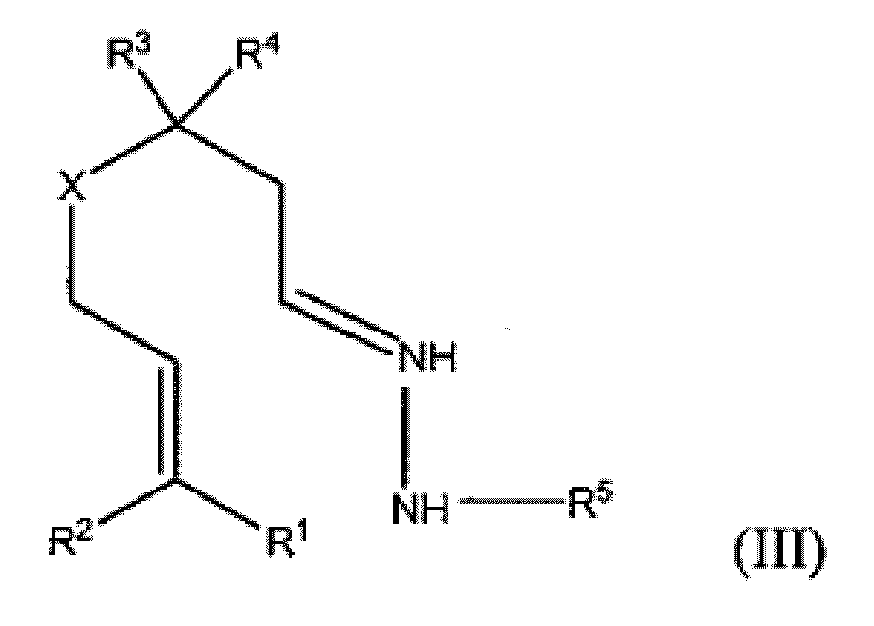
[0010] In order to solve the problems as above, the invention of this application first provides a process for an asymmetric intramolecular [3+2] cycloaddition reaction of a hydrazone characterized by reacting a hydrazone derivative represented by the following formula (III):
wherein R1, R2, R3 and R4 are each methyl, R5 is a benzoyl group which may have a substituent and X denotes CH2, in the presence of an asymmetric catalyst system obtained by mixing a zirconium alkoxide represented by the following formula (I):
Zr(OR)4 (I)
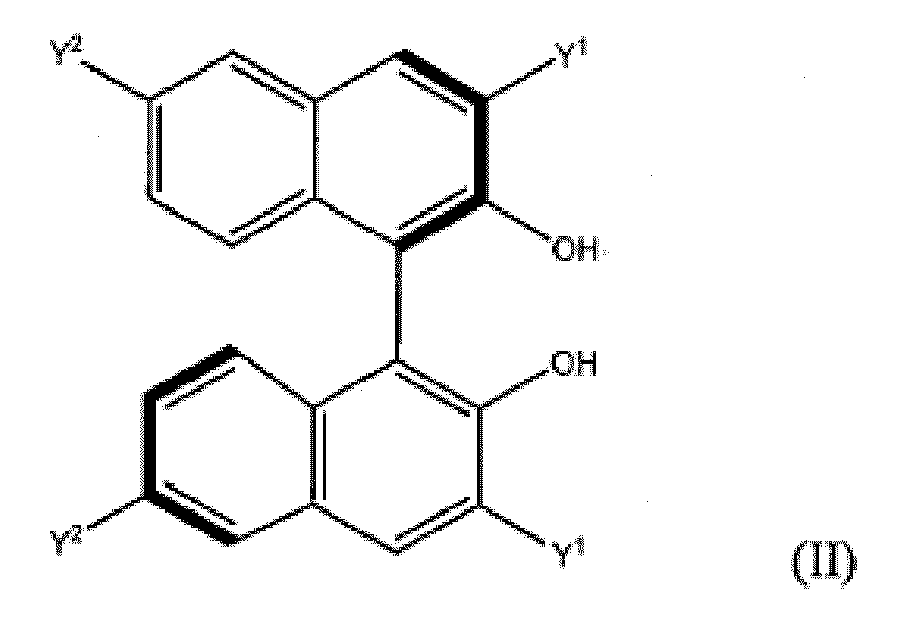
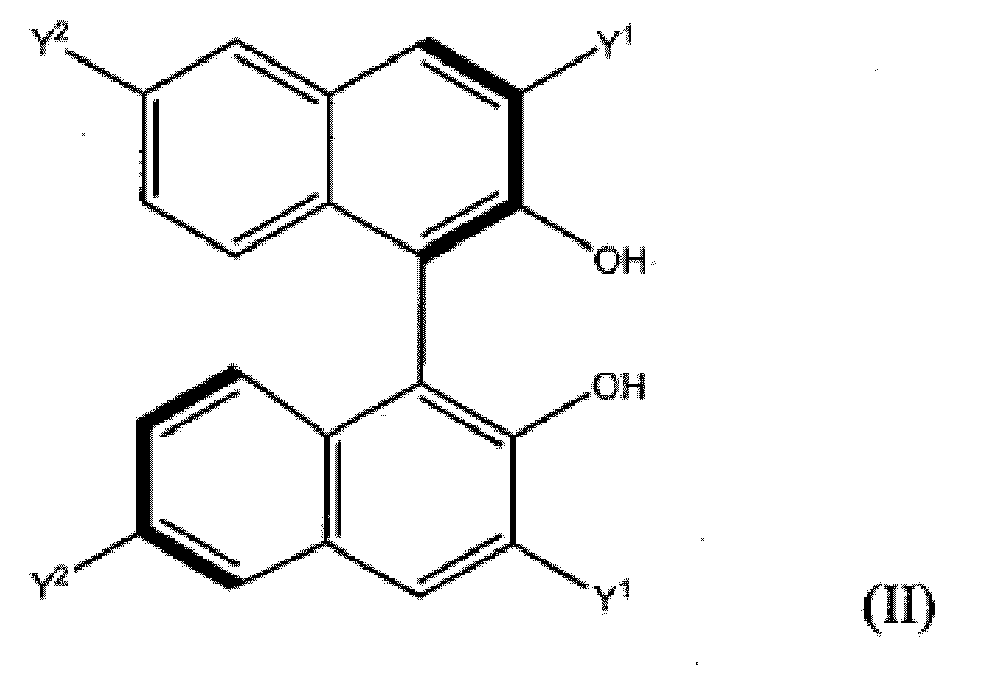
wherein R is a hydrocarbon group which may have a substituent, with a binaphthol derivative represented by the following formula (II):
wherein Y1 and Y2 are each identical or different, Y2 denotes a hydrogen atom or a halogen atom, and Y1 denotes a halogen atom.
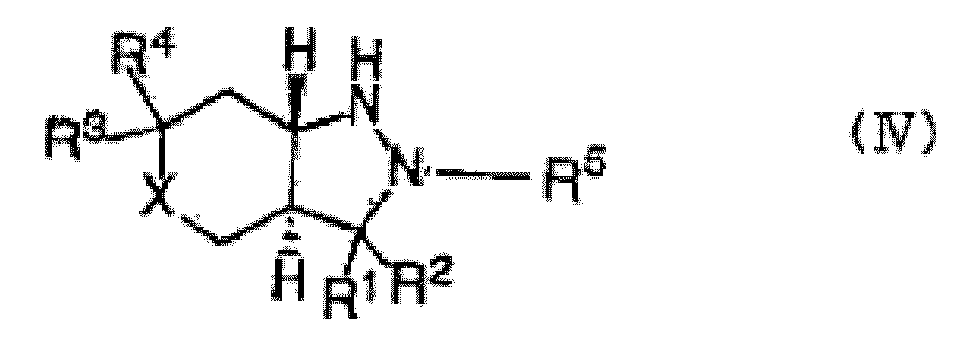
[0011] Also, the invention of this application secondly provides the above-mentioned process for an asymmetric intramolecular [3+2] cycloaddition reaction, which is carried out in the presence of a primary alcohol, and thirdly provides the process for an asymmetric intramolecular [3+2] cycloaddition reaction in which the primary alcohol is an n-propanol. In addition, the invention of this application fourthly provides the process for an asymmetric intramolecular [3+2] cycloaddition reaction, by which a compound represented by the following formula (IV):
is synthesized.
Also, the invention of this application fifthly provides the process for an asymmetric intramolecular [3+2] cycloaddition reaction according to any one of the above in which the zirconium alkoxide used in the catalyst system is Zr (OtBu)4 or Zr(OPr)4.
[0012] The inventors of this application found that an intermolecular [3+2] addition reaction of hydrozone efficiently proceeds even under a mild condition, for example, at room temperature or in an organic solvent, by using a catalytic amount of zirconium triflate. They continued further dedicated studies on expansion to a catalytic asymmetric reaction, and as a result, the invention of this application has been worked out.
[0013] Namely, in the process for an asymmetric intramolecular [3+2] cycloaddition reaction of the invention of this application, an intramolecular [3+2] cyclization of a hydrazone derivative stereoselectively takes place by using what is obtained by mixing a zirconium alkoxide represented by the following formula (I):
Zr(OR)4 (I)
(wherein R is a hydrocarbon group which may have a substituent) with a binaphthol derivative represented by the following formula (II):
(wherein Y1 and Y2 are each identical or different, Y2 denotes a hydrogen atom or a halogen atom, and Y1 denotes a halogen atom) as a catalyst system.
[0014] In the process for an asymmetric intramolecular [3+2] cycloaddition reaction of the invention of this application, the hydrazone derivative is a compound represented by the following formula (II):
In this formula, R1, R2, R3 and R4 are each methyl, R5 is a benzoyl group which may have a substituent and X is CH2.
[0015] Meanwhile, as the R5 examples include the one whose R5 has a benzoyl group with a 4-nitro group, a benzoyl group without a 4-nitro group or a benzoyl group with a substituent other than a 4-nitro group.
[0016] In the process for an asymmetric intramolecular [3+2] cycloaddition reaction of the invention of this application as mentioned above, these substituents may be arbitrarily selected according to the structure of a target nitrogen-containing compound.
[0017] According to the process for an asymmetric intramolecular [3+2] cycloaddition reaction of the invention of this application, for example, an optically active nitrogen-containing cyclic compound of the following formula (IV):
can be obtained.
[0018] In the reaction process of the invention of this application which enables a synthesis of such a compound, a hydrazone derivative may be reacted in the presence of a catalyst system as mentioned above, and the reaction condition is not particularly limited. Particularly, however, in the case where a primary alcohol coexists in a reaction system, the reaction yield or stereoselectivity will be increased, therefore, it is preferable. In this case, the kind or amount of the primary alcohol to be added is not limited. For example, 5 to 10 equivalent weight of n-propanol relative to the binaphthol derivative of the above-mentioned (II) may be added.
[0019] In the asymmetric intramolecular [3+2] cycloaddition reaction of the invention of this application, other reaction conditions are not particularly limited, however, it is characterized in that an asymmetric intramolecular [3+2] cycloaddition reaction proceeds with a high yield and stereoselectivity even under a mild condition, for example, at a reaction temperature in the vicinity of room temperature or in an organic solvent such as dichloromethane. Examples of the reaction solvent include various organic solvents, however, preferred examples include dichloromethane, benzene, fluorobenzene, toluene and the like. As mentioned above, the reaction yield or stereoselectivity is further improved by adding a primary alcohol to the reaction solvent, which is preferable.
[0020] It is needless to say that a nitrogen-containing compound produced by the process of the invention of this application may be further reacted and converted by various organic synthesis methods to obtain a desired substance. For example, an optically active 1,3-diamine can be derived by cleaving the N-N bond of a cyclized compound. In addition, after carrying out the process for an asymmetric intramolecular [3+2] cycloaddition reaction of the invention of this application, to purify the product, common procedures such as extraction, separation, filtration, washing and drying may be carried out.
Hereunder, the invention of this application will be explained in more detail by showing Examples. However, it is needless to say that the invention of this application is not limited to the following Examples.
Examples
< Example 1 >
[0021] According to the following reaction formula (A), asymmetric intramolecular [3+2] cycloaddition reactions using various asymmetric catalyst systems shown in Table 1 were carried out.
[0022] With respect to 4-nitrobenzoyl hydrazone, 1 equivalent weight of aldehyde (as to (S)-Citronellal, a commercially available one was obtained as it was, as to 3,3,7-Trimethyl-6-octenal and 7-Methyl-6-octenal, they were obtained by a method described in Sakane, S; Maruoka, K; Yamamoto, H. Tetrahedron 1986, 42, 2203) relative to a dimethylformamide (DMF) solution of 4-nitrobenzoyl hydrazine was added and stirred for several hours at room temperature until the aldehyde disappeared. Water was added to stop the reaction, and extraction was carried out three times with ethyl acetate. The organic layers were combined and washed with water three times, and with a saturated saline solution once, and dried with anhydrous sodium sulfate. After filtration, the solvent was removed under reduced pressure, then the residue was recrystallized from ethyl acetate-hexane (5:1). When the aldehyde that was a raw material remained, it was purified by silica gel column chromatography, then recrystallized.
[0023] The reaction yields and the stereoselectivities are shown in Table 1.
Table 1
| Zr(OR)4/mol% | BINOL/mol% | Additive / mol% | Yield (%) | ee/% |
| Zr(OtBu)4/ 10 | (R)-3,3'-Br2BINOL / 10 | - | 82 | 71 |
| Zr(OtBu)4/ 10 | (R)-3,3'-Br2BINOL / 20 | - | 86 | 75 |
| Zr(OtBu)4/ 10 | (R)-3,3'-Br2BINOL / 20 | PrOH / 20 | 90 | 72 |
| Zr(OtBu)4/ 10 | (R)-3,3'-Br2BINOL / 20 | PrOH / 50 | 80 | 90 |
| Zr(OtBu)4/ 10 | (R)-3,3'-Br2BINOL / 20 | PrOH / 100 | 90 | 92 |
| Zr(OtBu)4/ 10 | (R)-3,3'-Br2BINOL / 20 | CF3CH2OH / 50 | 55 | 89 |
| Zr(OtBu)4/ 10 | (R)-3,3'-Br2BINOL / 12 | PrOH / 50 | 92 | 93 |
| Zr(OtBu)4/ 10 | (R)-3,3'-Br2BINOL / 12 | PrOH/50, H2O/20 | 70 | 78 |
| Zr(OnPr)4/ 10 | (R)-3,3'-Br2BINOL / 12 | - | 82 | 92 |
[0024] From Table 1, it was confirmed that an asymmetric intramolecular [3+2] cycloaddition reaction of a hydrazone proceeds with a high yield and stereoselectivity by using a catalyst system obtained by mixing Zr(OtBu)4 with 3,3'-Br2BINOL in which Y1 is Br (bromine) and Y2 is a hydrogen atom in the above-mentioned formula (II). Particularly, in the system in which 5 to 10 equivalent weight of alcohol relative to Zr(OtBu)4 was added, the yield and the stereoselectivity were significantly improved.
< Example 2 >
[0025] The catalyst system in Example 1 was modified, and according to the following reaction formula (B), asymmetric cycloaddition reactions were carried out in the same manner. The results are shown in Table 2.
[0026] As is clear from Table 2, in the catalyst system using a BINOL derivative in which both Y1 and Y2 are Br or I in the above-mentioned formula (II), especially a high reaction yield and selectivity were obtained in the case where a primary alcohol was added.
Table 2
| BINOL / mol% | Additive / mol% | Time | Yield(%) | ee / % |
| (R)-3,3',6,6'-Br4BINOL | - | 6 h | 82 | 71 |
| (R)-3,3',6,6'-I4BINOL | - | 6 h | 86 | 75 |
| (R)-3,3',6,6'-Br4BINOL | PrOH / 50 | 4 h | 90 | 72 |
| (R)-3,3',6,6'-I4BINOL | PrOH / 50 | 4 h | 80 | 90 |
| (R)-3,3',6,6'-I4BINOL | PrOH / 50 | 11 h | 90 | 92 |
< Example 3 >
[0027] According to the following formula (C), asymmetric intramolecular [3+2] cycloaddition reactions of various hydrazone derivatives were carried out.
The reaction times, reaction yields and stereoselectivities are shown in Table 3.
Table 3
From Table 3, it was confirmed that a high reaction yield and stereoselectivity were
obtained in the compound having a substituent in the β-position. In addition, although
the reactivity was somewhat lower in the compound without a substituent in the β-position,
the enantioselectivity of trans compound was shown to be increased by using a catalyst
system that was prepared with 3,3',6,6'-I4BINOL as a binaphthol source.| Run | Hydrazone | Time | Yield(cis/trans) | ee/% | ||
| R1 | R2 | R3 | ||||
| 1 | Me | Me | Me | 4.5 h | 99 (<1/>99) | -/99 |
| 2 | Me | Me | Me | 12 h | 87 (<1/>99) | -/90 |
| 3* | Me | Me | H | 20 h | 70 (17/83) | dr cis: 99/1 trans: 98/2 |
| 4* | Me | Me | H | 24 h | 77 (84/16) | dr cis: 8/92 trans: 73/27 |
| 5* | Me | H | H | 64 h | 62 (29/71) | 13/92 |
|
|
12h | 91 (<1/>99) | -/97 | |||
| * Comparative Examples |
[0028] Meanwhile, in a hydrazone derivative having only one substituent in the β-position, a trans compound was preferentially obtained from (R)-binaphthol, and a cis compound was preferentially obtained from (S)-binaphthol.
< Example 4 >
[0029] According to the following formula (D), asymmetric intramolecular [3+2] cycloaddition reactions were carried out.
[0030] First, 4-nitrobenzoylhydrazone (1a) (R1 = R2 = R3 = R4 = Me, X = -CH2-) was reacted with various chiral BINOL catalyst systems. The results are shown in Table 4.
[0031] The reaction was carried out in a CH2Cl2 solvent at room temperature for 4 to 11 hours. The denotation b in the table indicates 10 mol%, c indicates 50 mol%, d indicates that benzene was used as a solvent, and e indicates that toluene was used as a solvent.
Table 4
| entry | Zr(OR)4b | BINOL/mol % | additive | yield/% | ee/% |
| 1 ‡ | Zr(OtBu)4 | 2a/20 | 35 | 9 | |
| 2 | Zr(OtBu)4 | 2b/20 | 86 | 75 | |
| 3 | Zr(OtBu)4 | 2b/12 | PrOH c | 92 | 93 |
| 4 | Zr(OPr)4 | 2b/12 | 82, 56d, 86e | 92, 93d, 95e | |
| 5 | Zr(OPr)4 | 2c/12 | 86 | 92 | |
| 6 | Zr(OPr)4 | 2d/12 | PrOH c | 99 | 96 |
| ≠ Comparative Examples |
[0032] Next, using a catalyst system of Zr(OPr)4 (10 mol%), (R)-2d (12 mol%) and PrOH (50 mol%), asymmetric intramolecular cycloaddition reactions of various hydrazone compounds were carried out at room temperature. The results are shown in Table 5.
[0033] Incidentally, in entries 5 and 6, (R)-2C was used as BINOL. In addition, the denotation b in the table indicates that the concentration of the catalyst was 5 mol%, C indicates that the concentration of the catalyst was 20 mol%, d indicates that it was crude, e indicates that the yield was calculated on the basis of the starting material compound (4), f indicates that the reaction temperature was 40°C, and g indicates that the reaction temperature was 60°C.
Table 5
| entry | hydrazone | solvent, time | yield/% (cis/trans) | ee/% (trans) |
| 1 | 1a | CH2Cl2, 4.5 h | 99 (<1/>99) | 96 |
| 2b | 1a | CH2Cl2, 12 h | 87 (<1/>99) | 90 |
| 3b | 1a | benzene, 28 h | 70 (<1/>99) | 95 |
| 4c | 1b | benzene-CH2Cl2, 64 h | 62 (29/71) | 92 |
| 5c ‡ | 1c | CH2Cl2, 12 h | 91 (<1/>99) | 97 |
| 6 ‡ | 1fd | benzene, 1 h | 57e (<1/>99) | 72 |
| 7c,f ‡ | 1g | benzene, 21 h | 38 (<1/>99) | 81 |
| 8c,g ‡ | 1h | benzene, 1 h | 73 (11/89) | 90 |
| ‡ Comparative Examples |
[0034] The asymmetric cyclic compounds shown with the following identification values were obtained corresponding to the hydrazone compounds that were reaction targets.
(3aS,7aS)-3,3,6,6-Tetramethyl-2-(p-nitrobenzoyl)indazolidine (3a): [α]D29-40.5 (c 1.01, CHCl3, 99% ee (after recrystallization)). IR [cm-1] (KBr) 3466, 2905, 2870, 1636, 1601, 1518, 1466, 1397, 1385, 1345, 1310. 1H NMR (CDCl3) δ = 0.92-1.02 (m, 1H), 0.96 (s, 3H), 1.00 (s, 3H), 1.21-1.28 (m 2H), 1.43 (ddd, 1H, J = 12, 12, 4.6Hz), 1.47 (s, 3H), 1.61 (m, 2H), 1.65 (s, 3H), 1.75 (dd, 1H, J = 12,3.4 Hz), 2.84 (ddd, 1H, J = 13, 12, 3.4 Hz), 3.28 (d, 1H, J = 13 Hz), 7.33 (d, 2H, J = 8.6 Hz), 8.19 (d, 2H, J = 8.6 Hz); 13C NMR (CDCl3) δ = 19.6, 20.4, 25.6, 25.9, 31.9, 32.7, 38.8, 41.3, 57.7, 60.9, 65.3, 122.8, 128.8, 143.8, 147.8, 165.5. MS (m/z) 331 (M+). Anal. calcd for C18H25N3O3: C, 65.23; H, 7.60; N, 12.68, found : C, 65.24; H, 7.79; N, 12.72. HPLC : Daicel Chiralpak AD, hexane/iPrOH = 9/1, flow rate = 1.0 mL/min : tR= 20.8 min (3aS,7aS), tR= 39.4 min (3aR,7aR).
trans-3,3-Dimethyl-2-(p-nitrobenzoyl)indazolidine (3b): IR [cm-1] (KBr) 3107, 1630, 1600, 1523, 1455, 1405, 1384, 1344. 1H NMR (CDCl3) trans isomer: δ = 1.05 (m, 1H), 1.20-1.35 (m, 4H), 1.44 (s, 3H), 1.64 (s, 3H), 1.75 (m, 1H), 1.85-1.90 (m, 2H), 2.05 (m, 1H), 2.62 (br, 1H), 3.79 (br, 0.8H), 7.72 (d, 1H, J = 8.8 Hz), 8.19 (d, 1H, J = 8.8 Hz); 13C NMR (CDCl3) trans isomer; δ = 19.5, 24.2, 24.4, 25.5, 26.0, 28.7, 60.3, 60.8, 65.4, 122.9, 128.8, 43.9, 147.9,165.6. MS (m/z) 303 (M+). Anal. calcd for C16H21N3O3: C, 63.35; H, 6.98; N, 13.85, found : C, 63.41; H, 6.93; N, 13.58. HPLC : Daicel Chiralcel OJ, hexane/iPrOH = 19/1, flow rate = 1.0 mL/min : tR= 44.5 min (minor), tR= 54.2 min (major).
trans-6,6-Ethylenedithio-3,3-Dimethyl-2-(p-nitrobenzoyl)indazolidine (3c): IR [cm-1] (KBr) 3438, 3206, 1625, 1596, 1524, 1422, 1345. 1H NMR (CDCl3) δ = 1.33 (dt, 1H, J = 12, 3.1 Hz), 1.47 (s, 3H), 1.55 (m, 1H), 1.67 (s, 3H), 1.64-1.86 (m, 2H), 1.97 (td, 1H, J = 13, 3.8 Hz), 2.31 (ddd, 1H, J = 14, 5.1, 3.2 Hz), 2.49 (ddd, 1H, J = 12, 3.1, 1.7 Hz), 3.33 (s, 4H), 3.88 (d, 1H, J = 13 Hz), 7.73 (d, 2H, J = 8.8 Hz), 8.20 (d, 2H, J = 8.8 Hz); 13C NMR (CDCl3) δ = 19.5, 23.5, 26.0, 38.3, 39.4, 42.3, 44.7, 59.3, 60.2, 65.3, 66.4, 122.9, 128.9, 143.6, 147.9, 165.6. MS (m/z) 393 (M+). Anal. calcd for C16H23N3S2: C, 54.94; H, 5,89; N, 10.68, found, C, 54.87; H, 6.01; N, 10.66. HPLC: Daicel Chiralpak AD, hexane/iPrOH = 4/1, flow rate = 1.0 mL/min : tR = 20.7 min (major), tR = 44 min (minor).
trans-3,3-Ethylenedithio-2-(p-nitrobenzoyl)indazolidine (3f): IR [cm-1] (KBr) 3442, 3183, 1627, 1403. 1H NMR (CD2Cl2) δ = 1.10 (ddd, 1H, J =12, 12, 3.8 Hz), 1.25-1.42 (m, 2H), 1.68 (m, 1H), 1.8-2.1 (m, 5H), 2.54-2.69 (m, 1H), 3.15 (td, 1H, J = 11, 4.8 Hz), 3.28 (m, 1H), 3.70 (m, 1H), 3.98 (br, 2H), 7.32-7.42 (m, 3H), 7.52-7.56 (m, 2H); 13C NMR (CD2Cl2) δ =24.4, 25.0, 25.1, 28.6, 39.5, 42.5, 61.2, 62.3, 92.0, 127.6, 127.9, 129.6, 137.66, 166.0. MS (m/z) 320 (M+). Anal. calcd for C16H20N2OS2: C, 59.96; H, 6.29; N, 8.74, found, C, 59.94; H, 6.36; N, 8.71. Daicel Chiralcel OD, hexane/iPrOH = 4/1, flow rate = 1.0 mL/min : tR = 19.4 min (minor), tR = 30.3 min (major).
trans-3,3,6,6-Tetramethyl-2-(p-nitrobenzoyl)-perhydropyrano[3,4-c]pyrazole (3g): IR [cm-1] (KBr) 3197, 1612, 1595, 1522, 1480, 1430, 1384, 1348, 1318. 1H NMR (CDCl3) δ = 1.24 (s, 3H), 1.2-1,3 (m, 1H), 1.29 (s, 3H), 1.48 (s, 3H), 1.56 (ddd, 1H, J = 11, 11, 3.9 Hz), 1.71 (s, 3H), 1.94 (dd, 1H, J = 12. 3.7 Hz), 3.0 (br, 1H), 3.63 (dd, 1H, J = 11, 11 Hz), 3.84 (dd, 1H, J = 11,4.1 Hz), 3.8 (br, 1H), 7.72 (d, 2H, J = 8.8 Hz), 8.19 (d, 2H, J = 8.6 Hz); 13C NMR (CDCl3) δ = 19.8, 22.9, 26.3, 31.3, 39.9, 56.4, 58.7, 60.8, 64.6, 72.5, 122.9, 128.2, 143.5, 148.0, 165.6. MS (m/z) 333 (M+). Daicel Chiralcel OD, hexane/iPrOH = 19/1, flow rate =1.0 mL/min: tR = 32.6 min (major), tR = 37.4 min (minor).
trans-3,3'-Dimethyl-2-(p-nitrobenzoyl)-2,3,3a,4,9,9a-hexahydro-1H-benz[f]indazole (3h): IR [cm-1] (KBr) 3195, 1617, 1590, 1523, 1484, 1438, 1383, 1349, 1318, 1290. 1H NMR (CDCl3) δ = 1.58 (s, 3H), 1.76 (s, 3H), 1.87 (ddd, 1H, J = 12, 12, 5.4 Hz), 2.58 (dd, 1H, J = 15, 11 Hz), 2.9 (m, 1H), 2.91 (dd, 1H, J = 16,5.6 Hz), 3.12 (m, 1H), 3.20 (dd, 1H, J = 15, 5.4 Hz), 4.04 (dbr, 1H, J = 12 Hz), 7.1-7.2 (m, 4H), 7.76 (d, 2H, J = 8.6 Hz), 8.20 (d, 2H, J = 8.5 Hz); 13C NMR (CDCl3) δ = 19.7, 26.3, 28.6, 33.1, 56.3, 57.8, 65.4, 122.9, 126.4, 126.6, 128.8, 129.6, 129.7, 133.0, 134.8, 143.7, 147.9, 165.4. MS (m/z) 351 (M+). Anal. calcd for C20H21N3O3 : C, 68.36; H, 6.02; N, 11.96, found : C, 68.55; H, 6.05; N, 12.00. HPLC (trans isomer): Daicel Chiralpak AD, hexane/iPrOH = 9/1, flow rate = 1.0 mL/min : tR = 35.9 min (major), tR = 41.8 min (minor).
< Reference Example > Derivation of Product
[0035] A cyclic compound obtained in a [3+2] cycloaddition reaction as mentioned above is an interesting compound as it is, however, it is contemplated that the compound can be transformed into an optically active 1,3-diamine by cleaving the N-N bond as the following formula (E).
[0036] It is contemplated that these 1,3-diamines may not only enable to be used as a chiral ligand, but also enable to be applied to an analogue synthesis of an anticancer agent, cisplatin.
[0037] According to the studies by the inventors, it was found that when, for example, the following cyclic compound in the above formula (E) was reacted with iodide samarium (SMI2), a nitrile compound was produced by aftertreatment. It is contemplated that from this nitrile compound, not only aminomethyl-cyclohexylamine can be derived by reduction of a nitrile group and deprotection of a benzoyl group, but also a β-amino acid can be derived. Therefore, it can be said that it is a very useful compound.
[0038] As explained in detail above, by the invention of this application, a process for carrying out an intramolecular [3+2] cycloaddition reaction of a hydrazone under a common mild condition with a high stereoselectivity and yield can be provided. Such an asymmetric intramolecular [3+2] cycloaddition reaction has a high usability as an easy process for stereoselectively synthesizing a nitrogen-containing compound which can be found in great number in a natural product or the like.
1. A process for an asymmetric intramolecular [3+2] cycloaddition reaction of a hydrazone
characterized by reacting a hydrazone derivative represented by the following formula (III):
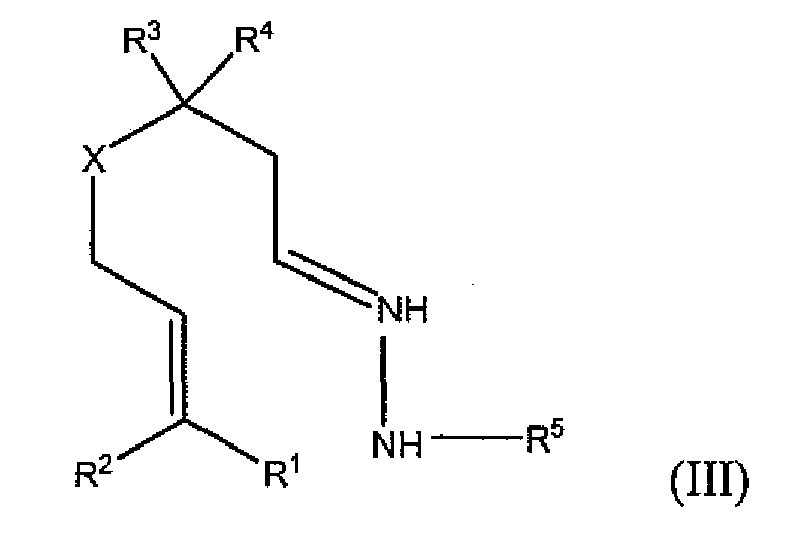
wherein R1, R2, R3 and R4 are each methyl, R5 is a benzoyl group which may have a substituent and X denotes CH2, in the presence of an asymmetric catalyst system obtained by mixing a zirconium alkoxide represented by the following formula (I):
Zr(OR)4 (I)
wherein R is a hydrocarbon group which may have a substituent, with a binaphthol derivative represented by the following formula (II):
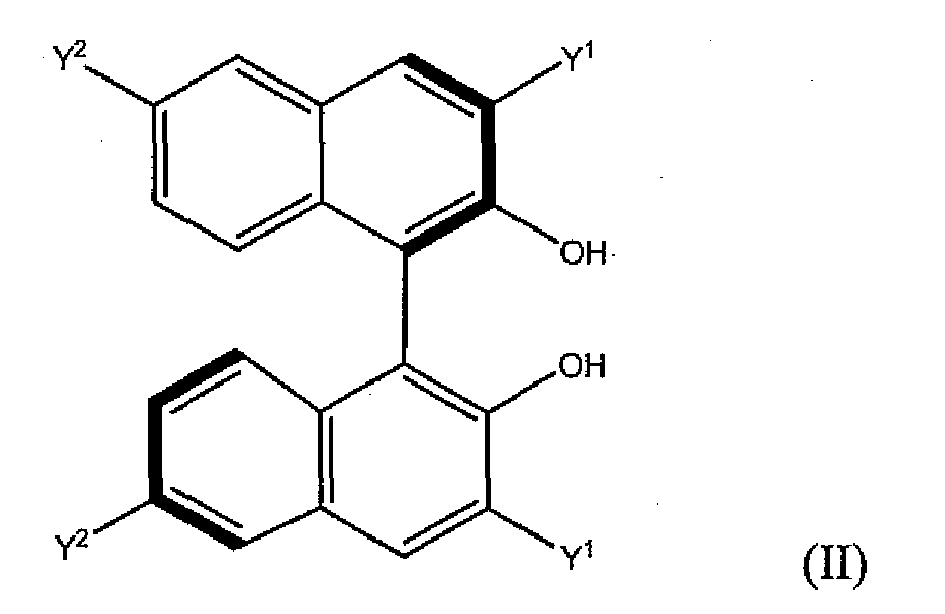
wherein Y1 and Y2 are each identical or different, Y2 denotes a hydrogen atom or a halogen atom, and Y1 denotes a halogen atom.
wherein R1, R2, R3 and R4 are each methyl, R5 is a benzoyl group which may have a substituent and X denotes CH2, in the presence of an asymmetric catalyst system obtained by mixing a zirconium alkoxide represented by the following formula (I):
Zr(OR)4 (I)
wherein R is a hydrocarbon group which may have a substituent, with a binaphthol derivative represented by the following formula (II):
wherein Y1 and Y2 are each identical or different, Y2 denotes a hydrogen atom or a halogen atom, and Y1 denotes a halogen atom.
2. A process for an asymmetric intramolecular [3+2] cycloaddition reaction as claimed
in claim 1, which is carried out in the presence of a primary alcohol.
3. A process for an asymmetric intramolecular [3+2] cycloaddition reaction as claimed
in claim 2, wherein the primary alcohol is an n-propanol.
4. A process for an asymmetric intramolecular [3+2] cycloaddition reaction as claimed
in any one of claims 1 to 3, by which an asymmetric cyclic compound represented by
the following formula (IV):
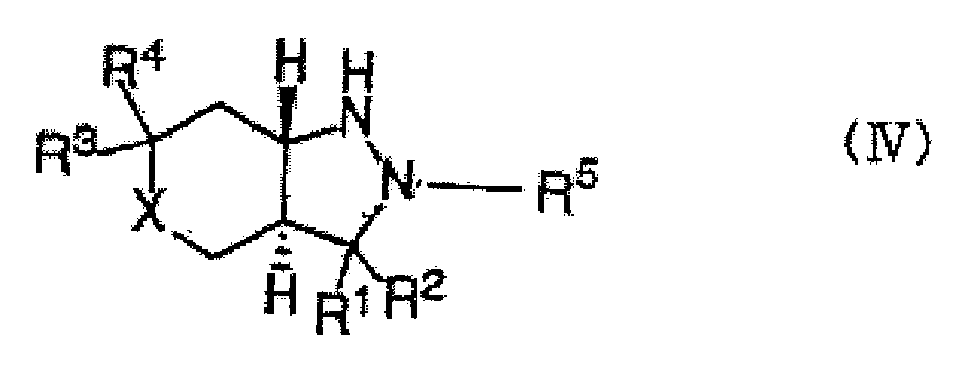
is synthesized.
is synthesized.
5. A process for an asymmetric intramolecular [3+2] cycloaddition reaction as claimed
in any one of claims 1 to 4, wherein the zironium alkoxide used in the catalyst system
is Zr(OtBu)4 or Zr(OPr)4.
1. Verfahren für eine asymmetrische intramolekulare [3+2] Cycloadditionsreaktion eines
Hydrazons, gekennzeichnet durch die Reaktion eines Hydrazonderivats, das dargestellt ist durch die folgende Formel (III):
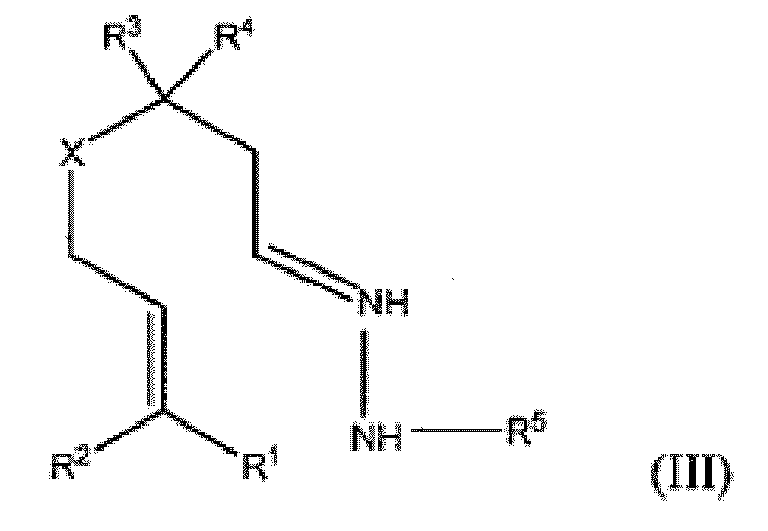
dargestellt ist, wobei R1, R2, R3 und R4 jeweils Methyl sind, R5 eine Benzoylgruppe ist, die einen Substituenten haben kann, und X CH2 bezeichnet, bei Vorhandensein eines asymmetrischen Katalysesystems, das durch Vermischen eines Zirkoniumalkoxids erhalten wird, das dargestellt ist durch die folgende Formel (I):
Zr(OR)4 (I)
wobei R eine Kohlenwasserstoffgruppe ist, die einen Substituenten haben kann, mit einem Binaphtolderivat, das durch die folgende Formel (II):
dargestellt ist, wobei Y1 und Y2 jeweils identisch oder unterschiedlich sind, Y2 ein Wasserstoffatom oder ein Halogenatom bezeichnet und Y1 ein Halogenatom bezeichnet.
dargestellt ist, wobei R1, R2, R3 und R4 jeweils Methyl sind, R5 eine Benzoylgruppe ist, die einen Substituenten haben kann, und X CH2 bezeichnet, bei Vorhandensein eines asymmetrischen Katalysesystems, das durch Vermischen eines Zirkoniumalkoxids erhalten wird, das dargestellt ist durch die folgende Formel (I):
Zr(OR)4 (I)
wobei R eine Kohlenwasserstoffgruppe ist, die einen Substituenten haben kann, mit einem Binaphtolderivat, das durch die folgende Formel (II):
dargestellt ist, wobei Y1 und Y2 jeweils identisch oder unterschiedlich sind, Y2 ein Wasserstoffatom oder ein Halogenatom bezeichnet und Y1 ein Halogenatom bezeichnet.
2. Verfahren für eine asymmetrische intramolekulare [3+2]-Cycloadditionsreaktion gemäß
Anspruch 1, das bei Vorhandensein eines primären Alkohols durchgeführt wird.
3. Verfahren für eine asymmetrische intramolekulare [3+2]-Cycloadditionsreaktion gemäß
Anspruch 2, bei dem der primäre Alkohol ein n-Propanol ist.
4. Verfahren für eine asymmetrische intramolekulare [3+2]-Cycloadditionsreaktion gemäß
Anspruch 1 bis 3, bei dem eine asymmetrische zyklische Verbindung, die durch die folgende
Formel (IV):
dargestellt ist, synthetisiert ist.
dargestellt ist, synthetisiert ist.
5. Verfahren für eine asymmetrische intramolekulare [3+2]-Cycloadditionsreaktion gemäß
Anspruch 1 bis 4, bei dem das in dem Katalysesystem verwendete Zirkoniumalkoxid Zr(OtBu)4 oder Zr(OPr)4 ist.
1. Processus pour une réaction de cycloaddition [3+2] intramoléculaire asymétrique d'un
hydrazone caractérisé par la réaction d'un dérivé d'hydrazone représenté par la formule suivante (III) :
dans laquelle R1, R2, R3 et R4 sont chacun du méthyle, R5 est un groupe benzoyle qui peut avoir un substituant et X désigne CH2, en présence d'un système de catalyseur asymétrique obtenu en mélangeant un alcoxyde de zirconium représenté par la formule suivante (I) :
Zr(OR)4 (I)
dans laquelle R est un groupe hydrocarbure qui peut avoir un substituant, avec un dérivé de binaphthol représenté par la formule suivante (II) :
dans laquelle Y1 et Y2 sont chacun identiques ou différents, Y2 désigne un atome d'hydrogène ou un atome d'halogène et Y1 désigne un atome d'halogène.
dans laquelle R1, R2, R3 et R4 sont chacun du méthyle, R5 est un groupe benzoyle qui peut avoir un substituant et X désigne CH2, en présence d'un système de catalyseur asymétrique obtenu en mélangeant un alcoxyde de zirconium représenté par la formule suivante (I) :
Zr(OR)4 (I)
dans laquelle R est un groupe hydrocarbure qui peut avoir un substituant, avec un dérivé de binaphthol représenté par la formule suivante (II) :
dans laquelle Y1 et Y2 sont chacun identiques ou différents, Y2 désigne un atome d'hydrogène ou un atome d'halogène et Y1 désigne un atome d'halogène.
2. Processus pour une réaction de cycloaddition [3+2] intramoléculaire asymétrique selon
la revendication 1, qui est effectué en présence d'un alcool primaire.
3. Processus pour une réaction de cycloaddition [3+2] intramoléculaire asymétrique selon
la revendication 2, dans lequel l'alcool primaire est un n-propanol.
4. Processus pour une réaction de cycloaddition [3+2] intramoléculaire asymétrique selon
n'importe laquelle des revendications 1 à 3, par lequel un composé cyclique asymétrique
représenté par la formule suivante (IV) :
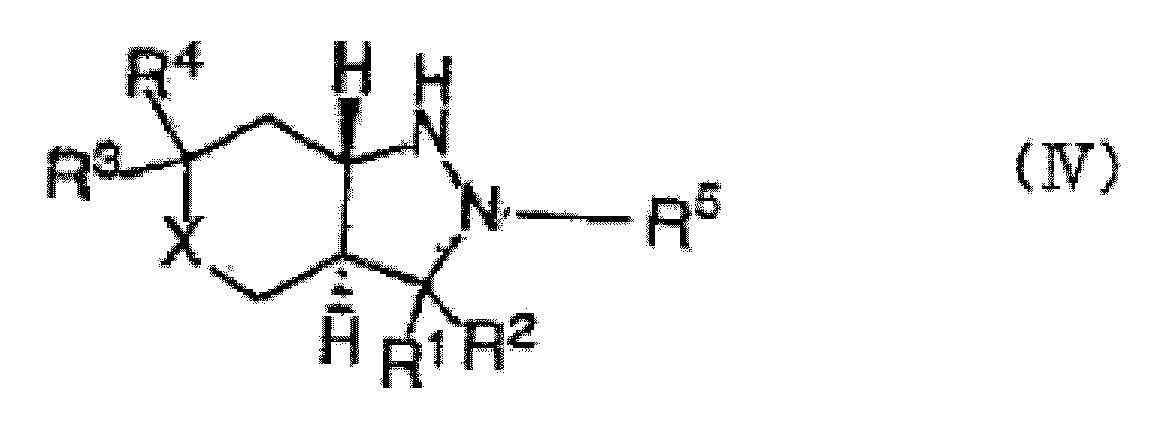
est synthétisé.
est synthétisé.
5. Processus pour une réaction de cycloaddition [3+2] intramoléculaire asymétrique selon
n'importe laquelle des revendications 1 à 4, dans lequel l'alcoxyde de zirconium utilisé
dans le système de catalyseur est du Zr(OtBu)4 ou Zr(OPr)4.
REFERENCES CITED IN THE DESCRIPTION
This list of references cited by the applicant is for the reader's convenience only. It does not form part of the European patent document. Even though great care has been taken in compiling the references, errors or omissions cannot be excluded and the EPO disclaims all liability in this regard.
Non-patent literature cited in the description
- FOUCHET B. et al.Tetrahedron Letters, 1981, vol. 22, 141333-1336 [0007]
- KOBAYASHI SHU et al.Organic Letters, vol. 2, 91225-1227 [0008]
- SAKANE, SMARUOKA, KYAMAMOTO, H.Tetrahedron, 1986, vol. 42, 2203- [0022]