|
(11) | EP 1 496 882 B1 |

| (12) | EUROPEAN PATENT SPECIFICATION |
|
|
| (54) |
TOLTERODINE SALTS TOLTERODIN-SALZE SELS DE TOLTERODINE |
|
|
|||||||||||||||||||||||||||||||||||
| Note: Within nine months from the publication of the mention of the grant of the European patent, any person may give notice to the European Patent Office of opposition to the European patent granted. Notice of opposition shall be filed in a written reasoned statement. It shall not be deemed to have been filed until the opposition fee has been paid. (Art. 99(1) European Patent Convention). |
Technical Field
[0001] The present invention concerns novel pharmaceutically active compounds, pharmaceutical compositions containing the same, the compounds for use as medicaments, and use of the compounds for the manufacture of specific medicaments. Specifically, the compounds are certain salts of tolterodine or hydroxytolterodine.
[0002] The novel compounds are useful as antimuscarinic agents. In particular, the novel compounds are useful for the treatment of asthma, a group of breathing disorders termed Chronic Obstructive Pulmonary Disease (COPD), asthma, allergic rhinitis, and urinary disorder.
[0003] More specifically, said compounds are advantageously administered by inhalation or insufflation.
Background of the Invention
[0004] US Patent 5,382,600 discloses (substituted) 3,3-diphenylpropylamines useful for treating urinary incontinence. In particular, it discloses 2-[(1R)-3-(diisopropylamino)-1-phenylpropyl)-4-methylphenol, also known as N,N-diisopropyl-3-(2-hydroxy-5-methylphenyl)-3-phenylpropylamine, with the generic name of tolterodine, as being useful to treat urinary incontinence. Tolterodine is the compound of Example 22 of US 5,382,600.
[0005] It is preferred that tolterodine is prepared by the processes of International Publication WO98/29402.
[0006] H Postlind et al, Drug Metabolism and Disposition, 26(4): 289-293 (1998) discloses that tolterodine is a muscarinic receptor antagonist. It is presently being sold in a number of different countries for treatment of urinary incontinence under the name Detrol®, marketed by Pharmacia. When tolterodine is used to treat urinary incontinence it is administered perorally as a tablet. The major, active metabolite of tolterodine is the 5-hydroxymethyl derivative of tolterodine.
[0007] US Patent 5,559,269 and H Postlind et al, Drug Metabolism and Disposition, 26(4): 289-293 (1998) disclose hydroxytolterodine. US Patent 5,559,269 discloses this compound as being useful to treat urinary incontinence. Pharmacol. Toxicol., 81: 169-172 (1997) discloses that hydroxytolterodine has antimuscarinic activity.
[0008] WO98/29402 mentions tolterodine salts of the following acids: methanesulfonic, hydrochloric, hydrobromic, sulfuric, phosphoric, nitric, benzoic, citric, tartaric, fumaric, maleic, CH3-(CH2)n-COOH where n is 0 thru 4, and HOOC-(CH2)n-COOH where n is as defined above.
[0009] PCT/US01/27779 discloses the use of tolterodine for treating asthma, COPD, and allergic rhinitis.
[0010] The currently marketed administration form of tolterodine.is film-coated tablets containing 1 mg, 2 mg or 4 mg of tolterodine L-tartrate for release in the gastrointestinal tract. Consumers constantly require alternative delivery forms with favorable efficacy and/or which simplify the treatment, thus improving their quality of life.
[0011] Despite the above advances in the art, it is desirable to develop novel pharmaceutical compounds that further improve the quality of life for a large number of individuals.
Summary of the Invention
[0012] For these and other purposes, it is an object of the present invention to provide highly efficient pharmaceutical compounds for treatment of asthma.
[0013] It is also an object of the present invention to provide highly efficient pharmaceutical compounds for treatment of COPD.
[0014] It is a further object of the present invention to provide highly efficient pharmaceutical compounds for treatment of allergic rhinitis.
[0015] It is an object of the present invention to provide highly efficient pharmaceutical compounds for treatment of urinary disorder.
[0016] It is also an object of the present invention to provide highly efficient, inhalable or insufflable antimuscarinic compounds.
[0017] It is also an object of the present invention to provide a pharmaceutical composition, comprising an antimuscarinic compound, which is appropriate for alternative delivery forms.
[0018] Another object of the present invention is to provide a novel use of an antimuscarinic compound for the manufacture of a medicament for therapeutical treatment of asthma, COPD, allergic rhinitis, and urinary disorder.
[0019] Finally, it is an object of the present invention to decrease undesirable systemic exposure upon treatment of a medical condition with an antimuscarinic agent.
[0020] For these and other objects that will be evident from the following disclosure, the present invention provides a pharmaceutically acceptable salt of tolterodine or hydroxytolterodine, wherein the salt is of an acid selected from the group consisting of aliphatic mono- and dicarboxylic acids comprising from 7 to 24 carbon atoms, alkanedisulfonic acids comprising from 2 to 4 carbon atoms, and naphthoic acid derivatives comprising from 11 to 27 carbon atoms.
[0021] In an embodiment of the pharmaceutically acceptable salt of tolterodine or hydroxytolterodine according to the invention, said acid is selected from the group consisting of: CH3-(CH2)n1-COOH, wherein n1 is an integer in the range of 5-16, HOOC-(CH2)n2-COOH, wherein n2 is an integer in the range of 5-16, and HO3S-(CH2)n3-SO3H, wherein n3 is an integer in the range of 2-4.
[0022] In another embodiment of the pharmaceutically acceptable salt of tolterodine or hydroxytolterodine according to the invention, said acid is selected from the group consisting of: CH3-(CH2)n1-COOH, wherein n1 is an integer in the range of 5-16, and HOOC-(CH2)n2-COOH, wherein n2 is an integer in the range of 5-16. In a preferred embodiment, n1 is an integer in the range of 8-12, and n2 is an integer in the range of 8-12.
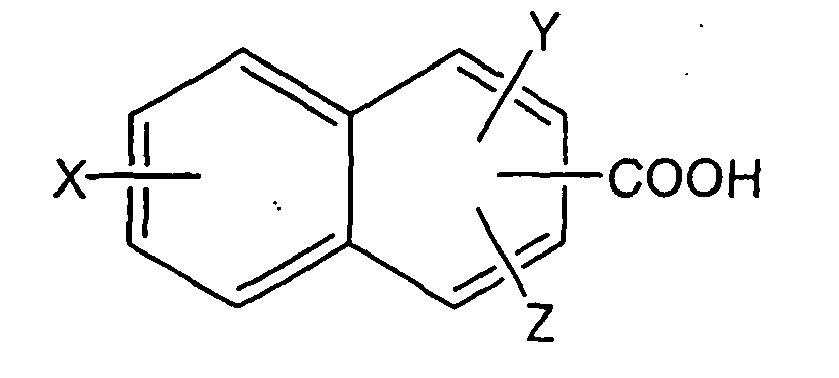
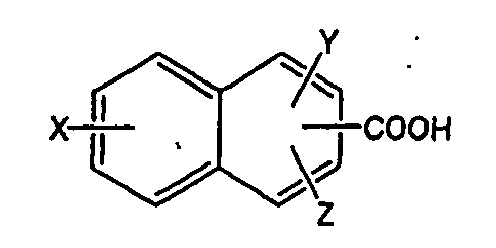
[0023] In yet another embodiment of the pharmaceutically acceptable salt of tolterodine or hydroxytolterodine according to the invention, said acid is selected from the group consisting of naphthoic acid derivatives comprising from 11 to 27 carbon atoms of the formula:
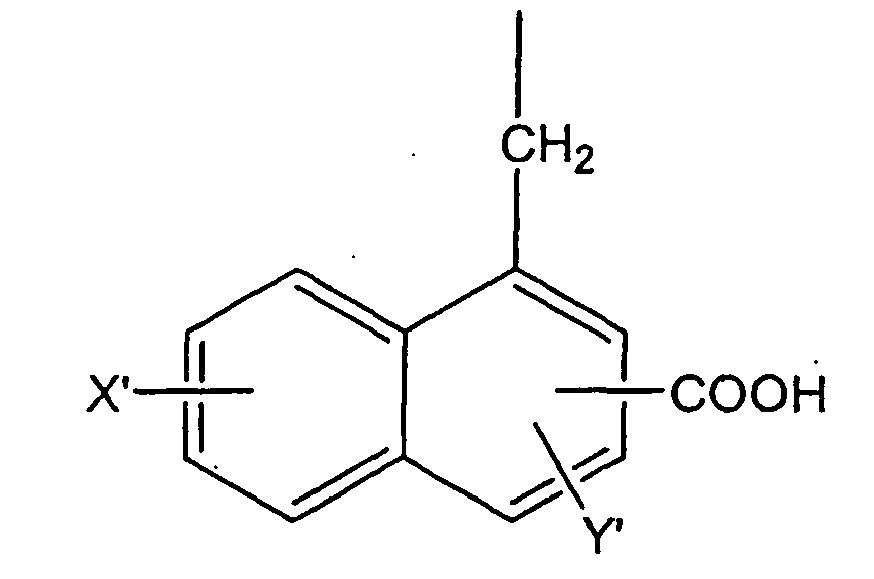
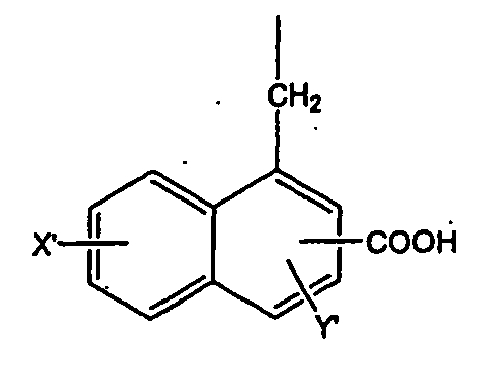
wherein X and Y are independently selected from the group consisting of -H, -OH, -CH3, -F, -Cl, -Br, -I, -COOH, -NO2, -SO3H, and -CF3, and Z is selected from the group consisting of -H and
wherein X' and Y' are independently selected from the group consisting of -H, -OH, -CH3, -F, -Cl, -Br, -I, -COOH, -NO2, -SO3H, and -CF3. It is preferred that X, Y, X', and Y' are independently selected from the group consisting of -H, -OH, and -COOH. It is particularly preferred that X and X' are -H, and Y and Y' are -OH.
[0024] In one preferred embodiment of the pharmaceutically acceptable salt of tolterodine or hydroxytolterodine according to the invention, said acid is selected from the group consisting of heptanoic acid, capric acid, lauric acid, pamoic acid, 1-hydroxy-2-naphthoic acid, 2-hydroxy-1-naphthoic acid, and 1,2-ethanedisulfonic acid.
[0025] In a preferred embodiment, said pharmaceutically acceptable salt of tolterodine or hydroxytolterodine according to the invention is in its crystal form.
[0026] The present invention also provides a pharmaceutical composition comprising a therapeutically effective amount of a salt according to the invention, and a suitable pharmaceutical diluent or carrier therefor. In a preferred embodiment, said composition is inhalable or insufflable.
[0028] The present invention also provides a novel use of a pharmaceutically acceptable salt of tolterodine or hydroxytolterodine, wherein the salt is of an acid selected from the group consisting of aliphatic mono- and dicarboxylic acids comprising from 7 to 24 carbon atoms, alkanedisulfonic acids comprising from 2 to 4 carbon atoms, naphthoic acid derivatives comprising from 11 to 27 carbon atoms, maleic acid and fumaric acid, for the manufacture of a medicament for treating a disorder selected from the group consisting of asthma, chronic obstructive pulmonary disease (COPD), allergic rhinitis, and urinary disorder. In a preferred embodiment, said medicament is inhalable or insufflable.
[0029] The present invention also provides the use for the manufacture of a medicament for treating a disorder selected from the group consisting of asthma, chronic obstructive pulmonary disease (COPD), allergic rhinitis, and urinary disorder, in a mammal, including man, of a therapeutically effective amount of a pharmaceutically acceptable salt of tolterodine or hydroxytolterodine, wherein the salt is of an acid selected from the group consisting of aliphatic mono- and dicarboxylic acids comprising from 7 to 24 carbon atoms, alkanedisulfonic acids comprising from 2 to 4 carbon atoms, naphthoic acid derivatives comprising from 11 to 27 carbon atoms, maleic acid and fumaric acid. The above-mentioned salts are also useful for treating a disorder selected from the group consisting of asthma, chronic obstructive pulmonary disease (COPD), allergic rhinitis, and urinary disorder, in a mammal, including man. In a preferred embodiment, said administration is performed by inhalation or insufflation.
Brief Description of the Drawings
[0030]
Figure 1: Rotating disk dissolution data for various salts of tolterodine at 25°C, pH 6, 0.05 M phosphate.
Description of the Invention
[0031] To the extent that any pharmaceutically active compound is disclosed or claimed, it is expressly intended to include all enantiomers, isomers or tautomers where the compound is capable of being present in its enantiomeric, isomeric or tautomeric form.
[0032] The compounds, compositions, and uses of the present invention are useful to treat mammals, including man. It is preferred that the mammal is a human.
[0033] The present invention involves the use of antimuscarinit compounds for therapeutical treatment of certain medical conditions, such as asthma, COPD, allergic rhinitis, and urinary disorder.
[0034] The compounds of the present invention are salts of tolterodine and derivatives thereof, specifically including salts of hydroxytolterodine. What is said in the following for tolterodine is also meant to include any active derivatives thereof, particularly hydroxytolterodine.
[0035] Upon traditional tablet administration of tolterodine, the plasma concentration thereof increases, peaking after 1-2 hours. Tolterodine is mainly metabolized by the liver following oral dosing. According to the present invention, administration of certain salts of tolterodine to patients in need thereof can advantageously be performed via inhalation or insufflation. Thereby, tolterodine elicits local effects, and the systemic effects are lessened or delayed, since the compounds according to the invention do not readily gain access to the systemic circulation.
[0036] The compositions according to the invention can be made up in solid or liquid form, such as powders, crystals, sterile solutions, suspensions or emulsions, and the like.
[0037] The compounds of the present invention are administered by inhalation or insufflation. The inhalation or insufflation is preferably by either an aerosol or a powder.
[0038] The compounds and compositions of the present invention are useful for the treatment of acetylcholine-mediated disorders. In particular, they are useful for treating asthma, COPD, allergic rhinitis, and urinary disorder.
[0039] "Asthma" refers to a chronic lung disease causing bronchoconstriction (narrowing of the airways) due to inflammation (swelling) and tightening of the muscles around the airways. The inflammation also causes an increase in mucus production, which causes coughing that may continue for extended periods. Asthma is characterized by recurrent episodes of breathlessness, wheezing, coughing, and chest tightness, termed exacerbations. The severity of exacerbations can range from mild to life threatening. The exacerbations can be a result of exposure to e.g. respiratory infections, dust, mold, pollen, cold air, exercise, stress, tobacco smoke, and air pollutants.
[0040] "COPD" refers to Chronic Obstructive Pulmonary Disease, primarily associated with past and present cigarette smoking. It involves airflow obstruction, mainly associated with emphysema and chronic bronchitis. Emphysema causes irreversible lung damage by weakening and breaking the air sacs within the lungs. Chronic Bronchitis is an inflammatory disease, which increases mucus in the airways and bacterial infections in the bronchial tubes,resulting in obstructed airflow.
[0041] "Allergic rhinitis" refers to acute rhinitis or nasal rhinitis, including hay fever. It is caused by allergens such as pollen or dust. It may produce sneezing, congestion, runny nose, and itchiness in the nose, throat, eyes, and ears.
[0042] "Urinary disorders" and symptoms thereof include some or all of the following: urgency, frequency, incontinence, urine leakage, enuresis, dysuria, hesitancy, and difficulty of emptying bladder. In particular, urinary disorders include urinary incontinence, caused by e.g. unstable or overactive urinary bladder.
[0043] Overactive urinary bladder encompasses variants of urinary disorders, including overactive detrusor (detrusor instability, detrusor hyperreflexia) and sensory urgency, as well as symptoms of detrusor overactivity, e.g. urge incontinence, urgency, urinary frequency, and LUTS (Lower Urinary Tract Symptoms), including obstructive urinary symptoms, such as slow urination, dribbling at the end of urination, inability to urinate and/or the need to strain to urinate at an acceptable rate, or irritating symptoms such as frequency and/or urgency).
[0044] Other conditions are also included, which give rise to urinary frequency, urgency and/or urge incontinence. Overactive bladder disorders also include nocturia and mixed incontinence. While overactive bladder is often associated with detrusor muscle instability, disorders of bladder function may also be due to neuropathy of the central nervous system (detrusor hyperreflexia), including spinal cord and brain lesions, such as multiple sclerosis and stroke. Overactive bladder symptoms may also result from, for example, male bladder outlet obstruction (usually due to prostatic hypertrophy), interstitial cystitis, local edema and irritation due to focal bladder cancer, radiation cystitis due to radiotherapy to the pelvis, and cystitis.
[0045] A specific problem which can be treated by the claimed method is a dry overactive bladder, which includes frequency, urgency and nocturia.
[0046] The dosage of the specific compound will vary depending on its potency, the mode of administration, the age and weight of the patient and the severity of the condition to be treated. The daily dosage may, for example, range from about 0.01 mg to about 4 mg per kg of body weight, administered singly or multiply in doses e.g. from about 0.05 mg to about 200 mg each. A clinically effective amount of a compound according to the invention is from about 0.05 mg to about 12 mg. It is preferred that the effective amount is from about 0.1 to about 6 mg; it is more preferred that the effective amount is from about 0.2 to about 5 mg.
[0047] The dosage form for inhalation can be an aerosol. The minimum amount of an aerosol delivery is about 0.2 ml and the maximum aerosol delivery is about 5 ml. The concentration of the compound according to the invention may vary as long as the total amount of spray delivered is within the about 0.2 to about 5 ml amount and it delivers an effective amount. It is well known to those skilled in the art that if the concentration is higher, one gives a smaller dose to deliver the same effective amount.
[0048] The non-active ingredient or carrier can be just (sterile) water with the pH adjusted to where the active pharmaceutical compound is soluble. It is preferred that the pH is at or near 7. Alternatively and preferably, the non-active carrier agent should be physiological saline with the pH adjusted appropriately. Aerosols for inhalation of various pharmaceutical agents are well known to those skilled in the art, including many aerosols for treating asthma.
[0049] Alternatively, the dosage form for inhalation can be a powder. Powders for inhalation of various pharmaceutical agents are well known to those skilled in the art, including many powders for treating asthma. When the dosage form is a powder, the compound according to the invention can be administered in pure form, e.g. pure crystal form, or diluted with an inert carrier. When an inert carrier is used, the compound according to the invention is compounded such that the total amount of powder delivered delivers an "effective amount" of the compound. The actual concentration of the compound may vary. If the concentration is lower, then more powder must be delivered; if the concentration is higher, less total material must be delivered to provide an effective amount of the compound.
[0050] Various devices are on the market for administering powders for inhalation for asthma, and these devices are suitable for administering the compounds and compositions of the present invention.
[0051] The carriers may be of any inert material, organic or inorganic, suitable for administration via inhalation or insufflation, such as: water, gelatin, gum arabicum, lactose, microcrystalline cellulose, starch, sodium starch glycolate, calcium hydrogen phosphate, magnesium stearate, talcum, colloidal silicon dioxide, and the like.
[0052] The compositions according to the invention may also contain other pharmaceutically active agents, and conventional additives, such as stabilizers, wetting agents, emulsifiers, flavoring agents, buffers, and the like.
[0053] Pharmaceutically acceptable salts according to the present invention include salts of the following acids: aliphatic mono- and dicarboxylic acids comprising from 7 to 24 carbon atoms, alkanedisulfonic acids comprising from 2 to 4 carbon atoms, naphthoic acid derivatives comprising from 11 to 27 carbon atoms, maleic acid and fumaric acid.
[0054] A preferred salt is of naphthoic acid or derivatives thereof. Naphthoic acid refers to naphthalene-1-carboxylic acid and naphtalene-2-carboxylic acid. Naphthoic acid derivatives comprise naphthoic acid substituted with at least one of the following: hydrogen, methyl, halogen (fluorine, chlorine, bromine, iodine), carboxyl, nitro, sulfo and trifluoromethyl, preferably with hydrogen, hydroxyl, or carboxyl. Both of the naphthoic acid aromatic rings may be independently substituted.
[0055] Naphthoic acid derivatives also comprise naphthoic acid substituted with another naphthoic acid (derivative), optionally via a linker. For example, a naphthoic acid (derivative) may be substituted with an alkylnaphthoic acid (derivative). Both of the rings of each of the two naphthoic acid structures may be independently substituted with at least one of the following: hydrogen, methyl, halogen (fluorine, chlorine, bromine, iodine), carboxyl, nitro, sulfo and trifluoromethyl, preferably with hydrogen, hydroxyl, or carboxyl.
[0057] Particularly preferred salts include salts of pamoic acid, 1-hydroxy-2-naphthoic acid, and 2-hydroxy-1-naphthoic acid. Pamoic acid, or embonic acid, is 4,4'-methylenebis(3-hydroxy-2-naphthoic acid).
[0058] Other preferred salts include salts of aliphatic mono- or dicarboxylic acids containing more than 6 carbon atoms and less than 25 carbon atoms, i.e. aliphatic mono- or dicarboxylic acids comprising from 7 to 24 carbon atoms. The acids may be saturated or partially unsaturated, as long as their corresponding bases are soluble in aqueous solution to any extent.
[0059] Particularly preferred salts are of aliphatic mono- or dicarboxylic acids comprising from 7 to 18 carbon atoms, even more preferred from 10 to 14. Preferred mono- or dicarboxylic acid salts are of unbranched mono- or dicarboxylic acids, more preferred unbranched monocarboxylic acids.
[0060] Particularly preferred salts are of heptanoic acid (7 C), capric acid (10 C), and lauric acid (12 C).
[0062] Other preferred salts are of alkanedisulfonic acids containing at least 2 carbon atoms but less than 5 carbon atoms, i.e. alkanedisulfonic acids comprising from 2 to 4 carbon atoms. A preferred specific salt is of 1,2-ethanedisulfonic acid (edisylate).
[0063] The salts according to'the invention have been found to dissolve rather slowly in aqueous solution, resulting in a long duration of action. This property makes them highly appropriate for pulmonary delivery of tolterodine and hydroxytolterodine, since they inventively provide local effects in the lungs upon inhalation, which is particularly useful for the treatment of respiratory tract disorders, such as asthma, COPD and allergic rhinitis.
[0064] Thus, the salts according to the invention spread the absorption of the drug out over a longer period of time. This is advantageous for the treatment of asthma, COPD and allergic rhinitis, since it is cost-effective and reduces the risk of side effects associated with systemic exposure in the subject.
[0065] However, systemic distribution still occurs at a modest rate. Therefore, the salts according to the invention are also useful for the treatment of urinary disorder when a slow release is desirable. This may for example be the case when a prolonged effect is of interest, and may contribute to preventing or diminishing of side effects from the therapeutical treatment. If desirable, systemic distribution may also be achieved through e.g. oral administration.
[0066] Advantageously, the composition according to the invention is contained in a suitable device for delivery to the subject. Examples of such devices include aerosol containers and devices for powder administration.
[0067] Specifically, the compositions according to the present invention have proven to be very suitable for administering the above-mentioned drug tolterodine and would likewise be suitable for its related compounds, i.e. the major, active metabolite of tolterodine, i.e. (R)-N,N-diisopropyl-3-(2-hydroxy-5-hydroxymethylphenyl)-3-phenylpropanamine; the corresponding (S)-enantiomer to tolterodine, i.e. (S)-N,N-diisopropyl-3-(2-hydroxy-5-methylphenyl)-3-phenylpropanamine; the 5-hydroxymethyl metabolite of the (S) -enantiomer, i.e. (S) -N,N-diisopropyl-3-(2-hydroxy-5-hydroxymethylphenyl)-3-phenylpropanamine; as well as the corresponding racemate to tolterodine, i.e. (R,S)-N,N-diisopropyl-3-(2-hydroxy-5-methylphenyl)-3-phenylpropanamine; and prodrug forms and pharmacologically acceptable salts thereof.
[0068] Tolterodine refers to 2-[(1R)-3-(diisopropylamino)-1-phenylpropyl]-4-methylphenol, also known as (R)-N,N-diisopropyl-3-(2-hydroxy-5-methylphenyl)-3-phenylpropylamine, a compound of the formula:
[0069] Hydroxytolterodine refers to 2-[(1R)-3-(diisopropylamino)-1-phenylpropyl]-4-(hydroxymethyl)phenol, a compound of the formula:
[0071] "Pharmaceutically acceptable" refers to those properties and/or substances which are acceptable to the patient from a pharmacological/toxicological point of view and to the manufacturing pharmaceutical chemist from a physical/chemical point of view regarding composition, formulation, stability, patient acceptance and bioavailability.
[0072] Analogously, "inhalably acceptable" and "insufflably acceptable", respectively, refer to properties and/or substances which are pharmaceutically acceptable and also suitable for use via inhalation and insufflation, respectively.
Examples
Example 1: Crystallization and dissolution rates of several salts of tolterodine
[0073] Tolterodine tartrate was used as the source of tolterodine for all experiments. A small amount of tolterodine free base in toluene (-1 gram) was prepared by neutralizing the tartrate salt with sodium carbonate and sodium hydroxide and then extracting it into toluene.
[0074] Several salts of tolterodine were prepared. The benzoate, caprate, fumarate, heptanoate, laurate, maleate and pamoate salts were all crystallized. The procedure involved the addition of an approximately equimolar amount of the counterion of choice to either tolterodine free base or tolterodine tartrate. Crystallization was achieved using standard techniques, known to a person skilled in the art.
[0075] Data was collected on the salts. Rotating disk dissolution data was collected at pH 6 in a 0.05 M phosphate buffer at 25°C on a fiber optic apparatus.
[0076] Table 1 shows a summary of the results for the eight salts that were crystallized. Powder X-ray data and optical microscopy were used to confirm that the salts were indeed crystalline and distinct. The DSC (Differential Scanning Calorimetry) data showed that the melting points of the salts varied widely, from about 60°C for the caprate and laurate salts up to 260°C for the fumarate salt.
Table 1
| Tolterodine salt | Melting point (°C) | Heat of fusion (J/g) | Rotating disk dissolution rate (RDDR; µg cm-2s-1) |
| tartrate | 216 | 127 | 14.0 |
| benzoate | 167-173 | pc | 2.1 |
| caprate | 62 | 74 | 0.75 |
| fumarate | 259 | dc | 2.6 |
| heptanoate | 97 | 78 | 2.7 |
| laurate | 59-70 | 61 | 0.38 |
| maleate | 177 | 119 | 4.1 |
| pamoate | 127 | 25 | < 0.3 |
| pc = phase conversion | |||
| dc = decomposition |
[0077] The physical property of most interest in this study is the dissolution rate. These data are shown graphically in Figure 1. The salts according to the invention show a variation in dissolution rates of greater than an order of magnitude. Furthermore, all of the salts dissolve at a rate slower than that of the reference material, tolterodine tartrate.
[0078] Figure 1 shows that the series of carboxylic acid salts, heptanoic, capric and lauric produced sequentially lower dissolution rates as the number of carbons was increased from seven to ten to twelve. This suggests that the dissolution rate for salts of other long chain carboxylic acids with tolterodine may have dissolution rates proportional to the number of carbon atoms in the chain. For example, palmitic (16 C) and myristic (14 C) acid salts of tolterodine would have very low predicted dissolution rates. The dissolution rate for the pamoate salt could not be measured, because the value was less than the detection limit of the instrument.
[0079] According to the Mooney Model (Mooney KG, Minutn MA, Himmelstein, KJ, Stella VJ, "Dissolution kinetics of carboxylic acids I: Effect of pH under unbuffered conditions" Journal of Pharm Sciences, 70, 13-22, 1981), the measured dissolution rates and the solubility of tolterodine tartrate can be used to estimate the solubility of the remaining salts. This calculation produces solubility values from about three to 0.3 mg/mL (in free base equivalents) for the examined salts.
[0080] Thus, seven different salts of tolterodine have been isolated. The dissolution rates of the salts vary over greater than one order of magnitude. Similar differences in dissolution rates for the salts of more the highly active metabolite, hydroxytolterodine, are expected.
[0081] In summary, seven different salts of tolterodine have been crystallized. For the seven salts that were crystallized, we have measured a range of rotating.disk dissolution rates from 4.1 to <0.3 µg cm-2sec-1 at 25°C in pH 6 media. These salts dissolve slower than tolterodine tartrate, which has a rotating disk dissolution rate of 14 µg cm-2sec-1 under these conditions.
[0082] It is possible that salts of pamoic acid may produce a salt whose bioavailability can be limited by dissolution.
Example 2 Equilibrium solubility of several salts of tolterodine
[0083] Different tolterodine salts (HCl, mesylate, tartrate, edisylate and maleate) were prepared in a similar manner to that described in Example 1. Solubility of different tolterodine salts were determined by shaking an excess of salt in the solvent(water and 0.1 M phosphate buffer pH 7.4, respectively) for 24 hours at room temperature. The resultant solution is centrifuged at 5000 rpm for 30 min in a temperature-controlled centrifuge. The supernatant was diluted and analysed for tolterodine by reversed phase high performance liquid chromatography (RP-HPLC). The results are shown in Table 2.
Table 2
| Tolterodine salt | Equilibrium solubility [mg/ml] | |
| in water (final pH) | in buffer (final pH) | |
| HCl | 8.7 (7.0) | 7.5 (7.3) |
| Mesylate | 170 (1.7) | 175 (1.2) |
| Tartrate | 11.4 (3.6) | 9..8 (4.4) |
| Edisylate | 7.1 (3.7) | 8.4 (7.3) |
| Maleate | 1.5 (5.0) | 4.7 (6.9) |
Example 3 Administration of tolterodine and hydroxytolterodine salts
Example 3A
[0084] A 50 years old male with a history of chronic COPD with FEV1 of 1.4 l is treated with inhalation of tolterodine pamoate powder 1 mg every 8 hr continuously for dyspnea.
Example 3B
[0085] A 55 year old female with a with a history of chronic COPD with a history of chronic COPD with FEV1 of 1.5 l is treated with inhalation of hydroxytolterodine caprate 2 mg every 12 hr continuously for dyspnea.
Example 3C
[0086] A 30 year old female with a history of asthma with a morning peak flow of less than 2.1 l/sec is treated with inhalation of tolterodine heptanoate 0.5 mg every 8 hr continuously.
Example 3D
[0087] A 25 year old male with a history of asthma with a morning peak flow of 4 l/sec is treated with inhalation of hydroxytolterodine laurate powder 5 mg once a day continuously.
Example 3E
1. A pharmaceutically acceptable salt of tolterodine or hydroxytolterodine, wherein the
salt is of an acid selected from the group consisting of aliphatic mono- and dicarboxylic
acids comprising from 7 to 24 carbon atoms, alkanedisulfonic acids comprising from
2 to 4 carbon atoms, and'naphthoic acid derivatives comprising from 11 to 27 carbon
atoms.
2. A pharmaceutically acceptable salt of tolterodine or hydroxytolterodine according
to claim 1, wherein said acid is selected from the group consisting of:
CH3-(CH2)n1-COOH, wherein n1 is an integer in the range of 5-16, HOOC-(CH2)n2-COOH, wherein n2 is an integer in the range of 5-16, and HO3S-(CH2)n3-SO3H, wherein n3 is an integer in the range of 2-4.
CH3-(CH2)n1-COOH, wherein n1 is an integer in the range of 5-16, HOOC-(CH2)n2-COOH, wherein n2 is an integer in the range of 5-16, and HO3S-(CH2)n3-SO3H, wherein n3 is an integer in the range of 2-4.
3. A pharmaceutically acceptable salt of tolterodine or hydroxytolterodine according
to claim 2, wherein said acid is selected from the group consisting of:
CH3-(CH2)n1-COOH, wherein n1 is an integer in the range of 5-16, and HOOC-(CH2)n2-COOH, wherein n2 is an integer in the range of 5-16.
CH3-(CH2)n1-COOH, wherein n1 is an integer in the range of 5-16, and HOOC-(CH2)n2-COOH, wherein n2 is an integer in the range of 5-16.
4. A pharmaceutically acceptable salt of tolterodine or hydroxytolterodine according
to claim 3, wherein n1 is an integer in the range of 8-12, and n2 is an integer in
the range of 8-12.
5. A pharmaceutically acceptable salt of tolterodine or hydroxytolterodine according
to claim 1, wherein said acid is selected from the group consisting of naphthoic acid
derivatives comprising from 11 to 27 carbon atoms of the formula:
wherein X and Y are independently selected from the group consisting of -H, -OH, -CH3, -F, -Cl, -Br, -I, -COOH, -NO2, -SO3H, and -CF3, and Z is selected from the group consisting of -H and
wherein X' and Y' are independently selected from the group consisting of -H, -OH, -CH3, -F, -Cl, -Br, -I, -COOH, -NO2, -SO3H, and -CF3.
wherein X and Y are independently selected from the group consisting of -H, -OH, -CH3, -F, -Cl, -Br, -I, -COOH, -NO2, -SO3H, and -CF3, and Z is selected from the group consisting of -H and
wherein X' and Y' are independently selected from the group consisting of -H, -OH, -CH3, -F, -Cl, -Br, -I, -COOH, -NO2, -SO3H, and -CF3.
6. A pharmaceutically acceptable salt of tolterodine or hydroxytolterodine according
to claim 5, wherein X, Y, X', and Y' are independently selected from the group consisting
of -H, -OH, and -COOH.
7. A pharmaceutically acceptable salt of tolterodine or hydroxytolterodine according
to claim 6, wherein X and X' are -H, and Y and Y' are -OH.
8. A pharmaceutically acceptable salt of tolterodine or hydroxytolterodine according
to claim 1, wherein said acid is selected from the group consisting of heptanoic acid,
capric acid, lauric acid, pamoic acid, 1-hydroxy-2-naphthoic acid, 2-hydroxy-1-naphthoic
acid, and 1,2-ethanedisulfonic acid.
9. A pharmaceutically acceptable salt of tolterodine or hydroxytolterodine according
to any one of claims 1-8 in its crystal form.
10. A pharmaceutical composition comprising a therapeutically effective amount of a salt
according to any one of claims 1-8, and a suitable pharmaceutical diluent or carrier
therefor.
11. A pharmaceutical composition according to claim 10, wherein said composition is inhalable
or insufflable.
12. A salt according to any one of claims 1-8 for use as a medicament.
13. Use of a pharmaceutically acceptable salt of tolterodine or hydroxytolterodine, wherein
the salt is of an acid selected from the group consisting of aliphatic mono- and dicarboxylic
acids comprising from 7 to 24 carbon atoms, alkanedisulfonic acids comprising from
2 to 4 carbon atoms, naphthoic acid derivatives comprising from 11 to 27 carbon atoms,
maleic acid and fumaric acid, or a pharmaceutical composition of said salt further
comprising a suitable pharmaceutical diluent or carrier therefor, for the manufacture
of a medicament for treating a disorder selected from the group consisting of asthma,
chronic obstructive pulmonary disease (COPD), allergic rhinitis, and urinary disorder.
14. Use according to claim 13, wherein said medicament is inhalable or insufflable.
15. Use of a therapeutically effective amount of a salt according to any one of claims
1-8, or a composition according to any one of claims 10 and 11, for the manufacture
of a medicament.
1. Pharmazeutisch annehmbares Salz von Tolterodin oder Hydroxytolterodin, wobei das Salz
von einer Säure ist, ausgewählt aus der Gruppe, bestehend aus aliphatischen Mono-
und Dicarbonsäuren, umfassend von 7 bis 24 Kohlenstoffatome, Alkandisulfonsäuren,
umfassend von 2 bis 4 Kohlenstoffatome, und Naphthoesäure-Derivate, umfassend von
11 bis 27 Kohlenstoffatome.
2. Pharmazeutisch annehmbares Salz von Tolterodin oder Hydroxytolterodin nach Anspruch
1, wobei die Säure ausgewählt ist aus der Gruppe, bestehend aus:
CH3-(CH2)n1-COOH, wobei n1 eine ganze Zahl im Bereich von 5-16 ist, HOOC-(CH2)n2-COOH, wobei n2 eine ganze Zahl im Bereich von 5-16 ist, und HO3S-(CH2)n3-SO3H, wobei n3 eine ganze Zahl im Bereich von 2-4 ist.
CH3-(CH2)n1-COOH, wobei n1 eine ganze Zahl im Bereich von 5-16 ist, HOOC-(CH2)n2-COOH, wobei n2 eine ganze Zahl im Bereich von 5-16 ist, und HO3S-(CH2)n3-SO3H, wobei n3 eine ganze Zahl im Bereich von 2-4 ist.
3. Pharmazeutisch annehmbares Salz von Tolterodin oder Hydroxytolterodin nach Anspruch
2, wobei die Säure ausgewählt ist aus der Gruppe, bestehend aus:
CH3-(CH2)n1-COOH, wobei n1 eine ganze Zahl im Bereich von 5-16 ist und HOOC-(CH2)n2-COOH, wobei n2 eine ganze Zahl im Bereich von 5-16 ist.
CH3-(CH2)n1-COOH, wobei n1 eine ganze Zahl im Bereich von 5-16 ist und HOOC-(CH2)n2-COOH, wobei n2 eine ganze Zahl im Bereich von 5-16 ist.
4. Pharmazeutisch annehmbares Salz von Tolterodin oder Hydroxytolterodin nach Anspruch
3, wobei n1 eine ganze Zahl im Bereich von 8-12 ist, und n2 eine ganze Zahl im Bereich
von 8-12 ist.
5. Pharmazeutisch annehmbares Salz von Tolterodin oder Hydroxytolterodin nach Anspruch
1, wobei die Säure ausgewählt ist aus der Gruppe, bestehend aus Naphthoesäurederivaten,
umfassend von 11 bis 27 Kohlenstoffatome, der Formel:
wobei X und Y unabhängig ausgewählt sind aus der Gruppe, bestehend aus -H, -OH, -CH3, -F, -Cl, -Br, -I, -COOH, -NO2, -SO3H, und -CF3, und Z ausgewählt ist aus der Gruppe bestehend aus -H und
wobei X' und Y' unabhängig ausgewählt sind aus der Gruppe, bestehend aus -H, -OH, -CH3, -F, -Cl, -Br, -I, -COOH, -NO2, -SO3H, und -CF3.
wobei X und Y unabhängig ausgewählt sind aus der Gruppe, bestehend aus -H, -OH, -CH3, -F, -Cl, -Br, -I, -COOH, -NO2, -SO3H, und -CF3, und Z ausgewählt ist aus der Gruppe bestehend aus -H und
wobei X' und Y' unabhängig ausgewählt sind aus der Gruppe, bestehend aus -H, -OH, -CH3, -F, -Cl, -Br, -I, -COOH, -NO2, -SO3H, und -CF3.
6. Pharmazeutisch annehmbares Salz von Tolterodin oder Hydroxytolterodin nach Anspruch
5, wobei X, Y, X' und Y' unabhängig ausgewählt sind aus der Gruppe, bestehend aus
-H, -OH und -COOH.
7. Pharmazeutisch annehmbares Salz von Tolterodin oder Hydroxytolterodin nach Anspruch
6, wobei X und X' -H sind und Y und Y' -OH sind.
8. Pharmazeutisch annehmbares Salz von Tolterodin oder Hydroxytolterodin nach Anspruch
1, wobei die Säure ausgewählt ist aus der Gruppe, bestehend aus Heptansäure, Caprinsäure,
Laurinsäure, Pamoasäure, 1-Hydroxy-2-naphthoesäure, 2-Hydroxy-1-naphthoesäure und
1,2-Ethandisulfonsäure.
9. Pharmazeutisch annehmbares Salz von Tolterodin oder Hydroxytolterodin nach einem der
Ansprüche 1-8 in seiner Kristallform.
10. Pharmazeutische Zusammensetzung, umfassend eine therapeutisch wirksame Menge eines
Salzes nach einem der Ansprüche 1-8 und ein geeignetes pharmazeutisches Verdünnungsmittel
oder einen geeigneten pharmazeutischen Träger dafür.
11. Pharmazeutische Zusammensetzung nach Anspruch 10, wobei die Zusammensetzung inhalierbar
oder insufflierbar ist.
12. Salz nach einem der Ansprüche 1-8 zur Verwendung als Medikament.
13. Verwendung eines pharmazeutisch annehmbaren Salzes von Tolterodin oder Hydroxytolterodin,
wobei das Salz von einer Säure ist, ausgewählt aus der Gruppe, bestehend aus aliphatischen
Mono- und Dicarbonsäuren, umfassend von 7 bis 24 Kohlenstoffatome, Alkandisulfonsäuren,
umfassend von 2 bis 4 Kohlenstoffatome, Naphthoesäure-Derivaten, umfassend von 11
bis 27 Kohlenstoffatome, Maleinsäure und Fumarsäure, oder einer pharmazeutischen Zusammensetzung
des Salzes, ferner umfassend ein geeignetes pharmazeutisches Verdünnungsmittel oder
einen geeigneten pharmazeutischen Träger dafür, zur Herstellung eines Medikaments
zur Behandlung einer Störung, ausgewählt aus der Gruppe, bestehend aus Asthma, chronischer
obstruktiver Lungenkrankheit (COPD), allergischer Rhinitis und Harnwegs- bzw. Blasenstörung.
14. Verwendung nach Anspruch 13, wobei das Medikament inhalierbar oder isufflierbar ist.
15. Verwendung einer therapeutisch wirksamen Menge eines Salzes nach einem der Ansprüche
1-8 oder einer Zusammensetzung nach einem der Ansprüche 10 und 11 zur Herstellung
eines Medikaments.
1. Sel pharmaceutiquement acceptable de toltérodine ou d'hydroxytoltérodine, ledit sel
étant un sel d'un acide choisi dans l'ensemble constitué d'acides mono- et dicarboxyliques
aliphatiques comprenant de 7 à 24 atomes de carbone, d'acides alcanedisulfoniques
comprenant de 2 à 4 atomes de carbone et de dérivés d'acides naphtoïques comprenant
de 11 à 27 atomes de carbone.
2. Sel pharmaceutiquement acceptable de toltérodine ou d'hydroxytoltérodine selon la
revendication 1, ledit acide étant choisi dans l'ensemble constitué de :
CH3-(CH2)n1-COOH où n1 est un nombre entier dans la plage de 5 à 16, HOOC-(CH2)n2-COOH où n2 est un nombre entier dans la plage de 5 à 16, et HO3S-(CH2)n3-SO3H où n3 est un nombre entier dans la plage de 2 à 4.
CH3-(CH2)n1-COOH où n1 est un nombre entier dans la plage de 5 à 16, HOOC-(CH2)n2-COOH où n2 est un nombre entier dans la plage de 5 à 16, et HO3S-(CH2)n3-SO3H où n3 est un nombre entier dans la plage de 2 à 4.
3. Sel pharmaceutiquement acceptable de toltérodine ou d'hydroxytoltérodine selon la
revendication 2, ledit acide étant choisi dans l'ensemble constitué de :
CH3-(CH2)n1-COOH où n1 est un nombre entier dans la plage de 5 à 16, et HOOC-(CH2)n2-COOH où n2 est un nombre entier dans la plage de 5 à 16.
CH3-(CH2)n1-COOH où n1 est un nombre entier dans la plage de 5 à 16, et HOOC-(CH2)n2-COOH où n2 est un nombre entier dans la plage de 5 à 16.
4. Sel pharmaceutiquement acceptable de toltérodine ou d'hydroxytoltérodine selon la
revendication 3, dans lequel n1 est un nombre entier dans la plage de 8 à 12 et n2
est un nombre entier dans la plage de 8 à 12.
5. Sel pharmaceutiquement acceptable de toltérodine ou d'hydroxytoltérodine selon la
revendication 1, ledit acide étant choisi dans l'ensemble constitué de dérivés d'acides
naphtoïques comprenant de 11 à 27 atomes de carbone de formule :
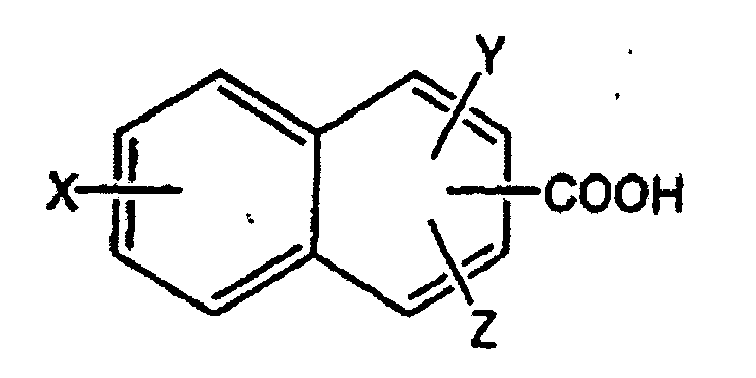
dans laquelle X et Y sont choisis indépendamment dans l'ensemble constitué de -H, -OH, -CH3, -F, -Cl, -Br, -I, -COOH, -NO2, -SO3H et -CF3, et Z est choisi dans l'ensemble constitué de -H et
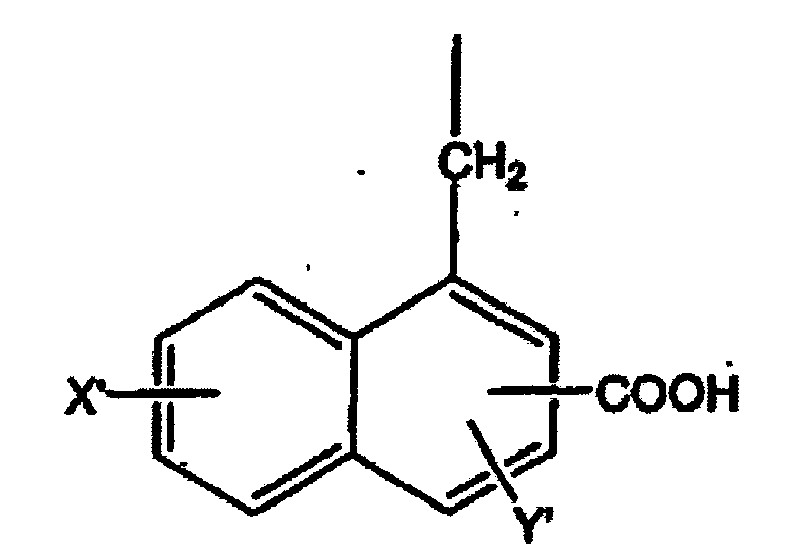
où X' et Y' sont choisis indépendamment dans l'ensemble constitué de -H, -OH, -CH3, -F, -Cl, -Br, -I, -COOH, -NO2, -SO3H et -CF3.
dans laquelle X et Y sont choisis indépendamment dans l'ensemble constitué de -H, -OH, -CH3, -F, -Cl, -Br, -I, -COOH, -NO2, -SO3H et -CF3, et Z est choisi dans l'ensemble constitué de -H et
où X' et Y' sont choisis indépendamment dans l'ensemble constitué de -H, -OH, -CH3, -F, -Cl, -Br, -I, -COOH, -NO2, -SO3H et -CF3.
6. Sel pharmaceutiquement acceptable de toltérodine ou d'hydroxytoltérodine selon la
revendication 5, dans lequel X, Y, X' et Y' sont choisis indépendamment dans l'ensemble
constitué de -H, -OH et -COOH.
7. Sel pharmaceutiquement acceptable de toltérodine ou d'hydroxytoltérodine selon la
revendication 6, dans lequel X et X' sont -H, et Y et Y' sont -OH.
8. Sel pharmaceutiquement acceptable de toltérodine ou d'hydroxytoltérodine selon la
revendication 1, ledit acide étant choisi dans l'ensemble constitué des acide heptanoïque,
acide caprique, acide laurique, acide pamoïque, acide 1-hydroxy-2-naphtoïque, acide
2-hydroxy-1-naphtoïque et acide 1,2-éthanedisulfonique.
9. Sel pharmaceutiquement acceptable de toltérodine ou d'hydroxytoltérodine selon l'une
quelconque des revendications 1 à 8 sous sa forme cristalline.
10. Composition pharmaceutique comprenant une quantité thérapeutiquement efficace d'un
sel selon l'une quelconque des revendications 1 à 8 et un diluant ou un véhicule pharmaceutique
acceptable pour celui-ci.
11. Composition pharmaceutique selon la revendication 10, ladite composition pouvant être
inhalée ou insufflée.
12. Sel selon l'une quelconque des revendications 1 à 8 destiné à être utilisé en tant
que médicament.
13. Utilisation d'un sel pharmaceutiquement acceptable de toltérodine ou d'hydroxytoltérodine,
ledit sel étant un sel d'un acide choisi dans l'ensemble constitué d'acides mono-
et dicarboxyliques aliphatiques comprenant de 7 à 24 atomes de carbone, d'acides alcanedisulfoniques
comprenant de 2 à 4 atomes de carbone, de dérivés d'acides naphtoïques comprenant
de 11 à 27 atomes de carbone, de l'acide maléique et de l'acide fumarique, ou d'une
composition pharmaceutique dudit sel, comprenant en outre un diluant ou un véhicule
pharmaceutique acceptable pour celui-ci, pour la fabrication d'un médicament pour
traiter un trouble choisi dans l'ensemble constitué de l'asthme, d'une maladie pulmonaire
obstructive chronique (MPOC), d'une rhinite allergique et d'un trouble urinaire.
14. Utilisation selon la revendication 13, dans laquelle ledit médicament peut être inhalé
ou insufflé.
15. Utilisation d'une quantité thérapeutiquement efficace d'un sel selon l'une quelconque
des revendications 1 à 8 ou d'une composition selon l'une quelconque des revendications
10 et 11 pour la fabrication d'un médicament.