| (19) |
 |
|
(11) |
EP 1 514 802 B1 |
| (12) |
EUROPEAN PATENT SPECIFICATION |
| (45) |
Mention of the grant of the patent: |
|
19.12.2007 Bulletin 2007/51 |
| (22) |
Date of filing: 20.05.2003 |
|
| (51) |
International Patent Classification (IPC):
|
| (86) |
International application number: |
|
PCT/ES2003/000225 |
| (87) |
International publication number: |
|
WO 2003/097464 (27.11.2003 Gazette 2003/48) |
|
| (54) |
VACUUM PUMP FOR BOTTLES
VAKUUMPUMPE FÜR FLASCHEN
POMPE A VIDE POUR BOUTEILLES
|
| (84) |
Designated Contracting States: |
|
AT BE BG CH CY CZ DE DK EE ES FI FR GB GR HU IE IT LI LU MC NL PT RO SE SI SK TR |
|
Designated Extension States: |
|
AL LT LV MK |
| (30) |
Priority: |
20.05.2002 ES 200201144
|
| (43) |
Date of publication of application: |
|
16.03.2005 Bulletin 2005/11 |
| (73) |
Proprietor: Brucart Bonich, Marta |
|
28206 Sabadell (ES) |
|
| (72) |
Inventor: |
|
- Brucart Bonich, Marta
28206 Sabadell (ES)
|
| (74) |
Representative: Toro Gordillo, Ignacio Maria |
|
Viriato, 56-1o izda.
28010 Madrid
28010 Madrid (ES) |
| (56) |
References cited: :
ES-B3- 2 007 549
US-A- 5 031 785
US-A- 5 535 900
|
US-A- 4 889 250
US-A- 5 469 979
US-A- 5 540 557
|
|
| |
|
|
|
|
| |
|
| Note: Within nine months from the publication of the mention of the grant of the European
patent, any person may give notice to the European Patent Office of opposition to
the European patent
granted. Notice of opposition shall be filed in a written reasoned statement. It shall
not be deemed to
have been filed until the opposition fee has been paid. (Art. 99(1) European Patent
Convention).
|
OBJECT OF THE INVENTION
[0001] The present invention refers to a vacuum pump which has been especially designed
as a closing means for bottles, such as wine bottles for example, which allows for
maintaining optimum environmental conditions inside the bottle once the primary opening
thereof has been carried out and part of its content has been consumed.
BACKGROUND OF THE INVENTION
[0002] In the preferred scope of practical application of the invention, that of wine-containing
bottles, the latter are marketed with a semi-hermetic closure, specifically through
a cork stopper, such that the latter allows the bottle to "breathe", but without the
wine coming into direct contact with the air.
[0003] Once the bottle is opened and if its entire content is not consumed, the air mass
which completes the capacity of the bottle with the wine determines a wine oxidation,
with the resulting and rapid deterioration thereof.
[0004] In attempting to avoid this drawback, different solutions are known, such as filling
the empty space of the bottle with an inert gas or applying a vacuum effect to said
bottle minimizing the oxidation process in a very substantial manner, prolonging the
useful life of the wine in a more than a sufficient extent so that the total consumption
thereof occurs. In this last aspect, stoppers are known which are provided with a
one-way valve, requiring the aid of an absorbent pump, a "bicycle-type pump", which
represents an uncomfortable, sizeable and scarcely effective solution.
DESCRIPTION OF THE INVENTION
[0006] The vacuum pump for bottles proposed by the invention, belonging to the last group
mentioned, i.e. to the group of mechanisms which allow for extracting most of the
air contained in the bottle once the closure thereof is carried out, solves in a completely
satisfactory manner the drawbacks set forth above.
[0007] To that end and more specifically, the pump proposed is structured by means of the
functional combination of three basic parts, a support intended to be externally coupled
to the neck of the bottle, a stopper which, traversing said support, is coupled inside
the neck of the bottle establishing a leak-tight closure with the latter and internally
incorporating a one-way valve, and a cap assembled on said support, which can be axially
moved with regard thereto and which in turn constitutes a second one-way valve, such
that maintaining said support stabilized with regard to the bottle with one of the
hands of the user, when the cap is axially moved in the extraction direction, the
one-way valve defined between the cap and support closes and the valve arranged in
the stopper opens, whereby the air from the bottle passes to the chamber comprised
between the stopper and the cap, whereas in the movement of said cap in the opposite
direction, the valve of the stopper is what closes and the valve arranged between
the cap and the support is what opens, the air flowing out to the exterior, such that
an alternative and repetitive operation of the type mentioned causes an absorbent
pumping which little by little gives rise to the vacuum inside the bottle. It is worth
mentioning that the pumping caused by means of the movement of said cap is of a remarkable
capacity, unlike known pumps which use the internal plunger model.
[0008] The one-way valve arranged in the internal stopper consists of two cylinders duly
fixed in an axial opening of the stopper itself, substantially spaced from one another,
leaving a small chamber in which a sealing disk of slightly smaller diameter than
that of said cylinders functions, such that the internal cylinder has an axial opening
on which the sealing disk acts when the valve closes, whereas the external cylinder,
also provided with an axial opening, has peripheral grooves, in the direction of its
generatrices, which, due to their own position, cannot be sealed by the intermediate
disk.
[0009] For its part, the one-way valve connecting the support with the cap consists of an
o-ring seal housed in a perimetral channel of the support and on which the side wall
of the cap acts, said channel being of substantially greater radius of curvature than
the radius of the o-ring seal, such that the latter is movable, dragged by the cap,
in either direction, specifically enhancing the closure when it moves in the direction
of closure of said valve, and being located in correspondence with grooves or windows
of the support which allow for the outflow of the air, i.e. the valve opening, in
the movement of the cap in the opposite direction.
DESCRIPTION OF THE DRAWINGS
[0010] To complement the description being made and for the purpose of helping to better
understand the features of the invention, according to a preferred practical embodiment
example thereof, a set of drawings is attached as an integral part of said description,
wherein the following has been shown in an illustrative and non-limiting manner:
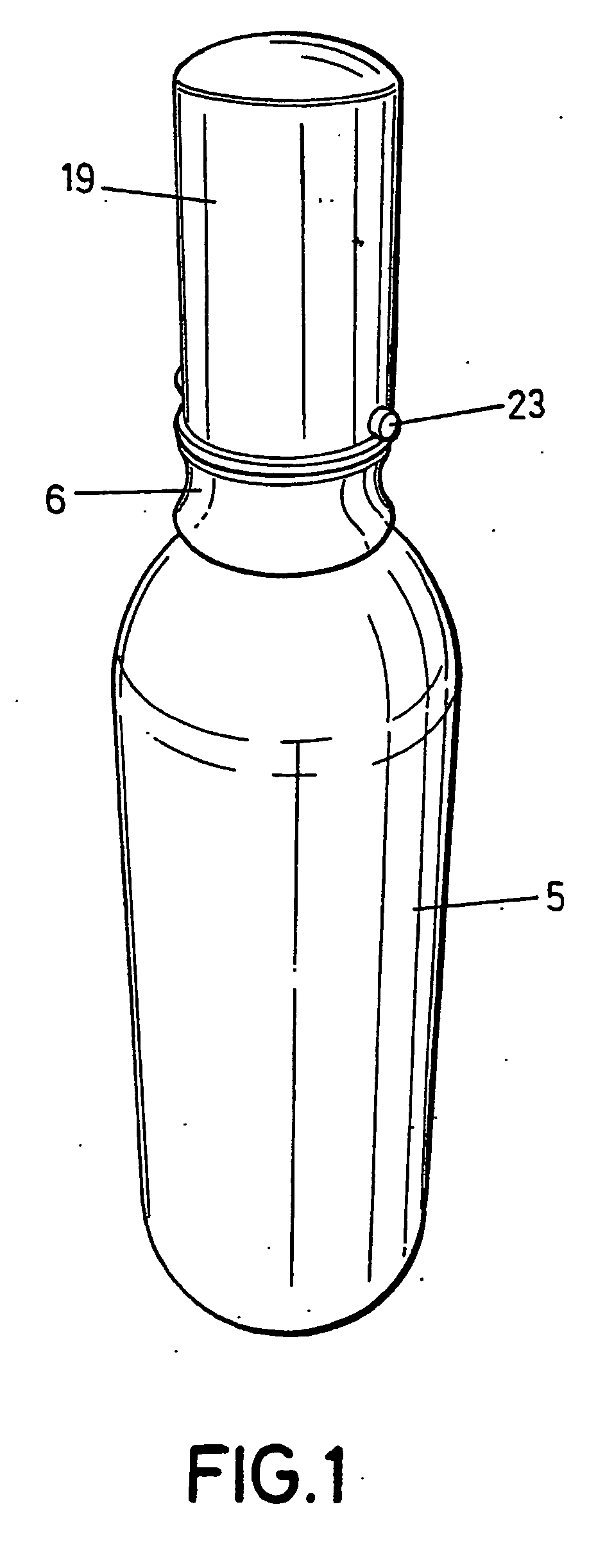
Figure 1 shows a perspective view of a vacuum pump carried out according to the object
of the present invention, duly coupled to the neck of a wine bottle.
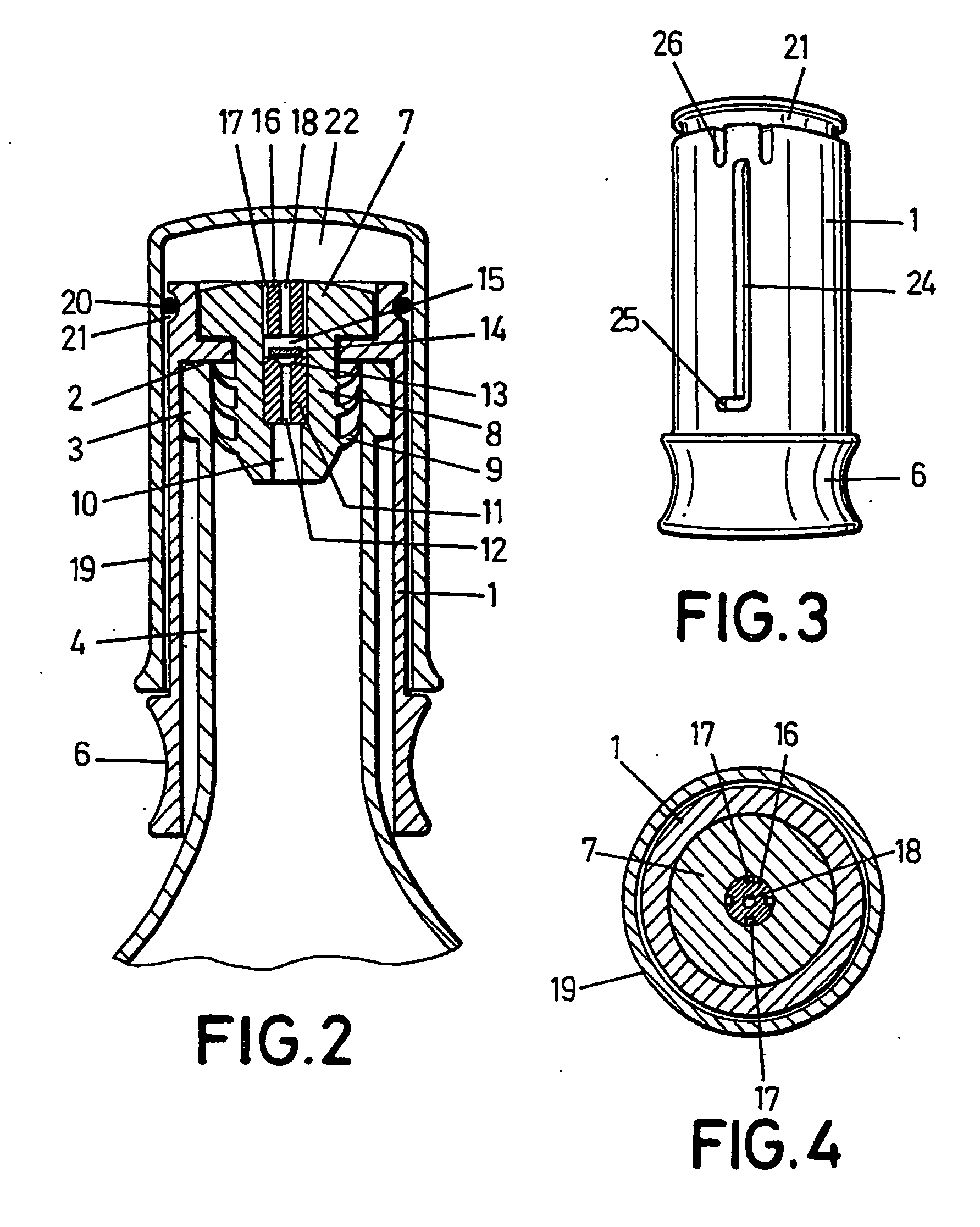
Figure 2 shows a side elevational and diametrical section view of the vacuum pump
of the previous figure, likewise coupled to the neck of a bottle, which is represented
in a dotted line.
Figure 3 shows a side elevational view of a detail of the intermediate support, in
which both air outlet grooves corresponding to the one-way valve and the guide grooves
for the movable cap are observed.
Figure 4 shows a cross section view of a detail of the internal stopper at the level
of its one-way valve.
PREFERRED EMBODIMENT OF THE INVENTION
[0011] In view of the described figures it can be observed how the vacuum pump proposed
by the invention is constituted of a support (1) of a suitable rigid material, such
as plastic for example, provided with a perimetral and internal restriction (2) close
to its upper and free end, intended for acting as a stop on the throat (3) of the
bottle, as is especially observed in Figure 2, said support (1) being extended along
the neck (4) of the bottle (5) and being finished off in a ring (6) of a recessed
profile, which facilitates its manual gripping.
[0012] The perimetral restriction (2) furthermore constitutes the seating area for the expanded
head (7) of a stopper (8), preferably of hard rubber, intended to penetrate inside
the neck (4) of the bottle and to be integrally and tightly fixed thereto, with the
collaboration of annular tabs (9), oversized with regard to the neck (4) of the bottle
and which are deformed under pressure on the latter.
[0013] The stopper (8) incorporates an axial opening (10) with a stepping on which a small
cylinder (11) rests, with an also small axial perforation (12) and with its external
end (13) frusto-conically recessed, constituting the seating for a soft rubber disk
(14), of slightly smaller diameter than that of the cylinder (11) in this area and
which functions in a chamber (15) defined between the cylinder (11) and a second cylinder
(16), the latter provided with, in addition to another axial opening (17), peripheral
grooves (18) in correspondence with its generatrices and equiangularly distributed,
the purpose of which will be described below.
[0014] The described structure is complemented with an also cylindrical cap (19), which
can be moved on the support (1) in an axial and adjustable manner, as is also observed
in Figure 2, and which is connected to the latter close to its external end though
an o-ring seal (20) housed in a channel (21) which will also be talked about below.
[0015] The cylinders (11) and (16) housed in the stopper (8) constitute a one-way valve
insofar as when the cap (19) is axially moved outwards, the chamber (22) arranged
between the bottom of said cap (19) and the head (7) of the stopper (8) progressively
grows and is subjected to a negative pressure by being maintained externally closed
though the seal (20) whereby said negative pressure is transmitted to the inside of
the bottle (5) through the openings (12) and (17) and the grooves (18), the sealing
disk (14) moving upwards, specifically resting on the internal end of the cylinder
(16), covering its opening (17) but leaving its side grooves (18) open due to their
smaller diameter, such that this negative pressure in the chamber (22) generates a
suction inside the bottle (5).
[0016] The movement of the cap (19) is guided and limited by a pair of internal lugs (23),
existing at the level of the mouth thereof, functioning in respective grooves (24)
of the support (1), provided with an orthogonal bending (25) at its internal end which
allows for locking said cap in the position shown in Figure 1 by means of a slight
rotation of the cap (19) with regard to the support (6).
[0017] When the cap begins the operation of axial movement in the opposite direction, the
negative pressure existing in the chamber (20) is transformed into pressure, to the
extent that the sealing disk (14) is moved upwards closing the opening (12) of the
cylinder (11), and, accordingly, closing the internal valve to the stopper (8) while
at the same time in this downwards movement of the cap (19), the o-ring seal (20)
moves in the same direction on the channel (21), reaching an area of the support (1)
in which the latter incorporates a series of grooves (26) establishing connection
between the interior and exterior of the o-ring seal (20), and which, as a result,
allow for the outward air discharge through the space defined between the cap (19)
and the support (1).
[0018] With the structure described and as has been pointed out previously, an alternative
movement of the cap (19) with regard to the support (1), maintaining the latter fixed
though the handle (6), causes an absorbent and intermittent pumping effect of the
air existing inside the bottle (5) towards the exterior, until achieving the suitable
vacuum level inside said bottle.
1. A vacuum pump for bottles which, being especially designed for extracting the air
contained in a bottle of which a partial consumption has been carried out, such as
a wine bottle for example, is characterized by being constituted by means of the functional combination of three parts, a cylindrical
support (1) which can be externally coupled to the neck (4) of the bottle, an internal
stopper (8) which can be coupled to said support (1) though its head (7) and can also
be coupled to the interior of the neck (4) of the bottle, in a fixed and tight manner,
and an external cap (19), which can axially and alternatively move with regard to
the intermediate support (1), having been provided that a one-way valve is arranged
between the cap (19) and support (1), and that the internal stopper has in turn another
one-way valve, such that in the axial and outward movement of the cap (19), the external
valve is maintained closed whereas the internal valve opens, allowing for the absorption
of air from the interior of the bottle to the chamber (22) created between the stopper
(8) and the cap (19), whereas in the opposite movement of said cap (19), the valve
of the stopper closes and the external valve is what opens, allowing for the outflow
of the air housed in said intermediate chamber (22) towards the exterior.
2. A vacuum pump for bottles according to claim 1, characterized in that the support (1) is materialized at its internal or lower end in a ring (6) acting
as a handle for manually stabilizing said support with regard to the bottle (5) during
the pumping operation, furthermore having an internal restriction (2) close to its
other end though which it rests on the throat or mouth (3) of the bottle and though
which it receives the head (7) of the internal stopper (8), which is of rigid plastic,
just like said support, and has perimetral rings (9) oversized with regard to the
neck of the bottle and which are deformed under pressure on the surface of said neck,
stabilizing and hermetically closing the coupling of the stopper thereto.
3. A vacuum pump for bottles according to previous claims, characterized in that the stopper (8) has an axial opening (10) provided with a perimetral stepping on
which a small cylinder (11) is seated, provided with an axial opening (12) from which
another similar cylinder (16) is considerably spaced, a chamber (15) being defined
between them in which a soft-rubber sealing disk (14) of a slightly undersized diameter
with regard to that of the chamber (15) in which it is housed functions, the second
cylinder (16) having peripheral grooves (18) in the direction of its generatrices,
such that said sealing disk (14) closes the axial opening (12) of the lower cylinder
(11) when it is pressed against the latter, but it maintains the openings or side
grooves (18) of the upper cylinder (16) open when it is adapted to the base of the
latter.
4. A vacuum pump for bottles according to previous claims, characterized in that the support (1) has a perimetral channel (21) at its upper end and its external face,
in which an o-ring seal (20) is housed, the radius of curvature of said channel (21)
being substantially greater than the radius of said seal (20) such that the latter
can be axially moved in either direction, when it is dragged by the cap, in order
to establish a closure on the upper area of said perimetral channel or to face the
grooves (26) of the support (1), which establish the connection between either side
of the o-ring seal (20), when the latter is located at the lower or internal end of
said channel (21).
5. - A vacuum pump for bottles according to previous claims, characterized in that the support (1) incorporates a pair of longitudinal and opposite grooves (24) in
which respective lugs (23) associated to the cap function, acting as guides conducting
and limiting the movement of said cap (19), it having been provided that said grooves
(24) are provided with a small orthogonal bending (25) at their lower or internal
end allowing a slight rotation of the cap (19) for locking the latter in the position
of maximum retraction.
1. Vakuumpumpe für Flaschen, die insbesondere zur Entziehung der in einer teilweise verbrauchten
Flasche, wie zum Beispiel eine Weinflasche, enthaltenen Luft gedacht ist, dadurch gekennzeichnet, dass sie aus der funktionellen Kombination von drei Teilen aufgebaut ist, einem Außen
am Flaschenhals (4) koppelbaren zylindrischen Halter (1), einem durch seinen Kopf
(7) am erwähnten Halter (1) koppelbaren inneren Zapfen (8) der ebenfalls fest und
abdichtend am Inneren des Flaschenhalses (4) koppelbar ist, und einer axial und alternativ
in Bezug zum Zwischenhalter (1) verschiebbare äußere Kappe (19), wobei zwischen Kappe
(19) und Halter (1) die Festlegung eines Einwegventils vorgesehen ist, und dass der
innere Zapfen seinerseits über ein anderes Einwegventil verfügt, so dass bei axialer
und nach Außen gerichteter Verschiebung des Zapfens (19) das äußere Ventil geschlossen
bleibt, während sich das innere Ventil öffnet, wobei die Aufsaugung von Luft vom Flascheninneren
zur zwischen Zapfen (8) und Kappe (19) gebildeten Kammer (22) erlaubt wird, während
sich bei entgegengesetzter Verschiebung der Kappe (19) das Zapfenventil schließt und
sich das äußere Ventil öffnet, wobei der Austritt der in der Zwischenkammer (22) vorhandenen
Luft nach Außen erlaubt wird.
2. Vakuumpumpe für Flaschen, gemäß Anspruch 1, dadurch gekennzeichnet, dass der Halter (1) an seinem inneren oder unteren Ende als Ring (6) verwirklicht ist,
der als Griff funktioniert um manuell den Halter während dem Pumpen bezüglich der
Flasche (5) zu stabilisieren, wobei der Halter nahe seinem anderen Ende zusätzlich
über eine innere Abschnürung (2) verfügt, durch welche er sich auf dem Wulstrand oder
Mundstück (3) der Flasche abstützt und durch die die Flasche den Kopf (7) des inneren
Zapfens (8) aufnimmt, der wie der erwähnte Halter aus steifem Kunststoff besteht und
über in Bezug auf den Flaschenhals überdimensionierte umlaufende Ringe (9) verfügt,
die sich unter Druck auf der Oberfläche des Halses verformen, wobei sie die Kopplung
des Zapfens bezüglich des Halses stabilisieren und abdichten.
3. Vakuumpumpe für Flaschen, gemäß den vorgehenden Ansprüchen, dadurch gekennzeichnet, dass der Zapfen (8) über eine axiale Öffnung (10) verfügt, mit einer umlaufenden Abstufung
versehen auf dem ein kleiner, eine axiale Öffnung (12) aufweisender Zylinder (11)
aufliegt, von dem ein anderer ähnlicher Zylinder (16) merklich beabstandet angelegt
ist, wobei zwischen diesen eine Kammer (15) definiert wird in der eine Dichtungsscheibe
(14) agiert, aus weichem Gummi, mit einem bezüglich dem der Kammer (15) in der sie
untergebracht ist leicht unterdimensionierten Durchmesser, wobei der zweite Zylinder
(16) über Randnuten (18) verfügt, in Richtung seiner Mantellinien, so dass die erwähnte
Dichtungsscheibe (14) die axiale Öffnung (12) des unteren Zylinders (11) schließt,
wenn die Dichtungsscheibe gegen letztere gedrückt wird, aber die Öffnungen oder Randnuten
(18) des oberen Zylinders (16) offen hält, wenn sie sich an die Basis des oberen Zylinders
anpasst.
4. Vakuumpumpe für Flaschen, gemäß den vorgehenden Ansprüchen, dadurch gekennzeichnet, dass der Halter (1) an seinem oberen Ende und auf seiner Außenseite über eine umlaufende
Auskehlung (21) verfügt in der eine O-Ring Dichtung (20) untergebracht ist, wobei
der Krümmungsradius der erwähnten Auskehlung (21) beträchtlich größer als der Radius
der erwähnten Dichtung (20) ist, so dass diese axial in der einen oder anderen Richtung
verschiebbar ist, wenn sie von der Kappe mitgezogen wird, damit auf dem oberen Bereich
der erwähnten umlaufenden Auskehlung ein Verschluss festgelegt wird, oder damit sie
Nuten (26) des Halters (1) gegenübersteht, die eine Kommunikation zwischen der einen
und der anderen Seite der O-Ring Dichtung (20) herstellen, wenn diese sich am unteren
oder inneren Ende der Auskehlung (21) positioniert.
5. Vakuumpumpe für Flaschen, gemäß den vorgehenden Ansprüchen, dadurch gekennzeichnet, dass der Halter ein Paar gegenübergestellte Längsnuten (24) einschließt, in denen jeweilige
mit der Kappe verbundene Ansätze (23) agieren, die als Führung die Verschiebung der
Kappe (19) leiten und begrenzen, wobei vorgesehen ist, dass die erwähnten Nuten (24)
an ihren unteren oder inneren Ende mit einer kleinen rechtwinkligen Abwinklung (25)
vorgesehen sind, die eine leichte Drehung der Kappe (19) erlaubt, um diese in maximal
ausgezogener Stellung zu blockieren.
1. Pompe à vide pour bouteilles, étant spécialement conçue pour extraire l'air contenu
dans une bouteille dont on a effectué une consommation partielle, comme par exemple
une bouteille de vin, caractérisée en ce qu'elle est constituée au moyen de la combinaison fonctionnelle de trois pièces, un support
cylindrique (1) pouvant être couplé extérieurement à la collerette (4) de la bouteille,
un bouchon (8) intérieur pouvant être couplé à travers sa tête (7) audit support (1)
et pouvant être également couplé à l'intérieur de la collerette (4) de la bouteille,
d'une manière fixe et étanche, et un capuchon extérieur (19), déplaçable axialement
y alternativement par rapport au support intermédiaire (1), en étant prévu qu'entre
le capuchon (19) et le support (1) soit établi une soupape unidirectionnelle, et que
le bouchon intérieur comprenne à son tour une autre soupape unidirectionnelle, de
manière que dans le déplacement axial et vers l'extérieur du capuchon (19), la soupape
extérieure se maintienne fermée, tandis que la soupape intérieure s'ouvre, en permettant
l'absorption d'air depuis l'intérieur de la bouteille à la chambre (22) créée entre
le bouchon (8) et le capuchon (19), tandis que dans le déplacement inverse dudit capuchon
(19), la soupape du bouchon se ferme et c'est la soupape extérieure celle qui s'ouvre,
en permettant la sortie de l'air logé dan ladite chambre (22) intermédiaire vers l'extérieur.
2. Pompe à vide pour bouteilles, selon la revendication 1, caractérisée en ce que le support (1) est matérialisé à son extrémité interne ou inférieure en une bague
(6) ayant les fonctions de poignée pour stabiliser manuellement ledit support par
rapport à la bouteille (5) pendant l'action de pompage, en comprenant en outre, près
de son autre extrémité, un étranglement intérieur (2) à travers lequel elle s'appuie
sur le goulot ou embouchure (3) de la bouteille et à travers lequel elle reçoit la
tête (7) du bouchon (8) intérieur, lequel est en plastique rigide, tout comme ledit
support, et elle comprend des bagues périmétrales (9) surdimensionnées par rapport
à la collerette de la bouteille et qui se déforment à force sur la surface de ladite
collerette en stabilisant et étanchéisant l'accouplement du bouchon à celle-ci.
3. Pompe à vide pour bouteilles, selon des revendications précédentes, caractérisée en ce que le bouchon (8) comprend un orifice axial (10) pourvu d'un échelonnement périmétral
sur lequel s'assied un petit cylindre (11) pourvu d'un orifice axial (12), duquel
est sensiblement éloigné un autre cylindre similaire (16), en se définissant entre
eux une chambre (15) dans laquelle joue un disque obturateur (14), en caoutchouc mou,
de diamètre légèrement sous-dimensionné par rapport à celui de la chambre (15) dans
laquelle il est logé, le deuxième cylindre (16) comprenant des rainures marginales
(18), dans le sens de ses génératrices, de manière à ce que ledit disque obturateur
(14) ferme l'orifice axial (12) du cylindre inférieur (11) lorsqu'il est pressé contre
ce dernier, mais il maintient ouverts les orifices ou rainures latérales (18) du cylindre
supérieur (16) lorsqu'il est adapté à la base de ce dernier.
4. Pompe à vide pour bouteilles, selon des revendications précédentes, caractérisée en ce que le support (1) comprend à son extrémité supérieure et sur une face externe une cannelure
périmétrale (21) dans laquelle est logé un joint torique (20), le rayon de courbure
de ladite cannelure (21) étant considérablement supérieur au rayon dudit joint (20),
de manière que celui-ci peut se déplacer axialement dans l'un ou l'autre sens, lorsqu'il
est entraîné par le capuchon, pour établir une fermeture sur la zone supérieure de
ladite cannelure périmétrale ou pour faire face aux rainures (26) du support (1),
qui établissent une communication entre l'un et l'autre côté du joint torique (20),
lorsque celui-ci se situe à l'extrémité inférieure ou interne de ladite cannelure
(21).
5. Pompe à vide pour bouteilles, selon des revendications antérieures, caractérisée en ce que le support incorpore une paire de rainures longitudinales et opposées (24) dans lesquelles
jouent des tétons (23) respectifs associés au capuchon, en agissant en guise de guides
conduisant et limitant le déplacement dudit capuchon (19), en étant prévu que lesdites
rainures (24) comportent à leur extrémité inférieure ou interne un petit accoudement
orthogonal (25) permettant une légère rotation de capuchon (19), pour le blocage de
ce dernier en situation de retrait maximal.
REFERENCES CITED IN THE DESCRIPTION
This list of references cited by the applicant is for the reader's convenience only.
It does not form part of the European patent document. Even though great care has
been taken in compiling the references, errors or omissions cannot be excluded and
the EPO disclaims all liability in this regard.
Patent documents cited in the description