|
(11) | EP 1 658 044 B1 |

| (12) | EUROPEAN PATENT SPECIFICATION |
|
|
| (54) |
CATIONIC CASSIA DERIVATIVES AND APPLICATIONS THEREFOR KATIONISCHE CASSIA-DERIVATE UND ANWENDUNGEN DAFÜR DERIVES CATIONIQUES DE CASSIA ET LEUR UTILISATION |
|
|
|||||||||||||||||||||||||||||||
|
||||||||||||||||||||||||||||||||
| Note: Within nine months from the publication of the mention of the grant of the European patent, any person may give notice to the European Patent Office of opposition to the European patent granted. Notice of opposition shall be filed in a written reasoned statement. It shall not be deemed to have been filed until the opposition fee has been paid. (Art. 99(1) European Patent Convention). |
Cross Reference to Related Application
[0001] This application claims priority from United States Provisional Application Serial No. 60/479,793 filed on June 19, 2003.
Technical Field
[0002] This invention generally relates to polygalactomannan derivatives. More specifically, the invention relates to cationically derivatized galactomannan polymers obtained from Cassia tora and Cassia obtusifolia and their use in personal care, health care, household, institutional and industrial products and the like. The cationically derivatized galactomannan polymers can be employed as thickeners, stabilizers, emulsifiers, spreading aids and carriers for enhancing the efficacy, deposition and delivery of chemically and physiologically active ingredients. In addition, these polymers are useful for improving the psychosensory and aesthetic properties of cosmetic formulations in which they are included.
Background
[0003] Polygalactomannans are polysaccharides that are found in the endosperm material of seeds from leguminous plants such as Cyamopsis tetragonoloba (guar gum), Cesalpinia spinosa (tara gum), Ceratonia siliqua (locust bean gum), and other members of the Leguminosae family. A polyglactomannan is composed of backbone of 1→4-linked β-D-mannopyranosyl units with recurring 1→6-linked α-D-galactosyl side groups branching from the number 6 carbon of a mannopyranose residue in the backbone. The galactomannan polymers of the different Leguminosae species defer from one another in the frequency of the occurrence of the galactosyl side units branching from the polymannopyranose backbone. The average ratio of D-mannosyl to D-galactosyl units in the polygalactomannan contained in guar gum is approximately 2:1, approximately 3:1 for tara gum, and approximately 4:1 for locust bean gum. Another important source of polygalactomannan is Cassia tora and Cassia obtusifolia (collectively known as cassia gum). The average ratio of D-mannosyl to D-galactosyl units in the polygalactomannan contained in cassia gum is approximately 5:1.
[0004] Polyglactomannan obtained from cassia gum is schematically represented in the structure below:
wherein n represents an integer from about 15 to about 35. In another embodiment, n represents and integer from about 20 about 30. In still another embodiment of the invention, the polygalactomannan of in invention has a number average molecular weight ranging from about 200,000 to about 300,000 (GPC method using a polystyrene standard)
[0005] Polygalactomannans are hydrocolloids that have a high affinity for water. They have been widely used as suspending, thickening, emulsifying, and gelling agents in applications as diverse as foodstuffs, coatings, personal care compositions and in oil well fracturing fluids. Although the use of these polymers has been met with great success, polygalactomannans used in their natural form have suffered some drawbacks from a water solubility standpoint. An unsubstituted polymannose backbone is completely insoluble in water. The attachment of galactose side units to the C-6 atom in the recurring mannose residues of the polymannose backbone increases the water solubility of the polymer, particularly in cold water (i.e., ambient temperature and below). The greater the galactose side unit substitution, the greater is the cold water solubility properties of the polygalactomannan. Consequently, lower ratios of D-mannosyl to D-galactosyl units in the polygalactomannan leads to better cold water solubility. For example the polygalactomannan contained in guar gum (average D-mannosyl to D-galactosyl ratio 2:1) is soluble in cold water, while the polygalactomannan obtained from cassia gum (average D-mannosyl to D-galactosyl ratio of 5:1) is only sparingly soluble in cold and hot water.
[0006] U.S. Patent No. 4,753,659 to Bayerlein et al. discloses inter alia that improved cold water solubility can be imparted to cassia gum by chemically modifying the polyglactomannan. The reaction of cassia gum polygalactomannan with selected reagents to yield C-6 substituted derivatives is disclosed. Exemplary reaction products include C-6 substituted and unsubstituted alkyl ethers, C-6 substituted phosphate esters, and C-6 substituted quaternary ammonium compounds. Disclosed uses for the chemically modified cassia gum polygalactomannans include textile printing applications, oil well drilling auxiliaries, mining and explosive applications.
[0007] U.S. Patent No. 5,733,854 to Chowdhary et al. discloses a chemically modified guar gum and a method for its preparation. According to Chowdhary et al., cationically derivatized guar gum polygalactomannans produce clear and colorless solutions upon dispersal in aqueous or organic solvents. A disclosed application for the cationically derivatized guar gum includes its incorporation into detergent compositions for human and household uses. Other disclosed uses include personal care and cosmetic applications. The use of cationically derivatized cassia gum in personal care, pharmaceutical, home care or cosmetic formulations is not discussed.
[0008] An inherent drawback with cationically derivatized guar gum polygalactomannans is the high ratio of galactose side units contained on the polymannose backbone. For every two mannose backbone repeating units there is one pendant galactose side unit. The galactose side units shield the hydroxyl groups contained on the C-6 atom of the mannose backbone units from access to derivation reagents. For the most part, only the C-6 hydroxyl group on the galactose side unit is accessible for functionalization by derivatizing agents. Consequently, the degree of cationic group substitution on the guar gum polygalactomannan is relatively low.
[0009] Accordingly, there exists is a need for a derivatized polygalactomannan with a high degree of molecular substitution which is suitable for use in thickener, stabilizer, emulsifier, spreading aid and carrier applications for enhancing the efficacy, deposition and delivery of chemically, cosmetically and physiologically active ingredients.
DESCRIPTION OF EXEMPLARY EMBODIMENTS
[0010] Exemplary embodiments in accordance with the present invention will be described. Various modifications, adaptations or variations of such exemplary embodiments described herein may become apparent to those skilled in the art as such are disclosed. It will be understood that all such modifications, adaptations or variations that rely upon the teachings of the present invention, and through which these teachings have advanced the art, are considered to be within the scope of the present invention.
[0011] In one aspect, embodiments of the present invention relate to polygalactomannan compositions that have been derivatized to higher degrees of molecular substitution than prior art polygalactomannan compositions. In some embodiments of the present invention a polygalactomannan isolated from the endosperm of the seeds of Cassia tora and Cassia obtusifolia (cassia gum) is post-functionalized to contain recurring pendant nonionic, anionic and cationic moieties. Some exemplary embodiments in accordance with the present invention relate to cationically modified cassia gum polygalactomannan. Other embodiments relate to molecularly substituted cassia gum polygalactomannans that are tailored for use as thickeners, stabilizers, emulsifiers, spreading aids and carriers for enhancing the efficacy, deposition and delivery of chemically and physiologically active ingredients. Yet other such embodiments relate to personal care, home care, food and industrial compositions that contain molecularly substituted cassia gum polygalactomannans.
[0012] As used here and throughout the specification, the terms molecularly substituted and molecular substitution mean appending a substituent selected from cationic containing moieties, to the C-6 carbon atom of the galactose side unit and/or to the C-6 carbon atom of the mannose repeating backbone units of the cassia gum derived polygalactomannan. Functionalization reagents containing these moieties are co-reacted with the hydroxyl group that is bonded to the C-6 carbon atom of the galactose and mannose residues that make up the cassia gum derived polygalactomannan. In other words, a hydroxyl hydrogen is replaced by a moiety derived from the functionalization reagent. In one embodiment, the hydroxyl hydrogen on the C-6 carbon atom is replaced by a moiety derived from the functionalization reagent. The reaction is schematically represented below:
[0013] In some embodiments of the invention, R independently represents hydrogen, a cationic group, subject to the proviso that all R groups can not be hydrogen at the same time. In other embodiments, R independently is selected from the formula:
-AR1
wherein A is an alkylene spacer group containing 1 to 6 carbon atoms and R1 represents a cationic substituent. In another embodiment the alkylene group contains 2, 3, 4, or 5 carbon atoms. The alkylene spacer is optionally mono-substituted or multi-substituted with a group selected from C1 to C3 alkyl, C1 to C3 haloalkyl, C1 to C3 hydroxyalkyl, hydroxyl, halogen (bromine, chlorine, fluorine, and iodine), and combinations thereof.
[0014] Exemplary cationic substituents under R1 includes quaternary ammonium, sulfonium and phosphonium derivatives represented by the radicals: -N(R3)3+ X-, -S(R3)2+ X-, -P(R3)3+ X-, wherein R3 independently represents C1 to C24 alkyl, benzyl and phenyl; and X is any suitable anion that balances the charge on the onium cation. In one embodiment, X is a halide anion selected from bromine, chlorine, fluorine and iodine. The alkyl, benzyl and phenyl substituents defined under R3 can optionally be mono-substituted or multi-substituted with a group selected from C1 to C3 alkyl, hydroxyl, halogen (bromine, chlorine, fluorine, and iodine), and combinations thereof. Illustrative cationic groups defined under -AR1 can be represented by the formulae:
-alkylene-N(R3)3+ X-
-alkylene-S(R3)2+ X-
-alkylene-P(R3)3+ X-
wherein a R3, and X are as previously defined. Representative of cationic groups under -AR1 are quaternary ammonium groups that include but are not limited to the formula:
wherein R3 is selected from methyl, decyl, dodecyl, butadecyl, cocoalkyl, dodecyl, and octadecyl, and R4 is selected from hydrogen and chlorine.
[0015] Underivatized Cassia gum or flour is commercially available from Noveon, Inc. under the Diagum trademark. As discussed supra, the derivatization of cassia gum polygalactomannan occurs at the C-6 hydroxyl group on the galactose side unit and/or on the backbone mannose repeating units. The steric hindrance of the galactose side unit controls the amount of substitution that can occur at the C-6 hydroxyl group in polygalactomannans. Cassia gum polygalactomannans differ from other polygalactomannans in the degree of substitution at the C-6 hydroxyl group since the structure of cassia affords more accessibility (i.e., less steric hindrance) of the C-6 hydroxyl reactive site, resulting in higher degrees of functional group substitution. In embodiments of the invention wherein ionic group substitution is effected the derivatized cassia gum polygalactomannan will have a broader range of charge density when compared to the similarly derivatized prior art polygalactomannans . In some embodiments of the invention the degree of quaternary ammonium cationic substitution can range up to 60% and above. The term "degree of substitution" refers to the percentage of available C-6 hydroxyl groups per polygalactomannan repeating unit (represented by the bracketed repeating unit structure above) that have been modified with the modifying substituent (e.g., 3 out of the 5 available C-6 hydroxyl groups are modified). In comparison, the derivatized prior art guar polygalactomannans exhibit a degree of substitution of only 33%.
[0016] The derivatization of the Cassia polygalactomannan C-6 hydroxyl group can be accomplished by methods well known to those skilled in the art. Generally speaking, the C-6 hydroxyl group can be reacted with any functionalization reagent that is co-reactive therewith. For example, to functionalize the C-6 hydroxyl group with the nonionic, anionic, cationic and amphoteric substituents of the invention, the C-6 hydroxyl group(s) on the Cassia gum polygalactomannan are reacted with a functionalization reagent that contains the respective nonionic, anionic, cationic and amphoteric substituents and a functional moiety that is co-reactive with the C-6 hydroxyl group. The functionalization reaction is conducted in an appropriate solvent and at an appropriate temperature. The amount of functional group substitution (degree of substitution) on the polygalactomannan C-6 hyroxyl atom(s) can be controlled by adjusting the stoichiometric amount of functionalization reagent added to the Cassia polygalactomannan. Functionalization methods for Cassia gum polygalactomannans are disclosed in U.S. Patent No. 4,753,659 which is incorporated herein by reference. Additional methods of derivatizing polygalactomannans are set forth in U.S. Patent No. 5,733,854.
[0017] In an exemplary reaction Cassia gum polygalactomannan can be functionalized with co-reactive quaternary ammonium compounds which contain an epoxy group or a halohydrin group. In one such embodiment Cassia polygalactomannan can reacted with glycidyltrimethylammonium chloride (75 % aqueous solution) in an alkaline aqueous medium at a temperature of about 52° C to yield the desired 2-hydroxy-3-(trimethylammonium)propyl Cassia galactomannan chloride product. The reaction is schematically represented below:
[0018] Chemical modification of Cassia gum leads to incorporation of cationic moieties onto the backbone. The chemical modification leads to various physical properties changes. For instance, derivatized cassia gums exhibit cold water or improved cold water solubility. It is able to hydrate in cold water and build viscosity by forming a colloidal thixotopic dispersion in cold water.
[0019] Some embodiments of the invention relate to the use of cationic cassia derivatives as multi-functional polymer ingredients in personal care, health care, household, institutional and industrial product applications and the like. The cationic cassia polymers can be employed as emulsifiers, spreading aids and carriers for enhancing the efficacy, deposition and delivery of chemically and physiologically active ingredients and cosmetic materials, and as a vehicle for improving the psychosensory and aesthetic properties of a formulation in which they are included. The term "personal care products" as used herein includes, without limitation, cosmetics, toiletries, cosmeceuticals, beauty aids, personal hygiene and cleansing products that are applied to the skin, hair, scalp, and nails of humans and animals. The term "health care products" as used herein includes, without limitation, pharmaceuticals, pharmacosmetics, oral care products (mouth, teeth), eye care products, ear care products and over-the-counter products and appliances, such as patches, plasters, dressings and the like. The term also includes medical devices that are externally applied to or into the body of humans and animals for ameliorating a health related or medical condition. The term "body" includes the keratinous (hair, nails) and non-keratinous skin areas of the entire body (face, trunk, limbs, hands and feet), the tissues of body openings and the eyes. The term "skin" includes the scalp and mucous membranes. The term "household care products" as used herein includes, without limitation, products being employed in a household for surface protection and/or cleaning including biocidal cleaning products for maintaining sanitary conditions in the kitchen and bathroom and laundry products for fabric cleaning and the like. The term "institutional and industrial products" as used herein includes, without limitation, products employed for protection and/or cleaning or maintaining sanitary conditions in industrial and institutional environments, including hospitals and health care facilities, and the like.
[0020] In a given composition or application, the cationic cassia derivatives of this invention can, but need not, serve more than one function, such as a thickener and conditioner, film former and carrier or deposition aid, and the like. The amount of cationic cassia derivatives that can be employed depends upon the purpose for which they are included in the formulation and can be determined by person skilled in the formulation arts. Thus, as long as the physicochemical and functional properties are achieved, a useful amount of cationic cassia derivatives on a total composition weight basis, typically can vary in the range of about 0.01% to about 25%, but is not limited thereto.
[0021] Compositions containing cationic cassia derivatives can be packaged and dispensed from containers such as jars, tubes, sprays, wipes, roll-ons, sticks and the like, without limitation. There is no limitation as to the form of the product in which these derivatives can be incorporated, so long as the purpose for which the product is used is achieved. For example, personal and health care products containing cationic cassia derivatives can be applied to the skin, hair, scalp, and nails, or to hard surfaces or laundry fabrics, without limitation in the form of gels, sprays (liquid or foams), emulsions (creams, lotions, pastes), liquids (rinses, shampoos), bars, ointments, suppositories, and the like.
[0022] The cationic cassia derivatives of this invention are suitable for preparation of personal care (cosmetics, toiletries, cosmeceuticals) and topical health are products, including, without limitation, hair care products (shampoos, combination shampoos, such as "two -in-one" conditioning shampoos), post-shampoo rinses, setting and style maintenance agents (including setting aids, such as gels and sprays, grooming aids such as pomades, conditioners, perms, relaxers, hair smoothing products, and the like), skin care products (facial, body, hands, scalp and feet), such as creams, lotions and cleansing products, antiacne products, antiaging products (exfoliant, keratolytic, anticellulite, antiwrinkle, and the like), skin protectants (sun care products, such as sunscreens, sunblock, barrier creams, oils, silicones and the like), skin color products (whiteners, lighteners, sunless tanning accelerators and the like), hair colorants (hair dyes, hair color rinses, highlighters, bleaches and the like), pigmented skin colorants (face and body make-ups, foundation creams, mascara, rouge, lip products, and the like) bath and shower products (body cleansers, body wash, shower gel, liquid soap, soap bars, syndet bars, conditioning liquid bath oil, bubble bath, bath powders, and the like), nail care products (polishes, polish removers, strengtheners, lengtheners, hardeners, cuticle removers, softness, and the like).
[0023] Toiletries and health and beauty aids containing cationic cassia derivatives, can include, without limitation, hair-removal products (shaving creams and lotions, epilators, after-shaving skin conditioner, and the like); deodorants and antiperspirants; oral care products (mouth, teeth, gums), such as mouth wash, dentifrice, such as toothpaste, tooth powder, tooth polishes, tooth whiteners, breath fresheners, denture adhesives, and the like; facial and body hair bleach and the like. Other health and beauty aids can contain cationic cassia derivatives, include, without limitation, sunless tanning applications containing artificial tanning accelerators, such as dihydroxyacetone (DHA), tyrosine, tyrosine esters and the like: skin-depigmenting, whitening and lightening, formulations containing such active ingredients as kojic acid, hydroquinone, arbutin, fruital, vegetable or plant extracts, (lemon peel extract, chamomile, green tea, paper mulberry extract, and the like), ascorbyl acid derivatives ascorbyl palmitate, ascorbyl stearate, magnesium ascorbyl phosphate and the like); foot care products, such as keratolytic corn and callous removers, foot soaks, foot powders (medicated such as antifungal athlete's foot powder, ointments, sprays, and the like, antiperspirant powders, or non-medicated moisture absorbent powder), liquid foot sprays (non-medicated, such as cooling, and deodorants sprays, and the like), and foot and toenail conditioners (lotions , creams, nails softeners, and the like).
[0024] Topical health and beauty aids can include cationic cassia derivatives as spreading aids and film formers include, without being limited thereto, skin protective sprays, cream, lotion, gels, stick, powder products such as insect repellants, itch relief, antiseptics, disinfectants, sun blocks, sun screens, skin tightening and toning milk and lotions, wart removal compositions, and the like.
[0025] Cationic cassia derivatives are particularly useful as suspending agents for particulates making them suitable for dermal products containing particulates, microabrasives, and abrasives, such as shower gels, masks and skin cleansers containing exfoliative scrub agents. Typical particulates include, but are not limited thereto, shell, seed, and stone granules, such as almonds, apricot (seed, kernel powder, shell), avocado, coconut, corn cob, olive, peach, rose hip seed, walnut shell, and the like, aluminum silicate, jojoba (wax, seed powder), oyster shell powder, evening primrose seed, milled adzuki beans, and the like, polyethylene (granules, spheres), polyethylene (and) hydroxycellulose granules, microcrystalline cellulose, polystyrene, polystyrene (and) talc granules, ground pumice, ground loofah, ground seaweed, rice, oat bran, silica (hydrated, colloidal, and the like), ground eggshell, ground blue poppy seed, salt, such as sodium chloride, dead sea salt, and the like, and mixtures thereof.
[0026] Cationic cassia derivatives are useful as thickeners and film formers in a variety of dermatological, cosmeceutical compositions employed for topically ameliorating skin conditions caused by aging, drying, photodamage, acne, and the like, containing conditioners, moisturizers, antioxidants, exfoliants, keratolytic agents, vitamins, and the like. Cationic cassia derivatives can be employed as a thickener for active skin treatment lotions and creams, containing as such active ingredients, acidic anti-aging agents, anti-cellulite, and anti-acne agents, such as alpha-hydroxy acid (AHA), beta-hydroxy acid (BHA), alpha amino-acid, alpha-keto acids (AKAs), and mixtures thereof. In such cosmeceuticals, AHAs can include, but are not limited to, lactic acid, glycolic acid, fruit acids, such as malic acid, citric acid, tartaric acid, extracts of natural compounds containing AHA, such as apple extract, apricot extract, and the like, honey extract, 2-hydroxyoctanoic acid, glyceric acid (dihydroxypropionic acid), tartronic acid (hydroxypropanedioic acid), gluconic acid, mandelic acid, benzilic acid, azelaic acid, acetic acid, alpha-lopioc acid, salicylic acid, AHA salts and derivatives, such as arginine glycolate, ammonium lactate, sodium lactate, alpha-hydroxybutyric acid, alpha-hydroxyisobutyric acid, alpha-hydroxyisocaproic acid, alpha-hydroxyisovaleric acid, atrolactic acid, and the like. BHAs can include, but are not limited to, 3-hydroxy propanoic acid, beta-hydroxybutyric acid, beta-phenyl lactic acid, beta-phenylpyruvic acid, and the like. Alpha-amino acids include, without being limited to, alpha-amino dicarboxylic acids, such as aspartic acid, glutamic acid, and mixtures thereof, sometimes employed in combination with fruit acids. AKAs include pyruvic acid. In some antiaging compositions, the acidic active agent may be retinoic acid, a halocarboxylic acid, such as trichloroacetic acid, an acidic antioxidant, such as ascorbic acid (vitamin C), a mineral acid, phytic acid, lysophosphatidic acid, and the like. Some antiacne agents, for example, can include salicylic acid, derivatives of salicylic acid, such as 5-octanoylsalicylic acid, retinoic acid and its derivatives.
[0027] Other health care products in which cationic cassia derivatives can be included are medical products, such as topical and non-topical pharmaceuticals and devices. In the formulation of pharmaceuticals, a cationic cassia derivatives can be used as a thickener and/or lubricant in such products as creams, pomades, gels, pastes, ointments, tablets, gel capsules, purgative fluids (enemas, emetics, colonics, and the like), suppositories, anti-fungal foams, eye products (ophthalmic products such as eyedrops, artificial tears, glaucoma drug delivery drops, contact lens cleaner, and the like), ear products (wax softeners, wax removers, otitis drug delivery drops, and the like), nasal products (drops, ointments, sprays, and the like), wound care (liquid bandages, wound dressings, antibiotic creams, ointments and the like), without limitation thereto.
[0028] The foregoing products typically contain various conventional additives and adjuvants known in the art, some of which can serve more than one function. The amounts employed will vary with the purpose and character of the product and can be readily determined by one skilled in the formulation arts and from the literature.
[0029] It is known that formulated compositions for personal care and topical, dermatological, health care, which are applied to the skin and mucous membranes for cleansing or soothing, are compounded with many of the same or similar physiologically tolerable ingredients and formulated in the same or similar product forms, differing primarily in the purity grade of ingredients selected, by the presence of medicaments or pharmaceutically accepted compounds, and by the controlled conditions under which products may be manufactured. Likewise, many of the ingredients employed in the products for household and I&I are same or similar to the foregoing, differing primarily in the amounts and material grades employed. It is also known that the selection and permitted amount of ingredients also may subject to governmental regulations, on a national, regional, local, and international level. Thus, discussions herein of various useful ingredients for personal care and health care products may apply to household and I&I products and industrial applications.
[0030] The choice and amount of ingredients in formulated compositions containing cationic cassia derivatives polymer will vary depending on the product and its function, as is well known to those skilled in the art. Formulation ingredients for personal care and topical health care products can typically include, but are not limited to, solvents, surfactants (as cleansing agents, emulsifying agents, foam boosters, hydrotropes, solubilizing agents, and suspending agents), non-surfactant suspending agents, emulsifiers, skin conditioning agents (emollients, moisturizers, and the like), hair conditioning agents (including silicones and silicone oils), hair fixatives, film-formers, skin protectants, binders, chelating agents, antimicrobial agents, antifungal agents, antidandruff agents, abrasives, adhesives, absorbents, colorants, deodorants agents, antiperspirant agents, humectants, opacifying and pearlescing agents, antioxidants, preservatives, propellants, spreading agents, sunscreen agents, sunless skin tanning accelerators, ultraviolet light absorbers, pH adjusting agents, botanicals, hair colorants, oxidizing agents, reducing agents, skin bleaching agents, pigments, physiologically active agents, anti-inflammatory agents, topical anesthetics, fragrance and fragrance solubilizers, and the like, in addition to ingredients previously described that may not appear herein. Oral care products, for instance, can contain anti-caries, anti-tartar and/or anti-plaque agents in addition to surfactants, abrasives, humectants, fillers, and flavorants. An extensive listing of substances and their conventional functions and product categories appears in the CFTA Dictionary, generally, and in Vol 2, section 4 and 5, in particular.
[0031] Due its water swelling properties, cationic cassia derivatives are often used as a gelling agent for water-based systems. For instance, cationic cassia derivatives can be used as gelling agents for air treatment gels that are designed to release continuously volatile air treatment agents from the gel. The volatile air treatment components can include air freshening ingredients such as disinfectants, bactericides, insecticides, fungicides, deodorants, pest repellants, odoriferous materials and mixtures thereof. Odoriferous materials include oil of rose, oil of lime, oil of lemon, oil of spearmint, oil of wintergreen, oil of cedar wood, oil of fir Canadian and the like. These oils may be used in combination with fragrances such as aromatic esters, aldehydes, ketones, and other compounds known to those skilled in the art of blending fragrances. The level of the gelling agent ranges from about 0.5 to about 25 wt. % in one embodiment, from about 0.75 to about 15 wt. % in another embodiment, and from about 1 to 5 wt. % in a further embodiment, wherein the weight percents are based on the total weight of the composition.
[0032] Cationic cassia derivatives can also be used to form hydrocolloid gels for wound dressing and medical devices. The healing of wounds such as wounds resulting from injury, surgery etc. is greatly dependent upon the dressing used. Conventional bandages often do not provide optimum results. Special pressure relieving or reducing measures should also be taken. A moist dressing is also often beneficial, providing rehydration of dehydrated tissue, increased angiogenesis (proliferation of new blood vessels), minimal bacterial growth, physical protection, and the maintenance of the proper pH for stimulating the release of oxygen and for allowing proteolytic enzymes to work more efficiently.
[0033] Pourable water based natural or synthetic water-soluble or water swellable gel forming hydrocolloidal gels can be used for wound dressing. They are initially sufficiently fluid to be poured or spread onto the wound, but, which after application can form a moist solid elastic protective gel that remains in the polymeric hydrocolloid hydrated state.
[0034] Medical devices adapted for implanting into the body to facilitate the flow of bodily fluids, to serve as vascular grafts or for other purposes have been developed. Typically, these devices include stents, catheters, or cannulas, plugs, constrictors, tissue or biological encapsulants and the like. Many of these devices that are used as implants are made from durable, non-degradable plastic materials such as polyurethanes, polyacrylates, and silicone polymers, and the like. In some instances they are made from biodegradable polymers, which remain stable in-vivo for a period of time, but eventually biodegrade into small molecules that are easily excreted form the body. Cross-linked hydrogels made from the cationic modified Cassia gum polygalactomannans are contemplated for use for such medical devices. They offer excellent biocompatibility and have been shown to reduce tendency for inducing thrombosis, encrustation and inflammation. In these applications, the hydrocolloidal polymeric gel that is used for wound healing or implants, the cationic cassia derivative. The cationic cassia-containing compositions, mixed with water, will form a solid temperature irreversible elastic gel, i.e. flexible gel, with or without crosslinking agents, to assist in the formation of a non-fluid system. Typical gels contain from 3 to 15 wt% cationic cassia derivatives. A greater amount of polymer and crosslinking agents will provide a more solid gel, or a gel that will display better physical and mechanical properties (modulus, stress at yield, strength). Sufficient water should be present to provide the initial fluidity required for pouring or spreading the gel onto the wound, or inserting the gel in the body through an endoscope, in the case of implants. Ionic and non-ionic cross-linkers are used then to solidify the gel, and control the crosslinking density (i.e., the final mechanical and physical properties of the gel). For most applications, the crosslinking agents are present from 0 to 8 wt%, more preferably from 0.1 to 5 wt%. Any suitable non-toxic crosslinker can be used, including galactose, mannose, oligosaccharides containing either or both mannose and galactose, borax, organic titanate, boric acid, diepoxides, polycarboxylic acids, glutaraldehyde, dihydroxyaluminum, sodium carbonate, citric acid, and a soluble source of any of the cations of calcium, magnesium and aluminum. In the case of implants, the ionic crosslinks can be easily and selectively displaced in-vivo after implantation of the implant device in the body, resulting in a swelling and softening of the device in the body which enhances patient comfort. The device will retain its original configuration without disintegration. If desired, any of the following substances can be included in the composition: medication and disinfectants, wound healing enhancers such as vitamins, blood coagulants, antibiotics, source of oxygen etc.
[0035] Cationic polymers are often used as conditioners in skin and/or hair compositions. Quaternized polymers are used in shampoos and conditioners to facilitate combability. The positively charged nitrogen bonds with negatively charged hair fibers to form films. They also make the hair feel softer and smoother to the touch without creating too much build-up. Cationic cassia derivatives can be used as part of a cationic polymer conditioner package in a conditioning detergent formulation that not only imparts cleansing, wet detangling, dry detangling and manageability properties to the hair, but also is relatively non-irritating. This composition is thus suitable for use by young children and adults having sensitive skin and eyes.
[0036] In skin care formulations, cationic cassia derivatives can be used as polymeric skin feel and skin mildness aids in ultra-mild skin cleansing compositions or moisturizing compositions. Cationic cassia derivatives provide skin conditioning, skin mildness and moisturizing, while maintaining desirable lathering properties. Cationic cassia derivatives also display a desirable silky, soft smooth in-use feeling, by avoiding less skin irritation though excessive defatting or overdrying the skin after multiple usage. The positively charged cationic cassia derivatives can bind with negatively charged sites on the skin to provide a soft skin feel after use. It improves the sensory feel on skin by reducing tackiness and greasiness and improving smoothness.
[0037] Cationic cassia derivatives of this invention can be employed as a rheology modifier or emulsion stabilizing agents in emulsions. The cationic cassia derivatives of this invention provide better emulsion stability to foaming emulsion compositions. The need for a skin cleansing composition having good dermatological compatibility is growing. In particular, the use of an alkyl oligoglycoside as a non-ionic surfactant has found favor due to its favorable foaming and cleaning properties, biodegradability and dermatological compatibility. However, such alkyl oligoglycosides-containing emulsions lack cosmetic appeal. These compositions are not readily absorbed by the skin and instead of forming a creamy microfoam upon application to the skin, they only form a coarse macrofoam. Formulations containing cationic polymers such as cationic cassia derivatives lead to the formation of a rich and creamy microfoam that is readily absorbed by the skin with high cleaning and refatting properties.
[0038] Cleansing compositions that show good conditioning and lathering properties are highly desirable. This is difficult to achieve due to the inherent incompatibility between anionic surfactants (that show superior cleansing with high lathering compared to other surfactants) and the cationic polymers (that provides conditioning properties and/or aids in the deposition of therapeutic agents to the skin or hair). The presence of such anionic surfactants in the cleansing composition also interferes with the deposition of therapeutic agents because such compositions are designed to remove oil, grease and dirt and particulate matter from the hair, scalp and skin during rinsing. In personal care applications, the cationic cassia derivatives of the invention can be used along with surfactant, water-soluble agents (for instance silicones) to provide an enhanced delivery system for therapeutic agents, conditioners, moisturizers etc. Examples of therapeutic agents include, but are not limited to, detangling/wet combing agent, humectants, anti-acne agents, anti hair loss agents, hair-growth inhibitor agents, herbal extracts etc.
[0039] Various water-insoluble particulates (solid or liquid particles of oil emulsions) have been incorporated in detergent compositions for the purpose of imparting desirable residual properties on surfaces washed with such products. For instance, shampoo compositions containing particulate antidandruff agents can not function unless such agents are deposited and retained on the hair and scalp subsequent to rinsing. Particulate antimicrobial agents have also been used in various laundry detergents and personal care body washes to impart residual antimicrobial activity to fabrics and hair and skin surfaces. Various other water-insoluble or sparingly soluble particulate materials such as sunscreen agents, fabric softeners, fabric brighteners, fabric whiteners, etc., have also been employed in detergent compositions. Their activity depends on particle deposition and retention on washed substrates (skin, hair, fabrics, etc.). By its very nature an effective detergent composition tends to minimize retention of particulate matter on washed surfaces. Consequently, only a relatively small portion of the active agents present in detergent compositions is actually retained after washing and rinsing of the substrate surface. Since the activity of the active agent depends on the quantity of the particles deposited and retained on the surface, a means to enhance active agent deposition and retention are highly desirable. The cationic cassia derivatives of the present invention are suitable for such purposes.
[0040] In styling shampoo, the use of the cationic cassia derivatives of the present invention as deposition aids to enhance the deposition of water-insoluble styling polymers improves the styling performance (conditioning, curl retention, superior hair feel) of the hair. The cationic cassia derivatives of the invention can be used as deposition aids in combination with water-insoluble hair styling polymers selected from the group of (meth)acrylates copolymers and silicone-grafted (meth)acrylates. Examples include t-butylacrylate/2-ethylhexylacrylate copolymers, t-butylacrylate/2-ethylhexylmethacrylate copolymers, t-butyl acrylate/2-ethylhexyl methacrylate/polydimethylsiloxane macromer, and t-butyl methacrylate/2-ethylhexylmethacrylate/polydimethylsiloxane macromer copolymers, and mixtures thereof.
[0041] As previously discussed, various water-insoluble or sparingly soluble particulate materials such as sunscreens; fabric softeners, fabric brighteners, fabric whiteners, biocides, etc. are employed in cleaning compositions. Their activity will depend on the particle deposition and retention on washed systems. By its very nature, an effective detergent composition tends to minimize retention of particulate matters on washed surfaces. Thus, only a relatively small portion of the agents present in such detergent composition is actually retained after washing and rinsing of the surface. Since the activity of the functional agent depends on the quantity of the particles deposited and retained on the surface, means to enhance deposition are highly desirable. Cationic cassia derivatives can be used as a deposition aid for those particulate materials: for instance for depositing fabric softener on fabric surfaces during laundering process, or depositing biocides on hard surfaces during sanitization. For example, the use of cationic cassia derivatives along with regular laundry detergents ingredients such as surfactants, builders, etc., shows improvement in softening properties due to better deposition of the fabric softener on the surface and significantly more storage stability. From about 0.05 to about 5 wt. % of the overall composition is used for the cationic cassia derivatives as deposition aid. In one aspect of the invention when employed in a composition that includes a surfactant, the ratio of cationic cassia to surfactant can range from about 10:1 1 to about 1:10 (wt. to wt. basis).
1. A personal care composition comprising a polygalactomannan having repeating units
containing a D-mannosyl to D-galactosyl residue ratio of 5 to 1
wherein a portion of the hydrogen groups on the pendant hydroxy substituents on the mannosyl and galactosyl residues are substituted with a group represented by the formula:
-AR1
wherein A is a substituted or unsubstituted alkylene group containing 1 to 6 carbon atoms, and R1 is a group independently selected from -N(R3)3+ X-, -S(R3)2+ X-, and -P(R3)3+ X-, wherein R3 independently represents substituted and unsubstituted C1 to C24 alkyl, substituted and unsubstituted benzyl and substituted and unsubstituted phenyl; and X is any suitable anion that balances the charge on the onium cation, and an ingredient selected from surfactants, non-surfactant suspending agents, emulsifiers, emollients, moisturizers, hair conditioning agents, hair fixatives, film-formers, skin protectants, binders, chelating agents, disinfectants, insecticides, fungicides, deodorants, pest repellants, odoriferous materials, antimicrobial agents, antifungal agents, antibiotics, antidandruff agents, abrasives, adhesives, absorbents, colorants, deodorants, antiperspirant agents, humectants, opacifying and pearlescing agents, antioxidants, preservatives, propellants, spreading agents, exfoliants, keratolytic agents, blood coagulants, vitamins, sunscreen agents, artificial tanning accelerators, ultraviolet light absorbers, pH adjusting agents, botanicals, hair colorants, oxidizing agents, reducing agents, skin bleaching agents, pigments, anti-inflammatory agents, topical anesthetics, fragrance and fragrance solubilizers, particulates, microabrasives, abrasives, and combinations thereof.
wherein a portion of the hydrogen groups on the pendant hydroxy substituents on the mannosyl and galactosyl residues are substituted with a group represented by the formula:
-AR1
wherein A is a substituted or unsubstituted alkylene group containing 1 to 6 carbon atoms, and R1 is a group independently selected from -N(R3)3+ X-, -S(R3)2+ X-, and -P(R3)3+ X-, wherein R3 independently represents substituted and unsubstituted C1 to C24 alkyl, substituted and unsubstituted benzyl and substituted and unsubstituted phenyl; and X is any suitable anion that balances the charge on the onium cation, and an ingredient selected from surfactants, non-surfactant suspending agents, emulsifiers, emollients, moisturizers, hair conditioning agents, hair fixatives, film-formers, skin protectants, binders, chelating agents, disinfectants, insecticides, fungicides, deodorants, pest repellants, odoriferous materials, antimicrobial agents, antifungal agents, antibiotics, antidandruff agents, abrasives, adhesives, absorbents, colorants, deodorants, antiperspirant agents, humectants, opacifying and pearlescing agents, antioxidants, preservatives, propellants, spreading agents, exfoliants, keratolytic agents, blood coagulants, vitamins, sunscreen agents, artificial tanning accelerators, ultraviolet light absorbers, pH adjusting agents, botanicals, hair colorants, oxidizing agents, reducing agents, skin bleaching agents, pigments, anti-inflammatory agents, topical anesthetics, fragrance and fragrance solubilizers, particulates, microabrasives, abrasives, and combinations thereof.
2. A personal care composition of claim 1 wherein said alkyl, alkylene, phenyl and benzyl
groups are substituted mono-substituted or independently multi-substituted with a
group selected from C1 to C3 alkyl, hydroxyl, and halogen.
3. A personal care composition of claim 1 wherein X is a halide.
4. A personal care composition of claim 1 wherein at least one C-6 hydroxyl hydrogen
is substituted by the -AR1 substituent.
5. A personal care composition of daim 1 wherein said polygalactomannan has a number
average molecular weight ranging from about 200,000 to about 300,000.
6. A personal care composition of daim 1 wherein said polygalactomannan repeating unit
is represented by the formula:
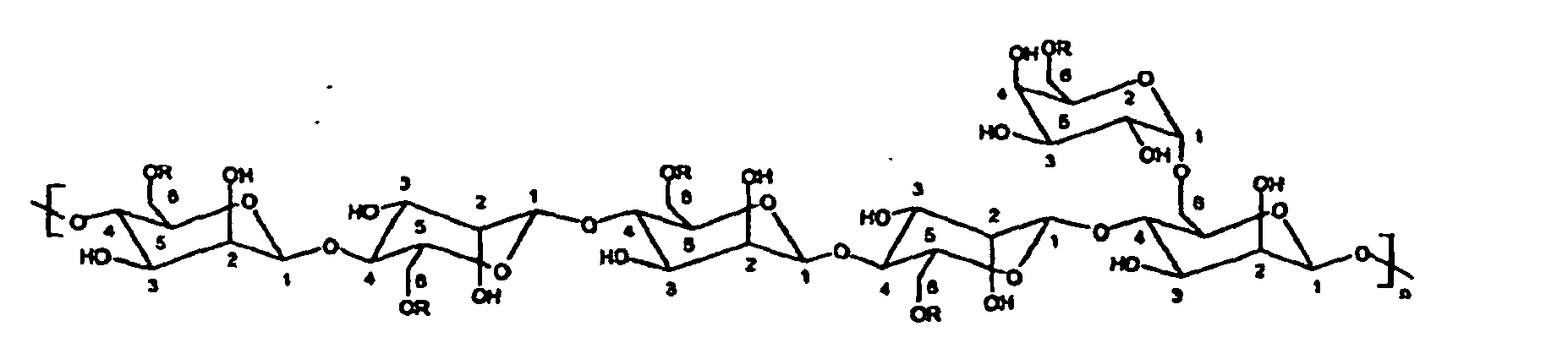
wherein R independently represents hydrogen, and -AR1, wherein -AR1 is defined as above.
wherein R independently represents hydrogen, and -AR1, wherein -AR1 is defined as above.
7. A personal care composition of claim 6, wherein n represents an integer ranging from
about 15 to about 35.
8. A personal care composition of claim 1 or 2 further comprising an ingredient selected
from water, solvents and combinations thereof.
9. A personal care composition of claim 1 further comprising an ingredient selected from
acidic anti-aging agents, anti-cellulite, anti-acne agents and combinations thereof.
10. A personal care composition of claim 1 further comprising a crosslinking agent.
11. A personal care composition of claim 1 further comprising an ingredient selected from
anti-caries agents, anti-tartar agents, anti-plaque agents, flavorants, and combinations
thereof.
12. A pesonal care composition of claim 1 wherein said polygalactomannan is isolated from
the endosperm of the seeds selected from Cassia tora and Cassia obtusifolia.
1. Körperpflegezusammensetzung, die Folgendes umfasst: ein Polygalactomannan, das Repetiereinheiten
aufweist, die ein Verhältnis von D-Mannosyl- zu D-Galactosylresten von 5 zu 1 enthält,
wobei ein Teil der Wasserstoffatome an den seitenständigen Hydroxysubstituenten an
den Mannosyl- und Galactosylresten durch eine Gruppe substituiert sind, die durch
die Formel
-AR1
dargestellt wird, wobei A eine substituierte oder unsubstituierte Alkylengruppe, die 1 bis 6 Kohlenstoffatome enthält, ist und R1 eine Gruppe ist, die unabhängig aus -N(R3)3+X-, -S(R3)2+X- und -P(R3)3+X- ausgewählt ist, wobei R3 unabhängig substituiertes und unsubstituiertes C1- bis C24-Alkyl, substituiertes und unsubstituiertes Benzyl und substituiertes und unsubstituiertes Phenyl darstellt und X irgendein geeignetes Anion ist, das die Ladung auf dem Oniumkation ausgleicht;
und einen Bestandteil, der ausgewählt ist aus Tensiden, nichttensidischen Suspendiermitteln, Emulgatoren, Emollienten, Befeuchtungsmitteln, Haarkonditionierern, Haarfestigern, Filmbildnern, Hautschutzmitteln, Bindemitteln, Chelatbildnern, Desinfektionsmitteln, Insektiziden, Fungiziden, Deodorantien, Repellentien, Riechstoffen, antimikrobiellen Mitteln, Antimykotika, Antibiotika, Antischuppenmitteln, Peelingpartikeln, Klebstoffen, Absorbentien, Farbstoffen, Desodorantien, Antitranspirantien, Feuchthaltemitteln, Opakern und Perleffektmitteln, Antioxidantien, Konservierungsmitteln, Treibmitteln, Spreitmitteln, Peelingmitteln, keratolytischen Mitteln, Blutgerinnungsmitteln, Vitaminen, Sonnenschutzmitteln, künstlichen Bräunungsbeschleunigern, UV-Absorbern, pH-Regulatoren, pflanzlichen Mitteln, Haarfärbemitteln, Oxidationsmitteln, Reduktionsmitteln, Hautbleichmitteln, Pigmenten, entzündungshemmenden Mitteln, Lokalanästhetika, Duftstoffen und Duftstoff-Lösungsmitteln, Partikeln, Mikroschleifmitteln, Schleifmitteln und Kombinationen davon.
-AR1
dargestellt wird, wobei A eine substituierte oder unsubstituierte Alkylengruppe, die 1 bis 6 Kohlenstoffatome enthält, ist und R1 eine Gruppe ist, die unabhängig aus -N(R3)3+X-, -S(R3)2+X- und -P(R3)3+X- ausgewählt ist, wobei R3 unabhängig substituiertes und unsubstituiertes C1- bis C24-Alkyl, substituiertes und unsubstituiertes Benzyl und substituiertes und unsubstituiertes Phenyl darstellt und X irgendein geeignetes Anion ist, das die Ladung auf dem Oniumkation ausgleicht;
und einen Bestandteil, der ausgewählt ist aus Tensiden, nichttensidischen Suspendiermitteln, Emulgatoren, Emollienten, Befeuchtungsmitteln, Haarkonditionierern, Haarfestigern, Filmbildnern, Hautschutzmitteln, Bindemitteln, Chelatbildnern, Desinfektionsmitteln, Insektiziden, Fungiziden, Deodorantien, Repellentien, Riechstoffen, antimikrobiellen Mitteln, Antimykotika, Antibiotika, Antischuppenmitteln, Peelingpartikeln, Klebstoffen, Absorbentien, Farbstoffen, Desodorantien, Antitranspirantien, Feuchthaltemitteln, Opakern und Perleffektmitteln, Antioxidantien, Konservierungsmitteln, Treibmitteln, Spreitmitteln, Peelingmitteln, keratolytischen Mitteln, Blutgerinnungsmitteln, Vitaminen, Sonnenschutzmitteln, künstlichen Bräunungsbeschleunigern, UV-Absorbern, pH-Regulatoren, pflanzlichen Mitteln, Haarfärbemitteln, Oxidationsmitteln, Reduktionsmitteln, Hautbleichmitteln, Pigmenten, entzündungshemmenden Mitteln, Lokalanästhetika, Duftstoffen und Duftstoff-Lösungsmitteln, Partikeln, Mikroschleifmitteln, Schleifmitteln und Kombinationen davon.
2. Körperpflegezusammensetzung gemäß Anspruch 1, wobei die Alkyl-, Alkylen-, Phenyl-
und Benzylgruppen mit einer Gruppe, die aus C1- bis C3-Alkyl, Hydroxy und Halogen ausgewählt ist, monosubstituiert oder unabhängig multisubstituiert
sind.
3. Körperpflegezusammensetzung gemäß Anspruch 1, wobei X ein Halogenid ist.
4. Körperpflegezusammensetzung gemäß Anspruch 1, wobei wenigstens ein C-6-Hydroxy-Wasserstoffatom
durch den Substituenten -AR1 substituiert ist.
5. Körperpflegezusammensetzung gemäß Anspruch 1, wobei das Polygalactomannan ein Zahlenmittel
des Molekulargewichts im Bereich von etwa 200 000 bis etwa 300 000 hat.
6. Körperpflegezusammensetzung gemäß Anspruch 1, wobei die Polygalactomannan-Repetiereinheit
durch die Formel
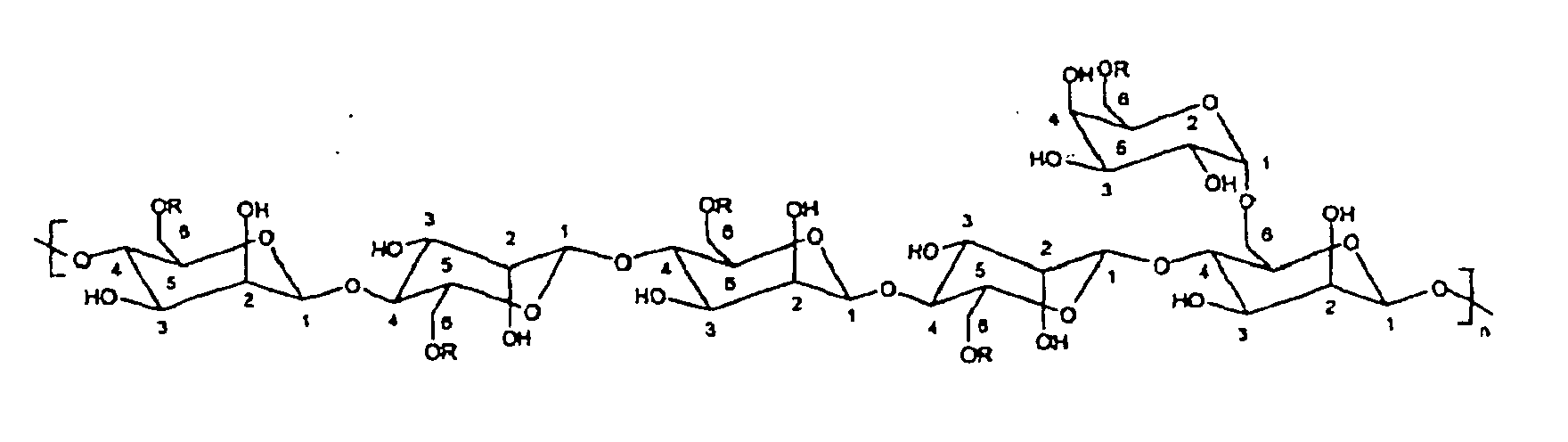
dargestellt wird, wobei R unabhängig Wasserstoff und -AR1 darstellt, wobei AR1 wie oben definiert ist.
dargestellt wird, wobei R unabhängig Wasserstoff und -AR1 darstellt, wobei AR1 wie oben definiert ist.
7. Körperpflegezusammensetzung gemäß Anspruch 6, wobei n eine ganze Zahl im Bereich von
etwa 15 bis etwa 35 darstellt.
8. Körperpflegezusammensetzung gemäß Anspruch 1 oder 2, die weiterhin einen Bestandteil
umfasst, der aus Wasser, Lösungsmitteln und Kombinationen davon ausgewählt ist.
9. Körperpflegezusammensetzung gemäß Anspruch 1, die weiterhin einen Bestandteil umfasst,
der aus sauren Antialterungsmitteln, Anticellulite-, Antiaknemitteln und Kombinationen
davon ausgewählt ist.
10. Körperpflegezusammensetzung gemäß Anspruch 1, die weiterhin ein Vernetzungsmittel
umfasst.
11. Körperpflegezusammensetzung gemäß Anspruch 1, die weiterhin einen Bestandteil umfasst,
der aus Antikariesmitteln, Antizahnsteinmitteln, Antiplaquemitteln, Aromastoffen und
Kombinationen davon ausgewählt ist.
12. Körperpflegezusammensetzung gemäß Anspruch 1, wobei das Polygalactomannan aus dem
Endosperm der Samen isoliert ist, die aus Cassia tora und Cassia obtusifolia ausgewählt sind.
1. Composition pour les soins personnels comprenant un polygalactomannane ayant des unités
répétées contenant un rapport de groupements D-mannosyle à D-galactosyle de 5 à 1
où une partie des groupes hydrogène sur les substituants hydroxy latéraux sur les
groupements mannosyle et galactosyle sont substitués avec un groupe représenté par
la formule :
-AR1
où A est un groupe alkylène substitué ou non substitué contenant 1 à 6 atomes de carbone, et R1 est un groupe choisi indépendamment parmi -N(R3)3+ X-, -S(R3)2+ X- et -P(R3)3+ X-, où R3 représente indépendamment C1 à C24 alkyle substitué et non substitué, benzyle substitué et non substitué et phényle substitué et non substitué ; et X est tout anion approprié qui compense la charge sur le cation onium, et un ingrédient choisi parmi les tensioactifs, les agents de suspension non tensioactifs, les émulsifiants, les émollients, les humidifiants, les agents de conditionnement des cheveux, les fixateurs pour les cheveux, les filmogènes, les agents protégeant la peau, les liants, les agents chélatants, les désinfectants, les insecticides, les fongicides, les désodorisants, les répulsifs pour les nuisibles, les substances odoriférantes, les agents antimicrobiens, les agents antifongiques, les antibiotiques, les agents antipelliculaires, les abrasifs, les adhésifs, les absorbants, les colorants, les désodorisants, les agents antisudoraux, les humectants, les agents opacifiants et nacrés, les antioxydants, les conservateurs, les propulseurs, les agents d'étalement, les exfoliants, les agents kératolytiques, les coagulants du sang, les vitamines, les agents filtres solaires, les accélérateurs de bronzage artificiel, les absorbeurs de lumière ultraviolette, les agents d'ajustement du pH, les matières botaniques, les colorants capillaires, les agents oxydants, les agents réducteurs, les agents de blanchiment de la peau, les pigments, les agents anti-inflammatoires, les anesthésiques topiques, les parfums et solubilisants de parfums, les matières particulaires, les micro-abrasifs, les abrasifs et leurs combinaisons.
-AR1
où A est un groupe alkylène substitué ou non substitué contenant 1 à 6 atomes de carbone, et R1 est un groupe choisi indépendamment parmi -N(R3)3+ X-, -S(R3)2+ X- et -P(R3)3+ X-, où R3 représente indépendamment C1 à C24 alkyle substitué et non substitué, benzyle substitué et non substitué et phényle substitué et non substitué ; et X est tout anion approprié qui compense la charge sur le cation onium, et un ingrédient choisi parmi les tensioactifs, les agents de suspension non tensioactifs, les émulsifiants, les émollients, les humidifiants, les agents de conditionnement des cheveux, les fixateurs pour les cheveux, les filmogènes, les agents protégeant la peau, les liants, les agents chélatants, les désinfectants, les insecticides, les fongicides, les désodorisants, les répulsifs pour les nuisibles, les substances odoriférantes, les agents antimicrobiens, les agents antifongiques, les antibiotiques, les agents antipelliculaires, les abrasifs, les adhésifs, les absorbants, les colorants, les désodorisants, les agents antisudoraux, les humectants, les agents opacifiants et nacrés, les antioxydants, les conservateurs, les propulseurs, les agents d'étalement, les exfoliants, les agents kératolytiques, les coagulants du sang, les vitamines, les agents filtres solaires, les accélérateurs de bronzage artificiel, les absorbeurs de lumière ultraviolette, les agents d'ajustement du pH, les matières botaniques, les colorants capillaires, les agents oxydants, les agents réducteurs, les agents de blanchiment de la peau, les pigments, les agents anti-inflammatoires, les anesthésiques topiques, les parfums et solubilisants de parfums, les matières particulaires, les micro-abrasifs, les abrasifs et leurs combinaisons.
2. Composition pour les soins personnels selon la revendication 1 où lesdits groupes
alkyle, alkylène, phényle et benzyle sont substitués mono-substitués ou multi-substitués
indépendamment avec un groupe choisi parmi C1 à C3 alkyle, hydroxyle et halogène.
3. Composition pour les soins personnels selon la revendication 1 où X est un halogénure.
4. Composition pour les soins personnels selon la revendication 1 où au moins un hydrogène
d'hydroxyle C-6 est substitué par le substituant -AR1.
5. Composition pour les soins personnels selon la revendication 1 où ledit polygalactomannane
a une masse moléculaire moyenne en nombre allant d'environ 200000 à environ 300000.
6. Composition pour les soins personnels selon la revendication 1 où ladite unité répétée
de polygalactomannane est représentée par la formule :
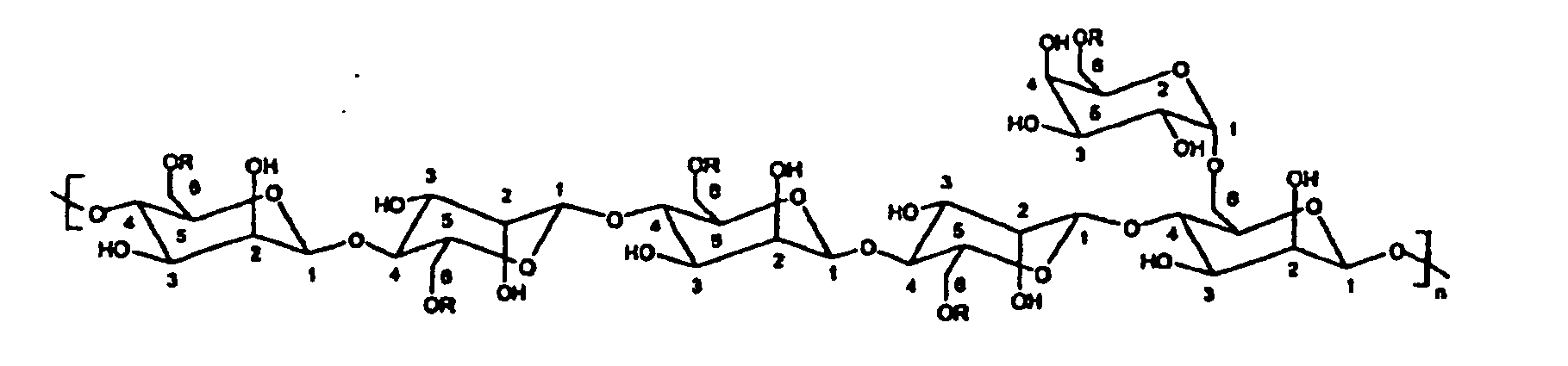
où R représente indépendamment l'hydrogène et -AR1 où -AR1 est défini comme ci-dessus.
où R représente indépendamment l'hydrogène et -AR1 où -AR1 est défini comme ci-dessus.
7. Composition pour les soins personnels selon la revendication 6 où n représente un
entier allant d'environ 15 à environ 35.
8. Composition pour les soins personnels selon la revendication 1 ou 2 comprenant en
outre un ingrédient choisi parmi l'eau, les solvants et leurs combinaisons.
9. Composition pour les soins personnels selon la revendication 1 comprenant en outre
un ingrédient choisi parmi les agents anti-vieillissement acides, les agents anti-cellulite,
anti-acné et leurs combinaisons.
10. Composition pour les soins personnels selon la revendication 1 comprenant en outre
un agent réticulant.
11. Composition pour les soins personnels selon la revendication 1 comprenant en outre
un ingrédient choisi parmi les agents anti-caries, les agents anti-tartre, les agents
anti-plaque, les aromatisants et leurs combinaisons.
12. Composition pour les soins personnels selon la revendication 1 où ledit polygalactomannane
est isolé à partir de l'endosperme de graines choisies parmi Cassia tora et Cassia obtusifolia.