|
(11) | EP 1 671 953 A1 |

| (12) | EUROPEAN PATENT APPLICATION |
|
|
|
|
||||||||||||||||||||
| (54) | Process for obtaining cizolirtine and its enantiomers |
| (57) A process is described for the preparation of a precursor alcohol of Cizolirtine,
(±)-2-[phenyl(1-methyl-1H-pyrazol-5-yl)methoxy]-N,N-dimethylethanamine and its enantiomers, it comprises the asymmetric addition of a
metalated phenyl reagent to an pyrazolcarbaldehyde in the presence of a chiral ligand
to render chiral alcohols. The chiral alcohols are further O-alkylated to render Cizolirtine
or its enantiomers. |
FIELD OF THE INVENTION
[0001] The present invention relates to the asymmetric addition of a metalated phenyl reagent to a heteroaryl aldehyde to render chiral alcohols. More particularly, it relates to a new process for the preparation of the pure enantiomers of an intermediate alcohol which is used in the preparation of Cizolirtine, (±)-2-[phenyl(1-methyl-1H-pyrazol-5-yl)methoxyl-N,N-dimethylethanamine and its enantiomers, comprising the enantioselective addition reaction of a phenyl zinc reagent to a pyrazolcarbaldehyde.
BACKGROUND OF THE INVENTION
[0002] The compound (±)-2-[phenyl(1-methyl-1H-pyrazol-5-yl)methoxy]-N,N-dimethylethanamine, also referred to as (±)-5-[α-(2-dimethylaminoethoxy)benzyl]-1-methyl-1H-pyrazole, or Cizolirtine of formula (I)
was described in the European patent EP 289 380. This compound is a potent analgesic which is currently in phase II clinical trials.
[0003] The two enantiomers of Cizolirtine, hereinafter referred to as (+)-I and (-)-I, have been previously obtained by optical resolution of the Cizolirtine racemate by fractional crystallization with optically active acids (WO 99/02500) such as, for instance, with (-)- and (+)-di-p-toluoyltartaric acid (Torrens, A.; Castrillo, J.A.; Frigola, J.; Salgado, L.; Redondo, J. Chirality, 1999, 11, 63). The study of their analgesic activities has shown that the dextrorotatory enantiomer, (+)-I, is more potent than the (-)-I. An enantiomerically pure compound synthesis (EPC synthesis) starting from ethyl (R)-mandelate of the intermediate permitted the assignation of the (R) absolute configuration to the (+)-I isomer (Hueso-Rodriguez, J.A.; Berrocal, J.; Gutiérrez, B.; Farré, A..; Frigola, J. Bioorg. Med. Chem. Lett. 1993, 3, 269).
[0005] The pure enantiomers of Cizolirtine (+)-I and (-)-I may be prepared by separately O-alkylating the enantiomerically pure intermediates (+)-II and (-)-II.
[0006] The enantiomerically pure compounds (+)-II and (-)-II are obtained either by reduction of a compound of formula III, which yields (±)-II as a racemate, followed by procedures of optical resolution of the racemate (±)-II, like fractional recrystallization from solvents or column chromatography [J.A: Hueso, J. Berrocal, B. Gutiérrez, A.J. Farré y J. Frigola, Bioorg. Med. Chem. Lett. 1993, 3, 269], or by EPC synthesis starting from the prochiral ketone of formula III:
[0007] The enantioselective reduction of prochiral ketones in organic synthesis to obtain secondary alcohols with high enantiomeric purity is of high interest since they can be valuable intermediates for the manufacture of active compounds. Accordingly, a number of strategies for the asymmetric reduction of prochiral ketones to single enantiomer alcohols have been developed [R. Noyori, T. Ohkuma, Angew. Chem. Int. Ed., 2001, 40, 40-73, Wiley-VCH Verlag]. Particularly, the use of oxazoborolidines as ligands or catalysts constitutes a major advance in the asymmetric reduction of prochiral ketones. The use of said chiral ligands or catalysts in combination with achiral reducing agents for the preparation of (+)-I and (-)-I has been described in patent EP 1 029 852 B1. However, for diaryl methanols, the reduction of the corresponding ketone precursors is problematic. The chiral catalyst has to differentiate between the two aromatic rings. This can usually only be done with high selectivity if the two rings are different in terms of steric and/or electronic properties which is not obvious in the case of Cizolirtine.
[0008] Another strategy for the enantioselective reduction of prochiral ketones with high enantiomeric excess comprises the use of a diphosphane/Ru/chiral diamine/inorganic base catalyst system. However, this process leads to the formation of heavy metal complexes of Ru or elemental Ru and trace amounts of such metal are very hard to remove.
[0009] A phenyl transfer reaction to aryl aldehydes as an approach towards enantio-pure diarylalcohols has also been proposed, as alternative to the enantioselective reduction of prochiral ketones [P.I. Dosa, J.C. Ruble, G.C. Fu, J. Org. Chem. 1997, 62 444; W.S. Huang, L. Pu, Tetrahedron Lett. 2000, 41, 145; M. Fontes, X.Verdaguer, L. Solà, M.A. Pericàs, A. Riera, J. Org. Chem. 2004, 69, 2532]. For this transformation, the group of Bolm et al. developed a protocol which utilized a ferrocene-based ligand (or catalyst) and diphenylzinc in combination with diethylzinc as aryl source [C. Bolm, N. Hermanns, M. Kesselgruber, J.P. Hildebrand, J. Organomet. Chem. 2001, 624, 157; C. Bolm, N. Hermanns, A. Claβen, K. Muñiz, Bioorg. Med. Chem. Lett. 2002, 12, 1795]. Enantiomerically enriched diarylmethanols with excellent enantiomeric excess (up to 99% ee) were thus obtained in a straightforward manner. Subsequently, the applicability of air-stable arylboronic acids as aryl source was also demonstrated [C. Bolm, J. Rudolph, J. Am. Chem. Soc. 2002, 124, 14850]. However, these systems require a high catalyst loading (of commonly 10% mol.) to achieve that high enantioselectivity. With the aim of reducing this problem, recently, it has been proposed the use of triphenylborane as an alternative phenyl source in a reaction where the ferrocene-based catalyst is also used (J. Rudolph, F. Schmidt, C. Bolm, Adv. Synth. Catal. 2004, 346, 867).
[0010] However, there are still some difficulties to obtain chiral alcohols with a high yield and enantioselectivity without a high amount of catalyst. For their large-scale preparation, the application of highly efficient catalytic system and enantioselective methods employing inexpensive starting materials and simple purification steps would be most desirable.
[0011] On the other hand, there is at the present time no example of an enantioselective addition of phenyl- or arylzinc reagents to heteroaryl aldehydes which comprise one or two nitrogen atoms, such as methyl-pyrazol aldehyde. Understandably, because substrates containing a nitrogen heteroatom can be expected to form catalytically active complexes (or product complexes) which would usually drastically diminish the selectivity by favouring competing catalytic pathways. Indeed, it is well known in zinc chemistry that various functional groups like esters or nitriles are tolerated on the aldehyde substrates. However, Lewis-basic or coordinating functional groups often lead to drastic decreases in enantioselectivity in arylzinc addition reaction due to their ability to complex to the zinc reagent or the active catalyst. An extreme example of this behaviour would be the asymmetric autocatalysis in the addition of zinc reagents to aldehydes as examined by Soai et al. (T. Shibata, H. Morioka, T. Hayase, K. Choji, K. Soai J. Am. Chem. Soc. 1996, 471).
[0012] Thus, to attain satisfactory ee values by an enantioselective addition reaction, an appropriate coordination of the catalyst system and the aldehyde is required. The results with unusual substrates cannot be predicted and each addition has to be investigated separately with regard to the substrate.
SUMMARY OF THE INVENTION
[0013] We have now surprisingly found that pyrazolcarbaldehydes can be successfully used as substrates for a phenyl transfer reaction. Indeed, the reaction works remarkably well even in the presence of two N on the heteroaromatic part of the aldehyde providing the desired diarylmethanols with high conversion and high enantiomeric purity. We have therefore applied this process to the synthesis of the enantiomerically pure intermediates (+)-II and (-)-II and to a process to obtain Cizolirtine and its enantiomers. This process should operate particularly well on an industrial scale and be satisfactory with regard to enantiomer excess, amount and availability of catalyst and in general raw material costs. Further, heavy metals are not used, avoiding the presence of potentially toxic impurities. Further, impurities are easily eliminated.
[0014] Accordingly, in one aspect the present invention refers to a process for the asymmetrical addition to a pyrazolcarbaldehyde with a phenyl zinc reagent in the presence of a chiral ligand. Said process allows the preparation of known intermediates of formula (II), which thereafter can yield, by O-alkylation, the desired enantiomers of the pharmaceutically active compound Cizolirtine.
[0015] The invention is thus directed to a process for the preparation of an enantiomerically enriched compound of formula (II):
which comprises an enantioselective addition reaction to a pyrazolcarbaldehyde compound of formula (IV):
with a phenyl zinc reagent in the presence of a chiral ligand.
DETAILED DESCRIPTION OF THE INVENTION
[0016] The process of the invention gives the desired product of formula II with high conversion and enantiomeric excess. This process has the further advantage that the zinc salts used or formed during the reaction are easily removed by aqueous work-up. The product of formula II is especially useful in the preparation of Cizolirtine enantiomers. The details of the process are discussed below.
Pyrazolcarbaldehyde
[0017] The synthesis of 2-Methyl-2H-pyrazole-3-carbaldehyde (IV), which is the essential starting material for the addition route, is known to the person skilled in the art. For example, (IV) can be easily prepared through the lithiation of 1-methyl pyrazol and concomitant quenching with dimethyl formamide (DMF). Then the reaction product is hydrolyzed, for example with water or sodium acetate buffer (pH 4.5), and either employed directly or after distillation (scheme I). Residual amounts of DMF apparently do not influence the selectivity of the subsequent addition process.
[0018] Optimal conditions for the lithiation are found in the literature (T.E. Smith, M.S. Mourad, A.J. Velander, Heterocycles 2002, 57, 1211) and can be employed to the formylation reaction. If necessary, diethyl amine can be used to prevent the deprotonation of the N-methyl group, normally 10 mol% is sufficient. Preferably, THF is used as a solvent; in this case no additive is necessary. The deprotonation reaction is preferably performed below -10°C (usually at -20°C) to prevent the formation of side products by ring-opening of THF. To purify the obtained 1-methylpyrazolcarbaldehyde, distillation or extractive workup with an organic solvent can be used to remove the byproducts. Otherwise, as previously mentioned, the aldehyde can be used directly for the addition.
Phenyl zinc reagent
[0019] The phenyl zinc reagent to be used in the process of the invention is also known to the person skilled in the art as mentioned above. For example it can be diphenylzinc or a mixed zinc species generated from diphenylzinc and diethylzinc or can be prepared in situ by a transmetallation reaction of a phenylboron reagent with dimethyl- or diethyl-zinc. The active species are presumably a mixed phenyl-ethyl-zinc or phenylmethyl-zinc. Among the suitable phenyl-boron reagents, phenylboronic acid (C. Bolm, J. Rudolph J. Am. Chem. Soc. 2002, 124, 14850), triphenylborane (J. Rudolph, F. Schmidt, C. Bolm, Adv. Synth. Catal. 2004, 346, 867), triphenylborane ammonia complex or 2-aminoethyl diphenylborinate can be used.
[0020] Diphenylzinc and triphenylborane are relatively expensive reagents. Therefore, stable complexes of aryl boranes are preferred. Especially triphenylborane ammonia complex, which can readily be prepared from commercially available triphenylborane sodium hydroxide complex, has proven very suitable. Additionally, commercially available and stable 2-aminoethyl diphenylborinate can also be employed. Preferably, the phenyl-boron reagent is triphenylborane ammonia complex.
[0021] A variable that can affect the enantioselectivity of the addition reaction is the ratio of borane reagent versus diethylzinc (when the phenyl zinc reagent is obtained from these compounds). For example, when using triphenylborane as borane reagent, it could seem obvious that this ratio must be 1:3 since each borane contains 3 phenyl groups which are theoretically transferable to the aldehyde. However, for this system the optimal value was determined as two phenyl groups (equalling 2/3 equivalents of triphenylborane) per one equivalent of diethylzinc.
Chiral Ligand
[0022] With the aim of enantioselectively synthesizing a compound of formula (II) by an addition reaction, the reaction must be carried out in the presence of a chiral catalyst or ligand, which forms the active catalyst in situ by reaction with the zinc reagent. That means that the ligand (or catalyst) must have at least one element of chirality like one or more stereocentres or elements of planar chirality.
[0023] In principle, there is a great variety of N,O-, N,N-, N,S-, N,Se- or O,O-ligands that can be used in the process of the invention and all of them have to be in enantiomerically pure form. There are about 600 ligands known in the art for this type of reaction. Most of them can be found, for example in a recent review on catalytic asymmetric organozinc additions to carbonyl compounds [L. Pu, H.-B. Yu, Chem. Rev. 2001, 101, 757]. The nomenclature N,O-, N,N-, N,S-, N,Se- or O,O- refers to ligands that have at least these two coordinating heteroatoms.
[0024] In a preferred embodiment of the present invention N,O-ligands are employed. In general they are derived from β-amino alcohols and therefore have two carbon atoms between the heteroatoms. However, some of the ligands used in this reaction are those which present three carbon atoms between the heteroatoms.
[0025] These ligands react with the zinc reagent forming a zinc-alcoxide complex which is more Lewis-acidic than the other present zinc species (reagent and product). Additionally, it is a Lewis-base catalyst (usually at the oxygen atom). This zinc-alcoxide complex in situ formed is the active catalyst.
[0026] More preferably, the O is an alcohol. In this case the preferred ligands have a structure-type (V) such as described below:
wherein n is 0 or 1.
[0027] Typical ligands to be used in this addition reaction are the following compounds, their enantiomers, or derivatives thereof:
[0028] Good results are obtained for example with sd311b and with (S)-2-piperidinyl-1,1,2-triphenylethanol which is commercially available:
[0029] In an example, 96,5% of the R-enantiomer alcohol versus 3,5% of the S was obtained using 10 mol% of this ligand. The ligand is available in both enantiomeric forms, allowing the synthesis of both enantiomers of the desired alcohol.
[0030] The reaction that takes place between the zinc reagent and the ligand leads to a complex of formula (VI):
wherein n is 0 or 1 and R"' is phenyl, ethyl or methyl.
[0031] This zinc alkoxide complex (VI) is the active catalyst in the addition reaction which subsequently coordinates with the pyrazolcarbaldehyde in such a way that induces the enantioselective addition of the phenyl group to said aldehyde.
[0032] The concentration of the ligand should be low to reduce costs but sufficient to provide good ee. The ligands are preferably used in amounts of 0.1 to 100 mol%, more preferably 1 to 20 mol% and most preferably 5 to 10 mol%. The use of more than the optimal amount of ligand is uneconomical and in some cases can lead to lower selectivity. On the contrary, using less than optimal amount of ligand diminishes the selectivity due to a stronger influence of the non-catalysed and non-enantioselective background reaction.
Solvent
[0033] Suitable solvents for the process of the invention are known from similar reactions and can be found in the above-mentioned references. Preferably they are non-coordinating hydrocarbons like e.g. pentane, hexane, heptane; aromatic solvents like benzene, toluene; chlorinated solvents like dichloromethane and 1,2-dichloroethane and weakly coordinating solvents like diethyl ether and methyl-tert-butyl ether (MTBE). The most preferred solvents are toluene and hexane. These solvents allow the optional O-alkylation to be carried out in the same reaction mixture.
[0034] To perform the process, a mixture of ligand and the compounds that form the zinc reagent can be prepared and stirred before the addition of the aldehyde. Usually, a pre-stirring is presumed to be beneficial for the selectivity because the deprotonation of the ligand by the zinc reagent giving the active catalyst requires a certain amount of time.
[0035] Unexpectedly, it has been found that higher enantiomeric excess is achieved if short pre-stirring times are used. The highest selectivity was obtained upon simultaneous addition of aldehyde and diethylzinc. Thus, in a preferred embodiment these reagents are simultaneously added. Once the aldehyde is added to the mixture of ligand and zinc reagent, the reaction time ranges between 1 h and 24 h.
[0036] The concentration of the aldehyde in the reaction is preferably low, such as between 0.01 molar and 2 molar, more preferably between 0.1 and 1 molar and most preferably at about 0.1 molar. Although in some cases it has been seen that enantioselectivity increases at lower concentrations, this is not suitable for a technical process. In these cases a proper balance between enantioselectivity and adequate concentrations has to be found.
[0037] The process of the invention can be carried out at temperatures between -40 and 100°C. Preferably, temperatures between 0 and 20°C are used. Most preferably, the reactions are carried out at 10°C. The person skilled in the art will readily find out the optimal temperature for each combination of reagents. The enantioselectivity of the reaction can also be dependent on the reaction temperature.
[0038] The process of the invention can also comprise the presence of additives, for example in order to improve the enantioselectivity by scavenging or complexing Lewis-acidic zinc salts present in the reaction or formed as products.
[0039] Suitable additives are for example alcohols, amines and derivatives of polyethylenglycol. More preferably the additive is selected from polyethylenglycols such as DiMPEG 1000, DiMPEG 2000, PEG 750, PEG 1000, PEG 2000, monoMPEG 2000 and PE-block-PEG, or from compounds such as 1,4-dioxane, i-propanol and triethylamine.
[0040] In a preferred embodiment the process is directed to the synthesis of each of the following alcohols of formula II with the highest possible enantiomeric purity:
[0041] The obtained alcohol can be purified through chromatography or crystallization; the zinc salts used or formed during the reaction are easily removed by aqueous work-up.
[0042] Alternatively, the alcohol can advantageously be used without further purification in the next step, which can be carried out in the same reaction medium.
[0043] Thus, in another aspect, the invention relates to a process as defined above which further comprises the step of O-alkylation of an enantiomerically enriched compound of formula (II) to yield the desired enantiomer of the pharmaceutically active Cizolirtine (I). To this end, the compound of formula (II) is treated with an amine of formula
X-CH2CH2N(Me)2
wherein X is a suitable leaving group such as halogen, more preferably chlorine, bromine or iodine; a reactive esterified hydroxyl, for example arylsulphonyloxy such as phenylsulphonyloxy; tosyloxy; mesyloxy; C1-4 alkyl sulphonyloxy, for example methanesulphonyloxy; arylphosphoryloxy, for example diphenylphosphoryloxy, dibenzylphosphoryloxy or a C1-4 alkyl phosphoryloxy, for example dimethylphosphoryloxy.
[0044] An appropriate O-alkylation has been described in EP289 380 or WO 99/07684, the content of these patent applications is incorporated herein in their entirety.
[0045] The alkylation is preferably carried out directly in the same reaction medium resulting from the process of the invention, without further purification of the carbinol. In general, the O-alkylation is carried out in conditions of phase transfer, using for example 2-chloro-N,N,-dimethylethylamine (other leaving groups instead of chloro are possible), an alkaline aqueous solution such as NaOH or KOH, in the presence of a catalyst such as a quaternary ammonium salt. Accordingly, the same solvent as the one used in the process of the invention is used, such as toluene. In these conditions we have the further advantage that the impurities like any remaining zinc salts are also eliminated through the aqueous phase.
[0046] The resulting product of formula I is enantiomerically enriched, it can be further purified using polar organic solvents. Further, a pharmaceutically acceptable salt of the compound of formula I can be formed. For example, the citrate salt can be prepared by dissolving the amine of formula I in ethanol and treating the solution with citric acid monohydrate. The preparation of other salts will be readily apparent to the person skilled in the art.
[0047] The following examples will further illustrate the invention, they should not be interpreted as limiting the scope of the invention.
EXAMPLES
Example 1. Synthesis of 2-Methyl-2H-pyrazole-3-carbaldehyde
[0048] In a dry 50 ml Vial is placed a solution of 1.642 g (20 mmol) N-Methylpyrazole in 30 ml dry THF. The mixture is cooled to -20°C and while stirring 8 ml (20 mmol, 2.5M in hexane) n-BuLi-solution is slowly added. The reaction mixture is stirred for 2.5 h at -20 °C. With vigorous stirring 4.7 ml (4.39g, 60 mmol) dry DMF is slowly added at -20 °C and the mixture kept at this temperature for 1h. The reaction mixture is then poured into 100 ml of a 1M acetic acid / sodium acetate buffer (pH: 4.5), 50 ml MTBE is added and the organic layer is separated, washed with 50 ml sat. Na2CO3-Solution to remove excess acetic acid (extraction with ethyl acetate leads to DMF in the final product). The organic layer is separated, dried with MgSO4 and the solvent is removed by om a rotary evaporator. The crude product is purified by vacuum distillation (bp: 67 °C, 21 mbar). 3 preparations which were distilled together yielded 5.969g (54 mmol, 90%) of the title compound.
1H-NMR (300 MHz, CDCl3): 4.18 (s, 3H, CH3-N), 6.91 (d, 1H, 3J=2.0 Hz, CH=C-N), 7.53 (d, 1H, 3J=2.0 Hz, CH=N), 9.87 (s, 1H, CH=O) ppm.
13C-NMR (100 MHz, CDCl3): 39.31 (CH3-N), 114.78 (CH=C-N), 138.54 (CH=N), 138.98 (CH=C-N), 179.83 (CH=O) ppm.
Example 2. Synthesis of (2-Methyl-2H-pyrazol-3-yl)-phenyl-methanol using triphenylborane ammonia complex
[0049] In a 20 ml vial is placed 8.91 mg (10 mol%) of (S)-2-piperidinyl-1,1,2-triphenyl-ethanol and 43 mg (0.17 mmol) of triphenylborane ammonia complex. The vial is closed and flushed with argon. Dry toluene (2 mL) is added and the vial is placed in a cooling bath of 10 °C. Diethylzinc (0.7 mL, 15% in hexane) and 25 µl (0.25 mmol) 2-methyl-2H-pyrazole-3-carbaldehyde is added and the reaction mixture is stirred for at least 12 h at 10 °C. The reaction is quenched by addition of 2 mL of 1 M HCl with vigorous stirring. The reaction mixture is placed in a separation funnel, 10 ml 1M HCl and approx. 25 mL MTBE is added. The organic layer is washed with 15 mL of sat. Na2CO3 -solution, dried with MgSO4 and the solvent is removed by a rotary evaporator to yield 40 mg of the crude product. The product can be further purified by column chromatography on silica using ethyl acetate / hexane (1:1) as eluent to afford (R)-II (37 mg, 79%) in 93% ee.
Evaluation of enantiomeric excess:
[0050] HPLC Column: Diacel Chiralcel OD 250x4 mm
heptane / propane-2-ol 80/20
Flow: 1 ml/min; Temp.: 20 °C; det.: 220 nm
Ret-Times: 8.5 min (R-Enantiomer) / 9.6 min (S-Enantiomer)
1H-NMR (400 MHz, CDCl3): 3.73 (s, 3H, CH3-N), 5.87 (s, 1H, CH-OH), 6.02 (dd, 1H, 3J=1.98, 4J=0.49 Hz, CH=C-N), 7.30 (d, 1H, 3J=1.98 Hz, CH=N), 7.30-7.38 (m, 5H, CHarom) ppm.
13C-NMR (100 MHz, CDCl3): 37.08 (CH3-N), 68.38 (CH-OH), 105.79 (CH=C-N), 126.49 (CH-CH=CH-C), 128.12 (CH-CH=CH-C), 128.60 (CH-CH=CH-C), 137.75 (CH=N), 140.88 (CH-CH=CH-C), 144.15 (CH=C-N) ppm.
Example 3. Synthesis of (2-Methyl-2H-pyrazol-3-yl)-phenyl-methanol using 2-aminoethyl diphenylborinate
[0051] In a 20 ml vial is placed 8.92 mg (10 mol%) of (S)-2-piperidinyl-1,1,2-triphenyl-ethanol and 56 mg of 2-aminoethyl diphenylborinate. The vial is closed and flushed with argon. Dry toluene (2 mL) is added and the vial is placed in a cooling bath of 10 °C. Diethylzinc (0.7 mL, 15% in hexane) and 25 µl (0.25 mmol) 2-methyl-2H-pyrazole-3-carbaldehyde is added and the reaction mixture is stirred for at least 12 h at 10 °C. The work-up is conducted as described in example 2 affording the product alcohol (R)-II (35 mg, 74%) in 89% ee.
Example 4. Influence of the ligand
[0052] Using the optimal conditions [Example 2] which leads to 85-87% ee with the ligand sd499, a ligand screening with a variety of N,O-ligands was carried out. The results are given in the following table.
[0053] The best results were obtained with the ligands sd311b (91% ee) and commercially available (S)-2-piperidinyl-1,1,2-triphenylethanol at 5 mol% scale. As the latter one is known to be a somewhat slower ligand than the paracyclophane-based ligands and the derivatives of sd499, we repeated the experiment with 10 mol% of (S)-2-piperidinyl-1,1,2-triphenylethanol. This experiment gave 93% ee. The ligand is available in both enantiomeric forms.
1. A process for the preparation of an enantiomerically enriched compound of formula
(II):
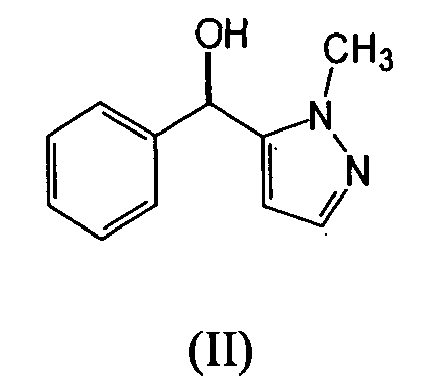
which comprises an enantioselective addition reaction to a pyrazolcarbaldehyde compound of formula (II):
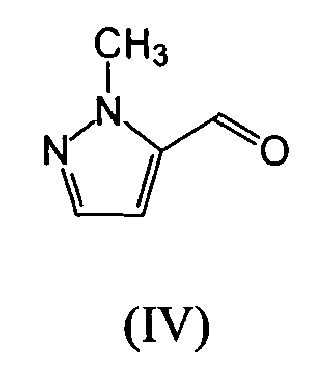
with a phenyl zinc reagent in the presence of a chiral ligand.
which comprises an enantioselective addition reaction to a pyrazolcarbaldehyde compound of formula (II):
with a phenyl zinc reagent in the presence of a chiral ligand.
2. A process according to claim 1 wherein the phenyl zinc reagent is diphenyl zinc, a
mixed zinc species generated from diphenylzinc and diethylzinc or is prepared in situ
by a transmetallation reaction of a phenylboron reagent with dimethyl-zinc or diethyl-zinc.
3. A process according to claim 2 wherein the phenylboron reagent is selected from the
group consisting of phenylboronic acid, triphenylborane, triphenylborane ammonia complex
and 2-aminoethyl diphenylborinate.
4. A process according to claim 1 wherein the chiral ligand is a N,O-, N,N-, N,S-, N,Se-
or O,O-ligand in its enantiomerically pure form.
5. A process according to claim 4 wherein the chiral ligand is a N,O-ligand, most preferably
the O is an alcohol.
6. A process according to claim 5 wherein the N,O-ligands are selected from the following
compounds:
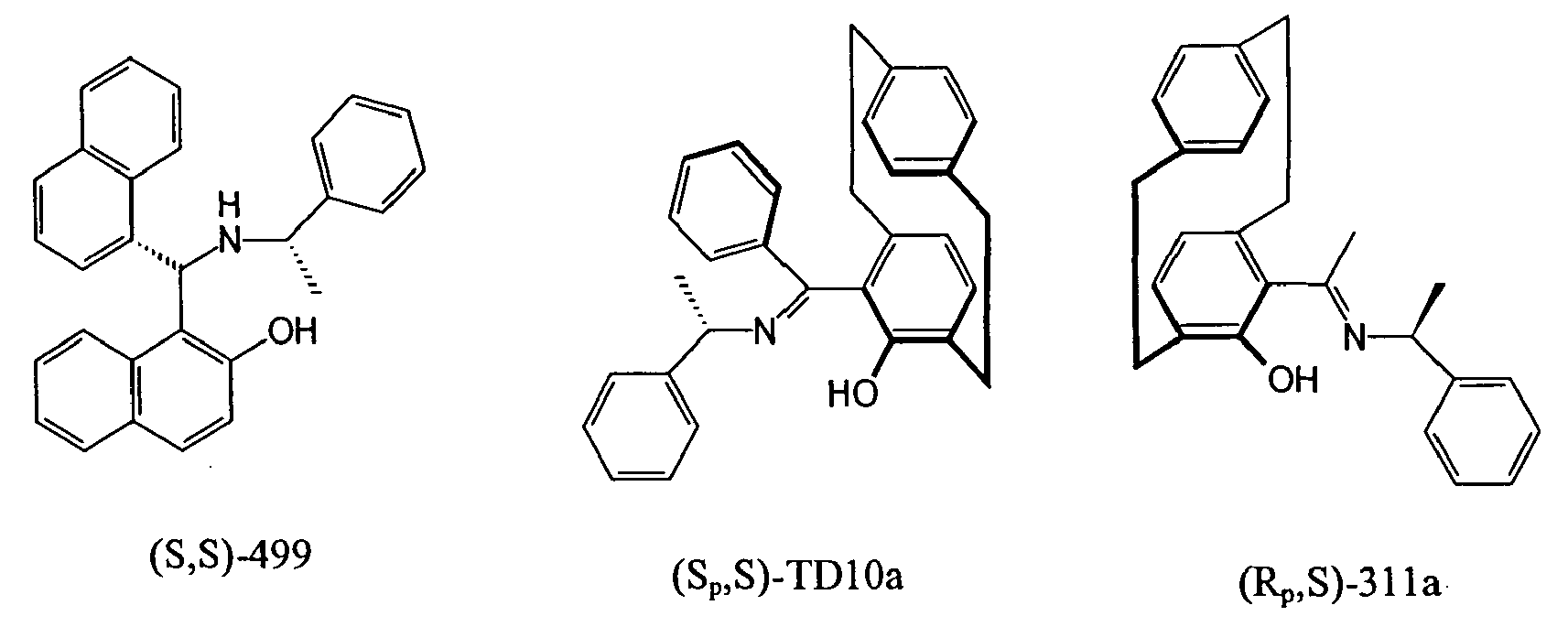
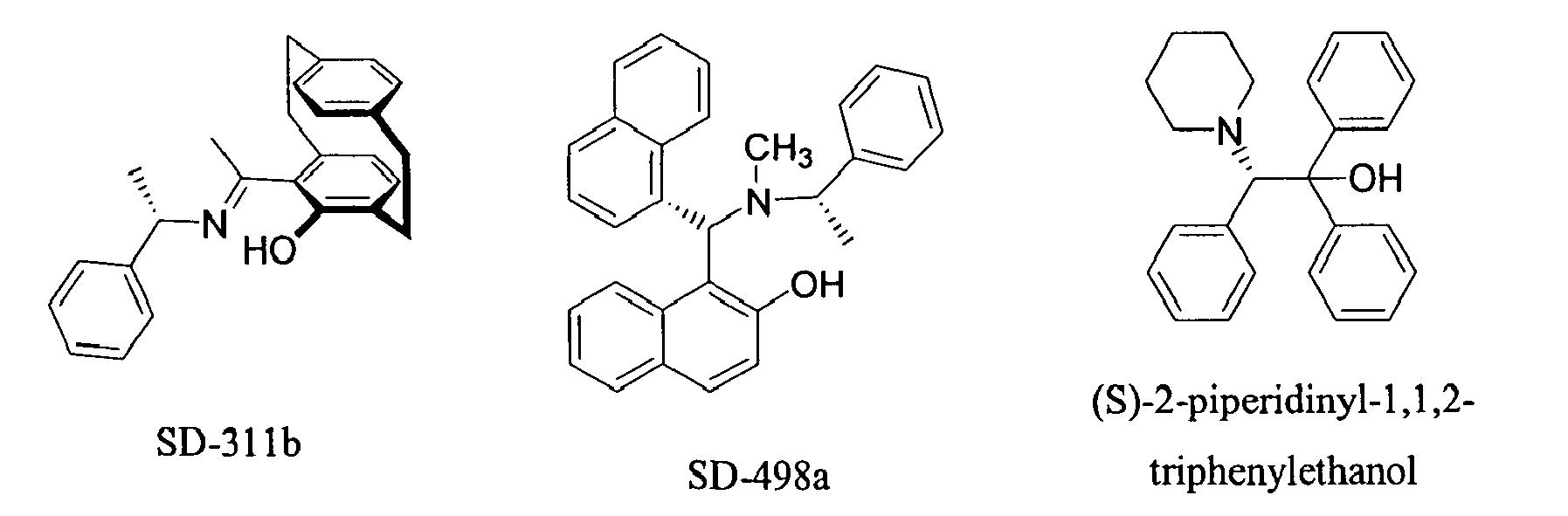
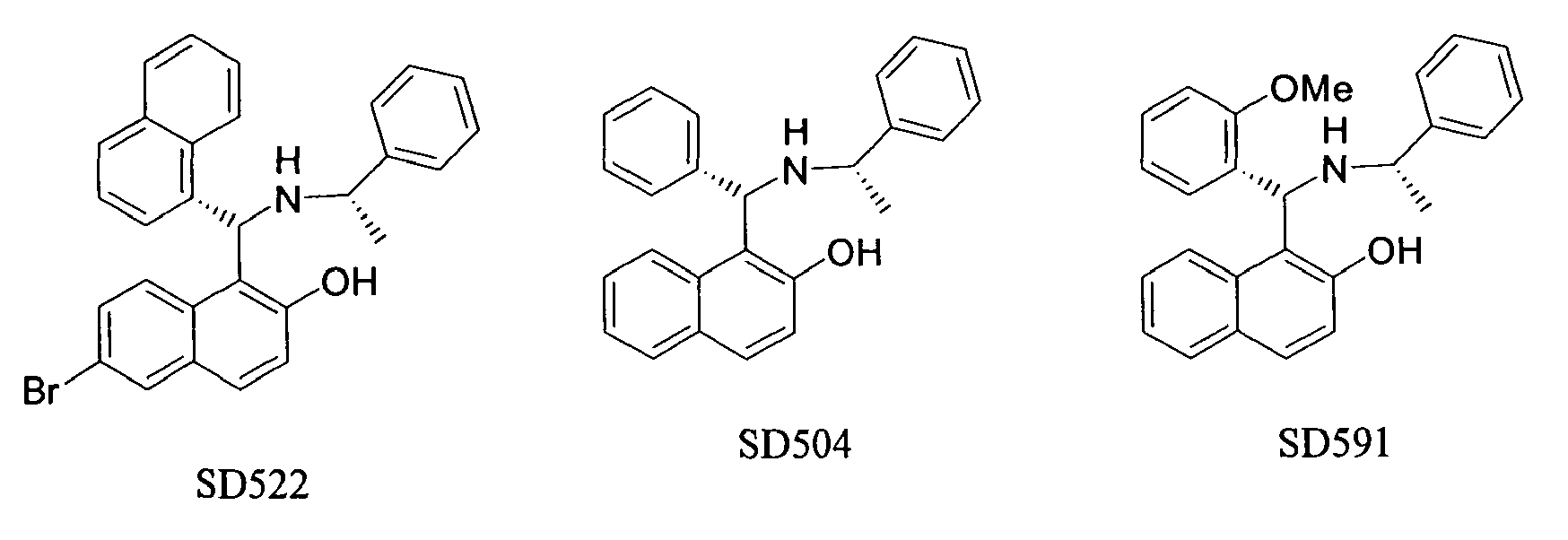
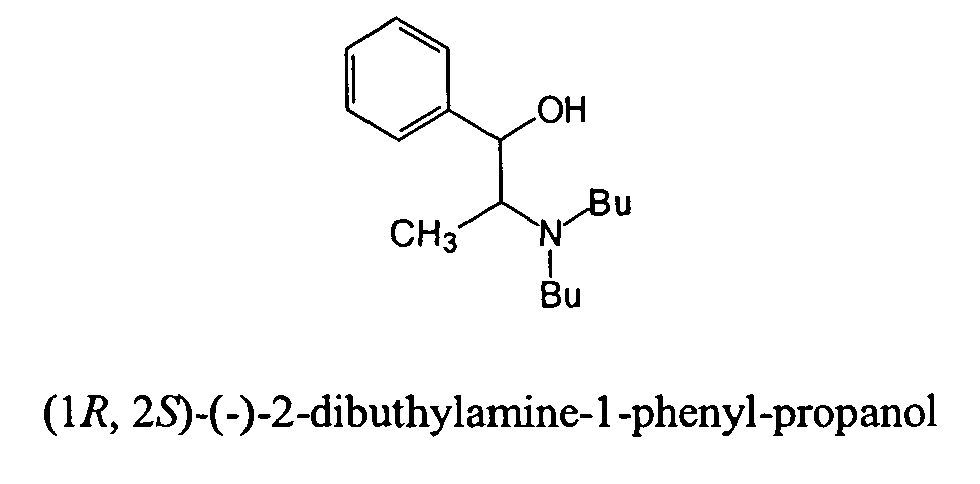
7. A process according to anyone of claims 1-6 wherein the ligand are used in amounts
ranged between 1 and 20 mol%, preferably between 5 and 10 mol%.
8. A process according to anyone of claims 1-7 wherein the temperature is comprised between
0°C and 20°C.
9. A process according to anyone of claims 1-8 wherein the aldehyde concentration ranges
between 0.01 molar and 2 molar.
10. A process according anyone of claims 1-9 wherein the solvent is toluene or hexane.
11. A process according to claim 1 which further comprises an O-alkylation of the enantiomerically
enriched compound of formula II to prepare respectively (+)-Cizolirtine and (-)-Cizolirtine.
12. A process according to claim 11 wherein the O-alkylation is carried out on the product
of the process as defined in anyone of claims 1-10, without an intermediate separation
or purification step.