|
(11) | EP 1 760 926 A1 |

| (12) | EUROPEAN PATENT APPLICATION |
|
|
|
|
||||||||||||||||
| (54) | Method and system for error-protection employing the Plotkin construction using LDPC codes for packet-based data transmission |
| (57) Packet-based data transmission method including an encoding by a LDPC code and a
corresponding decoding, wherein two consecutive packets, each being encoded by a LDPC
code, are connected such that, if for at least one of the two packets a decoding failure
occurs, this packet can be likely decoded with the help of the other packet. |
[0001] In most current communication systems data are transmitted in packets. To ensure reliability forward error connection (FEC) and automatic repeat request (ARQ) are used. Thereby the goal is to maximize the throughput and minimize the delay. For FEC, recently powerful LDPC codes [1] are used. The decoding of LDPC codes has the property that, if a solution is found it is correct, otherwise a decoding failure occurs [2]. In the latter case, the packet has to be sent again, so increasing the delay. Instead, a more powerful code with smaller rate could be used, but this would decrease the throughput.
[0002] In this regard an encoding approach would be desired that enables the elimination of a decoding failures, while avoiding complete packet retransmission and keeping at the same time the rate degradation very low.
[0003] The complete retransmission of a "not acknowledged" packet can be avoided by means of a Type II Hybrid ARQ scheme, also referred to as incremental redundancy [3]. In such scheme, instead of retransmitting the original packet, only new additional redundancy is transmitted. This is possible by using so-called rate compatible (RC) codes, that is a set of codes of equal dimension (information length) that span a range of code rates and have the special property that each codeword is a part of one codeword in all codes with lower rates. In the first transmission, the codeword corresponding to the highest code rate, i.e. with the shortest redundancy part, is transmitted. In every retransmission, only additional redundancy of the codeword, corresponding to the code with next lower rate, is transmitted.
[0004] This method allows increasing the redundancy stepwise, so avoiding unnecessary throughput reduction. However, as explained in the attached report [4], constructions of rate-compatible LDPC codes, e.g. by puncturing, are still quite limited.
[0005] It is, therefore, an object of the present invention to provide for an improved data transmission method and system which in particular allows for a simple elimination of decoding failures in a disturbed transmission, with a minimum of delay.
[0006] This object is solved by a data transmission method of claim 1, as well as by a data transmission system of claim 3 Preferred embodiments of the invention are subject of the dependent claims.
[0007] The invention includes the basic idea of providing for an encoding method that enables the recovery of a packet for which a decoding failure occurred. Specifically, it is a basic idea of the invention to connect two consecutive packets each encoded by a LDPC code such that, if for one of the two a decoding failure occurs, it can be likely decoded with the help of the other and no retransmission is necessary, thus the delay is decreased.
The encoding approach is as follows. Let
[0008] Cu(n,ku,du) and Cv(n,kv,dv)
be two LDPC codes of length n, dimension ku and kv and minimum distance du and dv, respectively. We require that
so that the rate Rv=kv/n of Cv is slightly smaller than the rate Ru= ku/n of Cu. At the same time, the minimum distance dv>du' or, in other words, the code Cv can correct more errors than Cu. Another consequence is:
According to a preferred embodiment of the invention, the two packets are encoded in a way that resembles Plotkin
construction [5]:
Let au be the first packet with ku information bits and av be the second packet with kv information bits.
- Firstly the two packets are encoded as: au → u and av → v
- Secondly, the two code-words u and u+v are transmitted.
[0009] Different from decoding of codes obtained with Plotkin construction, requirement (1) (and consequently (2)) allows to decode each packet by a decoder ϕu for the code Cu. Four cases may be distinguished:
- 1. Both packets are decoded successfully
- 2. First packet has decoding failure and second is decoded successfully
- 3. Second packet has decoding failure and first is decoded successfully
- 4. Both packets have decoding failure.
[0010] In order to describe the algorithm for the four cases, the following error model is introduced:
[0011] Let f be the error occurred at packet u and e the error at packet u+v, thus the received data are u+f and u+v+e.
Case 1:
[0013]
if û+ũ+ṽ ∈ Cv then decoding is û and û+ũ+ṽ, else a decoding failure is occurred and a new transmission is required.
Case 2:
[0015] Then u+f+ũ+ṽ=ṽ+f is decoded with a decoder ϕv for code Cv. Clearly, ũ=u in case of correct decoding of ϕu(u+v+e). Here, the property of LDPC codes is exploited that, if a solution is found it is correct, otherwise a decoding failure occurs. Hence,
[0016] Indeed, if the code Cu was not able to correct the error f, the code Cv is most likely able to manage it, since dv>du from (1). The decoding decision is ṽ andũ+ṽ+v̂.
Case 3:
[0019] Again, since from (1), dv > du the code Cv is most likely able to correct the error e. The decoding decisions are û andv̂.
Case 4:
[0021] A major advantage of the new code construction is that, if for a transmitted packet a decoding failure occurs, due to the variability of the number of errors in the channel, the decoding is still possible with the help of the second concatenated transmitted packet. Typically, only a few errors occur in the channel more than those which could be corrected by the chosen code Cu. Hence, the resort to a slightly stronger code, i.e. Cv, for the encoding of one of the two original data packets which are concatenated in the transmit packets, likely guarantees successful decoding. This requires only a small degradation of the overall code rate, i.e.
instead of
is sufficient to decrease the delay.
[0022] From a decoding perspective, an advantageous construction of the two LDPC codes Cu and Cv is obtained by letting the parity check matrix Hv of the code Cv be related to the parity check matrix Hu of the code Cu through Hv=
, where Hy represents additional parity checks.
[0023] It is advantageous then to choose Hy in such a way that the performance of the two codes do not differ too much, i.e. their BER curves are related as in the attached plot B rather than as in a plot A, so that a slightly higher robustness of code Cv is obtained without a too high code rate reduction.
[0024] References:
- [1] R.L. Urbanke, T.J. Richardson, M.A. Shokrollahi, "Design of capacity-approaching irregular low density parity check codes". IEEE Trans. on Information Theory, 47 (2): 619-637, Feb. 2001
- [2] M.P.C. Fossorier, M. Mihaljevic and H. Imai, "Reduced Complexity Iterative Decoding of Low Density Parity Check Codes Based on Belief Propagation", IEEE Transactions on Communications, 47(5), May 1999
- [3] D.N. Rowitch and L.B. Milstein, "On the performance of hybrid FEC/ARQ systems using rate compatible turbo (RCPT) codes", IEEE Trans. on Commun. 48: 948-959, June 2000
- [4] S. Stiglmayr, M. Bossert, "Rate Compatible Low Density Parity Check Codes", Siemens Internal Report, June 2005
- [5] M. Bossert. Channel Coding for Telecommunications. John Wiley and Sons, 1999
1. Packet-based data transmission method including an encoding by a LDPC code and a corresponding
decoding,
characterized in that
two consecutive packets, each being encoded by a LDPC code, are connected such that, if for at least one of the two packets a decoding failure occurs, this packet can be likely decoded with the help of the other packet.
characterized in that
two consecutive packets, each being encoded by a LDPC code, are connected such that, if for at least one of the two packets a decoding failure occurs, this packet can be likely decoded with the help of the other packet.
2. Packet-based data transmission method according to claim 1, characterized in that the two packets are encoded basically in accordance with a Plotkin construction,
wherein if au is the first packet with ku information bits and av the second packet with kv information bits, the two packets are encoded as au → u and av → v and the two code-words u and
u(+v) are transmitted, and
it is required that holds:
Cv ⊂ Cu,
u ∈ Cu, v ∈ Cv ⇒ u + v ∈ Cu
such that it becomes possible to decode each packet by a decoder ϕu for the code Cu or by a decoder ϕv for the code Cv, wherein Cu(n,ku,du) and Cv(n,kv,dv).
u(+v) are transmitted, and
it is required that holds:
Cv ⊂ Cu,
u ∈ Cu, v ∈ Cv ⇒ u + v ∈ Cu
such that it becomes possible to decode each packet by a decoder ϕu for the code Cu or by a decoder ϕv for the code Cv, wherein Cu(n,ku,du) and Cv(n,kv,dv).
3. Packet-based data transmission method according to claim 1 or 2, wherein the two LDPC
codes Cu and Cv are constructed by letting the parity check matrix Hv of the code Cv be related to the parity check matrix Hu of the code Cu through Hv =
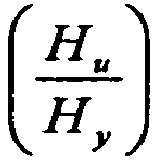
, where Hy represents additional parity checks.
, where Hy represents additional parity checks.
4. Packet-based data transmission method according to claim 3 wherein Hy is choosen in such a way that the performance of the two codes differ only slightly,
so that a slightly higher rebustness of code Cv is obtained, without a to high code rate reduction.
5. Packet-based data transmission system comprising encoding means and decoding means
for carrying out the method according to one of the preceding claims.
REFERENCES CITED IN THE DESCRIPTION
This list of references cited by the applicant is for the reader's convenience only. It does not form part of the European patent document. Even though great care has been taken in compiling the references, errors or omissions cannot be excluded and the EPO disclaims all liability in this regard.
Non-patent literature cited in the description
- R.L. URBANKET.J. RICHARDSONM.A. SHOKROLLAHIDesign of capacity-approaching irregular low density parity check codesIEEE Trans. on Information Theory, 2001, vol. 47, 2619-637 [0024]
- M.P.C. FOSSORIERM. MIHALJEVICH. IMAIReduced Complexity Iterative Decoding of Low Density Parity Check Codes Based on Belief PropagationIEEE Transactions on Communications, 1999, vol. 47, 5 [0024]
- D.N. ROWITCHL.B. MILSTEINOn the performance of hybrid FEC/ARQ systems using rate compatible turbo (RCPT) codesIEEE Trans. on Commun., 2000, vol. 48, 948-959 [0024]
- S. STIGLMAYRM. BOSSERTRate Compatible Low Density Parity Check CodesSiemens Internal Report, 2005, [0024]
- M. BOSSERT.Channel Coding for Telecommunications.John Wiley and Sons19990000 [0024]