|
(11) | EP 1 829 842 A1 |

| (12) | EUROPEAN PATENT APPLICATION |
| published in accordance with Art. 158(3) EPC |
|
|
|
|
|||||||||||||||||||
| (54) | DIELECTRIC CERAMIC AND MULTILAYER CERAMIC CAPACITOR |
| (57) A dielectric ceramic is provided having a high relative dielectric constant, and
in the case in which it is used for a multilayer ceramic capacitor (1), even when
the thickness of a dielectric ceramic layer (3) is decreased, high insulating properties
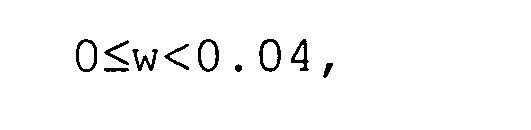
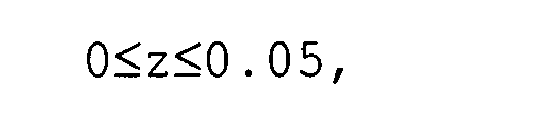
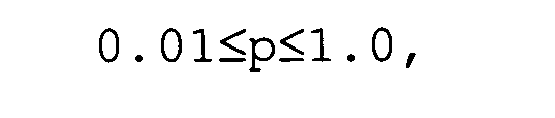
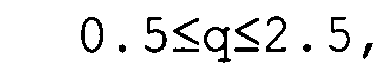
and superior reliability can be obtained. The dielectric ceramic has a composition represented by 100(Ba1-w-x-mCawSrxGdm)k (Ti1-y-z-nZryHfzMgn) 03+a + pMnO2 + qSiO2 + rCuO, and is used for forming the dielectric ceramic layer (3) of a multilayer ceramic capacitor 1. However, 0.995≤k≤1.010, 0≤w<0.04, 0≤x≤0.04, 0≤y≤0.10, 0≤z≤0.05, 0.015≤m≤0.035, 0.015≤n≤0.035, 0.01≤p≤1.0, 0.5≤q≤2.5, and 0.01≤r≤5.0 are satisfied. In addition, a is a value selected with respect to the deviation from 3 so that the primary component is electrically neutral. |
Technical Field
[0001] The present invention relates to a dielectric ceramic and a multilayer ceramic capacitor formed using this dielectric ceramic, and in more particular, relates to an improvement capable of further decreasing the thickness of a dielectric ceramic layer of a multilayer ceramic capacitor formed using a dielectric ceramic.
Background Art
[0002] As a ceramic interesting to the present invention, a dielectric ceramic that includes a primarily component and additive components has been disclosed in International Publication No. 2004/067473 pamphlet (Patent Document 1). In this dielectric ceramic, the primary component is a barium titanate-based composite oxide represented by the general formula of (Ba1-h-i-mCahSriGdm)k(Ti1-y-j-nZryHfjMgn)O3, where 0.995≤k≤1.015, 0≤h≤0.03, 0≤i≤0.03, 0.015≤m≤0.035, 0≤y<0.05, 0≤j<0.05, 0≤(y+j)<0.05, and 0.015≤n≤0.035 are satisfied, Ba is partly replaced with Gd, and Ti is partly replaces with Mg. In addition, the additive components are Ma (Ma is at least one of Ba, Sr, and Ca), Mb (Mb is at least one of Mn and Ni), and Mc (Mc is Si or Si and Ti), in which less than 1.5 moles (however, 0 moles is not included) of Ma is contained with respect to 100 moles of the primary component, less than 1.0 mole (however, 0 moles is not included) of Mb is contained with respect to 100 moles of the primary component, and 0.5 to 2.0 moles of Mc is contained with respect to 100 moles of the primary component.
[0003] According to the above dielectric ceramic, when dielectric ceramic layers of a multilayer ceramic capacitor are prepared using the above dielectric ceramic, since sintering stability is superior, humidity resistance is improved, the F characteristic specified by the JIS standard and the Y5V characteristic specified by the EIA standard are both satisfied, a relative dielectric constant of 9,000 or more can be obtained, and the multilayer ceramic capacitor can be used in a wide temperature range.
[0004] In addition, even when the thickness of the dielectric ceramic layer is decreased, since the humidity resistance and the high-temperature reliability are superior, the reduction in size and increase in capacity of the multilayer ceramic capacitor can be realized by decreasing the thickness of the dielectric ceramic layer, and in addition, it is not necessary to decrease the rated voltage. Hence, even when the thickness of the dielectric ceramic layer is decreased, for example, to 3 µm, sufficient practical properties can be imparted to the multilayer ceramic capacitor.
[0005] In addition, even when fired in a neutral or a reducing atmosphere, this dielectric ceramic is not semiconductorized and may have a high relative resistance; hence, when a multilayer ceramic capacitor is formed using this dielectric ceramic, as a conductive component contained in internal electrodes, a base metal may be used without causing any problems. As a result, cost of the multilayer ceramic capacitor can be reduced.
[0006] However, in the case in which dielectric ceramic layers of a multilayer ceramic capacitor are formed using the dielectric ceramic disclosed in Patent Document 1, it was found that when the thickness of the dielectric ceramic layer is decreased to 2 µm or less, it may become difficult in some cases to ensure the reliability. In addition, in order to sinter the dielectric ceramic disclosed in Patent Document 1, a high firing temperature, such as approximately 1,200°C or 1,200°C or more, is required.
Patent Document 1: International Publication No. 2004/067473 pamphlet
Disclosure of Invention
Problems to be Solved by the Invention
[0007] Accordingly, an object of the present invention is to provide a dielectric ceramic capable of solving the above problems.
[0008] Another object of the present invention is to provide a multilayer ceramic capacitor formed using the aforementioned dielectric ceramic.
Means for Solving the Problems
[0009] In order to solve the above technical problems, a dielectric ceramic according to the present invention has a composition represented by the general formula: 100 (Ba1-w-x-mCawSrxGdm)k(Ti1-y-z-nZryHfzMgn)O3+a + pMnO2 + qSiO2 + rCuO.
[0010] However, in the above general formula, (Ba1-w-x-mCawSrxGdm)k(Ti1-y-z-nZryHfzMgn)O3+a is a primary component, the units of k, w, x, y, z, m, n, p, q, and r are each the mole,
and
are satisfied, and a is a value selected with respect to the deviation from 3 so that the primary component is electrically neutral.
[0011] The dielectric ceramic according to the present invention preferably further includes as an additive component 0.50 moles or less of Re2O3 (Re is at least one selected from the group consisting of Y, Sm, Eu, Tb, Dy, Ho, Er, Tm, and Yb) with respect to 100 moles of the above primary component.
[0012] The present invention is also directed to a multilayer ceramic capacitor including: a laminate including dielectric ceramic layers laminated to each other and internal electrodes which are formed along specific interfaces between the dielectric ceramic layers and which are overlapped with each other in the lamination direction; and external electrodes formed on external surfaces of the laminate so as to be electrically connected to specific internal electrodes.
[0013] In the multilayer ceramic capacitor according to the present invention, the dielectric ceramic layers are composed of the above-described dielectric ceramic according to the present invention.
[0014] In the multilayer ceramic capacitor according to the present invention, the internal electrodes preferably include a base metal as a primary component.
Advantages
[0015] The dielectric ceramic according to the present invention includes elements common to the dielectric ceramic disclosed in Patent Document 1, and the primary component is substantially the same as that thereof; however, since including Cu as an additive component, the dielectric ceramic of the present invention is different from that disclosed in Patent Document 1.
[0016] According to the dielectric ceramic of the present invention, which has the above particular structure, in the case in which a dielectric ceramic layer forming a multilayer ceramic capacitor is formed using this dielectric ceramic, even when the thickness of the dielectric ceramic layer is decreased, the reliability is high, and sintering can be performed at a low temperature as compared to the dielectric ceramic disclosed in Patent Document 1. In addition, the change in electrostatic capacity with time at room temperature can be decreased. By the way, as for the relative dielectric constant, temperature characteristic, and resistivity, substantially the same properties as those of the dielectric ceramic disclosed in Patent Document 1 can be obtained.
[0017] In more particular, according to the dielectric ceramic of the present invention, the relative dielectric constant is high, such as 10,000 or more; as for the dielectric constant temperature properties, the F characteristic specified by the JIS standard and the Y5V characteristic specified by the EIA standard are both satisfied; the resistivity is high, such as 1011 Ω·cm or more; and a time to reach failure by an accelerated reliability test is long, so that high reliability can be obtained.
[0018] In addition, the dielectric ceramic according to the present invention can impart superior humidity resistance and superior reliability at a high temperature to a dielectric ceramic layer forming a multilayer ceramic capacitor even when the thickness of the dielectric ceramic layer is decreased. Hence, the reduction in size and increased in capacity of the multilayer ceramic capacitor can be realized by decreasing the thickness of the dielectric ceramic layer, and even when the thickness of the dielectric ceramic layer is decreased, it is not necessary to decrease the rated voltage. Accordingly, even when the thickness of the dielectric ceramic layer is decreased, for example, to 2 µm or less, sufficient practical properties can be imparted to the multilayer ceramic capacitor.
[0019] When 0.50 moles or less of Re2O3 (Re is at least one selected from the group consisting of Y, Sm, Eu, Tb, Dy, Ho, Er, Tm, and Yb) is further contained in the dielectric ceramic of the present invention with respect to 100 moles of the primary component, the absolute value of the rate of change with time in electrostatic capacity at room temperature of the multilayer ceramic capacitor, which is formed by using the above dielectric ceramic, can be further decreased.
Brief Description of the Drawings
[0020]
Fig. 1 is a cross-sectional view schematically showing a multilayer ceramic capacitor 1 formed using a dielectric ceramic according to the present invention.
Reference Numerals
[0021]
- 1
- multilayer ceramic capacitor
- 2
- laminate
- 3
- dielectric ceramic layer
- 4, 5
- internal electrode
- 8, 9
- external electrode
Best Mode for Carrying Out the Invention
[0022] Fig. 1 is a cross-sectional view schematically showing a multilayer ceramic capacitor 1 formed using a dielectric ceramic according to the present invention.
[0023] The multilayer ceramic capacitor 1 has a rectangular parallelepiped laminate 2 as a whole. The laminate 2 is formed of a plurality of dielectric ceramic layers 3 laminated to each other and a plurality of internal electrodes 4 and 5 formed along a plurality of specific interfaces between the dielectric ceramic layers 3. The internal electrodes 4 and 5 are formed to reach external surfaces of the laminate 2; however, the internal electrodes 4 extended to one end surface 6 of the laminate 2 and the internal electrodes 5 extended to the other end surface 7 are alternately disposed in the laminate 2.
[0024] On the end surfaces 6 and 7, which are the external surfaces of the laminate 2, a conductive paste is applied, followed by baking, so that external electrodes 8 and 9 are formed, respectively. On the external electrodes 8 and 9, first plating layers 10 and 11 composed of nickel, copper, a nickel-copper alloy, or the like are respectively formed, whenever necessary, and in addition, on the above plating layers, second plating layers 12 and 13 composed of solder, tin, or the like are formed, respectively.
[0025] As described above, in the multilayer ceramic capacitor 1, the internal electrodes 4 and 5 are formed so as to be overlapped with each other in the lamination direction, and hence an electrostatic capacity is formed between adjacent internal electrodes 4 and 5. In addition, the internal electrodes 4 are electrically connected to the external electrode 8, and the internal electrodes 5 are electrically connected to the external electrode 9; hence, through these external electrodes 8 and 9, the above electrostatic capacity can be obtained.
[0026] The dielectric ceramic layer 3 is formed from the following dielectric ceramic that is the feature of the present invention.
[0027] That is, the dielectric ceramic layer 3 is formed from a dielectric ceramic having a composition represented by the general formula of
100(Ba1-w-x-mCawSrxGdm)k(Ti1-y-z-nZryHfzMgn)O3+a+pMnO2+qSiO2+rCuO.
[0028] However, in the above general formula, (Ba1-w-x-mCawSrxGdm)k(Ti1-y-nZryHfzMgn)O3+a is a primary component, the units of k, w, x, y, z, m, n, p, q, and r are each the mole,
and
are satisfied, and
a is a value selected with respect to the deviation from 3 so that the primary component is electrically neutral.
[0029] When the dielectric ceramic layers 3 are formed using the dielectric ceramic as described above, the reliability of the multilayer ceramic capacitor 1 can be made superior such that, as apparent from experimental examples described later, the relative dielectric constant is high, such as 10,000 or more, the F characteristic specified by the JIS standard and the Y5V characteristic specified by the EIA standard are both satisfied, the resistivity is high, such as 1011 Ω·cm or more, and the mean time to failure by an accelerated reliability test (150°C, DC electric field strength: 16.8 V/µm) is more than 20 hours.
[0030] In addition, even when the thickness of the dielectric ceramic layer 3 is decreased, since superior humidity resistance and reliability at high temperature can be ensured, by the decrease in thickness of the dielectric ceramic layer 3, the reduction in size and increase in capacity of the multilayer ceramic capacitor 1 can be realized. In addition, even when the thickness of the dielectric ceramic layer 3 is decreased, it is not necessary to decrease the rated voltage. Hence, even when the thickness of the dielectric ceramic layer 3 is decreased to 2 µm or less, sufficient practical properties can be imparted to the multilayer ceramic capacitor 1.
[0031] In addition, since the dielectric ceramic described above can be fired in a neutral or a reducing atmosphere, a base metal, such as nickel, a nickel alloy, copper, or a copper alloy, can be used as a material for the internal electrodes 4 and 5.
[0032] The dielectric ceramic forming the dielectric ceramic layer 3 preferably contains 0.50 moles or less of Re2O3 (Re is at least one selected from the group consisting of Y, Sm, Eu, Tb, Dy, Ho, Er, Tm, and Yb) as an additive component with respect to 100 moles of the above primary component. Accordingly, the absolute value of the rate of change with time in electrostatic capacity at room temperature of the multilayer ceramic capacitor 1 can be further decreased. In addition, when more than 0.50 moles of Re2O3 is contained, the relative dielectric constant of the dielectric ceramic is decreased.
[0033] Next, a method for manufacturing the multilayer ceramic capacitor 1 shown in Fig. 1 will be described.
[0034] First, a powdered starting material for a dielectric ceramic forming the dielectric ceramic layer 3 is prepared. This powdered staring material is preferably formed as follows.
[0035] That is, a primary component having a composition represented by the general formula of
(Ba1-w-x-mCawSrxGdm)k(Ti1-y-z-nZryHfzMgn)O3+a is synthesized. However, k, w, x, y, z, m, and n are in the respective ranges as shown below,
and
[0036] In more particular, compounds containing respective elements included in the above primary component, such as BaCO3, CaCO3, SrCO3, TiO2, ZrO2, HfO2, Gd2O3, and MgCO3, are mixed together so as to obtain the above composition ratios and are then calcined in the atmosphere, followed by pulverization.
[0037] As the compounds containing respective elements included in the primary component, compounds other than the carbonates and oxides mentioned above may also be used. In addition, as a method for obtaining the above powder, besides the above calcination method, an alkoxide method, a coprecipitation method, or a hydrothermal synthesis method may also be used.
[0038] In addition, as the additive component, powders of MnCO3, SiO2, and CuO are prepared. As the powders mentioned above, compounds other than the above carbonate and oxides may also be used.
[0039] Next, MnCO3, SiO2, and CuO are mixed together so as to have 0.01 to 1.0 mole, 0.5 to 2.5 moles, and 0.01 to 5.0 moles, respectively, with respect to 100 moles of the primary component. This mixed powder is used as the powdered starting material for the dielectric ceramic.
[0040] In the above mixing step, with respect to 100 moles of the primary component, as an additive component, 0.50 moles or less of Re2O3 (Re is at least one selected from the group consisting of Y, Sm, Eu, Tb, Dy, Ho, Er, Tm, and Yb) may also be mixed together.
[0041] In addition, it is confirmed that among alkali metal oxides, such as Na2O and K2O, and other oxides such as Al2O3, which can be present as an impurity in the powder contained as the primary component, in particular, the content of the alkali metal oxides, such as Na2O and K2O, has a relatively large influence on electrical properties. However, it is also confirmed that when the content of the alkali metal oxides that can be present as an impurity as described above is less than 0.02 percent by weight of (Ba1-w-x-mCawSrxGdm)k(Ti1-y-z-nZryHfzMgn)O3+a as the primary component, the electrical properties are not degraded.
[0042] Next, an organic binder and a solvent are added to the powdered starting material thus obtained for the dielectric ceramic and are then mixed together to form a slurry, and by using this slurry, ceramic green sheets to be formed into the dielectric ceramic layers 3 are formed.
[0043] Next, on a specific ceramic green sheet, a conductive paste film to be formed into the internal electrode 4 or 5 is formed, for example, by screen printing. This conductive paste film contains a base metal, such as nickel, a nickel alloy, copper, or a copper alloy, as a conductive component. In addition, the internal electrodes 4 and 5 may be formed by a deposition method, a plating method, or the like instead of a printing method such as a screen printing method.
[0044] Next, after a plurality of ceramic green sheets on which the conductive past films are formed as described above are laminated to each other, ceramic green sheets on which no conductive past films are formed are laminated so as to sandwich the above laminated ceramic green sheets and are then pressure-bonded, followed by performing cutting whenever necessary, so that a green laminate to be formed into the laminate 2 is obtained. In this green laminate, end portions of the conductive paste films are each exposed to either one of the end surfaces.
[0045] Next, the green laminate is fired in a reducing atmosphere. By this treatment, the sintered laminate 2 as shown in Fig. 1 is obtained, and in the laminate 2, the above ceramic green sheets form the dielectric ceramic layers 3 composed of the dielectric ceramic, and the conductive paste films form the internal electrodes 4 and 5.
[0046] The dielectric ceramic forming the above dielectric ceramic layers 3 has a composition represented by the general formula of 100(Ba1-w-x-mCawSrxGdm)k(Ti1-y-z-nZryHfzMgn)O3+a + pMnO2 + qSiO2 + rCuO. In this general formula, Gd, a rare earth element, is described in the A site of perovskite, and in addition, Mg is described in the B site of perovskite. This indicates that Gd is solid-solved (that is, replaced) in the A site, and that Mg is solid-solved (that is, replaced) in the B site. In order to solid-solve Gd and Mg in the state described above, while Gd2O3 and MgCO3 are mixed with BaCO3, TiO2, and the like, calcination is performed as described above.
[0047] In the dielectric ceramic forming the dielectric ceramic layers 3, it is preferable that Gd is solid-solved primarily in the A site of perovskite and that Mg is solid-solved primarily in the B site of perovskite, as described above. However, as long as the objects of the present invention are not deteriorated, a trace amount of Gd may be present in grain boundaries or the B site of perovskite, and a trace amount of Mg may be present in grain boundaries or the A site of perovskite.
[0048] Next, the external electrodes 8 and 9 are formed so as to be electrically connected to the exposed ends of the internal electrodes 4 and 5, respectively, by applying a conductive paste on the end surfaces 6 and 7, respectively, of the laminate 2, followed by baking.
[0049] The external electrodes 8 and 9 are formed, in general, by applying a conductive paste to the external surfaces of the fired laminate 2, followed by baking, as described above; however, the external electrodes 8 and 9 may be formed by applying a conductive paste on external surfaces of the green laminate that is not processed by firing and then performing baking concomitant with firing to obtain the laminate 2.
[0050] Next, whenever necessary, on the external electrodes 8 and 9, plating of nickel, copper, or the like is performed, so that the first plating layers 10 and 11 are formed. Subsequently, on the first plating layers 10 and 11, plating of solder, tin, or the like is performed, so that the second plating layers 12 and 13 are formed.
[0052] Next, the present invention will be described in more particular with reference to experimental examples. The experimental examples also have an important role to show the reasons to limit the range of the present invention or a preferable range thereof.
Experimental Examples
(Experimental Example 1)
[0053] As starting materials for a dielectric ceramic, powders of high purity BaCO3, CaCO3, SrCO3, TiO2, ZrO2, HfO2, Gd2O3, and MgCO3 were prepared.
[0054] Next, in order to obtain a primary component represented by (Ba1-w-x-mCawSrxGdm)k(Ti1-y-z-nZryHf2Mgn)O3+a, the above powdered starting materials were mixed together so as to have molar ratios shown in respective columns of [k], [w], [x], [y], [z], [m], and [n] of Table 1, followed by wetpulverization. Subsequently, after drying was performed, the mixed powder was heated to a temperature of 900°C or more in the atmosphere to obtain a (Ba1-w-x-mCawSrxGdm)k(Ti1-y-z-nZryHfzMgn)O3+a powder by synthesis and was pulverized to obtain an average particle diameter of 0.2 to 0.4 µm.
[0056] Next, the above individual powders of MnCO3, SiO2, and CuO were added to and were mixed with the powdered primary component synthesized beforehand so as to obtain molar ratios in the form of MnO2 SiO2, and CuO, respectively, shown in the respective columns of [p], [q], and [r] of Table 1, so that powdered dielectric ceramic starting materials for respective samples were obtained.
[Table 1]
| SAMPLE NO. | 100(Ba1-w-x-mCawSrxGdm)k(Ti1-y-z-nZryHfzMgn)O3+a+pMnO2+qSiO2+rCuO | |||||||||
| k | w | x | y | z | m | n | p | q | r | |
| * 1 | 0.993 | 0.02 | 0.00 | 0.05 | 0.00 | 0.025 | 0.025 | 0.5 | 1.5 | 2.5 |
| 2 | 0.995 | 0.02 | 0.00 | 0.05 | 0.00 | 0.025 | 0.025 | 0.5 | 1.5 | 2.5 |
| 3 | 1.002 | 0.02 | 0.00 | 0.05 | 0.00 | 0.025 | 0.025 | 0.5 | 1.5 | 2.5 |
| 4 | 1.010 | 0.02 | 0.00 | 0.05 | 0.00 | 0.025 | 0.025 | 0.5 | 1.5 | 2.5 |
| * 5 | 1.012 | 0.02 | 0.00 | 0.05 | 0.00 | 0.025 | 0.025 | 0.5 | 1.5 | 2.5 |
| 6 | 1.002 | 0.00 | 0.00 | 0.05 | 0.00 | 0.025 | 0.025 | 0.5 | 1.5 | 2.5 |
| 7 | 1.002 | 0.03 | 0.00 | 0.05 | 0.00 | 0.025 | 0.025 | 0.5 | 1.5 | 2.5 |
| * 8 | 1.002 | 0.04 | 0.00 | 0.05 | 0.00 | 0.025 | 0.025 | 0.5 | 1.5 | 2.5 |
| 9 | 1.002 | 0.02 | 0.02 | 0.05 | 0.00 | 0.025 | 0.025 | 0.5 | 1.5 | 2.5 |
| 10 | 1.002 | 0.02 | 0.04 | 0.05 | 0.00 | 0.025 | 0.025 | 0.5 | 1.5 | 2.5 |
| * 11 | 1.002 | 0.02 | 0.05 | 0.05 | 0.00 | 0.025 | 0.025 | 0.5 | 1.5 | 2.5 |
| 12 | 1.002 | 0.02 | 0.00 | 0.00 | 0.00 | 0.025 | 0.025 | 0.5 | 1.5 | 2.5 |
| 13 | 1.002 | 0.02 | 0.00 | 0.01 | 0.00 | 0.025 | 0.025 | 0.5 | 1.5 | 2.5 |
| 14 | 1.002 | 0.02 | 0.00 | 0.10 | 0.00 | 0.025 | 0.025 | 0.5 | 1.5 | 2.5 |
| * 15 | 1.002 | 0.02 | 0.00 | 0.12 | 0.00 | 0.025 | 0.025 | 0.5 | 1.5 | 2.5 |
| 16 | 1.002 | 0.02 | 0.00 | 0.05 | 0.02 | 0.025 | 0.025 | 0.5 | 1.5 | 2.5 |
| 17 | 1.002 | 0.02 | 0.00 | 0.05 | 0.05 | 0.025 | 0.025 | 0.5 | 1.5 | 2.5 |
| * 18 | 1.002 | 0.02 | 0.00 | 0.05 | 0.06 | 0.025 | 0.025 | 0.5 | 1.5 | 2.5 |
| * 19 | 1.002 | 0.02 | 0.00 | 0.05 | 0.00 | 0.013 | 0.025 | 0.5 | 1.5 | 2.5 |
| 20 | 1.002 | 0.02 | 0.00 | 0.05 | 0.00 | 0.015 | 0.025 | 0.5 | 1.5 | 2.5 |
| 21 | 1.002 | 0.02 | 0.00 | 0.05 | 0.00 | 0.035 | 0.025 | 0.5 | 1.5 | 2.5 |
| * 22 | 1.002 | 0.02 | 0.00 | 0.05 | 0.00 | 0.037 | 0.025 | 0.5 | 1.5 | 2.5 |
| * 23 | 1.002 | 0.02 | 0.00 | 0.05 | 0.00 | 0.025 | 0.013 | 0.5 | 1.5 | 2.5 |
| 24 | 1.002 | 0.02 | 0.00 | 0.05 | 0.00 | 0.025 | 0.015 | 0.5 | 1.5 | 2.5 |
| 25 | 1.002 | 0.02 | 0.00 | 0.05 | 0.00 | 0.025 | 0.035 | 0.5 | 1.5 | 2.5 |
| * 26 | 1.002 | 0.02 | 0.00 | 0.05 | 0.00 | 0.025 | 0.037 | 0.5 | 1.5 | 2.5 |
| * 27 | 1.002 | 0.02 | 0.00 | 0.05 | 0.00 | 0.025 | 0.025 | 0.0 | 1.5 | 2.5 |
| 28 | 1.002 | 0.02 | 0.00 | 0.05 | 0.00 | 0.025 | 0.025 | 0.01 | 1.5 | 2.5 |
| 29 | 1.002 | 0.02 | 0.00 | 0.05 | 0.00 | 0.025 | 0.025 | 1.0 | 1.5 | 2.5 |
| * 30 | 1.002 | 0.02 | 0.00 | 0.05 | 0.00 | 0.025 | 0.025 | 1.2 | 1.5 | 2.5 |
| * 31 | 1.002 | 0.02 | 0.00 | 0.05 | 0.00 | 0.025 | 0.025 | 0.5 | 0.3 | 2.5 |
| 32 | 1.002 | 0.02 | 0.00 | 0.05 | 0.00 | 0.025 | 0.025 | 0.5 | 0.5 | 2.5 |
| 33 | 1.002 | 0.02 | 0.00 | 0.05 | 0.00 | 0.025 | 0.025 | 0.5 | 2.5 | 2.5 |
| * 34 | 1.002 | 0.02 | 0.00 | 0.05 | 0.00 | 0.025 | 0.025 | 0.5 | 2.7 | 2.5 |
| * 35 | 1.002 | 0.02 | 0.00 | 0.05 | 0.00 | 0.025 | 0.025 | 0.5 | 1.5 | 0.0 |
| 36 | 1.002 | 0.02 | 0.00 | 0.05 | 0.00 | 0.025 | 0.025 | 0.5 | 1.5 | 0.01 |
| 37 | 1.002 | 0.02 | 0.00 | 0.05 | 0.00 | 0.025 | 0.025 | 0.5 | 1.5 | 1.0 |
| 38 | 1.002 | 0.02 | 0.00 | 0.05 | 0.00 | 0.025 | 0.025 | 0.5 | 1.5 | 4.0 |
| 39 | 1.002 | 0.02 | 0.00 | 0.05 | 0.00 | 0.025 | 0.025 | 0.5 | 1.5 | 5.0 |
| * 40 | 1.002 | 0.02 | 0.00 | 0.05 | 0.00 | 0.025 | 0.025 | 0.5 | 1.5 | 5.3 |
[0057] Next, a poly(vinyl butyral)-based binder and an organic solvent such as ethanol were added to each of the powdered dielectric ceramic starting materials shown in Table 1 and were then wet-mixed using a ball mill, so that a ceramic slurry was obtained.
[0058] Next, the ceramic slurry was formed into a sheet by a gravure coater method, so that a ceramic green sheet having a thickness of 2 µm was obtained.
[0059] Next, on the ceramic green sheet, a conductive paste containing nickel as a primary component was printed, so that a conductive paste film to be formed into an internal electrode was formed.
[0060] Next, a plurality of ceramic green sheets are laminated to each other so that sides thereof to which the above conductive paste films are extended are alternately disposed, so that a green laminate was obtained.
[0061] Next, after the green laminate was heated to a temperature of 250°C in the atmosphere to burn the binder, firing was performed in a reducing atmosphere composed of a H2-N2-H2O gas at an oxygen partial pressure of 10-9 to 10-12 MPa for 2 hours at each temperature shown in the column of [firing temperature] of Table 2, so that the sintered laminate was obtained.
[0062] Next, onto the two end surfaces of the sintered laminate, a conductive paste containing a B2O3-SiO2-BaO-based glass frit together with silver as a conductive component was applied, and baking was performed at a temperature of 800°C in a nitrogen atmosphere, so that external electrodes electrically connected to the internal electrodes were formed.
[0063] The outer dimension of the multilayer ceramic capacitor thus obtained had a width of 1.2 mm, a length of 2.0 mm, and a thickness of 0.5 mm, and the thickness of the dielectric ceramic layer provided between the internal electrodes was 1.5 µm. In addition, the number of effective dielectric ceramic layers was 10, and a facing electrode area per one layer was 1.3 x 10⁻⁶ m2.
[0065] First, as for the "fraction defective", when a multilayer ceramic capacitor, which is a sample, was shortcircuited or was opened, it was regarded as a defective, and the ratio of samples that cause defects was obtained. The following evaluations were performed for samples other than defectives.
[0066] As for the [relative dielectric constant], the electrostatic capacity was measures using an automatic bridge type measurement device in accordance with JIS standard [5102], and the relative dielectric constant was calculated from a measured electrostatic capacity.
[0068] As for the [resistivity (log p)], an insulating resistance at 25°C was measured by applying a direct voltage of 4.2 kV/mm for 2 minutes using an insulating resistance tester, and the resistivity was calculated from the insulating resistance.
[0069] As for the [F characteristic] of the JIS standard, based on an electrostatic capacity at a temperature of 20°C, the rate of change in capacitance between -25°C and +85°C was obtained, and evaluation was performed whether this is satisfied or not, that is, whether this is in the specification or not.
[0070] As for the [Y5V characteristic] of the EIA standard, based on an electrostatic capacity at a temperature of 25°C, the rate of change in capacitance between -30°C and +85°C was obtained, and evaluation was performed whether this is satisfied or not, that is, whether this is in the specification or not.
[0071] As for the [mean time to failure], a high temperature load test was performed in which the rate of change with time in insulating resistance was measured while a direct voltage was applied at a temperature of 150°C so as to obtain an electric field strength of 16.8 V/µm, and in which when the insulating resistance of each sample reached 105.0 Ω or less, this point of time was regarded as a fault, and the average value of times reaching this defect was obtained.
[0072] As for the [rate of change with time in electrostatic capacity at room temperature], based on an electrostatic capacity which was obtained at the stage at which a sample was left in a no-load state for more than 30 minutes at a temperature of 150°C or more and was then left at room temperature (25°C) for 24 hours, the rate of change in electrostatic capacity was obtained after the sample was left for 240 hours at room temperature.
[Table 2]
| Sample No. | Firing Temperature (°C) | Relative Dielectric Constant | tan δ (%) | Resistivity log ρ (ρ:Ω·cm) | Mean Time to Failure (Hours) | Rate of Change with Time in Electrostatic Capacity at Room Temperature (%) | F Characteristic | Y5V Characteristic | Fraction Defective (%) |
| *1 | 1,160 | 10,100 | 12.0 | 9.1 | Not measurable | -9.3 | In specification | In specification | 0 |
| 2 | 1,180 | 10,700 | 12.6 | 11.0 | 20 | -9.5 | In specification | In specification | 0 |
| 3 | 1,180 | 12,100 | 14.0 | 11.3 | 26 | -10.7 | In specification | In specification | 0 |
| 4 | 1,200 | 10,200 | 11.9 | 11.3 | 21 | -9.3 | In specification | In specification | 0 |
| *5 | 1,220 | 8,900 | 10.5 | 11.1 | 11 | -8.5 | In specification | In specification | 0 |
| 6 | 1,180 | 12,200 | 14.1 | 11.2 | 25 | -10.9 | In specification | In specification | 0 |
| 7 | 1,180 | 10,000 | 11.9 | 11.3 | 38 | -9.2 | In specification | In specification | 0 |
| *8 | 1,220 | 8,000 | 10.1 | 11.4 | 41 | -8.1 | In specification | In specification | 0 |
| 9 | 1,180 | 11,000 | 12.4 | 11.2 | 25 | -9.7 | In specification | In specification | 0 |
| 10 | 1,180 | 10,200 | 11.5 | 11.1 | 21 | -9.5 | In specification | In specification | 0 |
| *11 | 1,180 | 9,800 | 10.8 | 11.1 | 15 | -9.2 | In specification | In specification | 0 |
| 12 | 1,180 | 13,300 | 15.0 | 11.2 | 30 | -11.0 | In specification | In specification | 0 |
| 13 | 1,180 | 13,400 | 15.1 | 11.1 | 29 | -11.0 | In specification | In specification | 0 |
| 14 | 1,180 | 10,900 | 12.7 | 11.2 | 20 | -9.7 | In specification | In specification | 0 |
| *15 | 1,180 | 9,200 | 11.0 | 11.5 | 17 | -8.7 | In specification | In specification | 0 |
| 16 | 1,180 | 11,100 | 12.7 | 11.2 | 28 | -9.7 | In specification | In specification | 0 |
| 17 | 1,180 | 10,600 | 12.5 | 11.3 | 22 | -9.4 | In specification | In specification | 0 |
| *18 | 1,180 | 10,200 | 12.0 | 11.2 | 14 | -9.2 | In specification | In specification | 0 |
| *19 | 1,180 | 12,000 | 14.0 | 10.3 | 4 | -10.7 | In specification | In specification | 0 |
| 20 | 1,180 | 11,700 | 13.2 | 11.0 | 20 | -10.5 | In specification | In specification | 0 |
| 21 | 1,200 | 10,200 | 12.3 | 11.3 | 39 | -9.3 | In specification | In specification | 0 |
| *22 | 1,220 | 8,800 | 10.6 | 11.4 | 48 | -8.5 | In specification | in specification | 0 |
| *23 | 1,180 | 14,100 | 16.3 | 10.2 | 10 | -11.4 | In specification | In specification | 2 |
| 24 | 1,180 | 11,900 | 13.8 | 11.0 | 21 | -10.6 | In specification | In specification | 0 |
| 25 | 1,180 | 10,200 | 12.0 | 11.2 | 33 | -9.3 | In specification | In specification | 0 |
| *26 | 1,200 | 9,600 | 11.9 | 11.4 | 40 | -9.1 | In specification | In specification | 0 |
| *27 | 1,180 | Semiconductorized | |||||||
| 28 | 1,180 | 12,000 | 14.7 | 11.0 | 25 | -10.6 | In specification | In specification | 0 |
| 29 | 1,180 | 10,800 | 10.8 | 11.3 | 29 | -11.7 | In specification | In specification | 0 |
| *30 | 1,180 | 9,100 | 11.0 | 11.1 | 38 | -13.1 | In specification | In specification | 0 |
| *31 | 1,250 | 7,800 | 8.8 | 9.0 | Not measurable | -7.8 | In specification | In specification | 0 |
| 32 | 1,200 | 10,200 | 12.1 | 11.0 | 22 | -9.3 | In specification | In specification | 0 |
| 33 | 1,180 | 11,300 | 13.5 | 11.0 | 20 | -10.3 | In specification | In specification | 2 |
| *34 | 1,160 | 11,000 | 12.8 | 11.1 | 5 | -9.6 | In specification | In specification | 8 |
| *35 | 1,250 | 10,100 | 12.2 | 11.2 | 4 | -13.5 | In specification | In specification | 0 |
| 36 | 1,200 | 10,600 | 12.8 | 11.3 | 20 | -12.4 | In specification | In specification | 0 |
| 37 | 1,180 | 12,500 | 14.5 | 11.4 | 31 | -11.3 | In specification | In specification | 0 |
| 38 | 1,160 | 11,500 | 13.5 | 11.3 | 22 | -10.4 | In specification | In specification | 0 |
| 39 | 1,160 | 10,800 | 14.8 | 11.0 | 20 | -9.5 | In specification | In specification | 0 |
| *40 | 1,160 | 9,000 | 10.7 | 11.5 | 16 | -8.4 | In specification | In specification | 0 |
[0073] In Tables 1 and 2, Sample Nos. provided with * indicate that the samples are out of the range of the present invention.
[0074] According to Samples 2 to 4, 6, 7, 9, 10, 12 to 14, 16, 17, 20, 21, 24, 25, 28, 29, 32, 33, 36 to 39, which are in the range of the present invention, as shown in Table 1, the following equations, 0.995≤k≤1.010, 0≤w<0.04, 0≤x≤0.04, 0≤y≤0.10, 0≤z≤0.05, 0.015≤m≤0.035, 0.015≤n≤0.035, 0.01≤p≤1.0, 0.5≤q≤2.5, and 0.01≤r≤5.0 are all satisfied.
[0075] As a result, according to the above samples, as shown in Table 2, sintering can be performed at a firing temperature of 1,200°C or less; a dielectric constant of 10,000 or more is obtained; as for the dielectric loss, a property in which tan δ is 16.0% or less is satisfied; a more preferable property, such as a tan δ of 12.5% or less, is satisfied in many samples; and as the resistivity, a property in which log ρ(p: Ω·cm) is 11.0 or more is satisfied. In addition, although the thickness of the dielectric ceramic layer is smaller than 2 µm, such as 1.5 µm, a mean time to failure of 20 hours or more can be obtained; as for the rate of change with time in electrostatic capacity at room temperature, a property within -12% is satisfied, and a more preferably property within -10% is also satisfied in many samples: the F characteristic and the Y5V characteristic are both within the respective specifications; and the fraction defective can be decreased within 10%.
[0076] On the other hand, according to Sample 1, which is out of the range of the present invention, since k is less than 0.995 as shown in Table 1, the resistivity log ρ is low, such as less than 11.0, and the mean time to failure cannot be measured, as shown in Table 2. In addition, according to Sample 5, k is more than 1.010 as shown in Table 1, the relative dielectric constant is low, and the mean time to failure is short, as shown in Table 2.
[0077] According to Sample 8, which is out of the range of the present invention, since w is 0.04 or more as shown in Table 1, the relative dielectric constant is low as shown in Table 2.
[0078] According to Sample 11, which is out of the range of the present invention, since x is more than 0.04 as shown in Table 1, the relative dielectric constant is low and the mean time to failure is short, as shown in Table 2.
[0079] According to Sample 15, which is out of the range of the present invention, since y is more than 0.10 as shown in Table 1, the relative dielectric constant is low and the mean time to failure is short, as shown in Table 2.
[0080] According to Sample 18, which is out of the range of the present invention, since z is more than 0.05 as shown in Table 1, the mean time to failure is short as shown in Table 2.
[0081] According to Sample 19, which is out of the range of the present invention, since m is less than 0.015 as shown in Table 1, the resistivity log ρ is low, such as less than 11.0, and the mean time to failure is short, as shown in Table 2. On the other hand, according to Sample 22, since m is more than 0.035 as shown in Table 1, the relative dielectric constant is low as shown in Table 2.
[0082] According to Sample 23, which is out of the range of the present invention, since n is less than 0.015 as shown in Table 1, the resistivity log ρ is low, such as less than 11.0, and the mean time to failure is short, as shown in Table 2. On the other hand, according to Sample 26, since n is more than 0.035 as shown in Table 1, the relative dielectric constant is low as shown in Table 2.
[0083] According to Sample 27, which is out of the range of the present invention, since p is less than 0.01 as shown in Table 1, the resistivity is low so as to be semiconductorized as shown in Table 2. On the other hand, according to Sample 30, since p is more than 1.0 as shown in Table 1, the relative dielectric constant is low and the absolute value of the rate of change with time in electrostatic capacity is large, as shown in Table 2.
[0084] According to Sample 31, which is out of the range of the present invention, since q is less than 0.5 as shown in Table 1, the sintering properties are inferior, and as shown in Table 2, the relative dielectric constant is low, the resistivity log ρ is less than 11.0, and the mean time to failure cannot be measured. On the other hand, according to Sample 34, since q is more than 2.5, the mean time to failure is short and the fraction defective is increased, as shown in Table 2.
[0085] According to Sample 35, which is out of the range of the present invention, since r is less than 0.01 as shown in Table 1, the mean time to failure is short and the absolute value of the rate of change with time in electrostatic capacity is large, as shown in Table 2. On the other hand, according to Sample 40, since r is more than 5.0, the dielectric constant is low and the mean time to failure is short, as shown in Table 2.
(Experimental Example 2)
[0086] As starting materials for a dielectric ceramic, in addition to the materials prepared in Experimental Example 1, an Re2O3 powder was prepared. By a method similar to that in Experimental Example 1, a powdered primary component was synthesized so as to obtain molar ratios shown in Table 3. Subsequently, MnCO3, SiO2, and CuO powders were added to this powdered primary component in accordance with the molar ratios shown in Table 3, and the powdered Re2O3 was also added in accordance with an R element and the molar ratio shown in Table 3, followed by mixing, so that powdered dielectric ceramic starting materials for respective samples were obtained.
[0087] In this Example, the composition of the primary component itself, and the composition ratios of the primary component to MnO2, SiO2, and CuO of Samples 41 to 71 are similar to those of Sample 3 shown in Table 1 of Experimental Example 1. Accordingly, Sample 41 in which [s] is [0.00], that is, Re2O3 is not included, is the same as Sample 3.
[Table 3]
| SAMPLE NO. | 100(Ba1-w-x-mCawSrxGdm)k(Ti1-y-z-nZryHfzMgn)O3+a+pMnO2+qSiO2+rCuO+sRe2O3 | |||||||||||
| k | w | x | y | z | m | n | p | q | r | s | Re ELEMENT/NUMBER OF MOLES | |
| 41 | 1.002 | 0.02 | 0.00 | 0.05 | 0.00 | 0.025 | 0.025 | 0.5 | 1.5 | 2.5 | 0.00 | |
| 42 | 1.002 | 0.02 | 0.00 | 0.05 | 0.00 | 0.025 | 0.025 | 0.5 | 1.5 | 2.5 | 0.10 | Y/0.10 |
| 43 | 1.002 | 0.02 | 0.00 | 0.05 | 0.00 | 0.025 | 0.025 | 0.5 | 1.5 | 2.5 | 0.10 | Sm/0.10 |
| 44 | 1.002 | 0.02 | 0.00 | 0.05 | 0.00 | 0.025 | 0.025 | 0.5 | 1.5 | 2.5 | 0.10 | Dy/0.05. Eu/0.05 |
| 45 | 1.002 | 0.02 | 0.00 | 0.05 | 0.00 | 0.025 | 0.025 | 0.5 | 1.5 | 2.5 | 0.30 | Y/0.30 |
| 46 | 1.002 | 0.02 | 0.00 | 0.05 | 0.00 | 0.025 | 0.025 | 0.5 | 1.5 | 2.5 | 0.30 | Sm/0.30 |
| 47 | 1.002 | 0.02 | 0.00 | 0.05 | 0.00 | 0.025 | 0.025 | 0.5 | 1.5 | 2.5 | 0.30 | by/0.10. Eu/0.20 |
| 48 | 1.002 | 0.02 | 0.00 | 0.05 | 0.00 | 0.025 | 0.025 | 0.5 | 1.5 | 2.5 | 0.50 | Y/0.50 |
| 49 | 1.002 | 0.02 | 0.00 | 0.05 | 0.00 | 0.025 | 0.025 | 0.5 | 1.5 | 2.5 | 0.50 | Sm/0.50 |
| 50 | 1.002 | 0.02 | 0.00 | 0.05 | 0.00 | 0.025 | 0.025 | 0.5 | 1.5 | 2.5 | 0.50 | Eu/0.50 |
| 51 | 1.002 | 0.02 | 0.00 | 0.05 | 0.00 | 0.025 | 0.025 | 0.5 | 1.5 | 2.5 | 0.50 | Tb/0.50 |
| 52 | 1.002 | 0.02 | 0.00 | 0.05 | 0.00 | 0.025 | 0.025 | 0.5 | 1.5 | 2.5 | 0.50 | Dy/0.50 |
| 53 | 1.002 | 0.02 | 0.00 | 0.05 | 0.00 | 0.025 | 0.025 | 0.5 | 1.5 | 2.5 | 0.50 | Ho/0.50 |
| 54 | 1.002 | 0.02 | 0.00 | 0.05 | 0.00 | 0.025 | 0.025 | 0.5 | 1.5 | 2.5 | 0.50 | Er/0.50 |
| 55 | 1.002 | 0.02 | 0.00 | 0.05 | 0.00 | 0.025 | 0.025 | 0.5 | 1.5 | 2.5 | 0.50 | Tm/0.50 |
| 56 | 1.002 | 0.02 | 0.00 | 0.05 | 0.00 | 0.025 | 0.025 | 0.5 | 1.5 | 2.5 | 0.50 | Yb/0.50 |
| 57 | 1.002 | 0.02 | 0.00 | 0.05 | 0.00 | 0.025 | 0.025 | 0.5 | 1.5 | 2.5 | 0.50 | Sm/0.30, Y/0.20 |
| 58 | 1.002 | 0.02 | 0.00 | 0.05 | 0.00 | 0.025 | 0.025 | 0.5 | 1.5 | 2.5 | 0.50 | Dy/0.15. Eu/0.35 |
| 59 | 1.002 | 0.02 | 0.00 | 0.05 | 0.00 | 0.025 | 0.025 | 0.5 | 1.5 | 2.5 | 0.50 | Sm/0.20. Dy/0.20 Ho/0.10 |
| * 60 | 1.002 | 0.02 | 0.00 | 0.05 | 0.00 | 0.025 | 0.025 | 0.5 | 1.5 | 2.5 | 0.70 | Y/0.70 |
| * 61 | 1.002 | 0.02 | 0.00 | 0.05 | 0.00 | 0.025 | 0.025 | 0.5 | 1.5 | 2.5 | 0.70 | Sm/0.70 |
| * 62 | 1.002 | 0.02 | 0.00 | 0.05 | 0.00 | 0.025 | 0.025 | 0.5 | 1.5 | 2.5 | 0.70 | Eu/0.70 |
| * 63 | 1.002 | 0.02 | 0.00 | 0.05 | 0.00 | 0.025 | 0.025 | 0.5 | 1.5 | 2.5 | 0.70 | Tb/0.70 |
| * 64 | 1.002 | 0.02 | 0.00 | 0.05 | 0.00 | 0.025 | 0.025 | 0.5 | 1.5 | 2.5 | 0.70 | Dy/0.70 |
| * 65 | 1.002 | 0.02 | 0.00 | 0.05 | 0.00 | 0.025 | 0.025 | 0.5 | 1.5 | 2.5 | 0.70 | Ho/0.70 |
| * 66 | 1.002 | 0.02 | 0.00 | 0.05 | 0.00 | 0.025 | 0.025 | 0.5 | 1.5 | 2.5 | 0.70 | Er/0.70 |
| * 67 | 1.002 | 0.02 | 0.00 | 0.05 | 0.00 | 0.025 | 0.025 | 0.5 | 1.5 | 2.5 | 0.70 | Tm/0.70 |
| * 68 | 1.002 | 0.02 | 0.00 | 0.05 | 0.00 | 0.025 | 0.025 | 0.5 | 1.5 | 2.5 | 0.70 | Yb/0.70 |
| * 69 | 1.002 | 0.02 | 0.00 | 0.05 | 0.00 | 0.025 | 0.025 | 0.5 | 1.5 | 2.5 | 0.70 | Sm/0.40, Y/0.30 |
| * 70 | 1.002 | 0.02 | 0.00 | 0.05 | 0.00 | 0.025 | 0.025 | 0.5 | 1.5 | 2.5 | 0.70 | Dy/0.25. Eu/0.45 |
| * 71 | 1.002 | 0.02 | 0.00 | 0.05 | 0.00 | 0.025 | 0.025 | 0.5 | 1.5 | 2.5 | 0.70 | Sm/0.30, Dy/0.20 Ho/0.20 |
[0088] Subsequently, by a method similar to that in Experimental Example 1, multilayer ceramic capacitors were formed, and evaluations similar to those described above were performed. The evaluation results are shown in Table 5.
[Table 4]
| Sample No. | Firing Temperature (°C) | Relative Dielectric Constant | tan δ (%) | Resistivity log ρ (ρ:Ωcm) | Mean Time to Failure (Hours) | Rate of Change with Time in Electrostatic Capacity at Room Temperature (%) | F Characteristic | Y5V Characteristic | Fraction Defective (%) |
| 41 | 1,180 | 12,100 | 14.0 | 11.3 | 26 | -10.7 | In specification | In specification | 0 |
| 42 | 1,180 | 11,800 | 13.5 | 11.2 | 23 | -10.3 | In specification | In specification | 0 |
| 43 | 1,170 | 11,900 | 13.8 | 11.1 | 26 | -10.4 | In specification | In specification | 0 |
| 44 | 1,170 | 11,700 | 13.7 | 11.3 | 27 | -10.3 | In specification | In specification | 0 |
| 45 | 1,180 | 11,500 | 13.1 | 11.1 | 28 | -9.9 | In specification | In specification | 0 |
| 46 | 1,170 | 11,600 | 13.7 | 11.2 | 30 | -10.0 | In specification | In specification | 0 |
| 47 | 1,170 | 11,400 | 13.4 | 11.4 | 32 | -9.9 | In specification | In specification | 0 |
| 48 | 1,180 | 11,300 | 12.8 | 11.2 | 20 | -9.4 | In specification | In specification | 0 |
| 49 | 1,160 | 11,300 | 13.6 | 11.1 | 25 | -9.5 | In specification | In specification | 0 |
| 50 | 1,160 | 11,100 | 12.8 | 11.3 | 26 | -9.9 | In specification | In specification | 0 |
| 51 | 1,180 | 10,800 | 12.6 | 11.4 | 33 | -9.2 | In specification | In specification | 0 |
| 52 | 1,180 | 10,600 | 12.3 | 11.2 | 30 | -9.2 | In specification | In specification | 0 |
| 53 | 1,180 | 10,600 | 12.7 | 11.3 | 31 | -9.2 | In specification | In specification | 0 |
| 54 | 1,200 | 10,500 | 12.4 | 11.2 | 30 | -9.1 | In specification | In specification | 2 |
| 55 | 1,200 | 10,300 | 12.0 | 11.2 | 35 | -9.0 | In specification | In specification | 0 |
| 56 | 1,200 | 10,000 | 12.0 | 11.3 | 37 | -8.9 | In specification | In specification | 0 |
| 57 | 1,160 | 11,100 | 13.1 | 11.1 | 24 | -9.7 | In specification | In specification | 1 |
| 58 | 1,160 | 11,100 | 13.1 | 11.4 | 27 | -9.6 | In specification | In specification | 0 |
| 59 | 1,180 | 11,100 | 13.3 | 11.3 | 28 | -9.7 | In specification | In specification | 1 |
| *60 | 1,180 | 9,800 | 12.4 | 11.3 | 30 | -9.0 | In specification | In specification | 0 |
| *61 | 1,160 | 9,800 | 12.9 | 11.3 | 34 | -8.9 | In specification | In specification | 0 |
| *62 | 1,160 | 9,500 | 12.3 | 11.5 | 40 | -8.9 | In specification | In specification | 0 |
| *63 | 1,180 | 9,400 | 12.0 | 11.5 | 42 | -8.6 | In specification | In specification | 0 |
| *64 | 1,180 | 9,100 | 11.8 | 11.3 | 41 | -8.7 | In specification | In specification | 0 |
| *65 | 1,180 | 9,000 | 11.6 | 11.4 | 43 | -8.5 | In specification | In specification | 0 |
| *66 | 1,200 | 8,900 | 11.7 | 11.4 | 41 | -8.5 | In specification | In specification | 1 |
| *67 | 1,200 | 8,800 | 11.6 | 11.3 | 46 | -8.2 | In specification | In specification | 0 |
| *68 | 1,200 | 8,600 | 11.4 | 11.5 | 46 | -7.9 | In specification | In specification | 0 |
| *69 | 1,160 | 9,600 | 12.5 | 11.2 | 33 | -8.9 | In specification | In specification | 0 |
| *70 | 1,160 | 9,500 | 12.6 | 11.5 | 36 | -9.0 | In specification | In specification | 0 |
| *71 | 1,180 | 9,700 | 12.7 | 11.4 | 38 | -8.9 | In specification | In specification | 0 |
[0089] In Tables 3 and 4, Sample Nos. provided with * are samples in which the content of Re2O3 is out of a preferable range.
[0090] According to Samples 42 to 71 containing Re2O3, the absolute value of the rate of change with time in electrostatic capacity can be decreased as compared to that of Sample 41 in which Re2O3 is not contained, as shown in Table 4.
[0091] In addition, comparison is made among Samples 42 to 71, and according to Samples 60 to 71 in which the content of Re2O3 is more than 0.50 moles with respect to 100 moles of the primary component, as shown in Table 4, the relative dielectric constant is low as compared to that of Samples 42 to 59 in which the content is 0.50 moles or less. Hence, it is understood that when Re2O3 is contained, the content thereof is preferably 0.50 moles or less with respect to 100 moles of the primary component.
(Experimental Example 3)
[0092] Experimental Example 3 was performed to investigate the influences of manufacturing methods to properties or characteristics of samples.
[0093] Sample 3 of Experimental Example 1 was used as a standard sample. In addition, in order to obtain a multilayer ceramic capacitor as a comparative object, which is Sample 3a, conditions similar to those for Sample 3 of Experimental Example 1 were used except that at the stage at which powdered dielectric ceramic starting materials were prepared, Gd2O3 and MgCO3 powders were not mixed with BaCO3, CaCO3, TiO2, and ZrO2 and were simultaneously added together with MnCO3, SiO2, and CuO, which were added in a subsequent step.
[0094] As for Sample 3 obtained in Experimental Example 1 described above and Sample 3a obtained as described above, after an arbitrary cross-section of each multilayer ceramic capacitor was cut off, was polished, and was hot-etched at a temperature of 1,200°C, arbitrary seven points were observed by a SEM. The magnification of the SEM was 2,000 times, and the size of field of view was 12 µm x 9 µm. The particle diameters of all ceramic particles present in one field of view were evaluated by a diameter measurement method, and the average value, the maximum value, the minimum value, the standard deviation σ, and 3CV (= σ/average value x 3 x 100) [%] of the particle diameter were obtained.
[0095] In Table 5, the evaluation results of Sample 3 are shown, and in Table 6, the evaluation results of Sample 3a are shown.
[Table 5]
| SAMPLE 3 | FIELD OF VIEW A-1 | FIELD OF VIEW A-2 | FIELD OF VIEW A-3 | FIELD OF VIEW A-4 | FIELD OF VIEW A-5 | FIELD OF VIEW A-6 | FIELD OF VIEW A-7 |
| AVERAGE (µm) | 1.42 | 1.15 | 1.19 | 1.25 | 1.32 | 1.04 | 1.18 |
| MAXIMUM (µm) | 3.24 | 2.24 | 2.24 | 2.65 | 2.18 | 2.18 | 3.24 |
| MINIMUM (µm) | 0.47 | 0.41 | 0.41 | 0.29 | 0.47 | 0.24 | 0.59 |
| σ (µm) | 0.54 | 0.50 | 0.47 | 0.60 | 0.48 | 0.50 | 0.53 |
| 3CV | 114.37 | 129.67 | 118.00 | 143.66 | 108.97 | 145.10 | 133.69 |
[Table 6]
| SAMPLE 3a | FIELD OF VIEW B-1 | FIELD OF VIEW B-2 | FIELD OF VIEW B-3 | FIELD OF VIEW B-4 | FIELD OF VIEW B-5 | FIELD OF VIEW B-6 | FIELD OF VIEW B-7 |
| AVERAGE (µm) | 1,62 | 1.16 | 1.21 | 1.39 | 1.32 | 1.24 | 1.05 |
| MAXIMUM (µm) | 5.64 | 2.98 | 3.28 | 3.53 | 4.18 | 4.32 | 3.73 |
| MINIMUM (µm) | 0.39 | 0.25 | 0.27 | 0.24 | 0.31 | 0.20 | 0.16 |
| σ(µm) | 1.20 | 0.93 | 0.97 | 1.17 | 0.96 | 1.08 | 0.90 |
| 3CV | 223.25 | 241.29 | 241.04 | 250.86 | 218.23 | 260.75 | 257.16 |
[0096] When Table 5 and Table 6 are compared to each other, it is found that Sample 3 has a small deviation of particle diameter as compared to that of Sample 3a.
[0097] Next, Sample 3a was processed by a method similar to that performed for Sample 3 of Experimental Example 1, so that the "mean time to failure" was obtained. The result is shown in Table 7. In order to make easy comparison, the "mean time to failure" of Sample 3 shown in Table 2 is also shown in Table 7.
[Table 7]
| Mean Time to Failure | |
| Sample 3 | 26 hours |
| Sample 3a | 11 hours |
[0098] As can be seen from Table 7, Sample 3 can obtain a long mean time to failure as compared to that of Sample 3a.
[0100] As for Sample 3a, since Gd and Mg, which are starting materials, were not added at the first preparation stage but were simultaneously added in the subsequent step in which Mn, Si, and Cu were added, it is estimated that the degrees of solid solubility of Gd and Mg in the primary component are low, and hence, as shown in Table 6, the deviation of particle diameter is large, resulting in degradation in reliability as shown in Table 7. Accordingly, it is found that Gd and Mg are preferably mixed and calcined with Ba and Ti at the first preparation stage.
1. A dielectric ceramic having a composition represented by the general formula:
100(Ba1-w-x-mCawSrxGdm)k(Ti1-y-z-nZryHfzMgn)O3+a+pMnO2+qSiO2+rCuO,
wherein in the general formula,
(Ba1-w-x-mCawSrxGdm)k(Ti1-y-z-nZryHfzMgn)O3+a is a primary component,
the units of k, w, x, y, z, m, n, p, q, and r are each the mole,





and
100(Ba1-w-x-mCawSrxGdm)k(Ti1-y-z-nZryHfzMgn)O3+a+pMnO2+qSiO2+rCuO,
are satisfied, and
a is a value selected with respect to the deviation from 3 so that the primary component is electrically neutral.
100(Ba1-w-x-mCawSrxGdm)k(Ti1-y-z-nZryHfzMgn)O3+a+pMnO2+qSiO2+rCuO,
wherein in the general formula,
(Ba1-w-x-mCawSrxGdm)k(Ti1-y-z-nZryHfzMgn)O3+a is a primary component,
the units of k, w, x, y, z, m, n, p, q, and r are each the mole,
and
100(Ba1-w-x-mCawSrxGdm)k(Ti1-y-z-nZryHfzMgn)O3+a+pMnO2+qSiO2+rCuO,
are satisfied, and
a is a value selected with respect to the deviation from 3 so that the primary component is electrically neutral.
2. The dielectric ceramic according to Claim 1, further comprising as an additive component:
0.50 moles or less of Re2O3 (Re is at least one selected from the group consisting of Y, Sm, Eu, Tb, Dy, Ho,
Er, Tm, and Yb) with respect to 100 moles of the primary component.
3. A multilayer ceramic capacitor comprising: a laminate including dielectric ceramic
layers laminated to each other and internal electrodes which are formed along specific
interfaces between the dielectric ceramic layers and which are overlapped with each
other in the lamination direction; and external electrodes formed on external surfaces
of the laminate so as to be electrically connected to specific internal electrodes,
wherein the dielectric ceramic layers are composed of the dielectric ceramic according
to Claim 1 or 2.
4. The multilayer ceramic capacitor according to Claim 3, wherein the internal electrodes
include a base metal as a primary component.
REFERENCES CITED IN THE DESCRIPTION
This list of references cited by the applicant is for the reader's convenience only. It does not form part of the European patent document. Even though great care has been taken in compiling the references, errors or omissions cannot be excluded and the EPO disclaims all liability in this regard.
Patent documents cited in the description