|
(11) | EP 1 858 644 B1 |

| (12) | EUROPEAN PATENT SPECIFICATION |
|
|
| (54) |
METHOD FOR ASYMMETRIC HYDROSILYLATION OF KETONES VERFAHREN ZUR ASYMMETRISCHEN HYDROSILYLATION VON KETONEN PROCEDE POUR L'HYDROSILYLATION ASYMETRIQUE DE CETONES |
|
|
|||||||||||||||||||||||||||||||
| Note: Within nine months from the publication of the mention of the grant of the European patent, any person may give notice to the European Patent Office of opposition to the European patent granted. Notice of opposition shall be filed in a written reasoned statement. It shall not be deemed to have been filed until the opposition fee has been paid. (Art. 99(1) European Patent Convention). |
Field of the Invention
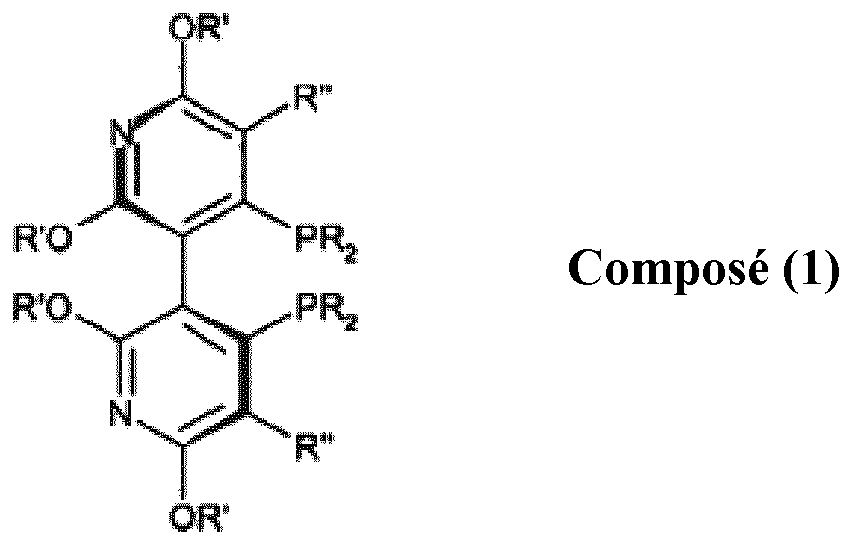
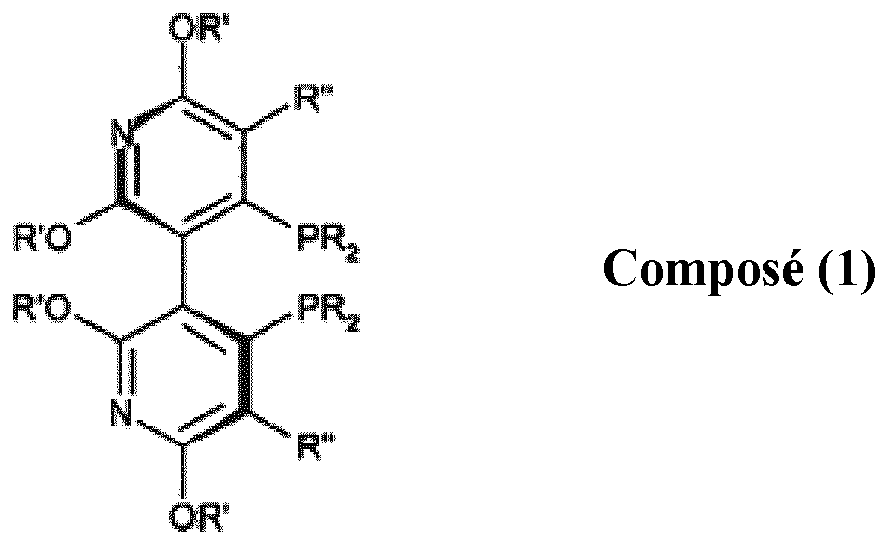
[0001] The present invention relates to a method of using asymmetric hydrosilylation to convert ketones into alcohols, e.g., secondary alcohols.
Background of the Invention
[0002] Considerable effort has been devoted to the development of efficient methods for the preparation of enantiomerically pure secondary alcohols due to the significance of these intermediates, e.g., in the manufacture of pharmaceuticals. The catalytic asymmetric reduction of prochiral ketones as a direct route to enantiomeric alcohols is among the most studied and developed strategies. Although intensive studies have focused on the asymmetric hydrogenation which shows excellent enantioselectivities for a wide range of simple ketones, asymmetric hydrosilylation has also attracted much attention because of the mild reaction conditions used and its technical simplicity.
[0003] The asymmetric hydrosilylations of prochiral simple ketones mediated by catalysts of rhodium(I) and ruthenium(II), titanium, zinc, tin and copper(I) have been extensively explored. Unfortunately, many of these reactions are routinely conducted at a low substrate-to-ligand ratio (S/L), from 50 to 500. The high cost of catalyst and the low substrate-to-catalyst ratio renders the previous hydrosilylation work commercially unattractive.
[0004] More recently, Lipshutz et al, developed a catalyst system formed in situ from CuCl and nonracemic bidentate phosphines (e.g., 3,5-xyl-MeO-BIPHEP or DTBM-SEGPHOS) along with t-BuONa. See Lipshutz et al, Ligand-accelerated, copper-catalyzed asymmetric hydrosilylations of aryl ketones, 123.J. AM. CHEM. SOC. 12917-18 (2001). This system allowed for highly active and enantioselective hydrosilylations of both aryl alkyl and heteroaromatic ketones in the presence of an inexpensive stoichiometric reductant, polymethylhydrosiloxane (PMHS), even at a S/L up to 100,000 which approached the levels achieved in related ruthenium-based asymmetric hydrogenations. The reactions, however, must be performed using standard Schlenk techniques and at low temperatures (e.g., from -50°C to -78°C) for maximum enantiomeric excess (ee). Moreover, the presence of a base, such as t-BuONa, was critical for the generation of the active catalyst..
[0005] Olivier Riant et al. also recently reported a base-free and air-accelerated CuF2/BINAP/PhSiH3 system for the same transformation which furnished secondary alcohols in moderate to good enantioselectivites under ambient conditions at lower S/L ratios of 100-200. See Sabine Sirol et al., Efficient enantioselective hydrosilylation of ketones catalyzed by air stable copper fluoride-phosphine complexes, 3 ORG. LETT. 4111-13 (2001). Although Riant's system is air-stable and conducted at mild reaction temperatures, the activities, enantioselectivities and substrate scope are not comparable to those described by Lipshutz.
[0006] Thus, there is a need for a catalyst system for the process for preparing secondary alcohols that results in high reactivities and enantioselectivities and conducted under mild conditions, normal atmosphere and without the addition of a base. The present invention addresses this need.
Summary of the Invention
[0007] The present invention relates to a method for converting a ketone in the presence of a catalyst into an enantiomeric alcohol. More specifically, the methods of the present invention, utilize a transition metal catalyst having the transition metal copper, or a salt thereof, bound to a compound of the following formula (I):
wherein
R is optionally substituted alkyl, cycloalkyl, aryl or heteroaryl;
R' is alkyl or aryl; and
R" is hydrogen, halogen, optionally substituted alkyl, hydroxyl, amino (e.g., primary, secondary or tertiary), alkenyl;
or an enantiomer thereof
[0008] The methods of the present invention can be conducted in the presence of air, e.g., a normal atmosphere, and at mild temperatures, e.g., from room temperature to -20°C. Furthermore, the methods of the present invention do not require the use of an organic or inorganic base In the reaction. Additionally, the methods employ a S/L molar ratio, e.g., from 20,000-500,000, e.g., from 30,000-250,000, e.g., from 50,000-100,000.
[0009] in a particular embodiment, the transition metal catalyst is copper bound to the ligand (S)-2,2',6,6'-tetramethoxy-4,4'-bis-(diphenylphosphino)-3,3'-bipyridine or an enantiomer thereof and enantiomeric mixtures thereof. In another embodiment, the ligand is 2,2',8,8'-tetrametoxy-4,4'-bis[di(3,5-dimethylphenyl)phosphino]-3,3'-bipyridine or an enantiomer thereof and enantiomeric mixtures thereof.
[0010] In yet another particular embodiment, the reaction is the asymmetric hydrosilylatiorl of a ketone to an alcohol. In a further embodiment, the reaction is the asymmetric hydrosilylation of a diaryl ketone to an alcohol.
Detailed Description of the invention
[0011] The present invention relates to a method for converting a prochiral ketone, by an asymmetric reaction in the presence of a catalyst to an enantiomeric alcohol. More specifically, the present invention relates to the use of chiral dipyridylphospine ligands bound to a transition metal catalyst, the transition metal being copper, or a salt thereof, for the catalysis of reactions conducted under air atmosphere, or normal atmosphere, and at mild temperatures without the addition of an organic or inorganic base. Such chiral ligands are especially useful, e.g., for the air-accelerated, copper(II) catalyzed asymmetric hydrosilylations reactions.
[0012] Dipyridylphosphine ligands, as used herein, include compounds of the formula (I):
wherein
R is optionally substituted alkyl, cycloalkyl, aryl or heteroaryl;
R' is alkyl; or aryl and
R" is hydrogen, halogen, optionally substituted alkyl, hydroxyl, amino (e.g., primary, secondary or tertiary), alkenyl;
or an enantiomer thereof .
[0013] As used herein, the term "optionally substituted alkyl" refers to unsubstituted or substituted straight- or branched-chain hydrocarbon groups having one to twenty carbon atoms, e.g., one to seven carbon atoms. Examples of unsubstituted alkyl groups, include, but are not limited to, methyl, ethyl, propyl, isopropyl, n-butyl, t-butyl, isobutyl, pentyl, neopentyl, hexyl, isohexyl, heptyl, octyl and the like. Substituted alkyl groups include, but are not limited to, alkyl groups substituted by one or more of the following groups: hydroxyl, alkylamino, dialkylamino, cycloalkyl, alkenyl or alkoxy.
[0014] As used herein, the term "lower alkyl" refers to those optionally substituted alkyl groups as described above having one to six carbon atoms.
[0015] As used herein, the term "alkenyl" refers to any one of the above alkyl groups having at least two carbon atoms and further containing a carbon to carbon double bond at the point of attachment. Useful are groups having two to four carbon atoms.
[0016] As used herein, the terms "halogen", "halide" or "halo" refer to fluorine, chlorine, bromine and iodine.
[0018] As used herein, the term "cycloalkyl" refers to optionally substituted monocyclic aliphatic hydrocarbon groups of three to six carbon atoms, which may be substituted by one or more substitutents, such as alkyl or alkoxy.
[0019] Examples of monocylic hydrocarbon groups include, but are not limited to, cyclopropyl, cyclobutyl, cyclopentyl, cyclohexyl and the like.
[0020] As used herein, the term "aryl" refers to monocylic or bicyclic aromatic hydrocarbon groups having six to twelve carbon atoms in the ring portion, such as phenyl, biphenyl, naphthyl and tetrahydronaphthyl, each of which may optionally be substituted by one to four substituents, such as optionally substituted alkyl, cycloalkyl or alkoxy.
[0021] As used herein, the term "monocyclic aryl" refers to optionally substituted phenyl as described under aryl.
[0022] As used herein, the term "heteroaryl" refers to an aromatic heterocycle, e.g., monocyclic or bicyclic aryl, such as pyrrolyl, pyrazolyl, imidazolyl, triazolyl, oxazolyl, isoxazolyl, thiazolyl, isothiazolyl, furyl, thienyl, pyridyl, pyrazinyl, pyrimidinyl, pyridazinyl, indolyl, benzothiazolyl, benzoxazolyl, benzothienyl, quinolinyl, isoquinolinyl, benzimidazolyl, benzofuryl and the like; optionally substituted by, e.g., lower alkyl or lower alkoxy.
[0023] Compounds of formula (I) and methods of their preparation are disclosed in U.S. Patent No. 5,886,182 .
[0024] When required, protecting groups may be introduced to protect the functional groups present from undesired reactions with reaction components under the conditions used for carrying out a particular chemical transformation of the present invention. The need and choice of protecting groups for a particular reaction is known to one killed in the art and depends on the nature of the functional group to be protected (amino, hydroxy etc.), the structure and stability of the molecule of which the substituent is a part and the reaction conditions.
[0025] Well-known protecting groups that meet these conditions and their introduction and removal are described, e.g., in McOmie, Protective Groups in Organic Chemistry, Plenum Press, London, NY (1973); and Greene and Wuts, Protective Groups in Organic Synthesis, John Wiley and Sons, Inc., NY (1999).
[0026] Particularly useful in the present invention are dipyridylphosphine compounds of formula (I), wherein R Is optionally substituted aryl, R' is alkyl and R" is hydrogen or an enantiomer thereof. Also particularly useful in the present invention are compounds of formula (I), wherein R is optionally substituted phenyl, R' is methyl, and R" is hydrogen. Exemplary embodiments of compound of formula (I) are: (S)-2,2',6,6'-tetramethoxy-4,4'-bis-(diphenylphosphino)-3,3'-bipyridine, also designated as (S)-P-Phos or (S)-1a; and 2,2',6,6'-tetrametoxy-4,4'-bis[di(3,5-dimethylphenyl)phosphino]-3,3'-bipyridine, also designated as (S)-Xyl-P-Phos or (S)-1b.
[0027] The dipyridylphosphine compounds of formula (I), as used in the present invention, e.g., have an optical purity of at least 85% ee, e.g., at least 95% ee, e.g., 98% ee.
[0028] The compounds of formula (I), as used in the present invention, can be converted to chiral transition metal catalysts by reacting a compound of formula (I) or an enantiomer thereof, or an enantiomeric mixture thereof, with a copper transition metal salt, or a complex thereof, to generate a chiral copper transition metal catalyst that can be subsequently used in the present invention. The choice of a suitable transition metal salt, or a complex thereof, for the preparation of a catalyst of the present invention may be selected, e.g., from those described herein the illustrative examples. Further examples of such transition metal salts may be found, e.g., in Seyden-Penne, Chiral Auxiliaries and Ligands in Asymmetric Synthesis, John Wiley & Sons, Inc., NY (1995). The catalyst may be generated in situ, or it can be isolated prior to use.
[0029] The chiral transition metal catalyst includes a suitable transition metal bound to a compound of the formula (I).
[0031] Particularly useful in the present invention are catalysts wherein the transition metal is copper, and the transition metal is bound to a compound of formula (I), wherein R is optionally substituted phenyl, R' is methyl, and R" is hydrogen; or an enantiomer thereof. Examples of such catalysts include, but are not limited to, Cu(II) bound to (S)-P-Phos and Cu(II) bound to (S)-Xyl-P-Phos. The copper, e.g., may be present in the catalyst in a salt form. Salt forms of copper include, but are not limited to, CuF2, CuCl2, CuCl, CuBr2, CuBr and Cul. These catalysts have also been found to be stable in air and in the presence of oxygen. Moreover, the catalysts of the present invention, e.g., are stable in the presence of oxidizing agents.
[0032] The above-mentioned catalyst systems, e.g., are particularly useful for the hydrosilylations of unfunctional ketones. Furthermore, the catalyst systems are provide a highly effective system for the hydrosilylation of a wide array of aryl alkyl ketones without the need for adding an organic or inorganic base. Such reactions can be conducted under air atmosphere and at mild temperatures. As used herein, the term "mild temperature" means a temperature ranging from room temperature (RT) to -20°C. Furthermore, the hydrosilylation source, that is hydride donor, can be, e.g., a silane, e.g., phenylsilane (PhSiH9), PMHS, diphenylsilane (Ph2SiH2), (PhMeSiH2) and (Et2SiH2).
[0033] Each of the hydrosilylation reactions (discussed below) is conducted in accordance with the following representative example which represents entry number 5 of Table 1, infra.
[0034] CuF2 (5.4 mg, 0.054 mmol) and (S)-Xyl-P-Phos (1b, 2.1 mg, 2.72 × 10⁻³ mmol) are weigh under air and placed in a 25 mL round-bottomed flask equipped with a magnetic stirrer. Toluene (5.4 mL) is added and the mixture is stirred at RT for 10 minutes. Phenylsilane (800 µL, 6.43 mmol) and acetophenone (2a, 640 µL, 5.43 mmol) are sequentially added under vigorous stirring, and the flask is stoppered. The reaction is monitored by thin layer chromatography. Upon completion, the reaction mixture is treated with 10% HCl (3 mL), and the organic product is extracted with ether (3 x 20 mL). The combined extract is washed with water, dried with anhydrous sodium sulfate, filtered through a plug of silica and concentrated in vacuo to give the crude product. The conversion and the ee of the product (S)-1-phenylethanol [(S)-3a] are determined by NMR and chiral gas chromatography analysis to be >99% and 77%, respectively (column, Chirasil-DEX CB; 25 m × 0.25 mm, CHROMPACK, carrier gas, N2). The pure product is isolated by column chromatography (ethyl acetate: hexane = 1 : 4).
[0035] For analysis, 1H NMR, 13C NMR and 31P NMR spectra are recorded in CDCl3 on a Varian AS 500 (500, 202 and 125 MHz, respectively) at RT. Chemical shifts (δ) are given in ppm and are referenced to residual solvent peaks (1H NMR, 13C NMR) or to an external standard (85% H3PO4, 31P NMR). Ee's of the asymmetric hydrosilylation products are determined by chiral GC and HPLC. Gas chromatographic analyses are conducted on an HP 4890A with an FID detector. HPLC analyses are performed using a Waters Model 600 with a Waters 486 UV detector. Optical rotations are measured on a Perkin-Elmer Model 341 polarimeter in a 10 cm cell. Optically pure P-Phos (1a), and Xyl-P-Phos (1b) are synthesized as stated in the following articles: Cheng-Chao Pai et al., Highly effective chiral dipyridylphosphlne ligands: synthesis, structural determination, and applications in the Ru-catalyzed asymmetric hydrogenation reactions, 122 J. AM. CHEM. SOC. 11513-514 (2000) and Jing Wu et al., A new chiral dipyrldylphosphine ligand Xyl-P-Phos and its application in the Ru-catalyzed asymmetric hydrogenation of β-ketoesters, 43 TETRAHEDRON LETT. 1538-43 (2002). Copper fluoride, phenylsilane, PMHS and ketone substrates were purchased from Sigma-Aldrich Co. (St. Louis, Missouri) or Fisher-Scientific (Acros Organics) (Hampton, New Hampshire) and used as received without further purification unless otherwise stated.
[0036] A series of copper(I) and copper(II) halides are examined in the hydrosilylation of acetophenone (2a) in toluene at ambient temperature and under N2 atmosphere employing (S)-1a ligand and PhSIH3 as a hydride donor. Shown below in Scheme 1.
[0037] The reaction rate largely relies on the choice of halogen in copper salts and fluoride in the copper precursor is important for the generation of an active catalyst. CuF2 provides a desirable product, i.e., (S)-3a in quantitative yield with 79% ee after 24 hours. In contrast, other Cu(I) and Cu(II) salts showed lesser reactivities (i.e., conversions less than 23%) under otherwise identical conditions.
[0038] As shown in Table 1, various catalyst systems with CuF2 and varying ligands are examined in the hydrosilylation of acetophenone 2a. The reaction conditions are such that between 120-700 mg substrate are reduced at a substrate concentration of 0.6-1 M in toluene. The absolute configuration is determined by comparison with the retention times as found in the data of Takeshi Ohkuma et al., Asymmetric hydrogenation of alkenyl, cyclopropyl, and aryl ketones. RuCl2(xylbinap)(1,2-diamine) as a precafalyst exhibiting a wide scope, 120 J. AM. CHEM. Soc. 13529-30 (1998) (hereinafter "Ohkuma").
Table 1 (Entries 6 and 7 are comparative examples only)
|
|
| Entry | CuF2, mol% | Ligand | S/L | T, °C | Atm. | Time | Conv., % | ee,* % |
| 1 | 3 | (S)-1a | 33 | RT | N2 | 3 h | 20 | 78(S) |
| 2 | 1 | (S)-1a | 2000 | RT | Air | 25 min | 52 | 77 (S) |
| 3 | 1 | (S)-1a | 2000 | RT | Air | 3 h | >99 | 78 (S) |
| 4 | 3 | (S)-1b | 33 | RT | N2 | 3 h | 63 | 76 (S) |
| 5 | 1 | (S)-1b | 2000 | RT | Air | 10 min | >99 | 77 (S) |
| 6 | 1 | (R)-BINAP | 2000 | RT | Air | 25 min | 14 | 73 (R) |
| 7† | 0.5 | (S)-BINAP | 200 | RT | Air | 6 h | 94 | 78 (S) |
| 8 | 3 | (S)-1a | 33 | -20 | Air | 24 h | 91 | 89 (S) |
| 9 | 3 | (S)-1b | 100 | -20 | Air | 6 h | >99 | 87 (S) |
[0039] Table 1 also shows that the presence of air in the reaction system markedly and surprisingly enhances the reaction rate. For example, when the hydrosilylation of 2a is carried out with 3 mol% CuF2 and (S)-Xyl-P-Phos (1b) at RT under N2, 63% conversion is observed after three hours. In contrast, under air, complete conversion is observed in only several minutes at a S/L of 2,000 with no diminution of enantioselectivity. Moreover, this is faster than that of the parent ligand P-Phos (1a). A direct comparison of the catalytic activities of P-Phos (1a) and Xyl-P-Phos (1b) compared with 2,2'-bis(diphenylphosphino)-1,1'-binaphtyl (BINAP) shows that the systems both with 1 a and 1 b are superior to that of the system with BINAP [the data for entry 7 is taken from Sabine Sirol, et al., Efficient enantioselective hydrosilylation of ketones catalyzed by air stable copper fluoride-phosphine complexes, 3 ORG. LETT. 4111-13 (2001). Further investigation shows that the lowering of the reaction temperature from room temperature to -20°C enhances the enantioselectivity.
[0040] Table 2 shows the asymmetric hydrosilylation of aryl alkyl ketones 2 catalyzed by Cu(II) and dipyridylphosphine 1 under air atmosphere.
Table 2
|
|
| Entry | Ketone | Ar | Ra | CuF2, mol% | Ligand | S/L | T, °C | Time | ee,* % |
| 1 | 2b | C6H5 | CH2CH3 | 3 | (S)-1b | 100 | -20 | 12 h | 93 |
| 2 | 2c | 2'-naphthyl | CH3 | 3 | (S)-1b | 100 | -20 | 24 h | 92 |
| 3 | 2d | 2-CH3C6H4 | CH3 | 3 | (S)-1b | 100 | -20 | 24 h | 72 |
| 4 | 2e | 2-ClC6H4 | CH3 | 3 | (S)-1b | 100 | -20 | 10 h | 77 |
| 5 | 2f | 2-BrC6H4 | CH3 | 3 | (S)-1b | 100 | -20 | 10 h | 70 |
| 6 | 2g | 3-CH3C6H4 | CH3 | 3 | (S)-1b | 100 | -20 | 12 h | 87 |
| 7 | 2h | 3-CH3OC6H4 | CH3 | 3 | (S)-1b | 100 | -20 | 12 h | 92 |
| 8 | 2i | 3-BrC6H4 | CH3 | 3 | (S)-1b | 100 | -20 | 12 h | 89 |
| 9 | 2j | 3-CF3C6H4 | CH3 | 3 | (S)-1b | 100 | -20 | 12 h | 91 |
| 10 | 2k | 4-CH3C6H4 | CH3 | 3 | (S)-1b | 100 | -20 | 24 h | 91 |
| 11 | 2l | 4-ClC6H4 | CH3 | 3 | (S)-1b | 100 | -20 | 6 h | 94 |
| 12 | 2m | 4-BrC6H4 | CH3 | 3 | (S)-1b | 100 | -20 | 6 h | 96 |
| 13 | 2n | 4-CF3C6H4 | CH3 | 3 | (S)-1a | 33 | -20 | 24 h | 96 |
| 14 | 2n | 4-CF3C6H4 | CH3 | 3 | (S)-1b | 100 | -20 | 6 h | 94 |
| 15 | 2o | 4-NO2C6H4 | CH3 | 1 | (S)-1b | 100 | RT | 1 h | 93 |
| 16 | 2o | 4-NO2C6H4 | CH3 | 3 | (S)-1b | 100 | -20 | 4 h | 97 |
| 17 | 2o | 4-NO2C6H4 | CH3 | 1.2 | (S)-1b | 20,000 | RT | 30 min | 91 |
| 18† | 2o | 4-NO2C6H4 | CH3 | 1.2 | (S)-1b | 100,000 | RT | 20 h | 90 |
| 19 | 2o | 4-NO2C6H4 | CH3 | 3 | (S)-1b | 50,000 | -10 | 48 h | 94 |
| 20 | 2m | 4-BrC6H4 | CH3 | 3 | (S)-1b | 50,000 | -10 | 48 h | 93 |
| Reaction conditions: 100 mg - 42 g substrate, substrate concentration = 0.6-1 M toluene,
>99% conversion is observed in all cases. *The absolute configuration is determined by comparison of the sign of optical rotation or the retention times with the data of Ohkuma. †The yield of the product isolated by column chromatography is 95%. |
[0041] Complete hydrosilylations of most substrates by using 1b is realized in a few hours, e.g., 4-12 hours. The positioning of the substituents on the aromatic ring of acetophenone effects the outcome of the reaction. For example, the ortho-substituted acetophenones (2d-2f) are converted to the desired alcohols with moderate enantioselectivities (between 70-77% ee), while meta- and para-substituted acetopheonones (2g-2o) gives consistently high enantioselectivities (87-97% ee).
[0042] To further evaluate the activity and air-stability of the present catalyst, the experiment of reducing 2o in air at RT with a S/L ratio 20,000 is conducted. No unreacted 2o is detected after only thirty minutes. Moreover, this reaction works even when the S/L ratio is increased to as high as 100,000. Thus, in the presence of only 2 mg of (S)-1b, hydrosilylation of 42 g 2o proceeds smoothly at RT under normal atmosphere and leads to 100% conversion within thirty hours to furnish (S)-3o bearing consistently high enantioselectivity. Furthermore, catalytic efficiency of (S)-1b/CuF2/PhSiH3 is confirmed by carrying out the reactions at -10°C with S/L ratios of 50,000. Net conversions and high enantioselectivities are maintained for the hydrosilylation of both 2m and 2o. These results indicate that the activity of this air-accelerated copper (II)-catalyst system using dipyridylphosphine ligand is significantly greater than that employing BINAP.
[0043] It is known that a usual problem associated with the use of metal phosphine catalysts is their air-sensitivity, especially in solution, and trace amounts of air in the reaction system often destroy the active catalysts and make irreproducible results. Surprisingly in the reactions of the present invention, air enhances reaction rates.
[0044] The following lists the conditions of the analyses of the chiral secondary alcohols of Tables 1 and 2, i.e., 3a-5h.
[0045] 1-Phenylethanol (3a). Capillary GC, Chirasil-DEX CB column; 120°C; isothermal; tR (2a) = 5.25 min; tR (R) = 10.36 min; tR (S) = 11.09 min.
[0046] 1-Phenylpropanol (3b). Capillary GC, Chirasil-DEX CB column; 122°C; isothermal; tR (2b) = 7.35 min; tR (R) = 15.62 min; tR (S) = 16.12 min.
[0047] 1-(2'-Naphthyl)ethanol (3c). Capillary GC, Chirasil-DEX CB column; 160°C; isothermal; tR (2c) = 13.40 min; tR (R) = 20.71 min; tR (S) = 21.65 min.
[0048] 1-(2-Methylphenyl)ethanol (3d). Capillary GC, Chirasil-DEX CB column; 140°C; isothermal; tR (2d) = 3.79 min; tR (R) = 7.78 min; tR (S) = 8.90 min.
[0049] 1-(2-Chlorophenyl)ethanol (3e). Capillary GC, Chirasil-DEX CB column; 145°C; isothermal; tR (2e) = 4.91 min; tR (R) = 9.40 min; tR (S) = 11.02 min.
[0050] 1-(2-Bromophenyl)ethanol (3f). Capillary GC, Chirasil-DEX CB column; 150°C; isothermal; tR (2f) = 5.21 min; tR (R) = 11.79 min; tR (S) = 14.48 min.
[0051] 1-(3-Methylphenyl)ethanol (3g). Capillary GC, Chirasil-DEX CB column; 122°C; isothermal; tR (2g) = 6.90 min; tR (R) = 14.02 min; tR (S) = 15.05 min.
[0052] 1-(3-Methoxyphenyl)ethanol (3h). Capillary GC, Chirasil-DEX CB column; 135°C; isothermal; tR (2h) = 8.11 min; tR (R) = 16.50 min; tR (S) = 17.63 min.
[0053] 1-(3-Bromophenyl)ethanol (3i). Capillary GC, Chirasil-DEX CB column; 145°C; isothermal; tR (2i) = 6.65 min; tR (R) = 15.19 min; tR (S) = 16.32 min.
[0054] 1-(3-Trifluromethylphenyl)ethanol (3j). Capillary GC, Chirasil-DEX CB column; 125°C; isothermal; tR (2i) = 3.82 min; tR (R) = 9.90 min; tR (S) = 11.06 min.
[0055] 1-(4-Methylphenyl)ethanol (3k). Capillary GC, Chirasil-DEX CB column; 125°C; isothermal; tR (2k) = 6.93 min; tR (R) = 10.78 min; tR (S) = 12.01 min.
[0056] 1-(4-Chlorophenyl)ethanol (3l). Capillary GC, Chirasil-DEX CB column; 144°C; isothermal; tR (2l) = 5.75 min; tR (R) = 10.89 min; tR (S) = 11.97 min.
[0057] 1-(4-Bromophenyl)ethanol (3m). Capillary GC, Chirasil-DEX CB column; 150°C; isothermal; tR (2m) = 6.87 min; tR (R) = 13.02 min; tR (S) = 14.15 min.
[0058] 1-(4-Trifluromethylphenyl)ethanol (3n). Capillary GC, Chirasil-DEX CB column; 125°C; isothermal; tR (2n) = 4.72 min; tR (R) = 12.38 min; tR (S) = 14.53 min.
[0059] 1-(4-Nitrophenyl)ethanol (3o). Capillary GC, Chirasil-DEX CB column; 172°C; isothermal; tR (2o) = 5.86 min; tR (R) = 14.01 min; tR (S) = 15.30 min.
[0060] o-Chlorobenzhydrol (5a). The conversion is determined by capillary GC with a 30 m × 0.25 mm J & W Scientific INNOWAX column; 232°C; isothermal; tR (4a) = 8.60 min; tR (5a) = 14.88 min. The ee value is determined by chiral HPLC analysis with a 25 cm × 4.6 mm Daicel Chiralcel OD column (eluent, 10:90 2-propanal-hexane; flow rate = 1.0 mL/min; detection: 254 nm light); tR (R) = 8.33 min; tR (S) = 10.33 min.
[0061] o-Fluorobenzhydrol (5b). The conversion is determined by capillary GC with a 30 m × 0.25 mm J & W Scientific INNOWAX column; 230°C; isothermal; tR (4b) = 6.23 min; tR (5b) = 9.95 min. The ee value is determined by chiral HPLC analysis with a 25 cm × 4.6 mm Daicel Chiralcel OD column (eluent, 4:96 2-propanal-hexane; flow rate = 0.4 mL/min; detection: 254 nm light); tR (R) = 29.96 min; tR (S) = 34.35 min.
[0062] o-Methylbenzhydrol (5c). The conversion is determined by capillary GC with a 30 m × 0.25 mm J & W Scientific INNOWAX column; 230°C; isothermal; tR (4c) = 6.18 min; tR (5c) = 11.76 min. The ee value is determined by chiral HPLC analysis with a 25 cm × 4.6 mm Daicel Chiralcel OB-H column (eluent, 10:90 2-propanal-hexane; flow rate = 0.5 mL/min; detection: 254 nm light); tR (R) = 19.96 min; tR (S) = 21.74 min.
[0063] o-Trifluromethylbenzhydrol (5d). The conversion is determined by capillary GC with a 30 m × 0.25 mm J & W Scientific INNOWAX column; 230°C; isothermal; tR (4d) = 5.06 min; tR (5d) = 6.96 min. The ee value is determined by chiral HPLC analysis with a 25 cm × 4.6 mm Daicel Chiralcel OD column (eluent, 10:90 2-propanal-hexane; flow rate = 0.9 mL/min; detection: 254 nm light); tR (R) = 6.39 min; tR (S) = 7.64 min.
[0064] m-Methylbenzhydrol (5e). The conversion is determined by capillary GC with a 30 m × 0.25 mm J & W Scientific INNOWAX column; 232°C; isothermal; tR (4e) = 6.90 min; tR (5e) = 10.73 min. The ee value is determined by chiral HPLC analysis with a 25 cm × 4.6 mm Daicel Chiralcel OB-H column (eluent, 10:90 2-propanal-hexane; flow rate = 0.9 mL/min; detection: 254 nm light); tR = 14.96 min (minor) and 27.55 min (major).
[0065] p-Chlorobenzhydrol (5f). The conversion is determined by capillary GC with a 30 m × 0.25 mm J & W Scientific INNOWAX column; 232°C; isothermal; tR (4f) = 9.20 min; tR (5f) = 19.93 min. The ee value is determined by chiral HPLC analysis with a 25 cm × 4.6 mm Daicel Chiralcel OB-H column (eluent, 10:90 2-propanal-hexane; flow rate = 0.8 mL/min; detection: 254 nm light); tR (R) = 19.98 min; tR (S) = 29.03 min.
[0066] p-Methylbenzhydrol (5g). The conversion is determined by capillary GC with a 30 m × 0.25 mm J & W Scientific INNOWAX column; 230°C; isothermal; tR (4g) = 8.13 min; tR (5g) = 12.28 min. The ee value is determined by chiral HPLC analysis with a 25 cm × 4.6 mm Daicel Chiralcel OB-H column (eluent, 10:90 2-propanal-hexane; flow rate = 0.4 mL/min; detection: 254 nm light). tR (R) = 28.90 min; tR (S) = 33.38 min.
[0067] p-Trifluromethylbenzhydrol (5h). The conversion is determined by capillary GC with a 30 m × 0.25 mm J & W Scientific INNOWAX column; 230°C; isothermal; tR (4h) = 4.67 min; tR (5h) = 9.62 min. The ee value is determined by chiral HPLC analysis with a 25 cm × 4.6 mm Daicel Chiralcel OB-H column (eluent, 10:90 2-propanal-hexane; flow rate = 0.8 mL/min; detection: 254 nm light); tR (R) = 9.17 min; tR (S) = 11.95 min.
[0068] Table 3 shows the asymmetric hydrosilylation of substituted benzophenones 4 catalyzed by Cu(II) and dipyridylphosphine 1 under air atmosphere.
Table 3
|
|
| Entry | Ketone | CuF2, mol% | Ligand [mol%] | T, °C | Time, h | Conv, % | ee,* % |
| 1 | 4a | 3 | (S)-1a [3] | RT | 30 | 96 | 81 (R) |
| 2 | 4a | 4 | (S)-1a [4] | -10 | 72 | 99 | 90 (R) |
| 3 | 4a | 4 | (S)-1b [4] | -10 | 48 | 82 | 91 (R) |
| 4 | 4b | 4 | (S)-1a [4] | -10 | 48 | >99 | 63 (R) |
| 5 | 4b | 4 | (S)-1b [4] | -10 | 48 | >99 | 75 (R) |
| 6 | 4c | 4 | (S)-1a [4] | -10 | 72 | 99 | 83 (R) |
| 7 | 4c | 4 | (S)-1b [4] | -10 | 48 | >99 | 75 (R) |
| 8 | 4d | 4 | (S)-1a [4]- | -10 | 72 | 85 | 98 (R)† |
| 9 | 4d | 4 | (S)-1b [4] | -10 | 48 | 88 | 95 (R)† |
| 10 | 4e | 4 | (S)-1b [4] | -10 | 48 | >99 | 6 (+) |
| 11 | 4f | 4 | (S)-1a [4] | -10 | 48 | >99 | 36 (S) |
| 12 | 4f | 4 | (S)-1b [4] | -10 | 48 | >99 | 43 (S) |
| 13 | 4g | 4 | (S)-1a [4] | -10 | 48 | >99 | 27 (S) |
| 14 | 4g | 4 | (S)-1b [4] | -10 | 48 | >99 | 39 (S) |
| 15 | 4h | 4 | (S)-1a [4] | -10 | 48 | >99 | 25 (S) |
| 16 | 4h | 4 | (S)-1b [4] | -10 | 48 | >99 | 41 (S) |
| Reaction conditions: 100-150 mg substrate, substrate concentration = 0.6-1 M in toluene. *The absolute configuration was determined by comparison of the sign of optical rotation or the retention times with the data of the following reference: Takeshi Ohkuma et al., Selective hydrogenation of benzophenones to benzhydrols. Asymmetric synthesis of unsymmetrical diaryl methanols, 2 ORGANIC LETT. 659-62 (2000). †The absolute configuration of 5d was determined by comparison of the sign of optical rotation with the data of refs. Eric Brown et al., Determination of the ee's of chiral acids by 19F NMR studies of their esters deriving from (R)-(+)-2-(triffluoromethyl)benzhydrof, 5 TETRRAHEDRON: ASYMMETRY 1191-94 (1994) and Junpai Naito et al, Enantioresolution of fluorinated diphanylmethanols and determination of their absolute configurations by X-Ray crystallographic and 1H NMR anisotropy methods, 16 CHIRALITY 22-35 (2004). |
[0069] Similar to aryl alkyl ketones, a lower reaction temperature give higher enantioselectivity at the expense of reaction rate. A range of ortho-substituted benzophenones (4a-4d) are reduced to benzhydrols with good to excellent enantioselectivity. In the case of 4d, the highest enantioselectivity of 98% ee is attained at -100°C with (S)-1a ligand. In addition, substrates with a bulkier ortho-substituent reacted favorably to give products of higher enantiopurities. Without being bound to any particular theory, it appears that steric effects of the ortho substituents affect the extent of the coplanarity of the benzene rings with C=O function In the transition state, thereby generating an asymmetric bias. Meta- and para-substituted benzophenones (4e-4h) are transformed to the corresponding alcohols with low to moderate enantioselectivities. Notably, (S)-1a or (S)-1b afforded ortho-substltuted benzhydrols with (R)-configurations, while the absolute configurations are inversed for para-substituted products.
1. A method for converting a prochiral ketone substrate to a chiral alcohol by asymmetric
hydrosilylation in the presence of a catalyst comprising a transition metal bound
to a compound of the formula (I):
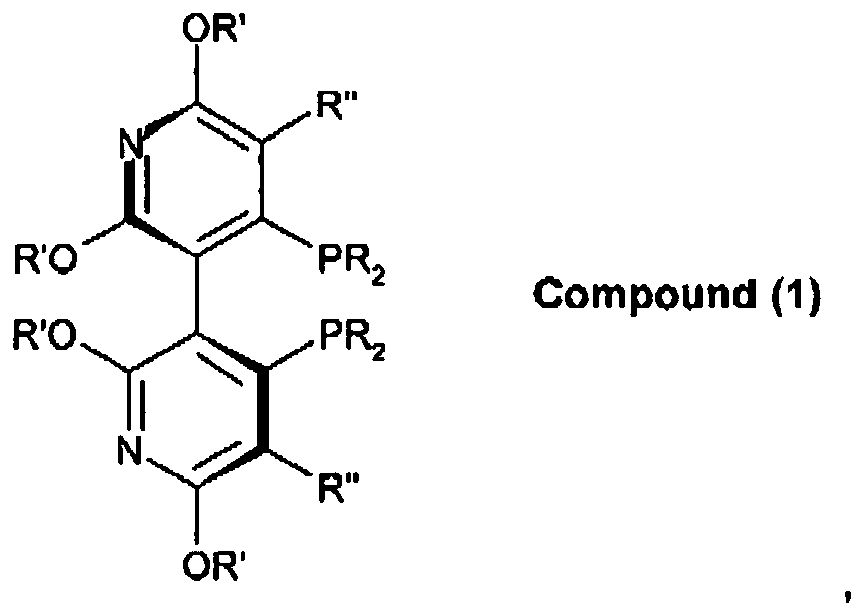
wherein
R is optionally substituted alkyl, cycloalkyl, aryl or heteroaryl;
R' is alkyl or aryl; and
R" is hydrogen, halogen, optionally substituted alkyl, hydroxyl, amino, alkenyl;
or an enantiomer thereof; and wherein the transition metal is copper or a salt thereof.
wherein
R is optionally substituted alkyl, cycloalkyl, aryl or heteroaryl;
R' is alkyl or aryl; and
R" is hydrogen, halogen, optionally substituted alkyl, hydroxyl, amino, alkenyl;
or an enantiomer thereof; and wherein the transition metal is copper or a salt thereof.
2. The method of claim 1,
wherein
R is phenyl;
R' is methyl; and
R" is hydrogen;
or an enantiomer thereof.
wherein
R is phenyl;
R' is methyl; and
R" is hydrogen;
or an enantiomer thereof.
3. The method of claim 1,
wherein
R is a substituted phenyl;
R' is methyl; and
R" is hydrogen;
or an enantiomer thereof.
wherein
R is a substituted phenyl;
R' is methyl; and
R" is hydrogen;
or an enantiomer thereof.
4. The method of claim 3, wherein R is 3,5-(CH3)2C6H3; or an enantiomer thereof.
5. The method of any preceding claim, wherein the prochiral ketone is a benzophenone
and the alcohol is a benzhydrol.
6. The method of claim 1, wherein the catalyst is present without the addition of a base.
7. The method of claim 6,
wherein
R is phenyl;
R' is methyl; and
R" is hydrogen;
or an enantiomer thereof.
wherein
R is phenyl;
R' is methyl; and
R" is hydrogen;
or an enantiomer thereof.
8. The method of claim 6,
wherein
R is a substituted phenyl;
R' is methyl; and
R" is hydrogen;
or an enantiomer thereof.
wherein
R is a substituted phenyl;
R' is methyl; and
R" is hydrogen;
or an enantiomer thereof.
9. The method of claim 8, wherein R is 3,5-(CH3)2C6H3; or an enantiomer thereof.
10. The method of claim 1 wherein the prochiral ketone is a benzophenone and the alcohol
is a benzhydrol.
11. The method of claim 6, wherein the method is conducted at a temperature of from room
temperature to -20°C.
12. The method of claim 6, wherein the method is conducted in the presence of air.
13. The method of claim 6, wherein the S/L (substrate-to-ligand) ratio is from 20,000-500,000.
14. The method of claim 13, wherein said reaction includes a silane as a hydride donor.
15. The method of claim 1, wherein the transition metal is CuF2 and the ligand is 2,2',6,6'-tetramethoxy-4,4'-bis-(diphenylphosphino)-3,3'-bipyridine or an enantiomer thereof.
16. The method of claim 1, wherein the transition metal is CuF2 and the ligand is 2,2',6,6'-tetrametoxy-4,4'-bis[d1(3,5-dimethylphenyl)phosphino]-3,3'-bipyridine or an enantiomer thereof
17. A catalyst for converting a prochiral substrate to a chiral product by asymmetric
hydrosilylation, wherein the catalyst comprises a transition metal bound to a ligand
having the formula (I):
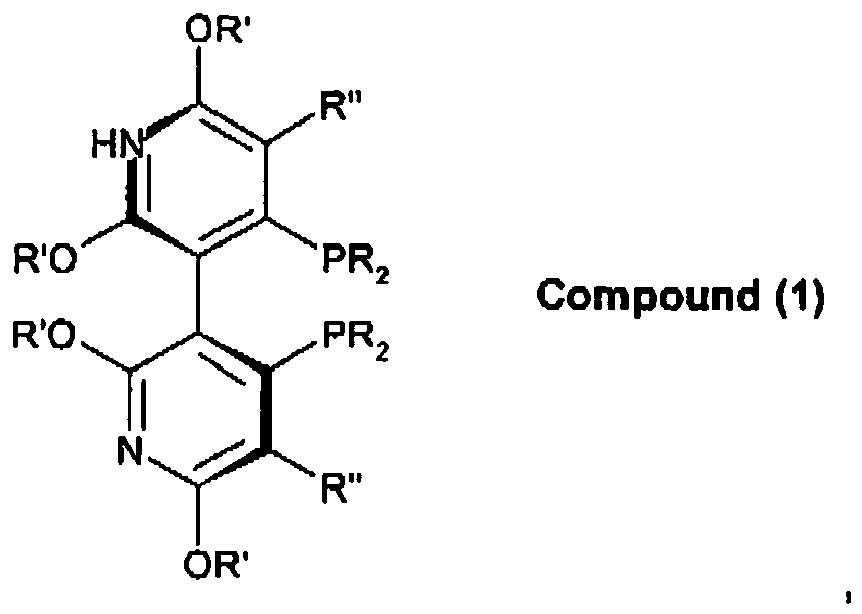
wherein
R is optionally substituted alkyl, cycloalkyl, aryl or heteroaryl;
R' is alkyl or aryl; and
R" is hydrogen, halogen, optionally substituted alkyl, hydroxyl, amino, alkenyl;
or an enantiomer thereof; and wherein the transition metal is copper or a salt thereof.
wherein
R is optionally substituted alkyl, cycloalkyl, aryl or heteroaryl;
R' is alkyl or aryl; and
R" is hydrogen, halogen, optionally substituted alkyl, hydroxyl, amino, alkenyl;
or an enantiomer thereof; and wherein the transition metal is copper or a salt thereof.
18. The catalyst of claim 17, wherein the transition metal is CuF2 and the ligand is 2,2',6,6'-tetramethoxy-4,4'-bis-(diphenylphosphino)-3,3'-bipyridine; or an enantiomer thereof.
19. The catalyst of claim 18, wherein the transition metal is CuF2 and the ligand is 2,2',6,6'-tetrametoxy-4,4'-bis-[di(3,5-dimethylphenyl)phosphino]-3,3'-bipyridine; or an enantiomer thereof.
1. Verfahren zur Umwandlung eines prochiralen Ketonsubstrats in einen chiralen Alkohol
durch asymmetrische Hydrosilylierung in Gegenwart eines Katalysators, der ein Übergangsmetall,
das an eine Verbindung der Formel (I):
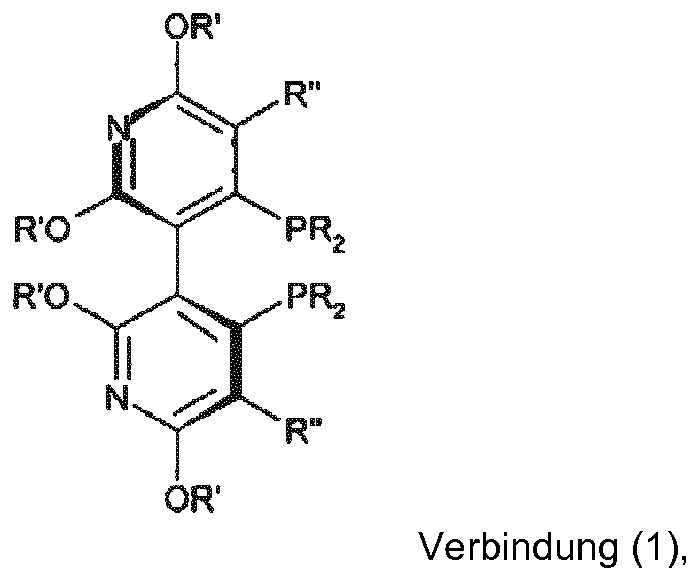
worin
R für optional substituiertes Alkyl, Cycloalkyl, Aryl oder Heteroaryl steht,
R' für Alkyl oder Aryl steht und
R" für Wasserstoff, Halogen, optional substituiertes Alkyl, Hydroxyl, Amino, Alkenyl steht;
oder an ein Enantiomer hiervon gebunden ist, umfasst, wobei das Übergangsmetall Kupfer oder ein Salz hiervon ist.
worin
R für optional substituiertes Alkyl, Cycloalkyl, Aryl oder Heteroaryl steht,
R' für Alkyl oder Aryl steht und
R" für Wasserstoff, Halogen, optional substituiertes Alkyl, Hydroxyl, Amino, Alkenyl steht;
oder an ein Enantiomer hiervon gebunden ist, umfasst, wobei das Übergangsmetall Kupfer oder ein Salz hiervon ist.
2. Verfahren nach Anspruch 1, wobei
R für Phenyl steht;
R' für Methyl steht; und
R" für Wasserstoff steht;
oder ein Enantiomer hiervon.
R für Phenyl steht;
R' für Methyl steht; und
R" für Wasserstoff steht;
oder ein Enantiomer hiervon.
3. Verfahren nach Anspruch 1, wobei
R für ein substituiertes Phenyl steht;
R' für Methyl steht; und
R" für Wasserstoff steht;
oder ein Enantiomer hiervon.
R für ein substituiertes Phenyl steht;
R' für Methyl steht; und
R" für Wasserstoff steht;
oder ein Enantiomer hiervon.
4. Verfahren nach Anspruch 3, wobei R für 3,5-(CH3)2C6H3 steht, oder ein Enantiomer hiervon.
5. Verfahren nach einem der vorhergehenden Ansprüche, wobei das prochirale Keton ein
Benzophenon ist und der Alkohol ein Benzhydrol ist.
6. Verfahren nach Anspruch 1, wobei der Katalysator ohne die Zugabe einer Base vorhanden
ist.
7. Verfahren nach Anspruch 6, wobei
R für Phenyl steht;
R' für Methyl steht; und
R" für Wasserstoff steht;
oder ein Enantiomer hiervon.
R für Phenyl steht;
R' für Methyl steht; und
R" für Wasserstoff steht;
oder ein Enantiomer hiervon.
8. Verfahren nach Anspruch 6, wobei
R für ein substituiertes Phenyl steht;
R' für Methyl steht; und
R" für Wasserstoff steht;
oder ein Enantiomer hiervon.
R für ein substituiertes Phenyl steht;
R' für Methyl steht; und
R" für Wasserstoff steht;
oder ein Enantiomer hiervon.
9. Verfahren nach Anspruch 8, wobei R für 3,5-(CH3)2C6H3 steht, oder ein Enantiomer hiervon.
10. Verfahren nach Anspruch 1, wobei das prochirale Keton Benzophenon ist und der Alkohol
ein Benzhydrol ist.
11. Verfahren nach Anspruch 6, wobei das Verfahren bei einer Temperatur von Raumtemperatur
bis -20 °C durchgeführt wird.
12. Verfahren nach Anspruch 6, wobei das Verfahren in Gegenwart von Luft durchgeführt
wird.
13. Verfahren nach Anspruch 6, wobei das S/L (Substrat-zu-Ligand)-Verhältnis bei 20.000
bis 500.000 liegt.
14. Verfahren nach Anspruch 13, wobei die genannte Umsetzung ein Silan als einen Hydriddonor
umfasst.
15. Verfahren nach Anspruch 1, wobei das Übergangsmetall CuF2 ist und der Ligand 2,2',6,6'-Tetramethoxy-4,4'-bis-(diphenylphosphino)-3,3'-bipyridin
oder ein Enantiomer hiervon ist.
16. Verfahren nach Anspruch 1, wobei das Übergangsmetall CuF2 ist und der Ligand 2,2',6,6'-Tetramethoxy-4,4'-bis[di(3,5-dimethylphenyl)phosphino]-3,3'-bipyridin
oder ein Enantiomer hiervon ist.
17. Katalysator zur Umwandlung eines prochiralen Substrats in ein chirales Produkt durch
asymmetrische Hydrosilylierung, wobei der Katalysator ein Übergangsmetall, das an
einen Liganden der Formel (I):
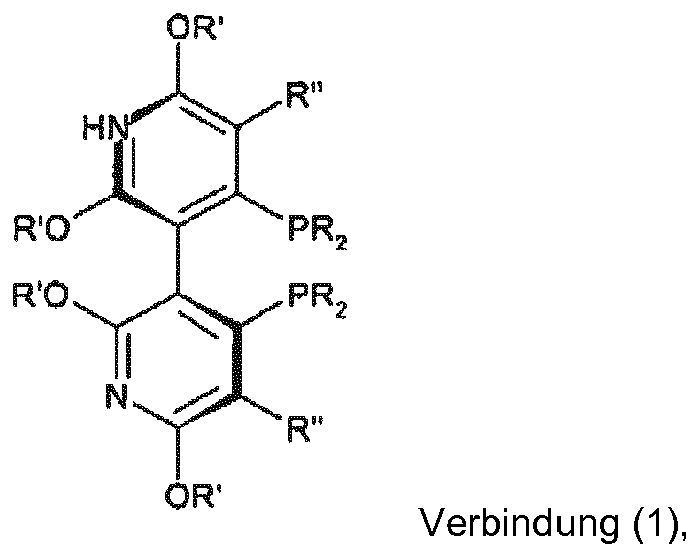
worin
R für optional substituiertes Alkyl, Cycloalkyl, Aryl oder Heteroaryl steht;
R' für Alkyl oder Aryl steht; und
R" für Wasserstoff, Halogen, optional substituiertes Alkyl, Hydroxyl, Amino, Alkenyl steht,
oder ein Enantiomer hiervon gebunden ist, umfasst, wobei das Übergangsmetall Kupfer oder ein Salz hiervon ist.
worin
R für optional substituiertes Alkyl, Cycloalkyl, Aryl oder Heteroaryl steht;
R' für Alkyl oder Aryl steht; und
R" für Wasserstoff, Halogen, optional substituiertes Alkyl, Hydroxyl, Amino, Alkenyl steht,
oder ein Enantiomer hiervon gebunden ist, umfasst, wobei das Übergangsmetall Kupfer oder ein Salz hiervon ist.
18. Katalysator nach Anspruch 17, wobei das Übergangsmetall CuF2 ist und der Ligand 2,2'-6,6'-Tetramethoxy-4,4'-bis-(diphenylphosphino)-3,3'-bipyridin
oder ein Enantiomer hiervon ist.
19. Katalysator nach Anspruch 18, wobei das Übergangsmetall CuF2 ist und der Ligand 2,2',6,6'-Tetramethoxy-4,4'-bis[di(3,5-dimethylphenyl)phosphino]-3,3'-bipyridin
oder ein Enantiomer hiervon ist.
1. Procédé pour convertir un substrat cétone prochirale en un alcool chiral par hydrosilylation
asymétrique en présence d'un catalyseur comprenant un métal de transition lié à un
composé de formule (I):
dans laquelle
R est un groupe alkyle, cycloalkyle, aryle ou hétéroaryle facultativement substitué;
R' est un groupe alkyle ou aryle; et
R" est un atome d'hydrogène, d'halogène, un groupe alkyle
facultativement substitué, hydroxyle, amino, alcényle;
ou à l'un de ses énantiomères; le métal de transition étant le cuivre ou l'un de ses sels.
dans laquelle
R est un groupe alkyle, cycloalkyle, aryle ou hétéroaryle facultativement substitué;
R' est un groupe alkyle ou aryle; et
R" est un atome d'hydrogène, d'halogène, un groupe alkyle
facultativement substitué, hydroxyle, amino, alcényle;
ou à l'un de ses énantiomères; le métal de transition étant le cuivre ou l'un de ses sels.
2. Procédé selon la revendication 1,
dans lequel
R est un phényle;
R' est un méthyle; et
R" est un atome d'hydrogène;
ou un énantiomère du composé.
dans lequel
R est un phényle;
R' est un méthyle; et
R" est un atome d'hydrogène;
ou un énantiomère du composé.
3. Procédé selon la revendication 1,
dans lequel
R est un phényle substitué;
R' est un méthyle; et
R" est un atome d'hydrogène;
ou un énantiomère du composé.
dans lequel
R est un phényle substitué;
R' est un méthyle; et
R" est un atome d'hydrogène;
ou un énantiomère du composé.
4. Procédé selon la revendication 3, dans lequel R représente 3,5-(CH3)2C6H3; ou l'un de ses énantiomères.
5. Procédé selon l'une quelconque des revendications précédentes, dans lequel la cétone
prochirale est une benzophénone et l'alcool est un benzhydrol.
6. Procédé selon la revendication 1, dans lequel le catalyseur est présent sans l'ajout
d'une base.
7. Procédé selon la revendication 6,
dans lequel
R est un phényle;
R' est un méthyle; et
R" est un atome d'hydrogène;
ou un énantiomère du composé.
dans lequel
R est un phényle;
R' est un méthyle; et
R" est un atome d'hydrogène;
ou un énantiomère du composé.
8. Procédé selon la revendication 6,
dans lequel
R est un phényle substitué;
R' est un méthyle; et
R" est un atome d'hydrogène;
ou un énantiomère du composé.
dans lequel
R est un phényle substitué;
R' est un méthyle; et
R" est un atome d'hydrogène;
ou un énantiomère du composé.
9. Procédé selon la revendication 8, dans lequel R représente 3,5-(CH3)2C6H3; ou l'un de ses énantiomères.
10. Procédé selon la revendication 1, dans lequel la cétone prochirale est une benzophénone
et l'alcool est un benzhydrol.
11. Procédé selon la revendication 6, ledit procédé étant effectué à une température allant
de la température ambiante à -20°C.
12. Procédé selon la revendication 6, ledit procédé étant effectué en présence d'air.
13. Procédé selon la revendication 6, dans lequel le rapport S/L (substrat sur ligand)
est de 20 000-500 000.
14. Procédé selon la revendication 13, dans lequel ladite réaction inclut un silane comme
donneur d'hydrure.
15. Procédé selon la revendication 1, dans lequel le métal de transition est le CuF2 et le ligand est la 2,2',6,6'-tétraméthoxy-4,4'-bis-(diphénylphosphino)-3,3'-bipyridine
ou l'un de ses énantiomères.
16. Procédé selon la revendication 1, dans lequel le métal de transition est le CuF2 et le ligand est la 2,2',6,6'-tétraméthoxy-4,4'-bis-[di(3,5-diméthylphényl)phosphino]-3,3'-bipyridine
ou l'un de ses énantiomères.
17. Catalyseur pour convertir un substrat prochiral en un produit chiral par hydrosilylation
asymétrique, ledit catalyseur comprenant un métal de transition lié à un ligand de
formule (I):
dans laquelle
R est un groupe alkyle, cycloalkyle, aryle ou hétéroaryle facultativement substitué;
R' est un groupe alkyle ou aryle; et
R" est un atome d'hydrogène, d'halogène, un groupe alkyle
facultativement substitué, hydroxyle, amino, alcényle;
ou à l'un de ses énantiomères; le métal de transition étant le cuivre ou l'un de ses sels.
dans laquelle
R est un groupe alkyle, cycloalkyle, aryle ou hétéroaryle facultativement substitué;
R' est un groupe alkyle ou aryle; et
R" est un atome d'hydrogène, d'halogène, un groupe alkyle
facultativement substitué, hydroxyle, amino, alcényle;
ou à l'un de ses énantiomères; le métal de transition étant le cuivre ou l'un de ses sels.
18. Catalyseur selon la revendication 17, dans lequel le métal de transition est le CuF2 et le ligand est la 2,2',6,6'-tétraméthoxy-4,4'-bis-(diphénylphosphino)-3,3'-bipyridine
ou l'un de ses énantiomères.
19. Catalyseur selon la revendication 18, dans lequel le métal de transition est le CuF2 et le ligand est la 2,2',6,6'-tétraméthoxy-4,4'-bis-[di(3,5-diméthylphényl)phosphino]-3,3'-bipyridine
ou l'un de ses énantiomères.
REFERENCES CITED IN THE DESCRIPTION
This list of references cited by the applicant is for the reader's convenience only. It does not form part of the European patent document. Even though great care has been taken in compiling the references, errors or omissions cannot be excluded and the EPO disclaims all liability in this regard.
Patent documents cited in the description
Non-patent literature cited in the description
- LIPSHUTZ et al.Ligand-accelerated, copper-catalyzed asymmetric hydrosilylations of aryl ketonesJ. AM. CHEM. SOC., 2001, vol. 123, 12917-18 [0004]
- SABINE SIROL et al.Efficient enantioselective hydrosilylation of ketones catalyzed by air stable copper fluoride-phosphine complexesORG. LETT., 2001, vol. 3, 4111-13 [0005] [0039]
- MCOMIEProtective Groups in Organic ChemistryPlenum Press19730000 [0025]
- GREENEWUTSProtective Groups in Organic SynthesisJohn Wiley and Sons, Inc.19990000 [0025]
- SEYDEN-PENNEChiral Auxiliaries and Ligands in Asymmetric SynthesisJohn Wiley & Sons, Inc.19950000 [0028]
- CHENG-CHAO PAI et al.Highly effective chiral dipyridylphosphlne ligands: synthesis, structural determination, and applications in the Ru-catalyzed asymmetric hydrogenation reactionsJ. AM. CHEM. SOC., 2000, vol. 122, 11513-514 [0035]
- JING WU et al.A new chiral dipyrldylphosphine ligand Xyl-P-Phos and its application in the Ru-catalyzed asymmetric hydrogenation of β-ketoestersTETRAHEDRON LETT., 2002, vol. 43, 1538-43 [0035]
- TAKESHI OHKUMA et al.Asymmetric hydrogenation of alkenyl, cyclopropyl, and aryl ketones. RuCl2(xylbinap)(1,2-diamine) as a precafalyst exhibiting a wide scopeJ. AM. CHEM. Soc., 1998, vol. 120, 13529-30 [0038]
- TAKESHI OHKUMA et al.Selective hydrogenation of benzophenones to benzhydrols. Asymmetric synthesis of unsymmetrical diaryl methanolsORGANIC LETT., 2000, vol. 2, 659-62 [0068]
- ERIC BROWN et al.Determination of the ee's of chiral acids by F NMR studies of their esters deriving from (R)-(+)-2-(triffluoromethyl)benzhydrofTETRRAHEDRON: ASYMMETRY, 1994, vol. 5, 1191-94 [0068]
- JUNPAI NAITO et al.Enantioresolution of fluorinated diphanylmethanols and determination of their absolute configurations by X-Ray crystallographic and H NMR anisotropy methodsCHIRALITY, 2004, vol. 16, 22-35 [0068]