|
(11) | EP 1 883 397 B1 |

| (12) | EUROPEAN PATENT SPECIFICATION |
|
|
| (54) |
DISPERSIBLE BOSERTAN TABLET DISPERGIERBARE BOSERTAN-TABLETTE COMPRIME DISPERSIBLE |
|
|
|||||||||||||||||||||||||||||||||||
|
||||||||||||||||||||||||||||||||||||
| Note: Within nine months from the publication of the mention of the grant of the European patent, any person may give notice to the European Patent Office of opposition to the European patent granted. Notice of opposition shall be filed in a written reasoned statement. It shall not be deemed to have been filed until the opposition fee has been paid. (Art. 99(1) European Patent Convention). |
[0001] The present invention relates to dispersible tablets comprising the compound 4-tert-butyl-N-[6-(2-hydroxy-ethoxy)-5-(2-methoxy-phenoxy)-2-(pyrimidin-2-yl)-pyrimidin-4-yl]-benzenesulfonamide, said compound being hereinafter referred to as compound I.
[0003] Compound I is an endothelin receptor inhibitor and useful for the treatment of pulmonary arterial hypertension (PAH). Compound I and the preparation thereof is disclosed in EP 0526708 A1.
[0004] Bosentan (Tracleer®) is an oral treatment for PAH (Class III and IV in the United States, Class III in Europe). Bosentan is a dual endothelin receptor antagonist with affinity for both endothelin ETA and ETB receptors thereby preventing the deleterious effects of ET-1. As known from the World Standard Drug Database, the commercial available formulation has the following composition: bosentan (125 or 62.5mg), starch, triacetin, magnesium stearate, talc, ferric oxide, povidone, titanium dioxide, ethylcellulose, glyceryl behenate, hypromellose and sodium starch glycollate.
[0005] Within the context of this disclosure, any reference to compound I is to be understood as referring also to pharmaceutically acceptable salts or solvates, including hydrates, of Compound I, as well as morphological forms thereof, if not indicated otherwise and where appropriate and expedient.
[0006] By "dispersible tablet" is meant a tablet, which disintegrates completely in water at 15-22°C in not more than 5 minutes or preferably less than 4 minutes. In a further embodiment the dispersible tablets of the present invention have a disintegration time of less than 3 minutes, preferably less than 2 minutes or most preferred less than 1 minute (disintegration method according to the European Pharmacopoeia, EP).
[0007] The present drug product of compound I is currently being marketed as a tablet for the treatment of PAH, a deadly disease if untreated. Children have difficulties in taking tablets, thus the currently marketed tablet formulation is not convenient for administration to children. A drug product in the form of a suspension will be more children-friendly. The present invention therefore relates to the development of a tablet, which can be dispersed in water to form a suspension before administration. The dispersible tablet should disintegrate completely in water at 15-22°C in less than 5 minutes or preferably less than 4 minutes. In a further embodiment the dispersible tablets of the present invention have a disintegration time of less than 3 minutes, preferably less than 2 minutes or most preferred less than 1 minute based on the method according to the European Pharmacopoeia (disintegration method according to the EP).
[0008] Further advantages of the paediatric formulation are the following:
- Better compliance due to special paediatric formulation
- It is now possible to give paediatric patients an optimized and individualized dosing according to body weight
- The paediatric formulation has demonstrated absorption based on pk data
[0009] The present invention provides such a dispersible tablet suitable for children comprising: (a) compound I and (b) pharmaceutically acceptable excipients suitable for the preparation of dispersible tablets. The amount of compound I, calculated as the percentage of the content in weight of the active moiety, based on the total weight of the dispersible tablet; is 5% to 40%, preferably between 8% to 30%. In particular, the amount of compound I as active ingredient may vary from 10% to 17%.
[0010] In a preferred embodiment of the invention, the present invention provides a dispersible tablet wherein compound I is in the monohydrate form.
[0011] Pharmaceutically acceptable excipients are present in the dispersible tablet, e.g. fillers (1.1), disintegrants (1.2), glidants (1.3), acidifying agents (1.4), flavouring agents (1.5), sweetening agents (1.6), and lubricants (1.7).
[0012] Reference is made to the extensive literature on the subject for these and other pharmaceutically acceptable excipients and procedures mentioned herein, see in particular Handbook of Pharmaceutical Excipients, Third Edition, edited by Arthur H. Kibbe, American Pharmaceutical Association, Washington, USA and Pharmaceutical Press, London; and Lexikon der Hilfsstoffe für Pharmazie, Kosmetik und angrenzende Gebiete edited by H. P. Fiedler, 4th Edition, Edito Cantor, Aulendorf and earlier editions.
[0013] Fillers (1.1) according to the invention include but are not restricted to microcrystalline cellulose, dicalcium phosphate, lactose and pregelatinized starch. Preferably, microcrystalline cellulose is used in combination with dicalcium phosphate.
[0014] Suitable disintegrants (1.2) according to the invention include but are not restricted to croscarmellose sodium, sodium starch glycolate, maize starch, CMC-Ca, CMC-Na, microcrystalline cellulose, cross-linked PVP, e.g. as known and commercially available under the trade names Crospovidone, Polyplasdone, available commercially from the ISP company, or Kollidon® XL, alginic acid, sodium alginate, pregelatinized starch, and guar gum. Preferably, Croscarmellose sodium, e.g. Ac-Di-Sol® is used.
[0015] As glidants (1.3), one or more of the following may be used: silica; colloidal silica, e.g. colloidal silica anhydrous, e.g. Aerosil® 200, magnesium trisilicate, powdered cellulose, starch and talc. Preferably, colloidal silicone dioxide is used.
[0016] Acidifying agents (1.4) include but are not restricted to tartaric acid, citric acid, ascorbic acid, lactic acid, and fumaric acid. Preferably tartaric acid is used
[0017] Flavouring agents (1.5) include but are not restricted to Tutti Frutti, Strawberry, Banana, and Vanilla. Preferably Tutti Frutti is used.
[0018] Appropriate sweetening agents (1.6) according to the invention include but are not restricted to: Aspartame, acesulfame potassium, saccharin, saccharin sodium, sodium cyclamate, sucralose. Preferably the sweetening agents used are aspartame and acesulfame potassium.
[0019] Added flavouring agents as mentioned above and/or sweetening agents as mentioned above have the advantage to increase the compliance.
[0020] As lubricants (1.7) one or more of the following may be used Mg-, Al- or Ca-stearate, stearic acid, sodium stearyl fumarate, talc, sodium benzoate, glyceryl mono fatty acid, e.g. having a molecular weight of from 200 to 800 Daltons, e.g. glyceryl monostearate (e.g.
[0021] Danisco, UK), glyceryl dibehenate (e.g. CompritolAT0888™, Gattefossé France), glyceryl palmito-stearic ester (e.g. Precirol™, Gattefossé France), polyethylene glycol (PEG, BASF), hydrogenated cotton seed oil (Lubitab, Edward Mendell Co Inc.), castor seed oil (Cutina HR, Henkel) and sucrose esters (Surfhope SE, Mitsubishi-Kagaku Foods Co.). Preferably, magnesium stearate, alone or in combination with glyceryl dibehenate, is used.
[0022] It will be appreciated that any given excipient may serve more than one function e.g. as filler, disintegrant, binder, glidant, and/or lubricant.
[0023] It was found that the presence of an acidifying agent (1.4) decreases the solubility of compound I thus preventing tasting of the bitter taste of compound I when the tablet is dispersed with water e.g. on a spoon before administration. The bitter taste of compound I can also be overcome by using flavouring agents (1.5) and/or sweetening agents (1.6).
[0024] According to the present invention, the amount of filler (1.1) varies within a range of 40 to 85%, in particular 63 to 78% in weight based on the total weight of the dispersible tablet.
[0025] The amount of disintegrant (1.2) varies within a range of from 0.5 to 20%, e.g. 1 to 15% in weight based on the total weight of the dispersible tablet.
[0026] The amount of glidant (1.3) varies within ranges of from 0.1 to 5%, in particular 0.1 to 2.5%, especially 0.5 to 1.0% in weight based on the total weight of the dispersible tablet.
[0027] The amount of acidifying agent (1.4) varies within ranges of from 0.5 to 13%, in particular 1 to 8% in weight based on the total weight of the dispersible tablet.
[0028] The amount of flavouring agent (1.5) varies from 1 to 15%, preferably from 2 to 10% in weight based on the total weight of the dispersible tablet.
[0031] The dispersible tablet comprises the following pharmaceutically acceptable excipients: one or more fillers (1.1), in a total amount of 40 to 85%, preferably from 63% to 78%, in weight based on the total weight of the dispersible tablet, one or more disintegrants (1.2), in a total amount of 0.5 to 20%, preferably from 1% to 15%, in weight based on the total weight of the dispersible tablet, one or more glidants (1.3), in a total amount of 0.1 to 5%, preferably from 0.5% to 1.0%, in weight based on the total weight of the dispersible tablet, one or more acidifying agents (1.4), in a total amount of 0.5 to 13%, preferably from 1% to 8%, in weight based on the total weight of the dispersible tablet, one or more flavouring agents (1.5), in a total amount of 1 to 15%, preferably from 2% to 10%, in weight based on the total weight of the dispersible tablet, one or more sweetening agents (1.6), in a total amount of 0.1 to 10%, preferably from 0.2 to 8%, in weight based on the total weight of the dispersible tablet, and one or more lubricants (1.7), in a total amount of 0.05 to 7%, preferably from 0.1% to 3.0%, in weight based on the total weight of the dispersible tablet.
[0032] The absolute amounts of each pharmaceutically acceptable excipient and the amounts relative to other pharmaceutically acceptable excipients is dependent on the desired properties of the dispersible tablet and may be chosen by routine experimentation.
[0033] The tablets of the invention are dispersible, e.g. in aqueous media such as water. The tablets can thus be dispersed in e.g. water before administration, which is a convenient form of administration for children. This also leads to a better patient compliance. The dispersible tablets of the present invention have a disintegration time of less than 5 minutes or preferably less than 4 minutes. In a further embodiment the dispersible tablets of the present invention have a disintegration time of less than 3 minutes, preferably less than 2 minutes or most preferred less than 1 minute based on the method according to the
[0035] According to the invention, a preferred process for the preparation of the dispersible tablets comprises mixing the excipients of phase II (about 10-20 minutes), adding it to phase I and re-mixing for the same period of time. Phase III is then added to the powder mixture of phases I and II and mixed for about 2-5 minutes and compressed into tablets.
[0036] Phase I comprises compound I and one or more pharmaceutically acceptable excipients which are present in a concentration of more than 5% in weight based on the total weight of the dispersible tablet.
[0037] Phase II comprises the pharmaceutically acceptable excipients which are present in a concentration of less than 5% in weight based on the total weight of the dispersible tablet with the exception of the lubricants of the stearate type.
[0039] Procedures which may be used may be conventional or known in the art or based on such procedures e.g. those described in L. Lachman et al., The Theory and Practice of Industrial Pharmacy, 3rd Ed., 1986; H. Sucker et al., Pharmazeutische Technologie, Thieme, 1991; Hagers Handbuch der pharmazeutischen Praxis, 4th Ed. (Springer Verlag, 1971) and Remington's Pharmaceutical Sciences, 13th Ed., (Mack Publ., Co., 1970) or later editions.
[0040] Since compound I is practically insoluble in water, it was a surprise that despite the general knowledge that direct compression (i.e. compression without previous wet granulation) does not enhance the dissolution of compounds with low solubility, compound I exhibits good dissolution from the dispersible tablets of the present invention obtained by the method of direct compression.
[0041] In fact, the dissolution of compound I from the dispersible tablets of the invention is such that more than 60%, especially more than 70% w/w of compound I is dissolved within 15 minutes when tested in 900 ml of phosphate buffer (pH=6.8) with 0.1% w/v sodium lauryl sulphate heated to 37°C and stirred at 100 rpm with a paddle as described in the United States Pharmacopoeia.
[0042] In one aspect of the invention one or more lubricants may be sprayed on the material contacting surfaces of pressing tools, e.g. punches and/or dies, of the tabletting machine before compression.
[0043] The physical and chemical stability of the dispersible tablets may be tested in conventional manner, e.g. by measurement of dissolution, friability, disintegration time, assay for compound I degradation products, appearance and/or microscopy, e.g. after storage at room temperature, i.e. 25 °C/60% r.h. (relative humidity), and/or storage at 40 °C/75% r.h..
[0044] The dissolution rate is stable over time and different storage conditions. In a preferred embodiment the dissolution rate of the tablets is stable over at least 6 months when they are stored at 25°C/60% r.h. and 40°C/75% r.h.
[0045] The dispersible tablets may vary in shape and be, for example, round, oval, oblong, cylindrical, clover-shaped or any other suitable shape.
[0046] In a preferred embodiment of the invention dispersible tablets obtained by the compression method described above are clover shaped or round. The edges of the dispersible tablets may be beveled or rounded. Most preferably, the dispersible tablets are clover shaped with beveled edges. The dispersible tablets according to the invention may be scored or engraved.
[0047] The dispersible tablet according to the invention is preferably clover-shaped, quadrisected with beveled edges. The dispersible tablet has a diameter ranging between 8 and 15 mm, most preferably between 9 and 11 mm. Its thickness is ranging from 2.5 to 4.5 mm, preferably between 2.9 and 3.9 mm.
[0048] The dispersible tablets of the invention comprising about 32mg of compound I as active moiety may have a hardness of from about 50 to 120 N, preferably 60 to 100 N.
[0049] The dispersible tablets of the invention may be colored and/or marked so as to impart an individual appearance and to make them instantly recognizable. The use of dyes can serve to enhance the appearance as well as to identify the dispersible tablets. Dyes suitable for use in pharmacy typically include carotinoids, iron oxides or chlorophyll. The dispersible tablets of the invention may be marked using an imprint code.
[0050] The dispersible tablets of the present invention are useful for the treatment of PAH and exhibit a good pharmacokinetic profile. The dispersible tablets of the present invention can be administered e.g. twice daily with an effective dosing of the active ingredient compound I in the range of 2mg/kg to 4mg/kg body weight.
[0051] The tablet may be packed in any possible blister known in the art, as for example into aluminum blisters.
[0052] As can be seen from figure 1, the paediatric formulation has demonstrated absorption based on pk data.
Example 1
[0054]
| Components | Amount per Tablet [mg] | Percent [w/w] | |
| Phase I | Compound I as monohydrate, micronized | 33.045 | 11.39 |
| Microcrystalline cellulose (1.1) | 116.265 | 40.09 | |
| Dicalcium phosphate (1.1) | 101.500 | 35.00 | |
| Phase II | Croscarmellose sodium (1.2) | 11.600 | 4.00 |
| Colloidal silicone dioxide (1.3) | 2.900 | 1.00 | |
| Tartaric acid (1.4) | 7.000 | 2.41 | |
| Tutti Frutti (1.5) | 9.000 | 3.10 | |
| Aspartame (1.6) | 3.700 | 1.28 | |
| Acesulfame potassium (1.6) | 1.800 | 0.62 | |
| Phase III | Magnesium stearate (1.7) | 3.190 | 1.1 |
| Total | 290 |
Tablet Properties:
[0055]
| Parameter | Value |
| Diameter | 10 mm |
| Friability | < 0.3% |
| Disintegration at 15 - 22°C (EP) | < 40 sec |
| Dissolution, mean of 6 tablets Paddle method, 100 rpm, phosphate buffer at pH = 6.8 with 0.1% sodium lauryl sulphate, 37°C | More than 75% within 15 minutes |
Example 2
[0056]
| Components | Amount per Tablet [mg] | Percent [w/w] | |
| Phase I | Compound I as monohydrate | 33.045 | 11.80 |
| Microcrystalline cellulose (1.1) | 135.200 | 48.29 | |
| Dicalcium phosphate (1.1) | 70.000 | 25.00 | |
| Phase II | Croscarmellose sodium (1.2) | 11.200 | 4.00 |
| Colloidal silicone dioxide (1.3) | 2.800 | 1.00 | |
| Tartaric acid (1.4) | 6.250 | 2.23 | |
| Tutti Frutti (1.5) | 9.000 | 3.21 | |
| Aspartame (1.6) | 3.700 | 1.32 | |
| Acesulfame potassium (1.6) | 1.800 | 0.64 | |
| Glyceryl dibehenate (1.7) | 5.600 | 2.00 | |
| Phase III | Magnesium stearate (1.7) | 1.400 | 0.50 |
| Total | 280 |
Tablet Properties:
[0057]
| Parameter | Value |
| Diameter | 10 mm |
| Friability | < 0.3% |
| Disintegration at 15 - 22°C (EP) | < 40 sec |
| Dissolution, mean of 6 tablets Paddle method, 100 rpm, phosphate buffer at pH = 6.8 with 0.1% sodium lauryl sulphate, 37°C | More than 75% within 15 minutes |
Example 3
[0058]
| Components | Amount per Tablet [mg] | Percent [w/w] | |
| Phase I | Compound I as monohydrate | 33.045 | 15.74 |
| Microcrystalline cellulose (1.1) | 79.765 | 37.98 | |
| Dicalcium phosphate (1.1) | 63.000 | 30.00 | |
| Phase II | Croscarmellose sodium (1.2) | 8.400 | 4.00 |
| Colloidal silicone dioxide (1.3) | 2.100 | 1.00 | |
| Tartaric acid (1.4) | 6.250 | 2.98 | |
| Strawberry (1.5) | 9.000 | 4.29 | |
| Aspartame (1.6) | 3.700 | 1.76 | |
| Acesulfame potassium (1.6) | 1.800 | 0.86 | |
| Phase III | Magnesium stearate (1.7) | 2.940 | 1.40 |
| Total | 210 |
Tablet Properties:
1. A dispersible tablet comprising compound I of the formula
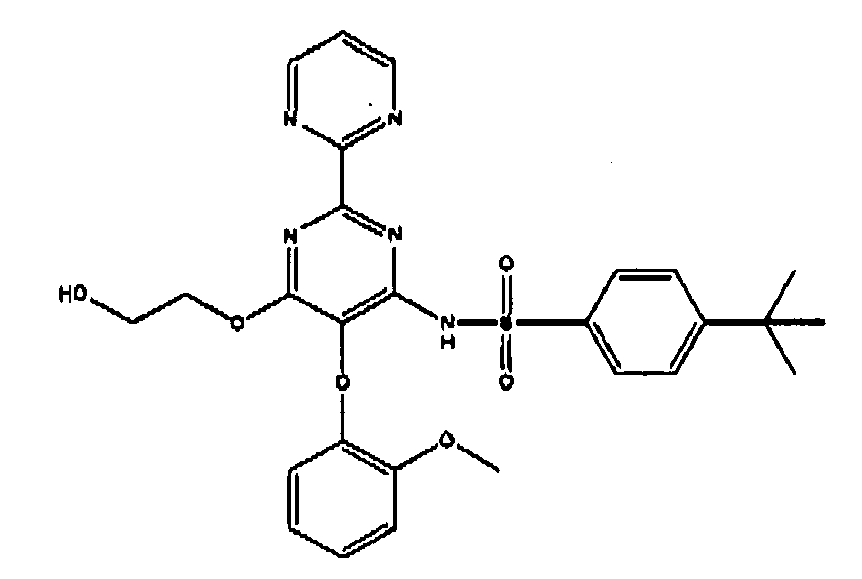
or a pharmaceutically acceptable salt or solvate thereof, and pharmaceutically acceptable excipients, comprising the following pharmaceutically acceptable excipients: one or more tillers in a total amount of 40 to 85% in weight based on the total weight of the dispersible tablet, one or more disintegrants in a total amount of 0.5 to 20% in weight based on the total weight of the dispersible tablet, one or more glidants in a total amount of 0.1 to 5% in weight based on the total weight of the dispersible tablet, one or more acidifying agents in a total amount of 0.5 to 13% in weight based on the total weight of the dispersible tablet, one or more flavouring agents in a total amount of 1 to 15% in weight based on the total weight of the dispersible tablet, one or more sweetening agents in a total amount of 0.1 to 10% in weight based on the total weight of the dispersible tablet, and one or more lubricants in a total amount of 0.05 to 7% in weight based on the total weight of the dispersible tablet,
wherein dispersible tablet is a tablet, which disintegrates completely in water at 15-22°C in not more than 5 minutes.
or a pharmaceutically acceptable salt or solvate thereof, and pharmaceutically acceptable excipients, comprising the following pharmaceutically acceptable excipients: one or more tillers in a total amount of 40 to 85% in weight based on the total weight of the dispersible tablet, one or more disintegrants in a total amount of 0.5 to 20% in weight based on the total weight of the dispersible tablet, one or more glidants in a total amount of 0.1 to 5% in weight based on the total weight of the dispersible tablet, one or more acidifying agents in a total amount of 0.5 to 13% in weight based on the total weight of the dispersible tablet, one or more flavouring agents in a total amount of 1 to 15% in weight based on the total weight of the dispersible tablet, one or more sweetening agents in a total amount of 0.1 to 10% in weight based on the total weight of the dispersible tablet, and one or more lubricants in a total amount of 0.05 to 7% in weight based on the total weight of the dispersible tablet,
wherein dispersible tablet is a tablet, which disintegrates completely in water at 15-22°C in not more than 5 minutes.
2. A dispersible tablet according to claim 1, comprising the following pharmaceutically
acceptable excipients: one or more fillers in a total amount of 63% to 78% in weight
based on the total weight of the dispersible tablet, one or more disintegrants in
a total amount of 1 to 15% in weight based on the total weight of the dispersible
tablet, one or more glidants in a total amount of 0.5 to 1.0% in weight based on the
total weight of the dispersible tablet, one or more acidifying agents in a total amount
of 1 to 8% in weight based on the total weight of the dispersible tablet, one or more
flavouring agents in a total amount of 2 to 10% in weight based on the total weight
of the dispersible tablet, one or more sweetening agents in a total amount of 0.2
to 8% in weight based on the total weight of the dispersible tablet, and one or more
lubricants in a total amount of 0.1 to 3% in weight based on the total weight of the
dispersible tablet.
3. A dispersible tablet according to claim 1, wherein the filler is selected from microcrystalline
cellulose, dicalcium phosphate, lactose and pregelatinized starch; the disintegrant
is selected from croscarmellose sodium, sodium starch glycolate, maize starch, CMC-Ca,
CMC-Na, microcrystalline cellulose, cross-linked PVP, alginic acid, sodium alginate,
pregelatinized starch, and guar gum; the glidant is selected from silica, colloidal
silica, magnesium trisilicate, powdered cellulose, starch and talc; the acidifying
agent is selected from tartaric acid, citric acid, ascorbic acid, lactic acid, and
fumaric acid; the flavouring agent is selected from Tutti Frutti, Strawberry, Banana,
and Vanilla; the sweetening agent is selected from aspartame, acesulfame potassium,
saccharin, saccharin sodium, sodium cyclamate, sucralose; the lubricant is selected
firm Mg-, Al- or Ca-stearate, stearic acid, sodium stearyl fumarate, talc, sodium
benzoate, glyceryl mono fatty acid, polyethylene glycol, hydrogenated cotton seed
oil, castor seed oil, and sucrose esters.
4. A dispersible tablet according to any one of claims 1 to 3, consisting 33.045 mg of
micronized compound of formula I as monohydrate; 116.265 mg of microcrystalline cellulose;
101.5 mg of dicalcium phosphate; 11.6 mg of croscarmellose sodium; 2.9 mg of colloidal
silicon dioxide; 7.0 mg of tartaric acid; 9.0 mg Tutti Frutti; 3.7 mg of aspartame;
1.8 mg of acesulfame potassium; 3.19 mg of magnesium stearate.
5. The dispersible tablet according to claim 1 wherein compound I is in the monohydrate
form.
6. The dispersible tablet according to claims 1 and 5 obtainable by using the method
of direct compression.
7. The dispersible tablet according to any one of claims 1, 5 and 6 for use as a medicament.
8. Use of compound I, or a pharmaceutically acceptable salt or solvate thereof, for the
preparation of a dispersible tablet according to any one of claims 1, 5 and 6, for
use in the treatment of pulmonary arterial hypertension.
9. A process for the preparation of a dispersible tablet comprising compound 1 of the
formula
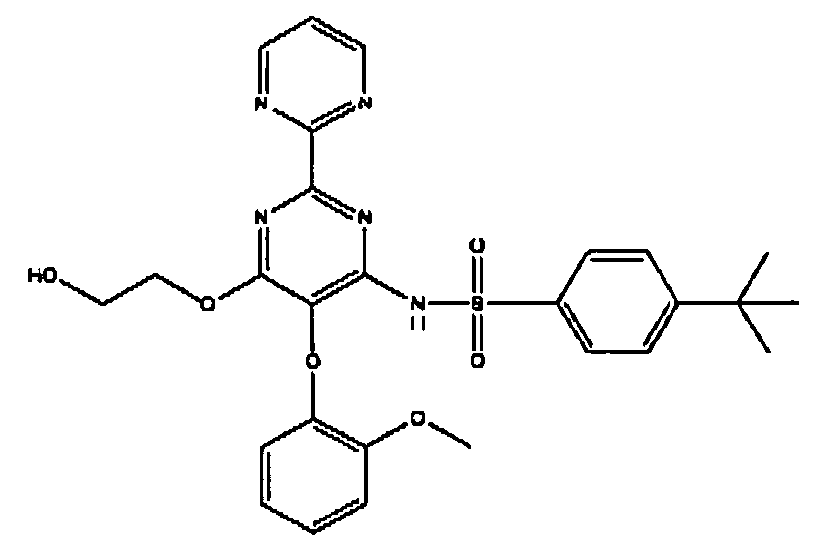
or a pharmaceutically acceptable salt or solvate thereof, and pharmaceutically acceptable excipients, characterized in that the tablet is prepared by direct compression,
wherein dispersible tablet is a tablet, which disintegrates completely in water at 15-22°C in not more than 5 minutes.
or a pharmaceutically acceptable salt or solvate thereof, and pharmaceutically acceptable excipients, characterized in that the tablet is prepared by direct compression,
wherein dispersible tablet is a tablet, which disintegrates completely in water at 15-22°C in not more than 5 minutes.
1. Dispergierbare Tablette, die die Verbindung 1 der Formel
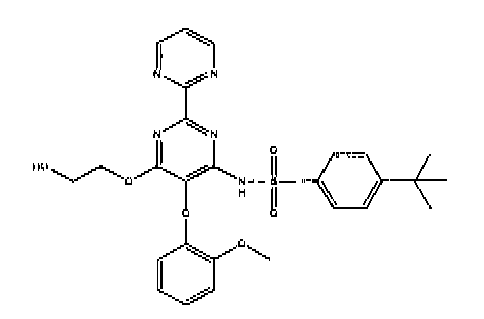
oder ein pharmazeutisch akzeptables Salz oder Solvat davon und pharmazeutisch akzeptable Exzipienten umfasst, umfassend die folgenden pharmazeutisch akzeptablen Exzipienten: einen oder mehrere Füllstoffe in einer Gesamtmenge von 40 bis 85 Gew.-% bezogen auf das Gesamtgewicht der dispergierbaren Tablette, ein oder mehrere Zerfallsmittel in einer Gesamtmenge von 0,5 bis 20 Gew.-% bezogen auf das Gesamtgewicht der dispergierbaren Tablette, ein oder mehrere Fließregulierungsmittel in einer Gesamtmenge von 0,1 bis 5 Gew.-% bezogen auf das Gesamtgewicht der dispergierbaren Tablette, ein oder mehrere Ansäuerungsmittel in einer Gesamtmenge von 0,5 bis 13 Gew.-% bezogen auf das Gesamtgewicht der dispergierbaren Tablette, ein oder mehrere Aromastoffe in einer Gesamtmenge von 1 bis 15 Gew.-% bezogen auf das Gesamtgewicht der dispergierbaren Tablette, ein oder mehrere Süßungsmittel in einer Gesamtmenge von 0,1 bis 10 Gew.-% bezogen auf das Gesamtgewicht der dispergierbaren Tablette und ein oder mehrere Gleitmittel in einer Gesamtmenge von 0,05 bis 7 Gew.-% bezogen auf das Gesamtgewicht der dispergierbaren Tablette,
wobei die dispergierbare Tablette eine Tablette ist, die in Wasser bei 15-22°C in nicht mehr als 5 Minuten vollständig zerfällt.
oder ein pharmazeutisch akzeptables Salz oder Solvat davon und pharmazeutisch akzeptable Exzipienten umfasst, umfassend die folgenden pharmazeutisch akzeptablen Exzipienten: einen oder mehrere Füllstoffe in einer Gesamtmenge von 40 bis 85 Gew.-% bezogen auf das Gesamtgewicht der dispergierbaren Tablette, ein oder mehrere Zerfallsmittel in einer Gesamtmenge von 0,5 bis 20 Gew.-% bezogen auf das Gesamtgewicht der dispergierbaren Tablette, ein oder mehrere Fließregulierungsmittel in einer Gesamtmenge von 0,1 bis 5 Gew.-% bezogen auf das Gesamtgewicht der dispergierbaren Tablette, ein oder mehrere Ansäuerungsmittel in einer Gesamtmenge von 0,5 bis 13 Gew.-% bezogen auf das Gesamtgewicht der dispergierbaren Tablette, ein oder mehrere Aromastoffe in einer Gesamtmenge von 1 bis 15 Gew.-% bezogen auf das Gesamtgewicht der dispergierbaren Tablette, ein oder mehrere Süßungsmittel in einer Gesamtmenge von 0,1 bis 10 Gew.-% bezogen auf das Gesamtgewicht der dispergierbaren Tablette und ein oder mehrere Gleitmittel in einer Gesamtmenge von 0,05 bis 7 Gew.-% bezogen auf das Gesamtgewicht der dispergierbaren Tablette,
wobei die dispergierbare Tablette eine Tablette ist, die in Wasser bei 15-22°C in nicht mehr als 5 Minuten vollständig zerfällt.
2. Dispergierbare Tablette nach Anspruch 1, die die folgenden pharmazeutisch akzeptablen
Exzipienten umfasst: einen oder mehrere Füllstoffe in einer Gesamtmenge von 63 bis
78 Gew.-% bezogen auf das Gesamtgewicht der dispergierbaren Tablette, ein oder mehrere
Zerfallsmittel in einer Gesamtmenge von 1 bis 15 Gew.-% bezogen auf das Gesamtgewicht
der dispergierbaren Tablette, ein oder mehrere Fließregulierungsmittel in einer Gesamtmenge
von 0,5 bis 1,0 Gew.-% bezogen auf das Gesamtgewicht der dispergierbaren Tablette,
ein oder mehrere Ansäuerungsmittel in einer Gesamtmenge von 1 bis 8 Gew.-% bezogen
auf das Gesamtgewicht der dispergierbaren Tablette, ein oder mehrere Aromastoffe in
einer Gesamtmenge von 2 bis 10 Gew.-% bezogen auf das Gesamtgewicht der dispergierbaren
Tablette, ein oder mehrere Süßungsmittel in einer Gesamtmenge von 0,2 bis 8 Gew.-%
bezogen auf das Gesamtgewicht der dispergierbaren Tablette und ein oder mehrere Gleitmittel
in einer Gesamtmenge von 0,1 bis 3 Gew.-% bezogen auf das Gesamtgewicht der dispergierbaren
Tablette.
3. Dispergierbare Tablette nach Anspruch 1, wobei der Füllstoff ausgewählt ist aus mikrokristalliner
Cellulose, Dicalciumphosphat, Lactose und vorgelatinierter Stärke; das Zerfallsmittel
ausgewählt ist aus Croscarmellose-Natrium, Natriumstärkeglykolat, Maisstärke, CMC-Ca,
CMC-Na, mikrokristalliner Cellulose, vernetztem PVP, Alginsäure, Natriumalginat, vorgelatinierter
Stärke und Guargummi; das Fließregulierungsmittel ausgewählt ist aus Siliziumdioxid,
kolloidalem Siliziumdioxid, Magnesiumtrisilikat, pulvriger Cellulose, Stärke und Talk;
das Ansäuerungsmittel ausgewählt ist aus Weinsäure, Zitronensäure, Ascorbinsäure,
Milchsäure und Fumarsäure; der Aromastoff ausgewählt ist aus Tuttifrutti, Erdbeere,
Banane und Vanille; das Süßungsmittel ausgewählt ist aus Aspartam, Acesulfamkalium,
Saccharin, Saccharin-Natrium, Natriumoyclamat, Sucralose; das Gleitmittel ausgewählt
ist aus Mg-, Al- oder Ca-Stearat, Stearinsäure, Natriumstearylfumarat, Talk, Natriumbenzoat,
Glycerylmonofettsäure, Polyethylenglykol, hydriertes Baumwollsaathartfett, Rizinussaatöl
und Saccharoseestern.
4. Dispergierbare Tablette nach einem der Ansprüche 1 bis 3, bestehend aus: 33,045 mg
der mikronisierten Verbindung der Formel I als Monohydrat; 116,265 mg mikrokristalline
Cellulose; 101,5 mg Dicalciumphosphat; 11,6 mg Croscarmellose-Natrium; 2,9 mg kolloidales
Siliziumdioxid; 7,0 mg Weinsäure; 9,0 mg Tuttifrutti; 3,7 mg Aspartam; 1,8 mg Acesulfamkalium;
3,19 mg Magnesiumstearat.
5. Dispergierbare Tablette nach Anspruch 1, wobei die Verbindung I in Monohydratform
vorliegt.
6. Dispergierbare Tablette nach einem der Ansprüche 1 und 5, die mit dem Verfahren der
direkten Kompression erhältlich ist.
7. Dispergierbare Tablette nach einem der Ansprüche 1, 5 und 6 zur Verwendung als Medikament.
8. Verwendung der Verbindung I oder eines pharmazeutisch akzeptablen Salzes oder Solvates
davon zur Herstellung einer dispergierbaren Tablette nach einem der Ansprüche 1, 5
und 6 zur Verwendung bei der Behandlung von pulmonalarterieller Hypertonie.
9. Verfahren zum Herstellen einer dispergierbaren Tablette, die die Verbindung I der
Formel
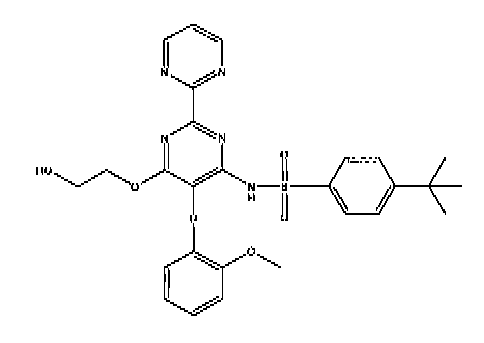
oder ein pharmazeutisch akzeptables Salz oder Solvat davon und pharmazeutisch akzeptable Exzipienten umfasst, dadurch gekennzeichnet, dass die Tablette durch direkte Kompression hergestellt wird,
wobei die dispergierbare Tablette eine Tablette ist, die in Wasser bei 15-22°C in nicht mehr als 5 Minuten vollständig zerfällt.
oder ein pharmazeutisch akzeptables Salz oder Solvat davon und pharmazeutisch akzeptable Exzipienten umfasst, dadurch gekennzeichnet, dass die Tablette durch direkte Kompression hergestellt wird,
wobei die dispergierbare Tablette eine Tablette ist, die in Wasser bei 15-22°C in nicht mehr als 5 Minuten vollständig zerfällt.
1. Comprimé dispersable comprenant un composé I de la formule :
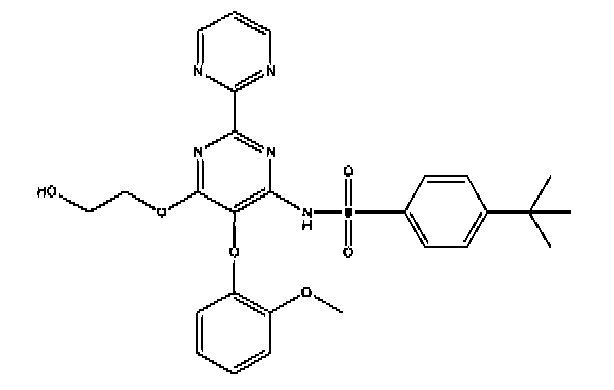
ou un sel ou solvate pharmaceutiquement acceptable de celui-ci et des excipients pharmaceutiquement acceptables, dont les excipients pharmaceutiquement acceptables suivants : une ou plusieurs matières de charge en une quantité totale correspondant à 40 à 85 % en poids du poids total du comprimé dispersable, un ou plusieurs désintégrants en une quantité totale correspondant à 0,5 à 20 % en poids du poids total du comprimé dispersable, un ou plusieurs glissants en une quantité totale correspondant à 0,1 à 5 % en poids du poids total du comprimé dispersable, un ou plusieurs agents acidifiants en une quantité totale correspondant à 0,5 à 13 % en poids du poids total du comprimé dispersable, un ou plusieurs aromatisants en une quantité totale correspondant à 1 à 15 % en poids du poids total du comprimé dispersable, un ou plusieurs édulcorants en une quantité totale correspondant à 0,1 à 10 % en poids du poids total du comprimé dispersable et un ou plusieurs lubrifiants en une quantité totale correspondant à 0,05 à 7 % en poids du poids total du comprimé dispersable,
où le comprimé dispersable est un comprimé qui se désintègre complètement en pas plus de 5 minutes dans l'eau à 15-22 °C.
ou un sel ou solvate pharmaceutiquement acceptable de celui-ci et des excipients pharmaceutiquement acceptables, dont les excipients pharmaceutiquement acceptables suivants : une ou plusieurs matières de charge en une quantité totale correspondant à 40 à 85 % en poids du poids total du comprimé dispersable, un ou plusieurs désintégrants en une quantité totale correspondant à 0,5 à 20 % en poids du poids total du comprimé dispersable, un ou plusieurs glissants en une quantité totale correspondant à 0,1 à 5 % en poids du poids total du comprimé dispersable, un ou plusieurs agents acidifiants en une quantité totale correspondant à 0,5 à 13 % en poids du poids total du comprimé dispersable, un ou plusieurs aromatisants en une quantité totale correspondant à 1 à 15 % en poids du poids total du comprimé dispersable, un ou plusieurs édulcorants en une quantité totale correspondant à 0,1 à 10 % en poids du poids total du comprimé dispersable et un ou plusieurs lubrifiants en une quantité totale correspondant à 0,05 à 7 % en poids du poids total du comprimé dispersable,
où le comprimé dispersable est un comprimé qui se désintègre complètement en pas plus de 5 minutes dans l'eau à 15-22 °C.
2. Comprimé dispersable selon la revendication 1, qui comprend les excipients pharmaceutiquement
acceptables suivants : une ou plusieurs matières de charge en une quantité totale
correspondant à 63 % à 78 % en poids du poids total du comprimé dispersable, un ou
plusieurs désintégrants en une quantité totale correspondant à 1 à 15 % en poids du
poids total du comprimé dispersable, un ou plusieurs glissants en une quantité totale
correspondant à 0,5 à 1,0 % en poids du poids total du comprimé dispersable, un ou
plusieurs agents acidifiants en une quantité totale correspondant à 1 à 8 % en poids
du poids total du comprimé dispersable, un ou plusieurs aromatisants en une quantité
totale correspondant à 2 à 10 % en poids du poids total du comprimé dispersable, un
ou plusieurs édulcorants en une quantité totale correspondant à 0,2 à 8 % en poids
du poids total du comprimé dispersable et un ou plusieurs lubrifiants en une quantité
totale correspondant à 0,1 à 3 % en poids du poids total du comprimé dispersable.
3. Comprimé dispersable selon la revendication 1, où la matière de charge est sélectionnée
parmi les suivantes : cellulose microcristalline, phosphate dicalcique, lactose et
amidon prégélatinisé ; le désintégrant est sélectionné parmi les suivants : croscarmellose
sodique, glycolate d'amidon sodique, amidon de maïs, CMC-Ca, CMC-Na, cellulose microcristalline,
PVP réticulé, acide alginique, alginate de sodium, amidon prégélatinisé et gomme guar
; le glissant est sélectionné parmi les suivants : silice, silice colloïdale, trisilicate
de magnésium, cellulose pulvérisée, amidon et tale ; l'agent acidifiant est sélectionné
parmi les suivants : acide tartrique, acide citrique, acide ascorbique, acide lactique
et acide fumarique ; l'aromatisant est sélectionné parmi les suivants : Tutti Frutti,
fraise, banane et vanille ; l'édulcorant est sélectionné parmi les suivants : aspartame,
acésulfame de potassium, saccharine, saccharine sodique, cyclamate sodique et sucralose
; le lubrifiant est sélectionné parmi les suivants : stéarate de Mg, d'Al ou de Ca,
acide stéarique, stéarylfumarate de sodium, tale, benzoate de sodium, mono-acide gras
de glycéryle, polyéthylène-glycol, huile de coton hydrogénée, huile de ricin et esters
de sucrose.
4. Comprimé dispersable selon l'une quelconque des revendications 1 à 3, consistant 33,045
mg d'un composé de formule 1, micronisé, sous forme monohydratée; 116,265 mg de cellulose
microcristalline ; 101,5 mg de phosphate dicalcique ; 11,6 mg de croscarmellose sodique
; 2,9 mg de dioxyde de silicium colloïdal ; 7,0 mg d'acide tartrique ; 9,0 mg d'aromatisant
Tutti Frutti ; 3,7 mg d'aspartame ; 1,8 mg d'acésulfame de potassium ; 3,19 mg de
stéarate de magnésium.
5. Comprimé dispersable selon la revendication 1, où le composé I est sous la forme monohydratée.
6. Comprimé dispersable selon l'une quelconque des revendications 1 et 5, qui peut être
obtenu par la méthode de compression directe.
7. Comprimé dispersable selon l'une quelconque des revendications 1, 5 et 6, à utiliser
comme un médicament.
8. Utilisation d'un composé I ou d'un sel ou solvate pharmaceutiquement acceptable de
celui-ci dans la préparation d'un comprimé dispersable selon l'une quelconque des
revendications 1,5 et 6 à utiliser dans le traitement de l'hypertension artérielle
pulmonaire.
9. Procédé de préparation d'un comprimé dispersable comprenant un composé I de la formule
:
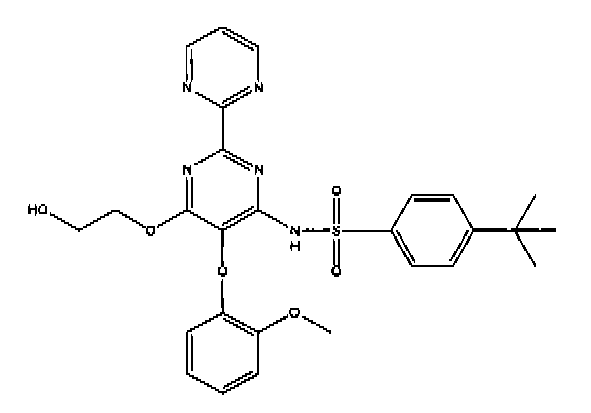
ou un sel ou solvate pharmaceutiquement acceptable de celui-ci et des excipients pharmaceutiquement acceptables, caractérisé en ce que le comprimé est préparé par compression directe,
où le comprimé dispersable est un comprimé qui se désintègre complètement en pas plus de 5 minutes dans l'eau à 15-22 °C.
ou un sel ou solvate pharmaceutiquement acceptable de celui-ci et des excipients pharmaceutiquement acceptables, caractérisé en ce que le comprimé est préparé par compression directe,
où le comprimé dispersable est un comprimé qui se désintègre complètement en pas plus de 5 minutes dans l'eau à 15-22 °C.
REFERENCES CITED IN THE DESCRIPTION
This list of references cited by the applicant is for the reader's convenience only. It does not form part of the European patent document. Even though great care has been taken in compiling the references, errors or omissions cannot be excluded and the EPO disclaims all liability in this regard.
Patent documents cited in the description
Non-patent literature cited in the description
- Handbook of Pharmaceutical ExcipientsAmerican Pharmaceutical Association, Washington, USA and Pharmaceutical Press [0012]
- Lexikon der Hilfsstoffe für Pharmazie, Kosmetik und angrenzende GebieteEdito Cantor [0012]
- L. Lachman et al.The Theory and Practice of Industrial Pharmacy19860000 [0039]
- H. Sucker et al.Pharmazeutische TechnologieThieme19910000 [0039]
- Hagers Handbuch der pharmazeutischen PraxisSpringer Verlag19710000 [0039]
- Remington's Pharmaceutical SciencesMack Publ., Co.19700000 [0039]