| (19) |
 |
|
(11) |
EP 1 888 576 B1 |
| (12) |
EUROPEAN PATENT SPECIFICATION |
| (45) |
Mention of the grant of the patent: |
|
18.02.2009 Bulletin 2009/08 |
| (22) |
Date of filing: 09.05.2006 |
|
| (51) |
International Patent Classification (IPC):
|
| (86) |
International application number: |
|
PCT/US2006/018261 |
| (87) |
International publication number: |
|
WO 2006/122253 (16.11.2006 Gazette 2006/46) |
|
| (54) |
PROCESS FOR MAKING AZTREONAM
HERSTELLUNGSVERFAHREN FÜR AZTREONAM
PROCEDE DE FABRICATION DE L'AZTREONAM
|
| (84) |
Designated Contracting States: |
|
AT BE BG CH CY CZ DE DK EE ES FI FR GB GR HU IE IS IT LI LT LU LV MC NL PL PT RO SE
SI SK TR |
| (30) |
Priority: |
09.05.2005 US 679313 P
17.05.2005 US 681808 P
|
| (43) |
Date of publication of application: |
|
20.02.2008 Bulletin 2008/08 |
| (73) |
Proprietor: Sicor Inc. |
|
Irvine, CA 92618 (US) |
|
| (72) |
Inventor: |
|
- FIMOGNARI, Domenico
I-20100 Milano (IT)
|
| (74) |
Representative: Gallagher, Kirk James et al |
|
D Young & Co
120 Holborn
London EC1N 2DY
London EC1N 2DY (GB) |
| (56) |
References cited: :
EP-A- 0 086 556
WO-A-20/04013133
US-A- 5 254 681
|
EP-A- 0 464 705
US-A- 4 775 670
|
|
| |
|
|
- DATABASE CA [Online] CHEMICAL ABSTRACTS SERVICE, COLUMBUS, OHIO, US; 2002, SINGH,
JANAK ET AL: "Regioselective Activation of Aminothiazole(iminoxyacetic acid)acetic
Acid: An Efficient Synthesis of the Monobactam Aztreonam" XP002400898 retrieved from
STN Database accession no. 2002:768758 & ORGANIC PROCESS RESEARCH & DEVELOPMENT (
2002 ), 6(6), 863-868 CODEN: OPRDFK; ISSN: 1083-6160, 2002,
- DATABASE CA [Online] CHEMICAL ABSTRACTS SERVICE, COLUMBUS, OHIO, US; 1996, NIESCHALK,
JENS ET AL: "Synthesis of thione analogs of monobactams" XP002400899 retrieved from
STN Database accession no. 1996:48264 & LIEBIGS ANNALEN ( 1996 ), (1), 141-5 CODEN:
LANAEM; ISSN: 0947-3440, 1996,
- DATABASE CA [Online] CHEMICAL ABSTRACTS SERVICE, COLUMBUS, OHIO, US; 1986, ZHU, YANLING
ET AL: "Synthesis of aztreonam" XP002400900 retrieved from STN Database accession
no. 1987:101925 & KANGSHENGSU ( 1986 ), 11(4), 362-3 CODEN: KANGDS; ISSN: 0254-6116,
1986,
|
|
| |
|
| Note: Within nine months from the publication of the mention of the grant of the European
patent, any person may give notice to the European Patent Office of opposition to
the European patent
granted. Notice of opposition shall be filed in a written reasoned statement. It shall
not be deemed to
have been filed until the opposition fee has been paid. (Art. 99(1) European Patent
Convention).
|
Field of the Invention
[0001] The present invention is directed to a process for the synthesis of aztreonam. In
particular, the present invention is directed to a "one-pot" process for the synthesis
of aztreonam.
Background
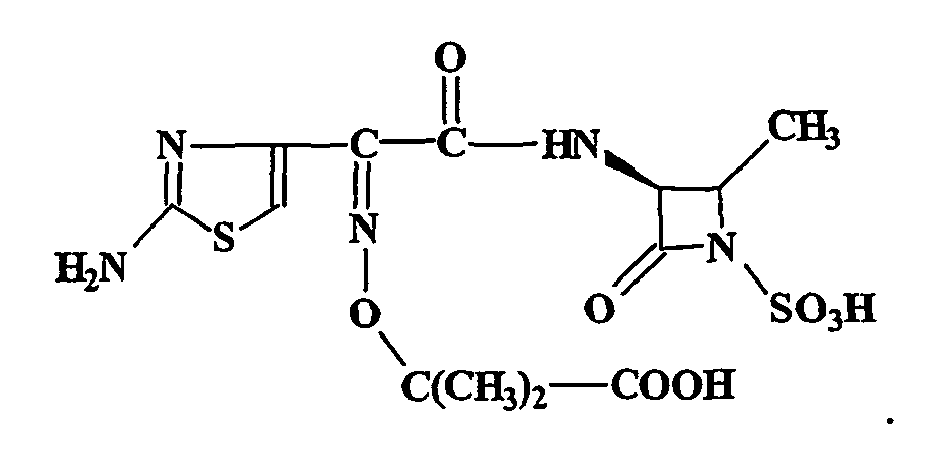
[0002] Aztreonam is a monobactam antibiotic, having the chemical name [3S-[3α(Z),4β]]-3-[[(2-amino-4-thiazolyl)[(1-carboxy-1-methylethoxy)imino]acetyl]amino]-4-methyl-2-oxo-1-azetidinesulfonic
acid, and the following structure:
[0003] U.S. Patent No. 4,775,670 discloses a process for acylating a compound of formula:
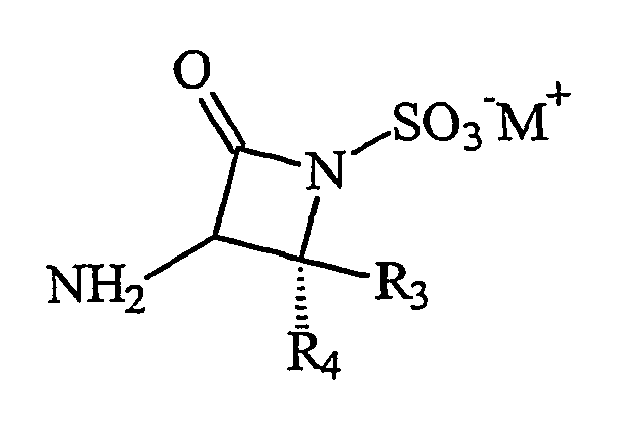
The acylation comprises reacting the compound with a carboxylic acid or the corresponding
carboxylic acid halide or carboxylic acid anhydride (R
1-OH) in the presence of a carbodiimide such as dicyclohexylcarbodiimide and a substance
capable of forming an active ester
in situ, such as N-hydroxybenzotriazole. The deprotection in
U.S. 4,775,670 is carried out by reaction of the acylation product with trifluoroacetic acid in
the presence of anisole under anhydrous conditions. The reagents used in this process
are toxic and expensive.
[0004] U.S. Patent No. 4,946,838 discloses an alternative process for making crystalline anhydrous aztreonam and a
crystalline anhydrous form of the antibacterial agent. The synthetic path described
in this patent is complicated, including, for example, the hydrolysis of a diphenylester
protecting group with trifluoracetic acid in anisole under anhydrous conditions to
produce the α-form of aztreonam. The α-form is recrystallized from an anhydrous organic
solvent to produce the β-form of aztreonam.
[0005] U.S. Patent 5,254,681 discloses a process for preparing aztreonam that comprises acylating azetidine with
2-(2-amino-4-thiazolyl)-2-(Z)-(alkoxyimino)acetic acid in the presence of 1-hydroxy-benzotriazole
and dicyclohexylcarbodiimide. The reagents used in this process are toxic and expensive,
and their disposal is difficult.
[0006] PCT Publication No. WO 2004/013133 discloses a process for preparing aztreonam by hydrolyzing the ester group of [3S-[3α(Z),4β]]-3-[[(2-amino-4-thiazolyl)[(1-t-butoxycarbonyl-1-methylethoxy)imino]acetyl]amino]-4-methyl-2-oxo-1-azetidinesulfonic
acid (t-Bu aztreonam) by reacting the ester with an aqueous acid, at elevated temperatures.
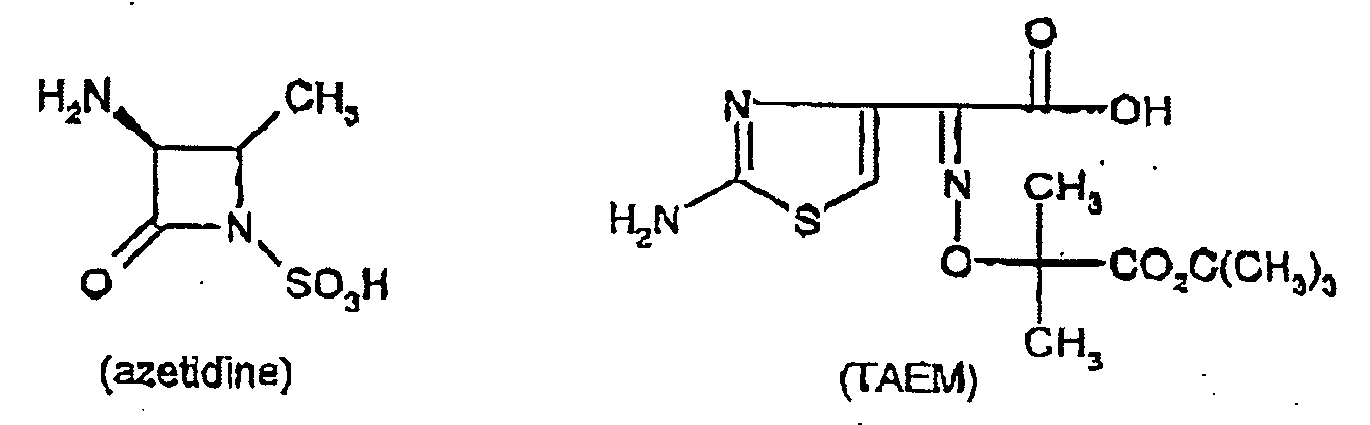
The application also describes the condensation of azetidine and TAEM with acetonitrile
and a base, optionally in the presence of other solvents such as THF, to obtain t-Bu
aztreonam.
[0007] A further simplification of the process would be desirable. The present invention
provides such a simplified process.
Summary
[0008] The present invention provides a one-pot process for preparing aztreonam. The process
comprises combining azetidine and TAEM in the presence of a C
1-C
3 tertiary amine and a solvent selected from the group consisting of acetone, 2-butanone,
and methyl-isobutyl-ketone (MIBK), to obtain a reaction mixture; adding a first mineral
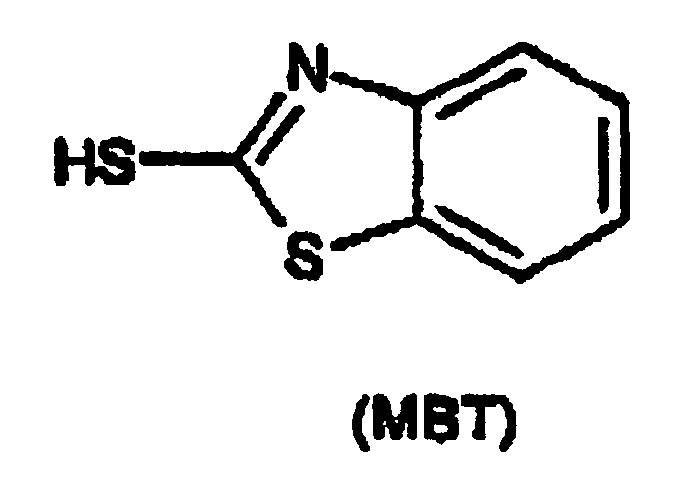
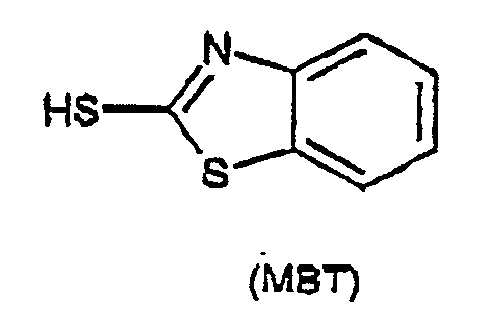
acid to obtain a pH of about 4.5 to about 7.5 to precipitate MBT; isolating the MBT;
adding water and a second mineral acid to obtain a pH of less than about 2; heating;
and cooling to obtain aztreonam, where the first and second mineral acids may be the
same or different.
Detailed Description
[0009] The present invention relates to the preparation of aztreonam in a one-pot process.
The process comprises the condensation of azetidine and TAEM in the presence of a
C
1-C
3 tertiary amine and a solvent to obtain t-Bu aztreonam, which is further hydrolyzed
to obtain aztreonam. Prior to the hydrolysis step, the by-product MBT, obtained during
the condensation of azetidine and TAEM, is isolated from the reaction mixture. The
process simplifies the process disclosed in
PCT Publication No. WO 2004/013133, due to the reduction of the number of solvents used in the condensation step, and
due to the use of a one-pot process. The process is further simplified by substituting
the solvent, acetonitrile, with a solvent of acetone, 2-butanone, or methyl-isobutyl-ketone
(MIBK), that together with a C
1-C
3 tertiary amine, enables dissolving both TAEM and aztreonam, and thus, the need for
and, thus, the need for excess TAEM, as well as the amount of time required for the
reaction to reach completion, is significantly reduced. The removal of the MBT side
product simplifies the process, in that the extraction of t-Bu aztreonam in a mixture
of ethyl acetate and water is not required.
[0010] The one-pot process, which avoids the separation of t-Bu aztreonam, saves time, reduces
waste, and improves plant capacity, as that portion of the product that would be lost
in the isolation of the t-Bu aztreonam is avoided, and the t-Bu aztreonam is subjected
to the next step of the process.
[0011] As used herein, the term "t-Bu aztreonam" refers to the compound [3S-[3α(Z),4β]]-3-[[(2-amino-4-thiazolyl)[(1-t-butoxycarbonyl-1-methylethoxy)imino]acetyl]amino]-4-methyl-2-oxo-1-azetidinesulfonic
acid.
[0012] As used herein, the term "azetidine" refers to a compound having the chemical formula:
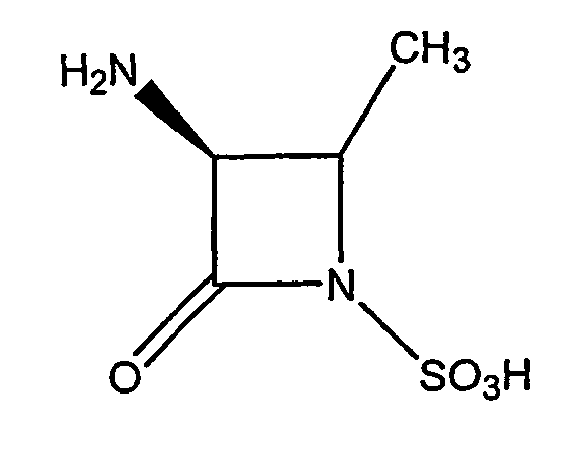
[0013] As used herein, the term "MBT", refers to a by-product, having the chemical formula:
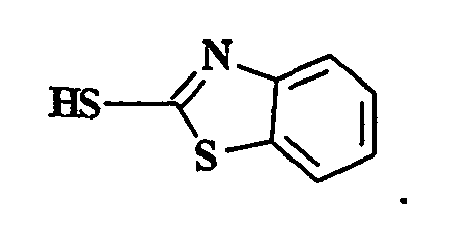
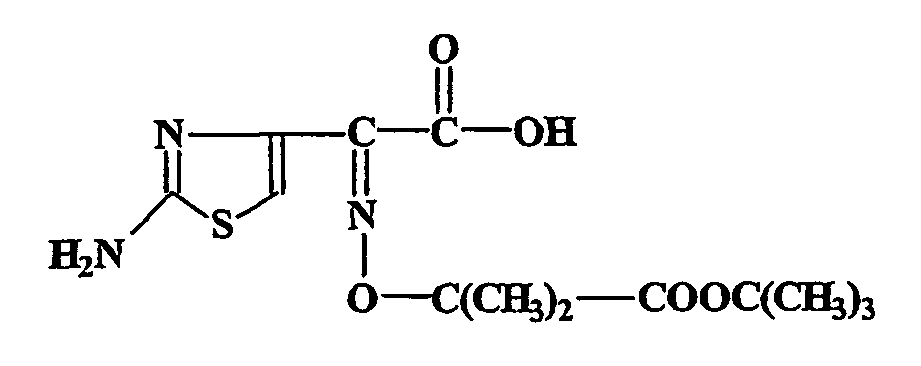
[0014] As used herein, the term "TAEM", refers to a compound having the chemical formula:
[0015] As used herein, the term "C
1-C
3 tertiary amine" refers to a molecule that contains an atom of nitrogen which is connected
to 3 chains, wherein each chain may independently be of C
1-C
3 alkyl.
[0016] The present invention provides a one-pot process for preparing aztreonam. The process
comprises combining azetidine and TAEM in the presence of a C
1-C
3 tertiary amine and a solvent selected from the group consisting of acetone, 2-butanone,
and methyl-isobutyl-ketone (MIBK), to obtain a reaction mixture; adding a first mineral
acid to obtain a pH of about 4.5 to about 7.5 to precipitate MBT; isolating the MBT;
adding water and a second mineral acid to obtain a pH of less than about 2; heating
and cooling to obtain aztreonam.
[0017] Preferably, the solvent is acetone. Preferably, the C
1-C
3 tertiary amine is triethylamine. Preferably, the process first comprises mixing the
C
1-C
3 tertiary amine with the solvent at a temperature of about -5°C to about 30°C, more
preferably, at a temperature of about 10°C to about 15°C. Preferably, the azetidine
is added to the mixture of the C
1-C
3 tertiary amine and the solvent, followed by addition of TAEM. Preferably, the TAEM
is added stepwise. Preferably, the azetidine and TAEM are added to the mixture of
the C
1-C
3 tertiary amine and the solvent, while stirring. Preferably, the stirring is for about
30 minutes. Preferably, the reaction mixture containing: a C
1-C
3 tertiary amine, a solvent, azetidine, and TAEM is maintained for about 4 hours. Preferably,
prior to the addition of the first mineral acid, water is added to the reaction mixture.
Preferably, after the addition of the water the solvent is removed from the reaction
mixture. Preferably, the removal of the solvent is by distillation. Preferably, the
distillation is with the water. Preferably, the pH of the reaction mixture, prior
to the isolation of MBT, is about 5 to about 6, more preferably, of about 5.5. Preferably,
the first and second mineral acids are selected from the group consisting of HCI,
H
2SO
4 and H
3PO
4. More preferably, at least one of the first and second mineral acids is HCI. Preferably,
prior to the isolation of MBT, the acidified reaction mixture is further cooled to
a temperature of below about 5°C. Preferably, the isolation of MBT is by filtration.
Preferably, the pH after the addition of water and a mineral acid is about 1 to about
2, more preferably, the pH is about 1.5. Preferably, the heating is to a temperature
of about 50°C to about 70°C to obtain a reaction mixture. More preferably, the heating
is to a temperature of about 60°C. Preferably, after heating, the process further
comprises maintaining for about 4 to about 5 hours, more preferably, for about 5.
Preferably, the cooling is to a temperature of about 5°C to about 0°C to obtain a
precipitate. Preferably, the cooling is for about 4 to about 8 hours, more preferably,
for about 5 hours.
[0018] Preferably, the process further comprises recovering the aztreonam. Preferably, the
recovering comprises filtering, washing with water, slurrying with an anhydrous polar
organic solvent, and filtering. After the recovery, a wet aztreonam is obtained. Preferably,
the anhydrous polar organic solvent is absolute ethanol or isopropanol methanol.
[0019] Preferably, the aztreonam is further crystallized. Washing the aztreonam before crystallization
avoids a problematic drying process. The use of an anhydrous polar organic solvent
for washing avoids damage to the product during drying, and eliminates any trace of
a solvent in the purification process, thus, reducing problems in cleaning the reactor.
The crystallization process comprises combining the wet aztreonam with an organic
ammonium salt, and adding ethanol, methanol, or isopropanol to obtain a solution.
The solution is further acidified with a mineral acid to obtain a pH of about 1 to
about 3, cooled to a temperature of about 10°C to about -10°C, filtered, and dried.
Preferably, the ammonium salt is ammonium acetate. Preferably, prior to the addition
of ethanol, methanol, or isopropanol, the reaction mixture is cooled to a temperature
of about 5°C to about 0°C. Preferably, the cooled solution is stirred for about 3
hours. Preferably, after adding the second mineral acid and prior to the cooling,
the reaction mixture is seeded. Preferably, the seeded reaction mixture is maintained
for about 6 hours at a temperature of about 0°C to about 5°C. Preferably, the acidified
reaction mixture is cooled to about 5°C to about 0°C.
Examples
[0020] Having described the invention with reference to certain preferred embodiments, other
embodiments will become apparent to one skilled in the art from consideration of the
specification. The invention is further defined by reference to the following examples
describing in detail the preparation of the composition and methods of use of the
invention.
Example 1
[0021] A 50 ml sample of triethylamine is added to a 0.5 1, three necked glass reactor,
equipped with condenser and mechanical stirrer with 100 ml of acetone, and cooled
to about 10° to about 15°C. Under mixing, 50 g of azetidine is added to the reaction
mixture, followed by 43g of TAEM. Stirring is continued for at least about 30 minutes,
until the initially formed color disappears. Two additional 43 g portions of TAEM
are then added in the same manner. After the reaction ends, typically after about
four hours, water is added to quench the reaction, and the acetone is removed by distillation
with the water. The reaction mass is acidified with HCI to a pH of about 5.5, and
cooled. Mercaptobenzothiazole (MBT) precipitates, and is separated by filtration.
[0022] The pH of the reaction mass containing tertbutylaztreonam is adjusted to about 1.5
with HCl, and diluted with about 400 ml of water. The reaction mass is heated to about
60°C and maintained at that temperature for about 5 hours. After verifying chromatographically
that the deprotection reaction has ended, the reaction mass is cooled slowly over
a period of about 5 hours to about 0° to about 5°C. Aztreonam precipitates, and is
filtered and washed several times with water. The filter cake is recharged, slurried
with 240 ml of absolute ethanol, filtered again, and discharged. About 140g of wet
aztreonam crude is obtained.
EXAMPLE 2
[0023] A 140 g sample of wet aztreonam with 70 g of ammonium acetate is added to a 2 1,
three necked glass reactor, equipped with condenser and mechanical stirrer, and is
cooled to about 0° to about 5°C. After the addition of 1.21 of ethanol, the resulting
clear solution is mixed for 3 hours at the same temperature. About 15 ml of a 33 percent
solution of HCI is added slowly, until a pH of from about 1 to about 3 is reached,
and the reaction mass is seeded and maintained for another 6 hours at a temperature
of about 0° to about 5°C. The aztreonam is then filtered and dried, providing 60 g
of dry aztreonam, an overall yield of about 50 percent.
1. A one-pot process for preparing aztreonam, comprising combining azetidine and TAEM:
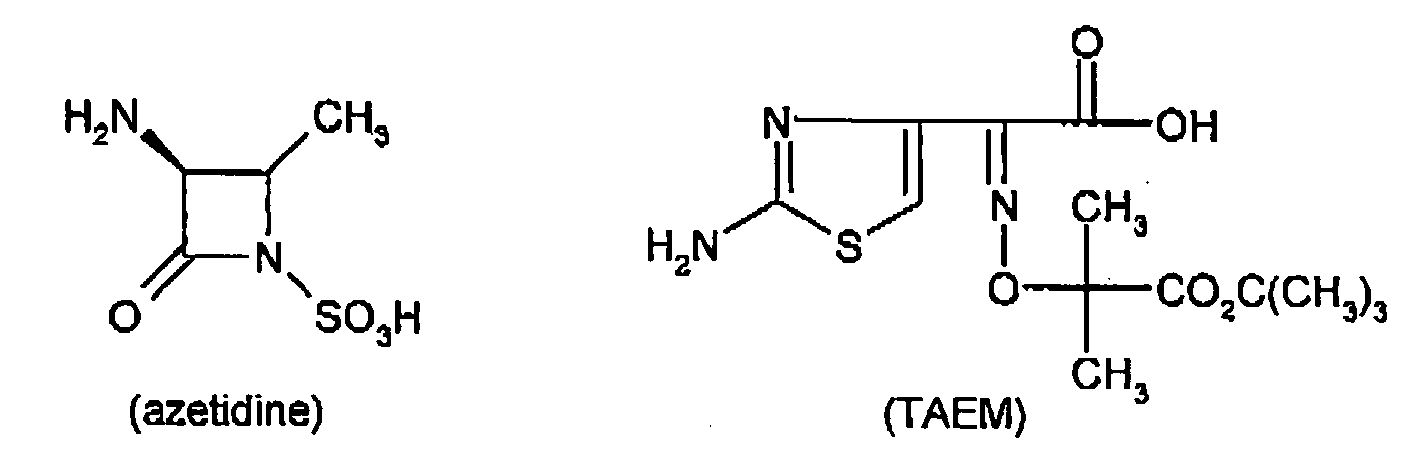
in the presence of a C
1-C
3 tertiary amine and a solvent selected from the group consisting of acetone, 2-butanone,
and methyl-isobutyl-ketone (MIBK), to obtain a reaction mixture; adding a first mineral
acid to obtain a pH of about 4.5 to about 7.5 to precipitate MBT:
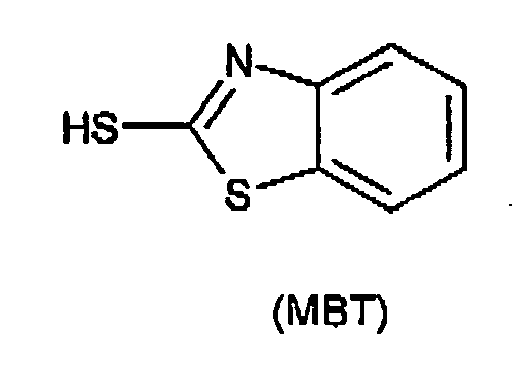
isolating the MBT; adding water and a second mineral acid, to obtain a pH of less
than about 2; heating; and cooling to obtain aztreonam; wherein the first and second
mineral acids may be the same or different.
2. The process of claim 1, wherein the solvent is acetone.
3. The process of either of claims 1 and 2, wherein the C1-C3 tertiary amine is triethylamine.
4. The process of any of claims 1 to 3, wherein the C1-C3 tertiary amine and the solvent are first mixed at a temperature of -5°C to 30°C.
5. The process of claim 4, wherein the C1-C3 tertiary amine and the solvent are first mixed at a temperature of 10°C to 15°C.
6. The process of either of claims 4 and 5, wherein the azetidine is added to the mixture
of the C1-C3 tertiary amine and the solvent.
7. The process of any of claims 1 to 6, wherein the TAEM is added after the addition
azetidine.
8. The process of any of claims 1 to 7, wherein the TAEM is added stepwise.
9. The process of any of claims 1 to 8, wherein the azetidine and TAEM are added to the
mixture of the C1-C3 tertiary amine and the solvent, while stirring.
10. The process of any of claims 1 to 9, wherein prior to the addition of the first mineral
acid, water is added to the reaction mixture.
11. The process of any of claims 1 to 10, wherein after the addition of the water the
solvent is removed from the reaction mixture.
12. The process of claim 11, wherein the removal of the solvent is by distillation.
13. The process of any of claims 1 to 12, wherein the pH prior to the isolation of MBT
is 5 to 6.
14. The process of any of claims 1 to 13, wherein the first and second mineral acids are
independently selected from the group consisting of HCI, H2SO4, and H3PO4.
15. The process of claim 14, wherein at least one of the first and second mineral acids
is HCl.
16. The process of any of claims 1 to 15, wherein, prior to the isolation of MBT, the
acidified reaction mixture is further cooled to a temperature of below 5°C.
17. The process of any of claims 1 to 16, wherein the isolation of MBT is by filtration.
18. The process of any of claims 1 to 17, wherein the pH, after the addition of the water
and the second mineral acid is added, is 1 to 2.
19. The process of claim 18, wherein the pH, after the addition of water and a mineral
acid, is about 1.5.
20. The process of any of claims 1 to 19, wherein the heating is to a temperature of 50°C
to 70°C.
21. The process of claim 20, wherein the heating is to a temperature of about 60°C.
22. The process of any of claims 1 to 21, wherein, after heating, the process further
comprises maintaining for 4 to 5 hours.
23. The process of any of claims 1 to 22, wherein, after heating, the process further
comprises maintaining for about 5 hours.
24. The process of any of claims 1 to 23, wherein the cooling is to a temperature of 5°C
to 0°C to obtain a precipitate.
25. The process of claim 24, wherein the cooling is for 4 to 8 hours.
26. The process of any of claims 1 to 25, wherein the process further comprises recovering
the aztreonam.
27. The process of claim 26, wherein the recovering comprises filtering, washing with
water, slurrying with an anhydrous polar organic solvent, and filtering.
28. The process of claim 27, wherein the anhydrous polar organic solvent is absolute ethanol
or isopropanol methanol.
29. The process of any of claims 1 to 26, wherein the process further comprises crystallizing
the aztreonam by combining the aztreonam with an organic ammonium salt, adding ethanol,
methanol, or isopropanol to obtain a solution, acidifying the solution with a mineral
acid to obtain a pH of 1 to 3, cooling to a temperature of 10°C to -10°C, filtering
and drying.
30. The process of claim 29, wherein the ammonium salt is ammonium acetate.
31. The process of either of claims 29 and 30, wherein, prior to the ethanol, methanol,
or isopropanol, addition the reaction mixture is cooled to a temperature of 5°C to
0°C.
32. The process of claim 31, wherein the cooled solution is stirred.
33. The process of any of claims 29 to 32, wherein, after adding the second mineral acid
and prior to the cooling, the reaction mixture is seeded.
34. The process of claim 33, wherein the seeded reaction mixture is maintained for about
6 hours at a temperature of 0°C to 5°C.
35. The process of any of claims 29 to 34, wherein the acidified reaction mixture is cooled
to 5°C to 0°C.
1. Ein-Topf-Verfahren zur Herstellung von Aztreonam, welches das Vereinigen von Azetidin
und TAEM
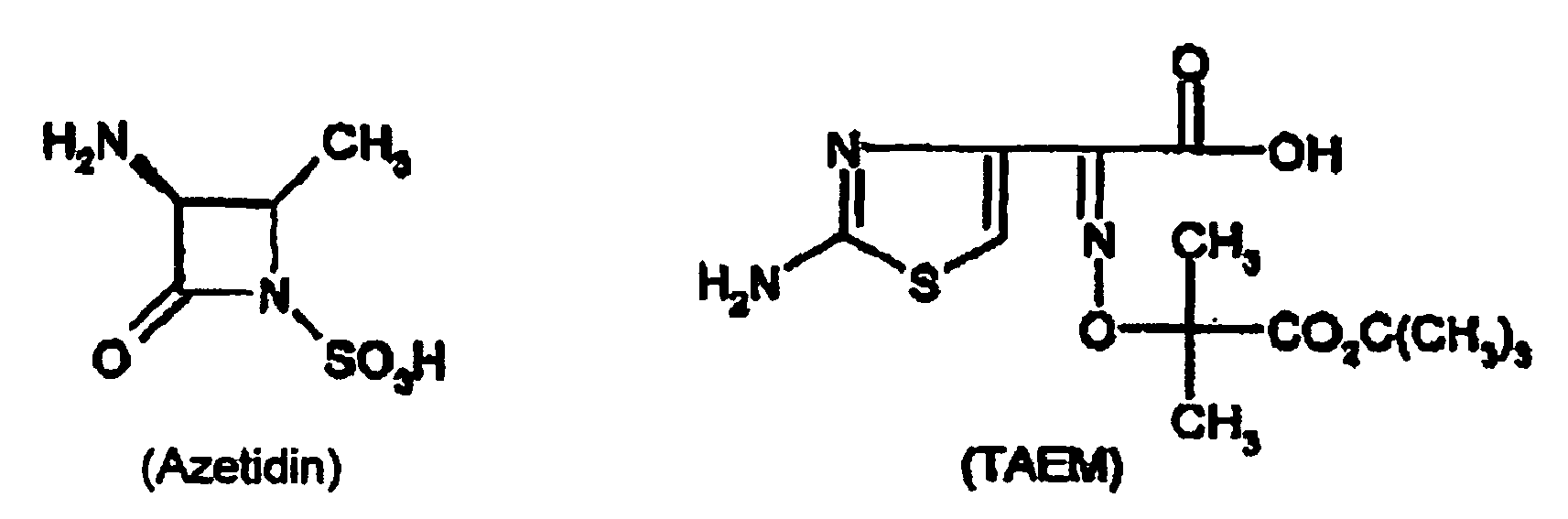
in der Gegenwart eines tertiären C
1-C
3-Amins und eines Lösungsmittels, ausgewählt aus der Gruppe, bestehend aus Aceton,
2-Butanon und Methyllsobutylketon (MIBK), unter Erhalt eines Reaktionsgemischs, das
Zugeben einer ersten Mineralsäure, um einen pH-Wert von etwa 4,5 bis etwa 7,5 zu erhalten,
um MBT:
zu präzipitieren, das Isolieren des MBT, das Zugeben von Wasser und einer zweiten
Mineralsäure, um einen pH-Wert von kleiner als etwa 2 zu erhalten, das Erhitzen und
das Kühlen unter Erhalt von Aztreonam umfaßt, wobei die ersten und zweiten Mineralsäuren
die gleichen oder verschieden sein können.
2. Verfahren nach Anspruch 1, wobei das Lösungsmittel Aceton ist.
3. Verfahren nach einem der Ansprüche 1 und 2, wobei das tertiäre C1-C3-Amin Triethylamin ist.
4. Verfahren nach einem der Ansprüche 1 bis 3, wobei das tertiäre C1-C3-Amin und das Lösungsmittel zuerst bei einer Temperatur von -5°C bis 30°C gemischt
werden.
5. Verfahren nach Anspruch 4, wobei das tertiäre C1-C3-Amin und das Lösungsmittel zuerst bei einer Temperatur von 10°C bis 15°C gemischt
werden.
6. Verfahren nach einem der Ansprüche 4 und 5, wobei das Azetidin zu dem Gemisch von
dem tertiären C1-C3-Amin und dem Lösungsmittel zugegeben wird.
7. Verfahren nach einem der Ansprüche 1 bis 6, wobei das TAEM nach der Zugabe von Azetidin
zugegeben wird.
8. Verfahren nach einem der Ansprüche 1 bis 7, wobei das TAEM stufenweise zugegeben wird.
9. Verfahren nach einem der Ansprüche 1 bis 8, wobei das Azetidin und das TAEM unter
Rühren zu dem Gemisch von dem tertiären C1-C3-Amin und dem Lösungsmittel zugegeben werden.
10. Verfahren nach einem der Ansprüche 1 bis 9, wobei vor der Zugabe der ersten Mineralsäure
Wasser zu dem Reaktionsgemisch zugegeben wird.
11. Verfahren nach einem der Ansprüche 1 bis 10, wobei nach der Zugabe des Wassers das
Lösungsmittel aus dem Reaktionsgemisch entfernt wird.
12. Verfahren nach Anspruch 11, wobei das Entfernen des Lösungsmittels mittels Destillation
erfolgt.
13. Verfahren nach einem der Ansprüche 1 bis 12, wobei der pH-Wert vor dem Isolieren von
MBT 5 bis 6 beträgt.
14. Verfahren nach einem der Ansprüche 1 bis 13, wobei die ersten und zweiten Mineralsäuren
unabhängig voneinander aus der Gruppe ausgewählt sind, bestehend aus HCI, H2SO4 und H3PO4.
15. Verfahren nach Anspruch 14, wobei wenigstens eine unter der ersten und der zweiten
Mineralsäure HCI ist.
16. Verfahren nach einem der Ansprüche 1 bis 15, wobei vor dem Isolieren von MBT das angesäuerte
Reaktionsgemisch weiter auf eine Temperatur unterhalb von 5°C gekühlt wird.
17. Verfahren nach einem der Ansprüche 1 bis 16, wobei das Isolieren von MBT mittels Filtration
erfolgt.
18. Verfahren nach einem der Ansprüche 1 bis 17, wobei der pH-Wert nach der Zugabe des
Wassers und nachdem die zweite Mineralsäure zugegeben worden ist, 1 bis 2 beträgt.
19. Verfahren nach Anspruch 18, wobei der pH-Wert nach der Zugabe von Wasser und einer
Mineralsäure etwa 1,5 beträgt.
20. Verfahren nach einem der Ansprüche 1 bis 19, wobei das Erhitzen auf eine Temperatur
von 50°C bis 70°C erfolgt.
21. Verfahren nach Anspruch 20, wobei das Erhitzen auf eine Temperatur von etwa 60°C erfolgt.
22. Verfahren nach einem der Ansprüche 1 bis 21, wobei nach dem Erhitzen das Verfahren
weiterhin das Halten für 4 bis 5 Stunden umfaßt.
23. Verfahren nach einem der Ansprüche 1 bis 22, wobei nach dem Erhitzen das Verfahren
weiterhin das Halten für etwa 5 Stunden umfaßt.
24. Verfahren nach einem der Ansprüche 1 bis 23, wobei das Kühlen auf eine Temperatur
von 5°C bis 0°C erfolgt, um ein Präzipitat zu erhalten.
25. Verfahren nach Anspruch 24, wobei das Kühlen für 4 bis 8 Stunden erfolgt.
26. Verfahren nach einem der Ansprüche 1 bis 25, wobei das Verfahren weiterhin das Gewinnen
des Aztreonams umfaßt.
27. Verfahren nach Anspruch 26, wobei das Gewinnen Filtrieren, Waschen mit Wasser, Aufschlämmen
mit einem wasserfreien polaren organischen Lösungsmittel und Filtrieren umfaßt.
28. Verfahren nach Anspruch 27, wobei das wasserfreie polare organische Lösungsmittel
absoluter Ethanol oder Isopropanol-Methanol ist.
29. Verfahren nach einem der Ansprüche 1 bis 26, wobei das Verfahren weiterhin das Kristallisieren
des Aztreonams durch Vereinigen des Aztreonams mit einem organischen Ammoniumsalz,
das Zugeben von Ethanol, Methanol oder Isopropanol unter Erhalt einer Lösung, das
Ansäuern der Lösung mit einer Mineralsäure unter Erhält eines pH-Werts von 1 bis 3,
das Kühlen auf eine Temperatur von 10°C bis -10°C, Filtrieren und Trocknen umfaßt.
30. Verfahren nach Anspruch 29, wobei das Ammoniumsalz Ammoniumacetat ist.
31. Verfahren nach einem der Ansprüche 29 und 30, wobei vor der Zugabe von Ethanol, Methanol
oder Isopropanol das Reaktionsgemisch auf eine Temperatur von 5°C bis 0°C gekühlt
wird.
32. Verfahren nach Anspruch 31, wobei die gekühlt Lösung gerührt wird.
33. Verfahren nach einem der Ansprüche 29 bis 32, wobei nach der Zugabe der zweiten MIneralsäure
und vor dem Kühlen das Reaktionsgemisch beimpft wird.
34. Verfahren nach Anspruch 33, wobei das beimpfte Reaktionsgemisch für etwa 6 Stunden
bei einer Temperatur von 0°C bis 5°C gehalten wird.
35. Verfahren nach einem der Ansprüche 29 bis 34, wobei das angesäuerte Reaktionsgemisch
auf 5°C bis 0°C gekühlt wird.
1. Un procédé de préparation de l'aztréonam en une seule étape, comprenant
- la combinaison de l'azétidine et du TAEM
en présence d'une amine en (C1-C3) tertiaire et d'un solvant choisi dans le groupe formé par l'acétone, le 2-butanone,
et la méthyl-isobutyl-cétone (MIBK), pour obtenir un mélange réactionnel;
- l'addition d'un premier acide minéral pour obtenir un pH d'environ 4.5 à environ
7,5 en vue de précipiter le MBT,
- l'isolement du MBT;
- l'addition d'eau et d'un second acide minéral pour obtenir un pH inférieur à environ
2;
- le chauffage du mélange ainsi obtenu;
- et le refroidissement pour obtenir l'aztréonam;
procédé dans lequel les premier et second acides minéraux peuvent être identiques
ou différents.
2. Le procédé selon la revendication 1, dans lequel le solvant est l'acétone.
3. Le procédé selon une quelconque des revendications 1 et 2, dans lequel l'amine en
(C1-C3) tertiaire est la triéthylamine.
4. Le procédé selon une quelconque des revendications 1 à 3, dans lequel l'amine en (C1-C3) tertiaire et le solvant sont tout d'abord mélangés à une température de -5°C à 30°C.
5. Le procédé selon la revendication 4, dans lequel l'amine en (C1-C3) tertiaire et le solvant sont tout d'abord mélangés à une température de 10°C à 15°C.
6. Le procédé selon une quelconque des revendications 4 et 5, dans lequel l'azétidine
est ajouté au mélange de l' amine en (C1-C3) tertiaire et du solvant.
7. Le procédé selon une quelconque des revendications 1 à 6, dans lequel la TAEM est
ajoutée après l'addition d'azétidine.
8. Le procédé selon une quelconque des revendications 1 à 7, dans lequel le TAEM est
ajouté petit à petit.
9. Le procédé selon une quelconque des revendications 1 à 8, dans lequel l'azetidine
et la TAEM sont ajoutés, sous agitation, au mélange de l' amine en (C1-C3) tertiaire et du solvant.
10. Le procédé selon une quelconque des revendications 1 à 9, dans lequel, préalablement
à l'addition du premier acide minéral, de l'eau est ajoutée au mélange réactionnel.
11. Le procédé selon une quelconque des revendications 1 à 10, dans lequel, après l'addition
d'eau, le solvant est éliminé du mélange réactionnel.
12. Le procédé selon la revendication 11, dans lequel l'élimination du solvant est effectuée
par distillation.
13. Le procédé selon une quelconque des revendications 1 à 12, dans lequel, préalablement
à l'isolement de MBT, le pH est compris entre 5 et 6.
14. Le procédé selon une quelconque des revendications 1 à 13, dans lequel le premier
et le second acide minéral, indépendamment l'un de l'autre, sont choisis dans le groupe
comprenant HCl, H2SO4 et H3PO4,
15. Le procédé selon la revendication 14, dans lequel au moins l'un des premier et second
acide minéral consiste en HCl.
16. Le procédé selon une quelconque des revendications 1 à 15, dans lequel, préalablement
à l'isolement de MBT, le mélange réactionnel acidifié est en outre refroidi à une
température inférieure à 5°C.
17. Le procédé selon une quelconque des revendications 1 à 16, dans lequel l'isolement
de MBT est réalisé par filtration.
18. Le procédé selon une quelconque des revendications 1 à 17, dans lequel, après addition
de l'eau et du second acide minéral, le pH est compris entre 1 et 2.
19. Le procédé selon une quelconque des revendications 18, dans lequel après addition
de l'eau et d'un acide minéral, le pH est d'environ 1.5.
20. Le procédé selon une quelconque des revendications 1 à 19, dans lequel le chauffage
est effectué à une température comprise entre 50°C et 70°C.
21. Le procédé selon la revendication 2, dans lequel le chauffage est effectué à une température
d'environ 60°C.
22. Le procédé selon une quelconque des revendications 1 à 21, dans lequel, après chauffage,
le procédé comprend en outre la le maintien au repos du mélange pendant 4 à 5 heures.
23. Le procédé selon une quelconque des revendications 1 à 22, dans lequel, après chauffage,
le procédé comprend en outre le maintien au repos du mélange pendant 5 heures.
24. Le procédé selon une quelconque des revendications 1 à 23, dans lequel le refroidissement
est effectué à une température comprise entre 5°C et 0°C pour que se forme un précipité.
25. Le procédé selon la revendication 24, dans lequel le refroidissement est effectué
pendant 4 à 8 heures.
26. Le procédé selon une quelconque des revendications 1 à 25, dans lequel le procédé
comprend en outre la récupération de l'aztréonam.
27. Le procédé selon la revendication 26, dans lequel le dite récupération comprend la
filtration, le lavage à l'eau, la mise en suspension avec un solvant organique polaire
anhydre et la filtration.
28. Le procédé selon la revendication 27, dans lequel le solvant organique polaire anhydre
est de l'éthanol absolu ou de l'isopropanol méthanol.
29. Le procédé selon une quelconque des revendications 1 à 26, dans lequel le procédé
comprend en outre la cristallisation de l'aztréonam par combinaison de l'aztréonam
avec un sel d'ammonium organique, l'addition d'éthanol, de méthanol, ou d'isopropanol
pour obtenir une solution, l'acidification de la solution avec un acide minéral pour
obtenir un pH de 1 à 3, le refroidissement à une température de 10°C à - 10°C, la
filtration et le séchage.
30. Le procédé selon la revendication29, dans lequel le sel d'ammonium est l'acétate d'ammonium.
31. Le procédé selon une quelconque des revendications 29 et 30, dans lequel préalablement
à l'addition d'éthanol, de méthanol ou d'isopropanol, le mélange réactionnel est refroidi
à une température de 5°C à 0°C.
32. Le procédé selon la revendication 31, dans lequel la solution refroidie est agitée.
33. Le procédé selon une quelconque des revendications 29 à 33, dans lequel après addition
du second acide minéral et avant le refroidissement, le mélange réactionnel est ensemencé.
34. Le procédé selon la revendication 33, dans lequel le mélange réactionnel ensemencé
est maintenu pendant environ 6 heures à une température comprise entre 0°C et 5°C.
35. Le procédé selon une quelconque des revendications 29 to 34, dans lequel le mélange
réactionnel acidifié est refroidi à une température comprise entre 55°C et 0°C.
REFERENCES CITED IN THE DESCRIPTION
This list of references cited by the applicant is for the reader's convenience only.
It does not form part of the European patent document. Even though great care has
been taken in compiling the references, errors or omissions cannot be excluded and
the EPO disclaims all liability in this regard.
Patent documents cited in the description