(57) An enhanced fingerprint sensing circuit in which a voltage change is applied to the
body during sensiaag, When the person's fingerprint is being sensed, the person's
body is in contact with an electrical terminal. When the sensing occurs, the voltage
on the electrical terminal changes, which changes the voltage on the person's body.
The pattern of the fingerprint performs two functions in the sensing circuit. In addition
to being a plate of a capacitor whose distance is being sensed, it is now a source
of input charge as well. The electrical effect on the cell of a voltage change on
a person's finger is different at a ridge than at a valley in the fingerprint sensing
circuit. Thus, the input capacitance to the sensing circuit is variable, depending
upon whether a ridge or a valley is present. The sensing circuit also detects a change
in its own capacitance based on the presence of a ridge or a valley. In summary, the
person's body acts as the input capacitor to provide a variable charge transfer for
the input capacitance and at the same time performs the function of being a variable
sensing capacitor value for the capacitive sensor. The fingerprint sensor is thus
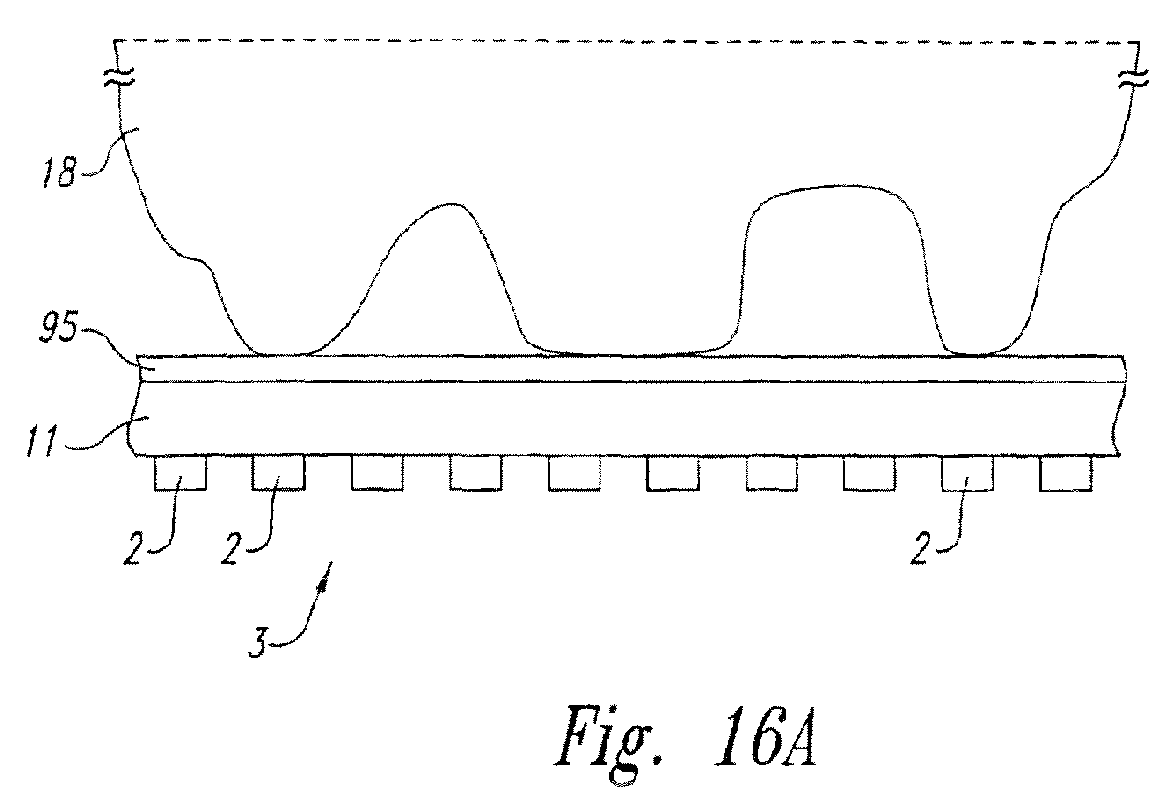
very sensitive and can detect a person's fingerprint even if a protective layer, such
as plastic, wax paper or the like is over the sensor. In addition, if the person is
wearing a thin glove, such as a latex glove, the fingerprint patterns can still be
sensed.
|
|
