| (19) |
 |
|
(11) |
EP 2 007 647 B1 |
| (12) |
EUROPEAN PATENT SPECIFICATION |
| (45) |
Mention of the grant of the patent: |
|
27.07.2011 Bulletin 2011/30 |
| (22) |
Date of filing: 10.04.2007 |
|
| (51) |
International Patent Classification (IPC):
|
| (86) |
International application number: |
|
PCT/EP2007/053477 |
| (87) |
International publication number: |
|
WO 2007/116067 (18.10.2007 Gazette 2007/42) |
|
| (54) |
SYSTEM FOR DELIVERING SEQUENTIAL COMPONENTS
SYSTEM ZUR ZUFUHR SEQUENTIELLER KOMPONENTEN
SYSTÈME POUR DISTRIBUER DES COMPOSANTS SÉQUENTIELS
|
| (84) |
Designated Contracting States: |
|
AT BE BG CH CY CZ DE DK EE ES FI FR GB GR HU IE IS IT LI LT LU LV MC MT NL PL PT RO
SE SI SK TR |
| (30) |
Priority: |
10.04.2006 US 790482 P
16.03.2007 US 724516
|
| (43) |
Date of publication of application: |
|
31.12.2008 Bulletin 2009/01 |
| (73) |
Proprietor: Poppack LLC |
|
San Francisco, CA 94127-2614 (US) |
|
| (72) |
Inventor: |
|
- PERELL, William S.
San Francisco, California 94127-2845 (US)
|
| (74) |
Representative: Grey, Ian Michael et al |
|
Venner Shipley LLP
20 Little Britain
London EC1A 7DH
London EC1A 7DH (GB) |
| (56) |
References cited: :
WO-A-2005/022323
US-A- 5 325 968
|
DE-U1- 20 314 741
US-B2- 6 726 364
|
|
| |
|
|
|
|
| |
|
| Note: Within nine months from the publication of the mention of the grant of the European
patent, any person may give notice to the European Patent Office of opposition to
the European patent
granted. Notice of opposition shall be filed in a written reasoned statement. It shall
not be deemed to
have been filed until the opposition fee has been paid. (Art. 99(1) European Patent
Convention).
|
[0001] This invention relates to delivering sequential components, and more particularly
delivering the components in an easy to open storage unit. Such an easy to open storage
unit is known from
US 6726364 B2.
[0002] US 5 325 968 discloses a series of interconnected storage units.
[0003] Traditionally, patients and other pill-takers along with their caretakers execute
a weekly pill-fill ritual. They gather their stock jars and bottles other repositories
of their medication stock, and load a seven- day receptacle. Each bin of the receptacle
holds all the medications for the day, or for a particular time period. The pill-fill
requires the pill takers or caretaker to know where the pill supplies are stored,
and which medications are to be taken, and at what time. For many pill-takers, the
print on the medication bottle is too small for them to read. The caps and closure
devices can be difficult to remove. Transferring the small pills to the proper small
bin container can be a trial.
[0004] It is therefore an object of this invention to provide a series of sequential storage
units for presenting small components such as parts or medication in an easy to open
storage unit. A breachable bubble on the storage unit is compressed causing a edge
breach with peel flaps that can be pulled back to open the storage unit. Self-assembly
products may require a dozen assembly steps involving hundreds of small parts of many
sizes such as bolts, nuts, washers, screws, brackets, and small tools. Each step entails
a specified group of parts. The assembler must locate and use each part in a specified
sequence for orderly assembly of the product.
[0005] It is another object of this invention to provide such a series of sequential storage
units which are loaded with medication by qualified people under controlled conditions.
The storage units may be automatically loaded at major hospitals and mail-order pharmaceutical
warehouses. Orders are filled by trained clerks and skilled technicians using reliable
computers and extensive data bases.
[0006] It is a further object of this invention to provide such a series of sequential storage
units for sequentially presenting medications for sequential delivery. As each storage
unit is presented and the medications disbursed, it is intuitively clear which of
the remaining storage unit is next.
[0007] Briefly, these and other objects of the present invention are accomplished by providing
a system for delivering specified components of a specified quantity in a specified
sequence. A base lamina and a flexible cover lamina are pressed into opposed selective
engagement defining a series of sequential storage units, wherein a sequential storage
unit and an adjacent sequential storage unit define a boundary therebetween. A perimeter
seal formed around each storage unit has a frangible seal portion and a destruct seal
portion, wherein the boundary between the sequential storage unit and the adjacent
sequential storage unit includes a destruct seal and a frangible seal. A sealed medication
chamber within each storage unit proximate the destruct seal stores a dosage of the
medication. A chamber access region within each storage unit is proximate the frangible
seal portion for accessing the medication chamber. A chamber seal formed by the selective
engagement of the opposed laminae, extends across each storage unit between the medication
chamber and the chamber access region. A breachable bubble is formed within each chamber
access region by the opposed laminae during the selective engagement. The bubble is
between the frangible seal portion and the chamber seal. The bubble expands under
applied pressure towards the frangible seal portion of the storage unit. The expansion
separates the opposed laminae forming the bubble, until the bubble produces a perimeter
breach in the frangible seal portion. A flexible peel flap is formed by the flexible
cover lamina along the breached frangible seal portion as the bubble breaches. The
flap may be peeled away from the base lamina detaching the chamber seal to open the
medication chamber providing delivery of the medication stored therein.
BRIEF DESCRIPTION OF THE DRAWINGS
[0008] Further objects and advantages of the sequence of storage units and the operation
of the breachable bubble will become apparent from the following detailed description
and drawings (not drawn to scale) in which:
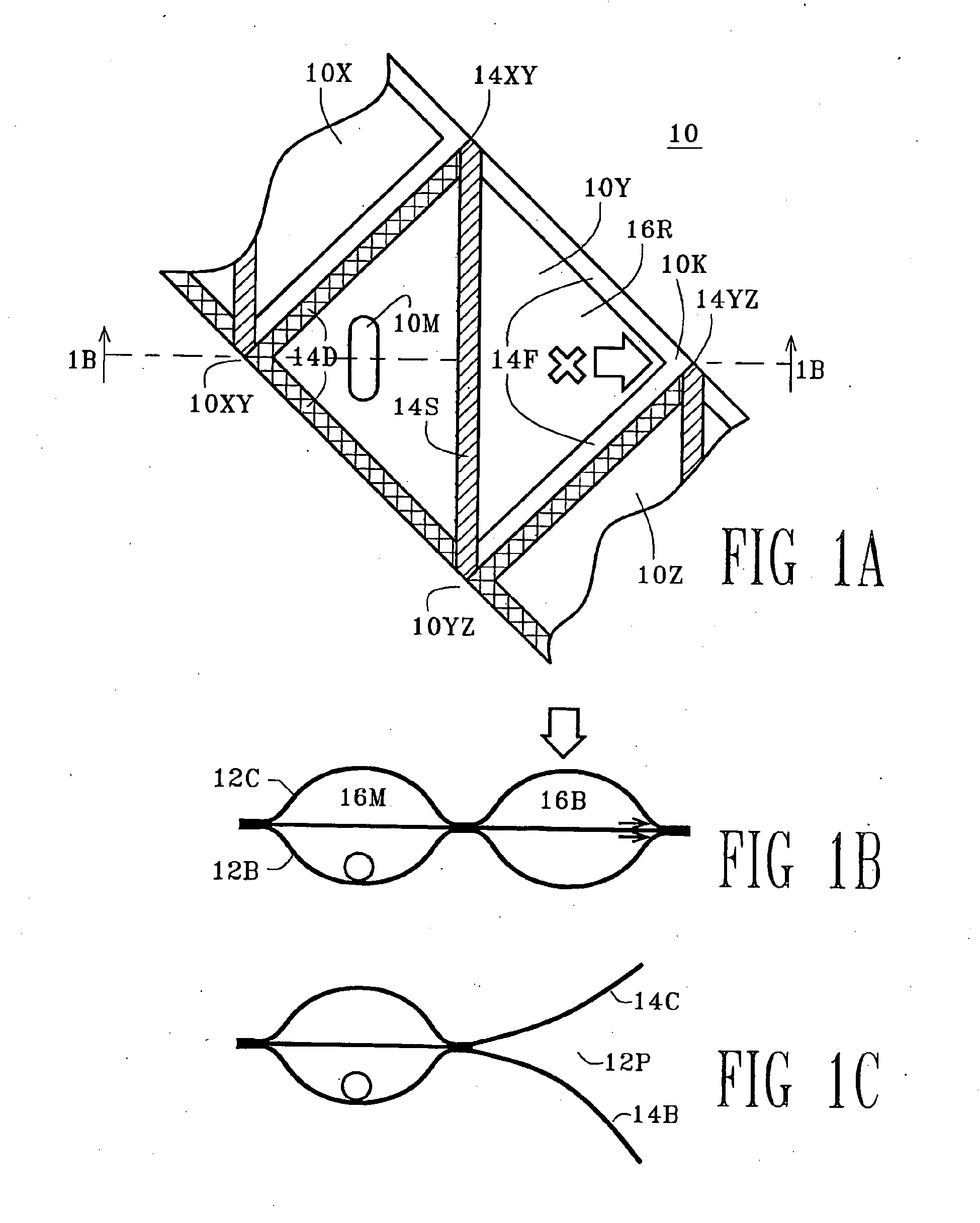
FIG. 1A is a fragmentary top view of a series of storage units 10X and 10Y and 10Z showing medication chamber 16M containing medications 10M;
FIG. 1B is a fragmentary sectional view taken generally along reference line IB-IB of FIG. 1A prior to the breaching of bubble 16B;
FIG. 1C is a fragmentary side view of the storage units after to the breaching of bubble
16B;
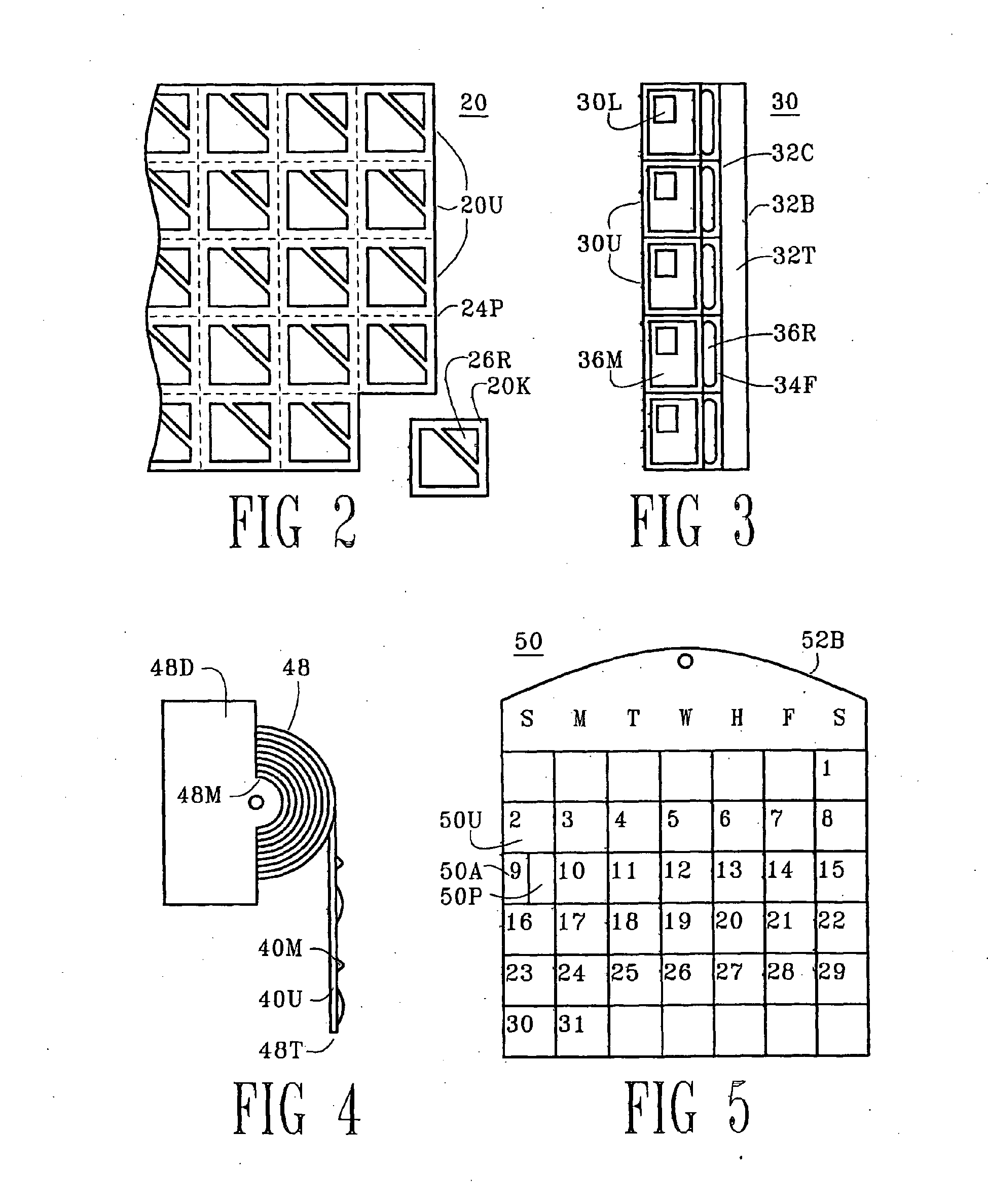
FIG. 2 is a fragmentary top view of delivery sheet 20 of storage units 20U;
FIG. 3 is a top view of delivery strip 30 of storage units 30U showing catch tray 32T;
FIG. 4 is a side view of medication dispenser 48D for supporting delivery spool 48 containing a roll of sequential storage units 40U; and
FIG. 5 is a front view of a calendar medication delivery system 50 having rigid base 52B.
[0009] The first digit of each reference numeral in the above figures indicates the figure
in which an element or feature is most prominently shown. The second digit indicates
related elements or features, and a final letter (when used) indicates a sub-portion
of an element or feature.
REFERENCE NUMERALS IN DRAWINGS
[0010] The table below lists the reference numerals employed in the figures, and identifies
the element designated by each numeral.
| 10 |
Delivery system |
| |
10K |
Corner |
| |
10M |
Medication(s) |
| |
10X |
Sequential Storage Unit |
| |
10Y |
Sequential Storage Unit |
| |
10Z |
Sequential Storage Unit |
| |
10XY |
Boundary |
| |
10YZ |
Boundary |
| |
|
|
| |
12B |
Base Lamina |
| |
12C |
Cover Lamina |
| |
12P |
Perimeter Breach |
| |
|
|
| |
14B |
Base Flexible peel flap |
| |
14C |
Cover Flexible peel flap |
| |
|
|
| |
14D |
Destruct Seal Portion (left and right) |
| |
14F |
Frangible Seal Portion (left and right) |
| |
14S |
Diagonal Chamber Seal |
| |
|
|
| |
14XY |
Tear-Away Cut Lines |
| |
14YZ |
Tear-Away Cut Lines |
| |
|
|
| |
16B |
Breachable Bubble |
| |
16M |
Sealed Medication Chamber |
| |
16R |
Chamber Access Region |
| 20 |
Delivery |
Sheet |
| |
20K |
Corner |
| |
20U |
Sequential Storage Unit |
| |
24P |
Tear-Away Perforations 24P |
| |
26R |
Chamber Access Region |
| |
|
|
| 30 |
Delivery |
Strip |
| |
30L |
Medical Data Label |
| |
30U |
Sequential Storage Unit |
| |
32B |
Base Lamina |
| |
32C |
Cover Lamina |
| |
32T |
Catch Tray |
| |
34F |
Frangible Seal Portions |
| |
36M |
Medication Chamber |
| |
36R |
Chamber Access Region |
| |
|
|
| |
40M |
Medications |
| |
40U |
Sequential Storage Unit |
| 48 |
Delivery |
Spool |
| |
48D |
Medication Dispenser |
| |
48M |
Inner Mooring End |
| |
48T |
Outer Terminal End |
| |
|
|
| 50 |
Calendar |
Matrix |
| |
50A |
am Storage Unit |
| |
50P |
pm Storage Unit |
| |
50U |
Storage Units |
| |
52B |
Rigid Base Lamina |
GENERAL EMBODIMENT - (FIG.s 1 ABC)
[0011] System
10 delivers specified components in specified quantities such as medication(s)
10M of a specified dosage, in a specified sequence (see
FIG. 1A). Flexible cover lamina
12C is pressed into selective engagement with base lamina
12B (see
FIG. 1B). The selective engagement of the opposed laminae defines a series of sequential storage
units
10X and
10Y and
10Z. A perimeter seal is formed around each storage unit by the pressed selective engagement.
The perimeter seal has a frangible seal portion and a destruct seal portion. The perimeter
seal for storage unit
10Y has frangible seal portion
14F (no hatching) and destruct seal portion
14D (double hatching). A frangible seal formed by two laminae heat pressed together can
be separated without harmful damage to either lamina, simply by pulling the laminae
apart. A destruct seal, however, cannot be separated without damage to one or both
of the laminae.
[0012] Sealed medication chamber
16M for storing a dosage of the medication, is proximate the destruct seal within each
storage unit. Chamber access region
16R for accessing the medication chamber, is proximate the frangible seal portion within
each storage unit. Diagonal chamber seal
14S (single hatching) formed by the pressed selective engagement of the opposed laminae,
extends across each storage unit between the medication chamber and the chamber access
region. Breachable bubble
16B is positioned within each chamber access region between the frangible seal portion
and the chamber seal. The bubble is formed by a volume gas, such as ambient air, trapped
between the opposed laminae during the selective engagement. The bubble expands under
applied pressure towards the frangible seal of the storage unit (see
FIG. 1A and
1B). The expansion separates the opposed laminae forming the bubble, until the bubble
produces perimeter breach
12P (see
FIG. 1C) in the frangible seal portion. Flexible peel flap
14C is formed by the flexible cover lamina along the breached frangible seal as the bubble
breaches. The flap is peeled away from the base lamina by the user, parting the chamber
seal to open the medication chamber providing access to the medication stored therein.
The user may be the patient who is under medication, or the caretaker who administers
the medication or other healthcare professional.
[0013] The destruct seals are stronger than the frangible seals due to a higher temperature
and/or pressure and/or dwell-time during the pressing stage of seal formation. That
is, the destruct seals are fused together more than the frangible seals. Preferably
the chamber seal has a strength greater than the weak frangible seal but not as great
as the strong destruct seal. The chamber seal is stronger than the weak frangible
seal so that the chamber seal will not separate during breaching of the bubble which
produces the perimeter breach. The chamber seal is weaker than the strong destruct
seal so that the medication chamber can be pulled opened after breach of the frangible
seal.
[0014] US patent 6,726,364 issued on Apr 27, 2004 to the present inventor shows a breaching bubble which provides opposed peel flaps
along a perimeter breach. The flaps are peeled back by the user to open a chamber
and present a product.
DIAGONAL CHAMBER SEAL - FIG. 1A
[0015] The chamber seal within each storage unit may extend diagonally across the storage
unit between the medication chamber and the chamber access region. Diagonal chamber
seal
14S (see
FIG. 1A) defines triangular shapes for medication chamber
16M and chamber access region
16R. The triangular medication chamber has destruct seals
14D (left and right) along the two legs, and diagonal chamber seal
14S across the hypotenuse. The triangular chamber access region has frangible seals
14F (left and right) along the two legs, and chamber seal
14S across the hypotenuse. The chamber seal is about 1.4 times as long as a single leg
of the frangible seal. When the chamber seal is parted, the user has maximum finger
or hand access to the medications in the medication chamber. Other non-diagonal configurations
may be employed.
FIG. 2 shows a non-symmetrical embodiment in which chamber access region
26R is limited to a small area in corner
20K. FIG. 3 shows a straight embodiment in which medication chamber
36M is larger than chamber access region
36R.
[0016] The boundaries between the sequential storage units has both a destruct seal and
a frangible seal. Boundary
10XY between unit
10X and 10Y has frangible seal
14F (right) of unit
10X, adjacent to destruct seal
14D (left) of unit
10Y. Likewise, boundary
10YZ between unit 10Y and
10Z has frangible seal
14F (right) of unit
10Y, adjacent to destruct seal
14D (left) of unit
10Z. The frangible seal must peel away as a storage unit is opened, leaving the adjacent
destruct seal intact for maintaining the integrity of the adjacent storage unit. Cover
lamina
12C has tear-away cut line
14XY along boundary
10XY, and tear-away cut line
14YZ along boundary
10YZ. The cut lines are between the frangible seal and the destruct seal to permit the
cover lamina of one storage unit to pull-away from the cover lamina of the adjacent
storage unit. This tear-away cut line is preferable a depth controlled laser cut through
the cover lamina, which terminates at the base lamina.
[0017] The delivery system may have a flexible cover lamina with a rigid base lamina, which
provides a single flexible peel flap. The user holds the rigid base down and pulls
the flexible flap away to expose the medication. Alternatively, base lamina
12B may also be flexible forming flexible peel flap
14B opposed to peel flap
14C formed by flexible cover lamina 12C (see
FIG. 1C). The pair of peel flaps facilitates pulling apart the chamber seal.
[0018] The peel flaps may be positioned at a corner of each storage unit. Corner
10K permits ease of gripping the peel flaps by the user (see
FIG. 1C) and peeling them back unsealing frangible seal
14F (left and right). Alternatively, the peel flap may be positioned in the middle between
two corners (see
FIG. 3).
STRIP EMBODIMENT - FIG.3
[0019] The base lamina and cover lamina may be a strip for sequential presentation of the
series of sequential storage units in a strip array. Base lamina strip
32B (see
FIG.3) may be wider than cover lamina strip
32C and extend beyond perimeter frangible seal portion
34F of the cover lamina. This extension provides tray
32T for catching the stored medications as they are delivered. The catch tray may have
a raised edge berm for retaining the medication on the tray.
[0020] The strip of opposed laminae may be wound onto delivery spool
48 (see
FIG. 4) with inner mooring end
48M and outer terminal end
48T, for sequential presentation of the strip of sequential storage units from the terminal
end. Medication dispenser
48D may be provided for supporting the delivery spool and the storage units. Medications
40M may be vacuum packed within the sealed medication chambers on the strip of storage
units. Removing the air from the medication chamber reduces the shipping volume and
spool size requirements. Even a slight vacuum locks the medications in place during
shipment and handling, preventing them from grinding against one another. Alternatively,
an inert gas may be provided within the sealed medication chamber for preserving the
medication. A nitrogen flush introduced just before sealing the medication chamber
displaces the ambient oxygen.
[0021] The cover lamina may be transparent permitting visible identification of the medication.
Medications are frequently known to the user or caretaker only by color or size or
shape. The lamina may be color coded to indicate the period of day for taking the
medications. For example, pink may indicate morning, yellow may indicate noon, and
blue may indicate evening. Alternatively, the cover lamina and the base lamina may
be opaque for preventing UV and other photo damage.
ROW AND COLUMN EMBODIMENTS - FIG. 2 and FIG. 5
[0022] The series of sequential storage units may be a matrix of rows and columns across
a sheet of opposed laminae. The entire inventory of medication can be seen at a glance.
A series of tear-away perforations
24P (see
FIG. 2) traverse the matrix between adjacent storage units
20U, permitting presentation of a single storage unit. A medication storage unit may
be torn-away from the matrix and distributed individually. Alternatively, each of
the sequential storage units may be firmly secured to the preceding storage unit and
to the succeeding storage unit (see
FIG. 3) along the strip of opposed laminae. The empty storage units remain on the strip after
delivery, along with the full storage units containing forgotten medication, as a
record of compliance.
[0023] Calendar matrix
50 of sequential storage units
50U may have a plurality of horizontal rows corresponding to the weeks of a particular
month. The matrix may also have seven vertical columns corresponding to the seven
days of each week. The user can easily locate and identify the medication for each
day. The calendar day may be divided into am and pm storage units
50A and
50P as shown for Tuesday the 4th in
FIG. 5. The base lamina for the calendar matrix may be sufficiently rigid to be self standing
and function as a stand-up display of the matrix of storage units and of the medications
sequentially stored therein.
MEDICAL DATA
[0024] Medical data relating to the medication may be associated with each storage unit.
The name and dosage of the medication may be listed along with the schedule (date
and time of day for taking). Important side effects and emergency numbers may be listed.
The patient's name and age, and the name of the doctor or caretaker may be provided.
The medical data may be printed directly on the lamina, or on label
30L later affixed to the lamina (see
FIG. 3), or inserted into the medication chamber or chamber access region. The basic information
may be included in a quick scan format such as bar code. More extensive data, such
as medical history may be included in a suitable mega format such as toned digital
data.
INDUSTRIAL APPLICABILITY
[0025] It will be apparent to those skilled in the art that the objects of this invention
have been achieved as described hereinbefore. Various changes may be made in the structure
and embodiments shown herein without departing from the concept of the invention.
Further, features of embodiments shown in various figures may be employed in combination
with embodiments shown in other figures. Therefore, the scope of the invention is
to be determined by the terminology of the following claims.
1. System for delivering specified components in specified quantities in a specified
sequence, comprising: a base lamina (12B, 32B, 52B); a flexible cover lamina (12C,
32C) opposed to the base lamina (12B, 32B, 52B), and pressed into selective engagement
therewith; a series of sequential storage units (10X, 10Y, 10Z, 20U, 40U, 30, 50U),
defined by the selective engagement of the opposed laminae, wherein a sequential storage
unit and an adjacent sequential storage unit define a boundary therebetween; a perimeter
seal formed around each storage unit (10X, 10Y, 10Z, 20U, 40U, 30, 50U) by the selective
engagement, having a frangible seal portion (14F) and a destruct seal portion (14D),
wherein the boundary between the sequential storage unit and the adjacent sequential
storage unit includes a destruct seal and a frangible seal; a component chamber (16M,
36M) within each storage unit proximate the destruct seal portion (14D) for storing
specified components in specified quantities; a chamber access region (16R, 26R, 36R)
within each storage unit (10X, 10Y, 10Z, 20U, 40U, 30, 50U) proximate the frangible
seal portion (14F) for accessing the component chamber (16M, 36M); a chamber seal
(14S) formed by the selective engagement of the opposed laminae, and extending across
each storage unit (10X, 10Y, 10Z, 20U, 40U, 30, 50U) between the component chamber
(16M, 36M) and the chamber access region (16R, 26R, 36R); a breachable bubble (16B)
within each chamber access region (16R, 26R, 36R) between the frangible seal portion
(14F) and the chamber seal (14S), and formed by the opposed laminae during the selective
engagement; the bubble (16B) expands under applied pressure towards the frangible
seal portion (14F) of the storage unit (10X, 10Y, 10Z, 20U, 40U, 30, 50U), which expansion
separates the opposed laminae forming the bubble (16B), until the bubble produces
a perimeter breach in the frangible seal portion (14F); and a flexible peel flap (14C)
formed by the flexible cover lamina (12C) along the breached frangible seal portion
(14F) as the bubble breaches, which flap (14C) is peeled away from the base lamina
(12B) detaching the chamber seal (14S) to open the component chamber (16M, 36M) providing
delivery of the components stored therein.
2. The system of Claim 1, wherein the flexible peel flap (14C) is positioned at a corner
of each storage unit.
3. The system of Claim 1, wherein the chamber seal (14S) within each storage unit (10X,
10Y, 10Z) extends diagonally across the storage unit between the component chamber
(16M) and the chamber access region (16R).
4. The system of Claim 1, wherein the base lamina (12B) is also flexible forming a peel
flap (14B) opposed to the peel flap (14C) formed by the flexible cover lamina (12C).
5. The system of Claim 1, wherein the base lamina and the cover lamina are strips forming
a strip of opposed laminae for sequential presentation of the series of sequential
storage units (10X, 10Y, 10Z, 20U, 40U, 30, 50U).
6. The system of Claim 5, further comprising a series of tear-away perforations (24P)
traversing the strip of opposed laminae between the sequential storage units (20U),
to permit presentation of a single storage unit.
7. The system of Claim 5, wherein the base lamina strip (32B) is wider than the cover
lamina strip (32C) and extends beyond the perimeter frangible seals of the cover lamina
(32C) to provide a tray (32T) for catching the stored components as they are delivered.
8. The system of Claim 5, wherein the strip of opposed laminae is wound onto a delivery
spool (48), and has an inner mooring end (48M) and an outer terminal end (48T) for
sequential presentation of the strip of sequential storage units (40U) from the terminal
end (48T).
9. The system of Claim 8, further comprising a dispenser (48D) for supporting the delivery
spool (48) during the sequential presentation of the strip of sequential storage units
(40U).
10. The system of Claim 1, wherein each of the sequential storage units (10X, 10Y, 10Z,
20U, 40U, 30, 50U) is firmly secured to the preceding storage unit and to the succeeding
storage unit along the strip of opposed laminae.
11. The system of Claim 1, wherein the cover lamina (12C, 32C) is transparent permitting
visible identification of the components.
12. The system of Claim 1, wherein the cover lamina (12C, 32C) and the base lamina (12B,
32B, 52B) are opaque.
13. The system of Claim 1, further comprising component data associated with each storage
unit (10X, 10Y, 10Z, 20U, 40U, 30, 50U) and related to the components stored therein.
14. The system of Claim 1, wherein the specified components are specified medications
of specified dosages delivered in a specified sequence.
15. The system of Claim 14, wherein the series of sequential storage units (50U) is a
matrix of rows and columns across the opposed laminae.
16. The system of Claim 15, wherein the base lamina (52B) is sufficiently rigid to be
self standing and function as a stand-up display of the matrix of storage units (50U)
and of the medications sequentially stored therein.
17. The system of Claim 15, wherein the matrix of rows and columns of the sequential storage
units (50U) has a plurality of horizontal rows corresponding to the weeks of a particular
month, and has seven vertical columns corresponding to the seven days of each week.
18. The system of Claim 14, wherein the medications are vacuum packed within the sealed
medication chamber (16M, 36M).
19. The system of Claim 14, further comprising an inert gas within the sealed medication
chamber (16M, 36M) for preserving the medication.
1. System zur Abgabe spezifizierter Komponenten in spezifizierten Mengen in einer spezifizierten
Sequenz, umfassend: eine Basisschicht (12B, 32B, 52B); eine flexible Deckschicht (12C,
32C), die der Basisschicht (12B, 32B, 52B) gegenüberliegt und in selektiven Eingriff
damit gepresst wird; eine Reihe sequenzieller Speichereinheiten (10X, 10Y, 10Z, 20U,
40U, 30, 50U), die durch den selektiven Eingriff der gegenüberliegenden Schichten
definiert sind, wobei eine sequenzielle Speichereinheit und eine angrenzende sequenzielle
Speichereinheit eine Grenze dazwischen definieren; eine Perimeterdichtung, die um
jede Speichereinheit (10X, 10Y, 10Z, 20U, 40U, 30, 50U) durch den selektiven Eingriff
gebildet wird, mit einem zerbrechlichen Dichtungsteil (14F) und einem zerstörbaren
Dichtungsteil (14D), wobei die Grenze zwischen der sequenziellen Speichereinheit und
der angrenzenden sequenziellen Speichereinheit eine zerstörbare Dichtung und eine
zerbrechliche Dichtung einschließt; eine Komponentenkammer (16M, 36M) innerhalb jeder
Speichereinheit nahe dem zerstörbaren Dichtungsteil (14D) zum Speichern spezifizierter
Komponenten in spezifizierten Mengen; einen Kammerzugangsbereich (16R, 26R, 36R) innerhalb
jeder Speichereinheit (10X, 10Y, 10Z, 20U, 40U, 30, 50U) nahe dem zerbrechlichen Dichtungsteil
(14F) für Zugang zur Komponentenkammer (16M, 36M); eine Kammerdichtung (14S), die
durch den selektiven Eingriff der gegenüberliegenden Schichten gebildet wird und sich
über jede Speichereinheit (10X, 10Y, 10Z, 20U, 40U, 30, 50U) zwischen der Komponentenkammer
(16M, 36M) und dem Kammerzugangsbereich (16R, 26R, 36R) erstreckt; eine durchbrechbare
Blase (16B) innerhalb jedes Kammerzugangsbereichs (16R, 26R, 36R) zwischen dem zerbrechlichen
Dichtungsteil (14F) und der Kammerdichtung (14S) und durch die gegenüberliegenden
Schichten während des selektiven Eingriffs gebildet; die Blase (16B) dehnt sich unter
angewandtem Druck in Richtung des zerbrechlichen Dichtungsteils (14F) der Speichereinheit
(10X, 10Y, 10Z, 20U, 40U, 30, 50U), welche Dehnung die gegenüberliegenden Schichten,
die die Blase (16B) bilden, trennt, bis die Blase einen Perimeterbruch im zerbrechlichen
Dichtungsteil (14F) erzeugt; und eine flexible Abziehlasche (14C), die von der flexiblen
Deckschicht (12C) entlang des durchgebrochenen zerbrechlichen Dichtungsteils (14F)
gebildet wird, sowie die Blase durchbricht, welche Lasche (14C) von der Basisschicht
(12B) abgezogen wird, was die Kammerdichtung (14S) ablöst, um die Komponentenkammer
(16M, 36M) zu öffnen und die darin gespeicherten Komponenten zur Abgabe bereitzustellen.
2. System nach Anspruch 1, wobei die flexible Abziehlasche (14C) an einer Ecke jeder
Speichereinheit positioniert ist.
3. System nach Anspruch 1, wobei sich die Kammerdichtung (14S) innerhalb jeder Speichereinheit
(10X, 10Y, 10Z) diagonal über die Speichereinheit zwischen der Komponentenkammer (16M)
und dem Kammerzugangsbereich (16R) erstreckt.
4. System nach Anspruch 1, wobei die Basisschicht (12B) außerdem flexibel ist und eine
Abziehlasche (14B) gegenüber der Abziehlasche (14C) bildet, die von der flexiblen
Deckschicht (12C) gebildet ist.
5. System nach Anspruch 1, wobei die Basisschicht und die Deckschicht Streifen sind,
die einen Streifen von gegenüberliegenden Schichten für sequenzielle Präsentation
der Reihe von sequenziellen Speichereinheiten (10X, 10Y, 10Z, 20U, 40U, 30, 50U) bilden.
6. System nach Anspruch 5, das weiter eine Reihe von abtrennbaren Perforationen (24P)
umfasst, die den Streifen von gegenüberliegenden Schichten zwischen den sequenziellen
Speichereinheiten (20U) durchqueren, um Präsentation einer einzelnen Speichereinheit
zuzulassen.
7. System nach Anspruch 5, wobei der Basisschichtstreifen (32B) breiter als der Deckschichtstreifen
(32C) ist und sich über den Perimeter zerbrechlicher Dichtungen der Deckschicht (32C)
hinaus erstreckt, um ein Tablett (32T) zum Auffangen der gespeicherten Komponenten
bereitzustellen, sowie diese abgegeben werden.
8. System nach Anspruch 5, wobei der Streifen gegenüberliegender Schichten auf eine Vorratsrolle
(48) gewickelt wird und ein inneres Befestigungsende (48M) und eine äußere Endstelle
(48T) zur sequenziellen Präsentation des Streifens sequenzieller Speichereinheiten
(40U) von der Endstelle (48T) aufweist.
9. System nach Anspruch 8, das weiter einen Spender (48D) zum Tragen der Vorratsrolle
(48) während der sequenziellen Präsentation des Streifens sequenzieller Speichereinheiten
(40U) umfasst.
10. System nach Anspruch 1, wobei jede der sequenziellen Speichereinheiten (10X, 10Y,
10Z, 20U, 40U, 30, 50U) fest an der vorhergehenden Speichereinheit und der nachfolgenden
Speichereinheit entlang des Streifens gegenüberliegender Schichten gesichert ist.
11. System nach Anspruch 1, wobei die Deckschicht (12C, 32C) transparent ist, um sichtbare
Identifikation der Komponenten zuzulassen.
12. System nach Anspruch 1, wobei die Deckschicht (12C, 32C) und die Basisschicht (12B,
32B, 52B) opak sind.
13. System nach Anspruch 1, das weiter Komponentendaten umfasst, die mit jeder Speichereinheit
(10X, 10Y, 10Z, 20U, 40U, 30, 50U) assoziiert und mit darin gespeicherten Komponenten
verbunden sind.
14. System nach Anspruch 1, wobei die spezifizierten Komponenten spezifizierte Medikamente
von spezifizierten Dosierungen sind und in einer spezifizierten Sequenz abgegeben
werden.
15. System nach Anspruch 14, wobei die Serie sequenzieller Speichereinheiten (50U) eine
Matrix von Reihen und Spalten über die gegenüberliegenden Schichten ist.
16. System nach Anspruch 15, wobei die Basisschicht (52B) ausreichend starr ist, um selbststehend
zu sein und als ein Stand-up-Display der Matrix von Speichereinheiten (50U) und der
darin sequenziell gespeicherten Medikamente zu funktionieren.
17. System nach Anspruch 15, wobei die Matrix von Reihen und Spalten der sequenziellen
Speichereinheiten (50U) eine Vielheit horizontaler Reihen aufweist, die den Wochen
eines speziellen Monats entsprechen und sieben vertikale Spalten aufweist, die den
sieben Tagen jeder Woche entsprechen.
18. System nach Anspruch 14, wobei die Medikamente innerhalb der abgedichteten Medikamentenkammer
(16M, 36M) vakuumverpackt sind.
19. System nach Anspruch 14, das weiter ein inertes Gas innerhalb der abgedichteten Medikamentenkammer
(16M, 36M) zum Bewahren der Medikamente umfasst.
1. Système de distribution de composants spécifiés dans des quantités spécifiées dans
une séquence spécifiée, comprenant : une feuille de base (12B, 32B, 52B) ; une feuille
de couverture souple (12C, 32C) opposée à la feuille de base (12B, 32B, 52B), et pressée
pour s'engager sélectivement avec celle-ci ; une série d'unités de stockage séquentielles
(10X, 10Y, 10Z, 20U, 40U, 30, 50U), définies par l'engagement sélectif des feuilles
opposées, dans lequel une unité de stockage séquentielle et une unité de stockage
séquentielle adjacente définissent une frontière entre elles ; un sceau périmétral
formé autour de chaque unité de stockage (10X, 10Y, 10Z, 20U, 40U, 30, 50U) par l'engagement
sélectif, ayant une partie de sceau ruptible (14F) et une partie de sceau destructible
(14D), dans lequel la frontière entre l'unité de stockage séquentielle et l'unité
de stockage séquentielle adjacente comporte un sceau destructible et un sceau ruptible
; une chambre à composants (16M, 36M) dans chaque unité de stockage à proximité de
la partie de sceau destructible (14D) pour stocker des composants spécifiés dans des
quantités spécifiées ; une région d'accès à la chambre (16R, 26R, 36R) dans chaque
unité de stockage (10X, 10Y, 10Z, 20U, 40U, 30, 50U) à proximité de la partie de sceau
ruptible (14F) pour accéder à la chambre à composants (16M, 36M) ; un sceau de chambre
(14S) formé par l'engagement sélectif des feuilles opposées, et s'étendant en travers
de chaque unité de stockage (10X, 10Y, 10Z, 20U, 40U, 30, 50U), entre la chambre à
composants (16M, 36M) et la région d'accès à la chambre (16R, 26R, 36R) ; une bulle
perforable (16B) dans chaque région d'accès à la chambre (16R, 26R, 36R) entre la
partie de sceau ruptible (14F) et le sceau de chambre (14S), et formée par les feuilles
opposées durant l'engagement sélectif ; la bulle (16B) se dilatant sous l'application
d'une pression vers la partie de sceau ruptible (14F) de l'unité de stockage (10X,
10Y, 10Z, 20U, 40U, 30, 50U), laquelle dilatation sépare les feuilles opposées formant
la bulle (16B), jusqu'à ce que la bulle produise une perforation périmétrale dans
la partie de sceau ruptible (14F) ; et un rabat pelable souple (14C) formé par la
feuille de couverture souple (12C) le long de la partie de sceau frangible perforée
(14F) quand la bulle se perfore, lequel rabat (14C) est pelé de la feuille de base
(12B) détachant le sceau de chambre (14S) pour ouvrir la chambre à composants (16M,
36M) et permettre la distribution des composants contenus dans celle-ci.
2. Système selon la revendication 1, dans lequel le rabat pelable souple (14C) est positionné
dans un coin de chaque unité de stockage.
3. Système selon la revendication 1, dans laquelle le sceau de chambre (14S) dans chaque
unité de stockage (10X, 10Y, 10Z) s'étend diagonalement en travers de l'unité de stockage
entre la chambre à composants (16M) et la région d'accès à la chambre (16R).
4. Système selon la revendication 1, dans lequel la feuille de base (12B) est également
souple formant un rabat pelable (14B) opposé au rabat pelable (14C) formé par la feuille
de couverture souple (12C).
5. Système selon la revendication 1, dans lequel la feuille de base et la feuille de
couverture sont des bandes formant une bande de feuilles opposées pour la présentation
séquentielle des séries des unités de stockage séquentielles (10X, 10Y, 10Z, 20U,
40U, 30, 50U).
6. Système selon la revendication 5, comprenant en outre une série de perforations déchirables
(24P) qui traversent la bande de feuilles opposées entre les unités de stockage séquentielles
(20U), pour permettre la présentation d'une seule unité de stockage.
7. Système selon la revendication 5, dans lequel la bande de feuille de base (32B) est
plus large que la bande de feuille de couverture (32C) et s'étend au-delà des sceaux
ruptibles périmétraux de la feuille de couverture (32C) afin de former un plateau
(32T) qui reçoit les composants stockés lors de leur distribution.
8. Système selon la revendication 5, dans lequel la bande de feuilles opposées est enroulée
autour d'une bobine de distribution (48), et comporte une extrémité d'arrimage interne
(48M) et une extrémité terminale externe (48T) pour la présentation séquentielle de
la bande d'unités de stockage séquentielles (40U) depuis l'extrémité terminale (48T).
9. Système selon la revendication 8, comprenant en outre un distributeur (48D) destiné
à supporter la bobine de distribution (48) durant la présentation séquentielle de
la bande d'unités de stockage séquentielles (40U).
10. Système selon la revendication 1, dans lequel chacune des unités de stockage séquentielles
(10X, 10Y, 10Z, 20U, 40U, 30, 50U) est fermement assujettie à l'unité de stockage
précédente et à l'unité de stockage suivante le long de la bande de feuilles opposées.
11. Système selon la revendication 1, dans lequel la feuille de couverture (12C, 32C)
est transparente, permettant l'identification visible des composants.
12. Système selon la revendication 1, dans lequel la feuille de couverture (12C, 32C)
et la feuille de base (12B, 32B, 52B) sont opaques.
13. Système selon la revendication 1, comprenant en outre des données de composants associées
à chaque unité de stockage (10X, 10Y, 10Z, 20U, 40U, 30, 50U) et relatives aux composants
stockés dans celle-ci.
14. Système selon la revendication 1, dans lequel les composants spécifiés sont des médicaments
spécifiés de dosages spécifiés distribués dans une séquence spécifiée.
15. Système selon la revendication 14, dans lequel la série d'unités de stockage séquentielles
(50U) est une matrice de rangées et de colonnes en travers des feuilles opposées.
16. Système selon la revendication 15, dans lequel la feuille de base (52B) est suffisamment
rigide pour tenir droite et servir d'affichage vertical de la matrice d'unités de
stockage (50U) et des médicaments stockés séquentiellement dans celles-ci.
17. Système selon la revendication 15, dans lequel la matrice de rangées et de colonnes
des unités de stockage séquentielles (50U) comporte une pluralité de rangées horizontales
correspondant aux semaines d'un mois particulier, et comporte sept colonnes verticales
correspondant aux sept jours de chaque semaine.
18. Système selon la revendication 14, dans lequel les médicaments sont emballés sous
vide dans la chambre à médicaments scellée (16M, 36M).
19. Système selon la revendication 14, comprenant en outre un gaz inerte dans la chambre
à médicaments scellée (16M, 36M) pour préserver les médicaments.
REFERENCES CITED IN THE DESCRIPTION
This list of references cited by the applicant is for the reader's convenience only.
It does not form part of the European patent document. Even though great care has
been taken in compiling the references, errors or omissions cannot be excluded and
the EPO disclaims all liability in this regard.
Patent documents cited in the description