| (19) |
 |
|
(11) |
EP 2 010 143 B1 |
| (12) |
EUROPEAN PATENT SPECIFICATION |
| (45) |
Mention of the grant of the patent: |
|
12.08.2015 Bulletin 2015/33 |
| (22) |
Date of filing: 16.03.2007 |
|
| (51) |
International Patent Classification (IPC):
|
| (86) |
International application number: |
|
PCT/US2007/064142 |
| (87) |
International publication number: |
|
WO 2007/109523 (27.09.2007 Gazette 2007/39) |
|
| (54) |
STABILIZED OPHTHALMIC COMPOSITIONS COMPRISING OXIDATIVELY UNSTABLE COMPONENTS
STABILISIERTE OPHTHALMISCHE ZUSAMMENSETZUNG MIT OXIDATIONSUNSTABILEN KOMPONENTEN
PROCÉDÉS DE STABILISATION DE COMPOSITIONS INSTABLES DE MANIÈRE OXYDATIVE
|
| (84) |
Designated Contracting States: |
|
DE FR GB IE IT |
| (30) |
Priority: |
17.03.2006 US 783557 P
|
| (43) |
Date of publication of application: |
|
07.01.2009 Bulletin 2009/02 |
| (73) |
Proprietor: Johnson & Johnson Vision Care, Inc. |
|
Jacksonville, FL 32256 (US) |
|
| (72) |
Inventors: |
|
- MAHADEVAN, Shivkumar
Orange Park, FL 32003 (US)
- MOLOCK, Frank
Orange Park, FL 32003 (US)
|
| (74) |
Representative: Tunstall, Christopher Stephen |
|
Carpmaels & Ransford LLP
One Southampton Row
London WC1B 5HA
London WC1B 5HA (GB) |
| (56) |
References cited: :
EP-A- 1 172 098
WO-A-99/36055
|
EP-A- 1 769 834
US-A1- 2002 165 254
|
|
| |
|
|
|
|
| |
|
| Note: Within nine months from the publication of the mention of the grant of the European
patent, any person may give notice to the European Patent Office of opposition to
the European patent
granted. Notice of opposition shall be filed in a written reasoned statement. It shall
not be deemed to
have been filed until the opposition fee has been paid. (Art. 99(1) European Patent
Convention).
|
[0001] Therapeutic agents for topical administration to the eye are generally formulated
in either a liquid or gel form and must be kept sterile until administration. Accordingly,
ophthalmic therapeutic agents are either packaged asceptically, which is cumbersome
and expensive or are heat sterilized. Unfortunately, many therapeutic agents are not
oxidatively stable, especially at elevated temperatures.
[0002] EDTA, Dequest, and Desferal have been used to improve the stability of certain therapeutic
agents during autoclaving. However, there remains a need for other compounds capable
of stabilizing unstable therapeutic agents that are susceptible to oxidative degradation.
This need is met by the following invention.
BRIEF DESCRIPTION OF THE DRAWINGS
[0003]
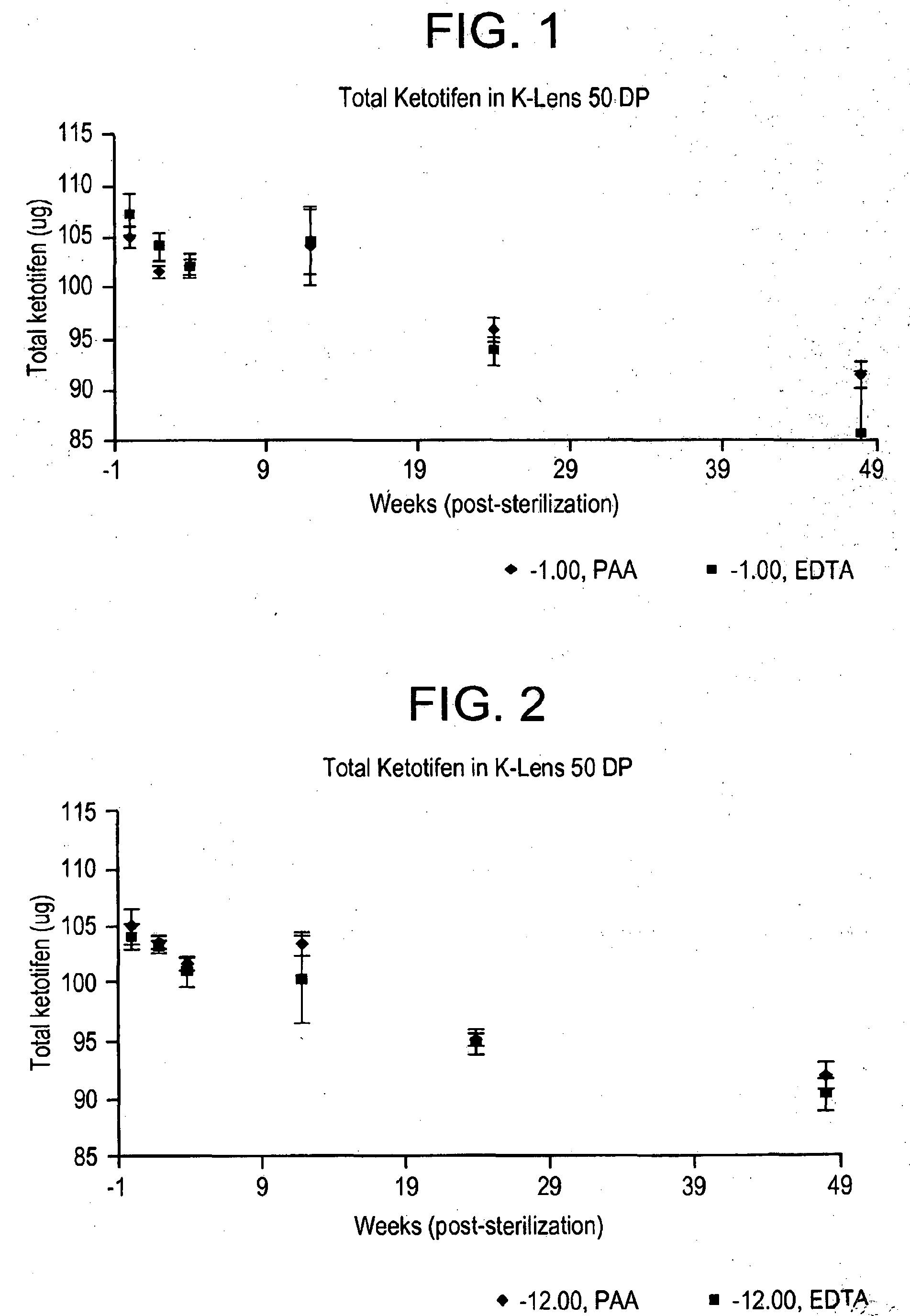
Fig. 1 Stability Study with Ketotifen and PAA or EDTA
Fig. 2. Stability Study with Ketotifen and PAA or EDTA
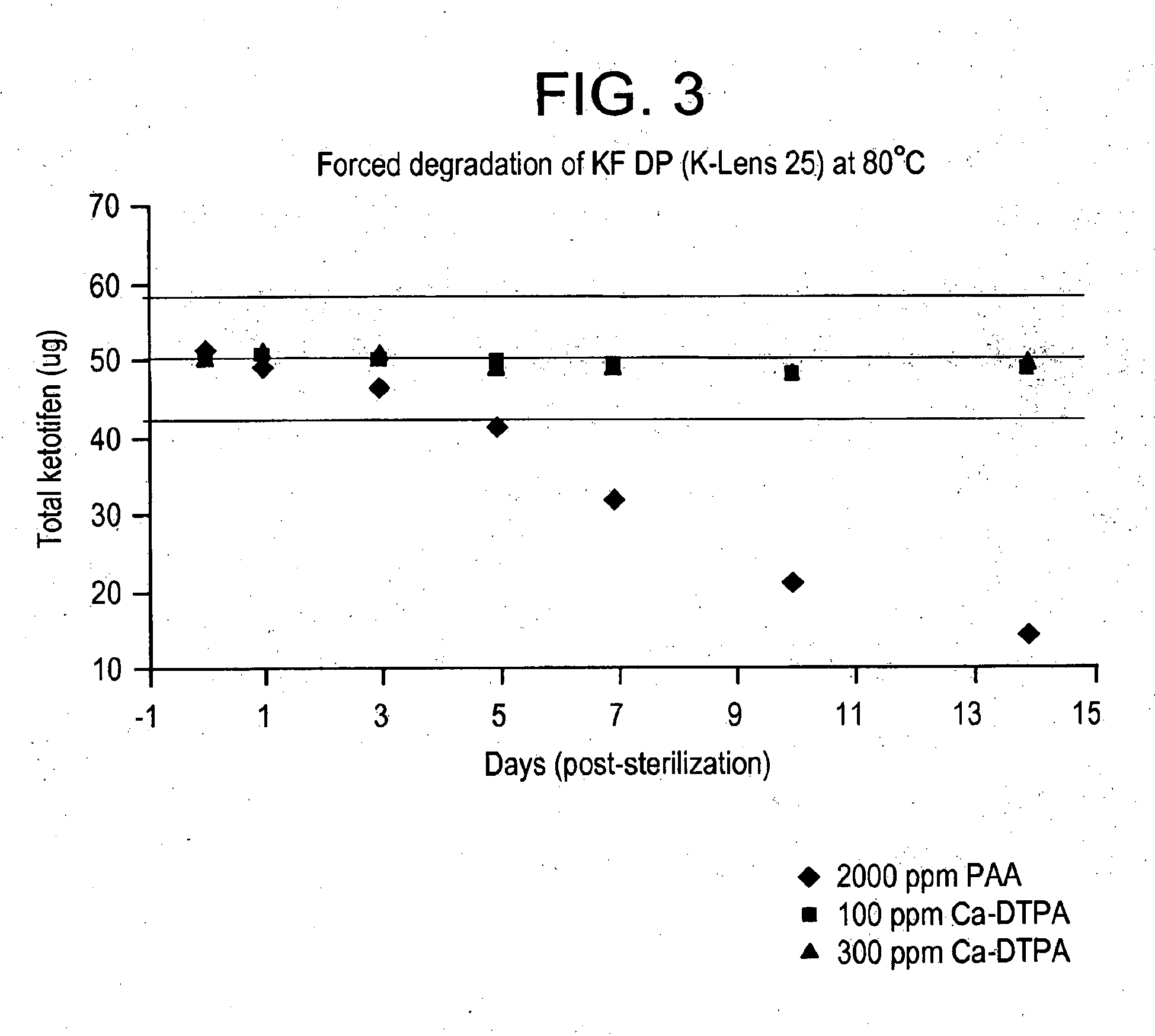
Fig. 3 Stability Study with Ketotifen and PAA or DTPA
DETAILED DESCRIPTION OF THE INVENTION
[0004] This invention includes a method of stabilizing an ophthalmic composition comprising
an oxidatively unstable pharmaceutical ingredient wherein said method comprises adding
an effective amount of a stabilizing agent to the ophthalmic composition.
[0005] As used herein "oxidatively unstable pharmaceutical ingredient" refers to pharmaceutical
compounds used to treat conditions of the eye, and such compounds degrade in the presence
of oxygen and certain transition metals.
[0006] The pharmaceutical compound are selected from the group consistintg of acrivastine,
antazoline, astemizole, azatadine, azelastine, buclizine, bupivacaine, cetirizine,
clemastine, cyclizine, cyproheptadine, ebastine, emedastine, ephedrine, eucatropine,
fexofenadine, homatropine, hydroxyzine, ketotifen, levocabastine, levoceterizine,
lomefloxacin, meclizine, mepivacaine, mequitazine, methdilazine, methapyrilene, mianserin,
naphazolinepnorastemizole, norebastine, ofloxacin, olopatadine oxymetazoline, pheniramine,
phenylephrine, physostigmine, picumast, promethazine, scopolamine, terfenadine, tetrahydozoline,
thiethylperazine, timolol, trimeprazine, triprolidine, pharmaceutically acceptable
salts and mixtures thereof. Preferred pharmaceutical compounds include acrivatine,
antazoline, astemizole, azatadine, azelastine, clemastine, cyproheptadine, ebastine,
emedastine, eucatropine, fexofenadine, homatropine, hydroxyzine, ketotife, levocabastine,
levoceterizine, meclizine, mequitazine, methdialazine, methapyrilene, norastemizole,
norebastine; oxymetazoline, physootigmine, picumast, promethazine, scopolamine, terfenadine,
tetrahyerozoline, fimilol, trimeprazine, triprolidine, and pharmaceutically acceptable
salts thereof. Particularly preferred pharmaceutical compounds include phenarimine,
ketotifen, ketotifen fumarate nor ketotifen, olopatadine and mixtures thereof. More
particularly preferred pharmaceutical compounds include ketotifen, its pharmaceutically
acceptable salts, and mixtures thereof.
[0007] Preferred pharmaceutical compounds are those that degrade when solutions of these
compounds and oxidative catalysts (such as metals and metallic salts) are mixed together
at ambient or elevated temperatures, as compared to solutions of these compounds without
oxidative catalysts at ambient or elevated temperatures. Particularly preferred pharmaceutical
compounds are those that degrade greater than about 10% when heated to about 120°C
for about 20 minutes with oxidative catalysts. The concentration of oxidatively unstable
pharmaceutical ingredients in the ophthalmic compositions of the invention range from
about 2 µg/mL to about 0.5 g/mL, particularly preferred, about 0.1 µg/mL to about
10,000 µg/mL.
[0008] The term "ophthalmic composition" refers to liquids, aerosols, or gels that may be
topically administered to the eye. The term "stabilizing agent" refers to chelant
compositions that inhibit metal catalyzed oxidative degradation of the oxidatively
unstable pharmaceutical ingredient.
[0009] The stabilizing agent is selected the group consisting of diethylenetriaminepentaacetic
acid ("DTPA") and salts of DTPA, such as CaNa
3DTPA, ZnNa
3DTPA, and Ca
2DTPA. The term "effective amount" refers to the amount of stabilizing agent required
to inhibit the oxidative degradation of the pharmaceutical ingredient. In most circumstances
it is preferred that there is a 1:1 molar ratio of metal present in the ophthalmic
composition to chelant, more preferably about 1 of metal to greater than about 1 of
chelant compositions, most preferably about 1 of metal to greater than or equal to
about 2 of chelant compositions. With respect to concentration limits, it is preferred
that the stabilizing agents have a concentration in the ophthalmic composition from
about 2.5 µmoles/liter to about, 5000 µmoles/liter more preferably from about 20 µmoles/liter
to about 1000 µmoles/liter, more preferably from about 100 µmoles/liter to about 1000
µmoles/liter, most preferably from about 100 µmoles/liter to about 500 µmoles/liter.
[0010] Aside from the oxidatively unstable pharmaceutical ingredient and the stabilizing
agent, the ophthalmic composition contains suitable ophthalmic carriers. Suitable
carriers include antioxidants (radical scavengers), demulcents, antibacterial agents,
solubilizers, surfactants, buffer agents, tonicity adjusting agents, chelating agents,
preservatives, wetting agents, thickeners, water, saline solution, mineral oil, petroleum
jelly, water soluble solvents, such as C
15-20 alcohols, C
15-20 amides, C
15-20 alcohols substituted with zwitterions, vegetable oils or mineral oils comprising
from 0.5 to 5% by weight hydroxyethylcellulose, ethyl oleate, carboxymethylcellulose,
polyvinyl-pyrrolidone and other non-toxic water-soluble polymers for ophthalmic uses,
such as, for example cellulose derivatives, such as methylcellulose, alkali metal
salts of carboxy-methylcellulose, hydroxymethylcellulose, hydroxyethylcellulose, methylhydroxypropyl-cellulose,
hydroxypropylcellulose, chitosan and scleroglucan, acrylates or methacrylates, such
as salts of poly(acrylic acid) or ethyl acrylate, polyacrylamides, natural products,
such as gelatin, alginates, pectins, tragacanth, karaya gum, xanthan gum, carrageenin,
agar and acacia, starch derivatives, such as starch acetate and hydroxypropyl starch,
and also other synthetic products, such as poloxamers, e.g. Poloxamer F127, polyvinyl
alcohol, polyvinylpyrrolidone, polyvlnyl methyl ether, polyethylene oxide, preferably
cross-linked poly(acrylic acid), such as neutral Carbopol, or mixtures of those polymers.
Preferred carriers are water, cellulose derivatives, such as methylcellulose, alkali
metal salts of carboxymethylcellulose, hydroxymethylcellulose, hydroxyethylcellulose,
methylhydroxypropylcellulose and hydroxypropylcellulose, neutral Carbopol, or mixtures
thereof. The concentration of the carrier is, for example, from 0.1 to 100000 times
the concentration of the active ingredient combinations thereof and the like. When
the ophthalmic composition is an eye drop, preferred carriers include water, pH buffered
saline solution and mixtures thereof. The preferred carrier is an aqueous saline solution
containing salts including sodium chloride, sodium borate, sodium phosphate, sodium
hydrogenphosphate, sodium dihydrogenphosphate, or the corresponding potassium salts
of the same. These ingredients are generally combined to form buffered solutions that
include an acid and its conjugate base, so that addition of acids and bases cause
only a relatively small change in pH. The buffered solutions may additionally include
2-(N-morpholino)ethanesulfonic acid (MES), sodium hydroxide, 2,2-bis(hydroxymethyl)-2,2',2"-nitrilotriethanol,
n-tris(hydroxymethyl)methyl-2-aminoethanesulfonic acid, citric acid, sodium citrate,
sodium carbonate, sodium bicarbonate, acetic acid, sodium acetate, ethylenediamine
tetraacetic acid and combinations thereof. Most preferably, the carrier is a borate
buffered or phosphate buffered saline solution.
[0011] Further the invention includes an ophthalmic composition comprising an oxidatively
unstable pharmaceutical ingredient and an effective amount of a stabilizing agent.
The terms oxidatively unstable pharmaceutical ingredient, effective amount, and stabilizing
agents all have their aforementioned meanings and preferred ranges.
[0012] Also disclosed is a method of stabilizing an ophthalmic composition comprising an
oxidatively unstable excipient wherein said method comprises adding an effective amount
of a stabilizing agent to the ophthalmic composition.
[0013] As used herein "oxidatively unstable excipient" refers to a component of ophthalmic
compositions that degrades in the presence of oxygen and certain transition metals.
Examples of unstable excipients include astringents, demulcents, emollients, hypertonicity
agents, oleaginous, agents and tonicity agents mucomimetic agents. Particularly examples
of unstable excipients include cellulose derivatives, carboxymethylcellulose, hydroxyethylcellulose,
hydroxypropylcellulose, hyaluronic acid, methylcellulose, Dextran, gelatin, polyols,
glycerin, polyethylene glycol, polysorbate, propylene glyxol, polyvinyl alcohol, povidone
lanolin, mineral oil, paraffin, petrolatum, white ointment, white petrolatum, white,
wax, and yellow wax. The terms "stabilizing agent," and "effective amount" have their
aforementioned meanings and preferred ranges.
[0014] Also disclosed is an ophthalmic composition comprising an oxidatively unstable excipient
and an effective amount of a stabilizing agent. The terms "oxidatively unstable excipient,"
"stabilizing agent," and "effective amount" have their aforementioned meanings and
preferred ranges.
[0015] Also disclosed is a method of stabilizing an ophthalmic composition comprising an
oxidatively unstable pharmaceutical ingredient wherein said method comprises
(a) functionalizing said stabilizing agent with a polymerizable group,
(b) polymerizing an effective amount of the product of step (a) with at least one
type of polymerizable monomer, and
(c) contacting the ophthalmic composition comprising an oxidatively unstable pharmaceutical
ingredient with the polymer of step (b).
[0016] The terms oxidatively unstable pharmaceutical ingredient, effective amount, and stabilizing
agents all have their aforementioned meanings and preferred ranges. The term functionalizing
means chemically bonding a polymerizable group to said stabilizing agent. Examples
of a polymerizable group include methacrylate, acrylate, acrylamide, and styrene.
The term polymerizable monomer includes compounds containing olefinic moieties capable
of adding to radical species, such as propylene and ethylene. The polymerization product
of step (b) may be soluble or insoluble in the ophthalmic composition. It is preferred
that the polymerization product of step (b) is not soluble in the ophthalmic composition
and as such the polymerization product of step (b) may be in any form such as rods,
discs, containers and films.
[0017] Also disclosed is a method of stabilizing an ophthalmic composition comprising an
oxidatively unstable excipient wherein said method comprises
(a) functionalizing said stabilizing agent with a polymerizable group,
(b) polymerizing an effective amount of the product of step (a) with at least one
type of polymerizable monomer, and
(c) contacting the ophthalmic composition comprising an oxidatively unstable exicipient
with the polymer of step (b).
[0018] The terms oxidatively unstable excipient, effective amount, stabilizing agents, polymerizable
group, and polymerizable monomers all have their aforementioned meanings and preferred
ranges.
[0019] Also disclosed is a container for an ophthalmic composition comprising an oxidatively
unstable pharmaceutical ingredient wherein said container comprises the polymerization
product of an effective amount of a stabilizing agent functionalized with a polymerizable
group and at least one type of polymerizable momoner. The terms oxidatively unstable
pharmaceutical ingredient, effective amount, stabilizing agents, polymerizable group,
and polymerizable monomers all have their aforementioned meanings and preferred ranges.
[0020] Also disclosed is a container for an ophthalmic composition comprising an oxidatively
unstable excipient wherein said container comprises the polymerization product of
an effective amount of a stabilizing agent functionalized with a polymerizable group
and at least one type of polymerizable momoner. The terms oxidatively unstable excipient,
effective amount, stabilizing agents, polymerizable group, and polymerizable monomers
all have their aforementioned meanings and preferred ranges.
[0021] The advantages of the compositions and methods of this invention are numerous. First
ketotifen is known as a oxidatively unstable pharmaceutical ingredient. Compositions
containing ketotifen fumarate are known. These compositions contain EDTA and the pH
of those compositions is about 5.5. These EDTA solutions stabilize the ketotifen fumarate
against oxidative degradation, the pH of these solutions is below the threshold for
ocular awareness and it is likely that some patient who use this solution will be
uncomfortable due to low pH value of the solution.
See Tang, I., Wong, D.M., Yee, D.J. and Harris, M.G. 1996 The pH of multi-purpose soft
contact lens solutions. Optom. Vis. Sci. 73:746-749.
Adler, F.H. 1959 Physiology of the Eye. Third edition. p.40.
Brawner, L.W. and Jessop, D.G. 1962. A review of contact lens solutions. Contacto
6:49-51. It has been discovered that the stabilizing agents of the invention will reduce
the degradation of ketotifen fumarate at higher pH values that those of ketotifen
fumarate solutions containing EDTA. The pH of ophthalmic compositions of the invention
is preferably between about pH 6.6 and about pH 7.2, more preferably between about
pH 6.8 and about pH 7.0.
[0022] Second it has been shown that the shelf life of ketotifen fumarate solutions containing
DTPA are superior to the shelf life of ketotifen fumarate solutions containing either
EDTA or PAA. Third, it is known that the application of heat increases the rate of
degradation of many pharmaceutical ingredients. It has been shown that the stabilizing
agents of this invention are useful in reducing degradation associated with higher
temperature, such as sterilization temperatures.
[0023] In order to illustrate the invention the following examples are included.
[0024] They are meant only to suggest a method of practicing the invention. Those knowledgeable
in contact lenses as well as other specialties may find other methods of practicing
the invention.
EXAMPLES
[0025] The following abbreviations are used below
PAA
[0026] Polyacrylic Acid, sodium salt having an average molecular weight of 200,000
EDTA
[0027] Ethylenediamine tetraacetic acid.
Solution A
[0028] Deionized water containing the following ingredients by weight: NaCl (0.83%), Boric
Acid (0.91%), Sodium tetraborate decahydrate (0.1%)
Initial Testing to Determine Suitability of Ingredients
[0029] It is known that excessive quantities of certain transition mentals and their salts
will degrade ketotifen fumarate. The amount of metals and salts contained within commercially
available ingredients varies, so test batches of Solution A were evaluated as follows.
200 g Solution A was mixed at ambient temperature and ketotifen fumarate (5 mg ± 2
mg) was added and mixed until homogenous. Six glass vials were filled with 3mL of
this solution. The vials were stopped with poly tetrafluoroethylene ("PTFE ") and
three of the vials were heated for eighteen minutes at 124 °C. Samples of each treated
vial (1.0-1.5mL) were analyzed by HPLC and compared to the untreated controls. If
the amount of ketotifen in the treated vials reduced by less than or equal to five
percent (≤5%) the ingredients were determined to be suitable for further studies and
larger batches of Solution A were prepared from these ingredients.
Example 1
Preparation of Ketotifen Fumarate Solutions with PAA, EDTA
[0030] PAA (2000 µg/mL) was added to Solution A, and 50 µg/mL of ketotifen fumarate (approximately
36 µg/mL of ketotifen) was dissolved in the system. EDTA (100 µg/mL) was added to
another batch of Solution A, and 50 µg/mL of ketotifen fumarate was dissolved in the
system. Negative One and negative twelve (-1.0 and 12.0) diopter etafilcon A contact
lenses were added to vials containing 3mL of each of the above solutions. The vials
were sealed with PTFE coated rubber stoppers, sterilized at 124 °C for 18 minutes,
and stored at ambient temperature for one year. Samples were harvested throughout
the year and analyzed for the presence of ketotifen by HPLC. The results are presented
in Figures 1 and 2. These results show that there is substantial degradation of the
ketotifen over time with PAA and with EDTA.
Example 2
Preparation of Ketotifen Fumarate Solutions with PAA, DTPA
[0031] To separate batches of Solution A, Ca
2DTPA (100 µg/mL and 300 µg/mL, 213 and 640 µmoles/L respectively) and 2000 µg/mL (0.2%,
approximately 18.51 mmole/L methacrylate content) of PAA were added, and approximately
25 µg/mL of ketotifen fumarate (approximately 18µg/mL of ketotifen) was dissolved
in each of the systems. Three mL samples of each solution were added to individual
vials containing contact lenses. Each set of vials was closed with PTFE stoppers,
sterilized at 124 °C for 18 minutes, and stored at 80°C for a period of two weeks.
Samples were harvested at various intervals and analyzed for the presence of ketotifen
by HPLC. The results are presented in Figure 3. These results show that there is substantial
degradation of the ketotifen over time with PAA but not with the calcium salt of DTPA
Example 3
Ketotifen Fumarate Solutions with oxidation catalysts
[0032] Ketotifen fumarate (50µg/mL, approximately 36µg/mL of ketotifen) was dissolved in
Solution A containing approximately 500 µg/mL of either DTPA (approximately 1272 µmoles/L
of DTPA) or the sodium salt of EDTA (Na
2C
10H
14O
8N
2•2 H
2O, 1344µmoles/L of EDTA). Approximately 50 µg/mL of the salts listed in Table 1 were
dissolved in each of the solutions and about 3mL of each solution was dosed into several
vials The vials were sealed with PTFE coated rubber stoppers and were subjected to
zero, one, two or three sterilization cycles as indicated in Table 1. One sterilization
cycle is eighteen minutes of heating at 124 °C. Samples were analyzed by HPLC for
the concentration of ketotifen at the intervals indicated in Table 2. This data shows
that in the presence of oxidative catalysts, DTPA reduces the amount of oxidative
degradation as compared to EDTA.
Table 1
| [salt] (ug/mL) |
Metal salt |
Solution |
| 16 |
MnSO4.H2O |
Manganese solutions |
| 18 |
KMnO4 |
| 16 |
MnOAc3 |
| 25 |
FeSO4.7H2O |
Iron solutions |
| 25 |
Fe2O12S3.nH2O |
| 25 |
NiSO4.7H2O |
Nickel solutions |
| 25 |
NiF6K2 |
| 25 |
CuSO4 |
Copper solutions |
| 26 |
Cu2O |
Table 2
| |
DTPA stabilized systems |
EDTA stabilized systems |
| # cycles |
Fe |
Cu |
Ni |
Mn |
Fe |
Cu |
Ni |
Mn |
| 0 |
36.29 |
36.35 |
36.40 |
35.57 |
36.15 |
35.78 |
36.34 |
33.54 |
| 1 |
35.14 |
36.13 |
36.48 |
34.33 |
19.41 |
35.33 |
34.46 |
23.98 |
| 2 |
34.10 |
36.19 |
36.10 |
33.71 |
12.84 |
34.89 |
32.75 |
18.01 |
| 3 |
33.28 |
35.92 |
36.22 |
33.34 |
7.73 |
34.71 |
29.91 |
12.89 |
1. A method of stabilizing an ophthalmic composition comprising an oxidatively unstable
pharmaceutical ingredient selected from the group consisting of acrivastine, antazoline,
astemizole, azatadine, azelastine, buclizine, bupivacaine, cetirizine, clemastine,
cyclizine, cyproheptadine, ebastine, emedastine, ephedrine, eucatropine, fexofenadine,
homatropine, hydroxyzine, ketotifen, levocabastine, levoceterizine, lomefloxacin,
meclizine, mepivacaine, mequitazine, methdilazine, methapyrilene, mianserin, naphazoline,
norastemizole, norebastine, ofloxacin, olopatadine, oxymetazoline, pheniramine, phenylephrine,
physostigmine, picumast, promethazine, scopolamine, terfenadine, tetrahydozoline,
thiethylperazine, timolol, trimeprazine, triprolidine, pharmaceutically acceptable
salts and mixtures thereof, wherein said method comprises adding an effective amount
of a stabilizing agent selected from the group consisting of diethylenetriaminepentaacetic
acid, and salts of diethylenetriaminepentaacetic acid, to the ophthalmic composition.
2. The method of claim 1 wherein the effective amount of the stabilizing agent is about
2.5 µmoles/liter to about 5000 µmoles/liter, or about 20 µmoles/liter to about 1000
µmoles/liter, or about 100 µmoles/liter to about 600 µmoles/liter.
3. The method of claim 1 wherein the stabilizing agent is diethylenetriaminepentaacetic
acid.
4. The method of claim 1 wherein the effective amount of said stabilizing agent is about
100 µmoles/liter to about 1000 µmoles/liter
5. The method of claim 1 wherein the oxidatively unstable pharmaceutical ingredient is
selected from the group consisting of acrivatine, antazoline, astemizole, azatadine,
azelastine, clemastine, cyproheptadine, ebastine, emedastine, eucatropine, fexofenadine,
homatropine, hydroxyzine, ketotifen, levocabastine, levoceterizine, meclizine, mequitazine,
methdilazine, methapyrilene, norastemizole, norebastine, olopatadine, oxymetazoline,
physostigmine, picumast, promethazine, scopolamine, terfenadine, tetrahydrozoline,
timolol, trimeprazine, triprolidine, and pharmaceutically acceptable salts thereof,
or is selected from the group consisting of phenarimine, ketotifen, ketotifen fumarate,
olopatadine and mixtures thereof, or is selected from the group consisting of ketotifen,
its pharmaceutically acceptable salts, and mixtures thereof.
6. The method of claim 1 wherein the effective amount of said stabilizing agent is about
100 µmoles/liter to about 1000 µmoles/liter, and the oxidatively unstable pharmaceutical
ingredient is selected from the group consisting of ketotifen, its pharmaceutically
acceptable salts, and mixtures thereof.
7. The method of claim 1 wherein the stabilizing agent is the calcium salt diethylenetriaminepentaacetic
acid, the effective amount of said stabilizing agent is about 100 µmoles/liter to
about 1000 µmoles/liter, and the oxidatively unstable pharmaceutical ingredient is
selected from the group consisting of ketotifen, pharmaceutically acceptable salts
of ketotifen, and mixtures thereof.
8. The method of claim 1 wherein the ophthalmic composition has a pH of about 6.6 to
about 7.2, or of about 6.8 to about 7.2.
9. An ophthalmic composition comprising an oxidatively unstable pharmaceutical ingredient
selected from the group consisting of acrivastine, antazoline, astemizole, azatadine,
azelastine, buclizine, bupivacaine, cetirizine, clemastino, cyclizine, cyproheptadine,
ebastine, emedastine, ephedrine, eucatropine, fexofenadine, homatropine, hydroxyzine,
ketotifen, levocabastine, levoceterizine, lomefloxacin, meclizine, mepivacaine, mequitazine,
methdilazine, methapyrilene, mianserin, naphazoline, norastemizole, norebastine, ofloxacin,
olopatadine, oxymetazoline, pheniramine, phenylephrine, physostigmine, picumast, promethazine,
scopolamine, terfenadine, tetrahydozoline, thiethylperazine, timolol, trimeprazine,
triprolidine, pharmaceutically acceptable salts and mixtures thereof, and an effective
amount of a stabilizing agent selected from the group consisting of diethylenetriaminepentaacetic
acid, and salts of diethylenetriaminepentaacetic acid.
10. The ophthalmic composition of claim 9 wherein the effective amount of the stabilizing
agent is about 2.5 µmoles/liter to about 5000 µmoles/liter, or about 100 µmoles/liter
to about 1000 µmoles/liter, or about 100 µmoles/liter to about 600 µmoles/liter.
11. The ophthalmic composition of claim 9 wherein the stabilizing agent is diethylenetriaminepentaacetic
acid.
12. The ophthalmic composition of claim 9 wherein the effective amount of said stabilizing
agent is about 100 µmoles/liter to about 1000 µmoles/liter.
13. The ophthalmic composition of claim 9 wherein the oxidatively unstable pharmaceutical
ingredient is selected from the group consisting ofacrivatine, antazoline, astemizole,
azatadine, azelastine, clemastine, cyproheptadine, ebastine, emedastine, eucatropine,
fexofenadine, homatropine, hydroxyzine, ketotifen, levocabastine, levoceterizine,
meclizine, mequitazine, methdilazine, methapyrilene, norastemizole, norebastine, olopatadine,
oxymetazoline, physostigmine, picumast, promethazine, scopolamine, terfenadine, tetrahydrozoline,
timolol, trimeprazine, triprolidine, and pharmaceutically acceptable salts thereof,
or is selected from the group consisting of phenarimine, ketotifen, ketotifen fumarate,
olopatadine and mixtures thereof, or is selected from the group consisting of ketotifen,
its pharmaceutically acceptable salts, and mixtures thereof.
14. The ophthalmic composition of claim 9 wherein the effective amount of said stabilizing
agent is about 200 µmoles/liter to about 1000 µmoles/liter, and the oxidatively unstable
pharmaceutical ingredient is selected from the group consisting of ketotifen, its
pharmaceutically acceptable salts, and mixtures thereof.
15. The ophthalmic composition of claim 9 wherein the stabilizing agent is the calcium
salt diethylenetriaminepentaacetic acid, the effective amount of said stabilizing
agent is about 100 µmoles/liter to about 1000 µmoles/liter, and the oxidatively unstable
pharmaceutical ingredient is selected from the group consisting of ketotifen, pharmaceutically
acceptable salts of ketotifen, and mixtures thereof.
16. The ophthalmic composition of claim 9 wherein the pH is about 6.6 to about 7.2, or
is about 6.8 to about 7.2.
1. Verfahren zum Stabilisieren einer ophthalmischen Zusammensetzung, die einen oxidationsunbeständigen
pharmazeutischen Bestandteil, ausgewählt aus der Gruppe bestehend aus Acrivastin,
Antazolin, Astemizol, Azatadin, Azelastin, Buclizin, Bupivacain, Cetirizin, Clemastin,
Cyclizin, Cyproheptadin, Ebastin, Emedastin, Ephedrin, Eucatropin, Fexofenadin, Homatropin,
Hydroxyzin, Ketotifen, Levocabastin, Levoceterizin, Lomefloxacin, Meclizin, Mepivacain,
Mequitazin, Methdilazin, Methapyrilen, Mianserin, Naphazolin, Norastemizol, Norebastin,
Ofloxacin, Olopatadin, Oxymetazolin, Pheniramin, Phenylephrin, Physostigmin, Picumast,
Promethazin, Scopolamin, Terfenadin, Tetrahydozolin, Thiethylperazin, Timolol, Trimeprazin,
Triprolidin, pharmazeutisch annehmbare Salze und Mischungen davon, umfasst, wobei
das Verfahren umfasst, dass man eine wirksame Menge eines Stabilisierungsmittels,
ausgewählt aus der Gruppe bestehend aus Diethylentriaminpentaessigsäure und Salzen
der Diethylentriaminpentaessigsäure, zu der ophthalmischen Zusammensetzung zugibt.
2. Verfahren nach Anspruch 1, wobei die wirksame Menge des Stabilisierungsmittels ungefähr
2,5 µmol/Liter bis ungefähr 5000 µmol/Liter, oder ungefähr 20 µmol/Liter bis ungefähr
1000 µmol/Liter, oder ungefähr 100 µmol/Liter bis ungefähr 600 µmol/Liter beträgt.
3. Verfahren nach Anspruch 1, wobei es sich bei dem Stabilisierungsmittel um Diethylentriaminpentaessigsäure
handelt.
4. Verfahren nach Anspruch 1, wobei die wirksame Menge des Stabilisierungsmittels ungefähr
100 µmol/Liter bis ungefähr 1000 µmol/Liter beträgt.
5. Verfahren nach Anspruch 1, wobei der oxidationsunbeständige pharmazeutische Bestandteil
aus der Gruppe bestehend aus Acrivatin, Antazolin, Astemizol, Azatadin, Azelastin,
Clemastin, Cyproheptadin, Ebastin, Emedastin, Eucatropin, Fexofenadin, Homatropin,
Hydroxyzin, Ketotifen, Levocabastin, Levoceterizin, Meclizin, Mequitazin, Methdilazin,
Methapyrilen, Norastemizol, Norebastin, Olopatadin, Oxymetazolin, Physostigmin, Picumast,
Promethazin, Scopolamin, Terfenadin, Tetrahydrozolin, Timolol, Trimeprazin, Triprolidin
und pharmazeutisch annehmbaren Salzen davon ausgewählt ist oder aus der Gruppe bestehend
aus Phenarimin, Ketotifen, Ketotifenfumarat, Olopatadin und Mischungen davon ausgewählt
ist, oder aus der Gruppe bestehend aus Ketotifen, seinen pharmazeutisch annehmbaren
Salzen und Mischungen davon ausgewählt ist.
6. Verfahren nach Anspruch 1, wobei die wirksame Menge des Stabilisierungsmittels ungefähr
100 µmol/Liter bis ungefähr 1000 µmol/Liter beträgt und der oxidationsunbeständige
pharmazeutische Bestandteil aus der Gruppe bestehend aus Ketotifen, seinen pharmazeutisch
annehmbaren Salzen und Mischungen davon ausgewählt ist.
7. Verfahren nach Anspruch 1, wobei es sich bei dem Stabilisierungsmittel um das Kalziumsalz
Diethylentriaminpentaessigsäure handelt, die wirksame Menge des Stabilisierungsmittels
ungefähr 100 µmol/Liter bis ungefähr 1000 µmol/Liter beträgt und der oxidationsunbeständige
pharmazeutische Bestandteil aus der Gruppe bestehend aus Ketotifen, pharmazeutisch
annehmbaren Salzen des Ketotifen und Mischungen davon ausgewählt ist.
8. Verfahren nach Anspruch 1, wobei die ophthalmische Zusammensetzung einen pH-Wert von
ungefähr 6,6 bis ungefähr 7,2 oder von ungefähr 6, 8 bis ungefähr 7,2 aufweist.
9. Ophthalmische Zusammensetzung, die einen oxidationsunbeständigen pharmazeutischen
Bestandteil, ausgewählt aus der Gruppe bestehend aus Acrivastin, Antazolin, Astemizol,
Azatadin, Azelastin, Buclizin, Bupivacain, Cetirizin, Clemastin, Cyclizin, Cyproheptadin,
Ebastin, Emedastin, Ephedrin, Eucatropin, Fexofenadin, Homatropin, Hydroxyzin, Ketotifen,
Levocabastin, Levoceterizin, Lomefloxacin, Meclizin, Mepivacain, Mequitazin, Methdilazin,
Methapyrilen, Mianserin, Naphazolin, Norastemizol, Norebastin, Ofloxacin, Olopatadin,
Oxymetazolin, Pheniramin, Phenylephrin, Physostigmin, Picumast, Promethazin, Scopolamin,
Terfenadin, Tetrahydozolin, Thiethylperazin, Timolol, Trimeprazin, Triprolidin, pharmazeutisch
annehmbaren Salzen und Mischungen davon, und eine wirksame Menge eines Stabilisierungsmittels,
ausgewählt aus der Gruppe bestehend aus Diethylentriaminpentaessigsäure und Salzen
der Diethylentriaminpentaessigsäure, umfasst.
10. Ophthalmische Zusammensetzung nach Anspruch 9, wobei die wirksame Menge des Stabilisierungsmittels
ungefähr 2,5 µmol/Liter bis ungefähr 5000 µmol/Liter, oder ungefähr 100 µmol/Liter
bis ungefähr 1000 µmol/Liter, oder ungefähr 100 µmol/Liter bis ungefähr 600 µmol/Liter
beträgt.
11. Ophthalmische Zusammensetzung nach Anspruch 9, wobei es sich bei dem Stabilisierungsmittel
um Diethylentriaminpentaessigsäure handelt.
12. Ophthalmische Zusammensetzung nach Anspruch 9, wobei die wirksame Menge des Stabilisierungsmittels
ungefähr 100 µmol/Liter bis ungefähr 1000 µmol/Liter beträgt.
13. Ophthalmische Zusammensetzung nach Anspruch 9, wobei der oxidationsunbeständige pharmazeutische
Bestandteil aus der Gruppe bestehend aus Acrivatin, Antazolin, Astemizol, Azatadin,
Azelastin, Clemastin, Cyproheptadin, Ebastin, Emedastin, Eucatropin, Fexofenadin,
Homatropin, Hydroxyzin, Ketotifen, Levocabastin, Levoceterizin, Meclizin, Mequitazin,
Methdilazin, Methapyrilen, Norastemizol, Norebastin, Olopatadin, Oxymetazolin, Physostigmin,
Picumast, Promethazin, Scopolamin, Terfenadin, Tetrahydrozolin, Timolol, Trimeprazin,
Triprolidin und pharmazeutisch annehmbaren Salzen davon ausgewählt ist oder aus der
Gruppe bestehend aus Phenarimin, Ketotifen, Ketotifenfumarat, Olopatadin und Mischungen
davon ausgewählt ist, oder aus der Gruppe bestehend aus Ketotifen, seinen pharmazeutisch
annehmbaren Salzen und Mischungen davon ausgewählt ist.
14. Ophthalmische Zusammensetzung nach Anspruch 9, wobei die wirksame Menge des Stabilisierungsmittels
ungefähr 200 µmol/Liter bis ungefähr 1000 µmol/Liter beträgt und der oxidationsunbeständige
pharmazeutische Bestandteil aus der Gruppe bestehend aus Ketotifen, seinen pharmazeutisch
annehmbaren Salzen und Mischungen davon ausgewählt ist.
15. Ophthalmische Zusammensetzung nach Anspruch 9, wobei es sich bei dem Stabilisierungsmittel
um das Kalziumsalz Diethylentriaminpentaessigsäure handelt, die wirksame Menge des
Stabilisierungsmittels ungefähr 100 µmol/Liter bis ungefähr 1000 µmol/Liter beträgt
und der oxidationsunbeständige pharmazeutische Bestandteil aus der Gruppe bestehend
aus Ketotifen, pharmazeutisch annehmbaren Salzen des Ketotifen und Mischungen davon
ausgewählt ist.
16. Ophthalmische Zusammensetzung nach Anspruch 9, wobei der pH-Wert ungefähr 6,6 bis
ungefähr 7,2 beträgt, oder ungefähr 6,8 bis ungefähr 7,2 beträgt.
1. Procédé de stabilisation d'une composition ophtalmique comprenant un ingrédient pharmaceutique
instable par oxydation choisi dans le groupe constitué par l'acrivastine, l'antazoline,
l'astémizole, l'azatadine, l'azélastine, la buclizine, la bupivacaïne, la cétirizine,
la clémastine, la cyclizine, la cyproheptadine, l'ébastine, l'émédastine, l'éphédrine,
l'eucatropine, la fexofénadine, l'homatropine, l'hydroxyzine, le kétotifène, la lévocabastine,
la lévocétérizine, la loméfloxacine, la méclizine, la mépivacaïne, la méquitazine,
la méthdilazine, le méthapyrilène, la miansérine, la naphazoline, le norastémizole,
la norébastine, l'ofloxacine, l'olopatadine, l'oxymétazoline, la phéniramine, la phényléphrine,
la physostigmine, le picumast, la prométhazine, la scopolamine, la terfénadine, la
tétrahydozoline, la thiéthylpérazine, le timolol, la triméprazine, la triprolidine,
les sels pharmaceutiquement acceptables de ceux-ci et les mélanges de ceux-ci, ledit
procédé comprenant l'addition d'une quantité efficace d'un agent stabilisant choisi
dans le groupe constitué par l'acide diéthylènetriaminepentaacétique, et les sels
d'acide diéthylènetriaminepentaacétique, à la composition ophtalmique.
2. Procédé selon la revendication 1 dans lequel la quantité efficace de l'agent stabilisant
est d'environ 2,5 µmoles/litre à environ 5000 µmoles/litre, ou environ 20 µmoles/litre
à environ 1000 µmoles/litre, ou environ 100 µmoles/litre à environ 600 µmoles/litre.
3. Procédé selon la revendication 1 dans lequel l'agent stabilisant est l'acide diéthylènetriaminepentaacétique.
4. Procédé selon la revendication 1 dans lequel la quantité efficace dudit agent stabilisant
est d'environ 100 µmoles/litre à environ 1000 µmoles/litre.
5. Procédé selon la revendication 1 dans lequel l'ingrédient pharmaceutique instable
par oxydation est choisi dans le groupe constitué par l'acrivatine, l'antazoline,
l'astémizole, l'azatadine, l'azélastine, la clémastine, la cyproheptadine, l'ébastine,
l'émédastine, l'eucatropine, la fexofénadine, l'homatropine, l'hydroxyzine, le kétotifène,
la lévocabastine, la lévocétérizine, la méclizine, la méquitazine, la méthdilazine,
le méthapyrilène, le norastémizole, la norébastine, l'olopatadine, l'oxymétazoline,
la physostigmine, le picumast, la prométhazine, la scopolamine, la terfénadine, la
tétrahydozoline, le timolol, la triméprazine, la triprolidine, et les sels pharmaceutiquement
acceptables de ceux-ci, ou est choisi dans le groupe constitué par la phénarimine,
le kétotifène, le fumarate de kétotifène, l'olopatadine et les mélanges de ceux-ci,
ou est choisi dans le groupe constitué par le kétotifène, ses sels pharmaceutiquement
acceptables, et les mélanges de ceux-ci.
6. Procédé selon la revendication 1 dans lequel la quantité efficace dudit agent stabilisant
est d'environ 100 µmoles/litre à environ 1000 µmoles/litre, et l'ingrédient pharmaceutique
instable par oxydation est choisi dans le groupe constitué par le kétotifène, ses
sels pharmaceutiquement acceptables, et les mélanges de ceux-ci.
7. Procédé selon la revendication 1 dans lequel l'agent stabilisant est le sel de calcium
acide diéthylènetriaminepentaacétique, la quantité efficace dudit agent stabilisant
est d'environ 100 µmoles/litre à environ 1000 µmoles/litre, et l'ingrédient pharmaceutique
instable par oxydation est choisi dans le groupe constitué par le kétotifène, les
sels pharmaceutiquement acceptables de kétotifène, et les mélanges de ceux-ci.
8. Procédé selon la revendication 1 dans lequel la composition ophtalmique a un pH d'environ
6,6 à environ 7,2, ou d'environ 6,8 à environ 7,2.
9. Composition ophtalmique comprenant un ingrédient pharmaceutique instable par oxydation
choisi dans le groupe constitué par l'acrivastine, l'antazoline, l'astémizole, l'azatadine,
l'azélastine, la buclizine, la bupivacaïne, la cétirizine, la clémastine, la cyclizine,
la cyproheptadine, l'ébastine, l'émédastine, l'éphédrine, l'eucatropine, la fexofénadine,
l'homatropine, l'hydroxyzine, le kétotifène, la lévocabastine, la lévocétérizine,
la loméfloxacine, la méclizine, la mépivacaïne, la méquitazine, la méthdilazine, le
méthapyrilène, la miansérine, la naphazoline, le norastémizole, la norébastine, l'ofloxacine,
l'olopatadine, l'oxymétazoline, la phéniramine, la phényléphrine, la physostigmine,
le picumast, la prométhazine, la scopolamine, la terfénadine, la tétrahydozoline,
la thiéthylpérazine, le timolol, la triméprazine, la triprolidine, les sels pharmaceutiquement
acceptables et les mélanges de ceux-ci, et une quantité efficace d'un agent stabilisant
choisi dans le groupe constitué par l'acide diéthylènetriaminepentaacétique, et les
sels d'acide diéthylènetriaminepentaacétique.
10. Composition ophtalmique selon la revendication 9 dans laquelle la quantité efficace
de l'agent stabilisant est d'environ 2,5 µmoles/litre à environ 5000 µmoles/litre,
ou environ 100 µmoles/litre à environ 1000 µmoles/litre, ou environ 100 µmoles/litre
à environ 600 µmoles/litre.
11. Composition ophtalmique selon la revendication 9 dans laquelle l'agent stabilisant
est l'acide diéthylènetriaminepentaacétique.
12. Composition ophtalmique selon la revendication 9 dans laquelle la quantité efficace
dudit agent stabilisant est d'environ 100 µmoles/litre à environ 1000 µmoles/litre.
13. Composition ophtalmique selon la revendication 9 dans laquelle l'ingrédient pharmaceutique
instable par oxydation est choisi dans le groupe constitué par l'acrivatine, l'antazoline,
l'astémizole, l'azatadine, l'azélastine, la clémastine, la cyproheptadine, l'ébastine,
l'émédastine, l'eucatropine, la fexofénadine, l'homatropine, l'hydroxyzine, le kétotifène,
la lévocabastine, la lévocétérizine, la méclizine, la méquitazine, la méthdilazine,
le méthapyrilène, le norastémizole, la norébastine, l'olopatadine, l'oxymétazoline,
la physostigmine, le picumast, la prométhazine, la scopolamine, la terfénadine, la
tétrahydozoline, le timolol, la triméprazine, la triprolidine, et les sels pharmaceutiquement
acceptables de ceux-ci, ou est choisi dans le groupe constitué par la phénarimine,
le kétotifène, le fumarate de kétotifène, l'olopatadine et les mélanges de ceux-ci,
ou est choisi dans le groupe constitué par le kétotifène, ses sels pharmaceutiquement
acceptables, et les mélanges de ceux-ci.
14. Composition ophtalmique selon la revendication 9 dans laquelle la quantité efficace
dudit agent stabilisant est d'environ 200 µmoles/litre à environ 1000 µmoles/litre,
et l'ingrédient pharmaceutique instable par oxydation est choisi dans le groupe constitué
par le kétotifène, ses sels pharmaceutiquement acceptables, et les mélanges de ceux-ci.
15. Composition ophtalmique selon la revendication 9 dans laquelle l'agent stabilisant
est le sel de calcium acide diéthylènetriaminepentaacétique, la quantité efficace
dudit agent stabilisant est d'environ 100 µmoles/litre à environ 1000 µmoles/litre,
et l'ingrédient pharmaceutique instable par oxydation est choisi dans le groupe constitué
par le kétotifène, les sels pharmaceutiquement acceptables de kétotifène, et les mélanges
de ceux-ci.
16. Composition ophtalmique selon la revendication 9 dans laquelle le pH est d'environ
6,6 à environ 7,2, ou est d'environ 6,8 à environ 7,2.
REFERENCES CITED IN THE DESCRIPTION
This list of references cited by the applicant is for the reader's convenience only.
It does not form part of the European patent document. Even though great care has
been taken in compiling the references, errors or omissions cannot be excluded and
the EPO disclaims all liability in this regard.
Non-patent literature cited in the description
- TANG, I.WONG, D.M.YEE, D.J.HARRIS, M.G.The pH of multi-purpose soft contact lens solutionsOptom. Vis. Sci., 1996, vol. 73,
746-749 [0021]
- ADLER, F.H.Physiology of the Eye1959000040- [0021]
- BRAWNER, L.W.JESSOP, D.G.A review of contact lens solutionsContacto, 1952, vol. 6, 49-51 [0021]