|
(11) | EP 2 039 785 B1 |

| (12) | EUROPEAN PATENT SPECIFICATION |
|
|
| (54) |
LADLE STEEL DEOXIDATION METHOD PFANNENSTAHLDESOXIDATIONSVERFAHREN PROCÉDÉ DE RÉDUCTION D'ACIER DANS LA POCHE |
|
|
||||||||||||||||||||||||||||
| Note: Within nine months from the publication of the mention of the grant of the European patent, any person may give notice to the European Patent Office of opposition to the European patent granted. Notice of opposition shall be filed in a written reasoned statement. It shall not be deemed to have been filed until the opposition fee has been paid. (Art. 99(1) European Patent Convention). |
[0001] The present invention relates to black metallurgy, in particular to technologies for producing high quality low-carbon steel.
[0002] A common and especially important process used in the production of high quality steels is the process of deoxidation or excess oxygen removal from a melt prepared for ladling, such a process is disclosed in US 48 63 684.
[0003] A high or inadequate oxygen content of a solid metal predetermines continuation of the residual carbon oxidation processes accompanied by gaseous carbon oxide until the ingot crystallization is over. Further, a finished product shows gas porosity which affects its quality and density.
[0004] Deposition is a deoxidation method most widely used in steel-making. This method consists in oxygen transfer from a solution, where it is present as ferrous oxide, into non-metallic compounds with elements that show more affinity to oxygen than that of iron and less than that of ferrous oxide and are soluble in metal. Thus formed oxidation products escape from metal to slag in a solid or liquid state.
[0005] In practices of special steels production depositing deoxidation is carried out in a ladle or directly at an out-of-furnace treatment plant. Sometimes silicon, manganese, magnesium, barium, calcium, complex alloys, are used, apart of aluminum, as deoxidizing agents and modifiers in steel-making.
[0006] The most common method for adding aluminum is feeding it in a ladle in the form of lumps or commensurable bars. When a deoxidizer material is added by using this method, the adoption degree of its useful element by a melt is at an extremely low level (e.g., 5-20% for aluminum) and is highly unstable. The very addition method has a significant manual labor content.
[0007] For the purpose of reducing deoxidizer loss various methods for adding lump or granulated oxidizers into a ladle are used.
[0008] A method of ladle steel deoxidation including addition of a granulated or lump deoxidizer, which density is less than that of a melt, into the said melt during its pouring off a production unit into a ladle has been taken as the prototype. (Yu.F. Vyatkin, V.A. Vikhrevchuk, V.F. Polyakov et al. "A resource-saving technology of deoxidizing steel with aluminum in a ladle", "Chermetinformatsya Journal, No. 6, 1990, p.53-55).
[0009] But the known method has the following disadvantages: a broken deoxidizer is introduced onto a melt surface or a metal stream surface during pouring off, due to which its major part is burned down with air oxygen and may not dissolve in a metal. This results in loss of the deoxidizer and obtaining of a metal of inferior quality.
[0010] The objective of the invention is to provide a deoxidation method enabling to improve metal quality and reduce deoxidizer loss and is carried out by the method of claim 1.
[0011] The anticipated technical effect is a reduced deoxidizer loss, improved stability of its acceptance, higher metal quality.
[0012] The stated technical effect may be achieved due to that in the known method of ladle steel deoxidation, including addition of a granulated or lump deoxidizer, which density is lower than the density of a melt in a ladle, a deoxidizer is introduced, according to the invention, into a melt stream by means of a concentrated high-velocity flow the momentum of which ensures penetration of said deoxidizer directly into the melt.
[0013] Other embodiments of the inventive deoxidation method are possible, which provide the following:
- a deoxidizer is introduced into a melt stream, which is poured off a production unit into a ladle, with the use of a shotblast machine;
- granulated or lump aluminum is used as the deoxidizer, granules or lumps having a size of 0.5 to 12 mm, which may be introduced into a melt stream poured off a production unit into a ladle by a shotblast machine;
- a place of introducing an aluminum flow into said stream is selected depending on its fractional composition, wherein the less are granules, the closer is the flow introduction place to the melt surface in a ladle being filled.
[0014] In order to introduce granules directly inside a melt with a required flow rate, such granules or lumps should be fed at a velocity ensuring, for a given granule, the condition of equilibrium between the high-velocity dynamic pressure and the static pressure inside the metal.
where:
ω - velocity of chemical agent flow;
ρ1 and ρ2 - density of chemical agent flow and density of liquid steel flow, respectively;
g - acceleration of gravity;
1 - depth of chemical agent penetration into a melt.
[0015] The calculations show that in order to ensure conditions for penetration of granulated aluminum having a size of 0.5-12 mm directly into a stream poured off a steel making unit into a ladle, said deoxidizer should be fed with a momentum (impulse of force) from 40 to 318.6 N (where N stands for Newton equal to .102 kgf).
[0016] The above data does not cover all possible values of the flow momentum and are defined for aluminum only. A shotblast machine is a device enabling to achieve penetration of a deoxidizer into a melt, both into a stream and under the metal surface in a ladle. Such machines are usually provided with metering devices and enable to feed a deoxidizer by batches from 50 to 200 kg.
[0017] Another feature of this invention is the fact that a place for introducing aluminum into a metal stream is determined on the basis of its fractional composition, the less is the granule size, the closer to the melt surface in a ladle being filled is the place of introduction. Granules having a size less than 0.5 mm are melted at the time of contact with a metal stream, which leads to significant oxidation of a deoxidizer by air oxygen. When feeding a deoxidizer having a size above 12 mm, certain problems in the operation of a shotblast machine arise that hamper the deoxidizer penetration into a melt and contribute to the deoxidizer combustion in the air. When a melt flows from the outlet edge or the trunk edge metal breaks up and entraps, while moving, air oxygen, which leads to its burn-off loss. Power of stream mixing is so high that, if a small-size deoxidizer is fed to the trunk edge, it would not practically enter into a ladle, and, consequently, when a chemical agent is fed into a stream, a place of introducing the chemical agent is to be determined at which deoxidizer loss would be minimal.
Example 1
[0018] The inventive method was implemented for making Steel 20 in an arc furnace. The metal was deoxidized with manganese and silicon. When pouring the metal into a ladle, aluminum pellets having a size of 6 mm were introduced by 100-kg batches with the use of a shotblast machine with the productivity of 400 kg/minute. The air pressure in the route was 5 bars. The transportation route was made of a metal pipe ensuring introduction of an aluminum flow in to a melt stream at a distance app. 1.5 m to 2.0 m.
[0019] The melt temperature at the furnace outlet was 1545°C. Aluminum was introduced with the momentum of 200 N on the basis of 1.5 kg of aluminum per one ton of steel.
1. A ladle steel deoxidation method comprising introduction of a granulated or lump aluminum
deoxidizer into a melt stream during its pouring off a production unit into a ladle,
wherein said deoxidizer has a density that is lower than a density of said melt in
said ladle, characterized in that the deoxidizer particles have the size of 0.5 to 12 mm and are introduced into the
melt stream by a momentum of a concentrated high-velocity flow with impulse of 40
to 318.6 N which allows penetration of said deoxidizer directly into said melt, and
with speed that is estimated from equilibrium between a high-velocity dynamic pressure
and a static pressure inside the metal given by:
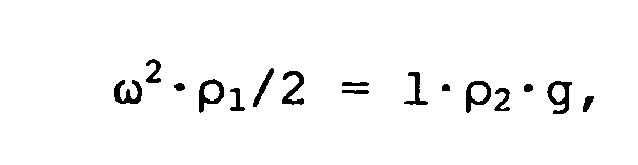
where ω - the velocity of chemical agent flow; ρ1 and ρ2 - the density of chemical agent flow and the density of liquid steel flow, respectively; g - the acceleration of gravity; 1 - the depth of chemical agent penetration into the melt.
where ω - the velocity of chemical agent flow; ρ1 and ρ2 - the density of chemical agent flow and the density of liquid steel flow, respectively; g - the acceleration of gravity; 1 - the depth of chemical agent penetration into the melt.
2. The method according to Claim 1, characterized in that for introducing the deoxidizer into the melt stream poured off a production unit
into the ladle a shotblast machine is used.
1. Pfannenstahldesoxidationverfahren umfassend die Zugabe eines granulierten oder klumpigen
Aluminiumdesoxidationsmittels in einen Schmelzfluss während des Ausgießens aus der
Fertigungseinheit in die Pfanne, wobei das Desoxidationsmittel eine Dichte aufweist,
die niedriger als die Dichte der Schmelze in der Pfanne ist, dadurch gekennzeichnet, dass die Partikel des Desoxidationsmittels eine Größe von 0,5 bis 12 mm aufweisen und
dem Schmelzfluss mit Schwung als ein konzentrierter Hochgeschwindigkeitsstrom mit
einem Kraftimpuls von 40 bis 318,6 N zugeführt wird, wodurch die direkte Penetration
des Desoxidationsmittels in die Schmelze gewährleistet wird, und mit einer Geschwindigkeit,
die aus dem Gleichgewicht von Hochdruckdynamischer Belastung und statischen Druck
im Inneren des Metalls kalkuliert ist und wie folgt bestimmt wird:
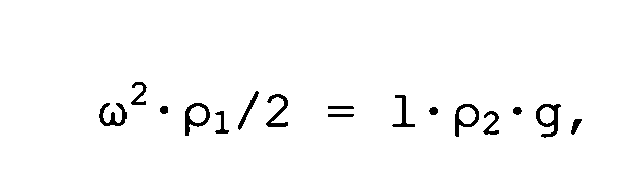
wobei ω - die Geschwindigkeit des Flusses des chemischen Mittels ist; ρ1 and ρ2 - die Dichte des Flusses des chemischen Mittels und die Dichte des flüssigen Stahlflusses sind; g - die Erdbeschleunigung ist; 1 - die Penetrationstiefe des chemischen Mittels in die Schmelze ist.
wobei ω - die Geschwindigkeit des Flusses des chemischen Mittels ist; ρ1 and ρ2 - die Dichte des Flusses des chemischen Mittels und die Dichte des flüssigen Stahlflusses sind; g - die Erdbeschleunigung ist; 1 - die Penetrationstiefe des chemischen Mittels in die Schmelze ist.
2. Verfahren nach Anspruch 1, dadurch gekennzeichnet, dass für die Zugabe des Desoxidationsmittels in den Schmelzfluss, der aus der Fertigungseinheit
in eine Pfanne gegossen wird, ein Kugelstrahler verwendet wird.
1. Procédé de désoxydation d'un acier coulé comprenant l'étape consistant à introduire
un désoxydant à base d'aluminium en granulés ou en morceaux dans un courant de métal
en fusion pendant sa coulée hors d'une unité de production à l'intérieur d'une poche
de coulée, dans lequel la densité dudit désoxydant est plus faible que la densité
dudit métal en fusion dans ladite poche de coulée, caractérisé en ce que les particules de désoxydant ont une taille allant de 0,5 à 12 mm et sont introduites
à l'intérieur du courant de métal en fusion par le biais d'une quantité de mouvement
d'un flux concentré de vitesse élevée avec une impulsion allant de 40 à 318,6 N, ce
qui permet audit désoxydant de pénétrer directement à l'intérieur dudit métal en fusion,
et avec une vitesse qui est estimée à partir de l'équilibre entre une pression dynamique
à vitesse élevée et une pression statique à l'intérieur du métal, donné par la relation
:

dans laquelle ω représente la vitesse d'écoulement d'agent chimique ; ρ1 et ρ2 représentent la densité du flux d'agent chimique et la densité du flux d'acier liquide, respectivement ; g représente l'accélération de la pesanteur ; 1 représente la profondeur de pénétration de l'agent chimique à l'intérieur du métal en fusion.
dans laquelle ω représente la vitesse d'écoulement d'agent chimique ; ρ1 et ρ2 représentent la densité du flux d'agent chimique et la densité du flux d'acier liquide, respectivement ; g représente l'accélération de la pesanteur ; 1 représente la profondeur de pénétration de l'agent chimique à l'intérieur du métal en fusion.
2. Procédé selon la revendication 1, caractérisé en ce qu'un poste de grenaillage est utilisé pour introduire le désoxydant dans le courant
de métal en fusion qui est coulé hors d'une unité de production à l'intérieur d'une
poche de coulée.
REFERENCES CITED IN THE DESCRIPTION
This list of references cited by the applicant is for the reader's convenience only. It does not form part of the European patent document. Even though great care has been taken in compiling the references, errors or omissions cannot be excluded and the EPO disclaims all liability in this regard.
Patent documents cited in the description
Non-patent literature cited in the description
- Yu.F. VyatkinV.A. VikhrevchukV.F. Polyakov et al.A resource-saving technology of deoxidizing steel with aluminum in a ladleChermetinformatsya Journal, 1990, 53-55 [0008]