| (19) |
 |
|
(11) |
EP 2 193 822 A1 |
| (12) |
EUROPEAN PATENT APPLICATION |
| (43) |
Date of publication: |
|
09.06.2010 Bulletin 2010/23 |
| (22) |
Date of filing: 08.12.2008 |
|
| (51) |
International Patent Classification (IPC):
|
|
| (84) |
Designated Contracting States: |
|
AT BE BG CH CY CZ DE DK EE ES FI FR GB GR HR HU IE IS IT LI LT LU LV MC MT NL NO PL
PT RO SE SI SK TR |
|
Designated Extension States: |
|
AL BA MK RS |
| (71) |
Applicant: Nduka, Harry |
|
Barking
London
IG11 0PY (GB) |
|
| (72) |
Inventor: |
|
- Nduka, Harry
Barking
London
IG11 0PY (GB)
|
|
| |
|
| (54) |
Bladder sphincter pacemaker |
(57) This device will be able to ascertain that the intra vesical pressure (ie intrabladder)
is risen (similar to pressure sensors used in urodynamic studies) and then stimulate
the fast twitch muscle part of the sphincter complex to contract and stop incontinence.
The slow acting part of the sphincter complex is usually working well stopping continous
leakage so does not need to be stimulated this is the main second difference with
the ideas proposed by others.
|
|
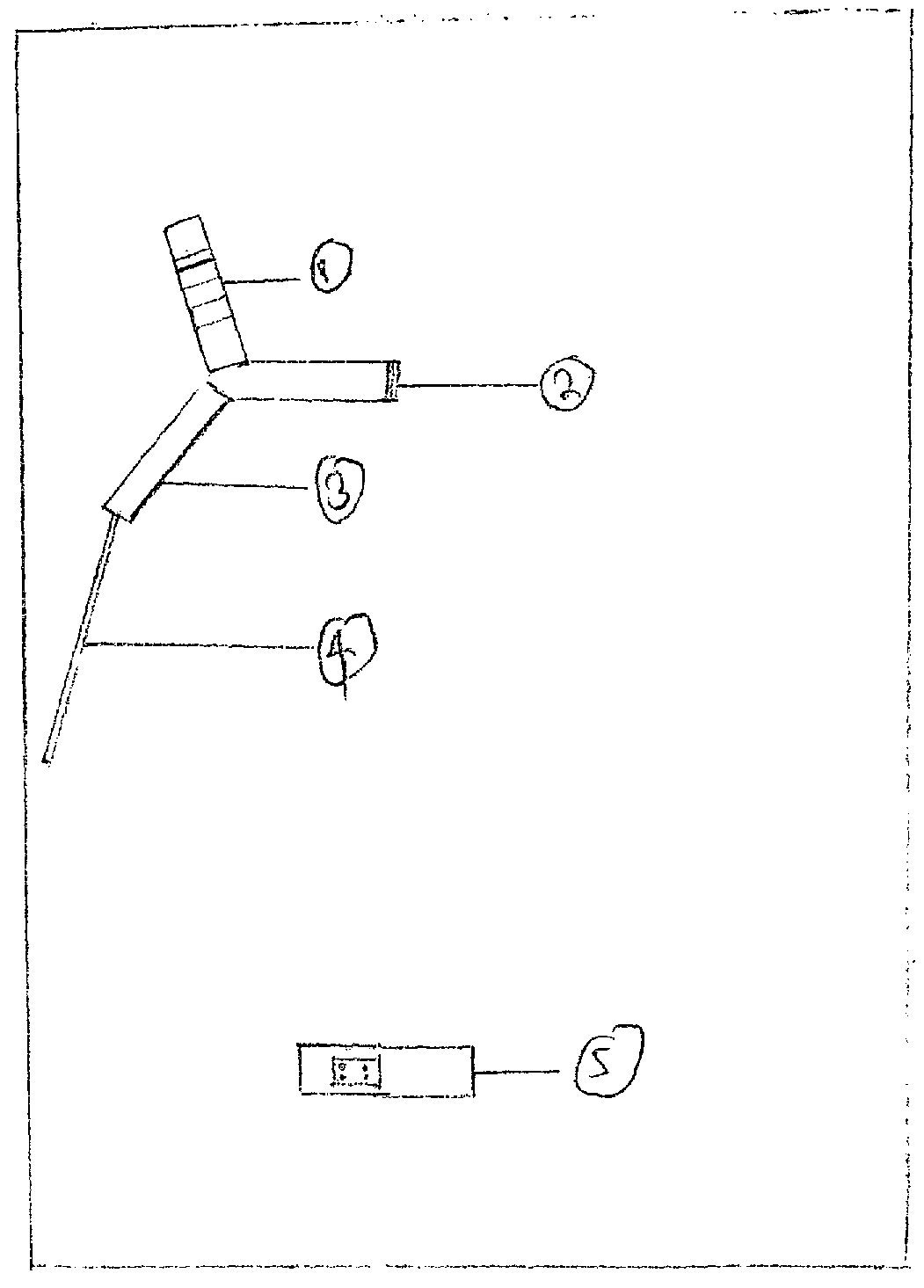
[0001] The electrode has a guide wire which is directly connected to the fast acting part
of the sphincter. This is easy to localise using magnetic resonance imaging.
[0002] The pressure guage sensors are to sense the intra bladder pressure and once a pre
set level is reached contraction is stimulated to stop urine leakage.
[0003] To pass urine normally the system is de activated temporarily using the radio frequency
remote.
1. Bladder sphincter pace maker gauging the bladder pressure and stimulating the fast
acting sphincter muscle to contract and stop urine leakage.
2. Bladder sphincter pace maker, Radio frequency controlled activation of sphincter muscle
relaxation to allow passage of urine.
3. Bladder sphincter pacemaker Pressure gauging adjustability.
4. As in Claim 1 Removable.