|
(11) | EP 2 250 178 B1 |

| (12) | EUROPEAN PATENT SPECIFICATION |
|
|
| (54) |
IMPROVED PROCESS FOR PREPARATION OF TRIAZOL-BENZODIAZEPINE DERIVATIVES VERBESSERTES VERFAHREN ZUR HERSTELLUNG VON TRIAZOL-BENZODIAZEPIN-DERIVATEN PROCÉDÉ AMÉLIORÉ DESTINÉ À LA PRÉPARATION DE DÉRIVÉS DE TRIAZOL-BENZODIAZÉPINE |
|
|
|||||||||||||||||||||||||||||||
| Note: Within nine months from the publication of the mention of the grant of the European patent, any person may give notice to the European Patent Office of opposition to the European patent granted. Notice of opposition shall be filed in a written reasoned statement. It shall not be deemed to have been filed until the opposition fee has been paid. (Art. 99(1) European Patent Convention). |
FIELD OF INVENTION
[0001] This invention relates to an improved process for preparation of pharmaceutically active triazol-benzodiazepine derivatives such as alprazolam, triazolam, brotizolam and etizolam etc. These pharmaceutically active agents are short acting drugs in the benzodiazepine class used to treat anxiety disorder and as an adjunctive treatment for depression.
BACKGROUND OF INVENTION
[0002] Triazole-benzodiazepine derivatives, such as alprazolam, triazolam, brotizolam, etizolam, etc., are marketed for therapeutic indications such as anxiety disorder and adjunctive treatment for depression.
[0003] The general scheme for preparation of the triazole-benzodiazepine derivatives is as follows:
where R is
(the spiral line indicates the side that is attached to the benzodiazepine nucleus), and X is hydrogen or halogen, i.e. chlorine, fluorine, bromine or iodine.
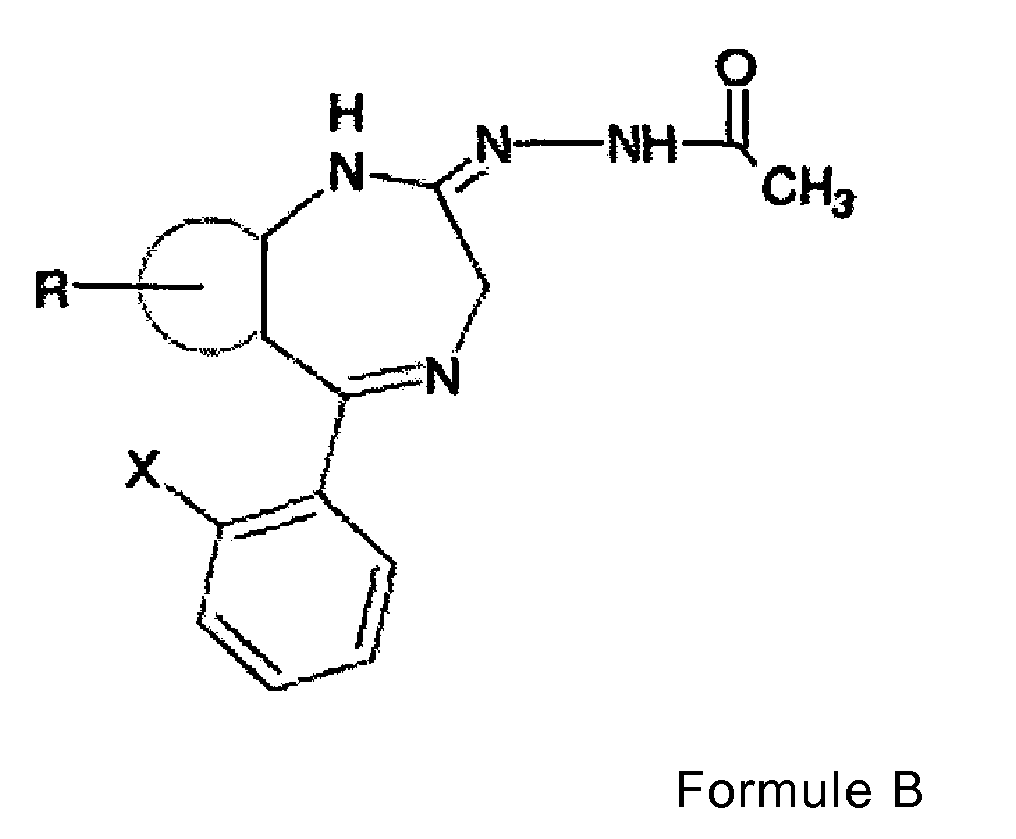
[0004] From the above mentioned general scheme, it appears that there is a common strategy for synthetic preparation of the triazole-benzodiazepine derivatives involves triazol ring formation as a common step. The benzodiazepine moiety (Formula A) required for synthesis can be prepared from corresponding suitable benzophenone derivatives which is commonly described in the literature. The synthesis of triazol-benzodiazepine involves a common step of cyclization and formation of the triazol ring from acetyl hydrazone derivatives (Formula B) derived from different benzodiazepine. The formation of acetyl hydrazone derivatives and its cyclization forms a common synthetic scheme in various triazol-benzodiazepines, such as alprazolam, triazolam, brotizolam and etizolam etc.
[0005] Therefore, the present invention aims to develop a convenient process of cyclization of acetyl hydrazone derivatives (Formula B) to obtain Formula C.
[0006] U.S. Pat. No. 3,987,052 to Hester et al. describes various strategies for the formation of benzodiazepine-triazol moieties in patent which involves the following steps:
[0007] According to the above patent, 1,3 dihydro-5-phenyl-2H-1,4 benzodiazepine-2-thione of formula (I) in ethanol when condensed with acetyl hydrazide (II) at a temperature range of 60-120° C. for 24 hours obtained a crude mixture comprising of corresponding 2-(2-acetyl hydrazino)-5-phenyl-3H-1,4 benzodiazepine (III) and the corresponding 8-chloro-1-methyl-6-phenyl-4H-s-triazolo[4,3-I] [1,4 ]benzodiazepine (IV). Further purification by conventional methods, such as extraction or chromatography, is required to obtain the compound IV with a yield of 47.7%.
[0008] From commercial point of view, above said preparation is tedious and lengthy as well as expensive due to low yield due to concomitant formation of compounds III and IV.
[0009] According to Croatian Patent No. HR-P2001000081, alprazolam was prepared by cyclization of acetyl hydrazone using tri-ethyl ortho acetate in presence of catalyst as follows:
[0010] Tri-ethyl ortho acetate is a flammable liquid which is difficult to handle on industrial scale. Additionally, the catalyst used in the above cyclization process is expensive, as well as being unavailable commercially, due to its high manufacturing cost.
[0011] In patent DE 3413709 A, the title compound I
(R1=H, C1-3 alkyl; R2 to R5=H, C1-3 alkyl, halo) were prepared by mesylating the alcohol II
(R-H) and cyclizing the product III
(R-SO2Me) with aqueous NH4OH-C1-3 alkanol. Mesylating the alcohol II (R, R2-R4=H, R1=Me, R5=Cl) in DMF, THF, and NEt3 with MeSO2Cl-THF at -10° C. over 30 min, then stirring 30 min, filtering, and treating the filtrate (containing the compound III (R=S02Me)) with aqueous NH40H-MeOH gave alprazolam (I, R1=Me, R2-R4=H, R5=Cl).
[0012] The drawbacks of the above mentioned processes are requiring more operations to obtain the triazol-benzodiazepine derivatives with critical parameters, and requiring the use of reagents such as methane sulphonyl chloride-tetra hydro furan (THF) at -10°C.
[0013] Therefore, there is a need in the art to provide a cost-effective and ecologically friendly process for preparation of triazol-benzodiazepine derivatives, such as alprazolam, triazolam, brotizolam and etizolam. Accordingly the present invention provides a process which is devoid of the use of expensive and hazardous reagents, and of critical reaction parameters. Also, the solvent used as reaction medium is recovered to a greater extent after the completion of reaction which makes the process commercially applicable for industrial scale.
[0015] William R. Banks and George A. Digenis "Development of methodology for the rapid incorporation of carbon-13 1,2,4-triazolo systems from carbon dioxide", Tetrahedron Letters, vol. 30, no. 47, 1989, pages 6473-6476, teaches rapid incorporation of C13 1,2,4-triazolo systems from carbon dioxide.
[0016] Bechtel et al. "Blood Level, Distribution, Excretion, and Metaboliote Pattern of [14C]-Brotizolam in the Rat, Dog and Rhesus Monkey", Arzneimittel Forschung, vol. 36, no. 1, teaches the use of [14C]-Brotizolam.
SUMMARY OF INVENTION
[0017] Therefore, the present invention utilizes a commercially available solvent toluene and a commercially available catalyst p-toluene sulphonic acid to exert good yield with purity thereby making the process cost effective.
[0018] An object of the present invention is to provide a commercially suitable process for the preparation of triazol-benzodiazepine derivatives, which involves a low number of operations and uses non-hazardous reagents and solvents.
[0019] Another objective of the invention is to provide cost effectiveness and environment friendly process over the existing prior arts.
[0020] This object is solved by an improved process for preparation of triazol-benzodiazepine derivatives of Formula C
wherein R is,
and X is hydrogen or halogen, the process comprising the step of cyclicizing the compound of Formula B
in the presence of p-toluene sulphonic acid as catalyst in toluene as the reaction medium to obtain compound of Formula A, wherein R is defined above and wherein the cyclization of Formula B is carried out at a temperature of 110 to 115° C for 10 to 12 hrs.
[0021] This invention mainly directed to industrially applicable and commercially feasible process for the preparation of triazol-benzodiazepine derivatives, such as alprazolam, triazolam, brotizolam, etizolam, etc. The improved process is carried out under milder reaction conditions and is devoid of highly toxic reagents.
[0022] The preparations of triazol-benzodiazepine derivatives involving the following common synthetic step:
where R and X are defined above. Preferably, the reaction takes place in toluene at reflux temperature in the presence of p-toluene sulphonic acid (PTSA).
[0023] In an embodiment, the intermediate for alprazolam, 2-(2-acetyl hydrazino)-7-chloro-5-phenyl-2H-1,4 benzodiazepine(acetyl hydrazone), is cyclicized in toluene at the reflux temperature in the presence of p-toluene sulphonic acid (PTSA), preferably for 10-12 hours, to obtain 8-chloro-1-methyl-6-phenyl-4H-s-trizolo[43-1] [1,4]benzodiazepine(alprazolam) in good yield without formation of side products.
[0024] In an another embodiment, the intermediate for triazolam, 2-(2-acetyl hydrazine)-7-chloro-5-(2-chloro phenyl)-3H-1,4-bezodiazepine(chloroacetylhydrazone), is cyclicized in toluene at the reflux temperature in the presence of p-toluene sulphonic acid (PTSA), preferably for 10-12 hours, to obtain triazolam in good yield without formation of side products.
[0025] In an another embodiment the intermediate, for brotizolam, 2-bromo-4-(2-chlorophenyl)-7-acetyl hydrazido-6H-thieno[32 f]-1,4-dizapine, is cyclized in toluene at the reflux temperature in the presence of p-toluene sulphonic acid (PTSA), preferably for 10-12 hours, to obtain brotizolan in good yield without formation of side products.
[0026] In an another embodiment the intermediate for etizolam, 7-(acetyl hydrazido)-4-(2-chloropheny)-2-ethyl-6H-thieno[3 2 f]-1,4-dizapine, is cyclized in toluene at the reflux temperature in the presence of p-toluene sulphonic acid (PTSA), preferably for 10-12 hours, to obtain etizolam in good yield without formation of side products.
DETAIL DESCRIPTION OF INVENTION
[0027] The invention will now be described in detail in connection with certain preferred and optional embodiments, so that various aspects thereof may be more fully understood and appreciated.
[0028] The method described herein further provides substantial benefits relative to previously used or suggested production methods. For example, the starting materials, intermediates, liquid media, and catalysts used are relatively easier to handle and to dispose off, if necessary. Importantly, the present method provides high yields of about 75 to 80% improvement over the methods of existing prior art.
[0029] This improved process for preparation of triazole-benzodiazapine derivatives carried out in single step which has been depicted as follows:
where R and X are defined above. The reaction preferably takes place in toluene at reflux temperature (100-110° C.) in the presence of p-toluene sulphonic acid (PTSA). The molar ratio of the compound of Formula B to toluene (solvent) is about 1:25 to about 1:45, preferably about 1:35 to about 1:40. The molar ratio of Formula-B to PTSA (catalyst) is at least 300:1, preferably about 300:1.1 to about 300:1.5. The cyclization of Formula B is carried out at a temperature of about 100-110°C., i.e. the reflux temperature of the solvent (toluene), for about 10-12 hours.
[0030] The reaction mass (after completion of reaction) is cooled abruptly for 30 min. to 25 to 30° C. and then gradually cooled to 10 to 15° C. and stirrer for 4-5 hrs. to obtain a solid or wet cake of compound Formula C. (alprazolam, triazolam, brotizolam, or etizolam).
[0031] The wet cake obtained from said cyclization reaction is slurried with an aliphatic solvent, (such as methanol or ethanol), an ester (such as ethyl acetate), or an aromatic solvent (such as toluene) for up to 2 hrs to obtain a pure Formula C.
[0032] The process described above can be used to make triazole-benzodiazapine derivatives (alprazolam, triazolam, brotizolam, etizolam, etc.) having a purity of about 99.5 to 99.9% and with about 75 to 80% yield.
[0033] In an embodiment of the present invention, the intermediate for alprazolam, 2-(2-acetyl hydrazino)-7-chloro-5-phenyl-2H-1,4benzodiazepine(acetyl hydrazone) (Formula B) is cyclicized in toluene at reflux temperature in presence of p-toluene sulphonic acid for 10-12 hours, to obtain 8-chloro-1-methyl-6-phenyl-4H-s-trizolo[43-I][1,4] benzodiazepine referred as Alprazolam with yield of about 75-80% with minimal or negligible formation of side products.
[0034] Thus, according to preferred embodiment, acetyl hydrazone of formula B is mixed with excess moles of toluene, followed by distillation of 0.2% of toluene at 110 to 112° C. The reaction mixture is cooled to 90 to 95° C., followed by the addition of p-toluene sulphonic acid in catalytic amount (about 1 to about 1.5% w/w). The reaction mixture is refluxed for 1 to 20 hrs; preferably 10 to 12 hrs. The progress of the reaction is monitored by thin layered chromatography (TLC). After completion, the reaction mixture is cooled to 25 to 30° C., then further cooled 0 to 15° C. and stirred at the same temperature for 4 to 5 hrs. The solids precipitated were filtered and washed with cold toluene and finally purified by isopropanol.
[0035] Without further description, it is believed that one of ordinary skill in the art can, using the preceding description and the following illustrative examples, make and utilize the compounds of the present invention and practice the claimed methods. The following examples are given to illustrate the present invention.
EXAMPLE 1 - General Preparation of triazole-benzodiazepine Derivatives
[0036] The following general scheme and reaction conditions illustrate the formation of the triazole-benzodiazepine derivatives:
where R and X are defined above.
[0037] Formula B (0.36 mole) and toluene (11.75 moles) were added to a round bottom (RB) flask. 0.94 mole of toluene are distilled out with a Dean-Stark apparatus for water removal at 110-112° C. The mixture was then cooled to 90-95° C. and p-toluene sulphonic acid (0.0012 mole) was added. The reaction mixture was refluxed at 105-110° C. for 10-12 hrs. At the end of the reaction (as indicated by TLC), the reaction mixture was cooled to 25-30° C. The reaction mass was then further cooled to 10-15° C. and stirred at same temperature for 4-5 hrs. The solids precipitated containing crude Formula C were filtered and washed with cold toluene. The Formula C thus obtained was further purified from isopropanol with a yield of 75-80%.
EXAMPLE 2 - Preparation of alprazolam
[0038] 2-(2-acetyl hydrazino)-7-chloro-5-phenyl-2H-1,4 benzodiazepine (117.5 g; 0.36 mole) and toluene (11.75 mole.) were added to a RB flask. 0.94 mole of toluene was distilled out at 110-112° C. The reaction mixture was cooled to 90-95° C. and charged with p-toluene sulphonic acid (0.0012 mole). The reaction mixture was then refluxed at 105-110° C. for 10-12 hrs with a Dean-Stark apparatus for water removal. At the end of the reaction (as indicated by TLC), reaction mixture was cooled to 25-30° C. The reaction mass was then further cooled to 10-15° C. and stirred at same temperature for 4-5 hrs. The solids precipitated were filtered and washed with cold toluene to obtain crude 8-chloro-1-methyl-6-phenyl-4H-s-trizolo[4 3-I][1,4] benzodiazepine (alprazolam). The crude alprazolam was purified from isopropanol to obtain 80% yield of pure alprazolam.
EXAMPLE 3 - Preparation of triazolam
[0039] The following steps are used in making triazolam: 1) charged 2-(2-acetyl hydrazine)-7-chloro-5-(2-chloro phenyl)-3H-1,4-bezodiazepine(chloro acetyl hydrazone) (130 g; 0.36 mole) and toluene (11.75 moles.) in a 2.0 L RB flask; 2) distilled out 0.94 moles of toluene at 110-112° C.; 3) cooled the reaction mixture to 90-95° C. and charged p-toluene sulphonic acid (0.0012 mole); 4) refluxed the reaction mixture at 105-110° C. for 10-12 hrs with Dean-Stark apparatus for water removal; 4) at the end of the reaction (as indicated by TLC), cooled the reaction mixture to 25-30° C.; 5) further cooled the reaction mixture to 10-15° C. and stirred at same temperature for 4-5 hrs; 5) filtered and washed precipitated solid with cold toluene (130 ml) to obtain crude triazolam (108-113.5 g); 5) obtained purified triazolam at 77% yield by purifying the crude triazolam from isopropanol.
[0040] Although certain presently preferred embodiments of the invention have been specifically described herein, it will be apparent to those skilled in the art to which the invention pertains that variations and modifications of the various embodiments shown and described herein may be made. Accordingly, it is intended that the invention be limited only to the extent required by the appended claims and the applicable rules of law.
1. An improved process for preparation of triazol-benzodiazepine derivatives of Formula
C
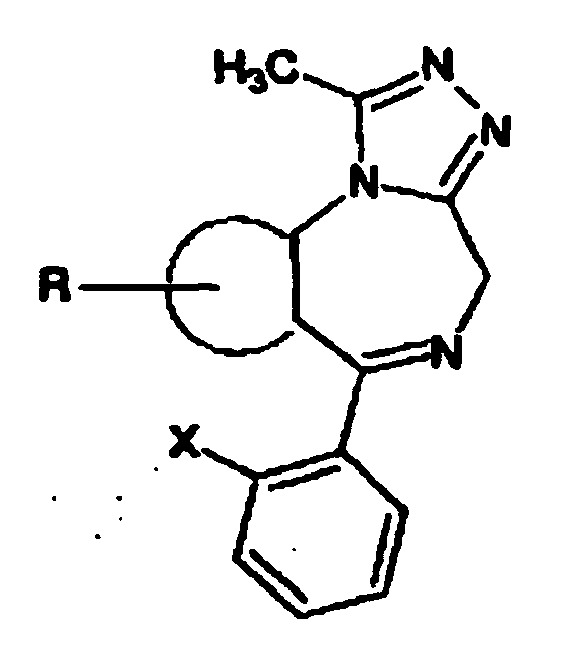
wherein R is,
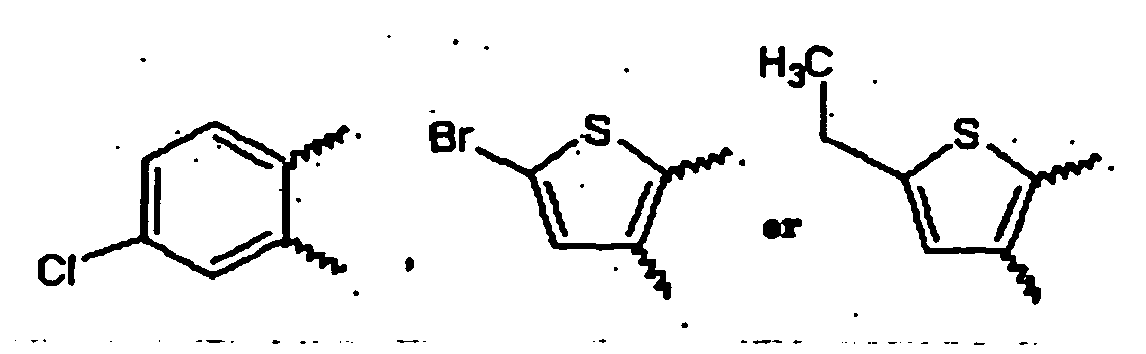
and X is hydrogen or halogen, the process comprising the step of cyclicizing the compound of Formula B
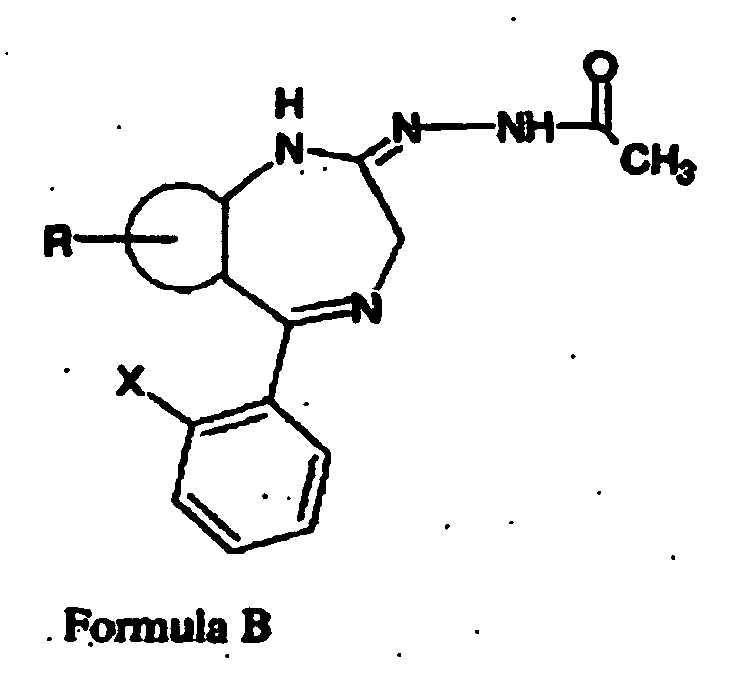
in the presence of p-toluene sulphonic acid as catalyst in toluene as the reaction medium to obtain compound of Formula C, wherein R is defined above, and wherein the cyclization of Formula B is carried out at a temperature of 110 to 115° C for 10 to 12 hrs.
wherein R is,
and X is hydrogen or halogen, the process comprising the step of cyclicizing the compound of Formula B
in the presence of p-toluene sulphonic acid as catalyst in toluene as the reaction medium to obtain compound of Formula C, wherein R is defined above, and wherein the cyclization of Formula B is carried out at a temperature of 110 to 115° C for 10 to 12 hrs.
2. The process of claim 1, further comprising the steps of cooling the reaction mass,
after completion of the cyclicizing step, to 25-30° C and further cooling to 10-15°
C to obtain a solid containing the compound of Formula C.
3. The process of claim 2, further comprising a step of stirring the reaction mass at
10 - 15°C. for 4 to 5 hrs. to obtain a solid or a wet cake containing the compound
of Formula C.
4. The process of claim 1, wherein the molar ratio of said Formula-B to p-toluene sulphonic
acid is at least 300:1.
5. The process of claim 1, further comprising a step of treating a dry solid cake obtained
from the cyclization with a solvent selected from the group consisting of aliphatic
solvent, ester, and aromatic solvent to obtain a pure Formula C.
6. The process of claims 1, wherein said process is used in the manufacture of alprazolam,
triazolam, brotizolam or etizolam with about 99.9% purity and about 75-80% yield.
7. The process of claim 1, wherein said compound of formula C is selected from the group
consisting of alprazolam, triazolam, brotizolam and etizolam.
1. Verbessertes Verfahren zur Herstellung von Triazol-Benzodiazepin-Derivaten mit der
Formel C
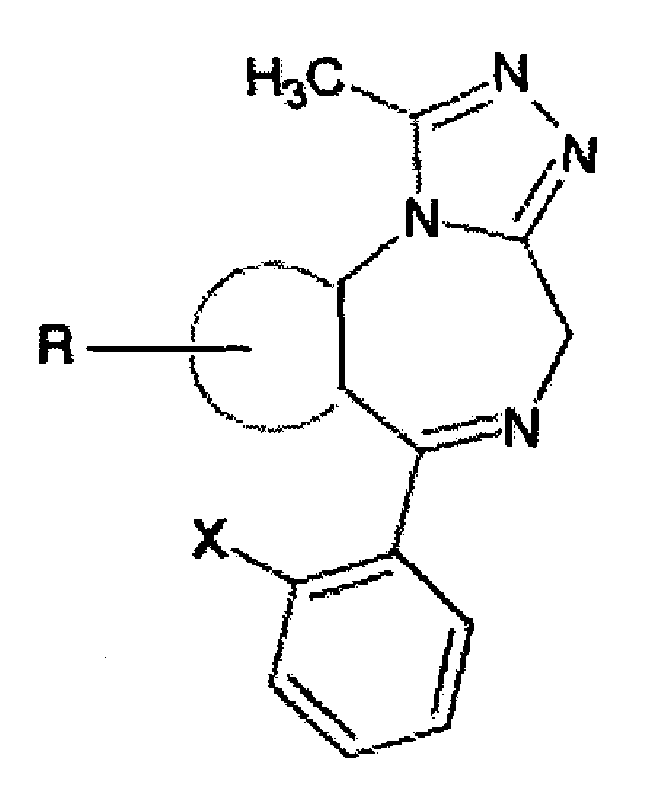
wobei R
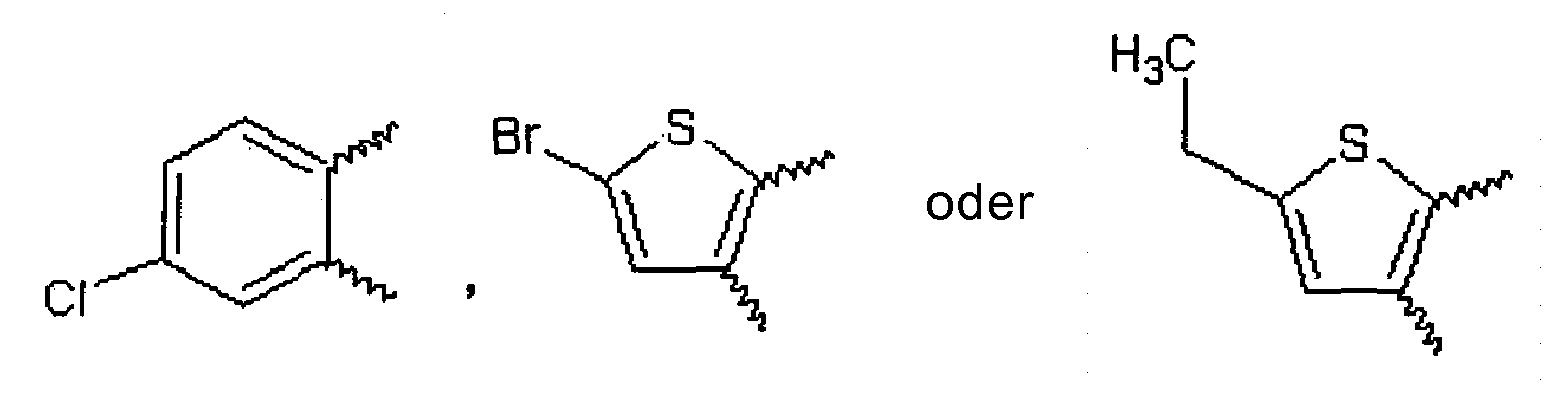
ist und X Wasserstoff oder ein Halogen ist, wobei das Verfahren den Schritt des Cyclisierens der Verbindung mit der Formel B
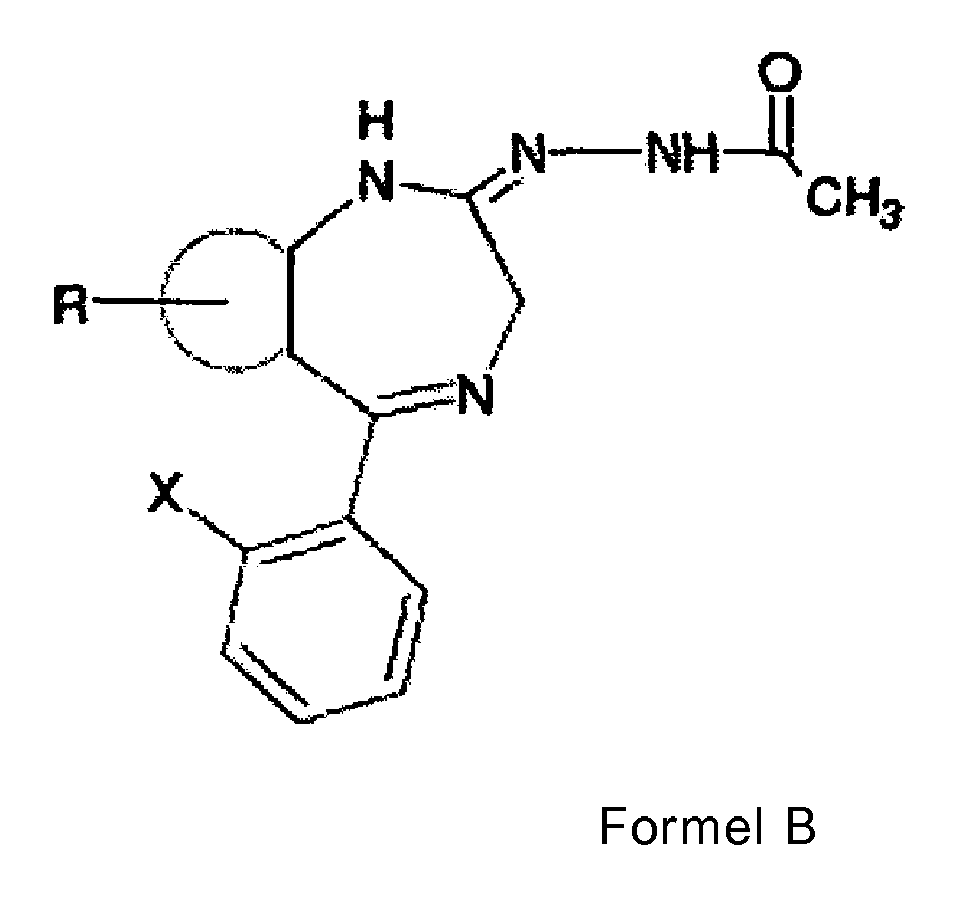
in Gegenwart von p-Toluolsulfonsäure als Katalysator in Toluol als Reaktionsmedium umfasst, um die Verbindung mit der Formel C zu erhalten, wobei R oben definiert ist und wobei die Cyclisierung der Formel B bei einer Temperatur von 110 bis 115°C während 10 bis 12 Std. durchgeführt wird.
wobei R
ist und X Wasserstoff oder ein Halogen ist, wobei das Verfahren den Schritt des Cyclisierens der Verbindung mit der Formel B
in Gegenwart von p-Toluolsulfonsäure als Katalysator in Toluol als Reaktionsmedium umfasst, um die Verbindung mit der Formel C zu erhalten, wobei R oben definiert ist und wobei die Cyclisierung der Formel B bei einer Temperatur von 110 bis 115°C während 10 bis 12 Std. durchgeführt wird.
2. Verfahren nach Anspruch 1, welches ferner die Schritte des Abkühlens der Reaktionsmasse,
nach Beendigung des Cyclisierungsschritts, auf 25-30°C und des weiteren Abkühlens
auf 10-15°C umfasst, um einen Feststoff zu erhalten, welcher die Verbindung der Formel
C enthält.
3. Verfahren nach Anspruch 2, welches ferner einen Schritt des Rührens der Reaktionsmasse
bei 10-15°C während 4 bis 5 Std. umfasst, um einen Feststoff oder einen Nasskuchen
zu erhalten, welcher die Verbindung der Formel C enthält.
4. Verfahren nach Anspruch 1, wobei das Molverhältnis der genannten Formel B zu p-Toluolsulfonsäure
mindestens 300:1 beträgt.
5. Verfahren nach Anspruch 1, welches ferner einen Schritt des Behandelns eines aus der
Cyclisierung erhaltenen trockenen festen Kuchens mit einem Lösungsmittel umfasst,
welches aus der Gruppe ausgewählt wird, welche aus aliphatischem Lösungsmittel, Ester
und aromatischem Lösungsmittel besteht, um eine reine Formel C-Verbindung zu erhalten.
6. Verfahren nach Anspruch 1, wobei das genannte Verfahren bei der Herstellung von Alprazolam,
Triazolam, Brotizolam oder Etizolam mit einer Reinheit von etwa 99,9% und einer Ausbeute
von etwa 75-80% eingesetzt wird.
7. Verfahren nach Anspruch 1, wobei die genannte Verbindung mit der Formel C aus der
Gruppe ausgewählt wird, welche aus Alprazolam, Triazolam, Brotizolam und Etizolam
besteht.
1. Procédé amélioré destiné à la préparation de dérivés de triazolbenzodiazépine de la
formule C
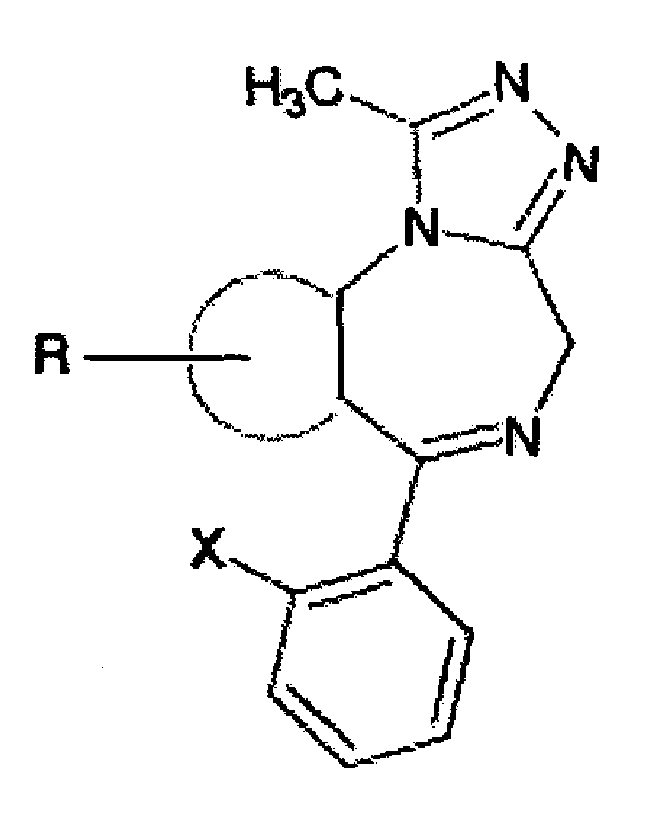
dans lequel R représente
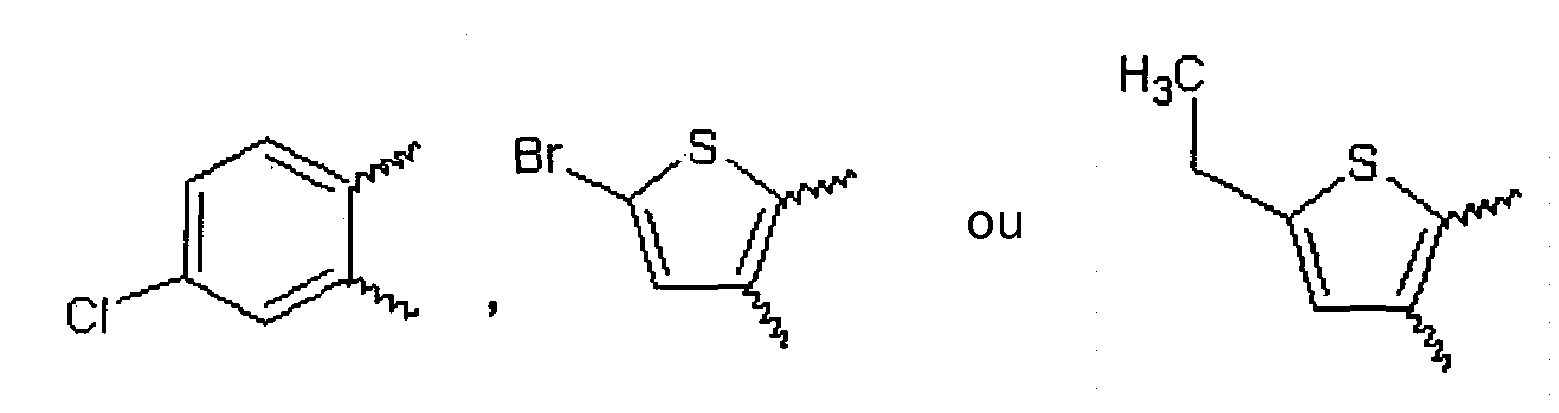
et X représente hydrogène ou un halogène, le procédé comprenant l'étape consistant à cycliser le composé de la formule B
en présence d'acide p-toluènesulfonique comme catalyseur dans du toluène comme milieu de réaction pour obtenir le composé de la formule C, dans lequel R est défini plus haut, et dans lequel la cyclisation de la formule B est effectuée à une température de 110 à 115°C pendant 10 à 12 heures.
dans lequel R représente
et X représente hydrogène ou un halogène, le procédé comprenant l'étape consistant à cycliser le composé de la formule B
en présence d'acide p-toluènesulfonique comme catalyseur dans du toluène comme milieu de réaction pour obtenir le composé de la formule C, dans lequel R est défini plus haut, et dans lequel la cyclisation de la formule B est effectuée à une température de 110 à 115°C pendant 10 à 12 heures.
2. Procédé selon la revendication 1, comprenant en outre les étapes consistant à réfrigérer
la masse réactionnelle, après compléter l'étape consistant à cycliser, à 25-30°C et
à réfrigérer encore à 10-15°C pour obtenir un solide contenant le composé de la formule
C.
3. Procédé selon la revendication 2, comprenant en outre une étape consistant à remuer
la masse réactionnelle à 10-15°C pendant 4 à 5 heures pour obtenir un solide ou un
gâteau humide contenant le composé de la formule C.
4. Procédé selon la revendication 1, dans lequel le rapport molaire dudit formule B à
l'acide p-toluènesulfonique est de 300:1 au moins.
5. Procédé selon la revendication 1, comprenant en outre une étape consistant à traiter
un gâteau sec et solide obtenu de la cyclisation avec un solvant sélectionné dans
le groupe consistant en solvant aliphatique, ester et solvant aromatique pour obtenir
un formule C pur.
6. Procédé selon la revendication 1, dans lequel ledit procédé est employé dans la fabrication
d'alprazolam, triazolam, brotizolam ou etizolam d'une pureté d'environ 99,9% et d'un
rendement d'environ 75-80%.
7. Procédé selon la revendication 1, dans lequel ledit composé de la formule C est sélectionné
dans le groupe consistant en alprazolam, triazolam, brotizolam et etizolam.
REFERENCES CITED IN THE DESCRIPTION
This list of references cited by the applicant is for the reader's convenience only. It does not form part of the European patent document. Even though great care has been taken in compiling the references, errors or omissions cannot be excluded and the EPO disclaims all liability in this regard.
Patent documents cited in the description
Non-patent literature cited in the description
- WILLIAM R. BANKSGEORGE A. DIGENISDevelopment of methodology for the rapid incorporation of carbon-13 1,2,4-triazolo systems from carbon dioxideTetrahedron Letters, 1989, vol. 30, 476473-6476 [0015]
- BECHTEL et al.Blood Level, Distribution, Excretion, and Metaboliote Pattern of [14C]-Brotizolam in the Rat, Dog and Rhesus MonkeyArzneimittel Forschung, vol. 36, 1 [0016]