|
(11) | EP 2 256 751 B1 |

| (12) | EUROPEAN PATENT SPECIFICATION |
|
|
| (54) |
Electromagnetic coil with terminal means Elektromagnetische Spule mit Anschlussmitteln Bobine électromagnétique avec dispositifs de connection |
|
|
|||||||||||||||||||||||||||||||
| Note: Within nine months from the publication of the mention of the grant of the European patent, any person may give notice to the European Patent Office of opposition to the European patent granted. Notice of opposition shall be filed in a written reasoned statement. It shall not be deemed to have been filed until the opposition fee has been paid. (Art. 99(1) European Patent Convention). |
[0001] The present invention relates to the field of mechanical electronics; more particularly, to an electromagnetic coil means.
[0002] Electromagnetic coil means may be applied in various fields. For example, it may be used as the coil of electronic expansion valve in an air-conditioner refrigeration system, which is a typical use thereof, or used as the stator part in a step motor, or used in an electronic device having a plurality of terminals connected with lead by means of soldering.
[0003] US 5,057,732 describes an electric motor comprising a stator disposed in a housing and including a coil bobbing, an exciting coil wound on said coil bobbing and at least two connector plates fixed to said coil bobbing. Further, the electric motor comprises a rotor rotatably supported in the housing and positioned concentrically to the stator.
[0004] JP 2008/253104 A describes a motor equipped with driving coils assembled in a stator and a terminal block at which a plurality of terminal pins are installed. The terminal pins are connected with the driving coils and are each composed of a mounting part mounted on the terminal block and a binding part connected with the driving coils. The mounting parts are installed so as to protrude in the radial direction of the motor while the binding parts are folded in the direction different from the radial direction of the motor.
[0005] Any of US 5,057,732, JP 2008/253 104, JP 09312963 and JP 2004153077 discloses an electromagnetic coil means according to the preamble of claim 1.
[0006] Reference is made to Fig.1, which is a schematic view showing the structure of a typical electromagnetic coil means in the prior art.
[0007] The electromagnetic coil means in the prior art includes a terminal part 12 and some pins 11 passing through the terminal part 12. The pins 11 are divided into a first group of pins connected with an upper coil stator and a second group of pins connected with a lower coil stator, in which the first and the second groups of pins are disposed spaced from each other. A head portion of the pin 11 passes through a pin leading-out surface 121 of the terminal part 12. The electromagnetic coil means has a frame including an upper frame 13 and a lower frame 14, which have an integral structure. The pins 11 of the electromagnetic coil means are connected with cable leads 15 by means of a circuit board 16.
[0008] The circuit board 16 has pin holes 162 and core holes 161 each as many as the pins 11, and the pin holes 162 and the core holes 161 are arranged in pairs. The pin head portion 111 extends out from the pin hole 162, and a head portion 151 of the cable lead extends out from the core hole 161. The pin head portion 111 is soldered to the cable lead head portion 151 through soldering materials.
[0009] There should be a relatively large distance between the pins of the electromagnetic coil means, thereby the insulation performance between the solder joints of pins and thus the stability and reliability of the operation of the electromagnetic coil could be ensured. However, due to the restriction caused by factors such as the overall volume of the electromagnetic coil means and the like, the distance between the pins can not be increased efficiently, which leads to a small distance between adjacent pins 11 in the prior art. Therefore, the distances between head portions 111 of adjacent pins and between the solder joints thereof are small, so that the insulation performance between the solder joints between pin head portions 111 is deteriorated, and the soldering operation is inconvenient.
[0010] The technical problem to be solved by the present invention is to provide an electromagnetic coil means which has a structure designed to be capable of improving the insulation performance between solder joints of pin head portions, and facilitating the soldering operation, thus to ensure the stability and reliability of the operation of the electromagnetic coil means.
[0011] To solve the above technical problem, the present invention pro-vides an electromagnetic coil means according to claim 1.
[0012] Preferably, the pin leading-out surface is an inclined surface, and an appropriate acute angle is formed between the centerlines of the first and second head portions and the inclined surface.
[0013] Preferably, the pin leading-out surface comprises an upper step surface and a lower step surface substantially parallel to the upper step surface; the first head portions are substantially perpendicular to the upper step surface, and the second head portions are substantially perpendicular to the lower step surface.
[0014] Preferably, each of said pins has the same length, and every adjacent first inner section and second inner section have equal distance these between and lie in the same horizontal plane; the horizontal distance between the plane in which the centerlines of the first outer sections lies and the plane in which the centerlines of the second outer sections lies is less than
times the distance between adjacent first inner section and second inner section.
[0015] Preferably, the horizontal distance equals to
times the distance between adjacent first inner section and second inner section.
[0016] Preferably, the pin leading-out surface is an inclined surface; first middle portions between the first inner sections and the first head portions are substantially perpendicular to the first inner sections, and an appropriate angle is formed between the centerlines of the first head portions and that of the first middle portions; second middle portions between the second inner sections and the second head portions are substantially perpendicular to the second inner sections, and an appropriate angle is formed between the centerlines of the second head portions and that of the second middle portions; the first and second head portions are substantially perpendicular to the inclined surface.
[0017] Preferably, the electromagnetic coil means comprises cable leads and a circuit board, the first and second head portions being connected with the cable leads by means of the circuit board; and the terminal part has linear grooves for receiving the cable leads.
[0018] Preferably, the circuit board comprises pin holes and core holes each as many as the pins; the pin holes and core holes are arranged in pairs adjacent to each other and connected with each other by conducting materials; the first and second head portions extend out from the pin holes, and head portions of the cable leads extend out from the core holes; the first and second head portions are soldered with the head portions of the cable leads by soldering materials.
[0019] Preferably, the center distance between the pin holes and the core holes is greater than 0.5 times the sum of the diameter of the pin holes and the diametre of the core holes and less than 5 times thereof.
[0020] The electromagnetic coil means may comprise a cover with a protruded locating portion, and the terminal part may comprise a locating groove engaging with the protruded locating portion; and the protruded locating portion may engage with the locating groove and may be sealed therewith by resin materials.
[0021] The electromagnetic coil means may comprise a frame, which in turn comprises an upper frame and a lower frame detachable from the upper frame, and the upper and lower frames may have the same structure and size.
[0022] In the electromagnetic coil means provided in this invention, both the first and second groups of pins are bent upward, and a distance between adjacent said first and second head portions is larger than that between adjacent said first and second root portions. The increase of the distance between adjacent first and second head portions enables to increase the distance between solder joints of adjacent pin head portions without increasing the overall volume of the electromagnetic coil means, thus the insulation performance between solder joints of adjacent pin head portions is improved and soldering operation is facilitated, ensuring the stability and reliability of the operation of the electromagnetic coil means.
[0023] Fig.1 is a schematic view of the structure of a typical electromagnetic coil means in the prior art;
[0024] Fig.2 is an assembly flowchart of an electromagnetic coil means provided in a first embodiment of the present invention;
[0025] Fig.3 is a schematic view of the structure of an electromagnetic coil means provided in a second embodiment of the present invention;
[0026] Fig.4 is a schematic view of the relative position of a first and a second groups of pins in the electromagnetic coil means provided in the second embodiment of the present invention;
[0027] Fig.5 is a top view of the relative position of the first and second groups of pins in the electromagnetic coil means provided in the second embodiment of the present invention;
[0028] Fig.6 is a schematic view of the structure of an electromagnetic coil means provided in a third embodiment of the present invention;
[0029] Fig.7 is schematic section view of the electromagnetic coil means provided in the third embodiment of the present invention.
[0030] Fig.8 is a schematic view of the structure of an electromagnetic coil means not forming part of the present invention;
[0031] Fig.9 is a schematic view of installation of a cover of electromagnetic coil means provided in the second embodiment of the present invention;
[0032] Fig.10 a schematic view of installation of a cover of electromagnetic coil means shown in Fig. 8.
[0033] The present invention is intended to provide an electromagnetic coil means which is designed with a structure that improves the insulation performance between solder joints of pin head portions and facilitates the soldering operation, ensuring the stability and reliability of the operation of the electromagnetic coil means.
[0034] A further detailed description of the invention is given hereinafter with reference to accompanied drawings and specific embodiments for those skilled in the art to better understand the technical solution of the present invention.
[0035] Reference is made to Fig.2, which is an assembly flowchart of an electromagnetic coil means provided in a first embodiment of the present invention.
[0036] The assembly process of the electromagnetic coil means provided in the first embodiment of the present invention is as follows:
[0037] Enameled wire is wound onto an upper frame 271, and the ends of the enameled wire are connected with first root portions 212b of a first group of pins 21, forming an upper coil stator on which an upper electromagnetic polar board 281 is mounted. Enameled wire is wound onto a lower frame 272, and the ends of the enameled wire are connected with second root portions 222b of a second group of pins 22, forming a lower coil stator on which a lower electromagnetic polar board 282 is mounted. The upper coil stator mounted with the upper electromagnetic polar board 281 and the lower coil stator mounted with the lower electromagnetic polar board 281 are assembled together, forming an electromagnetic coil stator. The electromagnetic coil stator is assembled with an upper shell 292 and a lower shell 291, forming a stator component. Then, the pins of the stator component are bent. Finally, the stator component with bent pins is positioned into a plastic resin packaging model so as to be packaged by injection molding, forming a terminal part 23 of the electromagnetic coil means. Consequently, the assembly of the electromagnetic coil means is completed.
[0038] A plurality of different embodiments of the electromagnetic coil means provided in the present invention are obtained depending on different bending ways of the pins of the stator component. The assembly process of the electromagnetic coil means provided in each of the following plurality of different embodiments of this invention is the same as that provided in the first embodiment, and the detailed description thereof will be omitted.
[0039] In the electromagnetic coil means provided in the first embodiment of the present invention, both the first and second groups of pins 21, 22 are bent upward, in which first outer sections 211 are substantially perpendicular to first inner sections 212, and second outer sections 221 are substantially perpendicular to second inner sections 222. A plane in which the centerlines of the first outer sections 211 lie and a plane in which the centerlines of the second outer sections 221 lie are substantially parallel to each other and are of an appropriate distance horizontally. The first and second head portions 211a, 221a extend out from the pin leading-out surface of the terminal part 23 which is an inclined surface 231, and an appropriate acute angle is formed between the first and second head portions 211a, 221a and the inclined surface 231.
[0040] The first and second groups of pins 21, 22 described in last paragraph are bent upward relative to the electromagnetic coil means disposed as shown in Fig.2.
[0041] In this embodiment, the pin may be bent in the following way (and procedures before the bending of pins may be made a reference to the preceding description of Fig.2): the stator component is placed into a bending machine tool; by setting a distance on the machine tool, the pins are divided into a first group of pins 21 and a second group of pins 22 spaced by an appropriate distance; then, the pins are bent by downward pressure provided by a cylinder or other facilities; the angle of bending is 90°, and of course, could be any other appropriate angles. It is also possible to perform the bending procedure earlier, right after the enameled wires of the upper and lower coil stators are wounded, in this case, the bending way of the pins of the upper and lower coil stators are the same.
[0042] By this arrangement, the distance between adjacent first and second head portions 211a, 221a and thus the distance between solder joints of adjacent pin head portions are increased, so that the insulation performance between the solder joints of the pin head portions are improved, and the stability and reliability of the operation of the electromagnetic coil means are ensured.
[0043] There is a height difference between the first head portions 211a and the second head portions 221a in a vertical direction, and the pin leading-out surface is provided as an inclined surface 231 which has an appropriate acute angle with respect to the first head portions 211a and second head portions 221a. By this arrangement, the first head portions 211a and the second head portions 221a protrude from the inclined surface 231, respectively, by lengths which are long enough and substantially equal, facilitating the soldering operation.
[0044] Reference is made to Fig.3 which is a schematic view of the structure of an electromagnetic coil means provided in a second embodiment of the present invention.
[0045] The second embodiment of the present invention is a variation of the first embodiment in which the shape of the terminal part 23 is varied. The bending direction of the pins in the second embodiment is the same as that in the first embodiment, thus a detailed description thereof is omitted.
[0046] In the second embodiment, the pin leading-out surface of the terminal part 23 includes an upper step surface 232 and a lower step surface 233 that is substantially parallel to the upper step surface 232. The first head portions 211a are substantially perpendicular to the upper step surface 232 and the second head portions 221a are substantially perpendicular to the lower step surface 233.
[0047] The bending method of pins in the second embodiment is the same as that in the first embodiment, thus a detailed description thereof is omitted.
[0048] By the arrangement that the first and second head portions 211a, 221a are substantially perpendicular to the upper and lower step surfaces 232, 233, respectively, the first and second head portions 211a, 221a are enabled to protrude from the upper and lower step surfaces 232, 233 by lengths long enough, respectively, thus the operation of soldering is facilitated.
[0049] There is a height difference between the first head portions 211a and the second head portions 221a in the vertical direction. Accordingly, the pin leading-out surface is provided as upper and lower step surfaces 232, 233 which have a height difference in the vertical direction. This arrangement, when compared with the inclined surface 231 provided in the first embodiment, can reduce the materials used for the terminal part 23 and thus the manufacture cost.
[0050] Reference is made to Figs.3-5, in which Fig.4 is a schematic view of the relative position of a first and a second groups of pins in the electromagnetic coil means provided in the second embodiment of the present invention, and Fig.5 is a top view of the relative position of the first and second groups of pins in the electromagnetic coil means provided in the second embodiment of the present invention.
[0051] In the second embodiment, it is provided that each of the pins has equal size, and adjacent first and second inner sections 212, 222 have equal distance therebetween and are disposed in the same horizontal plane. As shown in Fig.5, the distance between adjacent first and second inner sections 212, 222 are indicated with T, and the distance between adjacent first inner sections 212 and the distance between adjacent second inner sections 222 are indicated with 2T. As shown in Fig.4 or 5, the horizontal distance between the planes in which the centerlines of the first and second outer sections 211, 221 are disposed is indicated with L.
[0052] When
there is an appropriate distance between the first and second head portions 211a, 221a, thus a favorable insulation performance is ensured between the solder joints of pin head portions.
[0053] When
as shown in Fig.3, the distances between adjacent ends of adjacent first head portion 211a, the second head portion 221a, and next first head portion 211a or the distances between adjacent ends of adjacent second head portion 221a, first head portion 211a, and next second head portion 221a are substantially equal, and a generally regular triangle is formed by the ends of the three adjacent head portions. In this case, the insulation distances between adjacent solder joints of those three adjacent pin head portions are substantially equal, thus a favorable comprehensive insulation performance between the solder joints of pin head portions is provided.
[0054] Reference is made to Figs.6, 7, in which Fig.6 is a schematic view of the structure of an electromagnetic coil means provided in a third embodiment of the present invention, and Fig.7 is schematic section view of the electromagnetic coil means provided in the third embodiment of the present invention.
[0055] In the third embodiment, the pin leading-out surface is an inclined surface 234, and first and second groups of pins 21, 22 (both shown in Fig.2) bend upward. Middle portions 211b between the first inner sections 212 (shown in Fig.2) and the first head portion 211a are substantially perpendicular to the first inner sections 212, and an appropriate angle is formed between the first head portions 211a and the first middle portions 211b. Middle portions 221b between the second inner sections 222 and the second head portions 221a are substantially perpendicular to the second inner sections 222, and an appropriate angle is formed between the second head portions 221a and the second middle portions 221b. The first and second head portions 211a, 221a are substantially perpendicular to the inclined surface 234.
[0056] The first and second groups of pins 21, 22 described in last paragraph both bend upward relative to the electromagnetic coil means disposed as shown in Fig.7.
[0057] Before the package of the stator component, the bending method in the third embodiment is the same as that in the first embodiment. After the package, the packaged stator component needs to be placed onto a machine tool. The first and second head portions 211a, 221a are bent under a downward pressure provided by a cylinder or other facilities bend by an appropriate angle, such that they are substantially perpendicular to the inclined surface 234.
[0058] Compared with the first embodiment in which each of the first and second head portions 211a, 221a has an appropriate acute angle with respect to the inclined surface 231, the first and second head portions 211a, 221a in the third embodiment are arranged to be generally perpendicular to the inclined surface 234. This arrangement facilitates the extending of first and second head portions 211a, 221a out from the inclined surface 234, thus the soldering operation is further facilitated while favorable insulation performance between solder joints of adjacent pin head portions is ensured.
[0059] Reference is made to Fig.8, which is a schematic view of the structure of an electromagnetic coil means not forming part of the present invention.
[0060] One group of the first and second groups of pins 21, 22 (both shown in Fig.2) bends upward, while the other group bends downward. A plane in which the centerlines of the first outer sections 211 lie and a plane in which the centerlines of the second outer sections 221 lie are substantially parallel to each other and spaced with an appropriate distance in the vertical direction. The first and second head portions 211a, 221a are substantially perpendicular to the pin leading-out surface of the terminal part 23 (shown in Fig.10).
[0061] As described in the above paragraph, one group bends upward while the other bends downward with respect to the electromagnetic coil means placed as shown in Fig.8.
[0062] The bending method of the pins in this embodiment is as follows: the upper and lower coil stators are wounded thereon with enamel wires and then placed on a pin bending machine tool. The die of the machine tool punches the pins of the upper and lower coil stators to be bent using the downward pressure of a cylinder. The pins of the upper and lower coil stators have the same bending shapes and need to be bent twice. It is also possible to carry out the bending procedure after the assembly of the stator component, by bending one group of pins upward and the other downward.
[0063] Compared with the situation where all of the pins are bent upward as described above one group of pins are bend upward while the other group are bent downward, which can further increase the distance between adjacent first and second head portions 211a, 221a, and thus the distance between solder joints of adjacent pin head portions. Therefore, the insulation performance between the solder joints of the pin head portions are increased more effectively, ensuring the stability and reliability of the operation of electromagnetic coil means.
[0064] Each pin may be further devised with the same dimension, and adjacent first and second root portions 212b, 222b have equal distances therebetween and lie in the same horizontal plane. As shown in Fig.8, the distance between adjacent first and second root portions 212b, 222b is indicated with T, the distance between adjacent root portions of the first root portions 212b and that between adjacent root portions of the second root portions 222b are indicated with 2T, and the vertical distance between the plane in which the centerline of the first outer section 211 lies and the plane in which the centerline of the second outer section 221 lies is indicated with H.
[0065] When
there is an appropriate distance between the first and second head portions 211a, 221a, thus a preferable performance between the solder joints of the pin head portions is ensured.
[0066] When
as shown in Fig.8, the distances between adjacent ends of adjacent first head portion 211a, the second head portion 221a, and next first head portion 211a or the distances between adjacent ends of adjacent second head portion 221a, first head portion 211a, and next second head portion 221a are substantially equal, and a generally regular triangle is formed by the ends of the three adjacent head portions. In this case, the insulation distances between adjacent solder joints of those three adjacent pin head portions are substantially equal, thus a favorable comprehensive insulation performance between the solder joints of pin head portions is provided.
[0067] As shown in Fig.3 or 6, the first and second head portions 211a, 221a may be further connected with cable leads 25 through a circuit board 24, and the terminal part 23 may further have linear grooves 235 for receiving the cable leads 25. The number of the linear grooves 235 are equal to that of the cable leads 25, and each cable lead 25 is located within one linear groove 235, thereby on one hand the cable leads 25 are fixed while on the other hand, the cable leads 25 are insulated, further improving the insulation performance between cable leads 25.
[0068] As shown in Fig.3 or 6, the circuit board 24 may further have pin holes 241 and core holes 242 each as many as the pins. The pin holes 241 and core holes 242 may be arranged in pairs adjacent to each other, and connected with each other by conducting materials which may be conducting copper foil particularly. The first and second head portions 211a, 221a extend out from pin holes 241, and the head portions 251 of the cable leads extend out from the core holes 242. The first and second head portions 211a, 221a are soldered with the cable lead head portions 251 by soldering materials which may be tin solder particularly.
[0069] The first and second head portions 211a, 221a extend out from the pin holes 241, and the cable lead head portions 251 extend out from the core holes 242. Due to the fact that the pin holes 241 and core holes 242 are arranged adjacent to each other, the first and second head portions 211a, 221a can be close to the cable lead head portions 251, respectively, thus the soldering operation is facilitated and the soldering quality is improved.
[0070] As shown in Fig.3 or 6, the center distance between pin holes and core holes is indicated with S.
[0071] When S is greater than 0.5 times the sum of diameters of pin holes 241 and core holes 242 and less than 5 times thereof, there is an appropriate center distance between pin holes 241 and core holes 242, thus the electrical communication between the first and second head portions 211a, 221a and the cable lead head portion 251 is achieved directly through tin solder.
[0072] Reference is made to Figs.9, 10, in which Fig.9 is a schematic view of installation of a cover of the electromagnetic coil means provided in the second embodiment of the present invention, and Fig.10 a schematic view of installation of a cover of the electromagnetic coil means shown in Fig. 8.
[0073] The electromagnetic coil means further comprises a cover 26 with a protruded locating portion 261, and the terminal part 23 has a locating groove 236 engaged with the protruded locating portion 261. The protruded locating portion 261 engages with the locating groove 236 and is sealed therewith by resin materials. When performing packaging by resin materials, the protrusion-groove engaging between the protruded locating portion 261 and the locating groove 236 can prevent the resin materials from leaking out.
[0074] As shown in Fig.2, the frame of the electromagnetic coil means has an upper frame 271 and a lower frame 272 detachable from the upper frame 271. Each of the upper and lower frames 271, 272 have the same structure and size, thereby do not need to be distinguished from each other, resulting in an easy installation and a reduced operating cost.
[0075] A detailed description has been made to an electromagnetic coil means provided in the present invention. In this description, specific examples are used for illustrating the principle and embodiments of the present invention. Modifications to this examples are possible within the scope of protection of this invention defined in the appended claims.
1. An electromagnetic coil means, comprising an upper coil stator, a lower coil stator,
a terminal part (23) and pins (21, 22) passing through the terminal part (23), wherein
the pins (21, 22) are divided into a first group of pins (21) connected with the upper
coil stator and a second group of pins (22) connected with the lower coil stator,
and the first group of pins (21) and the second group of pins (22) are spaced apart
from each other; each pin of the first group of pins (21) comprises a first outer
section (211) with a first head portion (211a) and a first inner section (212) with
a first root portion (212b); each pin of the second group of pins (22) comprises a
second outer section (221) with a second head portion (221a) and a second inner section
(222) with a second root portion (222b); the first and second head portions (211a,
221a) extend out from a pin leading-out surface of the terminal part (23), characterized in that, the pins of both the first and second groups of pins (21; 22) are bent upward relative
to the electromagnetic coil means and the distance between adjacent said first and
second head portions (211a, 221a) is larger than that between adjacent said first
and second root portions (212b, 222b); the first outer section (211) is substantially
perpendicular to the first inner section (212), and the second outer section (221)
is substantially perpendicular to the second inner section (222); and the plane in
which the centerlines of the first outer sections (211) lie and the plane in which
the centerlines of the second outer sections (221) lie are substantially parallel
to each other and have an appropriate horizontal distance (L) therebetween.
2. The electromagnetic coil means according to Claim 1, characterized in that the pin leading-out surface is an inclined surface (231), and an appropriate acute
angle is formed between the centerlines of the first and second head portions (211a,
221a) and the inclined surface (231; 234).
3. The electromagnetic coil means according to Claim 1, characterized in that the pin leading-out surface comprises an upper step surface (232) and a lower step
surface (233) substantially parallel to the upper step surface (232); the first head
portions (211a) are substantially perpendicular to the upper step surface (232), and
the second head portions (221a) are substantially perpendicular to the lower step
surface (233).
4. The electromagnetic coil means according to Claim 3, characterized in that each of said pins (21, 22) has the same length, and every adjacent first inner section
(212) and second inner section (222) have equal distances (T) therebetween and lie
in the same horizontal plane; the horizontal distance (L) between the plane in which
the centerlines of the first outer sections (211) lie and the plane in which the center-lines
of the second outer sections (221) lie is less than
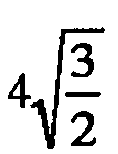
times the distance (T) between adjacent first inner section (212) and second inner section (222).
times the distance (T) between adjacent first inner section (212) and second inner section (222).
5. The electromagnetic coil means according to Claim 4, characterized in that the horizontal distance (L) equals to
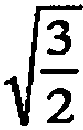
times the distance (T) between adjacent first inner section (212) and second inner section (222).
times the distance (T) between adjacent first inner section (212) and second inner section (222).
6. The electromagnetic coil means according to Claim 1, characterized in that the pin leading-out surface is an inclined surface (234); first middle portions (211b)
between the first inner sections (212) and the first head portions (211a) are substantially
perpendicular to the first inner sections (212), and an appropriate angle is formed
between the centerlines of the first head portions (211a) and that of the first middle
portions (211b); second middle portions (221b) between the second inner sections (222)
and the second head portions (221a) are substantially perpendicular to the second
inner sections (222), and an appropriate angle is formed between the centerlines of
the second head portions (221a) and that of the second middle portions (221b); the
first and second head portions (211a, 221a) are substantially perpendicular to the
inclined surface (234).
7. The electromagnetic coil means according to any of Claims 1 to 6, characterized by further comprising cable leads (25) and a circuit board (24), the first and second
head portions (211a, 221a) being connected with the cable leads (25) by means of the
circuit board (24); and the terminal part (23) has linear grooves (235) for receiving
the cable leads (25).
8. The electromagnetic coil means according to Claim 7, characterized in that the circuit board (24) comprises pin holes (241) and core holes (242) each as many
as the pins (21, 22); the pin holes (241) and core holes (242) are arranged in pairs
adjacent to each other and connected with each other by conducting materials; the
first and second head portions (211a, 221a) extend out from the pin holes (241), and
head portions (251) of the cable leads (25) extend out from the core holes (242);
the first and second head portions (211a, 221a) are soldered with the head portions
(251) of the cable leads (25) by soldering materials.
9. The electromagnetic coil means according to Claim 8, characterized in that the center distance between the pin holes (241) and the core holes (242) is greater
than 0.5 times the sum of the diameter of the pin holes (241) and the diameter of
the core holes (242) and less than 5 times thereof.
1. Elektromagnetisches Spulenmittel aufweisend einen oberen Spulenstator, einen unteren
Spulenstator, ein Anschlussteil (23) und Stifte (21, 22), die durch das Anschlussteil
(23) verlaufen, wobei die Stifte (21, 22) in eine erste Gruppe von Stiften (21), die
mit dem oberen Spulenstator verbunden sind, und eine zweite Gruppe von Stiften (22)
geteilt sind, die mit dem unteren Spulenstator verbunden sind, und wobei die erste
Gruppe von Stiften (21 ) und die zweite Gruppe von Stiften (22) beabstandet zueinander
angeordnet sind; wobei jeder Stift der ersten Gruppe von Stiften (21) einen ersten
äußeren Abschnitt (211) mit einem ersten Kopfteil (211a) und einen ersten inneren
Abschnitt (212) mit einem ersten Wurzelteil (212b) aufweist; wobei jeder Stift der
zweiten Gruppe von Stiften (22) einen zweiten äußeren Abschnitt (221) mit einem zweiten
Kopfteil (221a) und einen zweiten inneren Abschnitt (222) mit einem zweiten Wurzelteil
(222b) aufweist; wobei sich die ersten und zweiten Kopfteile (211a, 221 a) aus einer
Stift-Herausführ-Oberfläche des Anschlussteils (23) erstrecken, dadurch gekennzeichnet, dass die Stifte sowohl der ersten Gruppe von Stiften (21) als auch der zweiten Gruppe
von Stiften (22) nach oben gebogen sind relativ zu dem elektromagnetischen Spulenmittel
und dass der Abstand zwischen den ersten und zweiten Kopfteilen (211a, 221 a) größer
ist als der zwischen den ersten und zweiten Wurzelteilen (212b, 222b); wobei der erste
äußere Abschnitt (211) im Wesentlichen senkrecht zu dem ersten inneren Abschnitt (212)
angeordnet ist und wobei der zweite äußere Abschnitt (221) im Wesentlichen senkrecht
zu dem zweiten inneren Abschnitt (222) angeordnet ist; und wobei die Ebene, in welcher
die Mittellinien der ersten äußeren Abschnitte (211) liegen, und die Ebene, in der
die Mittellinien der zweiten äußeren Abschnitte (212) liegen, im Wesentlichen parallel
zueinander angeordnet sind und dazwischen einen geeigneten horizontalen Abstand (L)
aufweisen.
2. Elektromagnetisches Spulenmittel nach Anspruch 1, dadurch gekennzeichnet, dass die Stift-Herausführ-Oberfläche eine geneigte Oberfläche (231) ist und dass ein geeignet
spitzer Winkel zwischen den Mittellinien der ersten und zweiten Kopfteile (211a, 221
a) und der geneigten Oberfläche (231; 234) ausgebildet ist.
3. Elektromagnetisches Spulenmittel nach Anspruch 1, dadurch gekennzeichnet, dass die Stift-Herausführ-Oberfläche eine obere Stufenoberfläche (232) und eine untere
Stufenoberfläche (233) aufweist, die im Wesentlichen parallel zu der oberen Stufenfläche
(232) angeordnet ist; wobei die ersten Kopfteile (211a) im Wesentlichen senkrecht
zu der oberen Stufenoberfläche (232) angeordnet sind und wobei die zweiten Kopfteile
(221) im Wesentlichen senkrecht zu der unteren Stufenoberfläche (233) angeordnet sind.
4. Elektromagnetisches Spulenmittel nach Anspruch 3, dadurch gekennzeichnet, dass jeder der Stifte (21, 22) die gleiche Länge aufweist und dass jeder benachbarte erste
innere Abschnitt (212) und zweite innere Abschnitt (222) gleiche Abstände (T) dazwischen
aufweisen und in der gleichen horizontalen Ebene liegen; wobei der horizontale Abstand
(L) zwischen der Ebene, in der die Mittellinien der ersten äußeren Abschnitte (211)
liegen, und der Ebene, in der die Mittellinien der zweiten äußeren Abschnitte (221)
liegen, geringer als
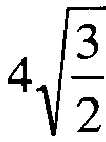
mal dem Abstand (T) zwischen einem benachbarten ersten inneren Abstand (212) und einem zweiten inneren Abschnitt (222) ist.
mal dem Abstand (T) zwischen einem benachbarten ersten inneren Abstand (212) und einem zweiten inneren Abschnitt (222) ist.
5. Elektromagnetisches Spulenmittel nach Anspruch 4, dadurch gekennzeichnet, dass der horizontale Abstand (L)
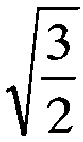
mal dem Abstand (T) zwischen einem benachbarten ersten Abschnitt (212) und einem zweiten inneren Abschnitt (222) gleicht.
mal dem Abstand (T) zwischen einem benachbarten ersten Abschnitt (212) und einem zweiten inneren Abschnitt (222) gleicht.
6. Elektromagnetisches Spulenmittel nach Anspruch 1, dadurch gekennzeichnet, dass die Stift-Herausführ-Oberfläche eine geneigte Oberfläche (234) ist; wobei erste Mittelteile
(211b) zwischen den ersten inneren Abschnitten (212) und den ersten Kopfteilen (211a)
im Wesentlichen senkrecht zu den ersten inneren Abschnitten (212) angeordnet sind
und wobei ein geeigneter Winkel zwischen den Mittellinien der ersten Kopfteile (211a)
und denen der ersten Mittelteile (211b) ausgebildet ist; wobei zweite Mittelteile
(221 b) zwischen den zweiten inneren Abschnitten (222) und den zweiten Kopfteilen
(221 a) im Wesentlichen senkrecht zu den zweiten inneren Abschnitten (222) angeordnet
sind und wobei ein geeigneter Winkel zwischen den Mittellinien der zweiten Kopfteile
(222a) und denen der zweiten Mittelteile (221 b) ausgebildet ist; wobei die ersten
und zweiten Kopfteile (211 a, 221 a) im Wesentlichen senkrecht zu der geneigten Oberfläche
(234) angeordnet sind.
7. Elektromagnetisches Spulenmittel gemäß einem der Ansprüche 1 bis 6, dadurch gekennzeichnet, dass es des Weiteren Leitungseinführungen (25) und eine Leiterplatte (24) aufweist, wobei
die ersten und zweiten Kopfteile (211a, 221 a) mit den Leitungsleitungen (25) mittels
der Leiterplatte (24) verbunden sind; und wobei der Anschlussteil (23) lineare Vertiefungen
(235) zum Aufnehmen der Leitungseinführungen (25) aufweist.
8. Elektromagnetisches Spulenmittel gemäß Anspruch 7, dadurch gekennzeichnet, dass die Leiterplatte (24) Stiftlöcher (241) und Kernlöcher (242) aufweist, und zwar genauso
viele wie Stifte (21, 22); wobei die Stiftlöcher (241) und die Kernlöcher (242) paarweise
nebeneinander angeordnet sind und miteinander verbunden sind mittels leitenden Materialien;
wobei sich die ersten und zweiten Kopfteile (211a, 221 a) von den Stiftlöchern (241)
nach außen erstrecken, und wobei sich die Kopfteile (251) der Leitungseinführungen
(25) von den Kernlöchern (242) nach außen erstrecken; wobei erste und zweite Kopfteile
(211a, 221 a) mit den Kopfteilen (251) der Leitungseinführungen (25) mittels Lötmaterialien
gelötet sind.
9. Elektromagnetisches Spulenmittel gemäß Anspruch 8, dadurch gekennzeichnet, dass der Mittelabstand zwischen den Stiftlöchern (241) und den Kernlöchern (242) größer
als 0,5 mal der Summe des Durchmessers der Stiftlöcher (241) und des Durchmessers
der Kernlöcher (242) und geringer als das 5-fache davon ist.
1. Moyen de bobine électromagnétique, comportant un stator supérieur de bobine, un stator
inférieur de bobine, un partie (23) de bornes et des broches (21, 22) passant à travers
la partie (23) de bornes, les broches (21, 22) étant divisées en un premier groupe
(21) de broches reliées au stator supérieur de bobine et un deuxième groupe (22) de
broches reliées au stator inférieur de bobine, et le premier groupe (21) de broches
et le deuxième groupe (22) de broches étant espacés l'un par rapport à l'autre ; chaque
broche du premier groupe (21) de broches comportant une première section extérieure
(211) dotée d'une première partie (211a) de tête et une première section intérieure
(212) dotée d'une première partie (212b) d'emplanture ; chaque broche du deuxième
groupe (22) de broches comportant une deuxième section extérieure (221) dotée d'une
deuxième partie (221a) de tête et une deuxième section intérieure (222) dotée d'une
deuxième partie (222b) d'emplanture ; les premières et deuxièmes parties (211a, 221a)
de tête s'étendant vers l'extérieur à partir d'une surface de départ de broches de
la partie (23) de bornes, caractérisé en ce que les broches du premier ainsi que du deuxième groupe de broches (21 ; 22) sont coudées
vers le haut par rapport au moyen de bobine électromagnétique et en ce que la distance entre lesdites premières et deuxièmes parties (211a, 221a) de tête adjacentes
est supérieure à celle entre lesdites premières et deuxièmes parties (212b, 222b)
d'emplanture adjacentes ; la première section extérieure (211) étant sensiblement
perpendiculaire à la première section intérieure (212), et la deuxième section extérieure
(221) étant sensiblement perpendiculaire à la deuxième section intérieure (222) ;
et le plan dans lequel se situent les axes de symétrie des premières sections extérieures
(211) et le plan dans lequel se situent les axes de symétrie des deuxièmes sections
extérieures (221) étant sensiblement parallèles entre eux et présentant entre eux
une distance horizontale (L) appropriée.
2. Moyen de bobine électromagnétique selon la revendication 1, caractérisé en ce que la surface de départ de broches est une surface inclinée (231), et en ce qu'un angle aigu approprié est formé entre les axes de symétrie des premières et deuxièmes
parties (211a, 221a) de tête et la surface inclinée (231 ; 234).
3. Moyen de bobine électromagnétique selon la revendication 1, caractérisé en ce que la surface de départ de broches comporte une surface (232) d'échelon supérieur et
une surface (233) d'échelon inférieur sensiblement parallèle à la surface (232) d'échelon
supérieur ; en ce que les premières parties de tête (211a) sont sensiblement perpendiculaires à la surface
(232) d'échelon supérieur, et en ce que les deuxièmes parties (221a) de tête sont sensiblement perpendiculaires à la surface
(233) d'échelon inférieur.
4. Moyen de bobine électromagnétique selon la revendication 3, caractérisé en ce que chacune desdites broches (21, 22) présente la même longueur, et en ce que chaque première section intérieure (212) et chaque deuxième section intérieure (222)
adjacentes présentent entre elles des distances égales (T) et se situent dans le même
plan horizontal ; en ce que la distance horizontale (L) entre le plan dans lequel se situent les axes de symétrie
des premières sections extérieures (211) et le plan dans lequel se situent les axes
de symétrie des deuxièmes sections extérieures (221) est inférieure à
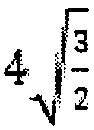
fois la distance (T) entre une première section intérieure (212) et une deuxième section intérieure (222) adjacentes.
fois la distance (T) entre une première section intérieure (212) et une deuxième section intérieure (222) adjacentes.
5. Moyen de bobine électromagnétique selon la revendication 4, caractérisé en ce que la distance horizontale (L) égale
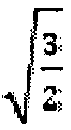
fois la distance (T) entre une première section intérieure (212) et une deuxième section intérieure (222) adjacentes.
fois la distance (T) entre une première section intérieure (212) et une deuxième section intérieure (222) adjacentes.
6. Moyen de bobine électromagnétique selon la revendication 1, caractérisé en ce que la surface de départ de broches est une surface inclinée (234) ; en ce que des premières parties médianes (211b) entre les premières sections intérieures (212)
et les premières parties de tête (211a) sont sensiblement perpendiculaires aux premières
sections intérieures (212), et en ce qu'un angle approprié est formé entre les axes de symétrie des premières parties de tête
(211a) et ceux des premières parties médianes (211b); en ce que des deuxièmes parties médianes (22 1 b) entre la deuxièmes sections intérieures (222)
et les deuxièmes parties (221a) de tête sont sensiblement perpendiculaires aux deuxièmes
sections intérieures (222), et en ce qu'un angle approprié est formé entre les axes de symétrie des deuxièmes parties (221a)
de tête et ceux des deuxièmes parties médianes (221b) ; en ce que les premières et deuxièmes parties (211a, 221a) de tête sont sensiblement perpendiculaires
à la surface inclinée (234).
7. Moyen de bobine électromagnétique selon l'une quelconque des revendications 1 à 6,
caractérisé en ce qu'il comporte en outre des brins (25) de câble et une carte (24) à circuit, les premières
et deuxièmes parties (211a, 221a) de tête étant reliées aux brins (25) de câble par
l'intermédiaire de la carte (24) à circuit ; et en ce que la partie (23) de bornes comprend des rainures linéaires (235) servant à recevoir
les brins (25) de câble.
8. Moyen de bobine électromagnétique selon la revendication 7, caractérisé en ce que la carte (24) à circuit comporte des trous (241) de broches et des trous (242) d'âmes
en nombre respectivement égal à celui des broches (21, 22) ; en ce que les trous (241) de broches et les trous (242) d'âmes sont disposés par paires, adjacents
entre eux et reliés ensemble par des matériaux conducteurs ; en ce que les premières et deuxièmes parties (211a, 221a) de tête dépassent des trous (241)
de broches, et des parties (251) de tête des brins (25) de câble dépassent des trous
(242) d'âmes ; en ce que les premières et deuxièmes parties (211a, 221a) de tête sont soudées aux parties
(251) de tête des brins (25) de câble par des matériaux de soudure.
9. Moyen de bobine électromagnétique selon la revendication 8, caractérisé en ce que l'entre-axe entre les trous (241) de broches et les trous (242) d'âmes est supérieur
à 0,5 fois la somme du diamètre des trous (241) de broches et du diamètre des trous
(242) d'âmes et inférieur à 5 fois celle-ci.
REFERENCES CITED IN THE DESCRIPTION
This list of references cited by the applicant is for the reader's convenience only. It does not form part of the European patent document. Even though great care has been taken in compiling the references, errors or omissions cannot be excluded and the EPO disclaims all liability in this regard.
Patent documents cited in the description