|
(11) | EP 2 283 027 B2 |

| (12) | NEW EUROPEAN PATENT SPECIFICATION |
| After opposition procedure |
|
|
| (54) |
PROTEIN FORMULATION PROTEINFORMULIERUNG FORMULATION DE PROTÉINES |
|
|
|||||||||||||||||||||||||||||||||||
Field of the Invention
[0001] This invention relates to the stability of proteins which exhibit formation of dimers or higher molecular weight species. The invention further relates to stability of proteins in aqueous systems, for example in an aqueous solution, in aqueous gel form or in non-liquid state such as solid state where free or bound water is present e.g. in frozen condition or following partial removal of water such as by drying or freeze-drying.
Background of the Invention
[0002] Many biological molecules, such as proteins, are unstable and are susceptible to structural degradation and consequent loss of activity while stored, particularly in aqueous solutions. The processes involved in protein degradation can be divided into physical (i.e. processes based on non-covalent interactions, such as loss of quaternary, tertiary or secondary structure, aggregation, surface adsorption) and chemical (i.e. processes involving a covalent change such as de-amidation, hydrolysis, oxidation, disulphide scrambling etc.). The rates of the degradation processes are typically proportional to temperature. Proteins are therefore generally more stable at lower temperatures. The same degradation principles generally apply to other biological molecules and more complex supramolecular systems made up of a discrete number of assembled molecular subunits or components.
[0003] Both physical and chemical instability of molecules is a particular problem in many applications, such as applications intended for therapy.
[0004] One particular stability problem of proteins and other biological molecules, especially those used in therapy, is formation of dimers or higher molecular weight species (HMWS), whereby two or more molecules aggregate and form larger molecular weight entities. Such aggregation can be either reversible or irreversible, depending on the nature of the interactions between the protein molecules. A number of different types of non-covalent interactions can be engaged in protein aggregation, such as ionic interactions between positively and negatively charged parts of the protein molecules, or hydrophobic interactions between hydrophobic patches at the protein surface. In rare cases, even covalent interactions such as disulphide bonds can facilitate protein aggregation. Whilst the different types of interactions can combine, it is typical that one particular type is the dominant force in the process of HMWS formation. So, for example, some proteins can form HMWS predominantly due to ionic interactions, while other proteins mainly due to hydrophobic interactions. The conditions that drive the formation of HMWS forward vary depending on the dominant interactions involved. Consequently, different conditions can be employed to minimise the rate of HMWS formation of different proteins.
[0005] Formation of HMWS can be measured by various techniques such as size-exclusion chromatography. Formation of large aggregates can be followed by various light-scattering techniques or microscopic or visual assessment.
[0006] Aggregation is a particular problem in formulations of therapeutic biological molecules. Although the aggregated forms, especially if reversible, are often equipotent with the native form of the protein, formation of HMWS represents a considerable hurdle in the regulatory approval process.
[0007] Another particular stability problem of many different classes of molecules, ranging from small molecules to complex supramolecular systems, is cleavage of a bond between two conjugated parts of the molecule or the system. Examples of such undesirable processes include cleavage of a polysaccharide moiety from a carrier protein in a number of polysaccharide-based vaccines (e.g. Haemophillus influenzae b vaccine) or a cleavage between key domains of fusion proteins (e.g. Etanercept). Acid or base hydrolysis is typically the mechanism of such degradation processes.
[0008] Hydrolysis is a chemical reaction during which a water molecule is split into hydrogen and hydroxide ions which go on to participate in cleavage of a particular covalent bond. Hydrolysis requires the presence of water and is known to be a pH-dependent process. However, proton transfer from molecules can also be involved in the mechanism of hydrolytic cleavage.
[0009] WO 2007/003936 discloses an aqueous system comprising a protein and one or more stabilising agents, characterised in that (i) the one or more stabilising agents have ionisable groups capable of exchanging protons with the protein and with the ionised products of water dissociation; (ii) the ionisable groups include first groups that are positively charged when protonated and uncharged when deprotonated, and second groups that are uncharged when protonated and negatively charged when deprotonated; and (iii) the pH of the composition is within a range of protein stability that is at least 50% of the maximum stability of the protein with respect to pH.
Summary of the Invention
[0010] The present invention is based on the discovery of several desirable parameters of aqueous formulations of small molecules, macromolecules such as proteins and supramolecular systems. Application of the invention results in an improvement of stability, potentially substantial, of proteins . In some aspects, application of the invention results in desirable reduction of formation of dimers and HMWS during storage.
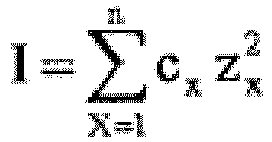
[0011] According to the invention there is provided a therapeutically useful aqueous composition comprising a protein at a pH adjusted to a particular value, with reduced rate of dimerisation or formation of high molecular weight species at such pH, characterized in that the composition comprises an amphiphilic excipient that has a charge and a non polar region wherein the non-polar region is a benzene nucleus and -non-ionic species to adjust its osmolarity and wherein the ionic strength of the composition is less than 15 mM, said ionic strength being calculated using the formula:
in which cx is molar concentration of ion x (mol L-1), zx is the absolute value of the charge of ion x and the sum covers all ions (n) present in the composition.
Description of the Invention
[0012] The term "small molecule" is used herein to encompass a molecule of any chemical structure with a molecular weight between 50 - 2000 Da.
[0013] The term "macromolecule" is used herein to encompass a molecule of any chemical structure with a molecular weight higher than 2000 Da. Macromolecules will typically be of polymeric nature,
[0014] The term "protein" is used herein to encompass molecules or molecular complexes consisting of a single polypeptide, molecules or molecular complexes comprising two or more polypeptides and molecules or molecular complexes comprising one or more polypeptides together with one or more non-polypeptide moieties such as prosthetic groups, cofactors etc. The term "polypeptide" is intended to encompass polypeptides comprising covalently linked non-amino acid moieties such as glycosylated polypeptides, lipoproteins etc.
[0015] The term "supramolecular systems" is used herein to encompass any system made up of a discrete number of assembled molecular subunits or components.
[0016] The term "substance used in therapy" is used herein to encompass any substance which is developed with the intention to be used in clinical trials or to be approved as part of a medical device or as a drug product. The term "high molecular weight species" is used herein to encompass any species formed by aggregation of the native form of a species, such as a protein. The term encompasses both soluble and insoluble aggregated forms.
[0017] The term "displaced buffer" is used herein to encompass any additive present in a composition of specified pH which is capable of exchanging protons and has pKa value(s) at least 1 unit more or less than the pH of the composition at the intended temperature range of storage of the composition. The art of applying displaced buffers to formulations of biologicals is described in WO2008/084237. In that specification, the importance of, and the distinction between, conventional and displaced buffers is described.
[0018] The term "ionic strength" is used herein as the following function of the concentration of all ions in a solution:
where cx is molar concentration of ion x (mol L-1), zx is the absolute value of the charge of ion x. The sum covers all ions (n) present in the solution.
[0019] Many proteins and other biological molecules undergo the process of aggregation, i.e. the formation of HMWS, during storage, especially in aqueous solutions. Aggregation is typically facilitated by non-covalent interactions such as charge-charge interactions or hydrophobic interactions between amino acid residues at the surface of individual protein molecules. Both the charge and the hydrophobicity of amino acid side chains are pH dependent. For example, histidine residue (pKa about 6.1) exists predominantly in the charged form at pH < 6.1 and predominantly in the uncharged form at pH > 6.1, the uncharged form being considerably more hydrophobic than the charged one. Consequently, the tendency of proteins and other biological molecules to aggregate is also dependent on pH. It is therefore important to optimise the pH of the formulation in order to minimise the tendency of the protein to form dimers or HMWS. However, apart from pH there are other parameters that are also very important for minimising the tendency of proteins and other biological molecules to aggregate. Such parameters may vary considerably depending on the nature of the aggregation process. The present invention addresses such parameters. The importance of such parameters may be relatively low if the protein is maintained at optimal pH with respect to aggregation, but is very significant if the protein must be maintained at a pH away from the optimum, for example for reasons of regulatory acceptability or for improved solubility.
[0020] A feature of the present invention in relation to reducing the rate of HMWS formation of proteins is in combining the following formulation features in the formulation of a protein:
- Minimal ionic strength: ionic strength of the formulation is kept minimal, and is less than 15 mM, preferably less than 10 mM.
- Use of a charged species which comprises a considerable non-polar (hydrophobic) region which is a benzene nucleus . The preferred example of such amphiphilic compound that can be usefully employed in the protein compositions according to the present invention is benzoic acid, particularly its ionic form (benzoate ion).
- Optionally, the use of displaced buffers to maintain the required pH: the formulation is substantially free of a conventional buffer, i.e a compound with pKa within 1 unit of the pH of the composition at the intended temperature range of storage of the composition, and comprises one or more additives (displaced buffers) which are capable of exchanging protons with the protein and have pKa values at least 1 unit more or less than the pH of the composition at the intended temperature range of storage of the composition; the art of applying displaced buffers to formulations of biologicals is described in PCT/BG2007/000082.
[0021] By combining these formulation parameters, the rate of the undesirable HMWS formation can be reduced substantially. Preferably, the formulation is kept at a pH at which the rate of HMWS formation is minimal. Optimal pH can be established experimentally. However, the invention is applicable at pH away for such pH optimum.
[0023] The formation of dimers or HMWS is very likely to involve hydrophobic interactions. It means that hydrophobic regions at the surface of two or more protein molecules interact and engage in non-covalent binding interactions. This leads to gradual aggregation. Without wishing to be bound by theory, it is useful to realise that the formation of hydrophobic bonds is known to be thermodynamically driven by increase in entropy of the system by eliminating unfavourable interactions between the hydrophobic regions and the surrounding aqueous environment. Importantly, the increase in entropy will be even higher if there is a high concentration of charged species present in the aqueous environment. For this reason, the formation of HMWS, if facilitated mainly by hydrophobic interactions, is likely to proceed more readily at high ionic strength than at low ionic strength. This is particularly the case if the protein is not kept at an optimal pH with respect to minimal aggregation.
[0024] A typical formulation of a therapeutic protein contains a buffer (for example phosphate, histidine or citrate) and one or more of the following excipients: tonicity modifiers (for example inorganic salts or amino acids), surfactants (for example Polysorbate 80) and sugars or polyalcohols (for example sucrose or mannitol). Many of these buffers and excipients contribute considerably to the ionic strength of the aqueous formulation, so the compositions of proteins intended for therapy are typically of relatively high ionic strength, such as higher than 100 mM, higher than 150 mM or higher than 200 mM. It is believed that the importance of low ionic strength in minimisation of protein aggregation, especially if the protein is maintained outside the optimum pH with respect to aggregation, has not been appreciated, particularly in commercial formulations of therapeutic proteins.
[0025] Therefore, herein described is a method for minimisation of dimer formation or formation of HMWS of a protein, particularly of such molecules used in therapy, by putting the protein in a formulation of certain pH with minimal ionic strength, i.e. less than 15 mM, most preferably less than 10 mM. Such method is particularly useful if the protein is maintained outside the optimum pH with respect to aggregation, for example for reasons of improved solubility.
[0026] Also herein described is an aqueous composition comprising a protein at a pH adjusted to a particular value, with reduced rate of dimer formation or formation of HMWS at such pH, further characterised in that the ionic strength of the composition is less than 15 mM, preferably less than 10 mM. The osmolarity of such composition is adjusted to a required level using non-ionic species such as sugars or sugar alcohols.
[0027] Some concentration of ionic species is typically needed as buffers in a formulation of a therapeutic protein. Therefore, the present invention may pose problems in ensuring sufficient buffering capacity whilst minimising the rate of aggregation. Such problems may be addressed by a specific choice of ionic species as buffers as follows: Since the ionic strength of an ionic species is proportional to the square of the charge of such species multivalent ions contribute considerably more strongly to ionic strength than monovalent ones. The use of monovalent ions as buffers is therefore preferable over the multivalent ones to ensure a degree of buffering capacity while minimising the ionic strength of the composition.
[0028] Also herein described is an aqueous composition comprising a protein at a pH adjusted to a particular value, with reduced rate of dimer formation or formation of HMWS at such pH, further characterised in that the composition is substantially free of multivalent ions and the ionic strength of the composition is less than 15 mM, preferably less than 10 mM. The osmolarity of such composition is adjusted to a required level using non-ionic species such as sugars or sugar alcohols.
[0029] It has been shown experimentally that it is beneficial if at least one of the charged species in such protein compositions comprises a considerable non-polar (hydrophobic) region which is a benzene nucleus. The use of such amphiphilic compound further reduces the rate of dimer formation or formation of HMWS. The preferred example of such amphiphilic compound that can be usefully employed in the protein compositions according to the present invention is benzoic acid, particularly its ionic form (benzoate ion). Benzoic acid comprises one carboxylic group, which is predominantly charged at pH > 4.2, and a non-polar benzene nucleus. It is also an approved excipient in therapeutic formulations. Without wishing to be bound by theory, it is believed that the beneficial effect of benzoic acid and similar type of excipients is due to its binding to the hydrophobic regions of the protein via the benzene nucleus while exposing the charge to the aqueous solution. Thus a charge is introduced to the hydrophobic region of the protein, which lowers the tendency of the hydrophobic region to engage in hydrophobic interactions. This results in lower rate of protein aggregation.
[0030] Also herein described is an aqueous system comprising a protein at a pH adjusted to a particular value, with reduced rate of dimer formation or formation of HMWS at such pH, further characterised in that (i) the ionic strength of the composition is less than 15 mM, preferably less than 10 mM, and (ii) the composition comprises a charged compound which contains an extensive hydrophobic region which is a benzene nucleus . Benzoate ion is the preferred excipient in such composition. The osmolarity of such composition is adjusted to a required level using uncharged species such as sugars or sugar alcohols.
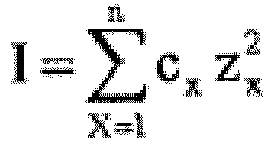
[0031] The present invention also provides the use of an aqueous composition comprising an amphiphilic excipient that has a charge and a non polar region wherein the non polar region is a benzene nucleus and non-ionic species to adjust its osmolarity and wherein the ionic strength of the composition is less than 15 mM, said ionic strength being calculated using the formula:
in which cx is molar concentration of ion x (mol L-1), zx is the absolute value of the charge of ion x and the sum covers all ions (n) present in the composition, for reducing the rate of dimerisation or formation of high molecular weight species of a therapeutically useful protein at a pH adjusted to a particular value.
[0032] Also herein described is a method for minimisation of dimer formation or formation of HMWS of a protein by (i) putting the protein in a formulation of certain pH with minimal ionic strength, i.e. less than 15 mM, most preferably less than 10 mM, and (ii) adding to the composition an ionic compound which contains an extensive hydrophobic region which is a benzene nucleus . Such method is particularly useful if the protein is maintained outside the optimum pH with respect to aggregation, for example for reasons of improved solubility.
[0033] In addition to improving stability of proteins by reduced formation of HMWS, the present disclosure also addresses the stability of therapeutic molecules by reducing the rate of hydrolytic processes, such as cleavage of amide bonds or ester bonds.
[0034] Hydrolysis is a particular stability problem of many different classes of molecules, ranging from small molecules to complex supramolecular systems. Examples of such undesirable processes include cleavage of a polysaccharide moiety from a carrier protein in a number of polysaccharide-based vaccines (e.g. Haemophillus influenzae b vaccine) or a cleavage between key domains of fusion proteins (e.g. Etanercept). Acid or base hydrolysis is typically the mechanism of such degradation processes.
[0035] Hydrolysis can also be part of the mechanism of more complex processes, such as deamidation of asparagine or aspartate isomerisation. The present disclosure is therefore also applicable in stabilising various molecules with respect to such processes which comprise hydrolysis as part of their molecular mechanism.
[0036] Hydrolysis is a chemical reaction during which water molecule is split into hydrogen and hydroxide ions which go on to participate in cleavage of a particular covalent bond. Hydrolysis is known to be a very pH dependent process. However, proton transfer from molecules other than water can also be involved in the mechanism of hydrolytical cleavage. Hydrolysis is generally known to be strongly dependent on pH. Optimization of pH is therefore essential in order to reduce the rate of hydrolysis. However, other formulation parameters can bring about further reduction in the rate of hydrolysis. The present disclosure addresses additional key formulation parameters that can be applied to reduce further the rate of hydrolytic processes in formulations of a wide range of molecules and more complex systems.
[0037] Another feature of the present disclosure in relation to reducing the rate of hydrolysis is in combining the following formulation features in the formulation of a particular molecule or a more complex system:
- Minimal ionic strength: ionic strength of the formulation is kept minimal, preferably less than 20 mM, most preferably less than 10 mM.
- Use of displaced buffers to maintain the required pH: the formulation is substantially free of a conventional buffer, i.e a compound with pKa within 1 unit of the pH of the composition at the intended temperature range of storage of the composition, and comprises one or more additives (displaced buffers) which are capable of exchanging protons with other molecules and have pKa values at least 1 unit more or less than the pH of the composition at the intended temperature range of storage of the composition; the art of applying displaced buffers to formulations of biologicals is described in WO2008/084237.
[0038] By combining these formulation parameters, the rate of the undesirable hydrolytic process can be reduced substantially. Preferably, the formulation is kept at a pH at which the rate of hydrolysis is minimal. Optimal pH can be established experimentally. However, the disclosure is applicable at pH away from such pH optimum.
[0040] The present disclosure discloses a method for minimisation of the rate of hydrolytic process on a molecule or supramolecular system by putting the molecule or the system in a formulation of certain pH with minimal ionic strength, preferably less than 20 mM, most preferably less than 10 mM. Preferably, the pH of the composition is adjusted to a level at which the rate of the undesirable hydrolytic process is minimal.
[0041] Also disclosed is an aqueous composition comprises a molecule or a supramolecular system, at a pH adjusted to a particular value, further characterised in that the ionic strength of the composition is preferably less than 20 mM, most preferably less than 10 mM. The osmolarity of such composition can be adjusted to a required level using non-ionic species such as sugars or sugar alcohols. Preferably, the pH of the composition is adjusted to a level at which the rate of the undesirable hydrolytic process is minimal.
[0042] Some concentration of ionic species is typically needed as buffers or antioxidants in a formulation of a therapeutic protein. Therefore, the present disclosure may pose problems in ensuring sufficient buffering capacity whilst minimising the rate of hydrolysis. Such problems may be addressed by the use of monovalent ions as buffers or antioxidants while avoiding multivalent ones to ensure a degree of buffering capacity while minimising the ionic strength of the composition. Therefore, there is also disclosed an aqueous composition comprises a molecule or a supramolecular system, at a pH adjusted to a particular value, further characterised in that the composition is substantially free of multivalent ions and the ionic strength of the composition is less than 40 mM, preferably less than 20 mM, most preferably less than 10 mM. The osmolarity of such composition can be adjusted to a required level using non-ionic species such as sugars or sugar alcohols. Preferably, the pH of the composition is adjusted to a level at which the rate of the undesirable hydrolytic process is minimal.
[0043] It was shown experimentally that in order to reduce further the rate of hydrolysis it is beneficial to use displaced buffers while keeping the composition substantially free of conventional buffers. Therefore, in another aspect of the present disclosure an aqueous composition comprises a molecule or supramolecular system, at a pH adjusted to a particular value, further characterised in that the composition is substantially free of conventional buffer and comprises one or more additives which are capable of exchanging protons with the protein and have pKa values at least 1 unit more or less than the pH of the composition at the intended temperature range of storage of the composition; the ionic strength of the composition is preferably less than 20 mM, most preferably less than 10 mM. The osmolarity of such composition can be adjusted to a required level using non-ionic species such as sugars or sugar alcohols. Preferably, the pH of the composition is adjusted to a level at which the rate of the undesirable hydrolytic process is minimal.
[0044] Various hydrolytic processes are catalysed by proton transfer at the cleavage site facilitated by molecules other than water, for example molecules of buffers. Without wishing to be bound by theory, it is believed that the benefit of using displaced buffers instead of conventional buffers in compositions of molecules that are prone to hydrolytic cleavage is in minimising the rate of proton transfer from molecules of conventional buffers to or from the cleavage site.
[0045] The invention is illustrated by the following Examples. Examples 1 and 2 do not fall within the claims.
Example 1 (Reference)
[0046] Formation of HMWS was followed in a solution of alpha-glucosidase (12.5 mg/mL) using the following size-exclusion chromatographic method: The mobile phase was 25 mM sodium phosphate (pH 6.2) containing 150 mM NaCl. The mobile phase was filtered prior to its use. The liquid chromatograph (Agilent 1100 series) was equipped with a 214 nm detector, guard column and a 7.8 x 300 mm BioSep SEC-S2000 column. The flow rate was maintained at 0.45 mL/min. 20 µL of aqueous samples of alpha-glucosidase were injected. The level of high molecular weight species was expressed as the percentage of the total peak area of all peaks with elution time shorter than that of the main peak versus the area of the main peak.
[0047] The aggregation rate was studied at 25°C in the presence of 4 mM TRIS buffer. The buffering strength of TRIS buffer at pH < 6.5 is minimal, but sufficient buffering capacity originated from the relatively concentrated enzyme itself at such pH. The optimum pH with respect to minimal formation of HMWS was found to be around 6.5. The aggregation rate was higher both at lower and at higher pH. Increase in ionic strength resulted in considerable increase in the rate of HMWS, especially outside the optimum pH (Table 1). So, whilst the increase in ionic strength resulted only in moderate increase of the aggregation rate at ph 6.5 the increase was considerably higher both at higher and at lower pH.
Table 1
| Formation of HMWS (%) at 25°C (3 weeks) in aqueous formulation of alpha-glucosidase (12.5 mg/mL) in the presence of 4 mM TRIS buffer and the indicated concentration of NaCl. | |||
| pH | 0 mM NaCl | 25 mM NaCl | 100 mM NaCl |
| 5.5 | 4.13 | 9.94 | 34.68 |
| 6.0 | 1.07 | 3.12 | 8.92 |
| 6.5 | 0.44 | 1.36 | 3.26 |
| 7.0 | 1.06 | 4.80 | 5.11 |
| 7.5 | 4.36 | 7.99 | 22.68 |
| 8.0 | 10.01 | 32.32 | 45.96 |
Example 2
[0048] Effect of benzoic acid was studied on the rate of HMWS formation at 25°C and 40°C (2 weeks) in a solution of alpha-glucosidase (12.5 mg/mL) using the size-exclusion chromatographic method described in Example 1. The aggregation rate was studied in the presence of 2 mM TRIS buffer. Apart from benzoic acid and/or TRIS, no other charged species were present in the formulation.
[0049] The presence of benzoic acid was shown to reduce the rate of formation of HMWS both at 25°C (Table 2) and at 40°C. The effect was more marked at pH 7.5, i.e. away from the pH optimum with respect to minimal aggregation, than at the pH optimum (pH 6.5)
Table 2
| Formation of HMWS (%) at 25°C (4 weeks) in aqueous formulation of alpha-glucosidase (12.5 mg/mL) in the presence of TRIS buffer (2 mM) either in the presence or in the absence of benzoic acid (2 mM). | ||
| pH | Without 2 mM benzoic acid | With 2 mM benzoic acid |
| 6.5 | 1.93 | 0.92 |
| 7.0 | 2.23 | 0.83 |
| 7.5 | 2.40 | 0.98 |
Table 3
| Formation of HMWS (%) at 40°C (2 weeks) in aqueous formulation of alpha-glucosidase (12.5 mg/mL) in the presence of TRIS buffer (2 mM) either in the presence or in the absence of benzoic acid (2 mM). | ||
| pH | Without 2 mM benzoic acid | With 2 mM benzoic acid |
| 6.5 | 16.82 | 3.76 |
| 7.0 | 18.16 | 3.80 |
| 7.5 | 25.09 | 4.08 |
1. A therapeutically useful aqueous composition comprising a protein at a pH adjusted
to a particular value, with reduced rate of dimerisation or formation of high molecular
weight species at such pH, characterized in that the composition comprises an amphiphilic excipient that has a charge and a non polar
region wherein the non-polar region is a benzene nucleus and non-ionic species to
adjust its osmolarity and wherein the ionic strength of the composition is less than
15 mM, said ionic strength being calculated using the formula:
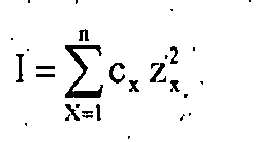
in which cx is molar concentration of ion x (mol L-1), zx is the absolute value of the charge of ion x and the sum covers all ions (n) present in the composition.
in which cx is molar concentration of ion x (mol L-1), zx is the absolute value of the charge of ion x and the sum covers all ions (n) present in the composition.
2. A composition according to claim 1, wherein the ionic strength is less than 10 mM.
3. A composition according to claim, 1 or claim 2, which is substantially free of divalent
ions.
4. A composition according to any of claims 1 to 3, wherein the amphiphilic excipient
is benzoic acid.
5. A composition according to any preceding claim, wherein the protein is a vaccine.
6. A composition according to any preceding claim, wherein the non-ionic species to adjust
the osmolarity are sugars or sugar alcohols.
7. A composition according to any preceding claim, which further comprises a physiologically
acceptable chelating agent.
8. A composition according to any preceding claim, which further comprises a physiologically
acceptable detergent.
9. Use of an aqueous composition comprising an amphiphilic excipient that has a charge
and a non polar region wherein the non-polar region is a benzene nucleus and non-ionic
species to adjust its osmolarity and wherein the ionic strength of the composition
is less than 15 mM, said ionic strength being calculated using the formula:
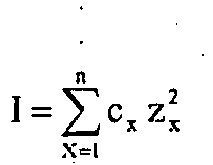
in which cx is molar concentration of ion x (mol L-1), zx is the absolute value of the charge of ion x and the sum covers all ions (n) present in the composition,
for reducing the rate of dimerisation or formation of high molecular weight species of a therapeutically useful protein at a pH adjusted to a particular value.
in which cx is molar concentration of ion x (mol L-1), zx is the absolute value of the charge of ion x and the sum covers all ions (n) present in the composition,
for reducing the rate of dimerisation or formation of high molecular weight species of a therapeutically useful protein at a pH adjusted to a particular value.
10. Use according to claim 9 wherein the amphiphilic excipient is benzoic acid.
11. Use according to claim 9 or claim 10 wherein the protein is a vaccine.
1. Wässrige Zusammensetzung mit therapeutischem Nutzen, umfassend ein Protein bei einem
auf einen bestimmten Wert eingestellten pH-Wert, mit reduzierter Geschwindigkeit der
Dimerisierung oder Bildung hochmolekularer Spezies bei einem solchen pH-Wert, dadurch gekennzeichnet, dass die Zusammensetzung einen amphiphilen Hilfsstoff, der eine Ladung und einen nichtpolaren
Bereich aufweist, wobei es sich bei dem nichtpolaren Bereich um einen Benzolkern handelt,
sowie nichtionische Spezies zur Einstellung ihrer Osmolarität umfasst, und wobei die
Ionenstärke der Zusammensetzung weniger als 15 mM beträgt, wobei die Ionenstärke unter
Verwendung der Formel:
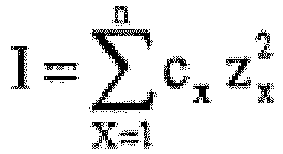
berechnet wird, in der cx die molare Konzentration von Ion x (mol l-1), zx den Absolutwert der Ladung des Ions x bedeutet und die Summe alle in der Zusammensetzung vorliegenden Ionen (n) abdeckt.
berechnet wird, in der cx die molare Konzentration von Ion x (mol l-1), zx den Absolutwert der Ladung des Ions x bedeutet und die Summe alle in der Zusammensetzung vorliegenden Ionen (n) abdeckt.
2. Zusammensetzung nach Anspruch 1, wobei die Ionenstärke weniger als 10 mM beträgt.
3. Zusammensetzung nach Anspruch 1 oder Anspruch 2, die weitgehend frei von zweiwertigen
Ionen ist.
4. Zusammensetzung nach einem der Ansprüche 1 bis 3, wobei es sich bei dem amphiphilen
Hilfsstoff um Benzoesäure handelt.
5. Zusammensetzung nach einem vorhergehenden Anspruch, wobei es sich bei dem Protein
um einen Impfstoff handelt.
6. Zusammensetzung nach einem vorhergehenden Anspruch, wobei es sich bei der nichtionischen
Spezies zur Einstellung der Osmolarität um Zucker oder Zuckeralkohole handelt.
7. Zusammensetzung nach einem vorhergehenden Anspruch, die ferner einen physiologisch
unbedenklichen Chelatbildner umfasst.
8. Zusammensetzung nach einem vorhergehenden Anspruch, die ferner ein physiologisch unbedenkliches
Detergens umfasst.
9. Verwendung einer wässrigen Zusammensetzung, die einen amphiphilen Hilfsstoff, der
eine Ladung und einen nichtpolaren Bereich aufweist, wobei es sich bei dem nichtpolaren
Bereich um einen Benzolkern handelt, sowie nichtionische Spezies zur Einstellung ihrer
Osmolarität umfasst, und wobei die Ionenstärke der Zusammensetzung weniger als 15
mM beträgt, wobei die Ionenstärke unter Verwendung der Formel:
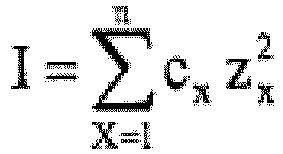
berechnet wird, in der cx die molare Konzentration von Ion x (mol l-1), zx den Absolutwert der Ladung des Ions x bedeutet und die Summe alle in der Zusammensetzung vorliegenden Ionen (n) abdeckt,
zur Reduzierung der Geschwindigkeit der Dimerisierung oder Bildung hochmolekularer Spezies eines Proteins mit therapeutischem Nutzen bei einem auf einen bestimmten Wert eingestellten pH-Wert.
berechnet wird, in der cx die molare Konzentration von Ion x (mol l-1), zx den Absolutwert der Ladung des Ions x bedeutet und die Summe alle in der Zusammensetzung vorliegenden Ionen (n) abdeckt,
zur Reduzierung der Geschwindigkeit der Dimerisierung oder Bildung hochmolekularer Spezies eines Proteins mit therapeutischem Nutzen bei einem auf einen bestimmten Wert eingestellten pH-Wert.
10. Verwendung nach Anspruch 9, wobei es sich bei dem amphiphilen Hilfsstoff um Benzoesäure
handelt.
11. Verwendung nach Anspruch 9 oder Anspruch 10, wobei es sich bei dem Protein um einen
Impfstoff handelt.
1. Composition aqueuse thérapeutiquement utile comprenant une protéine à un pH ajusté
à une valeur particulière, avec un taux réduit de dimérisation ou de formation d'espèces
de poids moléculaire élevé à un tel pH, caractérisée en ce que la composition comprend un excipient amphiphile qui a une charge et une région non
polaire, la région non polaire étant un noyau benzénique, et des espèces non ioniques
pour ajuster son osmolarité et la force ionique de la composition étant inférieure
à 15 mM, ladite force ionique étant calculée en utilisant la formule :
dans laquelle cx est la concentration d'ion x (mol.l-1), zx est la valeur absolue de la charge de l' ion x et la somme couvre tous les ions (n) présents dans la composition.
dans laquelle cx est la concentration d'ion x (mol.l-1), zx est la valeur absolue de la charge de l' ion x et la somme couvre tous les ions (n) présents dans la composition.
2. Composition selon la revendication 1, dans laquelle la force ionique est inférieure
à 10 mM.
3. Composition selon la revendication 1 ou la revendication 2, qui est sensiblement exempte
d'ions divalents.
4. Composition selon l'une quelconque des revendications 1 à 3, dans laquelle l'excipient
amphiphile est l'acide benzoïque.
5. Composition selon l'une quelconque des revendications précédentes, dans laquelle la
protéine est un vaccin.
6. Composition selon l'une quelconque des revendications précédentes, dans laquelle les
espèces non ioniques pour ajuster l'osmolarité sont des glucides ou des polyols.
7. Composition selon l'une quelconque des revendications précédentes, qui comprend en
outre un agent chélateur physiologiquement acceptable.
8. Composition selon l'une quelconque des revendications précédentes, qui comprend en
outre un détergent physiologiquement acceptable.
9. Utilisation d'une composition aqueuse comprenant un excipient amphiphile qui a une
charge et une région non polaire, la région non polaire étant un noyau benzénique,
et des espèces non ioniques pour ajuster son osmolarité et dans laquelle la force
ionique de la composition est inférieure à 15 mM, ladite force ionique étant calculée
au moyen de la formule :
dans laquelle cx est la concentration d'ion x (mol.l-1), zx est la valeur absolue de la charge de l' ion x et la somme couvre tous les ions (n) présents dans la composition,
pour réduire le taux de dimérisation ou de formation d'espèces de poids moléculaire élevé d'une protéine thérapeutiquement utile à un pH ajusté à une valeur particulière.
dans laquelle cx est la concentration d'ion x (mol.l-1), zx est la valeur absolue de la charge de l' ion x et la somme couvre tous les ions (n) présents dans la composition,
pour réduire le taux de dimérisation ou de formation d'espèces de poids moléculaire élevé d'une protéine thérapeutiquement utile à un pH ajusté à une valeur particulière.
10. Utilisation selon la revendication 9 dans laquelle l'excipient amphiphile est l'acide
benzoïque.
11. Utilisation selon la revendication 9 ou la revendication 10 dans laquelle la protéine
est un vaccin.
REFERENCES CITED IN THE DESCRIPTION
This list of references cited by the applicant is for the reader's convenience only. It does not form part of the European patent document. Even though great care has been taken in compiling the references, errors or omissions cannot be excluded and the EPO disclaims all liability in this regard.
Patent documents cited in the description