|
(11) | EP 2 305 275 A1 |

| (12) | EUROPEAN PATENT APPLICATION |
| published in accordance with Art. 153(4) EPC |
|
|
|
|
|||||||||||||||||||||||
| (54) | LIQUID COMPOSITION COMPRISING CISPLATIN-COORDINATING COMPOUND |
| (57) A liquid composition containing a polymer micelle and having a pH values of 3.0 to
7.0 is provided. The micelle is constituted of a coordination compound having a block
copolymer of polyethylene glycol and polyglutamic acid and cisplatin that is coordinate-bonded
to the block copolymer. |
TECHNICAL FIELD
[0001] The present invention relates to a stable liquid composition of a cisplatin coordination compound.
BACKGROUND ART
[0002] Although cisplatin (cis-diamine-dichloroplatinum (II)) is an extremely useful anticancer drug used in the clinical setting, it is known to have extremely potent adverse effects such as nephrotoxicity. Consequently, large-volume liquid infusion is required before, during and after administering cisplatin.
In order to resolve this problem, a coordination compound has been invented in which cisplatin is coordinate-bonded to a block copolymer consisting of polyethylene glycol and polyglutamic acid.
Prior Art Documents
Patent Documents
SUMMARY OF THE INVENTION
Problems to be Solved by the Invention
[0004] The purpose of the present invention is to stabilize a liquid composition containing a coordination compound in which cisplatin is coordinate-bonded to a block copolymer consisting of polyethylene glycol and polyglutamic acid. Means for Solving the Problems
[0005] As a result of employing extensive efforts to stabilize a complex in which cisplatin is coordinate-bonded to a block copolymer consisting of polyethylene glycol and polyglutamic acid, the inventors of the present invention found that the complex can be stabilized at a pH within a certain specific range, thereby leading to completion of the present invention.
[0006] Namely, the present invention includes the following aspects:
- (1) a liquid composition, containing a coordination compound of a block copolymer
represented by the following formula I or formula II:
(wherein, R1 independently represents a hydrogen atom or alkyl group optionally substituted by a functional group or substituent, A independently represents NH, CO, R5(CH2)pR6 or a direct bond, wherein R5 represents O, OCO, OCONH, NHCO, NHCOO, NHCONH, CONH or COO, R6 represents NH or CO, and p represents an integer of 1 to 6, R2 independently represents a hydrogen atom, alkaline metal, alkyl group or aralkyl group, R3 independently represents a hydrogen atom, hydroxyl group or hydrophobic residue, n represents an integer of 110 to 340, and m represents an integer of 20 to 80) and cisplatin, characterized in that the pH of the liquid composition is 3.0 to 7.0; - (2) the liquid composition described in (1), wherein the pH of the liquid composition is 4.0 to 6.0;
- (3) the liquid composition described in (1) or (2), wherein the liquid composition further contains a sugar or sugar-alcohol;
- (4) the liquid composition described in (3), wherein the sugar or sugar-alcohol is D-mannitol; and,
- (5) the liquid composition described in (4), wherein the concentration of D-mannitol in the liquid composition is 5% (w/v).
EMBODIMENTS OF THE INVENTION
[0007] A coordination compound of a block copolymer and cisplatin as referred to in the present invention refers to a compound in which one or both of two chlorine ions in a molecule of cisplatin are replaced with a carboxyl anion of a block copolymer represented by formula I or formula II. A coordination compound in which the equivalence ratio of Pt of cisplatin to carboxyl anion of the copolymer (Pt/COO-) is 0.3 or more is preferable for use as the coordination compound of the present invention.
In addition, the coordination compound of the present invention is able to form polymeric micelles in an aqueous medium.
[0008] In the block copolymer represented by formula I or formula II of the present invention, examples of the hydrophobic group referred to in R2 include, but are not limited to, C8-C16 alkylcarbonyl, C8-C16 alkyl, phenylacetyl, benzyl, diphenylacetyl, benzhydryl, pyrenesulfonyl, pyrenyl, adamantyl and cholesteryl groups. These groups can be introduced by an acid chloride method or active ester method. Such hydrophobic groups may be useful in enhancing the self-association ability, namely the ability to form polymeric micelles, of a coordination compound in accordance with the present invention in an aqueous medium.
[0009] Examples of the optionally protected functional group referred to in R1 include a hydroxyl group, acetal, ketal, aldehyde, sugar residue, maleimido group, carboxyl group, amino group, thiol group and active ester. A hydrophilic segment in the case R1 represents a lower alkyl group substituted by an optionally protected functional group can be in accordance with that described in, for example, WO 96/33233, WO 96/32434 or WO 97/06202.
[0010] In addition, it goes without saying that n and m in the block copolymer represented by formula I or formula II of the present invention represent average values, and the following block copolymer is particularly preferable:
(wherein, although n represents an integer of 110 to 340, it particularly preferably represents an integer of 200 to 340, and although m represents an integer of 20 to 80, it particularly preferably represents an integer of 30 to 50).
[0011] The method of synthesizing the block copolymer represented by formula I, formula I-a or formula II is not limited as long as the desired block copolymer can be obtained. For example, the block copolymer represented by formula I-a can be synthesized through the following procedure. N-carboxy-γ-benzyl-L-glutamate is added and allowed to react in a dehydrated organic solvent so as to obtain the desired number of m units by using MeO-PEGOCH2CH2CH2HN2 as an initiator, and then a synthesized blockcopolymer is treated through an alkaline hydrolyzing of benzyl groups in the side chain of the polyglutamic acid that constitutes the synthesized blockcopolymer.
[0012] The liquid composition of the present invention refers to a liquid that contains said coordination compound, particularly polymeric micelles, and includes a preparation thereof, bulk liquid of such a preparation and such a liquid prior to carrying out freeze-drying.
[0013] An analogue of the present invention refers to a peak represented as a peak other than that of polymeric micelles when a coordination compound of a block polymer and cisplatin, which has formed polymeric micelles in an aqueous medium, has been measured by gel permeation chromatography (GPC), and has appeared as a decomposition product of the block copolymer and/or due to disintegration of the polymeric micelles, and the amount thereof can be represented as a percentage of the total area other than that attributable to the polymeric micelles in a GPC chart.
[0014] The pH of the liquid composition of the present invention is the pH at which the amount of analogue generated during storage of the polymeric micelles at 40°C is 7% or less, preferably 5% or less and more preferably 3% or less, and that pH is preferably 3.0 to 7.0 and more preferably 4.0 to 6.0.
[0015] The liquid composition can be provided by using an additive that may be used to adjust the pH of an injection preparation as long as the pH of the composition is within the above ranges. For example, the pH may be adjusted by gradually adding the additive. Examples of the additive include hydrochloric acid, sodium hydroxide, citric acid, sodium citrate, acetic acid, tartaric acid, potassium hydroxide, sodium bicarbonate, sodium carbonate, lactic acid, triethanolamine, phosphoric acid, disodium hydrogen phosphate or sodium dihydrogen phosphate, to the liquid which contains a coordination compound, particularly polymeric micelles while stirring. Water is particularly preferable for the liquid containing polymeric micelles, but a dilute buffer solution may be used for the liquid as long as the coordinate bonds of the block copolymer and cisplatin is not disrupted.
Examples
[0016] The following provides a detailed explanation of the present invention through examples thereof. These examples are not intended to limit the scope of the present invention.
Example 1 - Preparation of Polymeric Micelles
[0017] A solution in which 70 g of cisplatin were dissolved in water for injection, and a solution in which 105 g of a copolymer synthesized according to the method described in Patent Document 1 in the form of methoxypolyethylene glycol-polyglutamic acid copolymer, PEG-p(Glu) (average molecular weight of PEG was 12,000; average number of glutamic acid residues was 40; glutamic acid side chain was carboxylic acid) were dissolved in water for injection, were mixed followed by the addition of water for injection to bring to a volume of 50 L. This solution was allowed to react for 3 days at 37°C. The resulting solution was purified and concentrated by repeatedly subjecting to ultrafiltration (fraction molecular weight was 100,000) followed by the addition of D-mannitol and water for injection to obtain a polymeric micelle solution (equivalent to 2.5 mg/mL as cisplatin and containing 5% D-mannitol).
Example 2 - Polymeric Micelle Stability Test
[0018] 0.01 mol/L hydrochloric acid or 0.01 mol/L sodium hydroxide solution and water for injection were gradually added to 20 mL of the prepared polymeric micelle solution (equivalent to 2.5 mg/mL of cisplatin and containing 5% D-mannitol) to adjust the pH to 3.0, 4.0, 5.0, 6.0, 7.0 and 9.0 and bring to a total volume of 25 mL. Six mL of each pH solution were dispensed into brown vials, and then were sealed and stored at 5°C. Two days later, the amount of analogue was measured under the conditions indicated below, and the remaining solutions were transferred to a temperature of 40°C and stored for an additional 20 days. After the storage, the amount of analogue was measured under the same conditions.
(Conditions)
[0019] Apparatus: Waters GPC System
Column: Waters Ultrahydrogel 500, 10 µm, 7.8φ × 300 mm
Column temperature: Constant temperature of about 40°C
Detector: UV detector (detection wavelength is 280 nm)
Mobile phase: 2.87 g of sodium dihydrogen phosphate (anhydrous), 0.24 g of disodium hydrogen phosphate dodecahydrate and 2.92 g of sodium chloride were dissolved in water and brought to a volume of 1 L
Flow rate: Approx. 0.6 mL/min
[0020] The results of measuring the amount of analogue after the storage of 2 days at 5°C and of 20 days at 40°C are shown in Tables 1 and 2, respectively.
[0021]
Table 1
| Initially adjusted pH | 3.0 | 4.0 | 5.0 | 6.0 | 7.0 | 9.0 |
| Total amount of analogue (%) | 1.6 | 1.1 | 0.6 | 0.46 | 0.46 | 1.16 |
[0022]
Table 2
| Initially adjusted pH | 3.0 | 4.0 | 5.0 | 6.0 | 7.0 | 9.0 |
| Total amount of analogue (%) | 6.8 | 2.7 | 1.9 | 2 | 5.75 | 75.63 |
[0023] As illustrated in the above results, liquid compositions containing a polymer micelle, which is formed from a coordination compound of a block copolymer and cisplatin at a pH in a range of 3.0 to 7.0, particularly the range of 4.0 to 6.0, were extremely stable even if stored under harsh storage conditions such as 20 days at 40°C.
1. A liquid composition, containing a coordination compound of a block copolymer represented
by the following formula I or formula II:
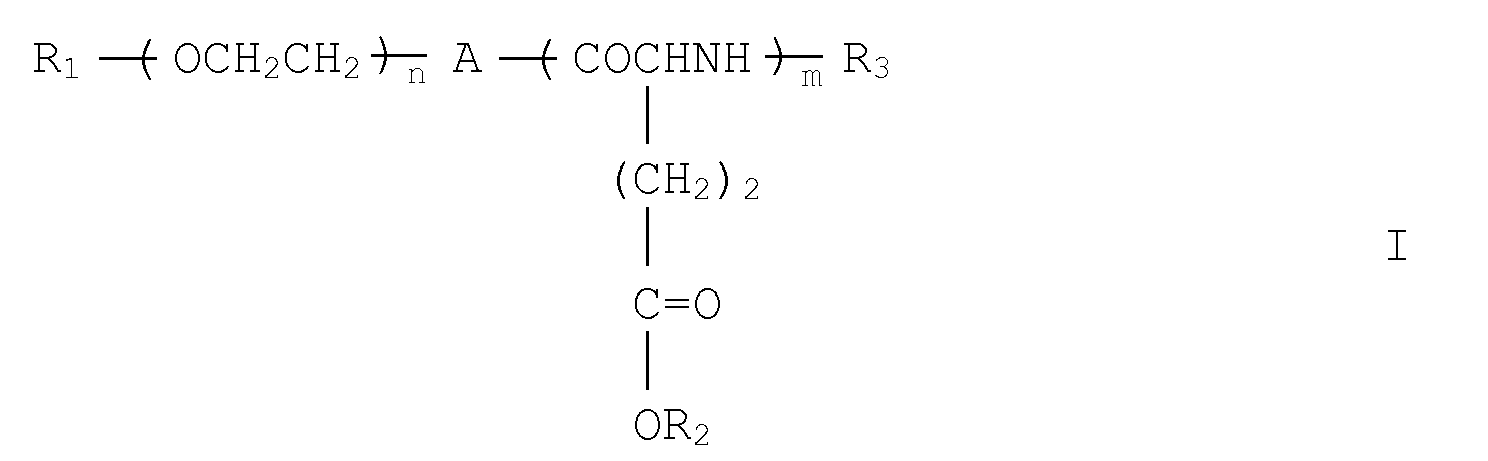
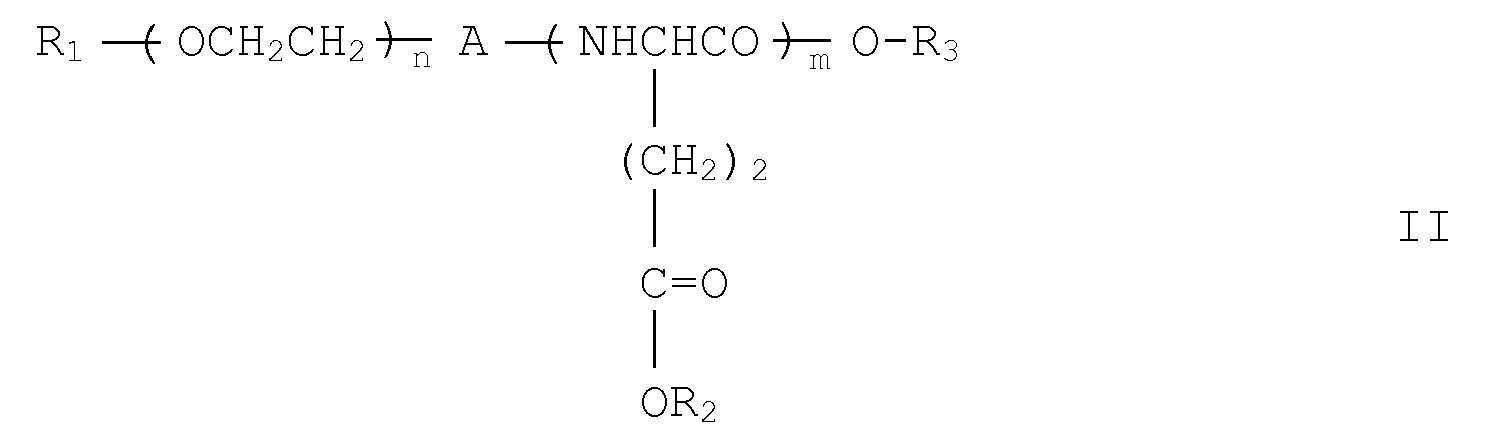
(wherein, R1 independently represents a hydrogen atom or alkyl group optionally substituted by a functional group or substituent, A independently represents NH, CO, R5(CH2)pR6 or a direct bond, wherein R5 represents O, OCO, OCONH, NHCO, NHCOO, NHCONH, CONH or COO, R6 represents NH or CO, and p represents an integer of 1 to 6, R2 independently represents a hydrogen atom, alkaline metal, alkyl group or aralkyl group, R3 independently represents a hydrogen atom, hydroxyl group or hydrophobic residue, n represents an integer of 110 to 340, and m represents an integer of 20 to 80) and cisplatin, characterized in that the pH of the liquid composition is 3.0 to 7.0.
(wherein, R1 independently represents a hydrogen atom or alkyl group optionally substituted by a functional group or substituent, A independently represents NH, CO, R5(CH2)pR6 or a direct bond, wherein R5 represents O, OCO, OCONH, NHCO, NHCOO, NHCONH, CONH or COO, R6 represents NH or CO, and p represents an integer of 1 to 6, R2 independently represents a hydrogen atom, alkaline metal, alkyl group or aralkyl group, R3 independently represents a hydrogen atom, hydroxyl group or hydrophobic residue, n represents an integer of 110 to 340, and m represents an integer of 20 to 80) and cisplatin, characterized in that the pH of the liquid composition is 3.0 to 7.0.
2. The liquid composition according to claim 1,
wherein the pH of the liquid composition is 4.0 to 6.0.
wherein the pH of the liquid composition is 4.0 to 6.0.
3. The liquid composition according to claim 1 or 2, wherein the liquid composition further
contains a sugar or sugar-alcohol.
4. The liquid composition according to claim 3, wherein the sugar or sugar-alcohol is
D-mannitol.
5. The liquid composition according to claim 4, wherein the concentration of D-mannitol
in the liquid composition is 5% (w/v).
REFERENCES CITED IN THE DESCRIPTION
This list of references cited by the applicant is for the reader's convenience only. It does not form part of the European patent document. Even though great care has been taken in compiling the references, errors or omissions cannot be excluded and the EPO disclaims all liability in this regard.
Patent documents cited in the description