| (19) |
 |
|
(11) |
EP 2 380 720 B1 |
| (12) |
EUROPEAN PATENT SPECIFICATION |
| (45) |
Mention of the grant of the patent: |
|
22.08.2012 Bulletin 2012/34 |
| (22) |
Date of filing: 07.03.2011 |
|
| (51) |
International Patent Classification (IPC):
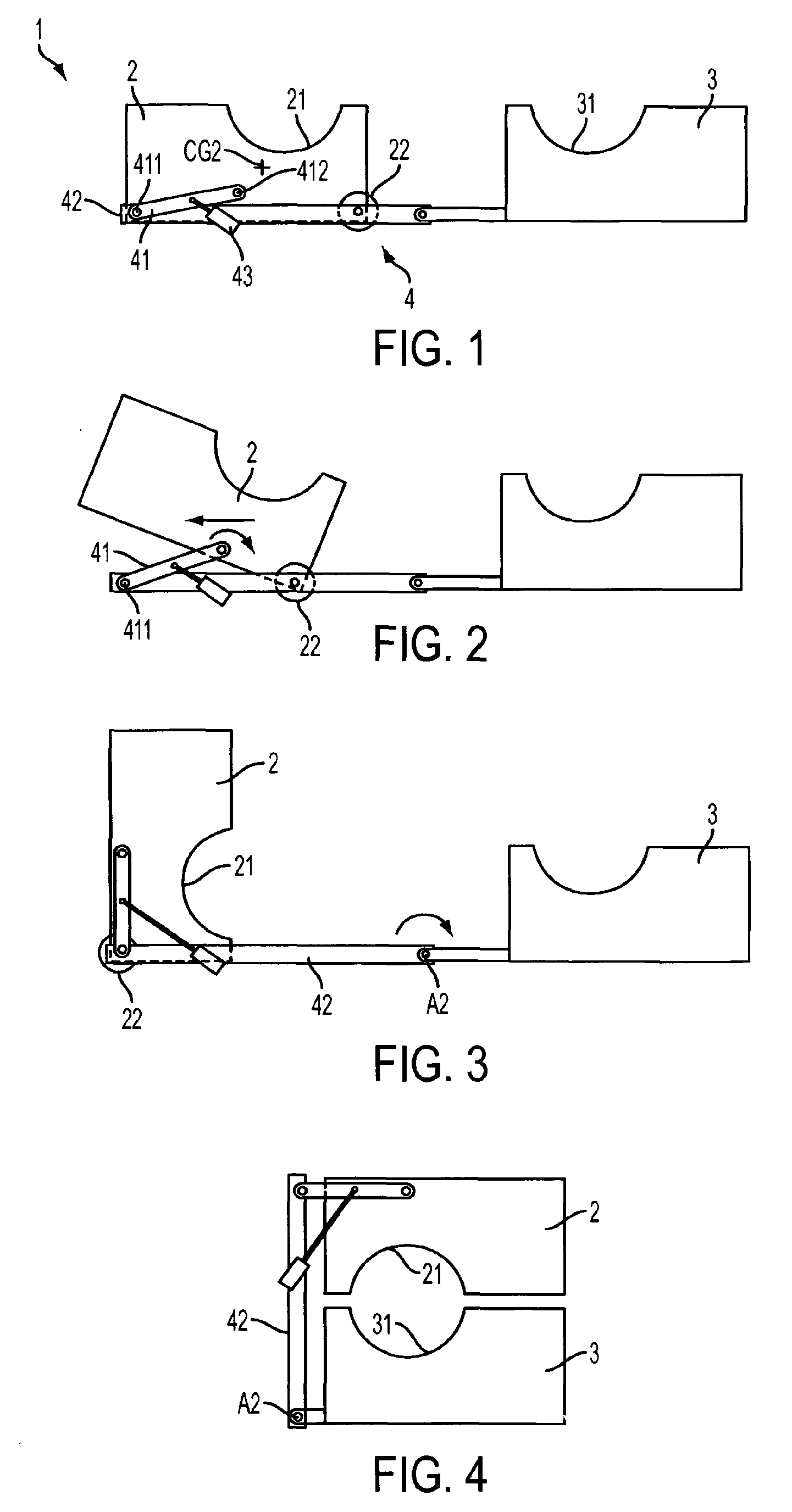
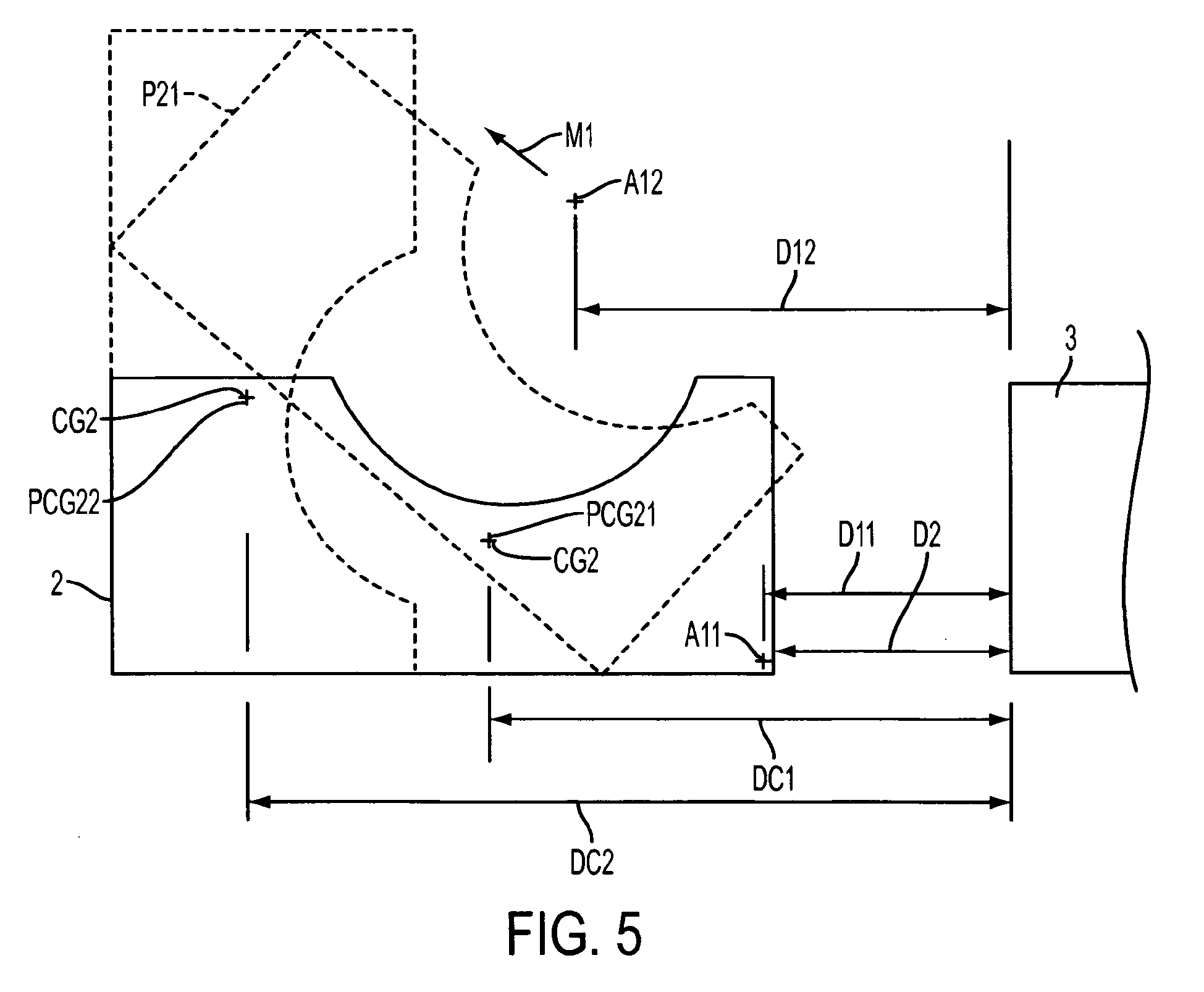
|
|
| (54) |
An improved wind turbine blade manufacturing arrangement
Verbesserte Anordnung zur Herstellung einer Windturbinenschaufel
Agencement amélioré de fabrication de pale d'éolienne
|
| (84) |
Designated Contracting States: |
|
AL AT BE BG CH CY CZ DE DK EE ES FI FR GB GR HR HU IE IS IT LI LT LU LV MC MK MT NL
NO PL PT RO RS SE SI SK SM TR |
| (30) |
Priority: |
22.04.2010 DK 201070162
|
| (43) |
Date of publication of application: |
|
26.10.2011 Bulletin 2011/43 |
| (73) |
Proprietor: Vestas Wind Systems A/S |
|
8200 Aarhus N (DK) |
|
| (72) |
Inventor: |
|
- Petersen, Leif Kappel
6940, Lem St (DK)
|
| (56) |
References cited: :
WO-A1-2007/054088
DE-U1-202010 014 682
|
DE-B3-102008 046 573
|
|
| |
|
|
|
|
| |
|
| Note: Within nine months from the publication of the mention of the grant of the European
patent, any person may give notice to the European Patent Office of opposition to
the European patent
granted. Notice of opposition shall be filed in a written reasoned statement. It shall
not be deemed to
have been filed until the opposition fee has been paid. (Art. 99(1) European Patent
Convention).
|
TECHNICAL FIELD
[0001] The invention relates to a wind turbine blade manufacturing arrangement comprising
a first mould and a second mould connected by a hinge mechanism and presenting respective
elongated first and second moulding surfaces. The invention also relates to a method
for manufacturing a wind turbine blade.
BACKGROUND
[0002] A general trend in wind turbine industry is for the turbines to become larger. This
entails some issues for the manufacturing of the blades, which can exceed 50 metres
in length. With such large items, there is a desire to keep the required factory space
down, since such space represents large investments for manufacturers.
[0003] A wind turbine blade is often manufactured in two elongated moulds placed laterally
beside each other with their longitudinal directions substantially parallel, at which
the moulds are connected with some kind of hinge mechanism. In the moulds, respective
pressure and suction side shells are laid up in fibre reinforced plastics, e.g. glass
and epoxy. This is done with the mould surfaces facing upwards. After curing, the
shells are bonded to each other, usually with a spar or similar structural reinforcement
element placed between them. For this assembly of the shells, by means of the hinge
mechanism one of the moulds is turned, with the cured shell in it, onto the top of
the other mould so that the mould surfaces are facing each other, and the shells are
brought together with adhesive in suitable locations. Variants of such a process are
described in
DK200200306U3 and
EP1562733B1.
[0004] WO2007/054088 suggests, in order to reduce the required height, a blade manufacturing arrangement
with a two axis hinge mechanism, whereby one of the moulds is turned about halfway
around one of the axes, and the rest of the way around the other axis. Although this
could reduce the height required for the turning step, such an arrangement would require
a relatively large horizontal extension in the lateral direction of the moulds, allowing
enough room for the double axis hinge mechanism before turning, when the mould surfaces
are faced upwards.
[0005] DE-B-102008046573 discloses an arrangement in accordance with the preamble of claim 1.
SUMMARY
[0006] An object of the invention is to improve manufacturing of wind turbine blades. Another
object of the invention is to reduce the space required to manufacture wind turbine
blades.
[0007] These objects are reached with a wind turbine blade manufacturing arrangement comprising
a first mould and a second mould connected by a hinge mechanism and presenting respective
elongated first and second moulding surfaces, wherein the first mould is adapted to
be rotated from an open mould position to a mould closing position by means of the
hinge mechanism in a first and a second rotation step, characterized in that the hinge
mechanism is arranged so as to provide for, during at least a part of the first rotation
step, the first mould undergoing a combined rotational and a translational movement.
[0008] The first mould rotates during the first and a second rotation step around a first
and a second axis of rotation, respectively. In said
WO2007/054088, the axis of rotation for the mould being turned remains fixed during each step of
the rotation. The invention introduces a combined rotational and a translational movement,
during which the first axis of rotation moves. Thereby, it is possible for the hinge
mechanism being arranged so as to provide for the first mould, in particular the centre
of gravity thereof, being translated, in the first rotation step, away from the second
mould. This in turn will allow for the first and second mould parts to be located
close to each other in the open mould position of the first mould, which will make
it possible to keep the width of the entire blade manufacturing arrangement, while
retaining the benefit of the low height requirement provided by the double rotational
axis hinge mechanism.
[0009] The first mould part can also, during the first rotation step, move away from the
second mould part, since the distance between the first axis of rotation and the second
mould, during at least a part of the first rotation step, is larger than the distance
between the first mould and the second mould.
[0010] It is understood that the first and second moulding surfaces extend in a longitudinal
direction from a respective root end to a respective tip end, which correspond to
respective root and tip ends of the blades manufactured in the blade manufacturing
arrangement. (According to this presentation, a transverse direction is defined as
extending perpendicularly to the longitudinal direction, from a location of a blade
leading edge to a location of a blade a trailing edge.) It is further understood that
the longitudinal directions of the first and second moulding surfaces are substantially
parallel, and the second mould surface is oriented so as to face substantially upwards.
[0011] It is also understood that the first and second axes of rotation are substantially
parallel to the longitudinal direction of the first moulding surface, and that they
are non-coinciding, but normally substantially parallel. Also, in the open mould position,
the first moulding surface is facing substantially upwards, and in the mould closing
position, the first moulding surface is located above the second moulding surface,
and the first and second moulding surfaces are facing each other. Further, it is understood
that during the first rotation step the first mould is rotated from the open mould
position to an intermediate position in which the first moulding surface is turned
towards the second mould part. Also, during the second turning step, the first mould
is rotated from the intermediate position to the mould closing position.
[0012] Preferably, the hinge mechanism comprises at least one rotation element which at
a first element connection is rotationally connected to a fixing unit which is adapted
to remain fixed during the first rotation step, and at a second element connection
is rotationally connected to the first mould, the distance between the second element
connection and the second mould being, at least during the open mould position of
the first mould, shorter that the distance between the first element connection and
the second mould.
[0013] Preferably, the axes of rotation at the first and second element connections are
parallel to the first axis of rotation. The fixing unit could be a part of the hinge
mechanism, or it could be a separate unit, e.g. connected to the floor in the building
in which the manufacturing arrangement is located.
[0014] Preferably, the distance between the centre of gravity of the first mould and the
second mould is shorter that the distance between the second element connection and
the second mould. Preferably, the rotation element is adapted to rotate in the opposite
direction in relation to the first mould. Preferably, the hinge mechanism comprises
at least one drive unit, adapted to act, during the first rotation step, on at least
one of the at least one rotation element so as the urge the rotation element to rotate
about the first element connection. Preferably, the distance between the second axis
of rotation and the second mould is, at least in the open mould position, shorter
than the distance between the second element connection and the second mould. Preferably,
the first mould is provided with at least one roller adapted to carry at least a portion
of the weight of the first mould, the distance between the roller and the second mould
being shorter than the distance between the second element connection and the second
mould, at least in the open mould position. Preferably, the distance between the roller
and the second mould being shorter than the distance between the centre of gravity
of the first mould and the second mould, at least in the open mould position.
[0015] The objects are also reached with a method for manufacturing a wind turbine blade
according to any one of the claims 10-15.
DESCRIPTION OF THE FIGURES
[0016] Below, embodiments of the invention will be described with reference to the drawings,
in which fig. 1 - fig. 4 show side views of a short end of a wind turbine blade manufacturing
arrangement, with respective different positions of a mould thereof, and fig. 5 shows
schematically the mould of the manufacturing arrangement during the positions shown
in fig. 1 - fig. 3.
DETAILED DESCRIPTION
[0017]
Fig. 1 shows a wind turbine blade manufacturing arrangement 1 comprising a first mould
2 and a second mould 3 connected by a hinge mechanism 4. The moulds 2, 3 present respective
elongated first and second moulding surfaces 21, 31, extending in respective longitudinal
parallel directions "into the paper presenting fig. 1". In fig. 1, the first mould
2 is in an open mould position in which the first and second mould surfaces 21, 31
are oriented so as to face upwards.
[0018] As detailed below, the first mould 2 is adapted to be rotated from the open mould
position to a mould closing position by means of the hinge mechanism 4 in a first
and a second rotation step, around a first and a second axis of rotation, respectively.
[0019] The hinge mechanism 4 comprises a plurality of rotation elements 41, which are distributed
along the longitudinal direction of the first mould 2, and of which only one is shown
in fig. 1. The rotation elements 41 are at respective first element connections 411
rotationally connected a fixing unit 42 of the hinge mechanism 4. The fixing unit
42 is adapted to remain fixed during the first rotation step. The rotation elements
41 are at respective second element connections 412 rotationally connected to the
first mould 2. The distance between the second element connections 412 and the second
mould 3 is, in the open mould position of the first mould 2, shorter that the distance
between the first element connections 411 and the second mould 3.
[0020] It should be noted that, in the open mould position, the distance between the centre
of gravity CG2 of the first mould 2 and the second mould 3 is preferably shorter that
the distance between the second element connections 412 and the second mould 3.
[0021] Reference is made also to fig. 2 and fig. 3. For each of the rotation elements 41,
the hinge mechanism comprises a drive unit 43, which is adapted to act between the
fixing unit 42 and the respective the rotation element 41, so as the urge the rotation
element 41 to rotate about the first element connection 411. This will cause the first
mould 2 to rotate in the opposite direction, as indicated in fig. 2, to end up in
an intermediate position as shown in fig. 3, in which the first moulding surface 21
is turned towards the second mould 3. The drive unit 43 can be of any suitable kind,
for example a hydraulic actuator or an electric motor.
[0022] For this first rotation step, the first mould is provided with a plurality of rollers
22, of which only one is shown in the figures, distributed in the longitudinal direction
of the first mould 2. In the open mould position shown in fig. 1, the distance between
the rollers 22 and the second mould 3 is shorter than the distance between the second
element connections 412 and the second mould 3. Also, in the open mould position the
distance between the rollers 22 and the second mould 3 is shorter than the distance
between the centre of gravity of the first mould 2 and the second mould 3. During
the first rotation step, the rollers 22 will carry a portion of the weight of the
first mould 2 and they will move in a direction away from the second mould 3.
[0023] As can be seen in fig. 4, during the second turning step, the first mould 2 is rotated
around the second axis A2 from the intermediate position to a mould closing position,
in which the first moulding surface 21 is located above the second moulding surface
31, and the first and second moulding surfaces are facing each other. The second axis
A2 is provided by an articulated joint of the hinge mechanism between the fixing unit
42 and the second mould 3. The distance between the second axis A2 and the second
mould 3 is, in the open mould position (fig. 1), shorter than the distance between
the rotation elements 41 and the second mould 3.
[0024] It should be noted that the manufacturing arrangement 1 is in this embodiment adapted
to provide, after the first mould 2 has reached the mould closing position shown in
fig. 4, a relatively short translational movement, (not illustrated), of the first
mould 2 so as to bring the first and second moulding surfaces 21, 31 closer to each
other. This translational movement will finally close the manufacturing arrangement,
at a manufacturing stage where cured wind blade shells in the moulds 2, 3 are bonded
together with a spar located between them.
[0025] Reference is made to fig. 5. During the first rotation step, the first mould 2 undergoes
a combined rotational and a translational movement, and the centre of gravity CG2
of the first mould 2 is translated from the position indicated as PCG21 to the position
indicated as PCG22. Thus, the distance between the centre of gravity CG2 of the first
mould 2 and the second mould 3 is increased, (as indicated by the double arrows DC1,
DC2).
[0026] Fig. 1 also indicates schematically how the first axis of rotation moves during the
first rotation step. (Such a moving axis of rotation is sometimes referred to as an
instant centre of rotation.) When the first mould 2 starts rotating, the first axis
of rotation is located approximately as indicated by the cross A11. When the first
mould 2 is in a position indicated with broken lines P21, the first axis of rotation
is located as indicated by the cross A12. As the first mould rotation continues the
first axis of rotation moves in a direction approximately indicated by the arrow M1
. It can be seen that during the first rotation step, the first axis of rotation A11,
A12 moves away from the second mould 3, and also upwards.
1. A wind turbine blade manufacturing arrangement comprising a first mould (2) and a
second mould (3) connected by a hinge mechanism (4) and presenting respective elongated
first and second moulding surfaces (21, 31), wherein
- the first mould (2) is adapted to be rotated from an open mould position to a mould
closing position by means of the hinge mechanism (4) in a first and a second rotation
step, characterized in that
- the hinge mechanism (4) is arranged so as to provide for, during at least a part
of the first rotation step, the first mould (2) undergoing a combined rotational and
a translational movement.
2. A wind turbine blade manufacturing arrangement according to claim 1, wherein, the
hinge mechanism (4) is arranged so as to provide for the first mould (2) being translated,
in the first rotation step, away from the second mould (3).
3. A wind turbine blade manufacturing arrangement according to any one of the claims
1 or 2, wherein the hinge mechanism (4) comprises at least one rotation element (41)
which at a first element connection (411) is rotationally connected to a fixing unit
(42) which is adapted to remain fixed during the first rotation step, and at a second
element connection (412) is rotationally connected to the first mould (2), the distance
between the second element connection (412) and the second mould (3) being, at least
during the open mould position of the first mould (2), shorter that the distance between
the first element connection (411) and the second mould (3).
4. A wind turbine blade manufacturing arrangement according to claim 3, wherein the distance
between the centre of gravity of the first mould (2) and the second mould (3) is shorter
that the distance between the second element connection (412) and the second mould
(3).
5. A wind turbine blade manufacturing arrangement according to any one of claims 3 or
4, wherein the rotation element (41) is adapted to rotate in the opposite direction
in relation to the first mould (2).
6. A wind turbine blade manufacturing arrangement according to any one of claims 3-5,
wherein the hinge mechanism (4) comprises at least one drive unit (43), adapted to
act, during the first rotation step, on at least one of the at least one rotation
element (41) so as the urge the rotation element (41) to rotate about the first element
connection (411).
7. A wind turbine blade manufacturing arrangement according to any one of claims 3-6,
wherein the first mould (2) is adapted to rotate during the first and a second rotation
step around a first and a second axis of rotation (A11, A12, A2), respectively, and
the distance between the second axis of rotation (A2) and the second mould (3) is,
at least in the open mould position, shorter than the distance between the second
element connection (412) and the second mould (3).
8. A wind turbine blade manufacturing arrangement according to any one of claims 3-7,
wherein the first mould (2) is provided with at least one roller (22) adapted to carry
at least a portion of the weight of the first mould (2), the distance between the
roller (22) and the second mould (3) being shorter than the distance between the second
element connection (412) and the second mould (3), at least in the open mould position.
9. A wind turbine blade manufacturing arrangement according to claim 8,
wherein the distance between the roller (22) and the second mould (3) being shorter
than the distance between the centre of gravity of the first mould (2) and the second
mould (3), at least in the open mould position.
10. A method for manufacturing a wind turbine blade, using a manufacturing arrangement
comprising a first mould (2) and a second mould (3) connected by a hinge mechanism
(4) and presenting respective elongated first and second moulding surfaces (21, 31),
the method comprising rotating the first mould (2), from an open mould position to
a mould closing position, in a first and a second rotation step, characterized in that during at least a part of the first rotation step, the first mould (2) undergoes
a combined rotational and a translational movement.
11. A method according to claim 10, wherein the first mould (2) is translated, in the
first rotation step, away from the second mould (3).
12. A method according to any one of the claims 10 or 11, comprising rotating, during
the first rotation step, at least one rotation element (41) around a first element
connection (411) between the rotation element (41) and a fixing unit (42) which remains
fixed during the first rotation step, and simultaneously rotating the first mould
(2) around a second element connection (412) between the first mould (2) and the rotation
element (41), the distance between the second element connection (412) and the second
mould (3) being, at least when the first mould (2) is in the open mould position,
shorter that the distance between the first element connection (411) and the second
mould (3).
13. A method according to claim 12, wherein the distance between the centre of gravity
of the first mould (2) and the second mould (3) is, at least when the first mould
(2) is in the open mould position, shorter that the distance between the second element
connection (412) and the second mould (3).
14. A method according to any one of claims 12 or 13, wherein the rotation element (41)
is rotates in the opposite direction in relation to the first mould (2).
15. A method according to any one of claims 12-14, wherein the first mould (2) rotates
during the first and a second rotation step around a first and a second axis of rotation
(A11, A12, A2), respectively, and the distance between the second axis of rotation
(A2) and the second mould (3) is, at least in the open mould position, shorter than
the distance between the second element connection (412) and the second mould (3).
1. Einrichtung zum Herstellen eines Windturbinenblatts, die eine erste Form (2) und eine
zweite Form (3) umfasst, die durch einen Gelenkmechanismus (4) verbunden sind und
die eine längliche erste bzw. zweite Formfläche (21, 31) haben, wobei
- die erste Form (2) dafür eingerichtet ist, mittels des Gelenkmechanismus (4) von
einer offenen Formposition in eine Formschließungsposition gedreht zu werden, und
dies in einem ersten und einem zweiten Drehungsschritt, dadurch gekennzeichnet, dass
- der Gelenkmechanismus (4) dafür eingerichtet ist, dass die erste Form (2) während
wenigstens eines Teils des ersten Drehungsschritts eine kombinierte drehende und translatorische
Bewegung erfährt.
2. Einrichtung zum Herstellen eines Windturbinenblatts nach Anspruch 1, wobei der Gelenkmechanismus
(4) dafür eingerichtet ist, dass die erste Form (2) im ersten Drehungsschritt translatorisch
weg von der zweiten Form (3) bewegt wird.
3. Einrichtung zum Herstellen eines Windturbinenblatts nach einem der Ansprüche 1 oder
2, wobei der Gelenkmechanismus (4) wenigstens ein Drehelement (41) umfasst, das an
einer ersten Elementverbindung (411) drehbar mit einer Befestigungseinheit (42) verbunden
ist, die dafür eingerichtet ist, während des ersten Drehungsschritts feststehend zu
sein, und das an einer zweiten Elementverbindung (412) drehbar mit der ersten Form
(2) verbunden ist, wobei der Abstand zwischen der zweiten Elementverbindung (412)
und der zweiten Form (3) wenigstens in der offenen Formposition der ersten Form (2)
kleiner ist als der Abstand zwischen der ersten Elementverbindung (411) und der zweiten
Form (3).
4. Einrichtung zum Herstellen eines Windturbinenblatts nach Anspruch 3, wobei der Abstand
zwischen dem Schwerpunkt der ersten Form (2) und der zweiten Form (3) kleiner ist
als der Abstand zwischen der zweiten Elementverbindung (412) und der zweiten Form
(3).
5. Einrichtung zum Herstellen eines Windturbinenblatts nach einem der Ansprüche 3 oder
4, wobei das Drehelement (41) dafür eingerichtet ist, sich relativ zur ersten Form
(2) in die entgegengesetzte Richtung zu drehen.
6. Einrichtung zum Herstellen eines Windturbinenblatts nach einem der Ansprüche 3 bis
5, wobei der Gelenkmechanismus (4) wenigstens eine Antriebseinheit (43) umfasst, die
dafür eingerichtet ist, während des ersten Drehungsschritts auf wenigstens eines der
wenigstens einen Drehelemente (41) derart einzuwirken, dass das Drehelement (41) dazu
gebracht wird, sich um die erste Elementverbindung (411) zu drehen.
7. Einrichtung zum Herstellen eines Windturbinenblatts nach einem der Ansprüche 3 bis
6, wobei die erste Form (2) dafür eingerichtet ist, sich während des ersten und eines
zweiten Drehungsschritts um eine erste bzw. eine zweite Drehachse (A11, A12, A2) zu
drehen, und wobei der Abstand zwischen der zweiten Drehachse (A2) und der zweiten
Form (3) wenigstens in der offenen Formposition kleiner ist als der Abstand zwischen
der zweiten Elementverbindung (412) und der zweiten Form (3).
8. Einrichtung zum Herstellen eines Windturbinenblatts nach einem der Ansprüche 3 bis
7, wobei die erste Form (2) mit wenigstens einer Rolle (22) ausgestattet ist, die
dafür eingerichtet ist, wenigstens einen Teil des Gewichts der ersten Form (2) zu
tragen, und wobei wenigstens in der offenen Formposition der Abstand zwischen der
Rolle (22) und der zweiten Form (3) kleiner ist als der Abstand zwischen der zweiten
Elementverbindung (412) und der zweiten Form (3).
9. Einrichtung zum Herstellen eines Windturbinenblatts nach Anspruch 8, wobei wenigstens
in der offenen Formposition der Abstand zwischen der Rolle (22) und der zweiten Form
(3) kleiner ist als der Abstand zwischen dem Schwerpunkt der ersten Form (2) und der
zweiten Form (3).
10. Verfahren zum Herstellen eines Windturbinenblatts, das eine Herstellungseinheit verwendet,
die eine erste Form (2) und eine zweite Form (3) umfasst, die durch einen Gelenkmechanismus
(4) verbunden sind und die eine längliche erste bzw. zweite Formfläche (21, 31) haben,
wobei das Verfahren das Drehen der ersten Form (2) von einer offenen Formposition
in eine Formschließungsposition in einem ersten und einem zweiten Drehungsschritt
umfasst, dadurch gekennzeichnet, dass die erste Form (2) während wenigstens eines Teils des ersten Drehungsschritts eine
kombinierte drehende und translatorische Bewegung erfährt.
11. Verfahren nach Anspruch 10, wobei die erste Form (2) im ersten Drehungsschritt translatorisch
weg von der zweiten Form (3) bewegt wird.
12. Verfahren nach einem der Ansprüche 10 oder 11, das während des ersten Drehungsschritts
Folgendes umfasst: das Drehen wenigstens eines Drehelements (41) um eine erste Elementverbindung
(411) zwischen dem Drehelement (41) und einer Befestigungseinheit (42), die während
des ersten Drehungsschritts feststehend bleibt, und das gleichzeitige Drehen der ersten
Form (2) um eine zweite Elementverbindung (412) zwischen der ersten Form (2) und dem
Drehelement (41), wobei der Abstand zwischen der zweiten Elementverbindung (412) und
der zweiten Form (3) wenigstens dann, wenn die erste Form (2) in der offenen Formposition
ist, kleiner ist als der Abstand zwischen der ersten Elementverbindung (411) und der
zweiten Form (3).
13. Verfahren nach Anspruch 12, wobei wenigstens dann, wenn die erste Form (2) in der
offenen Formposition ist, der Abstand zwischen dem Schwerpunkt der ersten Form (2)
und der zweiten Form (3) kleiner ist als der Abstand zwischen der zweiten Elementverbindung
(412) und der zweiten Form (3).
14. Verfahren nach einem der Ansprüche 12 oder 13, wobei das Drehelement (41) sich relativ
zur ersten Form (2) in die entgegengesetzte Richtung dreht.
15. Verfahren nach einem der Ansprüche 12 bis 14, wobei die erste Form (2) sich während
des ersten und eines zweiten Drehungsschritts um eine erste bzw. eine zweite Drehachse
(A11, A12, A2) dreht, und wobei der Abstand zwischen der zweiten Drehachse (A2) und
der zweiten Form (3) wenigstens in der offenen Formposition kleiner ist als der Abstand
zwischen der zweiten Elementverbindung (412) und der zweiten Form (3).
1. Agencement de fabrication de pale d'éolienne comprenant un premier moule (2) et un
deuxième moule (3) raccordés par un mécanisme de charnière (4) et présentant des première
et deuxième surfaces de moulage (21, 31) allongées respectives, dans lequel :
- le premier moule (2) est adapté pour être entraîné en rotation depuis une position
de moule ouverte jusqu'à une position de fermeture de moule au moyen du mécanisme
de charnière (4) dans une première et une deuxième étape de rotation, caractérisé en ce que :
- le mécanisme de charnière (4) est agencé pour que, pendant au moins une partie de
la première étape de rotation, le premier moule (2) subisse un mouvement combiné de
rotation et de translation.
2. Agencement de fabrication de pale d'éolienne selon la revendication 1, dans lequel
le mécanisme de charnière (4) est agencé pour que le premier moule (2) effectue un
mouvement de translation, pendant la première étape de rotation, à distance du deuxième
moule (3).
3. Agencement de fabrication de pale d'éolienne selon l'une quelconque des revendications
1 ou 2, dans lequel le mécanisme de charnière (4) comprend au moins un élément de
rotation (41) qui, au niveau d'un premier raccordement d'élément (411), est raccordé
en rotation à une unité de fixation (42) qui est adaptée pour rester fixe pendant
la première étape de rotation, et au niveau d'un deuxième raccordement d'élément (412),
est raccordé en rotation au premier moule (2), la distance entre le deuxième raccordement
d'élément (412) et le deuxième moule (3) étant, au moins pendant la position de moule
ouverte du premier moule (2), plus courte que la distance entre le premier raccordement
d'élément (411) et le deuxième moule (3).
4. Agencement de fabrication de pale d'éolienne selon la revendication 3, dans lequel
la distance entre le centre de gravité du premier moule (2) et le deuxième moule (3)
est plus courte que la distance entre le deuxième raccordement d'élément (412) et
le deuxième moule (3).
5. Agencement de fabrication de pale d'éolienne selon l'une quelconque des revendications
3 ou 4, dans lequel l'élément de rotation (41) est adapté pour tourner dans la direction
opposée par rapport au premier moule (2).
6. Agencement de fabrication de pale d'éolienne selon l'une quelconque des revendications
3 à 5, dans lequel le mécanisme de charnière (4) comprend au moins une unité d'entraînement
(43) adaptée pour agir, pendant la première étape de rotation, sur au moins l'un des
au moins un élément de rotation (41) afin de pousser l'élément de rotation (41) pour
qu'il tourne autour du premier raccordement d'élément (411).
7. Agencement de fabrication de pale d'éolienne selon l'une quelconque des revendications
3 à 6, dans lequel le premier moule (2) est adapté pour tourner pendant la première
et une deuxième étape de rotation, autour d'un premier et d'un deuxième axe de rotation
(A11, A12, A2) respectivement, et la distance entre le deuxième axe de rotation (A2)
et le deuxième moule (3) est, au moins dans la position de moule ouverte, plus courte
que la distance entre le deuxième raccordement d'élément (412) et le deuxième moule
(3).
8. Agencement de fabrication de pale d'éolienne selon l'une quelconque des revendications
3 à 7, dans lequel le premier moule (2) est prévu avec au moins un rouleau (22) adapté
pour supporter au moins une partie du poids du premier moule (2), la distance entre
le rouleau (22) et le deuxième moule (3) étant plus courte que la distance entre le
deuxième raccordement d'élément (412) et le deuxième moule (3), au moins dans la position
de moule ouverte.
9. Agencement de fabrication de pale d'éolienne selon la revendication 8, dans lequel
la distance entre le rouleau (22) et le deuxième moule (3) est plus courte que la
distance entre le centre de gravité du premier moule (2) et du deuxième moule (3),
au moins dans la position de moule ouverte.
10. Procédé pour fabriquer une pale d'éolienne, en utilisant un agencement de fabrication
comprenant un premier moule (2) et un deuxième moule (3) raccordés par un mécanisme
de charnière (4) et présentant des première et deuxième surfaces de moulage (21, 31)
allongées respectives, le procédé comprenant l'étape consistant à faire tourner le
premier moule (2) d'une position de moule ouverte à une position de fermeture de moule,
dans une première et une deuxième étape de rotation, caractérisé en ce que, pendant au moins une partie de la première étape de rotation, le premier moule (2)
subit un mouvement combiné de rotation et de translation.
11. Procédé selon la revendication 10, dans lequel le premier moule (2) effectue un mouvement
de translation, dans la première étape de rotation, à distance du deuxième moule (3).
12. Procédé selon l'une quelconque des revendications 10 ou 11, comprenant l'étape consistant
à faire tourner, pendant la première étape de rotation, au moins un élément de rotation
(41) autour d'un premier raccordement d'élément (411) entre l'élément de rotation
(41) et une unité de fixation (42) qui reste fixe pendant la première étape de rotation
et l'étape consistant à faire tourner simultanément le premier moule (2) autour d'un
deuxième raccordement d'élément (412) entre le premier moule (2) et l'élément de rotation
(41), la distance entre le deuxième raccordement d'élément (412) et le deuxième moule
(3) étant, au moins lorsque le premier moule (2) est dans la position de moule ouverte,
plus courte que la distance entre le premier raccordement d'élément (411) et le deuxième
moule (3).
13. Procédé selon la revendication 12, dans lequel la distance entre le centre de gravité
du premier moule (2) et du deuxième moule (3) est, au moins lorsque le premier moule
(2) est dans la position de moule ouverte, plus courte que la distance entre le deuxième
raccordement d'élément (412) et le deuxième moule (3).
14. Procédé selon l'une quelconque des revendications 12 ou 13, dans lequel l'élément
de rotation (41) est entraîné en rotation dans la direction opposée par rapport au
premier moule (2).
15. Procédé selon l'une quelconque des revendications 12 à 14, dans lequel le premier
moule (2) tourne pendant la première et une deuxième étape de rotation, autour d'un
premier et d'un deuxième axe de rotation (A11, A12, A2) respectivement, et la distance
entre le deuxième axe de rotation (A2) et le deuxième moule (3) est, au moins dans
la position de moule ouverte, plus courte que la distance entre le deuxième raccordement
d'élément (412) et le deuxième moule (3).
REFERENCES CITED IN THE DESCRIPTION
This list of references cited by the applicant is for the reader's convenience only.
It does not form part of the European patent document. Even though great care has
been taken in compiling the references, errors or omissions cannot be excluded and
the EPO disclaims all liability in this regard.
Patent documents cited in the description