|
(11) | EP 2 514 803 A1 |

| (12) | EUROPEAN PATENT APPLICATION |
|
|
|
|
|||||||||||||||||||||||
| (54) | Improvements in fuel oils |
| (57) A fuel oil composition comprises a fuel oil blend, at least one ethylene-vinyl ester
polymer and at least one polyalkylmethacrylate polymer. The fuel oil blend comprises
a middle-distillate fuel oil and a hydrotreated vegetable, animal or fish oil, wherein
the amount of hydrotreated vegetable oil in the fuel oil blend is sufficient to provide
the blend with an increase in the C15 to C20 n-alkane distribution of at least 3% by weight over the C15 to C20 n-alkane distribution of the middle-distillate alone. |
[0002] Fuel oils derived from petroleum sources contain n- alkanes that at low temperatures, tend to precipitate as large, plate-like crystals or spherulites of wax in such a way as to form a gel structure which causes the fuel oil to lose its ability to flow. The lowest temperature at which the fuel will still flow is known as the pour point.
[0003] As the temperature of a fuel falls and approaches the pour point, difficulties arise in transporting the fuel through lines and pumps. Further, the wax crystals that form tend to plug fuel lines, screens and filters at temperatures above the pour point. These problems are well recognised in the art, and various additives have been proposed, many of which are in commercial use, for depressing the pour point of fuel oils. Similarly, other additives have been proposed and are in commercial use for reducing the size and changing the shape of the wax crystals that do form. Smaller size crystals are desirable since they are less likely to clog a filter. The wax from a diesel fuel, which is primarily an alkane wax crystallizes as platelets. Certain additives inhibit this and cause the waxes to adopt an acicular habit, the resulting needles being more likely to pass through a filter, or form a porous layer of crystals on the filter, than are platelets. Other additives may also have the effect of retaining the wax crystals in suspension in the fuel, reducing settling and thus also assisting in the prevention of blockages. Additives of these types are commonly referred to as cold-flow additives.
[0004] Recent years have seen an increase in the use of alternatives to petroleum materials as sources for fuel oils. Bio-diesels, which are commonly the methyl esters of natural oils such as vegetable oils, are now used as blend components in many commercial diesel fuels. However, because bio-diesels are produced from natural materials, they are inherently variable in terms of their precise composition and their physical and chemical properties. As an alternative to using natural oils to produce methyl esters for use as fuels, it is known in the art to hydrotreat the oils to provide paraffinic mixtures and employ these products as fuels or as blend components to be combined with conventional diesel fuels. The products of hydrotreating are n-alkanes and as such, are essentially indistinguishable from the n-alkanes normally found in petroleum-derived diesel fuels. Hydrotreated vegetable oils (HVO) tend to be more uniform in composition and properties and have fewer impurities than methyl ester bio-diesels. The process of hydrotreating also allows greater control over the products obtained. It would thus be desirable to be able to use HVO as a blend component for petroleum-derived diesel fuels.
[0005] However HVOs tend to have a well-defined and narrow n-alkane distribution. The addition of such a blend component to a petroleum-derived diesel fuel gives rise to a 'spike' in the overall n-alkane distribution of a diesel-HVO fuel blend. This 'spike' alters the n-alkane distribution in the region which is most crucial for low-temperature performance. In many cases, a petroleum diesel fuel which could otherwise be easily treated with conventional cold-flow additives will be rendered essentially untreatable by the addition of a significant amount of HVO. This places a practical restriction on the use of HVO as a blend component for diesel fuels, particularly for use in regions where low temperature performance is important.
[0006] As noted below, oils suitable for hydrotreating may be obtained from sources other than vegetable oils. Oils and fats from animal and fish sources are also suitable. The term 'HVO' is used in this specification for convenience and encompasses hydrotreated oils obtained from any suitable source and thus should not be read as limited to those oils obtained only from vegetable sources.
[0007] The present invention is based on the discovery that specific combinations of polymeric cold-flow additives are effective to improve the low temperature properties of blends of petroleum-derived diesel fuel and HVO.
[0008] In accordance with a first aspect, the present invention provides a fuel oil composition comprising a fuel oil blend, at least one ethylene-vinyl ester polymer and at least one polyalkylmethacrylate polymer, wherein the fuel oil blend comprises a middle-distillate fuel oil and a hydrotreated vegetable, animal or fish oil, and wherein the amount of hydrotreated vegetable, animal or fish oil in the fuel oil blend is sufficient to provide the blend with an increase in the C15 to C20 n-alkane distribution of at least 3% by weight over the C15 to C20 n-alkane distribution of the middle-distillate alone.
[0009] In accordance with a second aspect, the present invention provides method of improving the low temperature properties of a blend of a middle-distillate fuel oil and a hydrotreated vegetable, animal or fish oil, wherein the amount of hydrotreated vegetable, animal or fish oil in the blend is sufficient to provide the blend with an increase in the C15 to C20 n-alkane distribution of at least 3% by weight over the C15 to C20 n-alkane distribution of the middle-distillate alone, the method comprising adding to the blend at least one ethylene-vinyl ester polymer and at least one polyalkylmethacrylate polymer.
[0010] In accordance with a third aspect, the present invention provides the use of at least one ethylene-vinyl ester polymer and at least one polyalkylmethacrylate polymer to improve the low temperature properties of a blend of a middle-distillate fuel oil and a hydrotreated vegetable, animal or fish oil, wherein the amount of hydrotreated vegetable, animal or fish oil in the blend is sufficient to provide the blend with an increase in the C15 to C20 n-alkane distribution of at least 3% by weight over the C15 to C20 n-alkane distribution of the middle-distillate alone.
[0011] With regard to the second and third aspects, preferably the improvement in low temperature properties of the blend of a middle-distillate fuel oil and a hydrotreated vegetable, animal or fish oil is as determined by CFPP measurement.
[0012] In all aspects of the invention, the at least one ethylene-vinyl ester polymer and the at least one polyalkylmethacrylate polymer may be added separately to the fuel oil blend, or added to the blend together as an additive composition. It is also within the scope of the present invention to add both of the polymers to the middle-distillate fuel oil and then blend this mixture with the hydrotreated vegetable, animal or fish oil, or to add both of the polymers to the hydrotreated vegetable, animal or fish oil and then blend this mixture with the middle-distillate fuel oil. Finally, one of the polymers may be added to one of the fuel blend components and the other polymer added to the other fuel blend component, the final fuel oil composition being the result of combining the two mixtures so obtained.
[0013] It is noteworthy that when used alone, neither the ethylene-vinyl ester polymer nor the polyalkylmethacrylate polymer were found to be effective to improve the low temperature properties of the middle-distillate fuel oil/HVO blend. Mixtures of different ethylene-vinyl ester polymers were similarly not effective. Acceptable performance was only found for the specific combination of additives.
[0014] The various features of the invention, which are applicable to all aspects will now be described in more detail.
The fuel oil blend
[0015] The fuel oil blend comprises a middle-distillate fuel oil and a hydrotreated vegetable, animal or fish oil.
[0016] Middle-distillate fuel oils generally boil within the range of from 110°C to 500°C, e.g. 150°C to 400°C. The present invention is applicable to middle-distillate fuel oils of all types, including the broad-boiling distillates, i.e., those having a 90%-20% boiling temperature difference, as measured in accordance with ASTM D-86, of 50°C or more. The middle-distillate fuel oil may comprise atmospheric distillate or vacuum distillate, cracked gas oil, or a blend in any proportion of straight run and thermally and/or catalytically cracked distillates. The most common petroleum distillate fuels are kerosene, jet fuels, diesel fuels, heating oils and heavy fuel oils. The heating oil may be a straight atmospheric distillate, or may also contain vacuum gas oil or cracked gas oil or both. The middle-distillate fuel oil is preferably a low sulphur content fuel oil. Typically, the sulphur content of the fuel oil will be less than 500ppm (parts per million by weight). Preferably, the sulphur content of the fuel will be less than 100ppm, for example, less than 50ppm. Fuel oils with even lower sulphur contents, for example less that 20ppm or less than 10ppm are also suitable. Suitable are middle-distillate diesel fuels meeting the EN 590 or ASTM D 975 standard specifications.
[0017] The hydrotreated vegetable, animal or fish oil may be produced in a known manner from natural raw materials containing fatty acids, fatty acid esters (e.g. tri-glyceride oils) and mixtures of these. Suitable vegetable-based raw materials are rapeseed oil, sunflower oil, soyabean oil, hemp oil, olive oil, palm oil, coconut oil, linseed oil, mustard oil, peanut oil, castor oil and the like. Included within the scope of vegetable-based are oils obtained from wood, e.g. tall oil. Animal-based fats and oils include tallow and lard. Also suitable are used and recycled fats and oils from the food industry.
[0018] The hydrotreated vegetable, animal or fish oil may be obtained from the natural raw materials by hydrogenating and decomposing the fatty acids and/or fatty acid esters to produce predominantly n-paraffins having between 12 and 24 carbon atoms. The patent literature describes several examples of processes to produce hydrotreated vegetable, animal or fish oils suitable for use in the present invention. See for example US 4,992,605, US 5,705,722, FR 2 607 803, WO2004/022674 A1 and WO2007/068795 A1.
[0019] The fuel oil blend preferably contains a major proportion of the middle-distillate fuel oil and a minor proportion of the HVO. In all aspects of the invention, the amount of HVO contained in the fuel oil blend is an amount which is sufficient to provide the fuel oil blend with an increase (spike) in the C15 to C20 n-alkane distribution of at least 3% by weight over the C15 to C20 n-alkane distribution of the middle-distillate alone. The actual amount of HVO required to obtain a 3% by weight increase will vary with the isomerisation level of the HVO and the n-alkane distribution of the middle-distillate fuel oil.
[0020] Preferably, the amount of HVO contained in the fuel oil blend is an amount which is sufficient to provide the fuel oil blend with an increase (spike) in the C15 to C20 n-alkane distribution of at least 3.5% by weight, more preferably at least 4% by weight, over the C15 to C20 n-alkane distribution of the middle-distillate alone.
[0021] Preferably, the amount of HVO contained in the fuel oil blend is not greater than the amount which is sufficient to provide the fuel oil blend with an increase (spike) in the C15 to C20 n-alkane distribution of more than 25% by weight, over the C15 to C20 n-alkane distribution of the middle-distillate alone.
[0022] Determination of the extent of the 'spike' in the C15 to C20 n-alkane distribution is simply a matter of subtracting the appropriate part of the n-alkane distribution of the middle-distillate fuel oil from that of the blend. Techniques for determining the n-alkane distributions of fuel oils will be known to those skilled in the art. Gas chromatography is a suitable method.
[0023] Typically the fuel oil blend will comprise from 50 to 95%, preferably from 65 to 95% by weight of the middle-distillate and from 5 to 50%, preferably from 5 to 35% by weight of HVO.
Ethylene-vinyl ester polymers
[0024] In an embodiment, the ethylene-vinyl ester polymer comprises a copolymer of ethylene and a vinyl ester, wherein the copolymer has a vinyl ester content of between 5 and 25 mole %, preferably between 10 and 20 mole%.
[0025] Preferably the ethylene-vinyl ester polymer has a number average molecular weight (Mn) as measured by GPC with reference to polystyrene standards of between 2,000 and 10,000, more preferably between 3,000 and 9,000, for example between 3,000 and 7,000.
[0026] Preferably, the vinyl ester corresponds to formula (I)
CH2=CH-OCOR (I)
where R is a C1 to C30 alkyl group, preferably a C1 to C16 alkyl group, more preferably a C1 to C12 alkyl group. The alkyl group may optionally be substituted by one or more hydroxyl groups. Group R may be linear or branched. In a preferred embodiment where R is branched, R is a branched alkyl group or a neoalkyl group having from 7 to 11 carbon atoms, preferably 8, 9 or 10 carbon atoms. Suitable are vinyl esters derived from secondary or tertiary carboxylic acids with a branching point in the alpha-position to the carbonyl group.
[0027] Preferably the vinyl ester is chosen from the group of vinyl acetate, vinyl propionate, vinyl butyrate, vinyl isobutyrate, vinyl hexanoate, vinyl heptanoate, vinyl octanoate, vinyl pivalate, vinyl 2-ethylhexanoate, vinyl laurate, vinyl stearate, vinyl neodecanoate, vinyl neononanoate and vinyl undecanoate. Vinyl acetate is most preferred.
[0028] In a further embodiment, the ethylene-vinyl ester polymer comprises a terpolymer of ethylene, vinyl acetate and a further vinyl ester corresponding to formula (I) which is not vinyl acetate. Preferably this terpolymer comprises a terpolymer of ethylene, vinyl acetate and a branched-chain ester chosen from the group of vinyl 2-ethylhexanoate, vinyl neononanoate, vinyl neodecanoate and vinyl neoundecanoate.
[0029] Preferred are terpolymers which apart from ethylene, contain 1 to 15 mole %, preferably 2 to 10 mole% of vinyl acetate, and 0.1 to 25 mole %, preferably 5 to 20 mole % of the further vinyl ester corresponding to formula (I) which is not vinyl acetate, preferably a branched-chain ester, more preferably a branched-chain ester chosen from the group of vinyl 2-ethylhexanoate, vinyl neononanoate, vinyl neodecanoate and vinyl neoundecanoate. The total ester content of the polymers is preferably 5 to 30 mole%, more preferably 10 to 20 mole %, for example from 12 to 18 mole%.
[0030] Preferably the terpolymers have a number average molecular weight (Mn) as measured by GPC with reference to polystyrene standards of between 2,500 and 12,000, more preferably between 3,000 and 9,000, for example between 4,000 and 7,000.
[0031] The polymers may be made from ethylene and vinyl ester monomers by processes known in the art.
Polyalkylmethacrylate polymer
[0032] The polyalkylmethacrylate polymer is preferably formed or obtainable from monomers corresponding to formula (II)
wherein R1 is a C4 to C16 alkyl group, preferably a C8 to C16 alkyl group, more preferably a C12 to C16 alkyl group. Single monomers where each R1 group is the same or mixtures of monomers with different R1 groups within the given ranges are suitable. Preferred are polymers where the monomers used are exclusively or predominantly those having as R1 a C14 alkyl group (tetradecyl), or a C12 alkyl group (dodecyl).
[0033] Preferably, the at least one polyalkylmethacrylate polymer has a number average molecular weight in the range from 1,500 to 6,000, more preferably from 2,000 to 4,000, as measured by GPC with reference to polystyrene standards.
[0034] Methods for the production of the polyalkylmethacrylate polymer will be known to those skilled in the art. Free-radical polymerisation as described in US 4,694,054 is one suitable method.
[0035] Preferably the combined total amount of ethylene-vinyl ester polymer and polyalkylmethacrylate polymer in the fuel oil composition is in the range from 100 to 5,000 ppm by weight, based on the weight of the fuel oil blend. More preferably, the combined total amount of ethylene-vinyl ester polymer and polyalkylmethacrylate polymer in the fuel oil composition is in the range from 200 to 3,000 ppm by weight, for example 500 to 2,500 ppm by weight, based on the weight of the fuel oil blend.
[0036] Preferably the weight ratio of ethylene-vinyl ester polymer to polyalkylmethacrylate polymer in the fuel oil composition is in the range from 1:8 8 to 8:1, more preferably from 1:5 5 to 5:1, for example from 1:2 to 2:1.
Co-additives
[0037] The fuel oil composition may further contain one or more co-additives. These additives may be additional cold-flow additives which may further enhance the low temperature properties of the fuel oil composition and/or they may be co-additives used to provide the fuel oil composition with additional advantageous properties.
[0038] A preferred additional cold-flow additive is an oil-soluble hydrogenated block diene polymer. Preferably this block diene polymer comprises at least one crystallisable block, obtainable by end-to-end polymerisation of a linear diene, and at least one non-crystallisable block, the non-crystallisable block being obtainable by 1,2-configuration polymerisation of a linear diene, by polymerisation of a branched diene, or by a mixture of such polymerisations.
[0039] Preferably, the block copolymer before hydrogenation comprises units derived from butadiene only, or from butadiene and at least one comonomer of formula (III)
CH2=CR2-CR3=CH2 (III)
wherein R2 represents a C1 to C8 alkyl group and R3 represents hydrogen or R2. Preferably, the total number of carbon atoms in the comonomer of formula (III) is 5 to 8. A preferred comonomer of formula (III) is isoprene. Preferably, the block copolymer contains at least 10% by weight of units derived from butadiene.
[0040] In general, the crystallisable block or blocks will be the hydrogenation product of the unit resulting from predominantly 1,4 or end-to-end polymerisation of butadiene, while the non-crystallisable block or blocks will be the hydrogenation product of the unit resulting from 1,2 polymerisation of butadiene or from 1,4 polymerisation of an alkyl-substituted butadiene.
[0041] In a preferred embodiment of all aspects of the present invention, the fuel oil composition comprises, in addition to the at least one ethylene-vinyl ester polymer and the at least one polymethacrylate polymer, an oil-soluble hydrogenated block diene polymer as described herein. Preferably, the amount of oil-soluble hydrogenated block diene polymer is in the range of from 1% to 20% by weight of combined total amount of ethylene-vinyl ester polymer and polyalkylmethacrylate polymer, more preferably in the range of from 1% to 15%, for example 5% to 15%.
[0042] Other additional cold-flow additives include comb polymers such as fumarate-vinyl acetate copolymers; hydrocarbon polymers such as ethylene α-olefin copolymers, and similar polymers. Such species are known in the art. Also suitable are additives known in the art as wax anti-settling additives (WASA) which are usually oil-soluble polar nitrogen compounds. Also suitable are condensate species such as alkyl-phenol formaldehyde condensates as described for example in EP 0 857 776 B1 and EP-A-1 767 610 , or hydroxy-benzoate formaldehyde condensates as described in EP-A-1 482 024.
[0043] Types of co-additives useful to provide the fuel oil composition with additional advantageous properties will be known in the art. These include lubricity additives, anti-oxidants, electrical conductivity improving additives, metal deactivators, demulsifiers and the like. When used, these additional additives are used in conventional amounts.
[0045] The additive components used are detailed in Table 1 below.
Table 1
| Component | Type | Description |
| A | ethylene vinyl acetate | 12 mol% vinyl acetate, Mn 4600 |
| B | ethylene vinyl acetate/ vinyl 2-ethyl hexanoate | 1.7 mol% vinyl acetate; 15.5 mol% vinyl 2-ethylhexanoate; Mn 6300 |
| C | thylene vinyl acetate/ vinyl 2-ethyl hexanoate | 3.5 mol% vinyl acetate; 11.2 mol% vinyl 2-ethylhexanoate; Mn 5770 |
| D | polyalkylmethacrylate | Tetradecylmethacrylate, Mn 2600 |
| E | hydrogenated block diene | Butadiene-derived |
[0046] These additive components were added in various amounts to a blend of a low sulphur-content diesel fuel and HVO. Amounts are expressed in parts per million (wppm) by weight, based on the weight of the fuel blend. The effect of the addition of HVO to the diesel fuel was to increase the C15 ― C20 n-alkane distribution of the fuel by 4% compared to the diesel fuel alone. The amount of HVO added to the diesel fuel was 30% by weight, based on the weight of the diesel fuel.
[0047] CFPP measurements were performed. CFPP (Cold Filter Plugging Point) is the standard industry test to evaluate the ability of a fuel oil sample to flow through a filter at reduced temperature. The test which is carried out by the procedure described in detail in "Jn. Of the Institute of Petroleum ", vol. 52, No. 510 (1996), pp 173-285, is designed to correlate with the cold flow of a middle distillate in automotive diesels. In brief, a sample of the oil to be tested (40 cm3) is cooled in a bath which is maintained at about -34°C to give linear cooling at about 1°C/min. Periodically (at each one degree centigrade starting from above the cloud point), the oil is tested for its ability to flow through a fine screen in a prescribed time period using a test device which is a pipette to whose lower end is attached an inverted funnel which is positioned below the surface of the oil to be tested. Stretched across the mouth of the funnel is a 350 mesh screen having an area defined by a 12 mm diameter. The periodic tests are initiated by applying a vacuum to the upper end of the pipette whereby oil is drawn through the screen up into the pipette to a mark indicating 20 cm3 of oil. After each successful passage, the oil is returned immediately to the CFPP tube. The test is repeated with each one degree drop in temperature until the oil fails to fill the pipette within 60 seconds, the temperature at which failure occurs being reported as the CFPP temperature. The base CFPP of the diesel fuel/HVO blend was -19°C. Results are given in Table 2 below.
Table 2
| Example | component | amount /wppm | component | amount /wppm | component | amount /wppm | CFPP /°C |
| 1 | A | 1200 | -21.0 | ||||
| 2 | C | 1366 | -20.5 | ||||
| 3 | B | 1500 | -21.5 | ||||
| 4 | A | 712 | C | 712 | -21.0 | ||
| 5 | A | 520 | B | 650 | E | 130 | -22.0 |
| 6 | A | 712 | B | 712 | -21.5 | ||
| 7 | D | 1920 | -23.0 | ||||
| 8 | A | 300 | D | 1440 | -26.0 | ||
| 9 | A | 600 | D | 960 | -26.0 | ||
| 10 | A | 900 | D | 480 | -29.0 | ||
| 11 | B | 630 | D | 605 | E | 140 | -28.0 |
1. A fuel oil composition comprising a fuel oil blend, at least one ethylene-vinyl ester
polymer and at least one polyalkylmethacrylate polymer, wherein the fuel oil blend
comprises a middle-distillate fuel oil and a hydrotreated vegetable, animal or fish
oil, and wherein the amount of hydrotreated vegetable oil in the fuel oil blend is
sufficient to provide the blend with an increase in the C15 to C20 n-alkane distribution of at least 3% by weight over the C15 to C20 n-alkane distribution of the middle-distillate alone.
2. A fuel oil composition according to claim 1, wherein the polyalkylmethacrylate polymer
is formed or obtainable from monomers corresponding to formula (II)
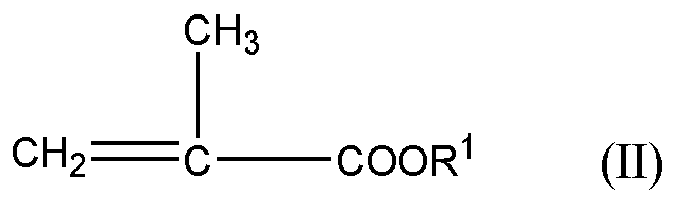
wherein R1 is a C4 to C16 alkyl group.
wherein R1 is a C4 to C16 alkyl group.
3. A fuel oil composition according to claim 2, wherein R1 is a C8 to C16 alkyl group, more preferably a C12 to C16 alkyl group.
4. A fuel oil composition according to claim 2 or claim 3, wherein R1 is a C14 alkyl group (tetradecyl), or R1 is a C12 alkyl group (dodecyl).
5. A fuel oil composition according to any preceding claim, wherein the number average
molecular weight of the at least one polyalkylmethacrylate polymer is in the range
from 1,500 to 6,000 as measured by GPC with reference to polystyrene standards.
6. A fuel oil composition according to any preceding claim, wherein the at least one
ethylene-vinyl ester polymer comprises a copolymer of ethylene and a vinyl ester,
wherein the copolymer has a vinyl ester content of between 5 and 25 mole %, preferably
between 10 and 20 mole%.
7. A fuel oil composition according to any of claims 1 to 5, wherein the at least one
ethylene-vinyl ester polymer comprises a terpolymer of ethylene, vinyl acetate and
a branched-chain ester chosen from the group containing vinyl 2-ethylhexanoate, vinyl
neononanoate, vinyl neodecanoate and vinyl neoundecanoate.
8. A fuel oil composition according to any preceding claim, wherein the combined total
amount of ethylene-vinyl ester polymer and polyalkylmethacrylate polymer in the fuel
oil composition is in the range from 100 to 5,000 ppm by weight, based on the weight
of the fuel oil blend.
9. A fuel oil composition according to any preceding claim, wherein the weight ratio
of ethylene-vinyl ester to polyalkylmethacrylate polymer in the fuel oil composition
is in the range from 1:8 to 8:1.
10. A fuel oil composition according to any preceding claim, wherein the fuel oil composition
further contains one or more co-additives, preferably an additional cold-flow additive.
11. A fuel oil composition according to claim 10, wherein the one or more co-additive
comprises an oil-soluble, hydrogenated block diene polymer.
12. A fuel oil composition according to claim 10, wherein the one or more co-additive
comprises one or more additive chosen from the group of lubricity additives, anti-oxidants,
electrical conductivity improving additives, metal deactivators and demulsifiers.
13. A method of improving the low temperature properties of a blend of a middle-distillate
fuel oil and a hydrotreated vegetable, animal or fish oil, wherein the amount of hydrotreated
vegetable oil in the blend is sufficient to provide the blend with an increase in
the C15 to C20 n-alkane distribution of at least 3% by weight over the C15 to C20 n-alkane distribution of the middle-distillate alone, the method comprising adding
to the blend at least one ethylene-vinyl ester polymer and at least one polyalkylmethacrylate
polymer.
14. The use of at least one ethylene-vinyl ester polymer and at least one polyalkylmethacrylate
polymer to improve the low temperature properties of a blend of a middle-distillate
fuel oil and a hydrotreated vegetable, animal or fish oil, wherein the amount of hydrotreated
vegetable oil in the blend is sufficient to provide the blend with an increase in
the C15 to C20 n-alkane distribution of at least 3% by weight over the C15 to C20 n-alkane distribution of the middle-distillate alone.
15. The method of claim 13 or the use of claim 14 wherein the improvement in low temperature
properties of the blend of a middle-distillate fuel oil and a hydrotreated vegetable,
animal or fish oil is as determined by CFPP measurement.
REFERENCES CITED IN THE DESCRIPTION
This list of references cited by the applicant is for the reader's convenience only. It does not form part of the European patent document. Even though great care has been taken in compiling the references, errors or omissions cannot be excluded and the EPO disclaims all liability in this regard.
Patent documents cited in the description
- US4992605A [0018]
- US5705722A [0018]
- FR2607803 [0018]
- WO2004022674A1 [0018]
- WO2007068795A1 [0018]
- US4694054A [0034]
- EP0857776B1 [0042]
- EP1767610A [0042]
- EP1482024A [0042]
Non-patent literature cited in the description
- Jn. Of the Institute of Petroleum, 1996, vol. 52, 510173-285 [0047]