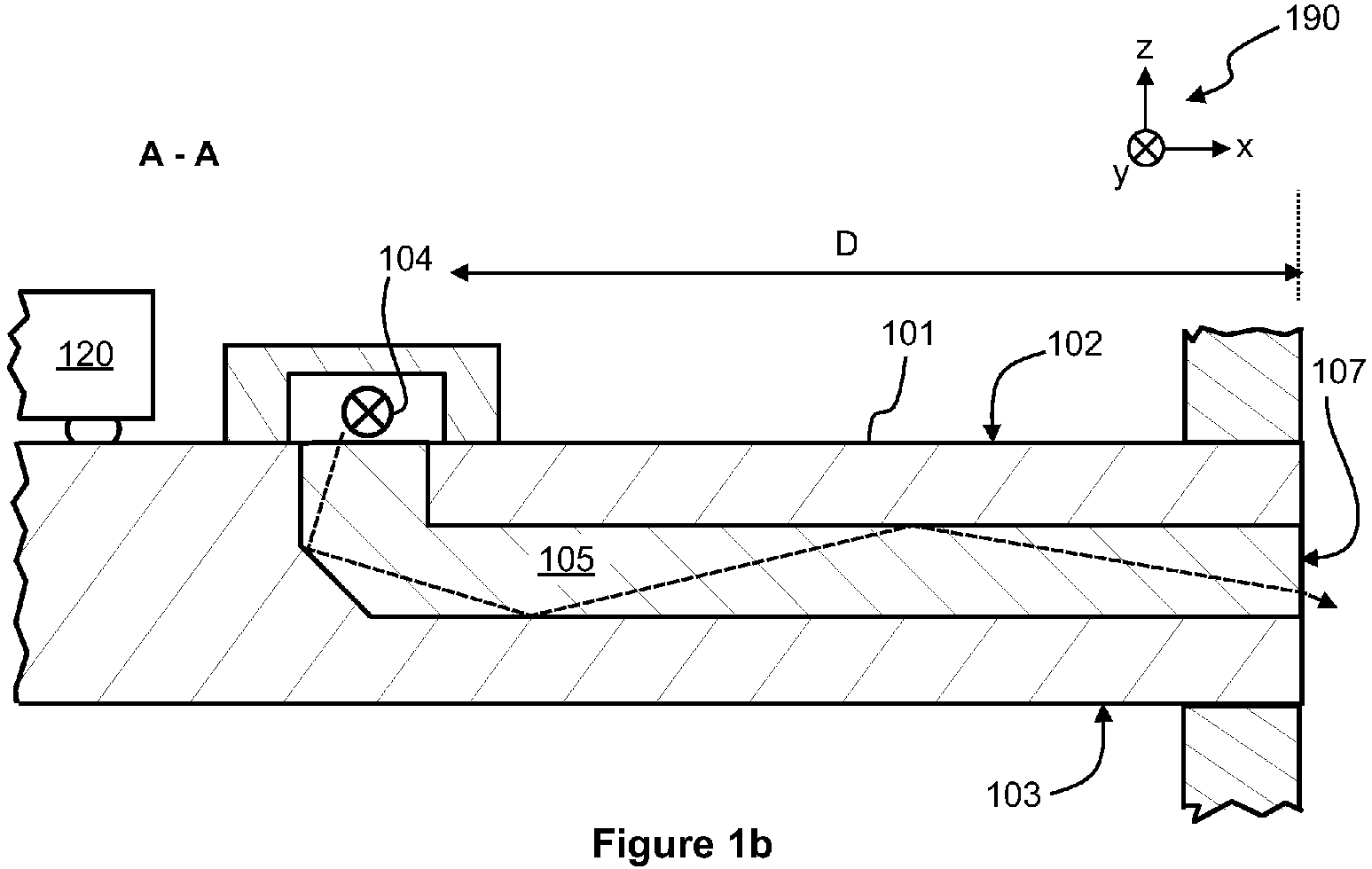
(57) An electrical device comprises a circuit board (101), a light source (104), and a
light guide (105). The light guide receives light from the light source and conducts
the received light to an end of the light guide so that the light crosses, in a direction
parallel with the circuit board, an edge of the circuit board. The end of the light
guide constitutes a display surface for showing the light to a user. On a fringe area
extending from the edge of the circuit board a distance (D) towards the opposite edge
of the circuit board, the light guide is between geometrical planes parallel and coinciding
with surfaces of the circuit board. Hence, the light guide does not require room in
directions perpendicular to the circuit board. Therefore, for example, more connectors,
key buttons, and/or other instruments can be placed on a control panel of the electrical
device.
|
|
