|
(11) | EP 2 822 160 A1 |

| (12) | EUROPEAN PATENT APPLICATION |
|
|
|
|
||||||||||||||||||||
|
|||||||||||||||||||||
| (54) | Brushless motor or generator with reduced reluctance torque |
| (57) The invention relates to a brushless motor or generator, in which the ratio of the
number of stator slots to the number of rotor poles is fractional characterised in
that the rotor has a pole-free zone (4) or zone between poles with an increased angle,
a result of adding the fractional part of dividing the number of stator slots between
the number of rotor poles into the space between magnets, wherein (N) is the number
of stator slots and (P) is the number of rotor poles with magnets inserted, (N) and
(P) being values such that their (N/P) ratio is fractional, the fractional part (Y)
being defined as: Y = (N/P) - Ent(N/P), and the pole-free zone (β) equals (360/N)*Y.
Dynamic compensation is achieved either by a number of recesses (5) or by filling
material in the longitudinal groove (6) of the pole-free zone (4).
|
OBJECT OF THE INVENTION
[0001] The object of the invention herein, as established in the title, is a brushless motor or generator with reduced reluctance torque with magnets inserted in the rotor and a number of slots relative to the fractional number of poles.
[0002] The rotor design and particularly the distribution of the poles in the rotor in order to reduce the reluctance torque in brushless motors and generators characterises the invention herein.
[0003] Therefore, this invention is confined within the scope of brushless motors and generators, and particularly among those in which the ratio of the number of slots to the number of poles is a fractional number, and more specifically, those aiming to reduce the reluctance torque.
BACKGROUND OF THE INVENTION
[0004] The presence of protruding poles on the rotors results in a reluctance torque, which is the torque required to achieve the ignition advance of the rotor, which is one of the causes of the so-called magnetic noise that results from continuous torque that has to be exceeded in the rotation of the rotor.
[0005] Therefore, the object of the invention herein is to reduce the reluctance torque in a motor or generator, in which there is a fractional ratio of the number of stator slots to the number of rotor poles, creating a rotor geometry such as that described below and is contained in its essential nature in the first claim.
DESCRIPTION OF THE INVENTION
[0006] The object of the invention herein is to provide a brushless motor or generator having a reduced reluctance torque, and in which the ratio of the number of stator slots to the number of rotor poles is fractional.
[0007] To achieve the aforementioned motor or generator with reduced reluctance torque, the rotor is constructed with a pole-free zone, the result of adding the fractional part of dividing the number of stator slots by the number of poles of the rotor to the space between magnets, i.e. it is an area between poles with an increased angle.
[0008] (N) being the number of stator slots and (P) being the number of rotor poles with magnets inserted, where (N) and (P) are values such that their (N/P) ratio is fractional, the fractional part (Y) being defined as
wherein Ent(N/P) is the integer part of the quotient of the number of slots between the number of poles,
and the pole-free area (β) is obtained from:
[0009] Therefore, the rotor geometry shall be such that the magnets inserted in the poles are evenly distributed, separated from each other at an angle (α), all but two of the poles that are spaced at an angle (α+β).
[0010] That is, the area between poles has a constant and uniform value in all cases except for between two of the magnets, which has an area between poles increased by a (β) value.
[0011] Since the space between poles is not uniform around the rotor, dynamic imbalances occur. In one possible embodiment, the aforementioned imbalances are compensated with a recess made in diametrically opposite areas to the increased space between poles. The recess to compensate the imbalance may already be defined in the designed part, in other words, when the plate is obtained from the die, this recess is already incorporated. The recess may also be subsequently incorporated after the rotor has been made.
[0012] In another possible embodiment, the aforementioned imbalances are compensated by providing material in the increased area between poles or pole-free zone.
EXPLANATION OF THE FIGURES
[0013] As a complement of the description being made and for a better understanding of the characteristics of the invention, according to an example of a practical preferred embodiment thereof, attached as an integral part of the aforementioned description is a set of drawings where, for purposes of illustration and in a non-limiting manner, the following is shown:
Figure 1 shows a rotor plate in one of many possible embodiments.
Figure 2 shows full view of a complete rotor in a construction variant.
PREFERRED EMBODIMENT OF THE INVENTION
[0015] Figure 1 shows a rotor (1) that have a plurality of poles with magnets (2) inserted, wherein the area between poles (3) is regular except between two poles that have an increased area between poles or pole-free zone (4).
[0016] The value of the increased area between poles or pole-free zone (4) is the value of the increased area between poles (3) at an angle (β) obtained from the fractional part (Y) after subtracting the fraction of the number of slots between the number of poles minus the integer part of said ratio, as seen in the following expression:
[0018] Figure 1 shows that the separation between all the magnets (2) has a constant value (α), and that in one case has a value of (α+β), as the increased area between poles or pole-free zone (4) has increased to a value of (β).
[0019] As a consequence of the lack of uniformity in the distribution of the magnets, dynamic imbalances occur, which in one possible embodiment are compensated by means of recesses (5) made on the rotor body in the area opposite the increased area between poles or pole-free zone (4). These recesses, as indicated above, may be defined in the designed part or can be subsequently incorporated.
[0020] By using this configuration described, a rotor is obtained from the die that has a pole-free zone and a number of recesses for dynamic compensation produced by the lack of uniformity in the distribution of the magnets.
[0021] Figure 2 shows the rotor in perspective, and wherein alternately, additional material is arranged to offset the dynamic imbalance caused in the increased area between poles or pole-free zone (4) in the notch itself (6) or recess. The function of said longitudinal notches (6) is to saturate this area of the rotor plate to prevent the recirculation of the flow from magnet to magnet, thereby improving closure thereof through the stator.
1. Brushless motor or generator, in which the ratio of the number of stator slots to
the number of rotor poles is fractional characterised in that the rotor has a pole-free zone (4) or zone between poles with an increased angle,
a result of adding the fractional part of dividing the number of stator slots between
the number of rotor poles into the space between magnets, wherein (N) is the number
of stator slots and (P) is the number of rotor poles with magnets inserted, (N) and
(P) being values such that their (N/P) ratio is fractional, the fractional part (Y)
being defined as:
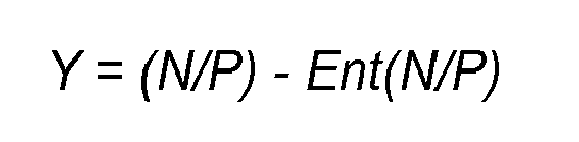
wherein Ent(N/P) is the integer part of the quotient of the number of slots between the number of poles,
and the pole-free area (β) is obtained from:

wherein Ent(N/P) is the integer part of the quotient of the number of slots between the number of poles,
and the pole-free area (β) is obtained from:
2. Brushless motor or generator according to claim 1, characterised in that one or more recesses (5)are made on the rotor body (1) in the area opposite the increased
area between poles or pole-free zone (4).
3. Brushless motor or generator according to claim 1, characterised in that the notch itself (6) or recess in the increased area between poles or pole-free zone
(4) has additional material.
4. Brushless motor or generator according to claim 2, characterised in that the recess (5) can be defined in the designed part, in other words, when the plate
is obtained from the die or, subsequently, when the rotor has been made.
Amended claims in accordance with Rule 137(2) EPC.
1. Brushless motor or generator, in which the ratio of the number of stator slots to
the number of rotor poles is fractional characterised in that the rotor has a pole-free zone (4) so the poles next to that pole-free zone (4) are
separated an angle (α + β) or an increased angle (β) respect to the separation angle
(α) of the rest of the poles, wherein the increased angle (β) is obtained from:

Wherein (N) is the number of stator slots and (Y) is the fractional part being defined as:
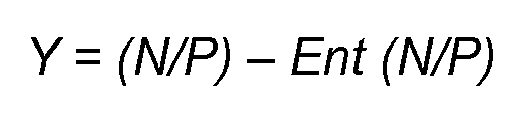
Being (P) the number of rotor poles with magnets inserted, (N) and (P) being values such that their (N/P) ratio is fractional, and Ent (N/P) is the integer part of the quotient of the number of slots between the number of poles, wherein on the rotor body (1) in the area opposite the increased area between poles or pole-free zone (4), one or more recesses (5) are made to compensate the dynamic imbalances.
Wherein (N) is the number of stator slots and (Y) is the fractional part being defined as:
Being (P) the number of rotor poles with magnets inserted, (N) and (P) being values such that their (N/P) ratio is fractional, and Ent (N/P) is the integer part of the quotient of the number of slots between the number of poles, wherein on the rotor body (1) in the area opposite the increased area between poles or pole-free zone (4), one or more recesses (5) are made to compensate the dynamic imbalances.
2. Brushless motor or generator according to claim 1, characterised in that the recess (5) can be defined in the designed part, in other words, when the plate
is obtained from the die or, subsequently, when the rotor has been made.