| (19) |
 |
|
(11) |
EP 2 918 555 B2 |
| (12) |
NEW EUROPEAN PATENT SPECIFICATION |
|
After opposition procedure |
| (45) |
Date of publication and mentionof the opposition decision: |
|
05.03.2025 Bulletin 2025/10 |
| (45) |
Mention of the grant of the patent: |
|
05.05.2021 Bulletin 2021/18 |
| (22) |
Date of filing: 08.11.2013 |
|
| (51) |
International Patent Classification (IPC):
|
| (86) |
International application number: |
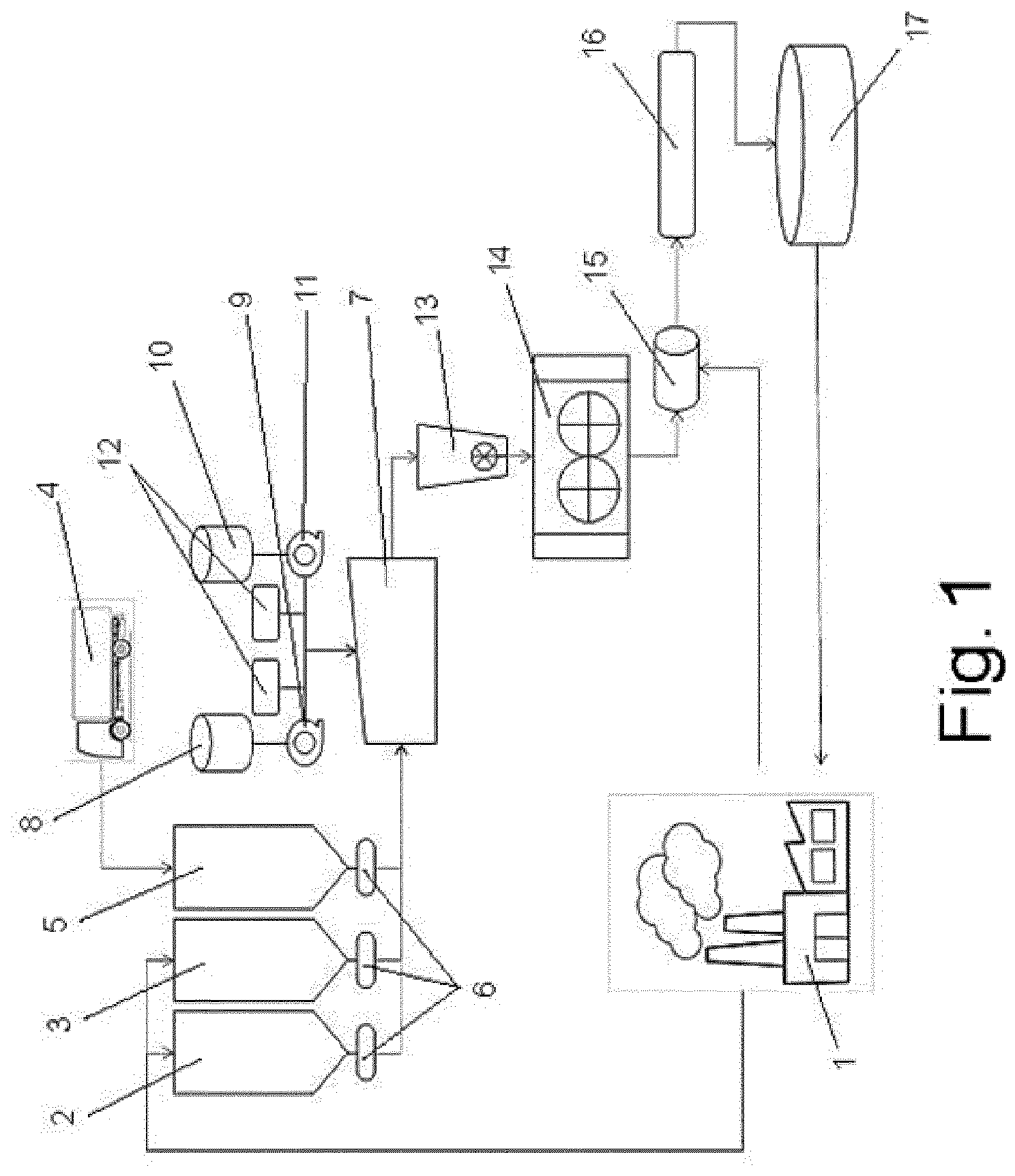
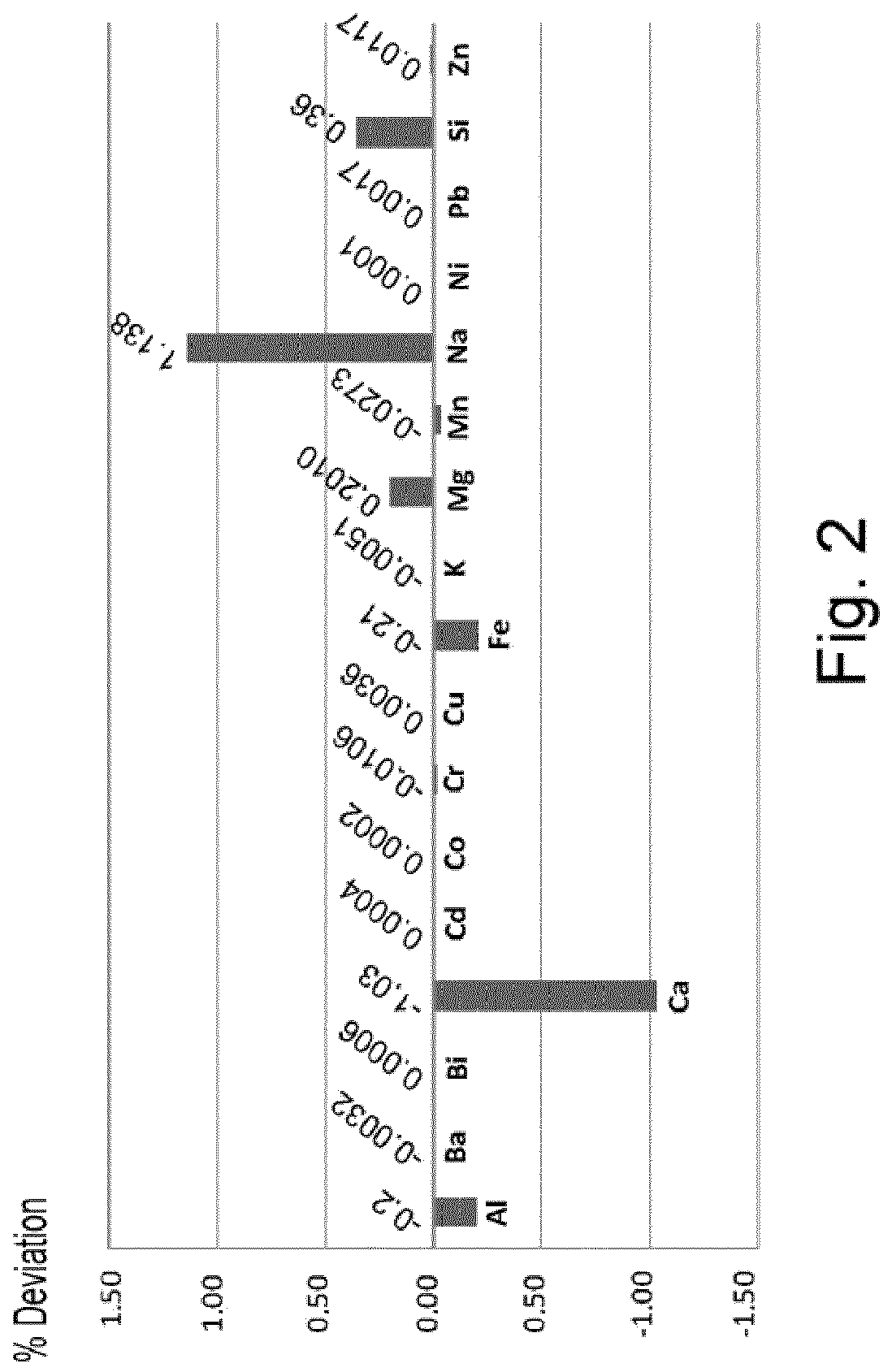
|
PCT/ES2013/070769 |
| (87) |
International publication number: |
|
WO 2014/072560 (15.05.2014 Gazette 2014/20) |
|
| (54) |
BRIQUETTE FOR THE PRODUCTION OF ROCK WOOL AND METHOD FOR THE PRODUCTION OF SAID BRIQUETTE
BRIKETT ZUR HERSTELLUNG VON STEINWOLLE UND VERFAHREN ZUR HERSTELLUNG DIESES BRIKETTS
BRIQUETTE UTILISÉE POUR LA PRODUCTION DE LAINE DE ROCHE ET PROCÉDÉ D'OBTENTION DE
LADITE BRIQUETTE
|
| (84) |
Designated Contracting States: |
|
AL AT BE BG CH CY CZ DE DK EE ES FI FR GB GR HR HU IE IS IT LI LT LU LV MC MK MT NL
NO PL PT RO RS SE SI SK SM TR |
| (30) |
Priority: |
12.11.2012 ES 201231735
31.10.2013 ES 201331598
|
| (43) |
Date of publication of application: |
|
16.09.2015 Bulletin 2015/38 |
| (73) |
Proprietor: V&L CHEM, S.L. |
|
48100 Mungia (Bizkaia) (ES) |
|
| (72) |
Inventors: |
|
- VITORICA MURGUIA, Ramón
E-48100 Munguia (Vizcaya) (ES)
- GUTIERREZ SAN MARTIN, Oscar
E-01010 Vitoria (Gazteiz) (ES)
|
| (74) |
Representative: Evens, Paul Jonathan et al |
|
Maguire Boss
24 East Street
St. Ives, Cambridgeshire PE27 5PD
St. Ives, Cambridgeshire PE27 5PD (GB) |
| (56) |
References cited: :
EP-A1- 2 415 721
WO-A1-2010/149655
WO-A1-97/25286
WO-A2-2006/042755
US-A- 6 074 967
|
WO-A1-2006/040046
WO-A1-97/25286
WO-A2-2006/002948
US-A- 2 366 473
US-A1- 2005 242 477
|
|
| |
|
|
- ANONYMOUS: "Man-Made Vitreous Fibres - Nomenclature, Chemistry, and Physical Properties",
NOMENCLATURE COMMITTEE OF TIMA INC, 1 March 1993 (1993-03-01), pages 49 - 55, XP055844701,
[retrieved on 20210927]
- DATABASE WPI Derwent World Patents Index; AN 2013-B15113, XP055255382
|
|
| |
|
Field of the Art
[0001] The present invention relates to briquettes, or solid blocks, used for material recovery
from rock wool waste and its possible mixing with fines from residual materials from
other industries or not, and/or alternative fuels of a residual origin, which supply
heat in furnaces, boilers or the like, proposing a briquette which is used in the
mineral fiber manufacturing industry, more specifically for the rock wool manufacturing
industry.
State of the Art
[0002] Rock wool is a mineral fiber used primarily in the construction sector as thermal
insulation, or as a fire protection element. Rock wool is obtained by melting basalt
raw material at more than 1600°C, in a melting furnace, generally in a cupola furnace;
the molten material is subjected to the effect of centrifugal force to generate fibers
that will form the final rock wool product.
[0003] Currently rock wool wastes, surplus or rejects, as well as other residual materials
from other industries, are compacted to form recycling briquettes, which are introduced
in the cupola furnace to be transformed back into rock wool.
[0004] Binders are known to be used to produce briquettes with mechanical strength suitable
for industrial handling. Low sulfur content cement is currently used as a binder for
manufacturing briquettes. Nevertheless, the sulfur emission rate using these briquettes
that are briquetted with cement, continues to be high because rock wool has organic
compounds that act adversely with cement, such that it is necessary to increase the
percentage of cement to produce a briquette with suitable mechanical strength. On
the other hand, in addition to the environmental issue generated by sulfur dioxide
emissions during combustion of the briquettes, an economic issue is also generated,
as a higher percentage of cement is required to produce the desired mechanical strength.
[0005] Patent document
WO97/25286 (and counterpart
US 6,074,967) discloses a method for the production of briquettes which are used in manufacturing
rock wool, the method being in accordance with the pre-amble of appended independent
claim 10. In the production of rock wool, when the molten material is introduced in
the cupola furnace and is subjected to the action of centrifugal force, rock wool
fibers are generated, 70% of which has a fibrous form, and 30% has a form of spherical
granules which are not valid for industrial use. Patent document
WO97/25286 proposes recovering those spherical granules of rock wool to form briquettes which
are used again in manufacturing new rock wool.
[0006] The spherical granules of rock wool are ground in a gyratory crusher until producing
a finely divided material with a uniform particle size of less than 30 mm. To produce
a briquette with suitable mechanical consistency, patent document
WO97/25286 proposes binding the spherical granules finely divided using a fibrous binder, specifically
cellulose fiber (recycled paper) which, like the spherical granules, is ground to
produce particles having an approximate dimension of 2 mm. Additionally, to make the
briquette harder so that it can be correctly handled in an industrial setting, patent
document
WO97/25286 requires adding a hardening product to the mixture of spherical granules of rock
wool and cellulose fiber, such as sodium silicate, calcium silicate or aluminum silicate.
[0007] This solution allows producing a briquette that reduces sulfur dioxide emissions
during combustion of the briquettes, however it requires using a fibrous binder to
be able to produce a briquette with suitable mechanical consistency, in addition to
requiring the use of special machinery for milling and grinding the granules of rock
wool and cellulose fiber and to be able to produce particles having a uniform size.
[0008] An alternative solution which allows the production of briquettes with a low sulfur
dioxide emission and which prevents the need to use a fibrous binder to provide the
briquette with suitable mechanical strength for correct industrial handling is therefore
necessary.
[0009] US 2005/0242477 relates to a method for making ceramic products from fiber glass waste.
[0010] WO 2006/042755 relates to a moulding for generating a mineral melted mass to be defibrated in order
to produce insulating materials made of mineral fibres.
[0011] US 2,366,473 relates to the preparation of glass batch from materials, such as, sand or silica
and fluxes such as, soda ash, lime, and the like.
[0012] WO 2010/149655 relates to a method of making a particulate material from a mineral wool base material.
Object of the Invention
[0013] In accordance with the present invention, there is provided a briquette according
to appended independent claim 1, and a method according to appended independent claim
10. Embodiments of the invention are defined in appended claims dependent on either
independent claim 1 or independent claim 10. The present invention proposes an alternative
process to the process currently used by the mineral fiber manufacturing industry
and, more specifically, by the rock wool manufacturing industry, which provides significant
improvements on an environmental level and greater utilization of energy resources,
giving rise to briquettes with less global impact throughout their life cycle.
[0014] The invention proposes a briquette which is used for the production of rock wool,
consisting of a raw material comprising rock wool waste, a non-fibrous inorganic binder
of that raw material, the non-fibrous inorganic binder being sodium silicate, and
an activating agent accelerating the curing (hardening) process of the briquetted
raw material, wherein the rock wool waste has a fiber morphology, with the fibers
of the rock wool waste having a diameter between 1 µm and 30 µm and a fiber length
to fiber diameter ratio of at least 3:1. The non-fibrous inorganic binder, sodium
silicate, is used to bind the raw material instead of using cement like in conventional
solutions, the sulfur emission problem which is generated with the cement binders
of conventional solutions thereby being eliminated.
[0015] Specifically, the invention proposes using trimmings, surplus or rejects from the
production of rock wool having a fiber morphology, such that when a raw material with
a fibrous form is used, it is not necessary to use a fibrous binder like in conventional
solutions to produce a briquette with the mechanical consistency necessary for correct
industrial handling. Therefore, the invention proposes using a single type of non-fibrous
binder, such as silicate, to bind the raw material of rock wool fibers.
[0016] The possibility of the raw material, in addition to rock wool waste, being able to
comprise fines from residual materials and/or fuels of a residual origin has been
envisaged. The fines from residual materials are fines from other industries or not,
such as for example, coke fines, steel mill and foundry slag, foundry sand or other
raw material rejects the grain size distribution of which is not suitable for direct
furnace feed. Torrefied biomass, conventional biomass, sewage sludge, SRF or any other
residue supplying calorific value and complying with environmental and technical parameters
required by the competent administration and the production process is used as fuel
of a residual origin.
[0017] Therefore, in one embodiment, the raw material used for manufacturing the briquette
has a composition by weight of 50% to 100% of rock wool waste, of between 0% and 50%
of fines from residual materials, and of between 0% and 50% of fuels of a residual
origin. The proportion by weight of the sodium silicate binder is from 3% to 20% in
relation to the total weight of the raw material used.
[0018] Even more preferably, the proportion by weight of the sodium silicate binder is from
6% to 16% in relation to the total weight of the raw material used. By using this
amount of binder together with the rock wool fibers, briquettes are produced with
a density of between 1.2 and 2.8 g/cm
3, which density is sufficient for the briquette to be handled on an industrial level
without causing it to break.
[0019] The possibility of using an ester as the activating agent used to accelerate the
curing process of the briquette in a percentage of 0% to 4% by weight in relation
to the total weight of the raw material used has been envisaged. Using carbon dioxide
gas (CO
2) as the activating agent as an alternative to ester has been envisaged.
[0020] The carbon dioxide (CO
2) can be artificial, being applied directly from cylinders containing the gas, or
it can be ambient carbon dioxide (CO
2), which is present in the atmosphere in which the briquettes are stored.
[0021] According to all this, for the case of an annual recovery of 10,000 MT of rock wool
waste by means of manufacturing briquettes, using the sodium silicate binder and the
method of the present invention as a replacement for the cement used as a binder in
conventional solutions, the reduction in emissions would be the equivalent of 35,300
kg of sulfuric dioxide (SO
2) (calculations have been done for briquettes with a percentage by weight of 15% cement
in the briquette and 2% SO
3 present in the cement used).
[0022] This reduction in sulfur emissions is even more significant when a fuel of a residual
origin of torrefied biomass is used as raw material as a replacement for the fines
from residual materials, specifically as a replacement for coke fines, and in a proportion
of 50% by weight with respect to the total weight of the raw material used. In these
conditions and according to the previously mentioned production, reductions of 131,550
kg of sulfur dioxide (SO
2) and 23,400,000 kg of carbon dioxide (CO
2) from fossil fuels are obtained.
[0023] The briquettes produced according to the present invention meet needs with respect
to:
- Mechanical strength sufficient for industrial handling.
- High productivity which allows assuring the current and future demand.
- Replacement of the cement currently used as a binder with sodium silicate, which favors
eliminating sulfur that is supplied by its use.
- Utilization of coke fines in an initial step in the case of such fines being used
as raw material, optimizing efficiency of the energy resources available.
- Replacement of coke with torrefied biomass, which favors eliminating sulfur that is
supplied by its use and reducing emissions of CO2 from fossil fuels.
[0024] A briquette to be used in the mineral fiber manufacturing industry, and more specifically
in the rock wool manufacturing industry, which provides significant improvements on
an environmental level and better utilization of energy resources is thereby produced.
Description of the Drawings
[0025]
Figure 1 shows a schematic diagram of manufacturing a briquette according to an embodiment
of the invention.
Figure 2 shows a graph comparing an elemental composition of the rock wool waste and
a briquette that has been briquetted with sodium silicate binder according to the
present invention.
Detailed Description of the Invention
[0026] Figure 1 shows a non-limiting embodiment of a process for the generation of briquettes
according to the present invention. In an installation (1) for the generation of rock
wool, rock wool waste, coke fines and other raw materials which are reused for manufacturing
new rock wool are generated. The rock wool waste and coke fines are stored, respectively,
in a rock wool silo (2) and a coke fines silo (3) .
[0027] Torrefied biomass or another fuel of a residual origin which is stored in a torrefied
biomass silo (5) is transported by means of external logistics (4). Each of the silos
(2, 3, 5) in which the raw materials for the generation of briquettes are stored,
are associated with respective weighing cells (6) which determine the suitable proportions
of raw material that are introduced in a mixer (7).
[0028] The raw material used for formation of the briquette can comprise rock wool or it
can comprise rock wool with coke fines and/or torrefied biomass. More specifically,
the rock wool used is in fiber form, the fibers having a diameter between 1 µm and
30 µm with a fiber length to fiber diameter ratio of at least 3:1.
[0029] Therefore, the proportions by weight of raw material used at all times can range
from 50% to 100% rock wool waste, from 0% to 10% coke fines, and from 0% to 50% torrefied
biomass. The percentage by weight is represented with respect to the total weight
of raw materials at the inlet of the mixer (7).
[0030] A non-fibrous inorganic binder, specifically sodium silicate, which is used to bind
the raw materials in solution, is stored in a binder tank (8). Sodium silicate is
injected into the mixer (7) through a binder injection pump (9). Ester, which is introduced
into the mixer (7) by means of an ester injection pump (11) in the case of using ester
as the activating agent of the mixture located in the mixer (7), is stored in another
tank (10).
[0031] The amounts to be injected into the mixer (7) by the binder injection pump (9) and
ester injection pump (11) are controlled by means of respective flow meters (12).
Therefore, the proportion by weight of sodium silicate binder is from 3% to 20% in
relation to the total weight of raw materials at the inlet of the mixer (7). Sodium
silicate used as a binder allows producing briquettes which, once cured, have a glassy
structure with a good degree of mechanical strength.
[0032] The proportion by weight of the sodium silicate binder is preferably from 6% to 16%
in relation to the total weight of the raw material used.
[0033] When the activating agent to accelerate curing of the mixture is an ester, the percentage
of ester in relation to the total weight of raw materials at the inlet of the mixer
(7) is between 0% and 4%.
[0034] Once the time necessary to homogenize the mixture has lapsed, a worm screw hopper
(13) pours the mixture from the mixer (7) into a briquetting machine (14) shaping
the briquettes.
[0035] When an ester is not used as the activating agent, the possibility of a chamber (15)
being arranged at the outlet of the briquetting machine (14) for exposing the briquettes
to CO
2 gas and a heater (16), which allow accelerating the kinetics for the briquette curing
reaction, has been envisaged for the purpose of assuring the mechanical strength necessary
for subsequent industrial handling. Finally, the briquettes are transported to a storage
area (17) in which they are stored until being used in the installation (1) for the
generation of new rock wool.
[0036] The CO
2 gas used to activate briquette curing can be artificial or it can be ambient CO
2 gas present in the storage area (17) of the briquettes.
[0037] Figure 2 shows a graph comparing an elemental composition of rock wool waste and
a briquette using rock wool waste compacted with sodium silicate binder as a raw material.
The elements making up the rock wool waste, aluminum (Al), barium (Ba), bismuth (Bi),
calcium (Ca), cadmium (Cd), cobalt (Co), chromium (Cr), copper (Cu), iron (Fe), potassium
(K), magnesium (Mg), manganese (Mn), sodium (Na), nickel (Ni), lead (Pb), silicon
(Si), zinc (Zn), are shown on X-axis. The deviation of each of the elements caused
by the addition of the sodium silicate (Na
2SiO
3) binder is shown on the Y-axis. As can be seen, the chemical alteration of the composition
due to the addition of the binder is virtually negligible.
1. A briquette used for the production of rock wool, consisting of a raw material comprising
rock wool waste, a non-fibrous inorganic binder of the raw material, the non-fibrous
inorganic binder being sodium silicate, and an activating agent accelerating the curing
process of the briquetted raw material, wherein the rock wool waste has a fiber morphology,
with the fibers of the rock wool waste having a diameter between 1 µm and 30 µm and
a fiber length to fiber diameter ratio of at least 3:1.
2. The briquette used for the production of rock wool according to claim 1, characterized in that the raw material additionally comprises fines from residual materials and/or fuels
of a residual origin.
3. The briquette used for the production of rock wool according to the preceding claim,
characterized in that the raw material used has a percentage by weight of between 50% and 100% rock wool
waste, between 0% and 50% of fines from residual materials, and between 0% and 50%
of fuels of a residual origin.
4. The briquette used for the production of rock wool according to claim 1, characterized in that the proportion by weight of the sodium silicate binder is from 3% to 20% in relation
to the total weight of the raw material.
5. The briquette used for the production of rock wool according to claim 1, characterized in that the proportion by weight of the sodium silicate binder is from 6% to 16% in relation
to the total weight of the raw material.
6. The briquette used for the production of rock wool according to claim 1, characterized in that an ester is used as the activating agent in a percentage of 0% to 4% by weight in
relation to the total weight of the raw material.
7. The briquette used for the production of rock wool according to claim 1, characterized in that carbon dioxide gas is used as the activating agent.
8. The briquette used for the production of rock wool according to claim 7, characterized in that the carbon dioxide gas used is an ambient gas present in the briquette storage area.
9. The briquette used for the production of rock wool according to claim 7, characterized in that the carbon dioxide gas used is an artificial gas supplied on the briquettes.
10. A method for the production of briquettes provided with the features of the preceding
claims, wherein a raw material comprising rock wool waste is mixed with a non-fibrous
inorganic binder to shape a briquette which is cured by means of an activating agent,
the non-fibrous inorganic binder being sodium silicate, characterized in that the rock wool waste has a fiber morphology, with the fibers of the rock wool waste
used as raw material having a diameter between 1 µm and 30 µm and a fiber length to
fiber diameter ratio of at least 3:1, such that the briquette is shaped without use
of a fibrous binder.
11. A method for the production of briquettes, according to claim 10, characterized in that the rock wool waste in fiber form used as raw material has a density comprised between
0.18 and 0.99 g/cm3.
12. The method for the production of briquettes according to claim 10, characterized in that the raw material additionally comprises fines from residual materials and/or fuels
of a residual origin.
13. The method for the production of briquettes according to the preceding claim, characterized in that the raw material used has a proportion by weight of between 50% and 100% of rock
wool waste, between 0% and 50% of fines from residual materials, and between 0% and
50% of fuels of a residual origin.
14. The method for the production of briquettes according to claim 10, characterized in that the sodium silicate used as a binder is added to the raw material in a proportion
of between 3% and 20% by weight in relation to the total weight of the raw material.
15. The method for the production of briquettes according to claim 10, characterized in that the sodium silicate used as a binder is added to the raw material in a proportion
of between 6% and 16% by weight in relation to the total weight of the raw material.
16. The method for the production of briquettes according to claim 10, characterized in that the activating agent used to cure the briquette is an ester which is added to the
raw material in a percentage of 0% to 4% by weight in relation to the total weight
of the raw material.
17. The method for the production of briquettes according to claim 10, characterized in that the activating agent used to cure the briquette is carbon dioxide gas.
18. The method for the production of briquettes according to claim 17, characterized in that the briquette is cured using ambient carbon dioxide gas present in the atmosphere
wherein the briquettes are stored.
19. The method for the production of briquettes according to claim 17, characterized in that the briquette is cured using artificial carbon dioxide gas which is supplied directly
on the briquettes.
20. The method for the production of briquettes according to claim 17, characterized in that the briquette cured with carbon dioxide gas is subjected to a heating process to
accelerate the curing process.
1. Brikett, verwendet zur Herstellung von Steinwolle, bestehend aus einem Rohmaterial,
das Steinwollabfall umfasst, einem nichtfaserigen anorganischen Bindemittel des Rohmaterials,
wobei das nichtfaserige anorganische Bindemittel Natriumsilikat ist, und einem Aktivierungsmittel,
das den Härtungsprozess des brikettierten Rohmaterials beschleunigt, wobei der Steinwollabfall
eine Fasermorphologie aufweist, wobei die Fasern des Steinwollabfalls einen Durchmesser
zwischen 1 µm und 30 µm und ein Verhältnis von Faserlänge zu Faserdurchmesser von
zumindest 3:1 aufweisen.
2. Brikett, verwendet zur Herstellung von Steinwolle nach Anspruch 1, dadurch gekennzeichnet, dass das Rohmaterial zusätzlich Feinanteile aus Restmaterialien und/oder Kraftstoffen
eines Restursprungs umfasst.
3. Brikett, verwendet zur Herstellung von Steinwolle nach dem vorhergehenden Anspruch,
dadurch gekennzeichnet, dass das verwendete Rohmaterial einen Gewichtsprozentsatz zwischen 50 % und 100 % Steinwollabfall,
zwischen 0 % und 50 % Feinanteile aus Reststoffen, und zwischen 0 % und 50 % Kraftstoffe
eines Restursprungs aufweist.
4. Brikett, verwendet zur Herstellung von Steinwolle nach Anspruch 1, dadurch gekennzeichnet, dass der Gewichtsanteil des Natriumsilikatbindemittels 3 % bis 20 % bezogen auf das Gesamtgewicht
des Rohmaterials ist.
5. Brikett, verwendet zur Herstellung von Steinwolle nach Anspruch 1, dadurch gekennzeichnet, dass der Gewichtsanteil des Natriumsilikatbindemittels 6 % bis 16 % bezogen auf das Gesamtgewicht
des Rohmaterials ist.
6. Brikett, verwendet zur Herstellung von Steinwolle nach Anspruch 1, dadurch gekennzeichnet, dass ein Ester als Aktivierungsmittel in einem Prozentsatz von 0 bis 4 Gewichts-% bezogen
auf das Gesamtgewicht des Rohmaterials verwendet wird.
7. Brikett, verwendet zur Herstellung von Steinwolle nach Anspruch 1, dadurch gekennzeichnet, dass Kohlendioxidgas als Aktivierungsmittel verwendet wird.
8. Brikett, verwendet zur Herstellung von Steinwolle nach Anspruch 7, dadurch gekennzeichnet, dass das verwendete Kohlendioxidgas ein Umgebungsgas ist, das in dem Brikettlagerbereich
vorhanden ist.
9. Brikett, verwendet zur Herstellung von Steinwolle nach Anspruch 7, dadurch gekennzeichnet, dass das verwendete Kohlendioxidgas ein künstliches Gas ist, das auf die Briketts zugeführt
wird.
10. Verfahren zur Herstellung von Briketts, die mit den Merkmalen der vorhergehenden Ansprüche
bereitgestellt sind, wobei ein Rohmaterial, das Steinwollabfall umfasst, mit einem
nichtfaserigen anorganischen Bindemittel gemischt wird, um ein Brikett zu formen,
das mittels eines Aktivierungsmittels gehärtet wird, wobei das nichtfaserige anorganische
Bindemittel Natriumsilikat ist, dadurch gekennzeichnet, dass der Steinwollabfall eine Fasermorphologie aufweist, wobei die Fasern des Steinwollabfalls,
die als Rohmaterial verwendet werden, einen Durchmesser zwischen 1 µm und 30 µm und
ein Verhältnis von Faserlänge zu Faserdurchmesser von zumindest 3:1 aufweisen, sodass
das Brikett ohne Verwendung eines Faserbindemittels geformt wird.
11. Verfahren zur Herstellung von Briketts nach Anspruch 10, dadurch gekennzeichnet, dass der Steinwollabfall in Faserform, der als Rohmaterial verwendet wird, eine Dichte
zwischen 0,18 und 0,99 g/cm3 aufweist.
12. Verfahren zur Herstellung von Briketts nach Anspruch 10, dadurch gekennzeichnet, dass das Rohmaterial zusätzlich Feinanteile aus Restmaterialien und/oder Kraftstoffe eines
Restursprungs umfasst.
13. Verfahren zur Herstellung von Briketts nach dem vorhergehenden Anspruch, dadurch gekennzeichnet, dass das verwendete Rohmaterial einen Gewichtsanteil zwischen 50 % und 100 % Steinwollabfall,
zwischen 0 % und 50 % Feinanteile aus Restmaterialien, und zwischen 0 % und 50 % Kraftstoffe
eines Restursprungs aufweist.
14. Verfahren zur Herstellung von Briketts nach Anspruch 10, dadurch gekennzeichnet, dass das Natriumsilikat, das als Bindemittel verwendet wird, dem Rohmaterial in einem
Gewichtsanteil zwischen 3 und 20 Gewichts-% bezogen auf das Gesamtgewicht des Rohmaterials
zugesetzt wird.
15. Verfahren zur Herstellung von Briketts nach Anspruch 10, dadurch gekennzeichnet, dass das Natriumsilikat, das als Bindemittel verwendet wird, dem Rohmaterial in einem
Gewichtsanteil zwischen 6 und 16 Gewichts-% bezogen auf das Gesamtgewicht des Rohmaterials
zugesetzt wird.
16. Verfahren zur Herstellung von Briketts nach Anspruch 10, dadurch gekennzeichnet, dass das Aktivierungsmittel, das verwendet wird, um das Brikett zu härten, ein Ester ist,
der dem Rohmaterial in einem Prozentsatz von 0 bis 4 Gewichts-% bezogen auf das Gesamtgewicht
des Rohmaterials zugesetzt wird.
17. Verfahren zur Herstellung von Briketts nach Anspruch 10, dadurch gekennzeichnet, dass das Aktivierungsmittel, das verwendet wird, um das Brikett zu härten, Kohlendioxidgas
ist.
18. Verfahren zur Herstellung von Briketts nach Anspruch 17, dadurch gekennzeichnet, dass das Brikett unter Verwendung von Umgebungskohlendioxidgas gehärtet wird, das in der
Atmosphäre vorhanden ist, wobei die Briketts gelagert sind.
19. Verfahren zur Herstellung von Briketts nach Anspruch 17, dadurch gekennzeichnet, dass das Brikett unter Verwendung von künstlichem Kohlendioxidgas gehärtet wird, das direkt
auf die Briketts zugeführt wird.
20. Verfahren zur Herstellung von Briketts nach Anspruch 17, dadurch gekennzeichnet, dass das Brikett, das mit Kohlendioxidgas gehärtet wird, einem Erwärmungsprozess unterzogen
wird, um den Härtungsprozess zu beschleunigen.
1. Briquette utilisée pour la production de laine de roche, constituée d'une matière
première comprenant des déchets de laine de roche, un liant inorganique non fibreux
de la matière première, le liant inorganique non fibreux étant du silicate de sodium,
et un agent d'activation accélérant le processus de durcissement de la matière première
briquetée, lesdits déchets de laine de roche présentant une morphologie de fibre,
les fibres des déchets de laine de roche possédant un diamètre compris entre 1 µm
et 30 µm et un rapport de la longueur de fibre sur le diamètre de fibre supérieur
ou égal à 3:1.
2. Briquette utilisée pour la production de laine de roche selon la revendication 1,
caractérisée en ce que la matière première comprend également des fines provenant de matières résiduelles
et/ou de combustibles d'origine résiduelle.
3. Briquette utilisée pour la production de laine de roche selon la revendication précédente,
caractérisée en ce que la matière première utilisée possède un pourcentage en poids de déchets de laine
de roche compris entre 50 % et 100 %, de fines provenant de matières résiduelles compris
entre 0 % et 50 %, et de combustibles d'origine résiduelle compris entre 0 % et 50
%.
4. Briquette utilisée pour la fabrication de laine de roche selon la revendication 1,
caractérisée en ce que la proportion en poids du liant silicate de sodium est de 3 % à 20 % par rapport
au poids total de la matière première.
5. Briquette utilisée pour la fabrication de laine de roche selon la revendication 1,
caractérisée en ce que la proportion en poids du liant silicate de sodium est de 6 % à 16 % par rapport
au poids total de la matière première.
6. Briquette utilisée pour la production de laine de roche selon la revendication 1,
caractérisée en ce qu'un ester est utilisé en tant qu'agent d'activation dans un pourcentage allant de 0
% à 4 % en poids par rapport au poids total de la matière première.
7. Briquette utilisée pour la production de laine de roche selon la revendication 1,
caractérisée en ce que du gaz carbonique est utilisé en tant qu'agent d'activation.
8. Briquette utilisée pour la production de laine de roche selon la revendication 7,
caractérisée en ce que le gaz carbonique utilisé est un gaz ambiant présent dans la zone de stockage de
briquettes.
9. Briquette utilisée pour la production de laine de roche selon la revendication 7,
caractérisée en ce que le gaz carbonique utilisé est un gaz artificiel fourni sur les briquettes.
10. Procédé permettant la production de briquettes dotées des caractéristiques des revendications
précédentes, une matière première comprenant des déchets de laine de roche étant mélangée
avec un liant inorganique non fibreux pour façonner une briquette qui est durcie au
moyen d'un agent d'activation, le liant inorganique non fibreux étant du silicate
de sodium, caractérisé en ce que les déchets de laine de roche possèdent une morphologie fibreuse, les fibres des
déchets de la laine de roche utilisée en tant que matière première possédant un diamètre
compris entre 1 µm et 30 µm et un rapport de la longueur de fibre sur le diamètre
de fibre supérieur ou égal à 3:1, de sorte que la briquette soit façonnée sans utiliser
de liant fibreux.
11. Procédé permettant la production de briquettes selon la revendication 10, caractérisé en ce que les déchets de laine de roche sous forme de fibres utilisés en tant que matière première
possèdent une densité comprise entre 0,18 et 0,99 g/cm3.
12. Procédé permettant la production de briquettes selon la revendication 10, caractérisé en ce que la matière première comprend également des fines de matières résiduelles et/ou de
combustibles d'origine résiduelle.
13. Procédé permettant la production de briquettes selon la revendication précédente,
caractérisé en ce que la matière première utilisée possède une proportion en poids de déchets de laine
de roche comprise entre 50 % et 100 %, de fines de matières résiduelles comprise entre
0 % et 50 %, et de combustibles d'origine résiduelle comprise entre 0 % et 50 %.
14. Procédé permettant la production de briquettes selon la revendication 10, caractérisé en ce que le silicate de sodium utilisé en tant que liant est ajouté à la matière première
dans une proportion comprise entre 3 % et 20 % en poids par rapport au poids total
de la matière première.
15. Procédé permettant la production de briquettes selon la revendication 10, caractérisé en ce que le silicate de sodium utilisé en tant que liant est ajouté à la matière première
dans une proportion comprise entre 6 % et 16 % en poids par rapport au poids total
de la matière première.
16. Procédé permettant la production de briquettes selon la revendication 10, caractérisé en ce que l'agent d'activation utilisé pour durcir la briquette est un ester qui est ajouté
à la matière première selon un pourcentage allant de 0 % à 4 % en poids par rapport
au poids total de la matière première.
17. Procédé permettant la production de briquettes selon la revendication 10, caractérisé en ce que l'agent d'activation utilisé pour durcir la briquette est du gaz carbonique.
18. Procédé permettant la production de briquettes selon la revendication 17, caractérisé en ce que la briquette est durcie à l'aide du gaz carbonique ambiant présent dans l'atmosphère
dans lequel les briquettes sont stockées.
19. Procédé permettant la production de briquettes selon la revendication 17, caractérisé en ce que la briquette est durcie à l'aide de gaz carbonique artificiel qui est fourni directement
sur les briquettes.
20. Procédé permettant la production de briquettes selon la revendication 17, caractérisé en ce que la briquette durcie avec du gaz carbonique est soumise à un processus de chauffage
pour accélérer le processus de durcissement.
REFERENCES CITED IN THE DESCRIPTION
This list of references cited by the applicant is for the reader's convenience only.
It does not form part of the European patent document. Even though great care has
been taken in compiling the references, errors or omissions cannot be excluded and
the EPO disclaims all liability in this regard.
Patent documents cited in the description