|
(11) | EP 3 127 885 A1 |

| (12) | EUROPEAN PATENT APPLICATION |
|
|
|
|
|||||||||||||||||||||||||||
| (54) | CEMENT COMPOSITE MATERIAL WITH INHOMOGENEOUS TEXTILE CRUSHED PIECES |
| (57) Cement composite material with shredded textile waste, which has a voided structure,
consists of the silicate cement, aggregate, shredded textile waste and water. The
composite contains cement in a weight dosage 260 to 400 kg/m3 and the aggregate of single unsorted fraction from the group (0-16, 0-22 or 0-32)
in a weight dosage 1400 kg/m3 to 2100kg/m3. The amount of the shredded textile waste is determined by the measured void ratio
of the aggregate and it ranges from 10 to 80 kg/m3. Water coefficient ranges from 0.25 to 0.4 depending on the aggregate water content
and on requirements for workability of the composite |
Background of the Invention
[0001] Presented solution deals with a new building material exploiting secondary raw materials. It means inhomogeneous shredded textile waste, possibly recycled concrete, which can be used as an aggregate. Resulting material features sufficient mechanical properties that allow to use it as a construction material for less demanding and low-rise buildings.
Description of Prior Art
[0002] Composite materials with cement matrix are a widely used building material, both due to their easy manufacture, and due to easy adjustment of their mechanical properties, such as tensile strength.
[0003] At present we know cement composite materials fully replacing natural aggregate with recycled concrete, while their structure is reinforced with synthetic fibers. This composite, which is currently manufactured from one fraction of recycled concrete, features high void ratio 25-60% depending on the size of the maximum grain of the given recycled concrete. Mechanical properties of the composite depend in particular on the amount of weight dosage of fibers reinforcing the composite structure. Manufacture of most of the fibers used for adjustment of the mechanical properties is complex and cost demanding, which negatively impacts the resulting composite price.
[0004] Textile materials are added to the concrete in the form of aligned woven textiles with clearly defined properties where the textiles are interlaced by concrete layers. Number of layers and their material vary depending on required final properties. Final composites however feature high price and therefore they are not commonly used in current design practice.
[0005] Another exploitation of textile materials is their use in cement composites with natural or artificial aggregates with fraction 0-8, high dosages of silicate cement, water and plasticizer. Disadvantage of this material is its higher price due to required higher dosages of cement bond and plasticizers as well as its low bulk density, which compromises the material with respect to thermal accumulation.
[0006] Inhomogeneous shredded textile waste is used for acoustic insulations or as a reinforcement of cement structure in concretes with continuous grain size curve. In these concretes its usage is questionable; the reason is that as a result of replacement of aggregate with textiles strength characteristics of final composite are compromised.
Summary of the Invention
[0007] Disadvantages of present solutions are removed by the cement composite material with inhomogeneous shredded textile waste, which has a voided structure and it consists of silicate cement, aggregate, shredded textile waste formed according to PP 50057-2012 by clumps of tufts composed mainly of non-textile particles interwoven with textile fibers, and/or it consists of combined textile/non-textile material and hardened textiles, and mixing water. Its principle is that it contains only four basic ingredients, specifically silicate cement in a weight dosage 260 to 400 kg/m3, aggregate of single unsorted fraction from the group (0-16, 0-22, 0-32) in a weight dosage 1400 kg/m3 to 2100kg/m3, dosage of inhomogeneous shredded textile waste in the range from 10 to 80 kg/m3. Water coefficient ranges from 0.25 to 0.4 depending on the aggregate water content and on requirements for workability of the composite, which corresponds to the weight dosage of mixing water from 65 to 160 kg/m3. Dimensions of the shredded textile waste are comparable with the maximum grain size of the applied aggregate fraction, while the dosage of the shredded textile waste, depending on the aggregate void ratio, is determined by the formula
where:
m is the weight of the shredded textile waste,
ρ is the bulk density of the shredded textile waste,
V is 50 to 100% void ratio of the aggregate.
[0008] In one possible preferred embodiment the shredded textile waste is formed by waste materials from worn-out and/or redundant parts of products used in transportation vehicles.
[0009] In a preferred embodiment the aggregate is the concrete recycled aggregate or other secondary raw material, such as crushed bricks, slag aggregate.
[0010] Voided-structure cement composite, which is the subject of the presented patent, has a fixed structure when compacted. The structure is formed by the aggregate grains, it is stable and capable to resist external loads, both mechanical, as well as the impacts of the environment. Low dosage of silicate cement together with the determined weight dosage of the shredded textile waste considerably reduces volume changes of the voided-structure cement composite as opposed to changes in the cement composites with filled-up structure, which can be considered as the benefit of the composite material created according to this patent.
Detailed Description of the Preferred Embodiments
[0011] Cement composite material with inhomogeneous shredded textile waste, which has a voided structure and consists of silicate cement, aggregate, shredded textile waste and mixing water. The composite contains cement in a weight dosage 260 to 400 kg/m3, aggregate of single unsorted fraction from the group (0-16, 0-22, 0-32) in a weight dosage 1400 kg/m3to 2100kg/m3, dosage of inhomogeneous shredded textile waste in the range from 10 to 80 kg/m3, and mixing water in the dosage from 65 to 160 kg/m3. Preferably shall be used the inhomogeneous shredded textile waste according to PP 50057-2012 formed by clumps of tufts composed mainly of non-textile particles interwoven with textile fibers, and/or combined textile/non-textile material and hardened textiles from worn-out and/or redundant parts of products used in transportation vehicles. Dimensions of the shredded textile waste shall be comparable with the maximum grain size of the applied aggregate fraction. Dosage of the shredded textile waste, depending on the void ratio, is determined by the formula
where
m is the weight of the shredded textile waste,
ρ is the bulk density of the shredded textile waste,
V is 50 to 100% void ratio of the aggregate.
[0012] Voided structures of cement composites with 100% replacement of natural aggregate with recycled materials are more suitable for determining the dosage of shredded textile waste. These composites have a discontinued grain size curve and therefore voids are formed throughout the whole volume.
[0013] The voids allow mixing of the shredded textile waste of natural or synthetic origin, possibly combination of both, and thus a new building material can be obtained. Shredded textile waste will not decrease the bulk densities of voided-structure composites as it happens with composites with continuous grain size curve. Using the shredded textile waste significantly improves the material's insulation characteristics against noise, partially against temperature and even fire provided that the shredded textile waste is obtained from textiles used in the automotive industry.
[0014] Each crushed piece of the shredded textile waste produced by crushing the waste textiles from cars has fibers jutting out, which improve their bond with the aggregate grains, and therefore it is advantageous to use this source. Owing to this fact the shredded textile waste partially overtakes the function of otherwise commonly used synthetic fibers for fiber concrete with recycled materials. Everything is subject to the weight dosage of the shredded textile waste and the aggregate grain size. As tests performed so far have shown, this replacement may reach up to 40 - 60% of the effect delivered by the synthetic fibers, it means mechanical properties to be proved for voided-structure cement composites using recycled aggregate with their structure reinforced by synthetic fibers. Replacement of synthetic fibers with shredded textile waste represents lower financial demands because synthetic fibers are the most expensive component of cement composites.
Formula example 1:
| [kg/m3] | |
| CEM I 42,5 R | 300 |
| Aggregate from recycled concrete 0-22 | 1400 |
| Shredded textile waste | 29.5 |
| Water | 93 |
Results in compressive strength
| Sample No. | Dimension | Weight | Force | Bulk density | Strength |
| [mm] | [g] | [kN] | [kg/m3] | [MPa] | |
| S2.1 | 100.22 | 1525 | 49.21 | 1502 | 4.86 |
| 101.1 | |||||
| 100.2 | |||||
| S2.2 | 100.16 | 1450 | 41.66 | 1428 | 4.11 |
| 101.5 | |||||
| 99.86 | |||||
| S2.3 | 100.16 | 1500 | 45.94 | 1493 | 4.58 |
| 100.2 | |||||
| 100.1 | |||||
| Mean value | 1492 | 1475 | 4.52 | ||
Results in flexural tensile strength with four-points support
| Sample No. | Dimension | Weight | Force | Bulk density | Strength |
| [mm] | [g] | [kN] | [kg/m3] | [MPa] | |
| S2.1 | 400 | 6505 | 3.12 | 1616 | 0.93 |
| 100.2 | |||||
| 100.45 | |||||
| S2.2 | 400 | 6585 | 3.11 | 1583 | 0.87 |
| 103.5 | |||||
| 100.45 | |||||
| S2.3 | 400 | 6500 | 2.49 | 1601 | 0.73 |
| 101.1 | |||||
| 100.4 | |||||
| Mean value | 6530 | 1600 | 0.84 | ||
Formula example 2:
| [kg/m3] | |
| CEM I 42,5 R | 300 |
| Aggregate from recycled concrete 0-16 | 1400 |
| Shredded textile waste | 59 |
| Water | 93 |
Results in compressive strength at the remaining pieces of beams
| Sample No. | Dimension [mm] | Force [kN] | Strength [MPa] |
| S.2.1 | 24.82 | 2.48 | |
| 99.75 | |||
| 100.4 | |||
| S.2.2 | 30.26 | 3.02 | |
| 99.6 | |||
| 100.5 | |||
| S.2.3 | 21.6 | 2.08 | |
| 103.3 | |||
| 100.4 | |||
| Mean value | 2.53 |
Results in flexural tensile strength with four-points support
| Sample No. | Dimension | Weight | Force | Bulk density | Strength |
| [mm] | [g] | [kN] | [kg/m3] | [MPa] | |
| S.2.1 | 400 | 5430 | 2.64 | 1355 | 0.79 |
| 99.75 | |||||
| 100.4 | |||||
| S.2.2 | 400 | 5495 | 1.46 | 1372 | 0.44 |
| 99.6 | |||||
| 100.5 | |||||
| S.2.3 | 400 | 5150 | 1.91 | 1241 | 0.53 |
| 103.3 | |||||
| 100.4 | |||||
| Mean value | 5358 | 1323 | 0.59 | ||
Formula example 3:
| [kg/m3] | |
| CEM I 42,5 R | 400 |
| Aggregate from recycled concrete 0-16 | 1400 |
| Shredded textile waste | 29.5 |
| Water | 93 |
Compressive strength at the remaining pieces of beams
| Sample No. | Dimension [mm] | Force [kN] | Strength [MPa] |
| B1.1 | 57.02 | 5.76 | |
| 99 | |||
| 100 | |||
| B1.2 | 40.96 | 4.18 | |
| 98.16 | |||
| 99.9 | |||
| B1.3 | 35.93 | 3.46 | |
| 103.8 | |||
| 100 | |||
| B1.4 | 42.8 | 4.32 | |
| 99.09 | |||
| 100 | |||
| Mean value | 4.43 | ||
Results in flexural tensile strength with four-points support
| Sample No. | Dimension | Weight | Force | Bulk density | Strength |
| [mm] | [g] | [kN] | [kg/m3] | [MPa] | |
| B1.1 | 400 | 6350 | 3.29 | 1600 | 0.99 |
| 99 | |||||
| 100.21 | |||||
| B1.2 | 400 | 6585 | 2.94 | 1679 | 0.92 |
| 98.16 | |||||
| 99.9 | |||||
| B1.3 | 400 | 6495 | 3.86 | 1541 | 1.06 |
| 103.8 | |||||
| 101.51 | |||||
| B1.4 | 400 | 6510 | 2.19 | 1630 | 0.66 |
| 99.09 | |||||
| 100.77 | |||||
| Mean value | 6485 | 1613 | 0.91 | ||
Industrial Applicability
[0015] Material characteristics of the composite, which is the subject of this patent, allow to use it in concrete construction engineering, in particular in its areas where the demands for compressive strength are not too high but where other properties are required, for example tensile strength or improved acoustic parameters. Composite materials may be used in civil engineering manufacture both for manufacture of building blocks used for construction of supporting structures of undemanding building objects, or for direct concreting of supporting elements. The proposed composite material features physical and mechanical properties usable for constructing the supporting structures of civil buildings as an alternative material to traditional brickwork.
1. Cement composite material with inhomogeneous shredded textile waste featuring a voided
structure and consisting of silicate cement, aggregate, shredded textile waste formed
by the clumps of tufts composed in particular of non-textile particles interwoven
with textile fibers and/or combined textile/non-textile material and hardened textiles,
and of mixing water characterized by the fact that it contains silicate cement in a weight dosage 260 to 400 kg/m3, aggregate of single unsorted fraction from the group (0-16, 0-22, 0-32) in a weight
dosage 1400 kg/m3 to 2100kg/m3, dosage of inhomogeneous shredded textile waste in the range from 10 to 80 kg/m3, and mixing water in the dosage from 65 to 160 kg/m3, where the dimensions of the shredded textile waste are comparable with the maximum
grain size of the applied aggregate fraction, while the dosage of the shredded textile
waste, depending on the aggregate void ratio, is determined by the formula
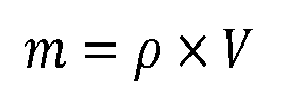
where
where
m is the weight of the shredded textile waste,
ρ is the bulk density of the shredded textile waste,
V is 50 to 100% void ratio of the aggregate.
2. Cement composite material according to claim 1 characterized by the fact that the shredded textile waste is formed by waste materials from worn-out
and/or redundant parts of products used in transportation vehicles.
3. Cement composite material according to claim 1 or 2 characterized by the fact that the aggregate is the concrete recycled aggregate or other secondary
raw material, such as crushed bricks, slag aggregate.