| (19) |
 |
|
(11) |
EP 3 246 653 A1 |
| (12) |
EUROPEAN PATENT APPLICATION |
|
published in accordance with Art. 153(4) EPC |
| (43) |
Date of publication: |
|
22.11.2017 Bulletin 2017/47 |
| (22) |
Date of filing: 15.01.2016 |
|
| (51) |
International Patent Classification (IPC):
|
| (86) |
International application number: |
|
PCT/ES2016/070017 |
| (87) |
International publication number: |
|
WO 2016/113455 (21.07.2016 Gazette 2016/29) |
|
| (84) |
Designated Contracting States: |
|
AL AT BE BG CH CY CZ DE DK EE ES FI FR GB GR HR HU IE IS IT LI LT LU LV MC MK MT NL
NO PL PT RO RS SE SI SK SM TR |
|
Designated Extension States: |
|
BA ME |
|
Designated Validation States: |
|
MA MD |
| (30) |
Priority: |
16.01.2015 WO PCT/ES2015/070024
|
| (71) |
Applicant: Rade Tecnologías, S. L. |
|
50197 Zaragoza (ES) |
|
| (72) |
Inventors: |
|
- DELGADO ACARRETA, Raúl
50197 Zaragoza (ES)
- LORENTE ALGORA, Diego
50197 Zaragoza (ES)
- YAGO LOSCOS, Andrés
50197 Zaragoza (ES)
- ROBLES PÉREZ, Rubén
50197 Zaragoza (ES)
- JIMÉNEZ NAVASCUÉS, Óscar
50197 Zaragoza (ES)
|
| (74) |
Representative: Pons |
|
Glorieta Ruben Dario 4
28010 Madrid
28010 Madrid (ES) |
|
| |
|
| (54) |
CARTRIDGE-IN-CHAMBER DETECTION SYSTEM FOR FIREARMS |
(57) The present invention relates to a cartridge-in-chamber detection system for firearms
which is independent in situations where the user comes into contact with metal parts
of the weapon (5, 11, 101, 102, 206, 217) or situations where said contact does not
exist, to provide a reliable indication of the presence or absence of the cartridge
(10) in the chamber (5), where the system comprises means to, through a supply voltage,
determine the variation of the electrical capacity between the two possible states
of the system, when there is no cartridge (10) in the chamber (5) and when there is
a cartridge (10) in the chamber (5), making use of at least one electrode (1, 114,
210), regardless of the grip performed by the user.
|
|

OBJECT OF THE INVENTION
[0001] The present invention relates to a cartridge-in-chamber detection system for firearms
which is independent in situations where the user comes into contact with metal parts
of the weapon or situations where said contact does not exist, to provide a reliable
indication of the presence or absence of the cartridge in the chamber.
[0002] The object of the present invention is a cartridge-in-chamber detection system for
firearms which comprise means to, through a supply voltage, determine the variation
of the electrical capacity between two possible states of the system, when there is
no cartridge in the chamber and when there is a cartridge in the chamber, making use
of at least one electrode, regardless of the grip performed by the user.
BACKGROUND OF THE INVENTION
[0003] Systems are known in the state of the art that make it possible to control an electric
weapon by detecting the presence of a cartridge in the chamber, where said systems
have means to, through a supply voltage, determine the impedance of the cartridge
in two possible states of the system, when there is no cartridge in the chamber and
when there is a cartridge in the chamber, making use of two electrodes.
[0004] Among the previous systems is that which is disclosed in patent
US5755056A relating to an electronic weapon and to the procedure to control said weapon, where
the electrodes are positioned to electrically contact with conductive portions of
the ammunition cartridge, means to supply current to at least one of the electrodes,
means to measure the resistance between the electrodes and means to compare the measured
resistance with at least one reference.
[0005] The system disclosed in the previous patent comprises a comparator circuit to detect
the presence of a cartridge, and in particular to detect ammunition which may be electrically
fired. The circuit is formed by the contacts between the electrodes and a cartridge.
If the cartridge is present between the two electrodes, the current of one of the
electrodes, which may be a firing pin, is transmitted through the cartridge, to the
second electrode which may be the weapon barrel.
[0006] However, the measurement of the impedance may be affected by the user's presence,
since the measurement may be distorted depending on whether the user comes into contact
with metal parts of the weapon or not.
[0007] The cartridge-in-chamber detection system for firearms of the present invention has
a configuration which makes it possible to resolve all the aforementioned drawbacks,
by providing a system which is independent of the situation where the user comes into
contact with metal parts of the weapon or not.
DESCRIPTION OF THE INVENTION
[0008] The present invention relates to a cartridge-in-chamber detection system for firearms
which is independent in situations where the user comes into contact with metal parts
of the weapon or situations where said contact does not exist, to provide a reliable
indication of the presence or otherwise of a cartridge in a chamber of the weapon.
[0009] The cartridge-in-chamber detection system for firearms comprises at least one electrical
contact connected by a sensor circuit to a microprocessor.
[0010] The at least one electrical contact is insulated with respect to the metal parts
of the weapon, preferably the chamber and preferably through insulation means.
[0011] The at least one electrical contact comes into electrical contact with the cartridge
when said cartridge is in the chamber, being both elements, cartridge and the at least
one electrical contact, and consequently the metal parts of the weapon that are in
physical contact with the cartridge, electrically connected.
[0012] The microprocessor, through the sensor circuit detects the capacitive variation between
the situation wherein the at least one electrical contact is electrically connected
to at least the metal parts of the weapon and the cartridge and the situation wherein
the at least one electrical contact is not electrically connected to the at least
metal parts of the weapon and the cartridge, thus making it possible to determine
the presence or absence of the cartridge in the chamber respectively.
[0013] The electrical capacity associated to the sensor circuit in the situation wherein
the at least one electrical contact is not electrically connected to the metal parts
of the weapon and the cartridge is very small in comparison with the electrical capacity
associated to the situation wherein the at least one electrical contact is electrically
connected to the metal parts of the weapon and the cartridge.
[0014] The sensor circuit makes it possible to convert the capacitive variation into a voltage
variation.
[0015] When the system attempts to detect if there is a cartridge in the chamber, the microprocessor
generates a signal with which the capacity of the sensor circuit is charged, which
in turn depends on the status of the system and it will be possible to measure the
variations in capacity of the sensor circuit.
[0016] Optionally, the at least one electrical contact is in physical contact with the cartridge
in the situation wherein the at least one electrical contact is electrically connected
to the metal parts of the weapon and the cartridge.
[0017] The insulation means of the at least one electrical contact with respect to the metal
parts of the weapon make it possible to insulate the at least one electrical contact
from the metal parts of the weapon, specially from the chamber, so that the capacitive
variation is independent in situations where the user comes into contact with metal
parts of the weapon or situations where said contact does not exist, thus providing
a reliable indication of the presence or absence of the cartridge in the chamber.
[0018] Optionally, the at least one electrical contact may be a weapon's own element, a
weapon's own modified element or an element external to the weapon.
[0019] Optionally, the at least one electrical contact is located in the chamber.
[0020] Optionally, the at least one electrical contact is located outside the chamber.
[0021] Optionally, the at least one electrical contact is not in physical contact with the
cartridge in the situation wherein the at least one electrical contact is electrically
connected to the metal parts of the weapon and the cartridge.
BRIEF DESCRIPTION OF THE DRAWINGS
[0022]
Figure 1 shows an exploded perspective view of the chamber, the barrel, the second
electrical contact together with the insulation means of the cartridge-in-chamber
detection system for firearms according to a first embodiment of the present invention.
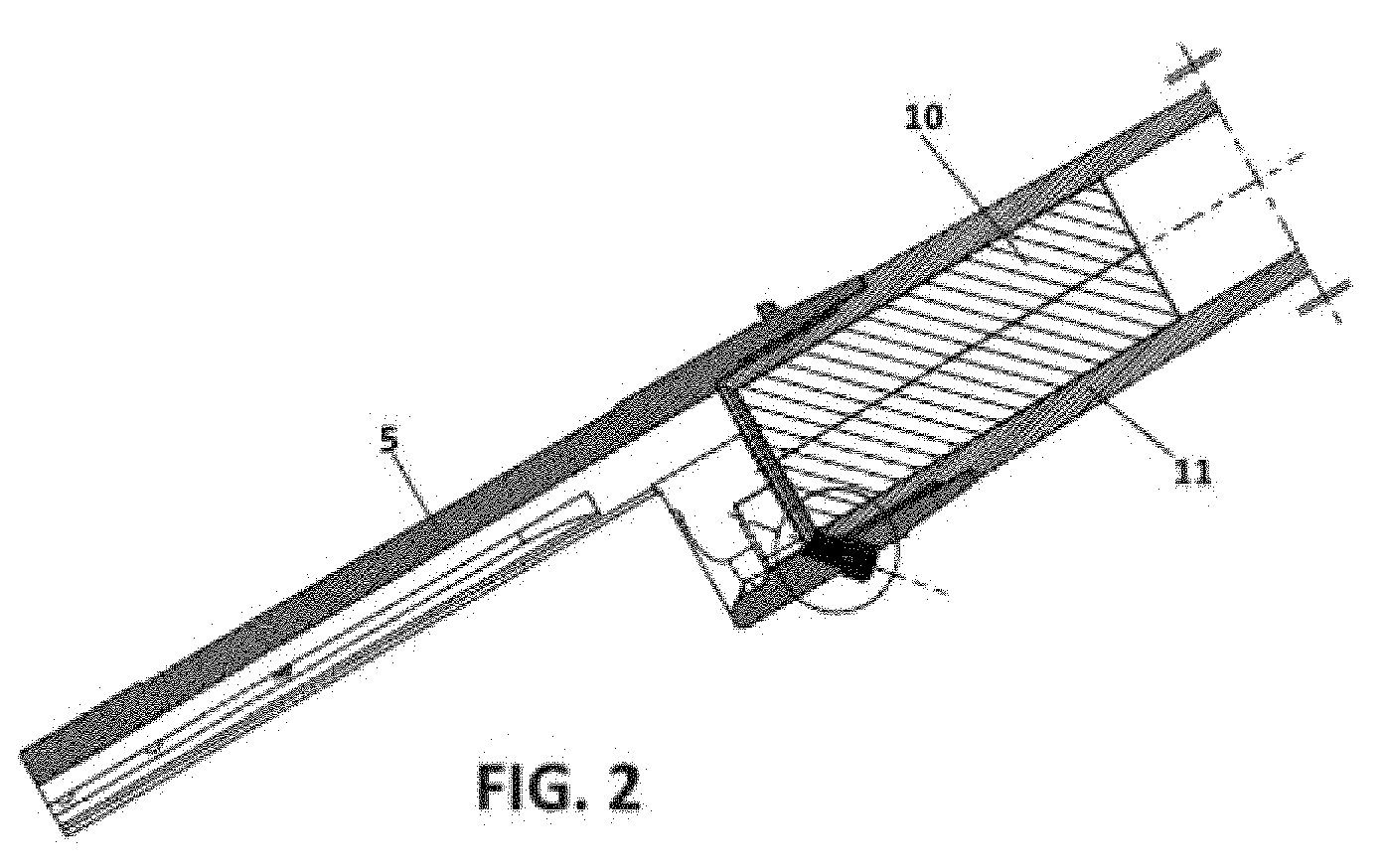
Figure 2 shows a sectional view of the chamber to which the barrel and the second
electrical contact have been coupled together with the insulation means of the cartridge-in-chamber
detection system for firearms according to the first embodiment of the present invention.
Figure 3 shows a detailed view of the second electrical contact together with the
insulation means shown in figure 2.
Figure 4 shows a perspective view of the handguard of the cartridge-in-chamber detection
system for firearms according to the first embodiment of the present invention.
Figure 5 shows an exploded perspective view of the handguard of the cartridge-in-chamber
detection system for firearms according to a first embodiment of the present invention.
Figure 6 shows an exploded perspective view of the cartridge-in-chamber detection
system for firearms according to a second embodiment of the present invention.
Figure 7 shows a perspective view of the connection between the first electrical contact
and the microprocessor carried out by means of three intermediate contacts according
to the second embodiment of the present invention.
Figure 8 shows an elevation view of the first and second electrical contact and the
elastic element of the cartridge-in-chamber detection system for firearms according
to the second embodiment in the extended arrangement of the elastic element.
Figure 9 shows an elevation view of the elements shown in Figure 8 in the compressed
arrangement of the elastic element.
Figure 10 shows an exploded perspective view of the cartridge-in-chamber detection
system for firearms according to a third embodiment of the present invention.
Figure 11 shows a detailed view of the first, second and third electrical contacts
of the cartridge-in-chamber detection system for firearms according to the third embodiment
of the present invention.
PREFERRED EMBODIMENT OF THE INVENTION
[0023] Below, the cartridge-in-chamber detection system for firearms of the present invention
is described in detail.
[0024] In a first embodiment shown in Figures 1 to 5, the system comprises a first electrical
contact (1) disposed in a handguard (2) of the weapon which is connected by a sensor
circuit to a microprocessor (3) supplied by a battery (4), both disposed in the handguard
(2), where the first electrical contact (1) is disposed in the longitudinal direction
of a chamber (5) of the weapon.
[0025] The system further comprises a second electrical contact (6) disposed in the chamber
(5) tilted with respect to its longitudinal direction, where the first electrical
contact (1) is in physical contact with the second electrical contact (6), in addition
to insulation means (7) of the second electrical contact (6) with respect to said
chamber (5).
[0026] The insulation means (7) of the second electrical contact (6) with respect to said
chamber (5) comprise an externally threaded rod to fix it to the chamber (5), where
the interior of the rod is hollow for the housing of the second electrical contact
(6).
[0027] The second electrical contact (6) comes into physical contact with a shell (9) of
a cartridge (10) when said cartridge (10) is in the chamber (5), being both elements,
cartridge (10) and second electrical contact (6), and consequently the metal parts
of the weapon which are in physical contact with the cartridge (10), preferably the
chamber (5) and a barrel (11), electrically connected through the connection between
the first electrical contact (1) and the second electrical contact (6).
[0028] The microprocessor (3), through the sensor circuit, detects the capacitive variation
between the situation wherein the first electrical contact (1) is electrically connected
to the second electrical contact (6), the metal parts of the weapon (5, 11) and the
shell (9) of the cartridge (10) and the situation wherein the first electrical contact
(1) is electrically connected to the second electrical contact (6), thus making it
possible to determine the presence or absence of the cartridge (10) in the chamber
(5) respectively.
[0029] In a second embodiment shown in figures 6 to 9, the system comprises a first electrical
contact (114) disposed in a slide (101) of the weapon that is connected via a sensor
circuit to a microprocessor (103) supplied by a battery (not shown), where the slide
(101) is closed via a cover plate (115).
[0030] The system further comprises a second electrical contact (112) disposed in the slide
(101), where the first electrical contact (114) is coupled to the second electrical
contact (112) through an elastic element (113). Preferably, the first electrical contact
(114), the second electrical contact (112) and the elastic element (113) are disposed
in the longitudinal direction of the slide (101) of the weapon.
[0031] When the cartridge is in the chamber, an extractor (111) pushes the second electrical
contact (112) towards the first electrical contact (114), the elastic element (113)
adopting a compressed arrangement, both electrical contacts (112, 114) coming into
physical contact, and consequently the metal parts of the weapon (101, 102) that are
in physical contact with the cartridge, preferably the chamber, a barrel (102) and
the slide (101), being electrically connected through the connection between the first
electrical contact (114) and the second electrical contact (112).
[0032] When the cartridge is not in the chamber, the extractor (111) does not push the second
electrical contact (112) towards the first electrical contact (114), the elastic element
(113) regaining this way its expanded position, the first electrical contact (114)
being electrically insulated from the second electrical contact (112), the metal parts
of the weapon (101, 102), a shell of the cartridge and the extractor (111).
[0033] The microprocessor (103), through the sensor circuit, detects the capacitive variation
between the situation wherein the first electrical contact (114) is electrically connected
to the second electrical contact (112), the metal parts of the weapon (101, 102),
the shell of the cartridge and the extractor (111) and the situation wherein the first
electrical contact (114) is not electrically connected to the second electrical contact
(112), the metal parts of the weapon (101, 102), the shell of the cartridge and the
extractor (111), thus making it possible to determine the presence or absence of the
cartridge in the chamber respectively.
[0034] The first electrical contact (114) comprises insulation means (107) with respect
to the metal parts of the weapon (101, 102) that allow insulation of the first electrical
contact (114) from the metal parts of the weapon (101, 102), in particular from the
chamber, in the situation in which there is no cartridge in the chamber.
[0035] In this second embodiment, both the first electrical contact (114) and the second
electrical contact (112) are disposed outside the chamber and only come into physical
contact with each other (112, 114) when there is a cartridge in the chamber.
[0036] The connection between the first electrical contact (114) and the microprocessor
(103) is carried out by means of three intermediate contacts shown in Figure 7, a
grub screw (116) to adjust the clearance between the first electrical contact (114)
and the second electrical contact (112), an insert (117) and a moveable contact (118)
connected to the microprocessor (103), in order to ensure the electrical connection
between the first electrical contact (114) and the microprocessor (103).
[0037] In a third embodiment shown in Figures 10 and 11, the system comprises a first electrical
contact (210) disposed in a bolt carrier (206) of the weapon that is connected via
a sensor circuit to a microprocessor (203), which is preferably supplied by a battery
(not shown).
[0038] The system further comprises a second electrical contact (212) disposed in a bolt
head (217), where the second electrical contact (212) is optionally at least partially
disposed in the chamber, where the first electrical contact (210) is in physical contact
with a third electrical contact (211) disposed between the first electrical contact
(210) and the second electrical contact (212). The system comprises insulation means
(207) of the first electrical contact (210), the second electrical contact (212) and
the third electrical contact (211) with respect to the metal parts of the weapon (206,
217), specially with respect to the bolt head (217) and the bolt carrier (206).
[0039] The second electrical contact (212) comes into physical contact with a shell of a
cartridge when said cartridge is in the chamber, being both elements, cartridge and
second electrical contact (212), and consequently the metal parts of the weapon (206,
217) that are in physical contact with the cartridge, preferably the chamber, a barrel,
the bolt head (217) and the bolt carrier (206), electrically connected through the
connection between the first electrical contact (210), the third electrical contact
(211) and the second electrical contact (212).
[0040] The microprocessor (203), through the sensor circuit, detects the capacitive variation
between the situation in which the first electrical contact (210) is electrically
connected to the second electrical contact (212), the third electrical contact (211),
the metal parts of the weapon (206, 217) and the shell of the cartridge and the situation
in which the first electrical contact (210) is electrically connected to the second
electrical contact (212) and the third electrical contact (211), thus making it possible
to determine the presence or absence of the cartridge in the chamber respectively.
[0041] For all the embodiments described, when the system attempts to detect if there is
a cartridge (10) in the chamber (5), the microprocessor (3, 103, 203) generates a
signal, preferably square, of preset frequency with which the capacity of the sensor
circuit is charged to measure the variations thereof.
[0042] The measurement of the capacity of the sensor circuit, which varies depending on
the presence or otherwise of the cartridge (10) in the chamber (5), is carried out
through a diode (not shown). The system of the present invention, through the microprocessor
(3, 103, 203), captures the voltage provided by the sensor circuit, which is compared
with a threshold voltage of the system to detect the presence of the cartridge (10)
in the chamber (5).
[0043] Due to the presence of the diode to measure the circuit capacity, the temperature
has an important influence on its operation. This is because the conduction voltage
of the diode has a variation of around 200 mV throughout the dynamic temperature range.
This variation depends on the temperature linearly. Therefore, and to decrease the
error rate to the maximum, the microprocessor (3, 103, 203) comprises a temperature
sensor (not shown) which measures the temperature in each reading and makes a temperature
compensation throughout the whole operating range.
[0044] The system comprises a DC to DC current converter (DC/DC step-up) (not shown) to
stabilize the input voltage and make it invariable from the charging status of the
battery (4).
[0045] The system has a response time of less than 1 ms to determine if the cartridge (10)
is present in the chamber (5) or otherwise.
[0046] The system further comprises an electrostatic protection device (not shown) against
residual currents, since the second electrical contact (6, 112, 212) is in physical
contact with the metal parts of the weapon (5, 11, 101, 102, 206, 217), which are
accessible by the user, when the cartridge (10) is present in the chamber (5).
[0047] The system uses a high operating frequency, around 20 MHz, which makes it possible
to discern the presence or otherwise of a cartridge (10) in the chamber (5) even in
short-circuit conditions due to fresh water between the second electrical contact
(6, 212) and the chamber (5), for the first and the third embodiments.
1. A cartridge-in-chamber detection system for firearms which comprises at least one
electrical contact (1, 114, 210) which is connected by a sensor circuit to a microprocessor
(3, 103, 203), characterised in that the at least one electrical contact (1, 114, 210) is in electrical contact with a
cartridge (10) when said cartridge (10) is in the chamber (5), being both elements,
cartridge (10) and the at least one electrical contact (1, 114, 210), and consequently
the metal parts of the weapon (5, 11, 101, 102, 206, 217) which are in electrical
contact with the cartridge (10), electrically connected, and where the microprocessor
(3, 103, 203), through the sensor circuit, detects the capacitive variation between
the situation in which the at least one electrical contact (1, 114, 210) is electrically
connected to at least the metal parts of the weapon (5, 11, 101, 102, 206, 217) and
the cartridge (10), and the situation in which the at least one electrical contact
(1, 114, 210) is not electrically connected to at least the metal parts of the weapon
(5, 11, 101, 102, 206, 217) and the cartridge (10), thus making it possible to determine
the presence or absence of the cartridge (10) in the chamber (5) respectively.
2. The cartridge-in-chamber detection system for firearms according to claim 1, characterised in that a first electrical contact (1) is connected via the sensor circuit to the microprocessor
(3), and a second electrical contact (6) disposed in the chamber (5) of the weapon,
where the first electrical contact (1) is in physical contact with the second electrical
contact (6), and where the second electrical contact (6) comes into physical contact
with a shell (9) of the cartridge (10) when said cartridge (10) is in the chamber
(5), being both elements, cartridge (10) and second electrical contact (6), and consequently
the metal parts of the weapon (5, 11) that are in physical contact with the cartridge
(10), electrically connected through the connection between the first electrical contact
(1) and the second electrical contact (6), and where the microprocessor (3), through
the sensor circuit, detects the capacitive variation between the situation in which
the first electrical contact (1) is electrically connected to the second electrical
contact (6), the metal parts of the weapon (5, 11) and the shell (9) of the cartridge
(10) and the situation in which the first electrical contact (1) is electrically connected
to the second electrical contact (6), thus making it possible to determine the presence
or absence of the cartridge (10) in the chamber (5) respectively.
3. The cartridge-in-chamber detection system for firearms according to claim 2, characterised in that the first electrical contact (1) is disposed in a handguard (2) of the weapon.
4. The cartridge-in-chamber detection system for firearms according to any of the claims
2 to 3, characterised in that the first electrical contact (1) is disposed in the longitudinal direction of the
chamber (5).
5. The cartridge-in-chamber detection system for firearms according to any of the claims
2 to 4, characterised in that the second electrical contact (6) is disposed tilted with respect to the longitudinal
direction of the chamber (5).
6. The cartridge-in-chamber detection system for firearms according to any of the claims
2 to 5, characterised in that it comprises insulation means (7) of the second electrical contact (6) with respect
to the chamber (5).
7. The cartridge-in-chamber detection system for firearms according to claim 6, characterised in that the insulation means (7) of the second electrical contact (6) with respect to the
chamber (5) comprise an externally threaded rod to fix it to the chamber (5), where
the interior of the rod is hollow to house the second electrical contact (6).
8. The cartridge-in-chamber detection system for firearms according to claim 1, characterised in that it comprises a first electrical contact (114) disposed in a slide (101) of the weapon
that is connected via the sensor circuit to the microprocessor (103), and a second
electrical contact (112) disposed in the slide (101), where the first electrical contact
(114) is coupled to the second electrical contact (112) through an elastic element
(113), so that when the cartridge is in the chamber, an extractor (111) pushes the
second electrical contact (112) towards the first electrical contact (114), the elastic
element (113) adopting a compressed arrangement, both electrical contacts (112, 114)
coming into physical contact, and consequently the metal parts of the weapon (101,
102) that are in physical contact with the cartridge, being electrically connected
through the connection between the first electrical contact (114) and the second electrical
contact (112), whilst when the cartridge is not in the chamber, the extractor (111)
does not push the second electrical contact (112) towards the first electrical contact
(114), the elastic element (113) regaining this way its expanded position, the first
electrical contact (114) being electrically insulated from the second electrical contact
(112), the metal parts of the weapon (101, 102), a shell of the cartridge and the
extractor (111), where the microprocessor (103), through the sensor circuit, detects
the capacitive variation between the situation in which the first electrical contact
(114) is electrically connected to the second electrical contact (112), the metal
parts of the weapon (101, 102), the shell of the cartridge and the extractor (111)
and the situation in which the first electrical contact (114) is not electrically
connected to the second electrical contact (112), the metal parts of the weapon (101,
102), the shell of the cartridge and the extractor (111), thus making it possible
to determine the presence or absence of the cartridge in the chamber respectively.
9. The cartridge-in-chamber detection system for firearms according to claim 8, characterised in that the first electrical contact (114) comprises insulation means (107) with respect
to the metal parts of the weapon (101, 102) that allow insulation of the first electrical
contact (114) from the metal parts of the weapon (101, 102) in the situation in which
there is no cartridge in the chamber.
10. The cartridge-in-chamber detection system for firearms according to any of the claims
8 or 9, characterised in that both the first electrical contact (114) and the second electrical contact (112) are
disposed outside the chamber and only come into physical contact with each other (112,
114) when there is a cartridge in the chamber.
11. The cartridge-in-chamber detection system for firearms according to claim 1, characterised in that it comprises a first electrical contact (210) disposed in a bolt carrier (206) of
the weapon that is connected via the sensor circuit to the microprocessor (203), and
a second electrical contact (212) disposed in a bolt head (217), where the first electrical
contact (210) is in physical contact with a third electrical contact (211) disposed
between the first electrical contact (210) and the second electrical contact (212),
where the second electrical contact (212) comes into physical contact with a shell
of a cartridge when said cartridge is in the chamber, being both elements, cartridge
and second electrical contact (212), and consequently the metal parts of the weapon
(206, 217) that are in physical contact with the cartridge, being electrically connected
through the connection between the first electrical contact (210), the third electrical
contact (211) and the second electrical contact (212), and where the microprocessor
(203), through the sensor circuit, detects the capacitive variation between the situation
in which the first electrical contact (210) is electrically connected to the second
electrical contact (212), the third electrical contact (211), the metal parts of the
weapon (206, 217) and the shell of the cartridge and the situation in which the first
electrical contact (210) is electrically connected to the second electrical contact
(212) and the third electrical contact (211), thus making it possible to determine
the presence or absence of the cartridge in the chamber respectively.
12. The cartridge-in-chamber detection system for firearms according to claim 11, characterised in that the second electrical contact (212) is at least partially disposed in the chamber.
13. The cartridge-in-chamber detection system for firearms according to any of the claims
11 or 12, characterised in that it comprises insulation means (207) of the first electrical contact (210), the second
electrical contact (212) and the third electrical contact (211) with respect to the
metal parts of the weapon (206, 217).
14. The cartridge-in-chamber detection system for firearms according to any of the preceding
claims, characterised in that the microprocessor (3, 103, 203), through the sensor circuit, converts the capacitive
variation into a voltage variation.
15. The cartridge-in-chamber detection system for firearms according to any of the preceding
claims, characterised in that the microprocessor (3, 103, 203) generates a square signal of preset frequency with
which the capacity of the sensor circuit is charged to measure the capacity variations
thereof.
16. The cartridge-in-chamber detection system for firearms according to any of the preceding
claims, characterised in that the microprocessor (3, 103, 203) captures the voltage provided by the sensor circuit,
which is compared to a threshold voltage.
17. The cartridge-in-chamber detection system for firearms according to any of the preceding
claims, characterised in that the microprocessor (3, 103, 203) comprises a temperature sensor which measures the
temperature in each reading of the microprocessor (3, 103, 203) and makes a temperature
compensation throughout a whole operating range.
18. The cartridge-in-chamber detection system for firearms according to any of the preceding
claims, characterised in that it comprises supply means (4).
19. The cartridge-in-chamber detection system for firearms according to claim 18, characterised in that the supply means are a battery (4).
20. The cartridge-in-chamber detection system for firearms according to claim 19, characterised in that it comprises a DC to DC current converter to stabilize the input voltage and make
it invariable from the charging status of the battery (4).
21. The cartridge-in-chamber detection system for firearms according to any of the preceding
claims, characterised in that the operating frequency is 20 MHz.
22. The cartridge-in-chamber detection system for firearms according to any of the preceding
claims, characterised in that it comprises an electrostatic protection device.
23. The cartridge-in-chamber detection system for firearms according to any of the preceding
claims, characterised in that it has a response time of less than 1 ms to determine if the cartridge (10) is present
in the chamber (5) or otherwise.
24. The cartridge-in-chamber detection system for firearms according to any of the claims
2-7, 11, 12, characterised in that the second electrical contact (6, 212) is completely or partially disposed in the
chamber (5).
25. The cartridge-in-chamber detection system for firearms according to claim 1, characterised in that the at least one electrical contact is in physical contact with the cartridge (10)
in the situation in which the at least one electrical contact is electrically connected
to the metal parts of the weapon (5, 11, 101, 102, 206, 217) and the cartridge (10).
26. The cartridge-in-chamber detection system for firearms according to claim 1, characterised in that the at least one electrical contact is insulated with respect to the metal parts
of the weapon (5, 11, 101, 102, 206, 217).
27. The cartridge-in-chamber detection system for firearms according to claim 1, characterised in that the at least one electrical contact is a firearm's own element.
28. The cartridge-in-chamber detection system for firearms according to claim 1, characterised in that the at least one electrical contact is a firearm's own modified element.
29. The cartridge-in-chamber detection system for firearms according to claim 1, characterised in that the at least one electrical contact is an external element to the firearm.
30. The cartridge-in-chamber detection system for firearms according to claim 1, characterised in that the at least one electrical contact is located in the chamber.
31. The cartridge-in-chamber detection system for firearms according to claim 1, characterised in that the at least one electrical contact (1, 114, 210) is located outside the chamber
(5).
32. The cartridge-in-chamber detection system for firearms according to claim 31, characterised in that the at least one electrical contact (1) is disposed in a handguard (2) of the weapon.
33. The cartridge-in-chamber detection system for firearms according to claim 1, characterised in that the at least one electrical contact is not in physical contact with the cartridge
(10) in the situation in which the at least one electrical contact is electrically
connected to the metal parts of the weapon (5, 11, 101, 102, 206, 217) and the cartridge
(10).
Amended claims under Art. 19.1 PCT
1. A cartridge-in-chamber detection system for firearms which comprises at least one
electrical contact (1, 114, 210) which is connected by a sensor circuit to a microprocessor
(3, 103, 203), characterised in that the at least one electrical contact (1, 114, 210) is in electrical contact with a
cartridge (10) when said cartridge (10) is in the chamber (5), being both elements,
cartridge (10) and the at least one electrical contact (1, 114, 210), and consequently
the metal parts of the weapon (5, 11, 101, 102, 206, 217) which are in physical contact
with the cartridge (10), electrically connected, and where the microprocessor (3,
103, 203), through the sensor circuit, detects the capacitive variation between the
situation in which the at least one electrical contact (1, 114, 210) is electrically
connected to at least the metal parts of the weapon (5, 11, 101, 102, 206, 217) and
the cartridge (10), and the situation in which the at least one electrical contact
(1, 114, 210) is not electrically connected to at least the metal parts of the weapon
(5, 11, 101, 102, 206, 217) and the cartridge (10), thus making it possible to determine
the presence or absence of the cartridge (10) in the chamber (5) respectively.
2. The cartridge-in-chamber detection system for firearms according to claim 1, characterised in that a first electrical contact (1) is connected via the sensor circuit to the microprocessor
(3), and a second electrical contact (6) disposed in the chamber (5) of the weapon,
where the first electrical contact (1) is in physical contact with the second electrical
contact (6), and where the second electrical contact (6) comes into physical contact
with a shell (9) of the cartridge (10) when said cartridge (10) is in the chamber
(5), being both elements, cartridge (10) and second electrical contact (6), and consequently
the metal parts of the weapon (5, 11) that are in physical contact with the cartridge
(10), electrically connected through the connection between the first electrical contact
(1) and the second electrical contact (6), and where the microprocessor (3), through
the sensor circuit, detects the capacitive variation between the situation in which
the first electrical contact (1) is electrically connected to the second electrical
contact (6), the metal parts of the weapon (5, 11) and the shell (9) of the cartridge
(10) and the situation in which the first electrical contact (1) is electrically connected
to the second electrical contact (6), thus making it possible to determine the presence
or absence of the cartridge (10) in the chamber (5) respectively.
3. The cartridge-in-chamber detection system for firearms according to claim 2, characterised in that the first electrical contact (1) is disposed in a handguard (2) of the weapon.
4. The cartridge-in-chamber detection system for firearms according to any of the claims
2 to 3, characterised in that the first electrical contact (1) is disposed in the longitudinal direction of the
chamber (5).
5. The cartridge-in-chamber detection system for firearms according to any of the claims
2 to 4, characterised in that the second electrical contact (6) is disposed tilted with respect to the longitudinal
direction of the chamber (5).
6. The cartridge-in-chamber detection system for firearms according to any of the claims
2 to 5, characterised in that it comprises insulation means (7) of the second electrical contact (6) with respect
to the chamber (5).
7. The cartridge-in-chamber detection system for firearms according to claim 6, characterised in that the insulation means (7) of the second electrical contact (6) with respect to the
chamber (5) comprise an externally threaded rod to fix it to the chamber (5), where
the interior of the rod is hollow to house the second electrical contact (6).
8. The cartridge-in-chamber detection system for firearms according to claim 1, characterised in that it comprises a first electrical contact (114) disposed in a slide (101) of the weapon
that is connected via the sensor circuit to the microprocessor (103), and a second
electrical contact (112) disposed in the slide (101), where the first electrical contact
(114) is coupled to the second electrical contact (112) through an elastic element
(113), so that when the cartridge is in the chamber, an extractor (111) pushes the
second electrical contact (112) towards the first electrical contact (114), the elastic
element (113) adopting a compressed arrangement, both electrical contacts (112, 114)
coming into physical contact, and consequently the metal parts of the weapon (101,
102) that are in physical contact with the cartridge, being electrically connected
through the connection between the first electrical contact (114) and the second electrical
contact (112), whilst when the cartridge is not in the chamber, the extractor (111)
does not push the second electrical contact (112) towards the first electrical contact
(114), the elastic element (113) regaining this way its expanded position, the first
electrical contact (114) being electrically insulated from the second electrical contact
(112), the metal parts of the weapon (101, 102), a shell of the cartridge and the
extractor (111), where the microprocessor (103), through the sensor circuit, detects
the capacitive variation between the situation in which the first electrical contact
(114) is electrically connected to the second electrical contact (112), the metal
parts of the weapon (101, 102), the shell of the cartridge and the extractor (111)
and the situation in which the first electrical contact (114) is not electrically
connected to the second electrical contact (112), the metal parts of the weapon (101,
102), the shell of the cartridge and the extractor (111), thus making it possible
to determine the presence or absence of the cartridge in the chamber respectively.
9. The cartridge-in-chamber detection system for firearms according to claim 8, characterised in that the first electrical contact (114) comprises insulation means (107) with respect
to the metal parts of the weapon (101, 102) that allow insulation of the first electrical
contact (114) from the metal parts of the weapon (101, 102) in the situation in which
there is no cartridge in the chamber.
10. The cartridge-in-chamber detection system for firearms according to any of the claims
8 or 9, characterised in that both the first electrical contact (114) and the second electrical contact (112) are
disposed outside the chamber and only come into physical contact with each other (112,
114) when there is a cartridge in the chamber.
11. The cartridge-in-chamber detection system for firearms according to claim 1, characterised in that it comprises a first electrical contact (210) disposed in a bolt carrier (206) of
the weapon that is connected via the sensor circuit to the microprocessor (203), and
a second electrical contact (212) disposed in a bolt head (217), where the first electrical
contact (210) is in physical contact with a third electrical contact (211) disposed
between the first electrical contact (210) and the second electrical contact (212),
where the second electrical contact (212) comes into physical contact with a shell
of a cartridge when said cartridge is in the chamber, being both elements, cartridge
and second electrical contact (212), and consequently the metal parts of the weapon
(206, 217) that are in physical contact with the cartridge, being electrically connected
through the connection between the first electrical contact (210), the third electrical
contact (211) and the second electrical contact (212), and where the microprocessor
(203), through the sensor circuit, detects the capacitive variation between the situation
in which the first electrical contact (210) is electrically connected to the second
electrical contact (212), the third electrical contact (211), the metal parts of the
weapon (206, 217) and the shell of the cartridge and the situation in which the first
electrical contact (210) is electrically connected to the second electrical contact
(212) and the third electrical contact (211), thus making it possible to determine
the presence or absence of the cartridge in the chamber respectively.
12. The cartridge-in-chamber detection system for firearms according to claim 11, characterised in that the second electrical contact (212) is at least partially disposed in the chamber.
13. The cartridge-in-chamber detection system for firearms according to any of the claims
11 or 12, characterised in that it comprises insulation means (207) of the first electrical contact (210), the second
electrical contact (212) and the third electrical contact (211) with respect to the
metal parts of the weapon (206, 217).
14. The cartridge-in-chamber detection system for firearms according to any of the preceding
claims, characterised in that the microprocessor (3, 103, 203), through the sensor circuit, converts the capacitive
variation into a voltage variation.
15. The cartridge-in-chamber detection system for firearms according to any of the preceding
claims, characterised in that the microprocessor (3, 103, 203) generates a square signal of preset frequency with
which the capacity of the sensor circuit is charged to measure the capacity variations
thereof.
16. The cartridge-in-chamber detection system for firearms according to any of the preceding
claims, characterised in that the microprocessor (3, 103, 203) captures the voltage provided by the sensor circuit,
which is compared to a threshold voltage.
17. The cartridge-in-chamber detection system for firearms according to any of the preceding
claims, characterised in that the microprocessor (3, 103, 203) comprises a temperature sensor which measures the
temperature in each reading of the microprocessor (3, 103, 203) and makes a temperature
compensation throughout a whole operating range.
18. The cartridge-in-chamber detection system for firearms according to any of the preceding
claims, characterised in that it comprises supply means (4).
19. The cartridge-in-chamber detection system for firearms according to claim 18, characterised in that the supply means are a battery (4).
20. The cartridge-in-chamber detection system for firearms according to claim 19, characterised in that it comprises a DC to DC current converter to stabilize the input voltage and make
it invariable from the charging status of the battery (4).
21. The cartridge-in-chamber detection system for firearms according to any of the preceding
claims, characterised in that the operating frequency is 20 MHz.
22. The cartridge-in-chamber detection system for firearms according to any of the preceding
claims, characterised in that it comprises an electrostatic protection device.
23. The cartridge-in-chamber detection system for firearms according to any of the preceding
claims, characterised in that it has a response time of less than 1 ms to determine if the cartridge (10) is present
in the chamber (5) or otherwise.
24. The cartridge-in-chamber detection system for firearms according to any of the claims
2-7, 11, 12, characterised in that the second electrical contact (6, 212) is completely or partially disposed in the
chamber (5).
25. The cartridge-in-chamber detection system for firearms according to claim 1, characterised in that the at least one electrical contact is in physical contact with the cartridge (10)
in the situation in which the at least one electrical contact is electrically connected
to the metal parts of the weapon (5, 11, 101, 102, 206, 217) and the cartridge (10).
26. The cartridge-in-chamber detection system for firearms according to claim 1, characterised in that the at least one electrical contact is insulated with respect to the metal parts
of the weapon (5, 11, 101, 102, 206, 217).
27. The cartridge-in-chamber detection system for firearms according to claim 1, characterised in that the at least one electrical contact is a firearm's own element.
28. The cartridge-in-chamber detection system for firearms according to claim 1, characterised in that the at least one electrical contact is a firearm's own modified element.
29. The cartridge-in-chamber detection system for firearms according to claim 1, characterised in that the at least one electrical contact is an external element to the firearm.
30. The cartridge-in-chamber detection system for firearms according to claim 1, characterised in that the at least one electrical contact is located in the chamber.
31. The cartridge-in-chamber detection system for firearms according to claim 1, characterised in that the at least one electrical contact (1, 114, 210) is located outside the chamber
(5).
32. The cartridge-in-chamber detection system for firearms according to claim 31, characterised in that the at least one electrical contact (1) is disposed in a handguard (2) of the weapon.
33. The cartridge-in-chamber detection system for firearms according to claim 1, characterised in that the at least one electrical contact is not in physical contact with the cartridge
(10) in the situation in which the at least one electrical contact is electrically
connected to the metal parts of the weapon (5, 11, 101, 102, 206, 217) and the cartridge
(10).
REFERENCES CITED IN THE DESCRIPTION
This list of references cited by the applicant is for the reader's convenience only.
It does not form part of the European patent document. Even though great care has
been taken in compiling the references, errors or omissions cannot be excluded and
the EPO disclaims all liability in this regard.
Patent documents cited in the description