|
(11) | EP 3 351 527 A1 |

| (12) | EUROPEAN PATENT APPLICATION |
|
|
|
|
|||||||||||||||||||||||||||
|
||||||||||||||||||||||||||||
| (54) | TRANS-CLOMIPHENE METABOLITES AND USES THEREOF |
| (57) The present invention relates to substantially pure metabolites of irara-clomiphene.
The invention is also directed to pharmaceutical compositions comprising these metabolites
and their use in treating disorders including secondary hypogonadism, type 2 diabetes,
elevated cholesterol, elevated triglycerides, wasting, lipodystrophy, female and male
infertility, benign prostate hypertrophy, prostate cancer, breast cancer, ovarian
cancer and endometrial cancer. |
FIELD OF THE INVENTION
[0001] This application claims the benefit, under 35 USC 119(e), of U.S. Provisional Patnet Application No. 61/515,278, filed August 4, 2011, the entire contents of which are hereby incorporated by reference.
[0002] The present invention relates to metabolites of trans-clomiphene in substantially pure form, pharmaceutical compositions comprising same and methods for treating various hormone-dependent disorders.
BACKGROUND
[0003] Clomiphene is a selective estrogen receptor modulator related to tamoxifen. Clomiphene binds to estrogen receptors and blocks the normal estrogen feedback on the hypothalamus and subsequent negative feedback on the pituitary. This leads to increases in luteinizing hormone (LH) and follicle stimulating hormone (FSH). In men, these increased levels of gonadotropins stimulate the Leydig cells of the testes and result in the production of higher testosterone levels. For example, Tenover et al., J. Clin. Endocrinol. Metab. 64:1103, (1987) and Tenover et al., J. Clin. Endocrinol. Metab. 64:1118 (1987) found increases in FSH, LH in both young and old men after treatment with clomiphene. They also found increases in free and total testosterone in men with young men showing significant increases.
[0004] In females, clomiphene is currently approved as a mixture of both cis- and trans-isomers, the cis-isomer being present as about 30% to 50% (Merck Manual) for the induction of ovulation in anovulatory women. The increases in LH and FSH in anovulatory females following administration of clomiphene result in follicular growth and ultimately ovulation. The drug is recommended to be administered for 5 days at a dose of up to 100 mg daily
[0005] Ernst et al., J. Pharmaceut. Sci. 65:148 (1976), have shown that clomiphene is a mixture of two geometric isomers which they refer to as cis,-Z-, clomiphene (cis-clomiphene or zuclomiphene) and trans-,E-, clomiphene, (trans-clomiphene or enclomiphene). According to Ernst, et al. trans-clomiphene HCI has a melting point of 149°C-150.5°C, while cis-clomiphene HCI has a melting point of 156.5°C-158°C. Ernst et al. have also noted that (the trans-isomer) is antiestrogenic (AE) while the cis-isomer is the more potent and more estrogenic form and has also been reported to have anti-estrogenic activity. The authors attribute the effect of the drug on ovulatory activity to both forms stating that the mixture is more effective than trans-clomiphene alone. The trans-isomer aids ovulation at the level of the hypothalamus. The estrogenic isomer cis-clomiphene contributes to enhanced ovulation elsewhere in the physiologic pathway leading to ovulation. The isomers are also reported to have different in vivo half-life. The cis isomer has been reported to leave residual blood levels for in excess of one month following a single dose.
[0006] Clomiphene has been associated with numerous side effects including: blurred vision, abdominal discomfort, gynecomastia, testicular tumors, vasomotor flushes, nausea, and headaches. Furthermore, other studies suggest that clomiphene possesses both genotoxic and tumor enhancement effects. The net outcome of these observations is that clomiphene in its current format, having between 30% and 50% of the cis isomer, would be unacceptable for chronic therapy in men for the treatment of testosterone deficiency.
[0007] Oral administration of trans-isomer of clomiphene (trans-clomiphene or enclomiphene) has been demonstrated to be effective in the treatment of a panoply of disorders ranging from secondary hypogonadism in males to induction of ovulation in anovulatory females. However, first pass metabolism of the drug by the liver requires relatively high doses to be administered orally to achieve therapeutic effect. A significant advance in the art would result if active metabolites of trans-clomiphene were discovered.
SUMMARY
[0008] The present invention provides substantially pure metabolites of trans-clomiphene and salts thereof, preferably the citrate salt. Pharmaceutical compositions comprising a substantially pure metabolite of trans-clomiphene or a salt thereof and a pharmaceutically acceptable carrier are also provided.
[0009] The present invention is also related to methods for treating and/or preventing disorders that are ameliorated by administration of an effective amount of trans-clomiphene. In other words, the present invention provides a method for treating any disorder which may be treated with trans-clomiphene, comprising administering a therapeutically effective amount of a substantially pure trans-clomiphene metabolite or pharmaceutical composition comprising same to a patient in need of such treatment.
[0010] Examples of disorders that are ameliorated by administration of an effective amount of trans-clomiphene (and which therefore may be treated according to the present invention) include, without limitation, secondary hypogonadism, type 2 diabetes, elevated cholesterol, elevated triglycerides, wasting, lipodystrophy, female and male infertility, benign prostate hypertrophy, prostate cancer, breast cancer, uterine cancer and ovarian cancer.
BRIEF DESCRIPTION OF THE DRAWING
[0011]
FIG. 1 is a graphic representative of the normal secretory total serum testosterone profiles in healthy men (young and old).
FIG. 2 shows the chemical structure of trans-clomiphene.
DETAILED DESCRIPTION
[0012] While the present invention is capable of being embodied in various forms, the description below of several embodiments is made with the understanding that the present disclosure is to be considered as an exemplification of the invention, and is not intended to limit the invention to the specific embodiments illustrated. Headings are provided for convenience only and are not to be construed to limit the invention in any way. Embodiments illustrated under any heading may be combined with embodiments illustrated under any other heading.
[0013] It is to be understood that any ranges, ratios and ranges of ratios that can be formed by any of the numbers or data present herein represent further embodiments of the present invention. This includes ranges that can be formed that do or do not include a finite upper and/or lower boundary. Accordingly, the skilled person will appreciate that many such ratios, ranges and ranges of ratios can be unambiguously derived from the data and numbers presented herein and all represent embodiments of the invention.
[0014] Before the present compounds, compositions and methods are disclosed and described, it is to be understood that the terminology used herein is for the purpose of describing particular embodiments only and is not intended to be limiting. It must be noted that, as used in the present specification and the appended claims, the singular forms "a," "an" and "the" include plural referents unless the context clearly dictates otherwise.
Definitions
[0015] The term "oral" administration means that the active agent is in a formulation designed to be ingested, i.e. designed to be delivered to the gastrointestinal system for absorption.
[0016] The term "effective dosage" means an amount of the composition's active component sufficient to treat a particular condition.
[0017] The term "treat" or "treatment" as used herein refers to any treatment of any progesterone-dependent disorder or disease, and includes, but is not limited to, inhibiting the disorder or disease arresting the development of the disorder or disease; relieving the disorder or disease, for example, causing regression of the disorder or disease; or relieving the condition caused by the disease or disorder, relieving the symptoms of the disease or disorder.
[0018] The term "prevent" or "prevention," in relation to a progesterone-dependent disorder or disease, means preventing the onset of disorder or disease development if none had occurred, or preventing further disorder or disease development if the disorder or disease was already present.
[0019] The term "substantially pure" means a compound of the present invention having purity greater than about 80%, preferably greater than about 90%, more preferably greater than 95% and most preferably having purity greater than about 99% as measured by high performance liquid chromatography (HPLC).
[0020] The term "pharmaceutically acceptable salt" refers to a salt prepared from a pharmaceutically acceptable non-toxic inorganic or organic acid. Inorganic acids include, but are not limited to, hydrochloric, hydrobromic, hydroiodic, nitric, sulfuric, and phosphoric. Organic acids include, but are not limited to, aliphatic, aromatic, carboxylic, and sulfonic organic acids including, but not limited to, formic, acetic, propionic, succinic, benzoic camphorsulfonic, citric, fumaric, gluconic, isethionic, lactic, malic, mucic, tartaric, paratoluenesulfonic, glycolic, glucuronic, maleic, furoic, glutamic, benzoic, anthranilic, salicylic, phenylacetic, mandelic, embonic (pamoic), methanesulfonic, ethanesulfonic, pantothenic, benzenesulfonic, stearic, sulfanilic, alginic, and galacturonic acid. A preferred salt is the citrate salt.
[0021] In various embodiments, the present invention provides metabolites of trans-clomiphene in substantially pure form. The metabolites may be purified from an appropriate source or may be synthetically produced in a purified and isolated form. For example, metabolites of the invention may be identified and isolated or separated from body tissues or fluids of a test animal following administration of trans-clomiphene. Alternatively, metabolites of the invention may be identified and isolated from animal hepatocytes following incubation with trans-clomiphene.
[0022] In one aspect, the metabolite may result from the action of liver enzymes of the cytochrome P450 (CYP) family. The metabolism of oral agents is often due to the action of these enzymes which reside in liver hepatocytes. Such "first pass" metabolism, in which drugs pass from the gut through the liver before distribution to the body, represents a potential barrier to the transfer of active pharmaceutical agents from the digestive tract to the bloodstream. The CYP enzymes fall into distinct classes and have analogous members throughout the mammals.
[0023] In various embodiments, the present invention provides a trans-clomiphene metabolite produced by the catalytic action of a member of the CYP2 or CYP3 family. In preferred embodiments, the metabolite is produced primarily through catalytic action of CYP2D6 and/or CYP3A4 and/or CYP3A5.
[0024] In one embodiment, the present invention provides a trans-clomiphene metabolite having a chemical formula selected from: C26H29NO4; C27H31NO3; C26H30NO3Cl; C32H36NO8Cl; C26H30NO3Cl; C27H30NO3Cl; C32H36NO8Cl; C26H28NO3Cl; C36H43N4O7SCl; C26H30NO3Cl; C36H43N4O7SCl; C27H31NO3; C24H24NO2Cl; C26H28NO2Cl; C27H30NO3Cl; C27H30NO6ClS; C26H28NO3Cl; C26H28NO7Cl; C26H28NO2Cl; C27H30NO3Cl; C24H24NOCl; C26H28NO2Cl; and C24H24NO2Cl.
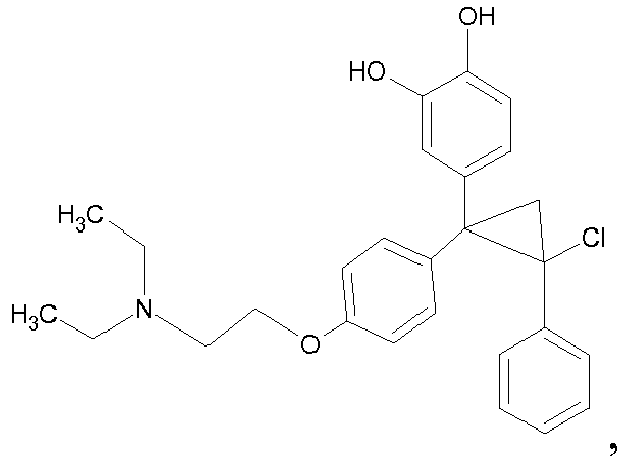
[0025] In a preferred embodiment, the trans-clomiphene metabolite has a chemical formula selected from: C26H30NO3Cl, C26H28NO2Cl, C27H30NO3Cl, and C24H24NOCl.
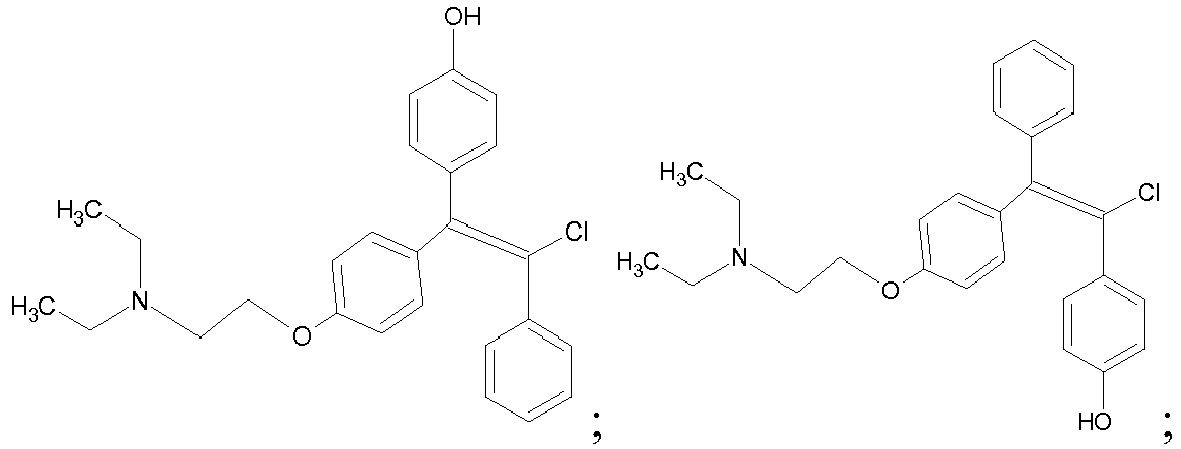
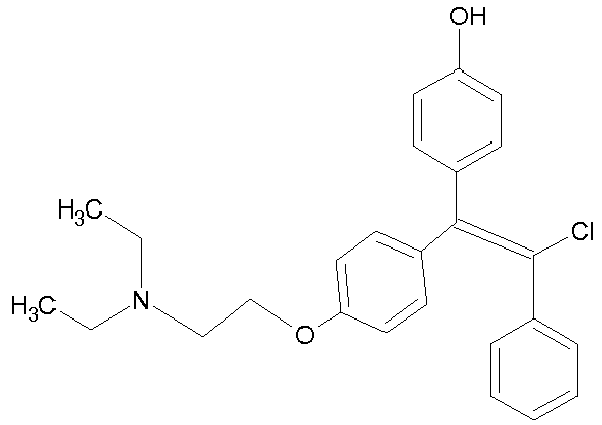
[0026] In a particularly preferred embodiment, the present invention provides a substantially pure trans-clomiphene metabolite, 4-hydroxy-trans-clomiphene (or 4-OH-trans-clomiphene) produced by the catalytic action of CYP2D6 having the formula
and pharmaceutically acceptable salts thereof. This metabolite is formed by 4-hydroxylation at the para position of the trans-clomiphene phenyl ring.
[0027] In a preferred embodiment, the present invention provides a substantially pure trans-clomiphene metabolite, 4'-hydroxy-trans-clomiphene (or 4'-OH-trans-clomiphene), produced by the catalytic action of CYP2B6 having the formula
and
pharmaceutically acceptable salts thereof. This metabolite is formed by 4'-hydroxylation at the para position of the trans-clomiphene phenyl ring.
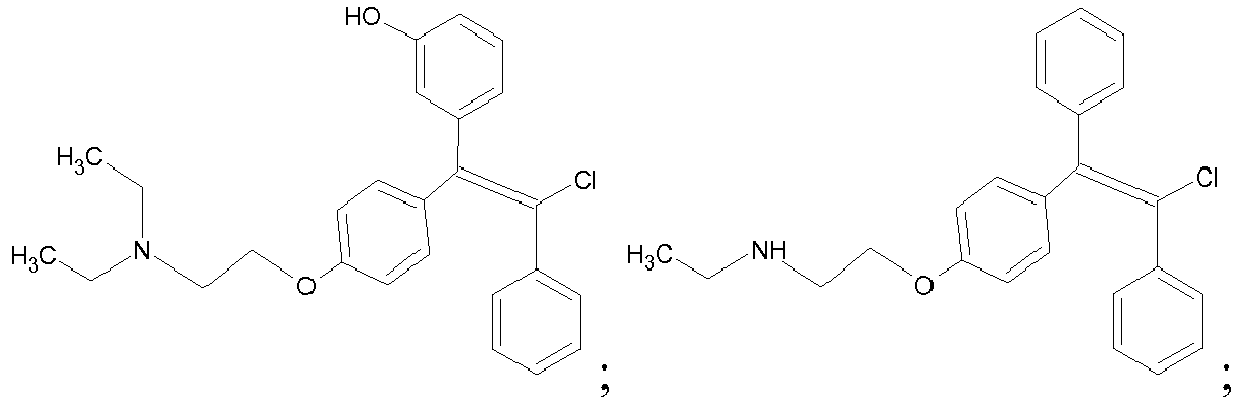
[0028] In another preferred embodiment, the present invention provides a substantially pure trans-clomiphene metabolite, 3-hydroxy-trans-clomiphene (or 3-OH-trans-clomiphene), produced by the catalytic action of CYP3A4 or CYP3A5 having the formula
and pharmaceutically acceptable salts thereof.
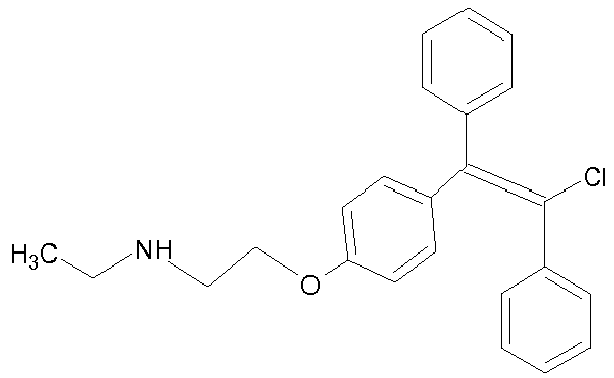
[0029] In another particularly preferred embodiment, the present invention provides a substantially pure trans-clomiphene metabolite, N-desethyl-trans-clomiphene, produced by the catalytic action of CYP3A4 or CYP3A5 having the formula
and pharmaceutically acceptable salts thereof. This metabolite is formed by N-desalkylation of an ethyl group from trans-clomiphene.
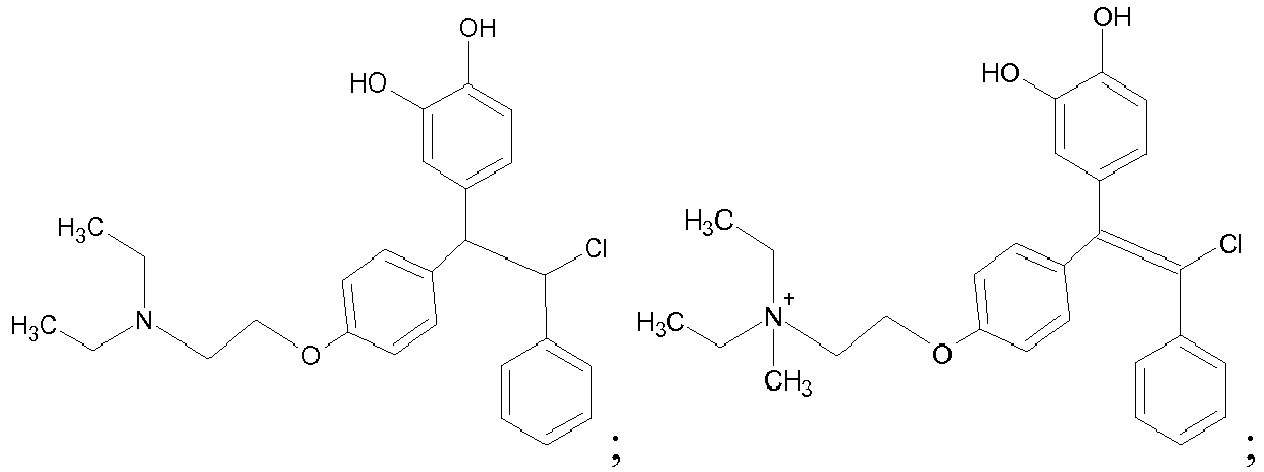
[0030] In another preferred embodiment, the present invention provides a substantially pure trans-clomiphene metabolite, 3,4-dihydroxy-trans-clomiphene, produced by the sequential catalytic action of CYP3A4/5 and CYP2D6 having the formula
and pharmaceutically acceptable salts thereof.
[0031] In a related preferred embodiment, the metabolite produced by the sequential action of CYP3A4/5 and CYP2D6 is further modified such that a double bound is reduced. Accordingly, the present invention also provides a substantially pure trans-clomiphene metabolite having the formula
(C26H30NO3Cl)
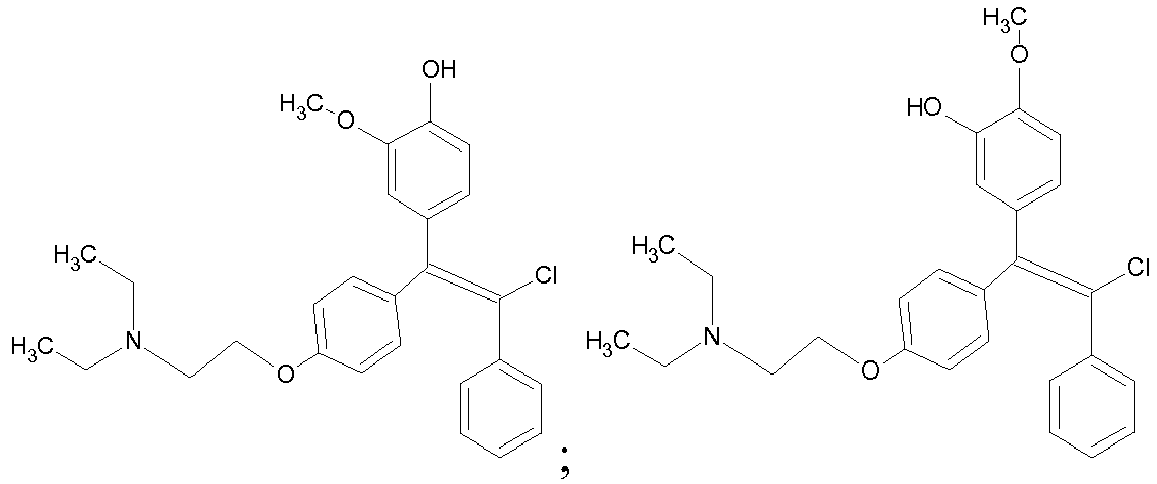
[0032] In another related preferred embodiment, the metabolite produced by the sequential action of CYP3A4/5 and CYP2D6 is mono-methylated. Accordingly, the present invention also provides a substantially pure trans-clomiphene metabolite having the chemical formula C27H30NO3Cl. The mono-methylated metabolite may have any one of the following structural formulas:
[0033] In another preferred embodiment, the present invention provides a substantially pure trans-clomiphene metabolite produced by the sequential catalytic action of CYP3A4/5 and CYP2B6 having the formula
and pharmaceutically acceptable salts thereof.
[0034] In another preferred embodiment, the present invention provides a substantially pure trans-clomiphene metabolite produced by the sequential catalytic action of CYP2D6 and CYP2B6 having the formula
and pharmaceutically acceptable salts thereof.
[0035] In various embodiments, the present invention also provides pharmaceutical compositions comprising one or more trans-clomiphene metabolites or salts thereof as described and a pharmaceutically acceptable carrier, which can be used in the methods described herein.
[0036] In various embodiments, the present invention also provides the use of a trans-clomiphene metabolite or salt thereof (or pharmaceutical composition comprising same) in the treatment of a trans-clomiphene-responsive disorder in a patient.
[0037] In one embodiment, a method for elevating testosterone levels is provided comprising administering an effective amount of a trans-clomiphene metabolite or salt thereof (or pharmaceutical composition comprising same) to a patient in need of such treatment. In a related embodiment, a method for treating a disorder related to testosterone deficiency including, without limitation, oligospermia, azoospermia, wasting and depression is provided. The use of trans-clomiphene for elevating testosterone levels in a mammal is described in US Patent No. 7,759,360, the entire content of which is hereby incorporated by reference, in particular at column 4, line 51 to column 6, line 5. In one preferred embodiment, the trans-clomiphene metabolite is 4-OH-trans-clomiphene. In another preferred embodiment the patient is a human male with secondary hypogonadism.
[0038] In a related embodiment, a method for treating secondary hypogonadism in a human male is provided comprising administering an effective amount of a trans-clomiphene metabolite or salt thereof (or pharmaceutical composition comprising same) to a patient in need of such treatment. In a preferred embodiment, the trans-clomiphene metabolite is 4-OH-trans-clomiphene.
[0039] In another embodiment, a method for decreasing cholesterol levels is provided, comprising administering an effective amount of a trans-clomiphene metabolite or salt thereof (or pharmaceutical composition comprising same) to a patient in need of such treatment. The use of trans-clomiphene for decreasing cholesterol levels is described in US Patent No.7,368,480, the entire content of which is hereby incorporated by reference, in particular at column 4, line 66 to column 6 line 10. In one preferred embodiment, the trans-clomiphene metabolite is 4-OH-trans-clomiphene. In another preferred embodiment the patient is a human male with secondary hypogonadism
[0040] In another embodiment, a method for treating and/or preventing a condition selected from the group consisting of benign prostate hypertrophy, prostate cancer and elevated triglycerides is provided comprising administering an effective amount of a trans-clomiphene metabolite or salt thereof (or pharmaceutical composition comprising same) to a patient in need of such treatment. The use of trans-clomiphene for treating benign prostate hypertrophy, prostate cancer and elevated triglycerides is described in US Patent Application Publication No..2008/0242726, the entire content of which is hereby incorporated by reference, in particular at page 3, paragraph [0030] to page 4, paragraph [0041]. In one preferred embodiment, the trans-clomiphene metabolite is 4-OH-trans-clomiphene. In another preferred embodiment the patient is a human male with secondary hypogonadism.
[0041] In another embodiment, a method for treating infertility in a human male is provided comprising administering an effective amount of a trans-clomiphene metabolite or salt thereof (or pharmaceutical composition comprising same) to a human male in need of such treatment. The use of trans-clomiphene for treating male infertility is described in US Patent Application Publication No. 2009/0215906, the entire content of which is hereby incorporated by reference, in particular at page 2, paragraph [0029] to page 3, paragraph [0034]. In one preferred embodiment, the trans-clomiphene metabolite is 4-OH-trans-clomiphene. In another preferred embodiment the patient is a human male with secondary hypogonadism.
[0042] In another embodiment, a method for preventing the transition from metabolic syndrome to type 2 diabetes is provided comprising administering an effective amount of a trans-clomiphene metabolite or salt thereof (or pharmaceutical composition comprising same) to a human male with secondary hypogonadism. The use of trans-clomiphene for preventing the transition from metabolic syndrome to type 2 diabetes mellitus in such a patient population is described in US Patent Application Publication No. 2009/0099265, the entire content of which is hereby incorporated by reference, in particular at page 3, paragraph [0040]. In a preferred embodiment, the trans-clomiphene metabolite is 4-OH-trans-clomiphene.
[0043] In yet another embodiment, a method for reducing fasting blood glucose levels is provided comprising administering an effective amount of a trans-clomiphene metabolite or salt thereof (or pharmaceutical composition comprising same) to a human male with secondary hypogonadism. The use of trans-clomiphene for reducing fasting blood glucose levels in such a patient population is described at paragraph [0041] of US Patent Application Publication No. 2009/0099265. In a preferred embodiment, the trans-clomiphene metabolite is 4-OH-trans-clomiphene.
[0044] In yet another embodiment, a method for treating type 2 diabetes mellitus is provided comprising administering an effective amount of a trans-clomiphene metabolite or salt thereof (or pharmaceutical composition comprising same) to a human male with secondary hypogonadism. The use of trans-clomiphene for treating type 2 diabetes mellitus in such a patient population is described at paragraph [0042] of US Patent Application Publication No. 2009/0099265. In a preferred embodiment, the trans-clomiphene metabolite is 4-OH-trans-clomiphene.
[0045] In another embodiment, a method for the treatment of female infertility is provided comprising administering an effective amount of a trans-clomiphene metabolite or salt thereof (or pharmaceutical composition comprising same) to a female in need of such treatment. Preferably the trans-clomiphene metabolite is administered as a daily dose in the early follicular phase of the menstrual cycle for five consecutive days. For example, an administration schedule could involve administration on days 5 to 9 or on days 3 to 7 of the menstrual cycle. Preferably the patient is an anovulatory female.
[0046] In another embodiment, a method for the treatment and/or prevention of breast cancer is provided comprising administering an effective amount of a trans-clomiphene metabolite or salt thereof (or pharmaceutical composition comprising same) to a female in need of such treatment. According to this embodiment, the trans-clomiphene metabolite may be administered to a female at increased risk for developing breast cancer in order to prevent the development of breast cancer. Alternatively, the trans-clomiphene metabolite may be administered to a female with breast cancer in order to treat the breast cancer. The trans-clomiphene metabolite may also be administered as an adjuvant therapy following initial treatment with surgery in order to minimize the possibility of relapse. Preferably when administered as an adjuvant, the trans-clomiphene is administered for a period of about 5 years.
[0047] In another embodiment, a method for the treatment of endometrial (or uterine) cancer is provided comprising administering an effective amount of a trans-clomiphene metabolite or salt thereof (or pharmaceutical composition comprising same) to a female in need of such treatment.
[0048] In yet another embodiment, a method for the treatment of ovarian cancer is provided comprising administering an effective amount of a trans-clomiphene metabolite or salt thereof (or pharmaceutical composition comprising same) to a female in need of such treatment.
[0049] In various embodiments, the invention provides intermittent dosing procedures useful in the treatment methods described herein.
[0050] By "intermittent administration" it is meant a period of administration of a therapeutically effective dose of a trans-clomiphene metabolite, followed by a time period of discontinuance, which is then followed by another period of administration of a therapeutically effective dose, and so forth.
[0051] The administration period of the therapeutically effective dose may comprise continuous dosing, as for example with a sustained-release formulation, or may comprise daily, weekly, monthly, or therebetween, dosing, as for example, with one, two or more tablets per day, so long as the dosing interval during the administration period is less than the discontinuance period.
[0052] The preferred length of the discontinuance period depends on the concentration and frequency of administration of the effective dose during the administration period and in any case should be chosen such that the desired therapeutic effect is achieved during the treatment period. For example, where the trans-clomiphene metabolite or salt thereof (or pharmaceutical composition comprising same) is administered to elevate testosterone levels, the discontinuance period should be terminated before testosterone levels fall below about 300 ng/DL.
[0053] Pharmaceutical compositions according to the present invention may comprise or consist essentially of a trans-clomiphene metabolite of the invention at a dosage between about one mg to about 200 mg (although the determination of optimal dosages is with the level of ordinary skill in the art). The composition may comprise a trans-clomiphene metabolite of the invention at a dosage of about 1 mg, 2 mg, 3, mg, 4 mg, 5 mg, 10 mg, 15 mg, 20 mg, 25 mg, 30 mg, 35 mg, 40 mg, 45 mg, 50 mg, 55 mg, 60 mg, 65 mg, 70 mg, 75 mg, 80 mg, 85 mg, 90 mg, 95 mg, 100 mg, 110 mg, 120 mg, 130 mg, 140 mg, 150 mg, 160 mg, 170 mg, 180 mg, 190 mg, 200 mg or there between.
[0054] Pharmaceutical compositions may comprise 100% w/w of a trans-clomiphene metabolite or may additionally comprise other active agents useful in achieving the desired therapeutic effect. Where the pharmaceutical composition comprises 100% w/w of a trans-clomiphene metabolite, one or more additional active agents may be separately co-administered sequentially or simultaneously to achieve a desired therapeutic effect.
[0055] Dosages are preferably (but not necessarily) administered as part of a dosage regimen designed to give rise to serum testosterone levels that mimic or correspond to the normal secretary total serum testosterone profile described in FIG. 1 during the period of administration and preferably during the period of discontinuance as well. For example, according to FIG. 1 a dosage of the preferred composition may be administered in a pharmaceutical formulation that would give rise to peak serum testosterone levels at around 8 a.m. Such pharmaceutical formulations may be in the form of sustained release formulations prepared as described for example in U.S. Patent No. 6,221,399, Japanese patent 4-312522, Meshali et al, Int. J. Phar. 89:177-181 (1993), Kharenko et al, Intern. Symp. Control Rel. Bioact. Mater. 22:232-233 (1995), WO 95/35093, Dangprasit et al., Drug. Devel. and Incl. Pharm. 21 (20):2323-2337 (1995); U.S. Patent Nos. 6,143,353, 6,190,591, 6,096,338, 6,129,933, 6,126,969, 6,248,363 and other sustained release formulations well known in the art.
[0056] The terms "treat" or "treatment" as used in the instant application, refer to both therapeutic treatment and prophylactic or preventative measures, wherein the object is to prevent or slow down (lessen) an undesired physiological or psychological change or disorder, such as symptoms associated with secondary hypogonadism. For purposes of the present invention, beneficial or desired clinical results include, but are not limited to, alleviation of symptoms, diminishment of extent of disease, stabilized (i.e., not worsening) state of disease, delay or slowing of disease progression, amelioration or palliation of the disease state and remission (whether partial or total), whether detectable or undetectable. "Treatment" can also mean prolonging survival as compared to expected survival if not receiving treatment. Individuals in need of treatment include those already with the condition or disorder as well as those prone to develop the condition or disorder or those in whom the condition or disorder is to be prevented.
[0057] Suitable pharmaceutical compositions or unit dosage forms may be in the form of solids, such as tablets or filled capsules or liquids such as solutions, suspensions, emulsions, elixirs or capsules filled with the same, all for oral use. The compositions may also be in the form of sterile injectable solutions or emulsions for parenteral (including subcutaneous) use. The compositions may also be formulated for topical administration. For example, the composition may be formulated as a lotion, cream, ointment, gel, foam, or transdermal patch. In one preferred embodiment, the composition is formulated as a gel (e.g. an aqueous alcoholic gel) for transdermal administration (e.g. to the scrotum). Such pharmaceutical compositions and unit dosage forms thereof may comprise ingredients in conventional proportions.
[0058] Although oral administration is the preferred route, compositions according to the present invention may be administered by any route of administration including, but not limited to, intravenous, subcutaneous, buccal, transmucosal, intrathecal, intradermal, intracisternal, intramuscular, transdermal, intraperitoneal, epidural, vaginal, rectal, intranasal, sublingual, intra-articular, intra-cerebrospinal and intrasynovial. After administration of the composition, serum testosterone levels may be measured as described above and dosages may be altered to achieve a sufficient increase in the serum testosterone levels to achieve the desired physiological results associated with normal testosterone described above.
[0059] Compositions of the present invention may also be administered in fast-release formulations, slow-release formulations or mixtures of fast-release and slow-release formulations such as a multi-layer tablet comprising at least one fast-release layer and at least one slow-release layer.
[0061] The following Examples are meant to be illustrative of the invention and are not intended to limit the scope of the invention as set out is the appended claims.
EXAMPLE 1
In vitro Metabolite Profile of Androxal® (trans-clomiphene)
[0062] A study was conducted to determine the metabolic profile of Androxal® in cryopreserved hepatocytes from Sprague-Dawley rat, Beagle dog, cynomolgus monkey, and human. The liver is the main site of drug metabolism and the full complement of hepatic drug metabolizing enzymes (including liver enzymes of the CYP P450 family) are maintained within the intact cell. Isolated liver hepatocytes constitute a physiologically relevant experimental model for the evaluation of liver-related drug properties such as metabolism. Cyropreservation of the hepatocytes greatly enhances their availability for studies.
[0063] Primary hepatocytes isolated from several donors for each animal species and five human donors were pooled according to species and cryopreserved. The hepatocytes were thawed, subjected to Percoll density gradient centrifugation to remove debris and counted to determine yield. Viability was measured using Trypan blue exclusion. The hepatocytes were diluted with CYP assay buffer (Krebs-Hensleit Buffer) to prepare a 2X cell suspension of 2.0 x 10⁶ viable cells/ml. Aliquots of the 2X hepatocyte suspension (0.5 ml containing 1.0 x 10⁶ cells) were transferred to appropriate wells for a final 1X cell density of 1.0 x 10⁶ cells/well. All incubations were conducted at 37 ± 1° C, 95% air/5% CO2, and saturating humidity in 12-well uncoated culture plates. Aliquots of 2X Androxal® dosing solutions (0.5 ml containing 6 and 60 µM Androxal®) were added to each appropriate well for a total final volume of 1 ml. The cultures were incubated for 1 and 4 hours. The sample size was N = 2 replicates.
[0064] Matrix control samples were included as a source of background matrix components to aid in metabolite identification. Equal volumes of 2X hepatocyte suspension and CYP assay buffer without Androxal® were combined and incubated for 4 hours.
[0065] Chemical degradation control samples were included to evaluate the possibility of chemical degradation of Androxal® in the absence of cells. Equal volumes of 2X Androxal® dosing solution (6 and 60 µM) and CYP buffer were combined and incubated for 1 and 4 hours.
[0066] Metabolic positive control samples were included to evaluate the metabolic capacity of the cryopreserved hepatocytes from each species. Equal volumes of 2X 7-Ethoxycoumarin dosing solutions (150 µM) and 2X hepatocyte suspension were combined and incubated for 1 and 4 hours.
[0067] The incubations were terminated as follows: Metabolic positive control incubations were terminated by adding an equal volume of methanol. All other incubations were terminated by placing the plates on ice. The contents of each well were mixed thoroughly and divided into five cryovials. An equal volume of organic solvent was added to one cryovial. The samples were either immediately analyzed or stored in cryovials at -70° ± 10 C until analysis.
[0068] All samples were analyzed by reverse-phase HPLC. A UV profile of the samples was obtained followed by liquid chromatography-mass spectrometry (LC/MS) analysis using a Micromass® Q-Tof-2 mass spectrometer capable of conducting accurate mass measurement. Preliminary metabolite identification was aided by the use of Metabolynx® software.
[0069] The metabolic capacity of the hepatocytes from each species was evaluated by measuring the formation of 7-hydroxycoumarin and its conjugated derivates, 7-hydroxycoumarin glucuronide and 7-hydroxycoumarin sulfate in the metabolic positive control samples using a validated HPLC bioanalytical method. The cryopreserved hepatocytes used in the study were considered to be metabolically active and the incubations acceptable.
[0070] The relative amounts of Androxal and its metabolites after 1 and 4 hour incubations are reported below at Tables 1-4.
[0071] Four major Androxal® metabolites (C26H30NO3Cl (M3), C26H28NO2Cl (M14), C27H30NO3Cl (M15) and C24H24NOCl (M22); see Tables 1-4 below) were observed in incubations with human hepatocytes, with hydroxylation, dealkylation and dehydrogenation as the major observed metabolic transformations. Metabolites C24H24NO2Cl, C26H28NO2Cl, C27H30NO3Cl and C24H24NOCl were also observed in incubations with rat, dog and monkey hepatocytes. C26H30NO3Cl was observed in the monkey and dog hepatocyte incubations with the 30 mM Androxal® dose. At the low dose of Androxal®, consistent with blood levels found in clinical trials (3 µM), hydroxylated metabolites predominate (see Tables 3 and 4 below). It was determined that 85% and 91% of all recovered metabolites were hydroxylated compounds at 1 and 4 hours respectively at the low dose (e.g. C26H28NO2Cl). At the higher dose of Androxal® (30 µM) de-ethylation becomes important and about half of all metabolites recovered were deethylated (2X demethylated) compounds (e.g. C24H24NOCl). Without being bound by theory, it is believed that CYP3A4 may have a higher binding constant/lower affinity for trans-clomiphene. Alternatively, higher concentrations of trans-clomiphene may overwhelm the CYP 2D6 system capacity in these hepatocytes. CYP 2D6 is largely responsible for hydroxylation and de-ethylation is accomplished largely through CYP 3A4. This data suggests that the primary active metabolites of trans-clomiphene are 4-OH-trans-clomiphene, produced by the action of CYP 2D6 and N-desethyl-trans-clomiphene, produced by the action of CYP 3A4. Therapeutic administration of these metabolites is expected to ameliorate the disorders described herein while reducing side effects which accompany administration of trans-clomiphene resulting from the individual actions of trans-clomiphene and its metabolite components shown below.
Table 1: Metabolite Profile of Incubations Containing 30 µM Androxal® for 4 hours
| Cmpd | RT | m/z | Transformation | Human | Cyno. monkey | Beagle dog | SD Rat |
| C26H28ClNO (Androxal®) | 27.6 | 406 | None | 4012.5 | 2828.5 | 4989.3 | 3123.3 |
| C26H29NO4 | 17.7 | 420 | Dechlorination + H+ Hydroxylation + 2x Hydroxylation | - | - | - | 130.2 |
| C27H31NO3 | 22.5 | 418 | Methylation + 2x Hydroxylation + Dechlorination + H | 20.3 | 26.6 | - | 438.2 |
| C26H30NO3Cl | 22.7 | 440 | Reduction + 2x Hydroxylation | 125.9 | 64.7 | 65.9 | - |
| C32H36NO8Cl | 22.8 | 598 | Gluc + Hydroxylation | - | - | 16.6 | 29.5 |
| C26H30NO3Cl | 22.95 | 440 | Reduction 2x Hydroxylation | - | - | 43.7 | - |
| C27H30NO3Cl | 22.9 | 452 | Methylation + 2x Hydroxylation | - | - | - | 15.8 |
| C32H36NO8Cl | 23.1 | 598 | Gluc + Hydroxylation | 22.4 | 18.1 | - | 30.8 |
| C26H28NO3Cl | 23.5 | 438 | 2x Hydroxylation | - | - | 86.2 | 117.1 |
| C36H43N4O7S Cl | 23.5 | 711 | S-Glutathione conjugation | - | - | - | 15.9 |
| C26H30NO3Cl | 24.0 | 440 | Reduction + 2x Hydroxylation | 66.8 | 53.1 | - | - |
| C36H43N4O7S Cl | 24.2 | 711 | S-Glutathione conjugation | - | - | - | 13.6 |
| C27H31NO3 | 24.3 | 418 | Methylation + 2x Hydroxylation + Dechlorination + H | 28 | 37.5 | - | 530.7 |
| C24H24NO2Cl | 24.7 | 394 | Hydroxyl + Deethylation | - | 335.6 | 113.1 | 188.9 |
| C26H28NO2Cl | 25.0 | 422 | Hydroxylation | 747.4 | 724.4 | 1999.3 | 1432.8 |
| C27H30NO3Cl | 25.1 | 452 | Methylation + 2x Hydroxylation | 140.7 | 93.9 | 310.1 | 905.3 |
| C27H30NO6Cl S | 25.5 | 532 | Methylation + 2x Hydroxyl + Sulfate conj. | - | - | 152.8 | - |
| C26H28NO3Cl | 25.5 | 438 | 2x Hydroxylation | - | - | 82.4 | 70.7 |
| C26H28NO7Cl | 25.6 | 502 | 3 x 2 x Hydroxylation | 68.0 | 44.8 | 64.2 | - |
| C26H28NO2Cl | 25.8 | 422 | Hydroxylation | 53.9 | 63.2 | 30.5 | - |
| C27H30NO3Cl | 25.9 | 452 | Methylation + 2x Hydroxylation | 24.7 | 10.3 | - | 97.4 |
| C24H24NOCl | 27.5 | 378 | 2x Demethylation (Deethylation) | 1262.4 | 2175.0 | 723.5 | 673.8 |
| C26H28NO2Cl | 28.0 | 422 | Hydroxylation | - | - | - | 174.6 |
| C24H24NO2Cl | 29.06 | 394 | Hydroxyl + Deethylation | - | 59.1 | - | - |
| Abbreviations: RT, retention time; Cyno., cynomolgus; SD, Sprague-Dawley; m/z, mass/charge |
Table 2 - Metabolite Profile of Incubations Containing 30 mM Androxal® for 1 hour
| Cmpd | RT | m/z | Transformation | Human | Cyno. monkey | Beagle dog | SD Rat |
| C26H28ClNO (Androxal®) | 27.6 | 406 | None | 4297.8 | 3166.4 | 6227.3 | 3166.8 |
| C27H31NO3 | 22.5 | 418 | Methylation + 2x Hydroxylation + Dechlorination + H | 18.1 | 19.3 | - | 346.1 |
| C26H30NO3Cl | 22.7 | 440 | Reduction + 2x Hydroxylation | 56.1 | 43.3 | 117.3 | - |
| C26H28NO3Cl | 23.5 | 438 | 2x Hydroxylation | - | - | 70.0 | 39.8 |
| C26H30NO3Cl | 24.0 | 440 | Reduction + 2x Hydroxylation | 32.9 | 44.9 | - | - |
| C27H31NO3 | 24.3 | 418 | Methylation + 2x Hydroxylation + Dechlorination + H | 30.0 | 28.9 | - | 420.3 |
| C24H24NO2Cl | 24.7 | 394 | Hydroxyl + Deethylation | 22.0 | 54.0 | 36.7 | 45.2 |
| C26H28NO2Cl | 25.0 | 422 | Hydroxylation | 538.8 | 455.5 | 1535.2 | 992.7 |
| C27H30NO3Cl | 25.1 | 452 | Methylation + 2x Hydroxylation | 36.4 | 22.6 | 199.7 | 445.8 |
| C27H30NO6ClS | 25.5 | 532 | Methylation + 2x Hydroxyl + Sulfate conj. | - | - | 24.9 | - |
| C26H28NO3Cl | 25.5 | 438 | 2x Hydroxylation | - | - | 102.2 | 16.2 |
| C26H28NO7Cl | 25.6 | 502 | 3 x 2 x Hydroxylation | - | - | 20.8 | - |
| C26H28NO2Cl | 25.8 | 422 | Hydroxylation | 25.4 | 27.9 | - | - |
| C27H30NO3Cl | 25.9 | 452 | Methylation + 2x Hydroxylation | - | - | - | 41.7 |
| C24H24NOCl | 27.5 | 378 | 2x Demethylation (Deethylation) | 699.8 | 1029.8 | - | 336.6 |
| C24H24NO2Cl | 29.06 | 394 | Hydroxyl + Deethylation | - | 10.5 | - | - |
| Abbreviations: RT, retention time; Cyno., cynomolgus; SD, Sprague-Dawley; m/z, mass/charge |
Table 3 - Metabolite Profile of Incubations Containing 3 µM Androxal® for 4 hours
| Cmpd | RT | m/z | Transformation | Human | Cyno. monkey | Beagle dog | SD Rat |
| C26H28ClNO (Androxal®) | 27.6 | 406 | None | 285.4 | 84.2 | 103.2 | 182.5 |
| C26H30NO3Cl | 22.7 | 440 | Reduction + 2x Hydroxylation | 49.3 | - | - | - |
| C26H28NO3Cl | 23.5 | 438 | 2x Hydroxylation | - | - | 27.9 | - |
| C24H24NO2Cl | 24.7 | 394 | Hydroxyl + Deethylation | 29.4 | - | 14.3 | - |
| C26H28NO2Cl | 25.0 | 422 | Hydroxylation | 247.0 | 43.4 | 103.4 | 31.1 |
| C27H30NO3Cl | 25.1 | 452 | Methylation + 2x Hydroxylation | 148.4 | 41.5 | 256.1 | 134.5 |
| C27H30NO3Cl | 25.5 | 452 | Methylation + 2x Hydroxylation | - | 15.7 | - | - |
| C27H30NO6ClS | 25.5 | 532 | Methylation + 2x Hydroxyl + Sulfate conj. | - | - | 27.5 | - |
| C24H24NOCl | 27.5 | 378 | 2x Demethylation (Deethylation) | 43.4 | - | 18.6 | - |
| Abbreviations: RT, retention time; Cyno., cynomolgus; SD, Sprague-Dawley; m/z, mass/charge |
Table 4 - Metabolite Profile of Incubations Containing 3 µM Androxal® for 1 Hour
| Cmpd | RT | m/z | Transformation | Human | Cyno. monkey | Beagle dog | SD Rat |
| C26H28ClNO (Androxal®) | 27.6 | 406 | None | 625.8 | 279.1 | 148.9 | 240.0 |
| C26H29NO4 | 17.7 | 420 | Dechlorination + H+ Hydroxylation + 2x Hydroxylation | - | - | - | 36.7 |
| C27H31NO3 | 22.5 | 418 | Methylation + 2x Hydroxylation + Dechlorination + H | - | - | - | 24.2 |
| C26H30NO3Cl | 22.7 | 440 | Reduction + 2x Hydroxylation | 24.5 | - | - | - |
| C26H28NO3Cl | 23.5 | 438 | 2x Hydroxylation | - | - | 52.5 | - |
| C27H31NO3 | 24.3 | 418 | Methylation + 2x Hydroxylation + Dechlorination + H | - | - | - | 27.1 |
| C24H24NO2Cl | 24.7 | 394 | Hydroxyl + Deethylation | - | 13.6 | 12.2 | |
| C26H28NO2Cl | 25.0 | 422 | Hydroxylation | 240.3 | 239.4 | 218.8 | 100.9 |
| C27H30NO3Cl | 25.1 | 452 | Methylation + 2x Hydroxylation | 34.9 | 107.4 | 232.9 | 255.8 |
| C27H30NO3Cl | 25.4 | 452 | Methylation + 2x Hydroxylation | - | 12.2 | - | - |
| C27H30NO3Cl | 25.9 | 452 | Methylation + 2x Hydroxylation | - | - | - | 16.2 |
| C24H24NOCl | 27.5 | 378 | 2x Demethylation (Deethylation) | 48.3 | 22.3 | 25.9 | - |
| Abbreviations: RT, retention time; Cyno., cynomolgus; SD, Sprague-Dawley; m/z, mass/charge |
1. A substantially pure compound having a chemical formula selected from the group consisting
of: C26H30NO3Cl, C26H28NO2Cl, C27H30NO3Cl and C24H24NOCl, or a pharmaceutically acceptable salt thereof.
2. A substantially pure compound according to claim 1, having a structural formula selected
from the group consisting of:
and
or a pharmaceutically acceptable salt thereof.
and
or a pharmaceutically acceptable salt thereof.
3. A pharmaceutical composition comprising one or more compounds according to claim 2
and a pharmaceutically acceptable carrier.
4. A pharmaceutical composition according to claim 3 for use in treating secondary hypogonadism
or a disorder associated therewith in a human male patient in need thereof, wherein
the disorder associated with secondary hypogonadism is selected from reduction of
muscle mass, reduction of bone density, reduction of libido, oligospermia, and azoospermia.
5. Pharmaceutical composition for use according to claim 4, wherein the composition is
for intermittent administration.
6. Pharmaceutical composition for use according to claim 5, wherein the composition is
for administration to the patient once per 3-30 day interval, wherein a serum testosterone
level of at least 300 ng/DL is maintained during said interval.
7. A pharmaceutical composition according to claim 3 for use in treating infertility
in a human female.
8. Pharmaceutical composition for use according to claim 7, wherein the composition is
for administration to the female as a daily dose for a period of five consecutive
days.
9. Pharmaceutical composition for use according to claim 8, wherein the administration
period of five consecutive days begins on the second to fifth day after the onset
of spontaneous or induced menstruation.
10. A pharmaceutical composition according to claim 3 for use in the prevention or treatment
of type 2 diabetes in a human male.
11. A pharmaceutical composition according to claim 3 for use in the prevention or treatment
of breast cancer in a human female.
12. A pharmaceutical composition according to claim 3 for use in treating endometrial,
uterine or ovarian cancer in a human female.
13. The compound according to claim 2, wherein the pharmaceutically acceptable salt thereof
is a citrate salt.
14. The compound according to claim 2, having the formula:
or pharmaceutically acceptable salt thereof.
or pharmaceutically acceptable salt thereof.
15. The compound according to claim 2, having the formula:
or pharmaceutically acceptable salt thereof.
or pharmaceutically acceptable salt thereof.
REFERENCES CITED IN THE DESCRIPTION
This list of references cited by the applicant is for the reader's convenience only. It does not form part of the European patent document. Even though great care has been taken in compiling the references, errors or omissions cannot be excluded and the EPO disclaims all liability in this regard.
Patent documents cited in the description
- US61515278B [0001]
- US7759360B [0037]
- US7368480B [0039]
- US20080242726A [0040]
- US20090215906A [0041]
- US20090099265A [0042] [0043] [0044]
- US6221399B [0055]
- JP4312522A [0055]
- WO9535093A [0055]
- US6143353A [0055]
- US6190591B [0055]
- US6096338A [0055]
- US6129933A [0055]
- US6126969A [0055]
- US6248363B [0055]
Non-patent literature cited in the description
- TENOVER et al.J. Clin. Endocrinol. Metab., 1987, vol. 64, 1103- [0003]
- TENOVER et al.J. Clin. Endocrinol. Metab., 1987, vol. 64, 1118- [0003]
- ERNST et al.J. Pharmaceut. Sci., 1976, vol. 65, 148- [0005]
- MESHALI et al.Int. J. Phar., 1993, vol. 89, 177-181 [0055]
- KHARENKO et al.Intern. Symp. Control Rel. Bioact. Mater., 1995, vol. 22, 232-233 [0055]
- DANGPRASIT et al.Drug. Devel. and Incl. Pharm., 1995, vol. 21, 202323-2337 [0055]