| (19) |
 |
|
(11) |
EP 3 359 458 B1 |
| (12) |
EUROPEAN PATENT SPECIFICATION |
| (45) |
Mention of the grant of the patent: |
|
18.12.2019 Bulletin 2019/51 |
| (22) |
Date of filing: 05.10.2016 |
|
| (51) |
International Patent Classification (IPC):
|
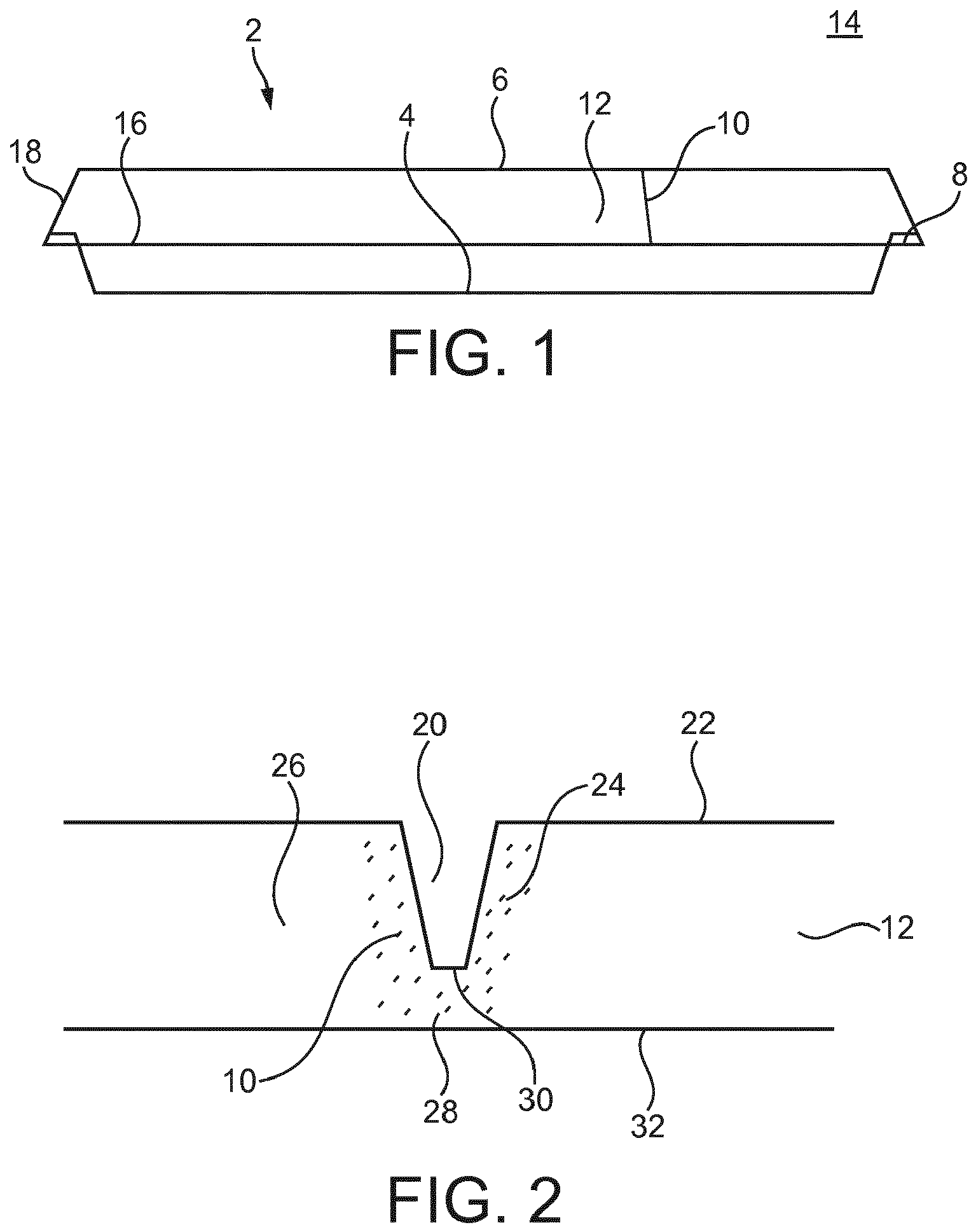
| (86) |
International application number: |
|
PCT/EP2016/073771 |
| (87) |
International publication number: |
|
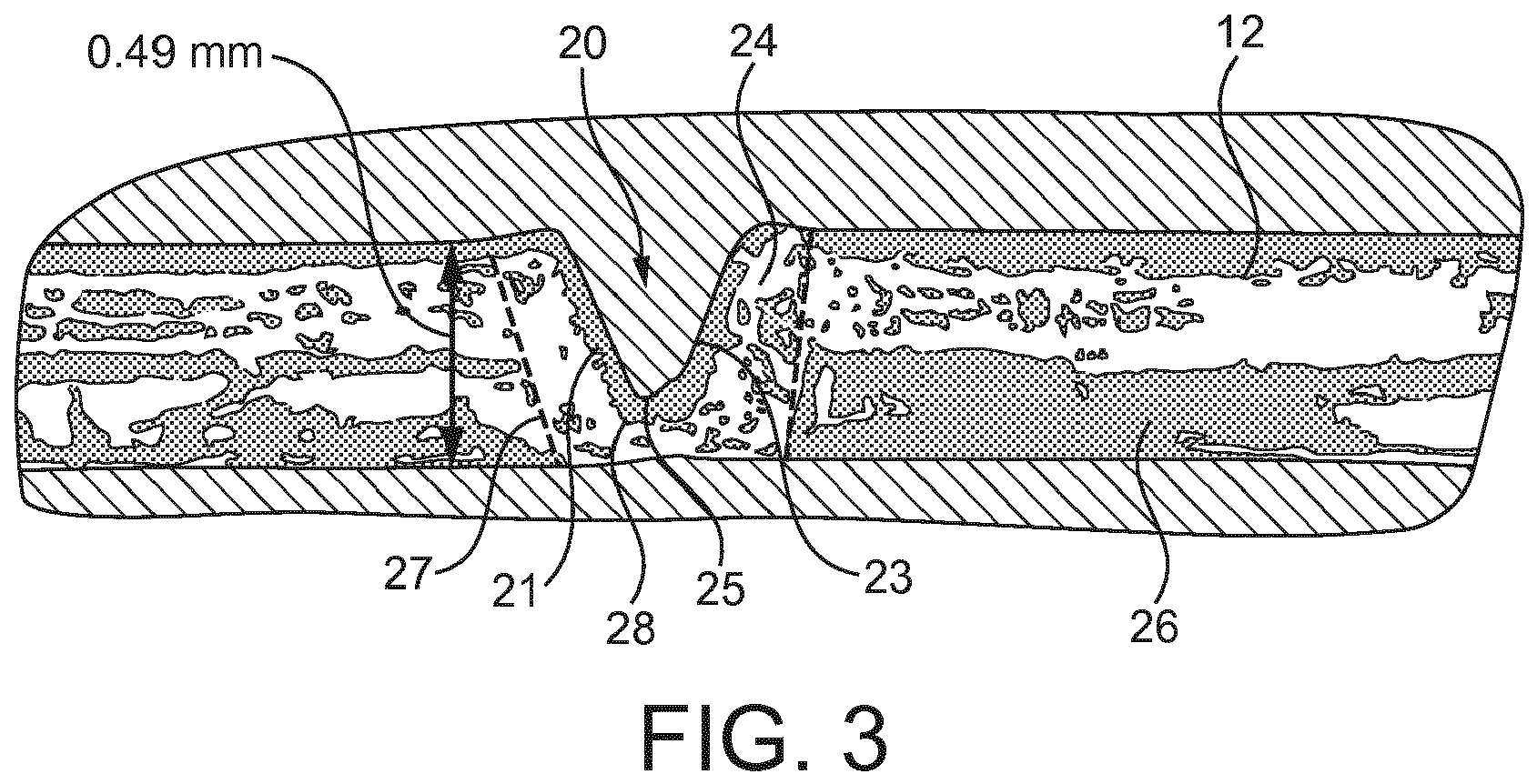
WO 2017/063928 (20.04.2017 Gazette 2017/16) |
|
| (54) |
CONTAINER WITH FRANGIBLE WEAKENED PORTION AND MANUFACTURE THEREOF
BEHÄLTER MIT ZERBRECHLICHEM, GESCHWÄCHTEM TEIL UND HERSTELLUNG DAVON
RÉCIPIENT À PARTIE AFFAIBLIE CASSABLE ET FABRICATION DE CELUI-CI
|
| (84) |
Designated Contracting States: |
|
AL AT BE BG CH CY CZ DE DK EE ES FI FR GB GR HR HU IE IS IT LI LT LU LV MC MK MT NL
NO PL PT RO RS SE SI SK SM TR |
| (30) |
Priority: |
16.10.2015 GB 201518363
|
| (43) |
Date of publication of application: |
|
15.08.2018 Bulletin 2018/33 |
| (73) |
Proprietor: Gr8 Engineering Limited |
|
Chichester, West Sussex PO19 7JU (GB) |
|
| (72) |
Inventor: |
|
- CLARKE, Peter Reginald
Billingshurst, West Sussex
RH14 0ED (GB)
|
| (74) |
Representative: Jenkins, Peter David |
|
Page White & Farrer
Bedford House
John Street
London WC1N 2BF
London WC1N 2BF (GB) |
|
| |
|
| Note: Within nine months from the publication of the mention of the grant of the European
patent, any person may give notice to the European Patent Office of opposition to
the European patent
granted. Notice of opposition shall be filed in a written reasoned statement. It shall
not be deemed to
have been filed until the opposition fee has been paid. (Art. 99(1) European Patent
Convention).
|
[0001] The present invention relates to a container with a frangible weakened portion, for
example a weakened tear line, and to a method of manufacturing such a container.
[0002] In the packaging industry, it is well known to provide containers with a tamper evident
feature to indicate whether or not the container has been opened or tampered with
prior to use.
[0003] For the manufacture of containers in the form of wide-mouth containers such as trays,
cups or tubs, typically thermoforming is used. A sheet of thermoplastic material,
typically a polyolefin, is heated and then urged, by a movable mould member and a
blowing pressure, into a mould cavity. Such thermoformed trays, cups or tubs often
incorporate closures such as snap-on lids. In order to provide a tamper evident feature,
the lid is fitted to a body portion of the container and then a sleeve of heat shrinkable
film is heat shrunk around the lid. The heat shrunk film may incorporate one or more
tear lines. In order to open the container, the user tears along the tear lines to
remove the heat shrunk film, and then the lid can be removed. The presence of the
heat shrunk film with in-tact tear lines in the film indicates that the container
has not been opened or tampered with prior to use.
[0004] It is known to produce trays, cups or tubs from polyethylene terephthalate (PET).
However, when such containers are used in combination with a heat shrunk film to provide
a tamper evident feature, there are two problems. First, the heat shrunk film may
not be composed of PET, for example being composed of PVC, and second, the heat shrunk
film must be separately removed prior to use, and each problem reduces the facility
of recycling the packaging materials.
[0005] Also, there is a need in the art for containers such as trays, cups or tubs composed
of polyethylene terephthalate (PET) which can have a high thermal stability, for example
when subjected to elevated temperature, typically when placed in an oven to cook or
reheat food, and high transparency or translucency.
[0006] US-A-2013/077898 discloses a method and apparatus for improved straw access to the interior of a pouch
formed from a multi-ply laminate which includes a laser-treated area that has improved
characteristics for enabling a straw to pass through the multi-ply laminate to access
the interior of the pouch. The laser treated area is more crystalline than adjacent
areas of the multi-ply laminate that causes the multi-ply laminate to fracture. One
such multi-ply laminate includes a sealant layer, a foil layer, and a PET layer.
[0007] The present invention aims at least partially to overcome these problems of known
containers and corresponding container manufacturing methods. There is a need in the
art for a container, and a corresponding method of manufacture, which provides cost-effective
containers having dimensions to enable them to be used as trays, cups or tubs, and
which have a tamper evident feature with good recyclability and low carbon footprint,
with such containers optionally having thermal stability at elevated temperatures,
for example at oven temperatures, and transparency/translucency, for example a transmissivity
through at least a sidewall of the container of at least 90% in visible light.
[0008] There is a particular need in the art for transparent thermoplastic trays which can
be subjected to elevated temperatures of typically above 150 °C, even above 200 °C,
without thermal distortion so that such trays are "dual ovenable" i.e. can be placed
in a microwave oven or a conventional oven to cook or reheat food without degradation
of the tray. Such trays have particular application in the packaging of "cook-chill"
food which is sold by many supermarkets and grocery stores, and is precooked (at least
partially) and refrigerated and sold to the consumer for reheating/finish cooking
at home.
[0009] The present invention provides a container comprising a part, in the form of a container
body or container closure, optionally a lid, having a frangible weakened portion formed
in a layer of polyethylene terephthalate forming a wall of the container body or closure,
the frangible weakened portion comprising a groove cut into a first surface of the
layer, a first portion of the layer surrounding the groove having a crystallinity
of from 35 to 45%, and a second portion of the layer, which second portion is adjacent
to the first portion on opposite sides of the groove and remote from the groove, the
second portion having a crystallinity at least 5% less than the crystallinity in the
first portion, wherein the layer has a thickness of from 200 to 700 µm and the groove
has a depth of from 200 to 500 µm.
[0010] The present invention further provides a method of manufacturing a container comprising
a part, in the form of a container body or container closure, optionally a lid, having
a frangible weakened portion formed in a layer of polyethylene terephthalate forming
a wall of the container, the method comprising the step of:
- (i) laser cutting a groove into a first surface of a layer of polyethylene terephthalate
to form a frangible weakened portion, wherein the layer has a thickness of from 200
to 700 µm and the groove has a depth of from 200 to 500 µm, to provide a first portion
of the layer surrounding the groove having a crystallinity of from 35 to 45%, and
a second portion of the layer, which second portion is adjacent to the first portion
on opposite sides of the groove and remote from the groove, the second portion having
a crystallinity at least 5% less than the crystallinity in the first portion.
[0011] Preferred features are defined in the dependent claims.
[0012] The present invention is at least partly predicated on the finding by the present
inventor that a frangible weakened portion, typically in the form of one or more weakened
tear lines, can be laser cut into a layer of polyethylene terephthalate which forms
a container body or closure, which may optionally be a lid. The laser cutting can
form a groove leaving a specific layer thickness beneath the groove and portions of
specific PET crystallinity on opposite sides of the groove.
[0013] By providing a specific reduced material thickness beneath the laser cut groove,
a relatively high crystallinity adjacent to the groove and a relatively lower crystallinity
adjacent to the high crystallinity portion, the material beneath the groove can be
manually torn because the high crystallinity is relatively brittle, whereas the relatively
lower crystallinity portion is more flexible and so the tearing stress can be confined
to the reduced material thickness beneath the laser cut groove.
[0014] The parameters of groove depth, layer thickness beneath the groove and PET crystallinity
adjacent to the groove has been found to provide that the frangible weakened portion
exhibits the combination of robustness against inadvertent opening during manufacture,
transport, storage and handling prior to use and ease of manual opening at the time
of use. The frangible weakened portion is integral to the PET container, so only one
polymer is employed to manufacture the tamper evident container after opening the
container the material of the container is unitary, and so only one item of packaging
waste to be recycled is produced.
[0015] Also, since the entire tamper evident container is composed of PET, the container
may have excellent mechanical properties, in particular impact resistance as well
as thermal stability at high temperatures and transparency in visible light. A thermoforming
step can optionally heat set the PET thermoplastic material of the container.
[0016] Embodiments of the present invention will now be described by way of example only
with reference to the accompanying drawings, in which:
Figure 1 is a schematic side view of a container having a frangible weakened portion
in accordance with a first embodiment of the present invention;
Figure 2 is a schematic cross-section through a layer of the container of Figure 1
having the frangible weakened portion; and
Figure 3 is a photomicrograph through a layer of the container of Figure 1 having
the frangible weakened portion.
[0017] Referring to Figure 1, there is shown a container 2 which is in the form of a closed
or sealed tray. The container comprises a body portion 4 and a closure in the form
of a lid 6 fitted thereto. The body portion 4 has been three-dimensionally shaped,
for example by a thermoforming process. The body portion 4 is formed of a layer of
polyethylene terephthalate, and is typically transparent.
[0018] The lid 6 has been three-dimensionally shaped, for example by a thermoforming process.
The lid 6 is typically snap-fitted, to the body portion 4 of the container 2. In alternative
embodiments, the lid 6 may be bonded, for example thermally bonded or adhered by an
adhesive layer, to the body portion 4 of the container 2. The lid 6 may be hingedly
attached to the body portion 4. The lid 6 is fitted to the body portion of the container
to form a seal 8, optionally a hermetical seal, therebetween.
[0019] In this specification the container may be in the form of any wide mouth container
which may be in the form of a tray, tub, pot, jar, cup, etc. The wide mouth of the
container has an opening which has substantially the same or greater dimensions and
area as compared to the body and base of the container. The container may have a variety
of different shapes, dimensions and aspect ratios.
[0020] The container 2 has a frangible weakened portion 10 formed in a layer 12 of polyethylene
terephthalate forming a wall 14 of the container 2. The frangible weakened portion
10 is typically in the form of a weakened tear line. The frangible weakened portion
10 is preferably non-perforated, and provides a localized thinning of the wall 14.
The weakened tear line may be a continuous line or an intermittent line. The frangible
weakened portion 10 comprises a tamper evident opening line of the container 2.
[0021] The wall 14, and thus the frangible weakened portion 10, may be in the body portion
4, or the lid 6, or may extend across the body portion 4 and the lid 6. In the illustrated
embodiment of Figure 1 the frangible weakened portion 10 is in the lid 6, in particular
located at a peripheral edge 16 of the lid 6 so that when the frangible weakened portion
10 is torn by separation along the frangible weakened portion 10, the lid 6 can be
removed from the body portion 4.
[0022] Accordingly, the frangible weakened portion 10 provides a tamper evident closure
18, preferably in the form of a lid 6, for the container 4 so that when the closure
18 is opened, or wholly or partly removed, to open the container 4, the tamper evident
closure 18 is torn along at least a part of the frangible weakened portion 10 to indicate
that the closure 18 has been opened.
[0023] The frangible weakened portion 10 is therefore formed in the layer 12 of polyethylene
terephthalate forming the wall 14 of the container 2. Typically the layer 12 comprises
a lid 6 of the container 2. Polyethylene terephthalate is a biaxially-orientable thermoplastic
material. In some embodiments, the polyethylene terephthalate thermoplastic material
may be blended with one or more polyesters, typically one or more polyalkylene polyesters
selected from polyethylene terephthalate, polybutylene terephthalate, polyethylene
naphthalate and polybutylene naphthalate. Preferablv, the biaxially-orientable thermoplastic
material is polyethylene terephthalate. The layer 12 has been formed by thermoforming.
[0024] Referring to Figures 2 and 3, which shows the frangible weakened portion 10 in greater
detail, the frangible weakened portion 10 comprises a groove 20 cut into a first surface
22 of the layer 12. The groove 20 is formed by laser cutting. The layer 12 has a thickness
of from 200 to 700 µm and the groove 20 has a depth of from 200 to 500 µm. More typically,
the layer 12 has a thickness of from 350 to 650 µm and the groove 20 has a depth of
from 300 to 450 µm, and the wall thickness beneath the groove 20 is from 100 to 500
µm, optionally from 100 to 200 µm. Typically, the groove 20 has a depth which is from
40 to 80%, optionally from 70 to 80%, of the thickness of the layer 12.
[0025] Typically, the groove 20 has a maximum width, at the top of the groove 20, of from
300 to 400 µm and the groove 20 has a minimum width, at the bottom of the groove 20,
of from 75 to 150 µm. Typically, the groove 20 has opposed inwardly inclined sidewalls
21, 23 converging toward a bottom wall 25 to form a substantially trapezoidal cross-section
of the groove 20.
[0026] Figure 3 is a photomicrograph through a layer of the container of Figure 1 having
the frangible weakened portion. The thickness of the layer (0.49 mm) is indicated.
In Figure 3, which shows one particularly preferred embodiment, the layer 12 has a
thickness of 490 µm, the groove 20 has a depth of 360 µm, the material thickness beneath
the groove 20 is 130 µm, the groove 20 has a maximum width, at the top of the groove
20, of 360 µm and the groove 20 has a minimum width, at the bottom of the groove 20,
of 110 µm.
[0027] A first portion 24 of the layer 12 surrounding the groove 20 has a crystallinity
of from 35 to 45%. A second portion 26 of the layer 12 is adjacent to the first portion
24 on opposite sides of the groove 20 and is remote from the groove 20. The second
portion 26 has a crystallinity at least 5% less, typically from 10 to 15% less, than
the crystallinity in the first portion 24. Typically, the second portion 26 has a
crystallinity of from 5 to 30%, preferably from 5 to 25%. In Figure 3 the boundary
27 between the first and second portions 24, 26 of the layer 12 is indicated by a
dashed line.
[0028] The first portion 24 includes a region 28 extending from a bottom 30 of the groove
20 to a second surface 32 the layer 12, the second surface 32 being opposite to the
first surface 22. Typically, the region 28, which is the material thickness beneath
the groove 20, is from 100 to 500 µm, optionally from 100 to 200 µm, thick.
[0029] Typically, on each side of the groove the first portion 24 has a width, at the top
of the groove 20, of from 100 to 250 µm, optionally from 150 to 200 µm. The first
portion 24 has a width, beneath the groove 20, of from 300 to 500 µm. The second portion
26 may comprise the remainder of the layer 12, or only a part of the layer 12 surrounding
the first portion 24, and in the latter case the second portion 26 may have a width
of at least 500 µm.
[0030] The groove 20 may be laser cut into the layer 12 either before or after thermoforming
the layer 12 to form the lid 6. Also, when the laser cutting is carried out after
thermoforming the lid 6, the groove 20 may be laser cut into the layer 12 either before
or after the lid has been applied to the container body portion 4.
[0031] The thermo formed material of the layer 12 apart from the first portion 24 and second
portion 26 may be substantially unoriented and amorphous, i.e. less than 10% crystallinity,
or alternatively that thermoformed material may be semi-crystalline and have some
orientation resulting from the thermoforming process.
[0032] In some embodiments of the present invention the container is transparent or translucent
and dimensionally stable at elevated temperatures, for example above 150°C, and therefore
can be used to hold food to be cooked or reheated in a cooking oven or a microwave
oven. In these embodiments the polyethylene terephthalate may be heat set to allow
the container to be subjectable to elevated temperatures without significant distortion,
for example in an oven when reheating food contained in the container. Such heat setting
may be achieved by holding the container at an elevated temperature to increase the
crystallinity of the thermoplastic material. The container may be subjected to quench
cooling after the laser cutting or moulding steps to maintain the crystallinity of
the thermoplastic material below a preset maximum threshold value.
[0033] The container of the preferred embodiments can provide a highly transparent thermoplastic
container, such as a tray, which can be subjected to elevated temperatures of typically
above 150 °C, even above 200 °C, without thermal distortion so that such a container
is "dual ovenable" i.e. can be placed in a microwave oven or a conventional oven to
cook or reheat food without degradation of the tray.
[0034] The present invention can provide a container, comprised of a body and a closure,
such as a lid, which may be composed entirely of a polyester, in particular PET, in
the form of a wide mouth container, for example a tray, cup, or tub, having high visual
clarity, and optionally high heat stability. A tamper evident opening line is provided
in the container body or lid by the laser cut groove without requiring any additional
wrapping material.
[0035] The PET container can be readily opened by tearing along the frangible weakened portion,
which provides a visual indication that the container has been opened. The dimensions
of the groove and the layer of PET in which the groove is formed, together with the
crystallinity values of the PET in the first and second regions adjacent to the groove,
provide a secure and robust tear line which does not inadvertently tear during transport
and product handling until a tear force is manually applied to the non-perforatedtear
line, which prevents ingress of foreign matter into the container (in contrast a perforated
line would permit ingress of foreign matter through the perforations).
1. A container (2) comprising a part, in the form of a container body (4) or container
closure, optionally a lid (6), characterized in that it has a frangible weakened portion (10) formed in a layer (12) of polyethylene terephthalate
forming a wall (14) of the container (2), the frangible weakened portion (10) comprising
a groove (20) cut into a first surface (22) of the layer (12), a first portion (24)
of the layer (12) surrounding the groove (20) having a crystallinity of from 35 to
45%, and a second portion (26) of the layer (12), which second portion (26) is adjacent
to the first portion (24) on opposite sides of the groove (20) and remote from the
groove (20), the second portion (26) having a crystallinity at least 5% less than
the crystallinity in the first portion (24), wherein the layer (12) has a thickness
of from 200 to 700 µm and the groove (20) has a depth of from 200 to 500 µm.
2. A container according to claim 1 wherein (i) on each side of the groove (20) the first
portion (24) has a width, at a top of the groove (20), of from 100 to 250 µm, optionally
from 150 to 200 µm and/or (ii) the first portion (24) has a width, beneath the groove
(20), of from 300 to 500 µm.
3. A container according to either one of claims 1 and 2 wherein the second portion (26)
has a crystallinity of from 10 to 15% less than the crystallinity in the first portion
(24), optionally wherein the second portion (26) has a crystallinity of from 5 to
30%, further optionally from 5 to 25%.
4. A container according to any foregoing claim wherein the layer (12) has a thickness
of from 350 to 650 µm and the groove (20) has a depth of from 300 to 450 µm, optionally
wherein the wall thickness beneath the groove (20) is from 100 to 500 µm, further
optionally from 100 to 200 µm.
5. A container according to any foregoing claim wherein (i) the groove (20) has a depth
which is from 40 to 80%, optionally from 70 to 80%, of the thickness of the layer
(12); and/or (ii) the groove (20) has a substantially trapezoidal cross-section, with
opposed inwardly inclined sidewalls (21) converging toward a bottom wall (25); and/or
(iii) the groove (20) has a maximum width, at the top of the groove (20), of from
300 to 400 µm and a minimum width, at the bottom of the groove (20), of from 75 to
150 µm.
6. A container according to any foregoing claim wherein the first portion (24) includes
a region (28) extending from a bottom of the groove (20) to a second surface of the
layer (12), the second surface (28) being opposite to the first surface (22), optionally
wherein the region (28) has a thickness of from 100 to 500 µm, further optionally
from 100 to 200 µm.
7. A container according to any foregoing claim wherein (i) the frangible weakened portion
(10) comprises a tamper evident opening line of the container (2), (ii) the frangible
weakened portion (10) is a continuous line, (iii) the frangible weakened portion (10)
is non-perforated, or (iv) the frangible weakened portion (10) forms a localized thinning
of the wall (14) along the length of the frangible weakened portion (10).
8. A container according to any foregoing claim wherein the layer (12) comprises a lid
(6) of the container (2), optionally (i) wherein the lid (6) has been three-dimensionally
shaped by a thermoforming process, and/or (ii) wherein the lid (6) is fitted, optionally
snap-fitted, to a body portion (4) of the container (2), further optionally wherein
the lid (6) is fitted to the body portion (4) of the container (2) to form a seal
(8), preferably a hermetical seal (8), therebetween, and still further optionally
wherein the body portion (4) is formed of a layer of polyethylene terephthalate and
has been three-dimensionally shaped by a thermoforming process, preferably wherein
the container (2) is a tray.
9. A method of manufacturing a container (2) comprising a part, in the form of a container
body (4) or container closure, optionally a lid (6), having a frangible weakened portion
(10) formed in a layer (12) of polyethylene terephthalate forming a wall (14) of the
container (2), the method comprising the step of:
(i) laser cutting a groove (20) into a first surface (22) of said layer (12) of polyethylene
terephthalate to form a frangible weakened portion (10), wherein the layer (12) has
a thickness of from 200 to 700 µm and the groove (20) has a depth of from 200 to 500
µm, to provide a first portion (24) of the layer (12) surrounding the groove (20)
having a crystallinity of from 35 to 45%, and a second portion (26) of the layer (12),
which second portion (26) is adjacent to the first portion (24) on opposite sides
of the groove (20) and remote from the groove (20), the second portion (26) having
a crystallinity at least 5% less than the crystallinity in the first portion (24).
10. A method according to claim 9 wherein the laser cutting is controlled so that (i)
on each side of the groove the first portion has a width, at a top of the groove,
of from 100 to 250 µm, optionally from 150 to 200 µm; and/or (ii) the first portion
has a width, beneath the groove, of from 300 to 500 µm; and/or (iii) the second portion
has a crystallinity of from 10 to 15% less than the crystallinity in the first portion,
optionally so that the second portion has a crystallinity of from 5 to 30%, further
optionally from 5 to 25%.
11. A method according to claim 9 or claim 10 wherein (i) the layer has a thickness of
from 350 to 650 µm and the groove has a depth of from 300 to 450 µm, optionally wherein
the wall thickness beneath the groove is from 100 to 500 µm, further optionally from
100 to 200 µm; and/or (ii) the laser cutting is controlled so that the groove has
a depth which is from 40 to 80%, optionally from 70 to 80%, of the thickness of the
layer; and/or (iii) the laser cutting is controlled so that the groove has a substantially
trapezoidal cross-section, with opposed inwardly inclined sidewalls converging toward
a bottom wall; and/or (iv) the laser cutting is controlled so that the groove has
a maximum width, at the top of the groove, of from 300 to 400 µm and a minimum width,
at the bottom of the groove, of from 75 to 150 µm; and/or (v) the laser cutting is
controlled so that the groove has a depth which is from 40 to 60% of the thickness
of the layer.
12. A method according to any one of claims 9 to 11 wherein the first portion includes
a region extending from a bottom of the groove to a second surface the layer, the
second surface being opposite to the first surface, optionally wherein the region
has a thickness of from 100 to 500 µm, further optionally from 100 to 200 µm.
13. A method according to any one of claims 9 to 12 wherein (i) the frangible weakened
portion comprises a tamper evident opening line of the container; (ii) the frangible
weakened portion is a continuous line; (iii) the frangible weakened portion is non-perforated;
and/or (iv) the frangible weakened portion forms a localized thinning of the wall
along the length of the frangible weakened portion.
14. A method according to any one of claims 9 to 13 wherein the layer comprises a lid
of the container, optionally wherein the lid has been three-dimensionally shaped by
a thermoforming process.
15. A method according to claim 14 wherein the lid is fitted, optionally snap-fitted,
to a body portion of the container, further optionally wherein the lid is fitted to
the body portion of the container to form a seal, optionally a hermetical seal, therebetween,
and yet further optionally wherein the body portion is formed of a layer of polyethylene
terephthalate which has been three-dimensionally shaped by a thermoforming process,
preferably wherein the container is a tray.
1. Behälter (2), umfassend ein Teil in Form eines Behälterkörpers (4) oder Behälterverschlusses,
gegebenenfalls eines Deckels (6), dadurch gekennzeichnet, dass es einen zerbrechlichen geschwächten Anteil (10) aufweist, der in einer Schicht (12)
aus Polyethylenterephthalat gebildet ist, die eine Wand (14) des Behälters (2) bildet,
wobei der zerbrechliche geschwächte Anteil (10) eine Nut (20), die in eine erste Oberfläche
(22) der Schicht (12) geschnitten ist, einen ersten Anteil (24) der Schicht (12),
die die Nut (20) umgibt, mit einer Kristallinität von 35 bis 45 %, und einen zweiten
Anteil (26) der Schicht (12) umfasst, wobei der zweite Anteil (26) sich neben dem
ersten Anteil (24) auf gegenüberliegenden Seiten der Nut (20) und entfernt von der
Nut (20) befindet, wobei der zweite Anteil (26) eine Kristallinität von mindestens
5 % unter der Kristallinität in dem ersten Anteil (24) aufweist, wobei die Schicht
(12) eine Dicke von 200 bis 700 µm aufweist, und die Nut (20) eine Tiefe von 200 bis
500 µm aufweist.
2. Behälter nach Anspruch 1, wobei (i) auf jeder Seite der Nut (20) der erste Anteil
(24) eine Breite in einem oberen Bereich der Nut (20) von 100 bis 250 µm, gegebenenfalls
150 bis 200 µm aufweist, und/oder (ii) der erste Anteil (24) eine Breite unter der
Nut (20) von 300 bis 500 µm aufweist.
3. Behälter nach einem der Ansprüche 1 oder 2, wobei der zweite Anteil (26) eine Kristallinität
von 10 bis 15 % unter der Kristallinität in dem ersten Anteil (24) aufweist, wobei
der zweite Anteil (26) gegebenenfalls eine Kristallinität von 5 bis 30 %, des Weiteren
gegebenenfalls 5 bis 25 % aufweist.
4. Behälter nach einem der vorhergehenden Ansprüche, wobei die Schicht (12) eine Dicke
von 350 bis 650 µm aufweist, und die Nut (20) eine Tiefe von 300 bis 450 µm aufweist,
wobei gegebenenfalls die Wanddicke unter der Nut (20) 100 bis 500 µm, des Weiteren
gegebenenfalls 100 bis 200 µm beträgt.
5. Behälter nach einem der vorhergehenden Ansprüche, wobei (i) die Nut (20) eine Tiefe
aufweist, die 40 bis 80 %, gegebenenfalls 70 bis 80 % der Dicke der Schicht (12) aufweist;
und/oder (ii) die Nut (20) einen im Wesentlichen trapezförmigen Querschnitt aufweist,
wobei gegenüberliegende, nach innen geneigte Seitenwände (21) in Richtung einer Bodenwand
(25) konvergieren; und/oder (iii) die Nut (20) eine Maximalbreite im oberen Bereich
der Nut (20) von 300 bis 400 µm und eine Minimalbreite am Boden der Nut (20) von 75
bis 150 µm aufweist.
6. Behälter nach einem der vorhergehenden Ansprüche, wobei der erste Anteil (24) eine
Region (28) einschließt, die sich von einem Boden der Nut (20) zu einer zweiten Oberfläche
der Schicht (12) erstreckt, wobei die zweite Oberfläche (28) der ersten Oberfläche
(22) gegenüberliegt, wobei die Region (28) gegebenenfalls eine Dicke von 100 bis 500
µm, des Weiteren gegebenenfalls von 100 bis 200 µm aufweist.
7. Behälter nach einem der vorhergehenden Ansprüche, wobei (i) der zerbrechliche geschwächte
Anteil (10) eine manipulationsgeschützte Öffnungslinie des Behälters (2) umfasst,
(ii) der zerbrechliche geschwächte Anteil (10) eine kontinuierliche Linie ist, (iii)
der zerbrechliche geschwächte Anteil (10) nicht-perforiert ist, oder (iv) der zerbrechliche
geschwächte Anteil (10) eine örtliche Verdünnung der Wand (14) entlang der Länge des
zerbrechlichen geschwächten Anteils (10) bildet.
8. Behälter nach einem der vorhergehenden Ansprüche, wobei die Schicht (12) einen Deckel
(6) des Behälters (2) umfasst, wobei gegebenenfalls (i) der Deckel (6) durch einen
Thermoformungsprozess dreidimensional gestaltet worden ist, und/oder (ii) wobei der
Deckel (6) an einen Körperanteil (4) des Behälters (2) gepasst, gegebenenfalls einrastgepasst
ist, wobei des Weiteren gegebenenfalls der Deckel (6) an den Körperanteil (4) des
Behälters (2) gepasst ist, um dazwischen eine Versiegelung (8) zu bilden, vorzugsweise
eine hermetische Versiegelung (8), und wobei des Weiteren gegebenenfalls der Körperanteil
(4) aus einer Schicht aus Polyethylenterephthalat gebildet ist und durch einen Thermoformungsprozess
dreidimensional gestaltet worden ist, wobei der Behälter (2) vorzugsweise ein Tablett
ist.
9. Verfahren zum Fertigen eines Behälters (2), der ein Teil in Form eines Behälterkörpers
(4) oder Behälterverschlusses, gegebenenfalls eines Deckels (6), mit einem zerbrechlichen
geschwächten Anteil (10) umfasst, der in einer Schicht (12) aus Polyethylenterephthalat
gebildet ist, die eine Wand (14) des Behälters (2) bildet, wobei das Verfahren den
Schritt umfasst:
(i) Laserschneiden einer Nut (20) in eine erste Oberfläche (22) der Schicht (12) aus
Polyethylenterephthalat, um einen zerbrechlichen geschwächten Anteil (10) zu bilden,
wobei die Schicht (12) eine Dicke von 200 bis 700 µm aufweist und die Nut (20) eine
Tiefe von 200 bis 500 µm aufweist, um einen ersten Anteil (24) der Schicht (12), die
die Nut (20) umgibt, mit einer Kristallinität von 35 bis 45 % und einen zweiten Anteil
(26) der Schicht (12) bereitzustellen, wobei sich der zweite Anteil (26) neben dem
ersten Anteil (24) auf gegenüberliegenden Seiten der Nut (20) und von der Nut (20)
entfernt befindet, wobei der zweite Anteil (26) eine Kristallinität aufweist, die
mindestens 5 % geringer als die Kristallinität in dem ersten Anteil (24) ist.
10. Verfahren nach Anspruch 9, wobei das Laserschneiden so gesteuert wird, dass (i) auf
jeder Seite der Nut der erste Anteil eine Breite an einem oberen Bereich der Nut von
100 bis 250 µm, gegebenenfalls 150 bis 200 µm aufweist; und/oder (ii) der erste Anteil
eine Breite unter der Nut von 300 bis 500 µm aufweist; und/oder (iii) der zweite Anteil
eine Kristallinität aufweist, die 10 bis 15 % geringer als die Kristallinität in dem
ersten Anteil ist, wobei der zweite Anteil gegebenenfalls eine Kristallinität von
5 bis 30 %, des Weiteren gegebenenfalls von 5 bis 25 % aufweist.
11. Verfahren nach Anspruch 9 oder Anspruch 10, wobei (i) die Schicht eine Dicke von 350
bis 650 µm aufweist und die Nut eine Tiefe von 300 bis 450 µm aufweist, wobei die
Wanddicke unter der Nut gegebenenfalls 100 bis 500 µm, des Weiteren gegebenenfalls
100 bis 200 µm beträgt; und/oder (ii) das Laserschneiden so gesteuert wird, dass die
Nut eine Tiefe aufweist, die 40 bis 80 %, gegebenenfalls 70 bis 80 % der Dicke der
Schicht beträgt; und/oder (iii) das Laserschneiden so gesteuert wird, dass die Nut
einen im Wesentlichen trapezförmigen Querschnitt aufweist, wobei gegenüberliegende
einwärts geneigte Seitenwände in Richtung einer Bodenwand konvergieren; und/oder (iv)
das Laserschneiden so gesteuert wird, dass die Nut eine Maximalbreite im oberen Bereich
der Nut von 300 bis 400 µm und eine Minimalbreite am Boden der Nut von 75 bis 150
µm aufweist; und/oder (v) das Laserschneiden so gesteuert wird, dass die Nut eine
Tiefe aufweist, die 40 bis 60 % der Dicke der Schicht beträgt.
12. Verfahren nach einem der Ansprüche 9 bis 11, wobei der erste Anteil eine Region einschließt,
die sich von einem Boden der Nut zu einer zweiten Oberfläche der Schicht erstreckt,
wobei die zweite Oberfläche der ersten Oberfläche gegenüberliegt, wobei die Region
gegebenenfalls eine Dicke von 100 bis 500 µm, des Weiteren gegebenenfalls von 100
bis 200 µm aufweist.
13. Verfahren nach einem der Ansprüche 9 bis 12, wobei (i) der zerbrechliche geschwächte
Anteil eine manipulationsgeschützte Öffnungslinie des Behälters umfasst, (ii) der
zerbrechliche geschwächte Anteil eine kontinuierliche Linie ist, (iii) der zerbrechliche
geschwächte Anteil nicht-perforiert ist, und/oder (iv) der zerbrechliche geschwächte
Anteil eine örtliche Verdünnung der Wand entlang der Länge des zerbrechlichen geschwächten
Anteils bildet.
14. Verfahren nach einem der Ansprüche 9 bis 13, wobei die Schicht einen Deckel des Behälters
umfasst, wobei der Deckel gegebenenfalls durch einen Thermoformungsprozess dreidimensional
gestaltet worden ist.
15. Verfahren nach Anspruch 14, wobei der Deckel auf einen Körperanteil des Behälters
gepasst, gegebenenfalls einrastgepasst wird, wobei des Weiteren gegebenenfalls der
Deckel auf den Körperanteil des Behälters gepasst wird, um dazwischen eine Versiegelung,
gegebenenfalls eine hermetische Versiegelung zu bilden, und des Weiteren noch gegebenenfalls,
wobei der Körperanteil aus einer Schicht aus Polyethylenterephthalat gebildet wird,
die durch einen Thermoformungsprozess dreidimensional gestaltet worden ist, wobei
der Behälter vorzugsweise ein Tablett ist.
1. Contenant (2), comprenant une partie, sous la forme d'un corps de contenant (4) ou
d'une fermeture de contenant, optionnellement un couvercle (6), caractérisé en ce qu'il a une portion affaiblie cassante (10) formée en une couche (12) de polyéthylène
téréphtalate formant une paroi (14) du contenant (2), la portion affaiblie cassante
(10) comprenant une rainure (20) coupée dans une première surface (22) de la couche
(12), une première portion (24) de la couche (12) entourant la rainure (20) ayant
une cristallinité de 35 à 45 %, et une seconde portion (26) de la couche (12), laquelle
seconde portion (26) est adjacente à la première portion (24) sur des côtés opposés
de la rainure (20) et éloignée de la rainure (20), la seconde portion (26) ayant une
cristallinité inférieure d'au moins 5 % à la cristallinité dans la première portion
(24), dans lequel la couche (12) a une épaisseur de 200 à 700 µm et la rainure (20)
a une profondeur de 200 à 500 µm.
2. Contenant selon la revendication 1, dans lequel (i) sur chaque côté de la rainure
(20), la première portion (24) a une largeur, en haut de la rainure (20), de 100 à
250 µm, optionnellement de 150 à 200 µm et/ou (ii) la première portion (24) a une
largeur, en dessous de la rainure (20), de 300 à 500 µm.
3. Contenant selon l'une quelconque des revendications 1 ou 2, dans lequel la seconde
portion (26) a une cristallinité inférieure de 10 à 15 % à la cristallinité dans la
première portion (24), optionnellement dans lequel la seconde portion (26) a une cristallinité
de 5 à 30 %, en outre optionnellement de 5 à 25 %.
4. Contenant selon une quelconque revendication précédente, dans lequel la couche (12)
a une épaisseur de 350 à 650 µm et la rainure (20) a une profondeur de 300 à 450 µm,
optionnellement dans lequel l'épaisseur de paroi en dessous de la rainure (20) est
de 100 à 500 µm, en outre optionnellement de 100 à 200 µm.
5. Contenant selon une quelconque revendication précédente, dans lequel (i) la rainure
(20) a une profondeur qui est de 40 à 80 %, optionnellement de 70 à 80 %, de l'épaisseur
de la couche (12) ; et/ou (ii) la rainure (20) a une section transversale sensiblement
trapézoïdale, avec des parois latérales opposées inclinées vers l'intérieur (21) convergeant
vers une paroi inférieure (25) ; et/ou (iii) la rainure (20) a une largeur maximum,
en haut de la rainure (20), de 300 à 400 µm et une largeur minimum, en bas de la rainure
(20), de 75 à 150 µm.
6. Contenant selon une quelconque revendication précédente, dans lequel la première portion
(24) inclut une région (28) s'étendant d'un bas de la rainure (20) à une seconde surface
de la couche (12), la seconde surface (28) étant opposée à la première surface (22),
optionnellement dans lequel la région (28) a une épaisseur de 100 à 500 µm, en outre
optionnellement de 100 à 200 µm.
7. Contenant selon une quelconque revendication précédente, dans lequel (i) la portion
affaiblie cassante (10) comprend une ligne d'ouverture inviolable du contenant (2),
(ii) la portion affaiblie cassante (10) est une ligne continue, (iii) la portion affaiblie
cassante (10) est non perforée, ou (iv) la portion affaiblie cassante (10) forme un
amincissement localisé de la paroi (14) le long de la longueur de la portion affaiblie
cassante (10).
8. Contenant selon une quelconque revendication précédente, dans lequel la couche (12)
comprend un couvercle (6) du contenant (2), optionnellement (i) dans lequel le couvercle
(6) a été mis en forme tridimensionnellement par un procédé de thermoformage, et/ou
(ii) dans lequel le couvercle (6) est ajusté, optionnellement ajusté par encliquetage,
sur une portion de corps (4) du contenant (2), en outre optionnellement dans lequel
le couvercle (6) est ajusté sur la portion de corps (4) du contenant (2) pour former
un scellement (8), de préférence un scellement hermétique (8), entre ceux-ci, et encore
en outre optionnellement dans lequel la portion de corps (4) est formée d'une couche
de polyéthylène téréphtalate et a été mise en forme tridimensionnellement par un procédé
de thermoformage, de préférence dans lequel le contenant (2) est un plateau.
9. Procédé de fabrication d'un contenant (2) comprenant une partie, sous la forme d'un
corps de contenant (4) ou d'une fermeture de contenant, optionnellement d'un couvercle
(6), ayant une portion affaiblie cassante (10) formée en une couche (12) de polyéthylène
téréphtalate formant une paroi (14) du contenant (2), le procédé comprenant l'étape
de :
(i) la coupe au laser d'une rainure (20) dans une première surface (22) de ladite
couche (12) de polyéthylène téréphtalate pour former une portion affaiblie cassante
(10), dans lequel la couche (12) a une épaisseur de 200 à 700 µm et la rainure (20)
a une profondeur de 200 à 500 µm, pour fournir une première portion (24) de la couche
(12) entourant la rainure (20) ayant une cristallinité de 35 à 45 %, et une seconde
portion (26) de la couche (12), laquelle seconde portion (26) est adjacente à la première
portion (24) sur des côtés opposés de la rainure (20) et éloignée de la rainure (20),
la seconde portion (26) ayant une cristallinité inférieure d'au moins 5 % à la cristallinité
dans la première portion (24).
10. Procédé selon la revendication 9, dans lequel la coupe au laser est commandée pour
que (i) sur chaque côté de la rainure, la première portion ait une largeur, en haut
de la rainure, de 100 à 250 µm, optionnellement de 150 à 200 µm ; et/ou (ii) la première
portion ait une largeur, en dessous de la rainure, de 300 à 500 µm ; et/ou (iii) la
seconde portion ait une cristallinité inférieure de 10 à 15 % à la cristallinité dans
la première portion, optionnellement pour que la seconde portion ait une cristallinité
de 5 à 30 %, en outre optionnellement de 5 à 25 %.
11. Procédé selon la revendication 9 ou la revendication 10, dans lequel (i) la couche
a une épaisseur de 350 à 650 µm et la rainure a une profondeur de 300 à 450 µm, optionnellement
dans lequel l'épaisseur de paroi en dessous de la rainure est de 100 à 500 µm, en
outre optionnellement de 100 à 200 µm ; et/ou (ii) la coupe au laser est commandée
pour que la rainure ait une profondeur qui est de 40 à 80 %, optionnellement de 70
à 80 %, de l'épaisseur de la couche ; et/ou (iii) la coupe au laser est commandée
pour que la rainure ait une section transversale sensiblement trapézoïdale, avec des
parois latérales opposées inclinées vers l'intérieur convergeant vers une paroi inférieure
; et/ou (iv) la coupe au laser est commandée pour que la rainure ait une largeur maximum,
en haut de la rainure, de 300 à 400 µm et une largeur minimum, en bas de la rainure,
de 75 à 150 µm ; et/ou (v) la coupe au laser est commandée pour que la rainure ait
une profondeur qui est de 40 à 60 %, de l'épaisseur de la couche.
12. Procédé selon l'une quelconque des revendications 9 à 11 dans lequel la première portion
inclut une région s'étendant depuis un bas de la rainure jusqu'à une seconde surface
de la couche, la seconde surface étant opposée à la première surface, optionnellement
dans lequel la région a une épaisseur de 100 à 500 µm, en outre optionnellement de
100 à 200 µm.
13. Procédé selon l'une quelconque des revendications 9 à 12, dans lequel (i) la portion
affaiblie cassante comprend une ligne d'ouverture inviolable du contenant ; (ii) la
portion affaiblie cassante est une ligne continue ; (iii) la portion affaiblie cassante
est non perforée ; et/ou (iv) la portion affaiblie cassante forme un amincissement
localisé de la paroi le long de la longueur de la portion affaiblie cassante.
14. Procédé selon l'une quelconque des revendications 9 à 13, dans lequel la couche comprend
un couvercle du contenant, optionnellement dans lequel le couvercle a été mis en forme
tridimensionnellement par un procédé de thermoformage.
15. Procédé selon la revendication 14, dans lequel le couvercle est ajusté, optionnellement
ajusté par encliquetage, sur une portion de corps du contenant, en outre optionnellement
dans lequel le couvercle est ajusté sur la portion de corps du contenant pour former
un scellement, optionnellement un scellement hermétique, entre ceux-ci, et encore
en outre optionnellement dans lequel la portion de corps est formée d'une couche de
polyéthylène téréphtalate qui a été mise en forme tridimensionnellement par un procédé
de thermoformage, de préférence dans lequel le contenant est un plateau.
REFERENCES CITED IN THE DESCRIPTION
This list of references cited by the applicant is for the reader's convenience only.
It does not form part of the European patent document. Even though great care has
been taken in compiling the references, errors or omissions cannot be excluded and
the EPO disclaims all liability in this regard.
Patent documents cited in the description