| (19) |
 |
|
(11) |
EP 3 403 849 B1 |
| (12) |
EUROPEAN PATENT SPECIFICATION |
| (45) |
Mention of the grant of the patent: |
|
17.08.2022 Bulletin 2022/33 |
| (22) |
Date of filing: 20.04.2018 |
|
| (51) |
International Patent Classification (IPC):
|
|
| (54) |
INSULATOR FOR HEAT GENERATED BY HIGH FRICTION
ISOLATOR GEGEN DURCH HOHE REIBUNG ERZEUGTE WÄRME
ISOLATEUR POUR CHALEUR GÉNÉRÉE PAR FRICTION ÉLEVÉE
|
| (84) |
Designated Contracting States: |
|
AL AT BE BG CH CY CZ DE DK EE ES FI FR GB GR HR HU IE IS IT LI LT LU LV MC MK MT NL
NO PL PT RO RS SE SI SK SM TR |
| (30) |
Priority: |
20.04.2017 US 201715492710
|
| (43) |
Date of publication of application: |
|
21.11.2018 Bulletin 2018/47 |
| (73) |
Proprietor: Consolidated Metco, Inc. |
|
Vancouver, WA 98661 (US) |
|
| (72) |
Inventor: |
|
- TORSTVEIT, Sven
Vancouver, WA 98682 (US)
|
| (74) |
Representative: Dehns |
|
St. Bride's House
10 Salisbury Square
London EC4Y 8JD
London EC4Y 8JD (GB) |
| (56) |
References cited: :
CN-U- 204 383 080
US-A- 4 421 197
|
JP-A- 2008 013 131
US-A- 4 911 972
|
|
| |
|
|
|
|
| |
|
| Note: Within nine months from the publication of the mention of the grant of the European
patent, any person may give notice to the European Patent Office of opposition to
the European patent
granted. Notice of opposition shall be filed in a written reasoned statement. It shall
not be deemed to
have been filed until the opposition fee has been paid. (Art. 99(1) European Patent
Convention).
|
[0001] The present invention refers to a gasket for use in a disk brake assembly, and to
a gasket arrangement with such a gasket.
BACKGROUND OF THE INVENTION
[0002] Disc brake rotors, for example, disc brake rotors used in heavy trucks, are typically
comprised of cast steel or cast iron. Such disc brake rotors are mounted adjacent
wheel hubs which can be comprised of cast aluminum or of an aluminum alloy. During
operation of the disc brake, the rotor can become quite hot from friction contact
with the brake pads. It is desirable to keep such heat at the brake rotor from flowing
back into the aluminum wheel hub, which in turn can lead to damage of the hub.
[0003] In order for a material to function successfully as a heat insulating gasket between
the disc brake rotor and the aluminum wheel hub, the gasket must sufficiently inhibit
heat feed-back from the disc brake rotor to the wheel hub. A resistance to degradation
at high temperatures is also important, due to the high temperatures of the disc brake
rotor during braking.
[0004] An object of the invention is, therefore, to provide a gasket that can be used between
a disc brake rotor and a wheel hub in a heavy truck.
SUMMARY OF THE INVENTION
[0006] A gasket according to the invention is defined in claim 1.
[0007] An embodiment of gasket is a composition of ceramic abrasive material and a binding
matrix. The ceramic abrasive material may be selected from the group of alumina, zirconia,
silicon carbide or equivalent materials. Such abrasive materials typically have a
Mohs hardness greater than 6.
[0008] The binding matrix typically is comprised of phenolic thermoset resins such as a
phenolformaldehyde resin. A reinforcing fiber such as aramid, glass, ceramic or PAN
may also be included in the resin.
[0009] The gasket is designed for use between the disc brake rotor and the wheel hub of
a heavy truck or other type of vehicle. The gaskets have strength suitable for handling
and have resistance to high temperatures, while providing thermal insulation between
the disc brake rotor and the wheel hub, thus preventing damage of the aluminum hubs
due to the flow back of heat.
[0010] The gasket should be of a thickness so as to provide sufficient thermal insulation.
In the preferred application in heavy trucks, a thickness between about 0.06 and about
0.12 inches is suitable.
[0011] The gaskets may be formed by any suitable means known in the art for manufacturing
composite materials such as molding, water jet cutting, or laser burning.
BRIEF DESCRIPTION OF THE DRAWINGS
[0012]
FIG. 1 is a side view in partial cross section of a gasket in accordance with an embodiment
of the present invention in a disc brake - wheel hub assembly;
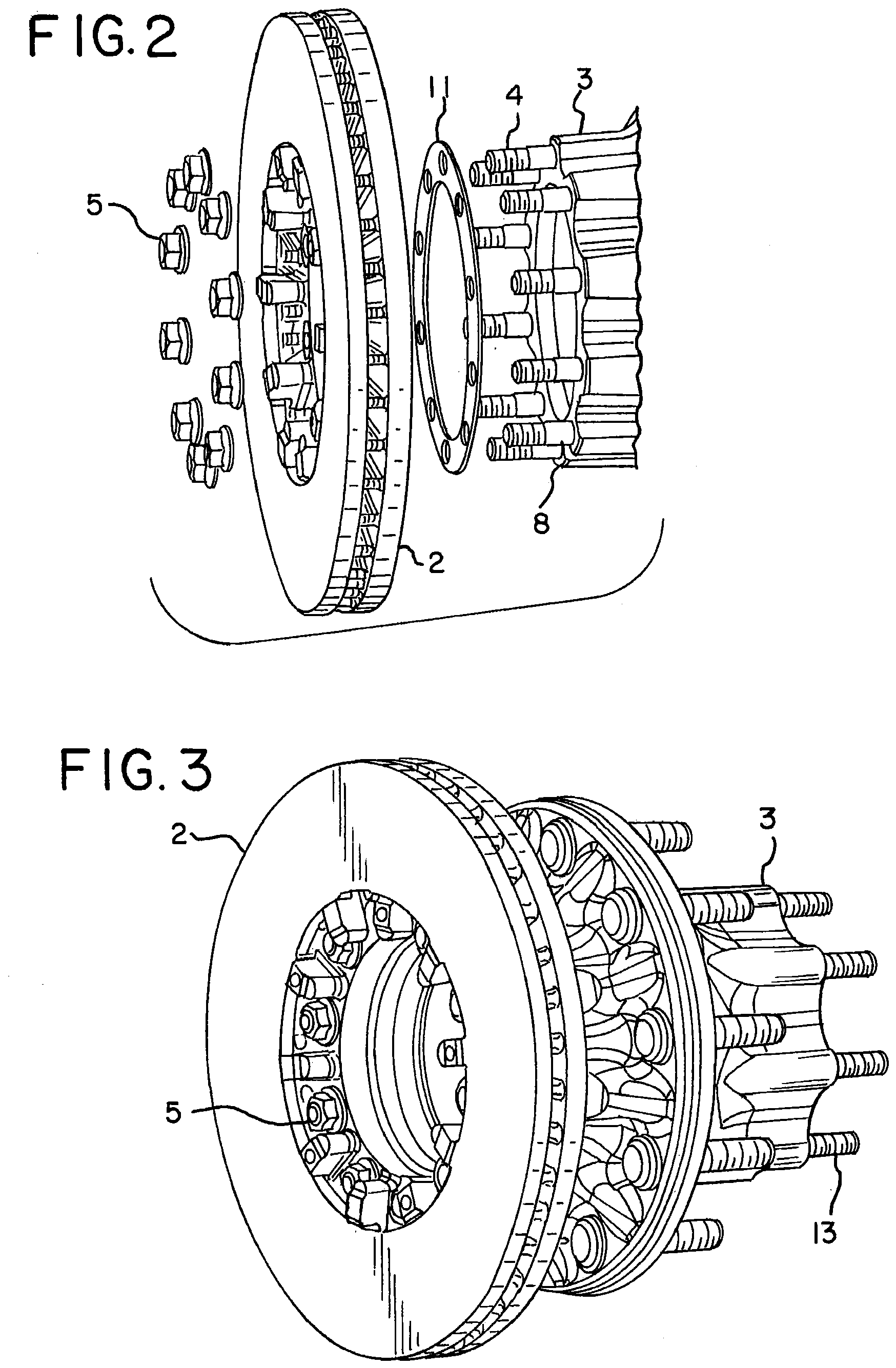
FIG. 2 is a partial view of a gasket in accordance with a first embodiment of the
present invention in a disc brake - wheel hub assembly, and
FIG. 3 is a perspective view of gasket in accordance with an embodiment of the present
invention in a disc brake - wheel hub assembly.
DETAILED DESCRIPTION OF THE INVENTION
[0013] Referring now to Figs. 1-3, a disc brake rotor 2 is shown attached to a wheel hub
3. Disc brake rotor 2 is typically comprised of cast steel or cast iron, and wheel
hub 3 is typically a cast aluminum component. Rotor studs 4 extend axially from wheel
hub 3 through openings in disc brake rotor 2 and are held by rotor stud nuts 5.
[0014] Wheel studs 13 extend axially from wheel hub 3 in a direction opposite from that
of rotor studs 4. Wheel studs 13 are used to mount a wheel and tire assembly onto
wheel hub 3. Gasket 11 is positioned between disc brake rotor 2 and an end 8 of wheel
hub 3. Gasket 11 has openings through which rotor studs 4 pass. Accordingly gasket
11 is held axially between disc brake rotor 2 and wheel hub end 8. Rotor stud nuts
5 when tightened for service assure that disc brake rotor 2 is held against wheel
hub end 8 with only gasket 11 therebetween. A typical thickness of gasket 11 is from
0.06 to 0.12 inch. Gasket 11 is chosen from a composition of a ceramic abrasive such
as alumina, zirconia, silicon carbide or equivalent with a bonding resin from the
family of phenolic thermoset resins. A reinforcing fiber such as glass, ceramic, aramid,
or PAN may also be present. The thermal conductivity of the gasket 11 should be up
to 4 W/mK.
[0015] The minimum compressive strength of gasket 11 should be 144 MPa at a temperature
of 425 degrees C. The dimensional stability of gasket 11 should be such that residual
fastener torque is retained at a minimum of 50 % of starting torque following three
cycles from 20 degrees C to 425 degrees C to 20 degrees C.
[0016] Further, the gasket 11 should have a minimum static coefficient of friction of 0.5
with cast iron and 0.7 with aluminum.
1. A gasket (11) for use in a disk brake asembly comprising:
a composite of an insulating component and a bonding resin.
2. The gasket (11) of claim 1, wherein the insulating component is a ceramic abrasive
and the bonding resin is a phenolic thermoset resin.
3. The gasket (11) of claim 2, wherein the insulating component is selected from the
group of alumina, zirconia, or silicon carbide.
4. The gasket (11) of any of claims 1, 2 or 3 further comprising a reinforcing fiber
selected from the group of glass, ceramic, aramid, or PAN fibers.
5. The gasket (11) of any preceding claim, wherein the thermal conductivity of the gasket
is up to 4 W/mK.
6. The gasket (11) of any preceding claim, wherein the minimum compressive strength of
the gasket is 144 MPa at a temperature of 425 degrees C.
7. The gasket (11) of any preceding claim, wherein the part dimensional stability of
the gasket is such that a residual fastener torque is retained at a minimum of 50%
of starting torque following three cycles from 20 degrees C to 425 degrees C to 20
degrees C.
8. The gasket (11) of any preceding claim, wherein the gasket has a minimum static coefficient
of friction of 0.5 with cast iron and 0.7 with aluminum.
9. A gasket arrangement for use in a disc brake assembly comprising:
a disc brake rotor (2),
a wheel hub (3) having an
end (8) with rotor studs (4) protruding axially therefrom,
a gasket (11) comprised of a composite of an insulating component and a bonding resin,
wherein the insulating component is a ceramic abrasive and the bonding resin is a
phenolic thermoset resin,
and wherein the gasket (11) includes a plurality of openings, with one of the rotor
studs (4) passing through each gasket opening, such that the gasket (11) is held between
the disc brake rotor and the wheel hub end (8).
10. The gasket arrangement of claim 9, wherein the composite insulating component is selected
from the group of alumina, zirconia, or silicon carbide.
11. The gasket arrangement of claim 9 or 10 wherein the gasket (11) is further comprised
of a reinforcing fiber selected from the group of glass, ceramic, aramid, or PAN fibers.
12. The gasket arrangement of any of claims 9, 10 or 11, wherein the thermal conductivity
of the gasket (11) is up to 4 W/mK.
13. The gasket arrangement of any of claims 9 to 12, wherein the minimum compressive strength
of the gasket (11) is 144 MPa at a temperature of 425 degrees C.
14. The gasket arrangement of any of claims 9 to 13, wherein the part dimensional stability
of the gasket (11) is such that a residual fastener torque is retained at a minimum
of 50% of starting torque following three cycles from 20 degrees C to 425 degrees
C to 20 degrees C.
15. The gasket arrangement of any of claims 9 to 14, wherein the gasket (11) has a minimum
static coefficient of friction of 0.5 with cast iron and 0.7 with aluminum.
1. Dichtung (11) zur Verwendung in einer Scheibenbremsenanordnung, umfassend:
einen Verbundstoff aus einer isolierenden Komponente und einem Bindeharz.
2. Dichtung (11) nach Anspruch 1, wobei die isolierende Komponente ein keramisches Schleifmittel
und das Bindeharz ein duroplastisches Phenolharz ist.
3. Dichtung (11) nach Anspruch 2, wobei die isolierende Komponente aus der Gruppe von
Aluminiumoxid, Zirkoniumdioxid oder Siliziumkarbid ausgewählt ist.
4. Dichtung (11) nach einem der Ansprüche 1, 2 oder 3, weiter umfassend eine Verstärkungsfaser
ausgewählt aus der Gruppe von Glas-, Keramik-, Aramid- oder PAN-Fasern.
5. Dichtung (11) nach einem der vorstehenden Ansprüche, wobei die Wärmeleitfähigkeit
der Dichtung bis zu 4 W/mK beträgt.
6. Dichtung (11) nach einem der vorstehenden Ansprüche, wobei die Mindestdruckfestigkeit
der Dichtung 144 MPa bei einer Temperatur von 425 Grad C beträgt.
7. Dichtung (11) nach einem der vorstehenden Ansprüche, wobei die Teildimensionsstabilität
der Dichtung derart ist, dass ein Restdrehmoment des Befestigungselements auf einem
Minimum von 50% des Ausgangsdrehmoments nach drei Zyklen von 20 Grad C bis 425 Grad
C bis 20 Grad C gehalten wird.
8. Dichtung (11) nach einem der vorstehenden Ansprüche, wobei die Dichtung einen minimalen
statischen Reibungskoeffizienten von 0,5 bei Gusseisen und 0,7 bei Aluminium aufweist.
9. Dichtungsanordnung zur Verwendung in einer Scheibenbremsenanordnung, umfassend:
einen Scheibenbremsenrotor (2),
eine Radnabe (3), die ein Ende (8) mit axial davon abstehenden Rotorstiften (4) aufweist,
eine Dichtung (11), bestehend aus einem Verbundstoff aus einer isolierenden Komponente
und einem Bindeharz, wobei die isolierende Komponente ein keramisches Schleifmittel
und das Bindeharz ein duroplastisches Phenolharz ist,
und wobei die Dichtung (11) eine Vielzahl von Öffnungen aufweist, wobei einer der
Rotorstifte (4) durch jede Dichtungsöffnung verläuft, sodass die Dichtung (11) zwischen
dem Scheibenbremsrotor und dem Radnabenende (8) gehalten wird.
10. Dichtungsanordnung nach Anspruch 9, wobei die isolierende Komponente des Verbundstoffs
aus der Gruppe von Aluminiumoxid, Zirkoniumdioxid oder Siliziumkarbid ausgewählt ist.
11. Dichtungsanordnung nach Anspruch 9 oder 10, wobei die Dichtung (11) weiter aus einer
Verstärkungsfaser besteht, die aus der Gruppe von Glas-, Keramik-, Aramid- oder PAN-Fasern
ausgewählt ist.
12. Dichtungsanordnung nach einem der Ansprüche 9, 10 oder 11, wobei die Wärmeleitfähigkeit
der Dichtung (11) bis zu 4 W/mK beträgt.
13. Dichtungsanordnung nach einem der Ansprüche 9 bis 12, wobei die Mindestdruckfestigkeit
der Dichtung (11) 144 MPa bei einer Temperatur von 425 Grad C beträgt.
14. Dichtungsanordnung nach einem der Ansprüche 9 bis 13, wobei die Teildimensionsstabilität
der Dichtung (11) derart ist, dass ein Restdrehmoment des Befestigungselements auf
einem Minimum von 50% des Ausgangsdrehmoments nach drei Zyklen von 20 Grad C bis 425
Grad C bis 20 Grad C gehalten wird.
15. Dichtungsanordnung nach einem der Ansprüche 9 bis 14, wobei die Dichtung (11) einen
minimalen statischen Reibungskoeffizienten von 0,5 bei Gusseisen und 0,7 bei Aluminium
aufweist.
1. Joint (11) pour une utilisation dans un ensemble de frein à disque comprenant :
un composite d'un composant isolant et d'une résine de liaison.
2. Joint (11) selon la revendication 1, dans lequel le composant isolant est un abrasif
en céramique et la résine de liaison est une résine phénolique thermodurcissable.
3. Joint (11) selon la revendication 2, dans lequel le composant isolant est sélectionné
à partir du groupe consistant en l'alumine, la zircone, ou le carbure de silicium.
4. Joint (11) selon l'une quelconque des revendications 1, 2 ou 3, comprenant en outre
une fibre de renforcement sélectionnée à partir du groupe consistant en des fibres
de verre, de céramique, aramides, ou PAN.
5. Joint (11) selon une quelconque revendication précédente, dans lequel la conductivité
thermique du joint va jusqu'à 4 W/mK.
6. Joint (11) selon une quelconque revendication précédente, dans lequel la résistance
à la compression minimale du joint est 144 MPa à une température de 425 degrés C.
7. Joint (11) selon une quelconque revendication précédente, dans lequel la stabilité
dimensionnelle partielle du joint est telle qu'un couple de fixation résiduelle est
retenu à un minimum de 50 % de couple de démarrage suivant trois cycles de 20 degrés
C à 425 degrés C à 20 degrés C.
8. Joint (11) selon une quelconque revendication précédente, dans lequel le joint présente
un coefficient de frottement statique minimal de 0,5 avec de la fonte et de 0,7 avec
de l'aluminium.
9. Agencement de joint pour une utilisation dans un ensemble de frein à disque comprenant
:
un rotor de frein à disque (2),
un moyeu de roue (3) présentant une extrémité (8) avec des clous de rotor (4) faisant
saillie axialement depuis celui-ci,
un joint (11) composé d'un composite d'un composant isolant et d'une résine de liaison,
dans lequel le composant isolant est un abrasif en céramique et la résine de liaison
est une résine phénolique thermodurcissable,
et dans lequel le joint (11) inclut une pluralité d'ouvertures, avec l'un des clous
de rotor (4) traversant chaque ouverture de joint, de sorte que le joint (11) soit
maintenu entre le rotor de frein à disque et l'extrémité de moyeu de roue (8).
10. Agencement de joint selon la revendication 9, dans lequel le composant isolant composite
est sélectionné à partir du groupe consistant en l'alumine, la zircone, ou le carbure
de silicium.
11. Agencement de joint selon la revendication 9 ou 10, dans lequel le joint (11) est
en outre composé d'une fibre de renforcement sélectionnée à partir du groupe consistant
en des fibres de verre, de céramique, aramides, ou PAN.
12. Agencement de joint selon l'une quelconque des revendications 9, 10 ou 11, dans lequel
la conductivité thermique du joint (11) va jusqu'à 4 W/mK.
13. Agencement de joint selon l'une quelconque des revendications 9 à 12, dans lequel
la résistance à la compression minimale du joint (11) est 144 MPa à une température
de 425 degrés C.
14. Agencement de joint selon l'une quelconque des revendications 9 à 13, dans lequel
la stabilité dimensionnelle partielle du joint (11) est telle qu'un couple de fixation
résiduelle est retenu à un minimum de 50 % de couple de démarrage suivant trois cycles
de 20 degrés C à 425 degrés C à 20 degrés C.
15. Agencement de joint selon l'une quelconque des revendications 9 à 14, dans lequel
le joint (11) présente un coefficient de frottement statique minimal de 0,5 avec de
la fonte et de 0,7 avec de l'aluminium.

REFERENCES CITED IN THE DESCRIPTION
This list of references cited by the applicant is for the reader's convenience only.
It does not form part of the European patent document. Even though great care has
been taken in compiling the references, errors or omissions cannot be excluded and
the EPO disclaims all liability in this regard.
Patent documents cited in the description