|
(11) | EP 3 492 333 A1 |

| (12) | EUROPEAN PATENT APPLICATION |
|
|
|
|
||||||||||||||||||||||||
| (54) | RAIL VEHICLE PROVIDED WITH A TRANSVERSE SUSPENSION SYSTEM AND SUSPENSION METHOD |
| (57) A rail vehicle (10) comprises a car body (12), at least one running gear (14) and
a suspension for transmitting a load having a static vertical component L from the
car body to the running gear (14), wherein the suspension comprises passive transverse
suspension means (24) and active transverse actuator means (26) in parallel between
the car body (12) and the running gear (14). The passive transverse suspension means
(24) have a relatively high stiffness K such that: |
TECHNICAL FIELD OF THE INVENTION
[0001] The present invention relates to a transverse suspension system for a rail vehicle and to a rail vehicle including a transverse suspension system.
BACKGROUND ART
[0002] In order to reduce vibration of a rail car body, it has been proposed in GB 2 025 572 to add various pneumatic actuators to a conventional secondary suspension provided with air springs. More specifically, two vertical pneumatic actuators and one transverse pneumatic actuator are provided between the car body of a rail vehicle and each of the front and rear running gears on which the car body is supported. The pneumatic actuators are controlled based on acceleration signals measured on the car body of the vehicle. The yawing vibrations are controlled mainly by the transverse pneumatic actuators provided on the two rolling gears while the pitching and rolling vibrations are controlled mainly by the vertical pneumatic actuators. With such an arrangement, the front and rear transverse pneumatic actuators are used to counteract vibrations and quasi-static transverse loads. These actuators must therefore be adapted to generate quasi-static forces of high magnitude and dynamic forces at high frequencies. To meet these conflicting requirements, the actuators have to be oversized in terms of both power and volume. High power actuators require external cooling and result in an overall bulky, heavy and complex system. Moreover, no fail-safe mode is available in case of malfunction of the transverse actuators.
SUMMARY OF THE INVENTION
[0003] The invention aims to address the above-identified problems of the prior art and to provide a simplified suspension system that achieves good results in terms of ride comfort.
[0004] According to a first aspect of the invention, there is provided a rail vehicle comprising a car body, at least one running gear and a suspension for transmitting a load having a static vertical component L from the car body to the running gear, wherein the car body is movable relative to the running gear in a transverse direction of the running gear over a range of transverse positions including a centred position and the suspension comprises passive transverse suspension means and active transverse actuator means in parallel between the car body and the running gear, characterized in that the passive transverse suspension means have a stiffness K such that:
over said range of transverse positions.
[0005] Unlike the suspension systems of the prior art, the suspension system of the invention combines a stiff passive transverse suspension and transverse actuator means. The particular combination enables to substantially downsize the transverse actuator means without negatively affecting the ride comfort. In case of malfunction, the transverse suspension system of the invention operates as a passive suspension and provides a fail-safe operating mode.
[0006] A typical secondary suspension of the prior art has a transverse stiffness per bellow of about 200 kN/m. This value is a compromise between ride comfort (which favours soft springs) and relative displacements (which favours stiff springs). In contrast, the transverse stiffness of the passive transverse suspension of the invention is substantially greater, in the range of 400 kN/m or 500 kN/m over the whole range of transverse positions, including the centre position. The stiffer passive transverse suspension reduces the relative transverse displacement.
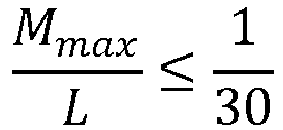
[0008] According to a preferred embodiment, the active transverse actuator means are adapted to generate forces in the transverse direction with a maximal magnitude Mmax such that:
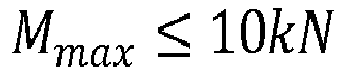
[0009] This contributes to the downsizing of the transverse actuator means, which do not have to generate great forces. Preferably, the active transverse actuator means are adapted to generate forces in the transverse direction with a maximal magnitude Mmax such that:
and preferably:
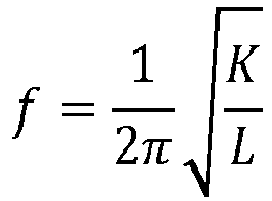
[0010] According to one embodiment, the rail vehicle further comprises a controller for controlling the active transverse actuator means such as to generate transverse forces that have no low frequency component or a low frequency component with a rms magnitude of less than 100 daN below a cut-off frequency f defined as follows:
[0011] At very low frequencies below the cut-off frequency, the suspension reacts as a stiff passive suspension. Less energy is required to power the actuator. Such low frequency transverse displacement occurs when the rail vehicle negotiates a curve or runs through a switch or crossing.
[0012] Advantageously, the rail vehicle further comprises a transducer for measuring a transverse acceleration or transverse velocity of the car body and delivering a signal to the controller. The transverse velocity can be obtained by integration of an acceleration signal.
[0013] According to an embodiment, the active transverse actuator means comprise one or more electro-hydraulic actuators. Other kinds of actuators are also envisaged, e.g. electro-pneumatic actuators. The actuators should be able to follow low frequency transverse relative movements between the car body and the running gear, i.e. to retract and expand, without generating reacting forces.
[0014] In principle, the transverse actuator means can comprise more than one transverse actuator, e.g. two transverse actuators. According to a preferred embodiment, however, the active transverse actuator means consist of only one actuator.
[0015] According to a preferred embodiment, the suspension system comprises vertical suspension elements, which constitute at least part of the passive transverse suspension means. The vertical suspension elements support the vertical static and dynamic components of the load applied by the car body on the running gear. In particular, the vertical suspension elements include pneumatic suspension elements and/or coil springs.
[0016] According to a preferred embodiment, the vertical suspension elements provide more than half the transverse stiffness K over more than half the transverse stroke of the car body relative to the running gear. Additional passive transverse suspension means can be used. They can include transverse springs operational throughout the transverse stroke or bump stops only operational at the ends of the transverse stroke.
[0017] The suspension system may also include a passive transverse damper. Alternatively or additionally, the active transverse actuator means can be controlled to generate a transverse damping force, i.e. a force proportional to the transverse velocity of the vehicle body, which can be a reactive force (in a direction opposite to the direction of movement) or pro-active, i.e. in the direction of the relative movement).
[0018] According to one embodiment, each of the one or more running gears has a pair of wheel sets equidistant from a vertical median transverse plane, and the active transverse actuator means are attached to the running gear at a location closer to the vertical median transverse plane than to the wheel sets, preferably in the geometric vertical median transverse plane. The active transverse actuator means should not be affected by the relative rotation between the running gear and the car body about a vertical axis.
[0019] For similar reasons, each of the one or more the running gears has a pair of wheel sets equidistant from a vertical median transverse plane, and the passive transverse suspension means are attached to the running gear at a location closer to the vertical median transverse plane than to the wheel sets, preferably in the geometric vertical median transverse plane.
[0020] According to one embodiment the suspension comprises a secondary suspension between the car body and a frame of the running gear. The running gear may also be provided with a primary suspension between the running gear frame and one or more sets of wheels, which may be wheelsets or independent wheels.
[0021] According other embodiments, the suspension is arranged between the car body and a running gear without primary suspension, or a running gear without frame, or a running gear with independent wheels, or a running gear with only one set of wheels, e.g. a portal axle.
[0022] According to another aspect of the invention, there is provided a method of supporting a rail car body on at least one running gear provided with a running gear and a suspension for transmitting a load having a static vertical component L from the car body to the running gear, the method comprising:
- providing passive transverse suspension means between the car body and the running
gear, with a stiffness K such that:
- providing active transverse actuator means in parallel with the passive transverse
suspension means between the car body and the running gear; wherein the active transverse
actuator means are adapted to generate forces in the transverse direction with a maximal
magnitude Mmax such that:
BRIEF DESCRIPTION OF THE FIGURES
[0023] Other advantages and features of the invention will then become more clearly apparent from the following description of a specific embodiment of the invention given as non-restrictive examples only and represented in the accompanying drawings in which figure 1 is a diagrammatic illustration of a rail vehicle according to one embodiment of the invention.
DETAILED DESCRIPTION OF PREFERRED EMBODIMENTS
[0024] Referring to Fig 1, a rail vehicle 10 comprises a car body 12 supported on two longitudinally spaced running gears 14. The car body defines a vertical longitudinal plane 100. Each of the running gears 14 comprises a running gear frame 16, a primary suspension 18 between the running gear frame 16 and two sets of wheels 20, and a secondary suspension between the running gear frame 16 and the car body 12, which comprises vertical suspension elements 22, e.g. pneumatic suspension elements or coil springs, as well as passive transverse suspension means 24 and active transverse actuator means 26 in parallel between the car body and the running gear frame.
[0025] In the centred position depicted in Figure 1, the rail vehicle is stationary on a straight track, and the longitudinal vertical plane 100 of the car body 12 coincides with a longitudinal vertical median plane 150 of each running gear frame. The two wheel sets 20 of each running gear 14 are equidistant from a vertical median transverse plane 200 of the running gear frame 16. The intersection between each vertical median transverse plane 200 and the vertical longitudinal plane 150 defines a vertical axis of rotation of the associated running gear. The car body 12 can also move relative to each running gear 14 in a transverse direction perpendicular to the longitudinal vertical median plane 150 of the running gear frame 16 on each side of the centred position. The secondary suspension system may also comprise transverse bump stops 27, which may constitute an additional part of the passive transverse suspension means 24 and become active at the ends of the transverse stroke of the car body 12 relative to each running gear frame 16. to limit the range of transverse positions of the car body 12 relative to the running gear frame 16.
[0026] Both the passive transverse suspension means 24 and the active transverse actuator means 26 are preferably attached to the running gear frame 16 at a location closer to the vertical median transverse plane 200 than to the wheel sets 20, preferably in the geometric vertical median transverse plane 200.
[0027] In the schematic view of figure 1, the passive transverse suspension means 24 have been depicted as an individualised separate means. However, the vertical suspension elements 22 may have a transverse stiffness and may constitute at least part of the passive transverse suspension means 24, preferably a preponderant part, i.e. more than half of the transverse stiffness. The bump stops 27 can also be individualised or incorporated to the passive transverse suspension means 24.
[0028] The active transverse actuator means 26 comprise one or more electro-hydraulic actuators, and preferably only one actuator.
[0029] The active transverse actuator means 26 of the two running gears 14 are connected to a common controller 28. A transducer 30 for measuring a transverse acceleration or transverse velocity of the car body 12 is connected to the controller 28.
[0030] If L denotes the static vertical load on each running gear (i.e. 2L is the weight of the car body), the passive transverse suspension means 24 have a high stiffness K such that:
[0031] As a result, the transverse actuator means are adapted to generate forces in the transverse direction with a relatively low maximal magnitude Mmax such that:
[0033] Moreover, the active transverse actuator means 26 is controlled by the controller 28 such as to generate transverse forces that have no low frequency component or a low frequency component with a rms magnitude of less than 100 daN below a cut-off frequency f defined as follows:
[0034] As mentioned before, all or part of this transverse stiffness K can be provided by the vertical suspension elements 22.
[0035] The invention is not limited to conventional running gears with a frame, a primary suspension between the frame and the wheelsets and a secondary suspension between the frame and the car body. It can also be applied to less convention layouts, running gears without primary suspension, running gears without frame, running gears with independent wheels, or running gears with only one set of wheels, e.g. portal axles.
1. A rail vehicle (10) comprising a car body (12), at least one running gear (14) and
a suspension for transmitting a load having a static vertical component L from the
car body (12) to the running gear (14), wherein the car body (12) is movable relative
to the running gear (14) in a transverse direction of the running gear (14) over a
range of transverse positions including a centred position and the suspension comprises
passive transverse suspension means (24) and active transverse actuator means (26)
in parallel between the car body (12) and the running gear (14), characterized in that the passive transverse suspension means (24) have a stiffness K such that:
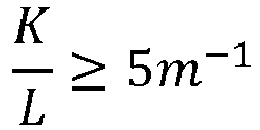
over said range of transverse positions.
over said range of transverse positions.
2. The rail vehicle of claim 1, wherein the active transverse actuator means (26) are
adapted to generate forces in the transverse direction with a maximal magnitude Mmax such that:
3. The rail vehicle of any one of the preceding claims, wherein the active transverse
actuator means (26) are adapted to generate forces in the transverse direction with
a maximal magnitude Mmax such that:
and preferably:
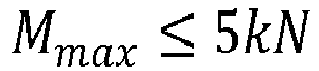
and preferably:
4. The rail vehicle of any one of the preceding claims, further comprising a controller
(28) for controlling the active transverse actuator means (26) such as to generate
transverse forces that have no low frequency component or a low frequency component
with a rms magnitude of less than 100 daN below a cut-off frequency f defined as follows:
5. The rail vehicle of any one of the preceding claims, further comprising a transducer
(30) for measuring a transverse acceleration or transverse velocity of the car body
(12) and delivering a signal to the controller (28).
6. The rail vehicle of any one of the preceding claims, wherein the active transverse
actuator means (26) comprise one or more electro-hydraulic actuators.
7. The rail vehicle of any one of the preceding claims, wherein the active transverse
actuator means (26) consist of only one actuator.
8. The rail vehicle of any one of the preceding claims, wherein the suspension system
comprises vertical suspension elements (22), which constitute at least part of the
passive transverse suspension means (24).
9. The rail vehicle of claim 8, wherein the vertical suspension elements (22) include
pneumatic suspension elements and/or coil springs.
10. The rail vehicle of any one of claims 8 to 9, wherein the vertical suspension elements
(22) provide more than half the transverse stiffness K over more than half the transverse
stroke of the car body (12) relative to the running gear (14).
11. The rail vehicle of any one of the preceding claims, wherein the suspension system
comprises transverse bump stops, which constitute at least part of the passive transverse
suspension means (24).
12. The rail vehicle of any one of the preceding claims, wherein each of the one or more
running gears (14) has a pair of wheel sets (20) equidistant from a vertical median
transverse plane (200), and the active transverse actuator means (26) are attached
to the running gear (14) at a location closer to the vertical median transverse plane
(200) than to the wheel sets (20), preferably in the geometric vertical median transverse
plane (200).
13. The rail vehicle of any one of the preceding claims, wherein each of the one or more
the running gears (14) has a pair of wheel sets (20) equidistant from a vertical median
transverse plane (200), and the passive transverse suspension means (24) are attached
to the running gear (14) at a location closer to the vertical median transverse plane
(200) than to the wheel sets (20), preferably in the geometric vertical median transverse
plane (200).
14. The rail vehicle of any one of the preceding claims, wherein the suspension comprises
a secondary suspension between the car body (12) and a frame (16) of the running gear
(14).
15. A method of supporting a rail car body (12) on at least one running gear (14) provided
with a running gear (14) and a suspension for transmitting a load having a static
vertical component L from the car body (12) to the running gear (14), the method comprising:
- providing passive transverse suspension means (24) between the car body (12) and
the running gear (14), with a stiffness K such that:
- providing active transverse actuator means (26) in parallel with the passive transverse
suspension means (24) between the car body (12) and the running gear (14); wherein
the active transverse actuator means (26) are adapted to generate forces in the transverse
direction with a maximal magnitude Mmax such that:
REFERENCES CITED IN THE DESCRIPTION
This list of references cited by the applicant is for the reader's convenience only. It does not form part of the European patent document. Even though great care has been taken in compiling the references, errors or omissions cannot be excluded and the EPO disclaims all liability in this regard.
Patent documents cited in the description