|
(11) | EP 3 872 120 A1 |

| (12) | EUROPEAN PATENT APPLICATION |
| published in accordance with Art. 153(4) EPC |
|
|
|
|
|||||||||||||||||||||||||||
| (54) | BARRIER FILM |
| (57) The present application relates to a barrier film. In the present application, a
barrier film having excellent barrier properties and optical properties can be provided.
The barrier film produced by the present application can be used for electronic products
sensitive to moisture or the like. |
Technical Field
Cross-Reference to Related Applications
[0001] This application claims the benefit of priority based on Korean Patent Application No. 10-2018-0128816 filed on October 26, 2018, Korean Patent Application No. 10-2018-0128798 filed on October 26, 2018, Korean Patent Application No. 10-2018-0128791 filed on October 26, 2018 and Korean Patent Application No. 10-2019-0002820 filed on January 9, 2019, the disclosures of which are incorporated herein by reference in their entirety.
Technical Field
[0002] The present application relates to a barrier film. In particular, the present application relates to a barrier film having excellent barrier properties against foreign substances such as oxygen or moisture.
Background Art
[0003] Barrier films for blocking external components such as oxygen and moisture are used not only for packaging materials of foods or medicines, and the like which are conventional main applications, but also members for FPDs (flat panel displays) such as LCDs (liquid crystal displays) or solar cells, substrates for electronic papers or OLEDs (organic light emitting diodes) or sealing films, and the like. In particular, barrier films used in electrical or electronic elements are required to have excellent barrier properties relative to thin thicknesses in accordance with the trend of thinning of elements.
[0004] The method for producing a barrier film may include, for example, a wet method. Specifically, the barrier film may be produced through a method of converting polysilazane coated on a base film into silica. At this time, the polysilazane may be converted to silica while undergoing a process such as heating under a predetermined condition or hydrolysis. For example, Japanese Patent Laid-Open Publication No. H10-194873 discloses a method of applying perhydropolysilazane or its modified product to a base film and firing it under vacuum.
Disclosure
Technical Problem
[0005] It is one object of the present application to provide a barrier film having excellent barrier properties against foreign substances such as oxygen or moisture.
[0006] It is another object of the present application to provide a barrier film having excellent barrier properties while having a thin thickness.
[0007] It is another object of the present application to provide a packaging material, apparatus or device comprising the barrier film.
[0008] The above objects of the present application and other objects can all be solved by the present application described in detail below.
Technical Solution
[0009] In one example of the present application, the present application relates to a barrier film. In the present application, the barrier film means a film that satisfies the intended light transmittance and barrier properties.
[0010] With regard to light transmittance, the barrier film may mean a film having transmittance of 90% or more, or 95% or more for visible light in a wavelength range of 380 to 780 nm, specifically, light having a wavelength of 550 nm. The upper limit of the transmittance is, for example, about 100%, where the film may have transmittance of less than 100%.
[0011] With regard to the barrier properties, the barrier film may have a good water vapor transmission rate.
[0012] In one example, the barrier film may satisfy a water vapor transmission rate of 0.5 × 10⁻³ g/m2·day or less as measured at a temperature of 38°C and 100% relative humidity. More specifically, the barrier film may have a water vapor transmission rate of 0.45 × 10⁻³ g/m2·day or less, 0.40 × 10⁻³ g/m2·day or less, 0.35 × 10⁻³ g/m2·day or less, 0.30 × 10⁻³ g/m2·day or less, 0.25 × 10⁻³ g/m2·day or less, 0.20 × 10⁻³ g/m2·day or less, 0.15 × 10⁻³ g/m2·day or less, 0.10 × 10⁻³ g/m2·day or less, or 0.05 × 10⁻³ g/m2·day or less, as measured under the above conditions. The lower the water vapor transmission rate is, the better the barrier property is, and thus the lower limit of the water vapor transmission rate is not particularly limited. In one example, the lower limit of the water vapor transmission rate may be 0.001 × 10⁻³ g/m2·day or more, 0.005 × 10⁻³ g/m2·day or more, or 0.01 × 10⁻³ g/m2·day or more. As a representative standard for measuring the water vapor transmission rate, ASTM F1249 or ISO15506-3, and the like is known, where the water vapor transmission rate of the present application may be measured according to the appropriate manner among the forgoing.
[0013] In general, it is known that the moisture barrier properties of the barrier film increases with the thickness of the functional layer that blocks moisture. However, the increase in thickness does not comply with the recent trend of thinning, which may cause a decrease in transparency of the film. In this regard, the barrier film of the present application may have an excellent water vapor transmission rate, despite the thin thickness.
[0014] Specifically, the thickness of the inorganic layer in the present application may be 600 nm or less. More specifically, the thickness of the inorganic layer may be 550 nm or less, 500 nm or less, 450 nm or less, 400 nm or less, 350 nm or less, 300 nm or less, 250 nm or less, 200 nm or less, or 150 nm or less. As such, the inorganic layer as described in detail below may provide the film with sufficient barrier properties even at a thin thickness. The lower limit of the thickness of the inorganic layer is not particularly limited, but may be, for example, 50 nm or more.
[0015] In one example, the thickness of the inorganic layer is 300 nm or less, where the barrier film may satisfy a water vapor transmission rate of 0.1 × 10⁻³ g/m2·day or less as measured under conditions of a temperature of 38°C and 100% relative humidity.
[0016] Within the thickness of the above-described range, the barrier film of the present application that satisfies light transmittance and barrier properties comprises a base layer and an inorganic layer. Then, the inorganic layer is formed from a composition as described below, thereby comprising Si, N, and O.
[0017] The base layer may comprise, for example, glass or a polymer film capable of providing light transmittance.
[0018] In one example, the base layer may comprise a polymer film capable of providing sufficient flexibility. For example, as the base layer, a polyester film such as a polyethylene terephthalate (PET) film, a polycarbonate film, a polyethylene naphthalate film or a polyarylate film, a polyether film such as a polyether sulfone film, a cycloolefin polymer film, a polyolefin film such as a polyethylene film or a polypropylene film, a cellulose resin film such as a diacetyl cellulose film, a triacetyl cellulose film or an acetyl cellulose butyrate film, a polyimide film, an acryl film and an epoxy resin film, and the like can be used. In the present application, the base layer may have a single layer or a multilayer structure.
[0019] The thickness of the base layer is not particularly limited. For example, the thickness of the base layer may be about 1 µm or more, 5 µm or more, 10 µm or more, 20 µm or more, 30 µm or more, 40 µm or more, or 50 µm or more. When the thickness is satisfied, the inorganic layer may be stably formed on the base layer. The upper limit of the base layer thickness is not particularly limited, but may be, for example, 500 µm or less, 400 µm or less, 300 µm or less, 200 µm or less, or 100 µm or less.
[0020] The inorganic layer may be formed through plasma modification of the polysilazane composition, that is, the polysilazane layer, applied on an adherend for coating (for example, the base layer).
[0021] In the present application, the polysilazane composition means a composition comprising polysilazane as a main component. For example, the ratio of the polysilazane in the polysilazane composition may be 55% or more, 60% or more, 65% or more, 70% or more, 75% or more, 80% or more, 85% or more, or 90% or more on the basis of weight. The weight ratio may be, for example, 100% or less, 99% or less, 98% or less, 97% or less, 96% or less, or 95% or less.
[0022] In the present application, the polysilazane may mean a polymer in which silicon elements (Si) and nitrogen elements (N) are repeated to form a basic backbone. This polysilazane may be modified through a predetermined treatment (for example, plasma treatment) to form silicon oxide or silicon oxynitride having barrier properties. Accordingly, the inorganic layer may comprise Si, N, and O.
[0023] In one example, the polysilazane used in the present application may comprise a unit represented by Formula 1 below.
[0024] In Formula 1, R1, R2 and R3 may each independently be a hydrogen atom, an alkyl group, an alkenyl group, an alkynyl group, an aryl group, an alkylsilyl group, an alkylamino group or an alkoxy group.
[0025] In the present application, the term "alkyl group" may mean an alkyl group having 1 to 20 carbon atoms, 1 to 16 carbon atoms, 1 to 12 carbon atoms, 1 to 8 carbon atoms or 1 to 4 carbon atoms, unless otherwise specified. The alkyl group may be linear, branched or cyclic. In addition, the alkyl group may be optionally substituted with one or more substituents.
[0026] In the present application, the term "alkenyl group" may mean an alkenyl group having 2 to 20 carbon atoms, 2 to 16 carbon atoms, 2 to 12 carbon atoms, 2 to 8 carbon atoms, or 2 to 4 carbon atoms, unless otherwise specified. The alkenyl group may be linear, branched or cyclic and may optionally be substituted with one or more substituents.
[0027] In the present application, the term "alkynyl group" may mean an alkynyl group having 2 to 20 carbon atoms, 2 to 16 carbon atoms, 2 to 12 carbon atoms, 2 to 8 carbon atoms, or 2 to 4 carbon atoms, unless otherwise specified. The alkynyl group may be linear, branched or cyclic and may optionally be substituted with one or more substituents.
[0028] In the present application, the term "aryl group" may mean a monovalent residue derived from a compound comprising a structure in which a benzene ring or two or more benzene rings are linked, or condensed or bonded while sharing one or two or more carbon elements, or a derivate thereof, unless otherwise specified. In this specification, the range of the aryl group may also include a so-called aralkyl group or an arylalkyl group, and the like as well as a functional group usually referred to as an aryl group. The aryl group may be, for example, an aryl group having 6 to 25 carbon atoms, 6 to 21 carbon atoms, 6 to 18 carbon atoms, or 6 to 12 carbon atoms. As the aryl group, a phenyl group, a dichlorophenyl group, a chlorophenyl group, a phenylethyl group, a phenylpropyl group, a benzyl group, a tolyl group, a xylyl group or a naphthyl group, and the like can be exemplified.
[0029] In the present application, the term "alkoxy group" may mean an alkoxy group having 1 to 20 carbon atoms, 1 to 16 carbon atoms, 1 to 12 carbon atoms, 1 to 8 carbon atoms or 1 to 4 carbon atoms, unless otherwise specified. The alkoxy group may be linear, branched or cyclic. In addition, the alkoxy group may be optionally substituted with one or more substituents.
[0030] If the unit represented by Formula 1 above is included, the specific kind of the polysilazane is not particularly limited.
[0031] In one example, the polysilazane may be polysilazane including the unit of Formula 1 in which all of R1 to R3 are hydrogen atoms, for example, perhydropolysilazane.
[0032] In one example, the polysilazane layer composition may be prepared, for example, by dissolving polysilazane in an appropriate organic solvent. For example, the polysilazane may be a commercially available product in a state dissolved in an organic solvent. Such a commercially available product may include, for example, AQUAMICA (registered trademark) NN120-10, NN120-20, NAX120-10, NAX120-20, NN110, NN310, NN320, NL110A, NL120A, NL150A, NP110, NP140, or SP140, and the like, manufactured by AZ Electronic Materials Kabushiki Kaisha (or Merck), but is not limited thereto.
[0033] In another example, the polysilazane layer composition may be a composition diluted to a predetermined concentration. The diluted concentration is not particularly limited, and for example, the weight ratio of total solid content may range from 1 to 95%. In one example, the composition may have a weight ratio of total solid content of 1 to 10% or less.
[0034] In the present application, the layer formed from the polysilazane, that is, the inorganic layer has enough durability and compactness capable of satisfying the thickness and the water vapor transmission rate. In the present application, the compactness can be expressed through an etching rate. For example, the inorganic layer may have an etching rate satisfying a predetermined value with respect to a reference condition. In the present application, the term "etching rate" means a value obtained by dividing an etched thickness (unit: nm) by an etching progress time (unit: second) on the assumption that etching is performed under the same conditions as the reference conditions described below. The etching for measuring the etching rate is so-called dry etching, which is the etching using a plasma state of reactive gas. Ar is used as the reactive gas.
[0035] Regarding the etching rate of the inorganic layer, the inventors of the present application have confirmed that even if like the inorganic layer is formed from the polysilazane to include Si, N and O, its constituent elements are similar, the degree of firmness or compactness in the layer may vary depending on the contents of elements forming the inorganic layer in the thickness direction of the inorganic layer, the change in distribution tendency, and/or the conditions for forming the inorganic layer, and consequently, the etching rate with respect to the reference condition may also vary. Specifically, in the prior art related to the barrier film, the type of the elements in the inorganic layer or the contents of the elements expressed as numerical values have been mainly considered as an important factor for determining the barrier properties, but the compactness of the inorganic layer may vary depending on the contents of the elements forming the inorganic layer, the change in distribution tendency, and/or the conditions for forming the inorganic layer, and consequently, the water vapor transmission rate of the barrier film may be significantly improved.
[0036] Specifically, the inorganic layer may satisfy an etching rate of 0.17 nm/s or less for a reference condition, that is, an Ar ion etching condition to etch Ta2O5 (film) at a rate of 0.09 nm/s or less. The etching rate may indicate the degree of compactness in the inorganic layer. That is, the inorganic layer having the etching rate may be considered to have a more dense structure than the inorganic layer that does not satisfy the etching rate, for example, as in the case where the etching rate is 0.19 nm/s. For example, the inorganic layer may have an etching rate of 0.165 nm/s or less, 0.160 nm/s or less, 0.155 nm/s or less, 0.150 nm/s or less, 0.145 nm/s or less, 0.140 nm/s or less, 0.135 nm/s or less, 0.130 nm/s or less, 0.125 nm/s or less, or 0.120 nm/s or less for the above condition. When the etching rate range is satisfied, it can be regarded as being sufficiently dense, and thus the lower limit of the etching rate is not particularly limited, but may be, for example, 0.05 nm/s or more, or 0.10 nm/s or more.
[0037] The inorganic layer comprises a first region and a second region. Specifically, the first region and the second region each comprise Si, N, and O.
[0039] In the present application, the first region and the second region constituting one inorganic layer have different elemental contents (atomic%) of Si, N, and O analyzed or measured by XPS (X-ray photoelectron spectroscopy) in the thickness direction from each other. That is, the first region and the second region can be distinguished due to the difference in the elemental content distribution of Si, N, and O. For example, the elemental content of each region can be analyzed according to the etching depth in the thickness direction of the inorganic layer, where in the case that a flat section is observed or in the case that a section in which the magnitude tendency in the content of each element is common is observed, the median or average value of the respective elemental contents in the corresponding section can be seen as the elemental content (range) in the region, because the degree of change in the content of each element with the depth is relatively small. Then, the elemental content at the interface between the first region and the second region may be changed continuously or stepwise in relation to the distinction of the regions according to the elemental contents, and as a result of these content changes, it is sufficient to distinguish the first region and the second region as long as the region satisfying the elemental content ratio defined by each region is observed, and the interface between the first region and the second region does not necessarily need to be clearly distinguished. This distinction can be clearly made by those skilled in the art through an elemental content distribution graph according to the etching depth identified using XPS.
[0040] The first region and the second region may have the compactness as described above. Specifically, the first region and/or the second region may each be a region where the etching rate measured under the Ar ion etching condition etching Ta2O5 at a rate of 0.09 nm/s satisfies 0.17 nm/s or less. For example, the first region and/or the second region may satisfy an etching rate of 0.165 nm/s or less, 0.160 nm/s or less, 0.155 nm/s or less, 0.150 nm/s or less, 0.145 nm/s or less, 0.140 nm/s or less, 0.135 nm/s or less, 0.130 nm/s or less, 0.125 nm/s or less, or 0.120 nm/s or less for the reference condition. The lower limit of the etching rate of the first region and/or the second region is not particularly limited, but may be, for example, 0.05 nm/s or more or 0.10 nm/s or more.
[0041] In one example, the first region may be a region satisfying O content > Si content > N content. That is, the first region means a region that satisfies such elemental contents.
[0042] In the present application, the content of the element is a value at the time of regarding the sum of the contents of Si, O and N, and optionally the content of impurities (for example: C) that can be measured in each layer or region as 100 in total. Unless specifically stated otherwise, the content of C is a value excluding the contents of Si, O and N, and thus it may be omitted.
[0043] Specifically, in the first region, the O content may be in a range of 50 to 65 atomic%, the Si content may be in a range of 35 to 45 atomic%, and the N content may be in a range of 1 to 15 atomic%. It is believed that such elemental contents can secure the compactness of the inorganic layer expressed by the above-described etching rate, and can improve the moisture barrier properties of the barrier film.
[0044] The first region has a ratio (a/b) of the O content (a) to the Si content (b) in a range of 1.1 to 1.9. In one example, the first region may satisfy a ratio (a/b) between the O content (a) and the Si content (b) in a range of 1.1 to 1.8. Preferably, it may be 1.2 or more, 1.3 or more, or 1.4 or more. In the first region where the contents of Si, N and O satisfy the above ranges, when the ratio (a/b) value is in the range of 1.1 to 1.9, it is believed that the compactness of the inorganic layer represented by the above-described etching rate can be secured and the moisture barrier properties of the barrier film can be improved.
[0045] In one example, the thickness of the first region satisfying the elemental content ratio may be 40 nm or more. When the thickness of the first region satisfies the above range, the inorganic layer or the first region may have sufficient compactness while being stably formed and may provide the barrier film with higher durability. For example, since the base layer adjacent to the first region or the intermediate layer described below may have predetermined roughness on its surface, the first region may have a minimum thickness so that the inorganic layer can be stably formed. More specifically, the thickness of the first region satisfying the elemental content may be, for example, 45 nm or more, 50 nm or more, 55 nm or more, 60 nm or more, 65 nm or more, 70 nm or more, 75 nm or more, 80 nm or more, 85 nm or more, 90 nm or more, 95 nm or more, or 100 nm or more. The upper limit of the thickness of the first region is not particularly limited, but may be, for example, 300 nm or less, 250 nm or less, or 200 nm or less.
[0046] In one example, the second region may be a region that satisfies Si content > N content > O content. That is, the second region means a region that satisfies such elemental contents. As a result of the experimental confirmation, the case where the second region satisfied Si content > N content > O content could more increase the compactness of the inorganic layer and better adjusted the barrier properties of the film than the case where it had Si content > O content > N content.
[0047] Specifically, in the second region, the Si content may be in a range of 45 to 60 atomic%, the N content may be in a range of 20 to 35 atomic%, and the O content may be in a range of 10 to 30 atomic%. Such elemental contents are considered to be advantageous in ensuring the compactness of the inorganic layer expressed by the above-described etching rate.
[0048] In one example, the thickness of the second region satisfying the elemental content ratio may be 10 nm or more, 20 nm or more, 30 nm or more, 40 nm or more, or 50 nm or more. The upper limit thereof is not particularly limited, but may be, for example, about 250 nm or less or about 200 nm or less. As confirmed in the following example, the thickness of the second region, which is a high nitrogen concentration region, seems to have an effect on improving the barrier properties of the film, and when the thickness range is satisfied, the barrier film may also be formed to a thin thickness of an appropriate level and simultaneously excellent barrier properties to the thickness may be provided. More specifically, the thickness of the second region satisfying the elemental content may be, for example, 190 nm or less, 185 nm or less, 180 nm or less, 175 nm or less, 170 nm or less, 165 nm or less, 160 nm or less, 155 nm or less, 150 nm or less, 145 nm or less, 140 nm or less, or 135 nm or less.
[0049] In one example, the difference (d) between the maximum value of the second region Si content and the maximum value of the first region O content may be 15 atomic% or less. In each region where the contents of Si, N and O satisfy the above ranges, when the difference (d) is satisfied, it is believed that the compactness of the inorganic layer represented by the above-described etching rate can be ensured and the moisture barrier properties of the barrier film can be improved.
[0050] In one example, the second region may be a high nitrogen concentration region in the inorganic layer. That is, the second region may be a region having a higher nitrogen content than that of the first region. The inventors of the present application have confirmed that the thicker the second region, which is the high nitrogen concentration region, the better the water vapor transmission rate, on the assumption that the compactness of the inorganic layer identified through the etching rate is secured, like the etching rate for the reference condition is 0.17 nm/s or less. This result is confirmed through the following example.
[0051] In one example, the thickness of the second region may have a thickness of 10% or more, relative to the thickness of the entire inorganic layer. For example, the thickness of the second region may be 15% or more, 20% or more, 25% or more, 30% or more, 35% or more, 40% or more, 45% or more, 50% or more, 55% or more, 60% or more, 65% or more, or 70% or more, based on the thickness of the entire inorganic layer. For example, when the thickness of the inorganic layer is 150 nm, the thickness of the second region may be 15 nm or more, 16 nm or more, 17 nm or more, 19 nm or more, or 20 nm or more. In this case, the thickness of the second region may also be 200 nm or less.
[0052] The formation of the first region and the second region may be performed through a plasma treatment of a composition comprising polysilazane, that is, a polysilazane layer.
[0053] In one example, the first region and the second region may be regions in the inorganic layer formed through one plasma treatment performed on one coated polysilazane composition, that is, one polysilazane layer. That is, the inorganic layer may be partitioned into the first region and the second region formed therein. It is believed that while the N-rich second region is formed through the plasma treatment, it is divided into the first region and the second region.
[0054] In another example, the first region and the second region may be adjacent regions formed through the plasma treatment on different polysilazane layers from each other. For example, the first region may be a region formed through the plasma treatment on a polysilazane layer (A), and the second region may be a region formed through the plasma treatment on a polysilazane layer (B) applied on the inorganic layer on which the first region is formed. These first region and second region comprise Si, N, and O, and constitute an inorganic layer. As described above, the N-rich region is placed on the surface layer portion of the plasma-treated polysilazane layer through the plasma treatment, which is the same as the case of the plasma-treated polysilazane layer (A), whereby it is believed that even if a separate plasma treatment is performed on the polysilazane layer (B), a second region having the same elemental content distribution as that of the surface layer portion of the polysilazane layer (A) is formed. In this case, the interfaces of the respective plasma-treated polysilazane layers (A, B) may be observed as a section where elemental content changes occur between the first region and the second region, for example, as in Figure 1. When the inorganic layer is formed in this manner, it is possible to ensure a larger thickness of the second region, whereby the barrier properties can be improved while the high nitrogen concentration region in the inorganic layer increases.
[0055] In one example, a modified layer having a high content of carbon may be present between the inorganic layer and the base layer. The modified layer may be an interface between the plasma-treated inorganic layer and the base layer. Alternatively, the modified layer may be an interface between the plasma-treated inorganic layer and an intermediate layer described below. The modified layer may be a region containing more carbon than the first region and the second region. For example, the modified layer may be a region that satisfies C content > O content > Si content > N content.
[0056] Specifically, in the modified layer, the C content may be in a range of 40 to 50 atomic%, the O content may be in a range of 30 to 40 atomic%, the Si content may be in a range of 15 to 30 atomic%, and the N content may be in a range of 1 to 5 atomic%.
[0057] In one example, the barrier film may further comprise an intermediate layer. Specifically, the barrier film may sequentially comprise a base layer, an intermediate layer, and an inorganic layer. The intermediate layer may be formed for the purpose of improving adhesion force between the inorganic layer and the base layer, controlling a dielectric constant, and the like. The intermediate layer may be referred to as an under coating layer (UC).
[0058] The intermediate layer may comprise at least one selected from the group consisting of an acrylic resin, a urethane resin, a melamine resin, an alkyd resin, an epoxy resin, a siloxane polymer and/or a condensation product of an organosilane compound represented by the following formula 2.
[0059] In Formula 2, X may be hydrogen, halogen, an alkoxy group, an acyloxy group, an alkyl carbonyl group, an alkoxycarbonyl group, or -N(R2)2, where R2 may be hydrogen or an alkyl group, R1 may be an alkyl group, an alkenyl group, an alkynyl group, an aryl group, an arylalkyl group, an alkylaryl group, an arylalkenyl group, an alkenylaryl group, an arylalkynyl group, an alkynylaryl group, halogen, an amino group, an amide group, an aldehyde group, an alkylcarbonyl group, a carboxy group, a mercapto group, a cyano group, a hydroxy group, an alkoxy group, an alkoxycarbonyl group, a sulfonyl group, a phosphoryl group, an acryloyloxy group, a methacryloyloxy group or an epoxy group, Q may be a single bond, an oxygen element or -N(R2)-, where R2 may be a hydrogen element or an alkyl group, and m may be a number in a range of 1 to 3.
[0060] As the organosilane, at least one selected from the group consisting of the compounds represented by Formula 2 above can be used, where if one organosilane compound is used, crosslinking may be possible.
[0061] The organosilane may be selected, as an example, from the group consisting of methyl trimethoxysilane, methyl triethoxysilane, phenyl trimethoxysilane, phenyl triethoxysilane, dimethyl dimethoxysilane, dimethyl diethoxysilane, diphenyl dimethoxysilane, diphenyl diethoxysilane, phenyl dimethoxysilane, phenyl diethoxysilane, methyl dimethoxysilane, methyl diethoxysilane, phenylmethyl dimethoxysilane, phenylmethyl diethoxysilane, trimethyl methoxysilane, trimethyl ethoxysilane, triphenyl methoxysilane, triphenyl ethoxysilane, phenyldimethyl methoxysilane, phenyldimethyl ethoxysilane, diphenylmethyl methoxysilane, diphenylmethyl ethoxysilane, dimethyl ethoxysilane, diphenyl methoxysilane, diphenyl ethoxysilane, 3-aminopropyl triethoxysilane, 3-glycidoxypropyl trimethoxysilane, p-aminophenylsilane, allyl trimethoxysilane, n-(2-aminoethyl)-3-aminopropyl trimethoxysilane, 3-aminepropyl triethoxysilane, 3-aminopropyl trimethoxysilane, 3-glycidoxypropyldiisopropyl ethoxysilane, (3-glycidoxypropyl)methyl diethoxysilane, 3-mercaptopropyl trimethoxysilane, 3-mercaptopropyl triethoxysilane, 3-methacryloxypropylmethyl diethoxysilane, 3-methacryloxypropylmethyl dimethoxysilane, 3-methacryloxypropyl trimethoxysilane, n-phenylaminopropyl trimethoxysilane, vinylmethyl diethoxysilane, vinyl triethoxysilane, vinyl trimethoxysilane, and a mixture thereof, and used.
[0062] In another example, the intermediate layer may be produced by polymerizing one or more polyfunctional acrylates. As the kind of the polyfunctional acrylate, for example, bifunctional acrylates such as 1,4-butanediol di(meth)acrylate, 1,6-hexanediol di(meth)acrylate, neopentyl glycol di(meth)acrylate, polyethylene glycol di(meth)acrylate, neopentylglycol adipate di(meth)acrylate, hydroxypivalic acid neopentyl glycol di(meth)acrylate, dicyclopentanyl di(meth)acrylate, caprolactone modified dicyclopentenyl di(meth)acrylate, ethylene oxide modified di(meth)acrylate, di(meth)acryloxyethyl isocyanurate, allylated cyclohexyl di(meth)acrylate, tricyclodecane dimethanol (meth)acrylate, dimethylol dicyclopentane di(meth)acrylate, ethylene oxide modified hexahydrophthalic acid di(meth)acrylate, neopentyl glycol modified trimethylpropane di(meth)acrylate, adamantane di(meth)acrylate or 9,9-bis[4-(2-acryloyloxyethoxy)phenyl]fluorene; trifunctional acrylates such as trimethylolpropane tri(meth)acrylate, dipentaerythritol tri(meth)acrylate, propionic acid modified dipentaerythritol tri(meth)acrylate, pentaerythritol tri(meth)acrylate, propylene oxide modified trimethylolpropane tri(meth)acrylate, trifunctional urethane (meth)acrylate or tris(meth)acryloxyethyl isocyanurate; tetrafunctional acrylates such as diglycerin tetra(meth)acrylate or pentaerythritol tetra(meth)acrylate; pentafunctional acrylates such as propionic acid modified dipentaerythritol penta(meth)acrylate; and hexafunctional acrylates such as dipentaerythritol hexa(meth)acrylate, caprolactone modified dipentaerythritol hexa(meth)acrylate or urethane (meth)acrylate (e.g. a reaction product of an isocyanate monomer and trimethylolpropane tri(meth)acrylate), and the like may be used, without being limited thereto.
[0063] In one example, the intermediate layer may comprise a fluorine-based compound. For example, a fluorine-based (meth)acrylate or a fluorine-based siloxane compound may be used. Although not particularly limited, a perfluoro compound such as perfluoropolyether acrylate may be used as the fluorine-based (meth)acrylate, and an alkoxysilane compound substituted with a fluorine-containing chain may be used as the fluorine-based siloxane compound.
[0064] As the epoxy resin applicable to the formation of the intermediate layer, at least one selected from the group consisting of an alicyclic epoxy resin and an aromatic epoxy resin can be used.
[0065] As the alicyclic epoxy resin, for example, at least one selected from the group consisting of an alicyclic glycidyl ether type epoxy resin and an alicyclic glycidyl ester type epoxy resin can be used. Also, for example, 3,4-epoxycyclohexyl-methyl-3,4-epoxy cyclohexane carboxylate, which is Celloxide 2021P (Daicel Co.), and derivatives thereof can be used, which are stable even at high temperatures, colorless and transparent, and have excellent toughness, adhesion and adhesiveness for lamination. Especially, when used for coating, they have excellent surface hardness.
[0066] As the aromatic epoxy resin, for example, at least one aromatic epoxy resin selected from the group consisting of a bisphenol A type epoxy resin, a brominated bisphenol A type epoxy resin, a bisphenol F type epoxy resin, a bisphenol AD type epoxy resin, a fluorene-containing epoxy resin and triglycidyl isocyanurate can also be used.
[0067] The intermediate layer may be, for example, a coating layer formed by a sol-gel reaction. For example, at least one selected from the group consisting of SiOx (where, x is an integer of 1 to 4), SiOxNy (where, x and y are each an integer of 1 to 3), Al2O3, TiO2, ZrO and ITO may also be included in the intermediate layer.
[0068] The intermediate layer may also comprise a metal alkoxide represented by Formula 3 below, or a condensation product thereof.
[0069] In Formula 3, M may be any one metal selected from the group consisting of aluminum, zirconium, and titanium, R3 may be halogen, an alkyl group, an alkoxy group, an acyloxy group, or a hydroxy group, and z may be 3 or 4.
[0070] In one example, the intermediate layer may further comprise a filler. The filler can be used in consideration of, for example, adjusting the refractive index of the intermediate layer and/or adjusting the mechanical strength, and the like. In one example, as the filler, at least one selected from the group consisting of CaO, CaF2, MgO, ZrO2, TiO2, SiO2, In2O3, SnO2, CeO2, BaO, Ga2O3, ZnO, Sb2O3, NiO and Al2O3 can be used.
[0071] The method of forming the intermediate layer using the above materials is not particularly limited and known methods, for example, various dry and/or wet coating methods such as a deposition method and a sol-gel coating method, may be used depending on the materials to be used.
[0072] The thickness of the intermediate layer is not particularly limited. For example, it may be 50 µm or less. Specifically, the upper limit of the thickness may be 40 µm or less, 30 µm or less, 20 µm or less, 10 µm or less, or 5 µm or less, and the lower limit may be 0.5 µm or more, or 1 µm or more.
[0073] In one example, the intermediate layer may be a layer that provides a flat surface on which an inorganic layer may be formed. That is, the intermediate layer may be a planarizing layer. The planarizing layer may be a layer that average surface roughness (Rt) of one surface opposite to a surface facing a base layer, that is, a surface on which an inorganic layer is formed, is in a range of 15 to 45 nm. The surface roughness of the intermediate layer means an average value for the height difference between the highest part and the lowest part in a predetermined region having roughness, which may be measured in the same manner as described in the following example.
[0074] In one example, the first region of the inorganic layer may have a thickness of at least twice or more relative to the average surface roughness (Rt) of the planarizing layer. For example, when the average surface roughness (Rt) of the planarizing layer is 20 nm, the thickness of the first region may be 40 nm or more, and in another example, when the average surface roughness (Rt) of the planarizing layer is 30 nm, the thickness of the first region may be 60 nm or more. When the planarizing layer and the first region satisfy the thickness relationship in the barrier film, the inorganic layer may be stably formed. Then, the stably formed inorganic layer can provide an excellent water vapor transmission rate without being damaged even if stored for a long time at high temperature/high humidity conditions. Although not particularly limited, in general, when the planarizing layer of the composition is formed, it may be preferable that the thickness of the first region is about 60 nm or more, 65 nm or more, 70 nm or more, or 75 nm or more, considering that the surface roughness formed on one surface thereof is about 20 nm or more, 25 nm or more or 30 nm or more. At this time, the upper limit of the thickness of the first region may also be, for example, in the range of 300 nm.
[0076] For example, the method for producing a barrier film may comprise steps of: applying a polysilazane composition on an adherend for coating including a base layer; and performing a plasma treatment on the polysilazane layer formed on the adherend for coating. The details are as follows.
[0077] The plasma treatment is performed by generating plasma under an atmosphere containing a plasma generation gas such as Ar and injecting positive ions in the plasma to the polysilazane layer, where the plasma may be generated, for example, by an external electric field or a negative high voltage pulse. This plasma treatment can be performed using a known apparatus.
[0079] In one example, the plasma treatment may be performed by a method of adjusting a distance of a plasma treatment object from an electrode. At this time, the plasma treatment object may mean a laminate in a state where a polysilazane composition is coated on an adherend for coating (for example, a base layer), or a laminate in a state where a polysilazane layer is formed through a predetermined warming (heating) state of the composition applied to the adherend for coating. Such a laminate can be referred to as a barrier film precursor. For example, upon the plasma treatment, the distance of the barrier film precursor from the electrode (positive and/or negative electrode) may be adjusted to 150 mm or less. It is believed that the closer the distance between the precursor sample and the positive electrode is in the range that satisfies the above distance, plasma energy can be transferred to the barrier film precursor while reducing the loss of plasma energy and the possibility of polysilazane modification can be increased while thermal energy generated upon plasma discharge is effectively transferred to the precursor. For example, the distance may be 140 mm or less, 130 mm or less, 120 mm or less, 110 mm or less, 100 mm or less, 90 mm or less, or 80 mm or less. The lower limit of the distance is not particularly limited, but if the distance between the negative electrode and the barrier film precursor is too close, there is a possibility of damage to the base layer, and thus for example, the lower limit of the distance may be 15 mm or more, or 20 mm or more.
[0080] In one example, the plasma treatment may be performed under a predetermined power density. Specifically, upon the plasma treatment, the power density per unit area of the electrode may be about 0.05 W/cm2 or 0.10 W/cm2 or more. In another example, the power density may be about 0.2 W/cm2 or more, about 0.3 W/cm2 or more, about 0.4 W/cm2 or more, about 0.5 W/cm2 or more, about 0.6 W/cm2 or more, about 0.7 W/cm2 or more, about 0.8 W/cm2 or more, or about 0.9 W/cm2 or more. Within the range that satisfies the power density, in the case of the positive electrode, the higher the power density, the degree of plasma treatment can be increased for a short time and the degree of modification of the polysilazane due to application of a high voltage can be increased. In the case of the negative electrode, the excessively high power density can cause damage to the base layer due to a high voltage, and thus considering this point, the upper limit of the power density may be about 2 W/cm2 or less, 1.5 W/cm2 or less, or 1.0 W/cm2 or less.
[0081] In one example, in the case of having the power density, the processing energy upon the plasma treatment, which is determined by multiplying the power density by the processing time, may be 50 J/cm2 or less. Specifically, the energy may be 45 J/cm2 or less, 40 J/cm2 or less, 35 J/cm2 or less, 30 J/cm2 or less, 25 J/cm2 or less, 20 J/cm2 or less, and the lower limit may be 5 J/cm2 or more, 10 J/cm2 or more, or 15 J/cm2 or more.
[0082] In one example, the plasma treatment may be performed under a predetermined process pressure. Specifically, the process pressure upon the plasma treatment may be 350 mTorr or less. In the case of the positive electrode, the lower the process pressure, the easier the average free path is secured, and thus the plasma treatment can be performed without energy loss due to collision with gas molecules. For example, the process pressure may be 340 mTorr or less, 330 mTorr or less, 320 mTorr or less, 310 mTorr or less, 300 mTorr or less, 290 mTorr or less, 280 mTorr or less, 270 mTorr or less, 260 mTorr or less, 250 mTorr or less, 240 mTorr or less, 230 mTorr or less, 220 mTorr or less, 210 mTorr or less, or 200 mTorr or less. On the other hand, in the case of the negative electrode, the lower the process pressure is, the less the gas molecules are, and thus high voltage and power may be required to generate the plasma, where the high voltage and the high power may cause damage to the base layer, and for example, the lower limit may be 50 mTorr or more, 60 mTorr or more, 70 mTorr or more, 80 mTorr or more, 90 mTorr or more, 100 mTorr or more, 110 mTorr or more, 120 mTorr or more, 130 mTorr or more, 140 mTorr or more, 150 mTorr or more, 160 mTorr or more, 170 mTorr or more, 180 mTorr or more, or 190 mTorr or more. The pressure may be a pressure at the beginning of the process and the pressure may be maintained within the range during the process.
[0083] In one example, the plasma treatment may be performed while adjusting the type and flow rate of process gases. Specifically, the plasma treatment may be performed while injecting water vapor, discharge gas (Ar) and oxygen into the processing space. When the plasma treatment is performed under such a process gas atmosphere, it is believed that the hydrogen radicals dissociated from the water vapor in the processing space remove hydrogen elements of the polysilazane and combine to form hydrogen (H2), whereby the reactivity of the polysilazane can increase, and as a result, the barrier properties can be improved.
[0084] When water vapor, discharge gas and oxygen are used as process gases, the vapor pressure of water vapor in the processing space may be 5% or more. The water vapor pressure is the percentage of the injection flow rate of the injected water vapor, relative to the total flow rate of the gases injected into the processing space, where in the case of performing the plasma treatment while injecting water vapor, a discharge gas and a reaction gas at flow rates of A sccm, B sccm and C sccm, respectively, the water vapor pressure can be calculated as 100% ×A/(A+B+C). In another example, the water vapor pressure may be about 10% or more, about 15% or more, about 20% or more, about 25% or more, or about 30% or more. The upper limit of the water vapor pressure is not particularly limited and may be, for example, about 90% or less, about 85% or less, about 80% or less, about 75% or less, about 70% or less, about 65% or less, about 60% or less, about 55% or less, about 50% or less, about 45% or less, about 40% or less, or about 35% or less.
[0085] In order to maintain the water vapor pressure to the above level, the plasma treatment may be performed while introducing water vapor having a predetermined flow rate or more into the space. For example, the modification treatment can be performed while injecting the water vapor at a flow rate of 50 sccm or more in the processing space. In another example, the injection flow rate of the water vapor may be 60 sccm or more, 70 sccm or more, 80 sccm or more, 90 sccm or more, 100 sccm or more, 110 sccm or more, or 120 sccm or more. The upper limit of the injection flow rate is not particularly limited, and for example, the injection flow rate may be about 500 sccm or less, 400 sccm or less, 300 sccm or less, 200 sccm or less, or about 150 sccm or less.
[0086] The hydrogen partial pressure in the processing space can be controlled by maintaining the water vapor pressure as above.
[0087] When the type and vapor pressure of the process gas are adjusted as above, dehydrogenation of the polysilazane layer may be performed by hydrogen radicals generated from water vapor, thereby adjusting the partial pressure of hydrogen in the processing space. For example, the partial pressure of hydrogen (H2) in the processing space may range from about 2.00 × 10⁻⁵ Pa to 1.00 × 10⁻⁴ Pa.
[0088] In one example, with respect to plasma processing conditions, the injection flow rates of discharge gas and water vapor can be adjusted. Specifically, the ratio (H/N) of the injection flow rate (H) of the water vapor to the injection flow rate (N) of the discharge gas for the processing space may be maintained at 0.4 or more. In another example, the ratio (H/N) may be maintained at about 0.45 or more or about 0.5 or more. The upper limit of the ratio (H/N) is not particularly limited and may be, for example, about 5 or less, about 4 or less, about 3 or less, about 2 or less, about 1 or less, or about 0.9 or less. Under such a range, the modification treatment can be effectively performed.
[0089] In one example, with respect to plasma processing conditions, the injection flow rates of water vapor and oxygen can be adjusted. Specifically, the ratio (H/O) of the injection flow rate (H) of the water vapor to the injection flow rate (O) of the oxygen gas for the processing space may be 0.4 or more. In another example, the ratio (H/O) may be maintained at about 0.45 or more, or about 0.5 or more. The upper limit of the ratio (H/O) is not particularly limited and may be, for example, about 5 or less, about 4 or less, about 3 or less, about 2 or less, about 1 or less, or about 0.9 or less. Under such a range, the modification treatment can be effectively performed.
[0090] The temperature at which the plasma treatment is performed is not particularly limited, but if the temperature increases, the reaction for forming the barrier layer may be made smoother, whereby it may be appropriate to perform the treatment above room temperature. For example, the process temperature upon the modification treatment may be 30°C or higher, 40°C or higher, 50°C or higher, 60°C or higher, 70°C or higher, or 80°C or higher. In another example, the process temperature may be about 85°C or higher, about 90°C or higher, about 95°C or higher, about 100°C or higher, about 105°C or higher, or about 110°C or higher. The process temperature may be maintained at about 200°C or lower, about 190°C or lower, about 180°C or lower, about 170°C or lower, about 160°C or lower, about 150°C or lower, about 140°C or lower, about 130°C or lower, or about 120°C or lower.
[0091] The plasma treatment time can be appropriately adjusted at a level that does not hinder the barrier properties of the film. For example, the plasma treatment can be performed for a time of about 10 seconds to 10 minutes.
[0092] The polysilazane layer formed on the adherend for coating can be modified through the plasma treatment under the above conditions, whereby the properties of the barrier film described above can be imparted. For example, upon the formation of the inorganic layer, the polysilazane undergoes a dehydrogenation crosslinking reaction or a silica formation reaction, where it is believed that if the first region adjacent to the base layer or the intermediate layer described below in the inorganic layer is formed, residual moisture or oxygen is supplied from the organic portion derived from the base layer or the intermediate layer, so that silica formation occurs predominantly. In addition, upon the formation of the second region, the supply of residual moisture, oxygen, etc. derived from the base layer or the intermediate layer is limited by the first region already formed, so that it is believed that the nitrogen content increases as the dehydrogenation crosslinking reaction progresses considerably. Then, it is believed that the compactness is given to the inorganic layer having such elemental contents (distribution).
[0093] In one example, the method for producing a barrier film may further comprise a heating step for the film precursor before performing the plasma treatment. The heating can be performed, for example, in the range of 40 to 150°C for several minutes to several hours. After the solvent is evaporated through the heating, the plasma treatment may be performed.
[0094] The barrier film of the present application formed by such a manner has excellent barrier properties, so that it can be used in various applications such as packaging materials of foods, drugs or the like, members for FPDs (flat panel displays) such as LCDs (liquid crystal displays) or solar cells, substrates for electronic papers or OLEDs (organic light emitting diodes) or sealing films. Particularly, the barrier film formed in the above-described manner has excellent optical performances such as transparency and thus can be effectively used in optical devices such as various display devices or lighting devices.
[0095] When it is used for such a use, the lamination order of the barrier film and the optical device is not particularly limited.
[0096] For example, the barrier film may be positioned such that its second region is adjacent to an object to be protected, i.e., a configuration vulnerable to moisture. Specifically, when the barrier film is attached to an OLED element, the lamination order may be the base layer, the first region, the second region, and the OLED element. At this time, the second region may be formed directly on the OLED element or be adjacent to the OLED element via another layer configuration.
[0097] In another example, the first region may be located to be adjacent to an object to be protected, i.e., a configuration vulnerable to moisture. Specifically, when the barrier film is attached to the OLED element, the lamination order may be the OLED element, the first region, and the second region. At this time, the first region may be formed directly on the OLED element or be adjacent to the OLED element via another layer configuration.
[0098] In another example of the present application, the present application relates to an electrical or electronic element. These elements may comprise a barrier film having the same configuration or properties as described above.
[0099] In yet another example of the present application, the present application relates to a method for producing a barrier film. The method may comprise steps of applying a polysilazane composition on a base layer and subjecting it to a plasma treatment.
[0100] Specific features and configurations of the base layer and the polysilazane composition are as described above.
[0101] In addition, the above-described contents may also be equally applied to the plasma treatment method for forming an inorganic layer.
Advantageous Effects
[0102] According to one example of the present application, a barrier film having excellent barrier properties and light transmittance may be provided.
Brief Description of Drawings
[0103]
Figure 1 shows the XPS analysis results for the inorganic layer of Example 1.
Figure 2 is a view obtained by TEM analyzing the cross section of the barrier film of Example 1.
Best Mode
[0104] Hereinafter, the barrier film of the present application will be described through examples according to the present application and comparative examples, but the scope of the present application is not limited by the following examples.
Measuring method
[0105] * Water vapor transmission rate: Using MOCON Aquatron II, the water vapor transmission rate of the produced barrier film was measured at 38°C and 100% relative humidity conditions.
[0106] * Etching rate and elemental content analysis: The element distribution analysis in the depth (thickness) direction from the surface of the inorganic material layer to the base material direction was performed while gradually removing the inorganic layer using Ar ions. As the etching conditions, an Ar ion setting with an etching rate of 0.09nm/s for Ta2O5 as the reference material was used. In addition, the elemental contents of the inorganic layer were analyzed using XPS (X-ray photoelectron spectroscopy) (C can be detected as an impurity derived from the base material).
[0107] The thickness, etching rate, and water vapor transmission rate of the barrier film produced as described below were measured, and the results were described in Table 1.
Example 1
[0108] A planarizing layer having a thickness of 1 µm was laminated on a PET (poly(ethylene terephthalate)) film (a product from Teijin Co., Ltd.) having a thickness of about 50 µm, and an inorganic material layer was formed on the planarizing layer. The specific process is as follows.
[0109] Formation of planarizing layer: A composition comprising 2 ratios by weight of a photocuring initiator to a mixture of fluorine-based acrylate HR6060: PETA (pentaerythritol triacrylate): DPHA (dipentaerythritol hexaacrylate) in a content (weight) ratio of 80:10:10 was diluted in PGME (propylene glycol methyl ether) to 25% to prepare a coating liquid for a planarizing layer. The coating liquid was applied onto a PET film as a base material using a Mayer bar, and dried at 100°C for 5 minutes. Subsequently, the coating layer was irradiated with ultraviolet rays at 0.6 J/cm2 by a mercury lamp, and cured to form a planarizing layer. 10 different regions having an area of about 100 µm2 of the surface of the planarizing layer were designated, and the height difference between the highest part and the lowest part in each region was obtained by using Optical Profiler, and an average surface roughness value (Rt) of 34 nm (standard deviation 5.8 nm) was obtained.
[0110] Formation of inorganic coating layer (1): Polysilazane was diluted to 3.7% with Merck's NL grade dibutylether, coated on the planarizing layer using a Mayer bar, and then dried at 100°C for 5 minutes. A plasma treatment was performed on the polysilazane coating layer under the following conditions, and an inorganic coating layer was formed. Regarding the concentration of the diluted polysilazane, % means the weight ratio of the total solid content.
- Pressure 250 mTorr (flow rate on the basis of sccm atmosphere of Ar: O2: H2O = 1.5:1:1)
- Distance between polysilazane coated surface and electrode 25 mm
- Power density: supply of DC power 0.8 W/cm2 for 25 seconds
[0111] Formation of inorganic coating layer (2): On the inorganic coating layer (1), a polysilazane layer was further formed by using a coating liquid having a silazane concentration of 3.7%, and the plasma treatment was performed under the same conditions as in Example 1 to further form an inorganic coating layer (2).
Example 2
[0112] An inorganic coating layer (1-1) replacing the inorganic coating layer (1) of Example 1 was formed under the same conditions using a coating liquid having a silazane concentration of 1.1%. The other configurations are the same as in Example 1.
Example 3
[0113] On the inorganic coating layer (1) manufactured in Example 1, a polysilazane layer was further formed by using a coating liquid having a silazane concentration of 1%, and the plasma treatment was performed under the same conditions as in Example 1 to further laminate an inorganic coating layer (2).
Comparative Example 1
[0114] A barrier film was produced in the same manner as in Example 1, except that the polysilazane solution diluted to 4.5% was used and the plasma treatment conditions were changed as follows.
- Pressure 100 mTorr (flow rate on the basis of sccm atmosphere of Ar: O2 = 1:1)
- Distance between polysilazane coated surface and electrode 10 mm
- Power density: supply of DC power 0.3 W/cm2 for 65 seconds
Comparative Example 2
[0115] A barrier film was produced in the same method as in Comparative Example 1, except that the polysilazane solution diluted to 4.9% was used and the distance from the electrode was 175 mm.
[Table 1]
| Inorganic layer | Water vapor transmission rate (×10-3g/m2·day) | ||||
| Thickness (nm) | Etching time (s) | Etching rate (nm/s) | |||
| Example | 1 | 250 | 1,600 | 0.156 | <0.05 |
| 2 | 150 | 950 | 0.158 | 0.08 | |
| 3 | 185 | 1,180 | 0.157 | <0.05 | |
| Comparative Example | 1 | 180 | 700 | 0.257 | 2.39 |
| 2 | 200 | 760 | 0.263 | 1.20 | |
[0116] As in Table 1, it can be seen that Examples comprising the inorganic layer satisfying an etching rate of 0.17nm/s or less have very low water vapor transmission rates relative to Comparative Examples which do not satisfy the etching rate. In particular, in can be confirmed that in the case of Example 2 of the present application, the thickness of the inorganic layer is thinner than those of Comparative Examples, but the excellent water vapor transmission rate can be ensured. This means that the inorganic layers of the barrier films in Examples are denser than the inorganic layers of the barrier films in Comparative Examples.
[0117] On the other hand, the silazane solution of 4.8% in total was used upon producing the barrier film of Example 2, and the silazane solution of 4.9% in total was used upon producing the barrier film of Comparative Example 2, whereby the concentrations of the silazane solutions were almost similar (the concentration of Comparative Example was higher), but it can be seen that the difference in water vapor transmission rate occurred. This suggests that the compactness of the film is not due to the concentration of the coating solution.
1. A barrier film comprising: a base layer; and an inorganic layer including Si, N, and
O,
wherein the inorganic layer has a thickness of 600 nm or less, and the film has a water vapor transmission rate of 0.5 × 10⁻³ g/m2·day or less as measured under conditions of a temperature of 38°C and 100% relative humidity.
wherein the inorganic layer has a thickness of 600 nm or less, and the film has a water vapor transmission rate of 0.5 × 10⁻³ g/m2·day or less as measured under conditions of a temperature of 38°C and 100% relative humidity.
2. The barrier film according to claim 1, wherein the inorganic layer has a thickness
of 300 nm or less, and the water vapor transmission rate measured under conditions
of a temperature of 38°C and 100% relative humidity is 0.1 × 10⁻³ g/m2·day or less.
3. The barrier film according to claim 2, wherein the inorganic layer has an etching
rate of 0.17nm/s or less in the thickness direction for an Ar ion etching condition
to etch Ta2O5 at a rate of 0.09nm/s.
4. The barrier film according to claim 3, wherein the inorganic layer comprises a first
region and a second region, which have different elemental contents in atomic% of
Si, N, and O measured by XPS from each other, and
the first region is closer to the base layer than the second region.
the first region is closer to the base layer than the second region.
5. The barrier film according to claim 4, wherein the first region satisfies O content
> Si content > N content.
6. The barrier film according to claim 5, wherein the O content of the first region is
in a range of 50 to 65 atomic%, the Si content is in a range of 35 to 45 atomic%,
and the N content is in a range of 1 to 15 atomic%.
7. The barrier film according to claim 6, wherein the first region has a ratio a/b of
the O content a to the Si content b in a range of 1.1 to 1.9.
8. The barrier film according to claim 6, wherein the second region satisfies Si content
> N content > O content.
9. The barrier film according to claim 8, wherein the Si content of the second region
is in a range of 45 to 60 atomic%, the N content is in a range of 20 to 35 atomic%,
and the O content is in a range of 10 to 30 atomic%.
10. The barrier film according to claim 9, wherein the N content in the second region
is greater than the N content in the first region.
11. The barrier film according to claim 9, wherein the difference between the highest
value of the Si content in the second region and the highest value of the O content
in the first region is 15 atomic% or less.
12. The barrier film according to claim 1, wherein the inorganic layer is obtained by
plasma-treating polysilazane having a unit of Formula 1 below:
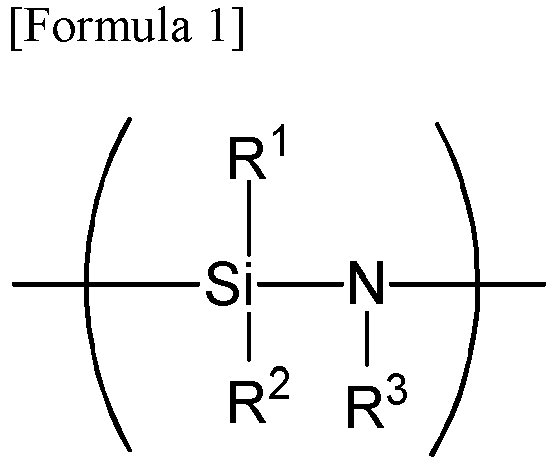
wherein, R1, R2 and R3 are each independently a hydrogen atom, an alkyl group, an alkenyl group, an alkynyl group, an aryl group, an alkylsilyl group, an alkylamino group or an alkoxy group.
wherein, R1, R2 and R3 are each independently a hydrogen atom, an alkyl group, an alkenyl group, an alkynyl group, an aryl group, an alkylsilyl group, an alkylamino group or an alkoxy group.
13. An electrical or electronic element comprising the barrier film according to claim
1.
REFERENCES CITED IN THE DESCRIPTION
This list of references cited by the applicant is for the reader's convenience only. It does not form part of the European patent document. Even though great care has been taken in compiling the references, errors or omissions cannot be excluded and the EPO disclaims all liability in this regard.
Patent documents cited in the description
- KR1020180128816 [0001]
- KR1020180128798 [0001]
- KR1020180128791 [0001]
- KR1020190002820 [0001]
- JPH10194873A [0004]