|
(11) | EP 4 276 178 B1 |

| (12) | EUROPEAN PATENT SPECIFICATION |
|
|
| (54) |
ESTERASE MUTANT AND USE THEREOF ESTERASEMUTANTE UND VERWENDUNG DAVON MUTANT D'ESTÉRASE ET SON UTILISATION |
|
|
|||||||||||||||||||||||||||||||
|
||||||||||||||||||||||||||||||||
| Note: Within nine months from the publication of the mention of the grant of the European patent, any person may give notice to the European Patent Office of opposition to the European patent granted. Notice of opposition shall be filed in a written reasoned statement. It shall not be deemed to have been filed until the opposition fee has been paid. (Art. 99(1) European Patent Convention). |
Technical Field
[0001] The present disclosure relates to the field of biotechnologies, in particular to an esterase mutant and use thereof.
Background
[0002] With the development of medicine, pesticide and other fine chemical industries, organic synthesis faces more and more challenges. Firstly, due to the chiral recognition ability in organisms, there is often only one stereoisomer in a drug molecule that has a therapeutic effect, while the other stereoisomers do not have the therapeutic effect or even side effects. Secondly, products with small production batches and high added value, such as pharmaceutical products, have structural complexity and diversity. If the production process has chemical and regional selectivity, unnecessary protection and deprotection steps may be avoided (in traditional organic synthesis, the protection and deprotection steps are usually introduced to compensate for the lack of chemical and regional selectivity of a reaction), the production process is greatly optimized, and thus the production cost is reduced. Therefore, a new-type organic synthesis technology must have the following characteristics: high chemical selectivity, regional selectivity and stereoselectivity; mild reaction conditions; and less pollution to the environment caused by reaction medium post-treatment and the like. A biocatalytic technology has exactly these characteristics, the biocatalytic reaction conditions are mild, and it is usually performed at neutral and room temperatures, or close to such conditions; in most cases, the biocatalytic reaction is performed in an aqueous phase, so the environmental pollution is less; and the biocatalytic reaction usually has the characteristics of high chemical selectivity, regional selectivity and stereoselectivity and the like. Therefore, the application of the biocatalytic technology in organic synthesis has the great scientific significance and practical application value.
[0003] Esterase refers to the general name of a class of enzymes with the ability to hydrolyze an ester bond, widely exists in animals, plants and microorganisms, is a class of hydrolase widely used in organic synthesis, and is also the most widely researched enzyme in genetic engineering. It is divided into eight groups which are classified according to the types of substrates: carboxylate, thioester, phosphate monoester, phosphate diester, phospholipid sulfate, and sulfate. The esterases from different sources have the different catalytic characteristics and catalytic activities.
[0004] In a patent (CN105802935B), a marine pseudomonas strain is screened from deep-sea samples, an esterase gene PHE14 is obtained, and an expression vector is constructed and transformed into an expression strain. A recombinant expression esterase PHE14 is obtained, and it may be used to prepare chiral methyl lactate; and in a patent (CN104988165B), an esterase gene est4 is extracted from deep-sea sludge, and a genetically engineered strain containing the esterase gene est4 is constructed to achieve the heterologous expression of the gene est4, and is successfully used in reactions such as the catalytic synthesis of a variety of short-chain terpene esters and the kinetic resolution of a variety of aromatic secondary alcohols.
[0005] Although wild-type biocatalysts usually have the better reactivity and selectivity for their natural substrates, their reactivity, stability and selectivity for non-natural substrates are often unsatisfactory. While the biocatalysts are used in organic synthesis, they are non-natural substrates in most cases. In general, wild enzymes may be modified by means of directed evolution, as to improve their reactivity, stability and selectivity (including chemical selectivity, regional selectivity and stereoselectivity) to the non-natural substrates, and thereby it may be used in production.
[0006] Relevant technologies are also known from "EStB1 esterase from Bacillus sp." 16 August 2004 (2004-08-16).
Summary
[0007] The present disclosure aims to provide an esterase mutant and use thereof, as to improve the specificity of the enzyme.
[0008] In order to achieve the above purpose, according to one aspect of the present disclosure, an esterase mutant is provided. The esterase mutant consisting of the amino acid sequence shown in SEQ ID NO: 1 containing the mutation N51G.
[0009] Or, the mutation consisting of the amino acid sequence shown in SEQ ID NO: 1 containing the mutations: N51G+T117M+S140G, N51G+T117M+S140N, N51G+T117M+S140C, N51G+T117M+S140T, N51G+T117M+S140A, N51G+T117M+A142V, N51G+T117M+A142P, N51G+T117M+A142S, N51G+T117M+A142L, N51G+T117M+D217Q, N51G+T117M+D217A, N51G+T117M+D217S, N51G+T117M+D217G, N51G+T117M+L231I, N51G+T117M+S140C+M52F, N51G+T117M+S140C+M52L, N51G+T117M+S140C+M52N, N51G+T117M+S140C+M52Y, N51G+T117M+S140C+M52G, N51G+T117M+S140C+M52W, N51G+T117M+S140C+I195F, N51G+T117M+S140C+I1195L, N51G+T117M+S140C+I195T, N51G+T117M+S140C+I195V, N51G+T117M+S140C+D217S, N51G+T117M+S140C+L231I, N51G+T117M+S140C+V267I, N51G+T117M+S140C+I268V, N51G+T117M+S140C+S295F, N51G+T117M+S140C+S295M, N51G+T117M+S140C+S295N, N51G+T117M+S140C+S295G, N51G+T117M+S140C+S295D.
[0010] According to another aspect of the present disclosure, a DNA molecule is provided. The DNA molecule encodes the above esterase mutant.
[0011] According to another aspect of the present disclosure, a recombinant plasmid is provided. The recombinant plasmid contains any one of the above DNA molecules.
[0012] Further, the recombinant plasmid is pET-22a(+), pET-22b(+), pET-3a(+), pET-3d(+), pET-11a(+), pET-12a(+), pET-14b, pET-15b(+), pET-16b(+), pET-17b(+), pET-19b(+), pET-20b(+), pET-21a(+), pET-23a(+), pET-23b(+), pET-24a(+), pET-25b(+), pET-26b(+), pET-27b(+), pET-28a(+), pET-29a(+), pET-30a(+), pET-31b(+), pET-32a(+), pET-35b(+), pET-38b(+), pET-39b(+), pET-40b(+), pET-41a(+), pET-41b(+), pET-42a(+), pET-43a(+), pET-43b(+), pET-44a(+), pET-49b(+), pQE2, pQE9, pQE30, pQE31, pQE32, pQE40, pQE70, pQE80, pRSET-A, pRSET-B, pRSET-C, pGEX-5X-1, pGEX-6p-1, pGEX-6p-2, pBV220, pBV221, pBV222, pTrc99A, pTwin1, pEZZ18, pKK232-8, pUC-18 or pUC-19.
[0013] According to another aspect of the present disclosure, a host cell is provided. The host cell contains any one of the above recombinant plasmids.
[0014] Further, the host cell includes a prokaryotic cell or a eukaryotic cell; and preferably, the prokaryotic cell is Escherichia coli BL21 cell or Escherichia coli DH5α competent cell, and the eukaryotic cell is yeast.
[0015] According to another aspect of the present disclosure, a method for producing a chiral acid is provided. The method includes a step of catalyzing a reaction of an ester compound by an esterase, and the esterase is any one of the above esterase mutants.
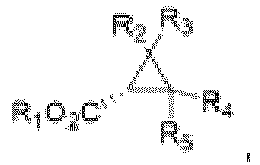
[0016] Further, the ester compound is
and a reaction product is
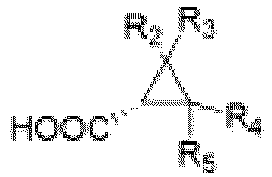
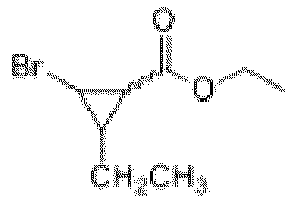
herein R1 represents -CH3, -CH2CH3, -CH2CH2CH3 or -CHCH3CH3; R2, R3, R4 and R5 each independently represent -H, -F, -Cl, -Br, -CH3 or -CH2CH3; and preferably, the ester compound is
or
[0017] Further, a pH of the reaction catalyzed by an esterase mutant is 8.5 to 9.0, and a reaction temperature is 30°C to 35°C.
[0018] The esterase mutant of the present disclosure is based on the esterase shown in SEQ ID NO: 1, and is mutated by a method of site-directed mutation, as to change its amino acid sequence and achieve changes of the protein structure and function, and then the esterase with the above mutation site is obtained by a method of directional screening. Therefore, these esterase mutants have the advantage of greatly improving enzyme specificity, and the enzyme activity is also correspondingly improved, thus the usage amount of the enzyme is greatly reduced, and the cost in industrial production is reduced.
Detailed Description of the Embodiments
[0019] It should be noted that embodiments in the present application and features in the embodiments may be combined with each other without conflicting. The present disclosure is described in detail below in combination with the embodiments.
[0020] The present disclosure improves the specificity of esterase and reduces the usage amount of esterase by a method of directed evolution. The template amino acid sequence of the present disclosure (derived from Bacillus sp.01-855, National Center of Biotechnology Information (NCBI) Serial Number: AY640622, and Website: https://www.ncbi.nlm.nih.gov/nuccore/AY640622) is SEQ ID NO: 1 (MGSNNDNMGKRGGNLMITIPTVHKVSLPNGEVMGYRKRDGGEKTILLVHGNMTSSKHWDLFFET FPASYTLVAIDMRGFGESSYNKRVEGIEDFAQDLKFFVDQLGLNDFTMIGWSTGGAVCMQFEAQY PGYCDKIVLISSASTRGYPFFGTHSDGTPDLNQRLKTVDDIEKDPMRTIPIQQAYDTGNRALLKTIW NSLIYTHNQPEEKRYEAYVDDMMTQRNLADVYHALNTFNISSVTNGLTEGTNQANLIRIPVLVLRGE RDLVISKEMTEEIVEDLGTNSTYKELSASGHSPFIDDCDQLTNIITDFLEK), and the corresponding nucleotide sequence is SEQ ID NO: 2 (ATGGGCAGCAATAACGACAACATGGGTAAACGTGGCGGCAACCTGATGATCACCATCCCGAC AGTGCATAAAGTGAGCCTGCCGAATGGCGAAGTGATGGGTTATCGTAAGCGCGACGGCGGTG AAAAAACCATCCTGCTGGTGCACGGCAACATGACCAGCAGCAAACATTGGGACCTGTTCTTCG AGACCTTTCCGGCAAGCTATACACTGGTGGCCATCGATATGCGCGGCTTCGGCGAAAGCAGCT ATAACAAACGCGTGGAAGGCATCGAGGACTTTGCCCAGGACCTGAAATTCTTCGTGGATCAGC TGGGCCTGAACGATTTCACCATGATCGGTTGGAGCACAGGCGGCGCCGTGTGTATGCAGTTT GAAGCCCAGTATCCGGGCTACTGCGACAAGATTGTGCTGATTAGCAGCGCAAGCACCCGTGG CTATCCGTTTTTTGGTACCCACAGCGATGGCACCCCGGATCTGAATCAGCGCCTGAAGACCGT GGACGACATCGAAAAAGATCCTATGCGCACCATTCCGATCCAGCAGGCCTACGATACCGGTAA CCGCGCCCTGCTGAAAACCATCTGGAATAGCCTGATTTACACCCACAACCAGCCGGAGGAAAA GCGCTATGAGGCCTATGTGGACGACATGATGACCCAGCGTAATCTGGCCGATGTGTATCACGC CCTGAACACATTCAACATTAGCAGCGTGACCAACGGCCTGACCGAGGGCACCAATCAGGCCA ACCTGATCCGCATCCCTGTGCTGGTTCTGCGCGGCGAACGCGACCTGGTGATCAGCAAAGAG ATGACCGAGGAGATCGTGGAGGATCTGGGCACCAACAGCACCTATAAAGAGCTGAGCGCCAG CGGCCACAGCCCTTTTATCGATGATTGCGACCAGCTGACCAACATCATCACCGATTTTCTGGA GAAATAA).
[0021] Firstly, a mutation site is introduced into the esterase by a mode of site-directed mutation, and the specificity of the mutant is detected to select the mutant with improved specificity. Compared with an initial template, the specificity of the mutant N51G is increased significantly. Subsequently, the mutant N51G is used as a template to continue the mutation in order to obtain a mutant with improved catalytic activity.
[0022] Herein, site-directed mutation: referring to introduction of required changes (usually changes that represent favorable directions) into a target DNA segment (either a genome or a plasmid) by a polymerase chain reaction (PCR) or other methods, including base addition, deletion, point mutation and the like. The site-directed mutation may rapidly and efficiently improve the character and representation of a target protein expressed by DNA, and is a very useful means in gene research work.
[0023] A method of introducing the site-directed mutation by the whole-plasmid PCR is simple and effective, and is more widely used at present. The principle thereof is that a pair of primers (forward and reverse) containing mutation sites are annealed with a template plasmid, "cyclic extension" is performed by using a polymerase, and the so-called cyclic extension is that the polymerase extends the primer according to the template, is returned to a 5'-terminal of the primer and terminated after one circle, and subjected to a cycle of repeatedly heated and annealed extension, this reaction is different from rolling circle amplification, and does not form multiple tandem copies. Extension products of the forward and reverse primers are paired to form an open-circle plasmid with an incision after annealed. A Dpn I enzyme-digested extension product, because the original template plasmid is derived from conventional Escherichia coli, is modified by dam methylation, and is sensitive to Dpn I so as to be shredded, but a plasmid with a mutant sequence synthesized in vitro is not cut because it is not methylated, so it may be successfully transformed in subsequent transformation, and a clone of a mutant plasmid may be obtained. The mutant plasmid is transformed into Escherichia coli cells, and then a crude enzyme is obtained by ultrasonic cell-break.
[0024] The mutant plasmid described above is transformed into the Escherichia coli cells and overexpressed in the Escherichia coli. Then the crude enzyme is obtained by the method of ultrasonic cell-break. The optimum condition for induced expression of the esterase is: 25 °C, and inducing in 0.1 mM isopropyl-β-d-thiogalactoside (IPTG) for 16 h.
[0025] By computer simulation analysis of the three-dimensional structure of the esterase by using software, it is found that the mutation sites are located near the substrate binding site, and the mutation may enhance the binding of substrate and enzyme, thus the catalytic efficiency is improved.
[0026] According to a typical implementation of the present disclosure, an esterase mutant is provided. The esterase mutant has an amino acid sequence obtained by the mutation of the amino acid sequence shown in SEQ ID NO: 1, and the mutation comprises a mutation site N51G.
[0027] Preferably, the mutation includes at least one of the following mutation sites: N51G, M52F/UN/Y/G/W, W115P, T117L/M/F/W/A/I, S140A/G/N/C/T/V/L/P, A142V/UP/S, V167M, I195L/F/T/V, W196I/L/V, D217M/Q/A/S/G, L231T/I, V267E/C/I/V and S295T/A/Y/F/M/N, herein "/" means "or".
[0028] More preferably, the mutation comprises any one of the following mutation site combinations: N51G+T117M+S140G, N51G+T117M+S140N, N51G+T117M+S140C, N51G+T117M+S140T, N51G+T117M+S140A, N51G+T117M+A142V, N51G+T117M+A142P, N51G+T117M+A142S, N51G+T117M+A142L, N51G+T117M+D217Q, N51G+T117M+D217A, N51G+T117M+D217S, N51G+T117M+D217G, N51G+T117M+L2311, N51G+T117M+S140C+M52F, N51G+T117M+S140C+M52L, N51G+T117M+S140C+M52N, N51G+T117M+S140C+M52Y, N51G+T117M+S140C+M52G, N51G+T117M+S140C+M52W, N51G+T117M+S140C+I195F, N51G+T117M+S140C+I1195L, N51G+T117M+S140C+I195T, N51G+T117M+S140C+I195V, N51G+T117M+S140C+D217S, N51G+T117M+S140C+L231I, N51G+T117M+S140C+V267I, N51G+T117M+S140C+I268V, N51G+T117M+S140C+S295F, N51G+T117M+S140C+S295M, N51G+T117M+S140C+S295N, N51G+T117M+S140C+S295G, N51G+T117M+S140C+S295D.
[0029] The esterase mutant of the present disclosure is based on the esterase shown in SEQ ID NO: 1, and is mutated by a method of site-directed mutation, as to change its amino acid sequence and achieve changes of the protein structure and function, and then the esterase with the above mutation site is obtained by a method of directional screening. Therefore, these esterase mutants have the advantage of greatly improving enzyme specificity, and the enzyme activity is also correspondingly improved, thus the usage amount of the enzyme is greatly reduced, and the cost in industrial production is reduced.
[0030] According to a typical implementation of the present disclosure, a DNA molecule is provided. The esterase encoded by the above DNA may improve the enzyme activity and stability, the usage amount of the enzyme in the industrial production of amino acids may be reduced, and the difficulty of post-treatment is reduced.
[0031] The above DNA molecule of the disclosure may also exist in the form of an "expression cassette". The "expression cassette" refers to a linear or circular nucleic acid molecule that encompasses DNA and RNA sequences capable of guiding expression of a specific nucleotide sequence in an appropriate host cell. Generally, including a promoter which is effectively linked with a target nucleotide, it is optionally effectively linked with a termination signal and/or other control elements. The expression cassette may also include a sequence required for proper translation of the nucleotide sequence. A coding region usually encodes a target protein, but also encodes a target function RNA in a sense or antisense direction, for example an antisense RNA or an untranslated RNA. The expression cassette including a target polynucleotide sequence may be chimeric, which means that at least one of components thereof is heterologous to at least one of the other components thereof. The expression cassette may also be existent naturally, but obtained with effective recombinant formation for heterologous expression.
[0032] According to a typical embodiment of the present disclosure, a recombinant plasmid is provided. The recombinant plasmid contains any one of the above DNA molecules. The DNA molecule in the above recombinant plasmid is placed in an appropriate position of the recombinant plasmid, so that the above DNA molecule may be correctly and smoothly replicated, transcribed or expressed.
[0033] Although a qualifier used in the disclosure while the above DNA molecule is defined is "contain", it does not mean that other sequences which are not related to a function thereof may be arbitrarily added to both ends of the DNA sequence. Those skilled in the art know that in order to meet the requirements of recombination operations, it is necessary to add suitable enzyme digestion sites of a restriction enzyme at two ends of the DNA sequence, or additionally increase a start codon, a termination codon and the like, therefore, if the closed expression is used for defining, these situations may not be covered truly.
[0034] A term "plasmid" used in the present disclosure includes any plasmid, cosmid, bacteriophage or agrobacterium binary nucleic acid molecule in double-stranded or single-stranded linear or circular form, preferably a recombinant expression plasmid, which may be a prokaryotic expression plasmid or may be a eukaryotic expression plasmid, preferably the prokaryotic expression plasmid, in some embodiments, the recombinant plasmid is selected from pET-22a (+) , pET-22b (+) , pET-3a (+) , pET-3d (+) , pET-11a (+) , pET-12a (+) , pET-14b (+) , pET-15b (+) , pET-16b (+) , pET-17b (+) , pET-19b (+) , pET-20b (+) , pET-21a (+) , pET-23a (+) , pET-23b (+) , pET-24a (+) , pET-25b (+) , pET-26b (+) , pET-27b (+) , pET-28a (+) , pET-29a (+) , pET-30a (+) , pET-31b (+) , pET-32a (+) , pET-35b (+) , pET-38b (+) , pET-39b (+) , pET-40b (+) , pET-41a (+) , pET-41 b (+) , pET-42a (+) , pET-43a (+) , pET-43b (+) , pET-44a (+) , pET-49b (+) , pQE2, pQE9, pQE30, pQE31, pQE32, pQE40, pQE70, pQE80, pRSET-A, pRSET-B, pRSET-C, pGEX-5X-1, pGEX-6p-1, pGEX-6p-2, pBV220, pBV221, pBV222, pTrc99A, pTwin1, pEZZ18, pKK232-18, pUC-18 or pUC-19. More preferably, the above recombinant plasmid is pET-22b (+).
[0035] According to a typical implementation of the present disclosure, a host cell is provided. The host cell contains any one of the above recombinant plasmids. The host cell applicable to the present disclosure includes but is not limited to a prokaryotic cell or a eukaryotic cell. Preferably the prokaryotic cell is Escherichia coli BL21 cell or Escherichia coli DH5α competent cell, and the eukaryotic cell is yeast.
[0036] According to a typical implementation of the present disclosure, a method for producing a chiral acid is provided. The method includes a step of catalyzing a reaction of an ester compound by an esterase, and the esterase is any one of the above esterase mutants. Because the above esterase of the present disclosure has the better specificity and even higher enzyme catalytic activity, the preparation of the chiral acid using the esterase mutant of the present disclosure may not only reduce the production cost, but also obtain a higher enantiomeric excess (ee) value of the amino acid.
[0037] According to a typical implementation of the present disclosure, the ester compound is
and a reaction product is
herein R1 represents -CH3, -CH2CH3, -CH2CH2CH3 or -CHCH3CH3; R2, R3, R4 and R5 each independently represent -H, -F, -Cl, -Br, -CH3 or -CH2CH3; and preferably, the ester compound is
[0038] Preferably, a pH of the reaction catalyzed by an esterase mutant is 8.5 to 9.0, and a reaction temperature is 30°C to 35°C.
[0039] The beneficial effects of the present disclosure are further described below in combination with specific embodiments.
Working example 1
[0040] 20 mg of Substrate 1 added, 1 mL reaction system, 2 mg of esterase, and 0.3 M of potassium phosphate buffer pH 7.5. After it was reacted at 30°C for 16 h, 50µL of 6 M HCl was added into the 1 mL reaction system, and pH was between 2~3. After being mixed uniformly, 2 mL of ethyl acetate was added. After being shaken fully, it was centrifuged at 12000 rpm for 3 min, a supernatant was taken and appropriate amount of anhydrous magnesium sulfate was added, it was centrifuged at 12000 rpm for 3 min, a supernatant was taken for gas phase detection, the transformation rate and e.e. value were detected. Substrate 2 and Substrate 3, as described in Substrate 1, established reaction and treatment modes of the same system. Results were shown in Table 1.
Table 1
| Enzyme | Substrate 1 | Substrate 2 | Substrate 3 | |||
| Activity | e.e.(%) | Activity | e.e.(%) | Activity | e.e.(%) | |
| WT | -14.0 | -30 | -25 | |||
| N51G | - | *** | - | ** | + | *** |
| N51G+W115P | - | ** | - | ** | + | ** |
| N51G+T117L | + | *** | + | *** | + | ** |
| N51G+T117M | ++ | **** | ++ | **** | ++ | **** |
| N51G+T117F | - | *** | - | *** | - | * |
| N51G+T117W | - | *** | - | ** | - | *** |
| N51G+T117A | ++ | *** | + | * | + | *** |
| N51G+T117I | + | *** | - | *** | - | ** |
| N51G+A142V | +++ | *** | + | ** | - | *** |
| N51G+V167M | + | * | - | * | - | ** |
| N51G+W196I | - | ** | + | * | + | ** |
| N51G+W196L | + | *** | - | *** | - | ** |
| N51G+W196V | - | ** | + | ** | ++ | ** |
| N51G+D217M | + | ** | + | ** | + | ** |
| N51G+L231T | ++ | *** | - | ** | - | *** |
| N51G+L231I | + | *** | - | *** | - | ** |
| N51G+V267E | - | ** | + | ** | + | ** |
| N51G+V267C | ++ | ** | + | * | ++ | ** |
| N51G+S295T | + | ** | + | ** | + | ** |
| N51G+S295A | + | *** | ++ | *** | ++ | ** |
| N51G+S295Y | + | ** | + | ** | + | *** |
| N51G+S295F | + | ** | + | *** | + | ** |
[0041] Compared with parental enzyme, the times of decrease and increase in activity are as follows: --- represents decrease by 10-50 times, -- represents decrease by 5-10 times, - represents decrease by 1-5 times, + represents increase by 1-5 times, ++ represents increase by 5-10 times, +++ represents increase by 10-50 times, and ++++ represents increase by more than 50 times.
[0042] * represents the ee value less than 0%, ** represents the ee value of 0-50%, *** represents the ee value of 50-95%, and **** represents the ee value greater than 95%.
Working example 2
[0043] 20 mg of Substrate 4 added, 1 mL reaction system, 2 mg of esterase, and 0.3 M of potassium phosphate buffer pH 7.5. After it was reacted at 30°C for 16 h, 50µL of 6 M HCl was added into the 1 mL reaction system, and pH was between 2~3. After being mixed uniformly, 2 mL of ethyl acetate was added. After being shaken fully, it was centrifuged at 12000 rpm for 3 min, a supernatant was taken and appropriate amount of anhydrous magnesium sulfate was added, it was centrifuged at 12000 rpm for 3 min, a supernatant was taken for gas phase detection, the transformation rate and e.e. value were detected. Substrate 5, as described in Substrate 4, established reaction and treatment modes of the same system. Results were shown in Table 2.
Table 2
| Enzyme | Substrate 4 | Substrate 5 | ||
| Activity | e.e.(%) | Activity | e.e.(%) | |
| WT | -20.0 | -10 | ||
| N51G | - | *** | - | ** |
| N51G+W115P | - | * | + | ** |
| N51G+T117L | + | *** | ++ | ** |
| N51G+T117M | ++ | **** | + | **** |
| N51G+T117F | - | *** | - | *** |
| N51G+T117W | - | *** | - | ** |
| N51G+T117A | ++ | ** | + | *** |
| N51G+T117I | + | *** | + | *** |
| N51G+A142V | +++ | *** | ++ | ** |
| N51G+V167M | + | ** | + | ** |
| N51G+W196I | - | ** | - | *** |
| N51G+W196L | + | *** | + | ** |
| N51G+W196V | - | ** | - | ** |
| N51G+D217M | + | ** | ++ | *** |
| N51G+L231T | ++ | *** | + | ** |
| N51G+L231I | + | *** | + | ** |
| N51G+V267E | - | ** | - | *** |
| N51G+V267C | ++ | ** | + | ** |
| N51G+S295T | + | ** | ++ | *** |
| N51G+S295A | + | *** | + | ** |
| N51G+S295Y | + | ** | ++ | ** |
| N51G+S295F | + | ** | + | *** |
[0044] Compared with parental enzyme, the times of decrease and increase in activity are as follows: --- represents decrease by 10-50 times, -- represents decrease by 5-10 times, - represents decrease by 1-5 times, + represents increase by 1-5 times, ++ represents increase by 5-10 times, +++ represents increase by 10-50 times, and ++++ represents increase by more than 50 times.
[0045] * represents the ee value less than 0%, ** represents the ee value of 0-50%, *** represents the ee value of 50-95%, and **** represents the ee value greater than 95%.
[0046] The mutation is continued, the ee value of a product is increased, the substrate concentration is increased, and the reaction volume is reduced.
Working example 3
[0047] 33 mg of Substrate 1 added, 1 mL reaction system, 3.3 mg of esterase, 50 µL of N,N-dimethylformamide, and 0.3 M of Tris-HCl pH 8.5 buffer. After it was reacted at 30°C for 16 h, 50µL of 6 M HCl was added into the 1 mL reaction system, and pH was between 2~3. After being mixed uniformly, 2 mL of ethyl acetate was added. After being shaken fully, it was centrifuged at 12000 rpm for 3 min, a supernatant was taken and appropriate amount of anhydrous magnesium sulfate was added, it was centrifuged at 12000 rpm for 3 min, a supernatant was taken for gas phase detection, the transformation rate and e.e. value were detected. Substrate 2 and Substrate 3, as described in Substrate 1, established reaction and treatment modes of the same system. Results were shown in Table 3.
Table 3
| Enzyme | Substrate 1 | Substrate 2 | Substrate 3 | |||
| Activity | e.e.(%) | Activity | e.e.(%) | Activity | e.e.(%) | |
| N51G+T117M+S140G | ++ | *** | +++ | *** | ++ | **** |
| N51G+T117M+S140N | ++ | *** | +++ | **** | ++ | **** |
| N51G+T117M+S140C | +++ | **** | ++ | **** | ++ | **** |
| N51G+T117M+S140T | + | *** | + | **** | ++ | **** |
| N51G+T117M+S140A | ++ | *** | ++ | *** | + | *** |
| N51G+T117M+A142V | + | **** | ++ | **** | + | **** |
| N51G+T117M+A142P | + | **** | + | **** | ++ | **** |
| N51G+T117M+A142S | + | **** | + | *** | + | *** |
| N51G+T117M+A142L | + | *** | ++ | *** | + | *** |
| N51G+T117M+D217Q | + | **** | + | **** | ++ | **** |
| N51G+T117M+D217A | ++ | *** | ++ | **** | ++ | **** |
| N51G+T117M+D217S | ++ | **** | + | **** | ++ | *** |
| N51G+T117M+D217G | - | *** | - | *** | + | *** |
| N51G+T117M+L231I | + | *** | ++ | *** | + | *** |
[0048] Compared with parental enzyme, the times of decrease and increase in activity are as follows: --- represents decrease by 10-50 times, -- represents decrease by 5-10 times, - represents decrease by 1-5 times, + represents increase by 1-5 times, ++ represents increase by 5-10 times, +++ represents increase by 10-50 times, and ++++ represents increase by more than 50 times.
[0049] * represents the ee value less than 0%, ** represents the ee value of 0-50%, *** represents the ee value of 50-95%, and **** represents the ee value greater than 95%.
Working example 4
[0050] 33 mg of Substrate 4 added, 1 mL reaction system, 3.3 mg of esterase, 50 µL of N,N-dimethylformamide, and 0.3 M of Tris-HCl pH 8.5 buffer. After it was reacted at 30°C for 16 h, 50µL of 6 M HCl was added into the 1 mL reaction system, and pH was between 2~3. After being mixed uniformly, 2 mL of ethyl acetate was added. After being shaken fully, it was centrifuged at 12000 rpm for 3 min, a supernatant was taken and appropriate amount of anhydrous magnesium sulfate was added, it was centrifuged at 12000 rpm for 3 min, a supernatant was taken for gas phase detection, the transformation rate and e.e. value were detected. Substrate 5, as described in Substrate 4, established reaction and treatment modes of the same system. Results were shown in Table 4.
Table 4
| Enzyme | Substrate 4 | Substrate 5 | ||
| Activity | e.e.(%) | Activity | e.e.(%) | |
| N51G+T117M+S140G | ++ | *** | +++ | *** |
| N51G+T117M+S140N | + | **** | ++ | *** |
| N51G+T117M+S140C | +++ | **** | ++ | **** |
| N51G+T117M+S140T | + | **** | + | *** |
| N51G+T117M+S140A | +++ | **** | ++ | *** |
| N51G+T117M+A142V | + | **** | + | **** |
| N51G+T117M+A142P | + | **** | ++ | **** |
| N51G+T117M+A142S | + | *** | + | **** |
| N51G+T117M+A142L | ++ | *** | + | *** |
| N51G+T117M+D217Q | ++ | **** | ++ | **** |
| N51G+T117M+D217A | ++ | **** | + | **** |
| N51G+T117M+D217S | ++ | **** | ++ | *** |
| N51G+T117M+D217G | + | *** | - | *** |
| N51G+T117M+L231I | + | *** | + | *** |
[0051] Compared with parental enzyme, the times of decrease and increase in activity are as follows: --- represents decrease by 10-50 times, -- represents decrease by 5-10 times, - represents decrease by 1-5 times, + represents increase by 1-5 times, ++ represents increase by 5-10 times, +++ represents increase by 10-50 times, and ++++ represents increase by more than 50 times.
[0052] * represents the ee value less than 0%, ** represents the ee value of 0-50%, *** represents the ee value of 50-95%, and **** represents the ee value greater than 95%.
[0053] The beneficial mutation sites are further combined to further increase the substrate concentration and reduce the reaction volume.
Working example 5
[0054] 50 mg of Substrate 1 added, 1 mL reaction system, 5 mg of esterase, 50 µL of N,N-dimethylformamide, and 0.3 M of Tris-HCl pH 8.5 buffer. After it was reacted at 30°C for 16 h, 50µL of 6 M HCl was added into the 1 mL reaction system, and pH was between 2~3. After being mixed uniformly, 2 mL of ethyl acetate was added. After being shaken fully, it was centrifuged at 12000 rpm for 3 min, a supernatant was taken and appropriate amount of anhydrous magnesium sulfate was added, it was centrifuged at 12000 rpm for 3 min, a supernatant was taken for gas phase detection, the transformation rate and e.e. value were detected. Substrate 2 and Substrate 3, as described in Substrate 1, established reaction and treatment modes of the same system. Results were shown in Table 5.
Table 5
| Enzyme | Substrate 1 | Substrate 2 | Substrate 3 | |||
| Activity | e.e. (%) | Activity | e.e. (%) | Activity | e.e. (%) | |
| N51G+T117M+S140C+M52F | ++ | *** | ++ | *** | ++ | *** |
| N51G+T117M+S140C+M52L | +++ | *** | +++ | **** | ++ | *** |
| N51G+T117M+S140C+M52N | ++ | **** | + | **** | + | *** |
| N51G+T117M+S140C+M52Y | + | **** | + | **** | ++ | **** |
| N51G+T117M+S140C+M52G | + | **** | ++ | **** | + | **** |
| N51G+T117M+S140C+M52W | +++ | **** | ++ | *** | ++ | **** |
| N51G+T117M+S140C+I195F | ++ | **** | ++ | **** | ++ | **** |
| N51G+T117M+S140C+I195L | +++ | **** | ++ | **** | +++ | **** |
| N51G+T117M+S140C+I195T | + | **** | + | **** | + | **** |
| N51G+T117M+S140C+I195V | ++ | *** | ++ | **** | ++ | **** |
| N51G+T117M+S140C+D217S | +++ | **** | ++ | **** | ++ | **** |
| N51G+T117M+S140C+L231I | + | **** | + | **** | + | *** |
| N51G+T117M+S140C+V267I | + | **** | + | **** | ++ | **** |
| N51G+T117M+S140C+I268V | + | *** | ++ | *** | + | *** |
| N51G+T117M+S140C+S295F | +++ | **** | +++ | **** | +++ | **** |
| N51G+T117M+S140C+S295M | ++ | *** | ++ | **** | ++ | **** |
| N51G+T117M+S140C+S295N | +++ | **** | ++ | **** | +++ | **** |
| N51G+T117M+S140C+S295G | +++ | **** | ++ | **** | ++ | *** |
| N51G+T117M+S140C+S295D | ++ | **** | ++ | **** | +++ | **** |
[0055] Compared with parental enzyme, the times of decrease and increase in activity are as follows: --- represents decrease by 10-50 times, -- represents decrease by 5-10 times, - represents decrease by 1-5 times, + represents increase by 1-5 times, ++ represents increase by 5-10 times, +++ represents increase by 10-50 times, and ++++ represents increase by more than 50 times.
[0056] * represents the ee value less than 0%, ** represents the ee value of 0-50%, *** represents the ee value of 50-95%, and **** represents the ee value greater than 95%.
Working example 6
[0057] 50 mg of Substrate 4 added, 1 mL reaction system, 5 mg of esterase, 50 µL of N,N-dimethylformamide, and 0.3 M of Tris-HCl pH 8.5 buffer. After it was reacted at 30°C for 16 h, 50µL of 6 M HCl was added into the 1 mL reaction system, and pH was between 2~3. After being mixed uniformly, 2 mL of ethyl acetate was added. After being shaken fully, it was centrifuged at 12000 rpm for 3 min, a supernatant was taken and appropriate amount of anhydrous magnesium sulfate was added, it was centrifuged at 12000 rpm for 3 min, a supernatant was taken for gas phase detection, the transformation rate and e.e. value were detected. Substrate 5, as described in Substrate 4, established reaction and treatment modes of the same system. Results were shown in Table 6.
Table 6
| Enzyme | Substrate 4 | Substrate 5 | ||
| Activity | e.e.(%) | Activity | e.e.(%) | |
| N51G+T117M+S140C+M52F | ++ | *** | ++ | *** |
| N51G+T117M+S140C+M52L | ++ | *** | + | *** |
| N51G+T117M+S140C+M52N | ++ | **** | + | **** |
| N51G+T117M+S140C+M52Y | + | *** | + | **** |
| N51G+T117M+S140C+M52G | ++ | **** | ++ | **** |
| N51G+T117M+S140C+M52W | ++ | **** | +++ | *** |
| N51G+T117M+S140C+I195F | ++ | **** | ++ | **** |
| N51G+T117M+S140C+I195L | +++ | **** | ++ | **** |
| N51G+T117M+S140C+I195T | + | **** | + | **** |
| N51G+T117M+S140C+I195V | +++ | **** | +++ | *** |
| N51G+T117M+S140C+D217S | ++ | **** | ++ | **** |
| N51G+T117M+S140C+L231I | ++ | *** | + | **** |
| N51G+T117M+S140C+V267I | + | **** | + | **** |
| N51G+T117M+S140C+I268V | + | *** | ++ | *** |
| N51G+T117M+S140C+S295F | ++ | **** | +++ | **** |
| N51G+T117M+S140C+S295M | ++ | **** | +++ | *** |
| N51G+T117M+S140C+S295N | +++ | **** | +++ | **** |
| N51G+T117M+S140C+S295G | ++ | *** | ++ | **** |
| N51G+T117M+S140C+S295D | ++ | **** | +++ | *** |
[0058] Compared with parental enzyme, the times of decrease and increase in activity are as follows: --- represents decrease by 10-50 times, -- represents decrease by 5-10 times, - represents decrease by 1-5 times, + represents increase by 1-5 times, ++ represents increase by 5-10 times, +++ represents increase by 10-50 times, and ++++ represents increase by more than 50 times.
[0059] * represents the ee value less than 0%, ** represents the ee value of 0-50%, *** represents the ee value of 50-95%, and **** represents the ee value greater than 95%.
Working example 7
[0061] 50 mg of Substrate 1 added, 1 mL reaction system, 5 mg of esterase (N51G+T117M+S140C+S295N), 50 µL of N,N-dimethylformamide, and 0.3 M of Tris-HCl pH 8.5 buffer. Based on the reaction conditions, the reaction system was optimized, with cosolvent dimethylsulfoxide (DMSO) (0%~20%) and dimethyl formamide (DMF) (0%~20%) with different solubility, buffer (0.1 M~1 M Tris-HCl pH 8.5) with different concentrations, buffer (0.3 M potassium phosphate buffer (KPB) pH 7~8, 0.3 M Tris-HCl pH 8~9) with different pH, and the reaction temperature (20°C~50°C). After it was reacted for 16 h, 50µL of 6 M HCl was added into the 1 mL reaction system, and pH was between 2~3. After being mixed uniformly, 2 mL of ethyl acetate was added. After being shaken fully, it was centrifuged at 12000 rpm for 3 min, a supernatant was taken and appropriate amount of anhydrous magnesium sulfate was added, it was centrifuged at 12000 rpm for 3 min, a supernatant was taken for gas phase detection, the transformation rate and e.e. value were detected. Results were shown in Tables 7-10.
Table 7
| Enzyme | Cosolvent | Substrate 1 | |
| Activity | e.e. (%) | ||
| N51G+T117M+S140C+S295N | DMSO 0% | ++ | **** |
| N51G+T117M+S140C+S295N | DMSO 5% | +++ | **** |
| N51G+T117M+S140C+S295N | DMSO 10% | +++ | **** |
| N51G+T117M+S140C+S295N | DMSO 15% | +++ | **** |
| N51G+T117M+S140C+S295N | DMSO 20% | ++ | **** |
| N51G+T117M+S140C+S295N | DMF 0% | ++ | **** |
| N51G+T117M+S140C+S295N | DMF 5% | +++ | **** |
| N51G+T117M+S140C+S295N | DMF 10% | ++ | **** |
| N51G+T117M+S140C+S295N | DMF 15% | ++ | **** |
| N51G+T117M+S140C+S295N | DMF 20% | + | **** |
Table 8
| Enzyme | Buffer | Substrate 1 | |
| Activity | e.e. (%) | ||
| N51G+T117M+S140C+S295N | 0.1M Tris-HCl pH 8.5 | ++ | **** |
| N51G+T117M+S140C+S295N | 0.3 M Tris-HCl pH 8.5 | +++ | **** |
| N51G+T117M+S140C+S295N | 0.5 M Tris-HCl pH 8.5 | +++ | **** |
| N51G+T117M+S140C+S295N | 0.7 M Tris-HCl pH 8.5 | ++ | **** |
| N51G+T117M+S140C+S295N | 1 M Tris-HCl pH 8.5 | ++ | **** |
Table 9
| Enzyme | Buffer | Substrate 1 | |
| Activity | e.e. (%) | ||
| N51G+T117M+S140C+S295N | 0.3 M KPB pH 7.0 | ++ | **** |
| N51G+T117M+S140C+S295N | 0.3 M KPB pH 7.5 | ++ | **** |
| N51G+T117M+S140C+S295N | 0.3 M KPB pH 8.0 | ++ | **** |
| N51G+T117M+S140C+S295N | 0.3 M Tris-HCl pH 8.0 | ++ | **** |
| N51G+T117M+S140C+S295N | 0.3 M Tris-HCl pH 8.5 | +++ | **** |
| N51G+T117M+S140C+S295N | 0.3 M Tris-HCl pH 9.0 | +++ | **** |
Table 10
| Enzyme | Reaction temperature | Substrate 1 | |
| Activity | e.e. (%) | ||
| N51G+T117M+S140C+S295N | 20°C | ++ | **** |
| N51G+T117M+S140C+S295N | 25°C | ++ | **** |
| N51G+T117M+S140C+S295N | 30°C | +++ | **** |
| N51G+T117M+S140C+S295N | 35°C | +++ | **** |
| N51G+T117M+S140C+S295N | 40°C | + | **** |
| N51G+T117M+S140C+S295N | 45°C | + | *** |
| N51G+T117M+S140C+S295N | 50°C | + | *** |
[0062] Compared with parental enzyme, the times of decrease and increase in activity are as follows: --- represents decrease by 10-50 times, -- represents decrease by 5-10 times, - represents decrease by 1-5 times, + represents increase by 1-5 times, ++ represents increase by 5-10 times, +++ represents increase by 10-50 times, and ++++ represents increase by more than 50 times.
[0063] * represents the ee value less than 0%, ** represents the ee value of 0-50%, *** represents the ee value of 50-95%, and **** represents the ee value greater than 95%.
[0064] According to the optimized reaction system, an amplification reaction of 10 g of the substrate is performed.
Working example 8
[0065] Based on the optimized reaction system, an amplification reaction was performed. 10 g of Substrate 1 added, 100 mL of a reaction system, 250 mg of esterase (N51G+T117M+S140C+S295N), 5 mL of N,N-dimethylformamide, and 0.5 M Tris-HCl pH 9.0 buffer. It was reacted at 30 °C, the reaction time was tracked, a sample was taken for detection, and pH was adjusted to about 9.0. While it was reacted for 50 h, the transformation rate was 48%, and the e.e. value was 98%. After post-treatment was performed on a reaction sample, 6 M of HCl was added, and pH was adjusted between 2~3. After being mixed uniformly, 200 mL of ethyl acetate was added, and it was extracted. After being shaken fully, an organic layer was separated, and appropriate amount of anhydrous sodium sulfate was added. It was further filtered, and rotary evaporation treatment was performed on the organic layer, finally 4.4 g of the sample was obtained, the purity was 98%, and the e.e. value was 98%. Nuclear magnetic detection was further performed, and the yield was 45%.
Working example 9
[0066] Based on the optimized reaction system, an amplification reaction was performed. 10 g of Substrate 4 added, 100 mL of a reaction system, 250 mg of esterase (N51G+T117M+S140C+S295N), 5 mL of N,N-dimethylformamide, and 0.5 M Tris-HCl pH 9.0 buffer. It was reacted at 30°C, the reaction time was tracked, a sample was taken for detection, and pH was adjusted to about 9.0. While it was reacted for 60 h, the transformation rate was 48%, and the e.e. value was 98%. After post-treatment was performed on a reaction sample, 6 M of HCl was added, and pH was adjusted between 2~3. After being mixed uniformly, 300 mL of ethyl acetate was added, and it was extracted. After being shaken fully, an organic layer was separated, and appropriate amount of anhydrous sodium sulfate was added. It was further filtered, and rotary evaporation treatment was performed on the organic layer, finally 4.3 g of the sample was obtained, the purity was 98%, and the e.e. value was 98%. Nuclear magnetic detection was further performed, and the yield was 44%.
1. An esterase mutant consisting of the amino acid sequence shown in SEQ ID NO: 1 containing
the mutation N51G.
2. An esterase mutant consisting of the amino acid sequence shown in SEQ ID NO: 1 containing
the mutations: N51G+T117M+S140G, N51G+T117M+S140N, N51G+T117M+S140C, N51G+T117M+S140T,
N51G+T117M+S140A, N51G+T117M+A142V, N51G+T117M+A142P, N51G+T117M+A142S, N51G+T117M+A142L,
N51G+T117M+D217Q, N51G+T117M+D217A, N51G+T117M+D217S, N51G+T117M+D217G, N51G+T117M+L231I,
N51G+T117M+S140C+M52F, N51G+T117M+S140C+M52L, N51G+T117M+S140C+M52N, N51G+T117M+S140C+M52Y,
N51G+T117M+S140C+M52G, N51G+T117M+S140C+M52W, N51G+T117M+S140C+1195F, N51G+T117M+S140C+I1195L,
N51G+T117M+S140C+I195T, N51G+T117M+S140C+I195V, N51G+T117M+S140C+D217S, N51G+T117M+S140C+L231I,
N51G+T117M+S140C+V267I, N51G+T117M+S140C+I268V, N51G+T117M+S140C+S295F, N51G+T117M+S140C+S295M,
N51G+T117M+S140C+S295N, N51G+T117M+S140C+S295G, or N51G+T117M+S140C+S295D.
3. A DNA molecule encoding the esterase mutant according to claim 1 or 2.
4. A recombinant plasmid containing the DNA molecule according to claim 3.
5. The recombinant plasmid according to claim 4, wherein the recombinant plasmid is pET-22b(+),
pET-22b(+), pET-3a(+), pET-3d(+), pET-11a(+), pET-12a(+), pET-14b, pET-15b(+), pET-16b(+),
pET-17b(+), pET-19b(+), pET-20b(+), pET-21a(+), pET-23a(+), pET-23b(+), pET-24a(+),
pET-25b(+), pET-26b(+), pET-27b(+), pET-28a(+), pET-29a(+), pET-30a(+), pET-31b(+),
pET-32a(+), pET-35b(+), pET-38b(+), pET-39b(+), pET-40b(+), pET-41a(+), pET-41b(+),
pET-42a(+), pET-43a(+), pET-43b(+), pET-44a(+), pET-49b(+), pQE2, pQE9, pQE30, pQE31,
pQE32, pQE40, pQE70, pQE80, pRSET-A, pRSET-B, pRSET-C, pGEX-5X-1, pGEX-6p-1, pGEX-6p-2,
pBV220, pBV221, pBV222, pTrc99A, pTwin1, pEZZ18, pKK232-8, pUC-18, or pUC-19.
6. A host cell containing the recombinant plasmid according to claim 4 or 5.
7. The host cell according to claim 6, wherein the host cell comprises a prokaryotic
cell or a eukaryotic cell.
8. The host cell according to claim 7, wherein the prokaryotic cell is Escherichia coli BL21 cell or Escherichia coli DH5α competent cell, and the eukaryotic cell is yeast.
9. A method for producing chiral acids, comprising a step of catalyzing a reaction of
ester compound by an esterase, wherein the esterase is the esterase mutant according
to claim 1 or 3.
10. The method according to claim 9, wherein the ester compound is
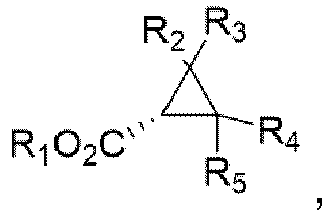
and reaction product is
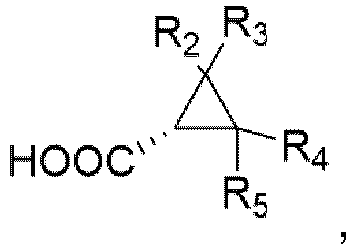
wherein R1 represents -CH3, -CH2CH3, -CH2CH2CH3, or -CHCH3CH3; R2, R3, R4, and R5 each independently represent -H, -F, -Cl, -Br, -CH3, or -CH2CH3.
and reaction product is
wherein R1 represents -CH3, -CH2CH3, -CH2CH2CH3, or -CHCH3CH3; R2, R3, R4, and R5 each independently represent -H, -F, -Cl, -Br, -CH3, or -CH2CH3.
11. The method according to claim 10, wherein the ester compound is

or
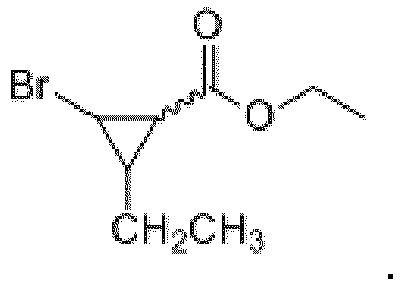
or
12. The method according to claim 10, wherein a pH of the reaction catalyzed by an esterase
mutant is 8.5 to 9.0, and a reaction temperature is 30°C to 35°C.
1. Esterase-Mutante, bestehend aus der Aminosäuresequenz, gezeigt in SEQ ID NO: 1, enthaltend
die Mutation N51G.
2. Esterase-Mutante, bestehend aus der Aminosäuresequenz, gezeigt in SEQ ID NO: 1, enthaltend
die Mutationen: N51G+T117M+S140G, N51G+T117M+S140N, N51G+T117M+S140C, N51G+T117M+S140T,
N51G+T117M+S140A, N51G+T117M+A142V, N51G+T117M+A142P, N51G+T117M+A142S, N51G+T117M+A142L,
N51G+T117M+D217Q, N51G+T117M+D217A, N51G+T117M+D217S, N51G+T117M+D217G, N51G+T117M+L231I,
N51G+T117M+S140C+M52F, N51G+T117M+S140C+M52L, N51G+T117M+S140C+M52N, N51G+T117M+S140C+M52Y,
N51G+T117M+S140C+M52G, N51G+T117M+S140C+M52W, N51G+T117M+S140C+I195F, N51G+T117M+S140C+I195L,
N51G+T117M+S140C+I195T, N51G+T117M+S140C+I195V, N51G+T117M+S140C+D217S, N51G+T117M+S140C+L231I,
N51G+T117M+S140C+V267I, N51G+T117M+S140C+I268V, N51G+T117M+S140C+S295F, N51G+T117M+S140C+S295M,
N51G+T117M+S140C+S295N, N51G+T117M+S140C+S295G, oder N51G+T117M+S140C+S295D.
3. DNA-Molekül, das für die Esterase-Mutante nach Anspruch 1 oder 2 codiert.
4. Rekombinantes Plasmid, das das DNA-Molekül nach Anspruch 3 enthält.
5. Rekombinantes Plasmid nach Anspruch 4, wobei das rekombinante Plasmid pET-22b(+),
pET-22b(+), pET-3a(+), pET-3d(+), pET-11a(+), pET-12a(+), pET-14b, pET-15b(+), pET-16b(+),
pET-17b(+), pET-19b(+), pET-20b(+), pET-21a(+), pET-23a(+), pET-23b(+), pET-24a(+),
pET-25b(+), pET-26b(+), pET-27b(+), pET-28a(+), pET-29a(+), pET-30a(+), pET-31b(+),
pET-32a(+), pET-35b(+), pET-38b(+), pET-39b(+), pET-40b(+), pET-41 a(+), pET-41 b(+),
pET-42a(+), pET-43a(+), pET-43b(+), pET-44a(+), pET-49b(+), pQE2, pQE9, pQE30, pQE31,
pQE32, pQE40, pQE70, pQE80, pRSET-A, pRSET-B, pRSET-C, pGEX-5X-1, pGEX-6p-1, pGEX-6p-2,
pBV220, pBV221, pBV222, pTrc99A, pTwin1, pEZZ18, pKK232-8, pUC-18, oder pUC-19 ist.
6. Wirtszelle, die das rekombinante Plasmid nach Anspruch 4 oder 5 enthält.
7. Wirtszelle nach Anspruch 6, wobei die Wirtszelle eine prokaryontische Zelle oder eine
eukaryontische Zelle umfasst.
8. Wirtszelle nach Anspruch 7, wobei die prokaryontische Zelle eine Escherichia coli-BL21-Zelle oder eine kompetente Escherichia coli-DH5α-Zelle ist und die eukaryontische Zelle Hefe ist.
9. Verfahren zur Herstellung chiraler Säuren, umfassend einen Schritt zum Katalysieren
einer Reaktion einer Esterverbindung durch eine Esterase, wobei die Esterase die Esterase-Mutante
nach Anspruch 1 oder 3 ist.
10. Verfahren nach Anspruch 9, wobei die Esterverbindung
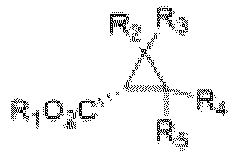
ist und das Reaktionsprodukt
ist, wobei R1 -CH3, -CH2CH3, -CH2CH2CH3, oder - CHCH3CH3 darstellt; R2, R3, R4, und R5 jeweils unabhängig -H, -F, -Cl, -Br, -CH3, oder -CH2CH3 darstellen.
ist und das Reaktionsprodukt
ist, wobei R1 -CH3, -CH2CH3, -CH2CH2CH3, oder - CHCH3CH3 darstellt; R2, R3, R4, und R5 jeweils unabhängig -H, -F, -Cl, -Br, -CH3, oder -CH2CH3 darstellen.
11. Verfahren nach Anspruch 10, wobei die Esterverbindung

oder
ist.
oder
ist.
12. Verfahren nach Anspruch 10, wobei ein pH-Wert der durch eine Esterase-Mutante katalysierten
Reaktion 8,5 bis 9,0 beträgt und eine Reaktionstemperatur 30 °C bis 35 °C beträgt.
1. Mutant d'estérase constitué de la séquence d'acides aminés indiquée dans la SEQ ID
N° : 1 contenant la mutation N51G.
2. Mutant d'estérase constitué de la séquence d'acides aminés indiquée dans la SEQ ID
N° : 1 contenant les mutations : N51G+T117M+S140G, N51G+T117M+S140N, N51G+T117M+S140C,
N51G+T117M+S140T, N51G+T117M+S140A, N51G+T117M+A142V, N51G+T117M+A142P, N51G+T117M+A142S,
N51G+T117M+A142L, N51G+T117M+D217Q, N51G+T117M+D217A, N51G+T117M+D217S, N51G+T117M+D217G,
N51G+T117M+L231I, N51G+T117M+S140C+M52F, N51G+T117M+S140C+M52L, N51G+T117M+S140C+M52N,
N51G+T117M+S140C+M52Y, N51G+T117M+S140C+M52G, N51G+T117M+S140C+M52W, N51G+T117M+S140C+I195F,
N51G+T117M+S140C+I195L, N51G+T117M+S140C+I195T, N51G+T117M+S140C+I195V, N51G+T117M+S140C+D217S,
N51G+T117M+S140C+L231T, N51G+T117M+S140C+V267I, N51G+T117M+S140C+I268V, N51G+T117M+S140C+S295F,
N51G+T117M+S140C+5295M, N51G+T117M+S140C+S295N, N51G+T117M+S140C+S295G, ou N51G+T117M+S140C+S295D.
3. Molécule d'ADN codant le mutant d'estérase selon la revendication 1 ou 2.
4. Plasmide recombiné contenant la molécule d'ADN selon la revendication 3.
5. Plasmide recombiné selon la revendication 4, dans lequel le plasmide recombiné est
pET-22b(+), pET-22b(+), pET-3a(+), pET-3d(+), pET-11a(+), pET-12a(+), pET-14b, pET-15b(+),
pET-16b(+), pET-17b(+), pET-19b(+), pET-20b(+), pET-21a(+), pET-23a(+), pET-23b(+),
pET-24a(+), pET-25b(+), pET-26b(+), pET-27b(+), pET-28a(+), pET-29a(+), pET-30a(+),
pET-31b(+), pET-32a(+), pET-35b(+), pET-38b(+), pET-39b(+), pET-40b(+), pET-41 a(+),
pET-41 b(+), pET-42a(+), pET-43a(+), pET-43b(+), pET-44a(+), pET-49b(+), pQE2, pQE9,
pQE30, pQE31, pQE32, pQE40, pQE70, pQE80, pRSET-A, pRSET-B, pRSET-C, pGEX-5X-1, pGEX-6p-1,
pGEX-6p-2, pBV220, pBV221, pBV222, pTrc99A, pTwin1, pEZZ18, pKK232-8, pUC-18, ou pUC-19.
6. Cellule hôte contenant le plasmide recombiné selon la revendication 4 ou 5.
7. Cellule hôte selon la revendication 6, dans laquelle la cellule hôte comprend une
cellule procaryote ou une cellule eucaryote.
8. Cellule hôte selon la revendication 7, dans laquelle la cellule procaryote est une
cellule Escherichia coli BL21 ou une cellule compétente Escherichia coli DH5α, et la cellule eucaryote est une levure.
9. Procédé de production d'acides chiraux, comprenant une étape de catalyse d'une réaction
de composé ester par une estérase, dans lequel l'estérase est le mutant d'estérase
selon la revendication 1 ou 3.
10. Procédé selon la revendication 9, dans lequel le composé ester est
et le produit de la réaction est
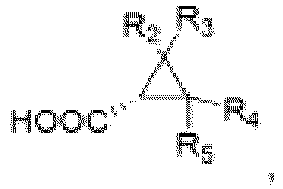
où R1 représente -CH3, -CH2CH3, -CH2CH2CH3, ou -CHCH3CH3 ; R2, R3, R4, et R5 représentent chacun indépendamment -H, -F, -Cl, -Br, -CH3, ou - CH2CH3.
et le produit de la réaction est
où R1 représente -CH3, -CH2CH3, -CH2CH2CH3, ou -CHCH3CH3 ; R2, R3, R4, et R5 représentent chacun indépendamment -H, -F, -Cl, -Br, -CH3, ou - CH2CH3.
11. Procédé selon la revendication 10, dans lequel le composé ester est

ou
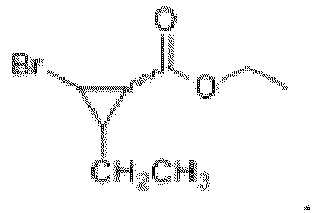
ou
12. Procédé selon la revendication 10, dans lequel le pH de la réaction catalysée par
un mutant d'estérase est compris entre 8,5 et 9,0, et la température de réaction est
comprise entre 30 et 35°C.
REFERENCES CITED IN THE DESCRIPTION
This list of references cited by the applicant is for the reader's convenience only. It does not form part of the European patent document. Even though great care has been taken in compiling the references, errors or omissions cannot be excluded and the EPO disclaims all liability in this regard.
Patent documents cited in the description