| (19) |
 |
|
(11) |
EP 1 778 753 B1 |
| (12) |
EUROPEAN PATENT SPECIFICATION |
| (45) |
Mention of the grant of the patent: |
|
19.11.2008 Bulletin 2008/47 |
| (22) |
Date of filing: 04.08.2004 |
|
| (51) |
International Patent Classification (IPC):
|
| (86) |
International application number: |
|
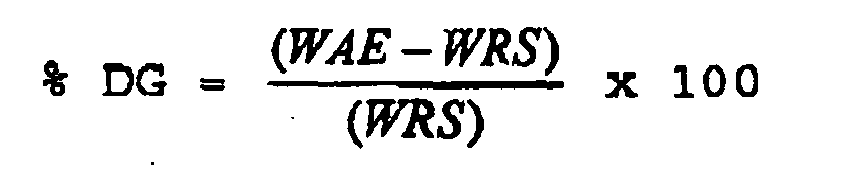
PCT/EP2004/008735 |
| (87) |
International publication number: |
|
WO 2006/012912 (09.02.2006 Gazette 2006/06) |
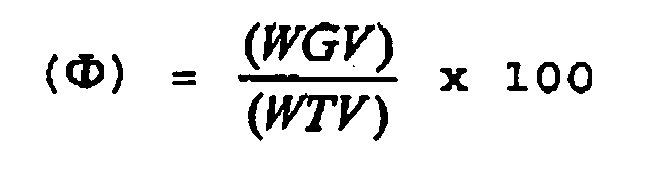
|
| (54) |
THERMOPLASTIC ELASTOMERIC MATERIAL AND PROCESS FOR ITS MANUFACTURING
THERMOPLASTISCHES ELASTOMERES MATERIAL UND HERSTELLUNGSVERFAHREN DAFÜR
ÉLASTOMÈRE THERMOPLASTIQUE ET PROCESSUS DE FABRICATION
|
| (84) |
Designated Contracting States: |
|
AT BE BG CH CY CZ DE DK EE ES FI FR GB GR HU IE IT LI LU MC NL PL PT RO SE SI SK TR
|
| (43) |
Date of publication of application: |
|
02.05.2007 Bulletin 2007/18 |
| (73) |
Proprietor: Pirelli & C. S.p.A. |
|
20123 Milano (IT) |
|
| (72) |
Inventors: |
|
- COIAI, Serena
I-56010 Pontasserchio (IT)
- PASSAGLIA, Elisa
I-56121 Pisa (IT)
- HIREL, Catherine
30100 Grenoble (FR)
- CIARDELLI, Francesco
I-56125 Pisa (IT)
- TIRELLI, Diego
I-20126 Milano (IT)
- RESMINI, Emiliano
I-20126 Milano (IT)
- PERUZZOTTI, Franco
I-20126 Milano (IT)
|
| (74) |
Representative: Giannesi, Pier Giovanni |
|
Pirelli & C. S.p.A.
Viale Sarca, 222
20126 Milan
20126 Milan (IT) |
| (56) |
References cited: :
WO-A-02/24795
US-A- 3 042 634
US-B1- 6 262 175
|
GB-A- 2 022 105
US-A1- 2003 013 815
|
|
| |
|
|
|
|
| |
|
| Note: Within nine months from the publication of the mention of the grant of the European
patent, any person may give notice to the European Patent Office of opposition to
the European patent
granted. Notice of opposition shall be filed in a written reasoned statement. It shall
not be deemed to
have been filed until the opposition fee has been paid. (Art. 99(1) European Patent
Convention).
|
[0001] The present invention relates to a process for manufacturing a thermoplastic elastomeric
material, said process comprising a free radical polymerization of vinyl monomers
in the presence of a vulcanized rubber in a subdivided form.
[0002] The increased production of industrial rubber products has resulted in the accumulation
of large amounts of rubber wastes which are generally disposed in dedicated landfills
with the main drawbacks of environment pollution as well as of the need for large
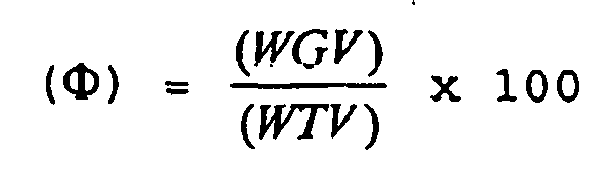
dedicated areas for storing said wastes.
[0003] It is known in the art to depolymerize waste rubber, such as tyres, in an effort
to reduce the volume of waste and obtain a useful byproduct. Likewise, rubber products
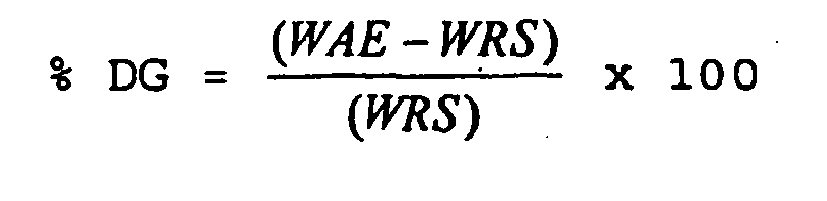
may be devulcanized in an attempt to recycle the waste rubber.
[0004] In addition to these techniques, it is common in the art to grind the waste rubber
and utilize the ground particles so obtained. These ground particles may then be compounded
with thermoplastic polymeric materials in order to make final products which may be
employed in a plurality of applications.
[0005] Said ground particles may be added to substantially thermoplastic polymers such as,
for example, polypropylene or polystyrene, to improve their impact strength.
[0006] For example, the article of
D. Tuchman and S. L. Rosen published in "Journal of Elastomers and Plastics", Vol.
10, pp. 115-128 (1978), discloses the addition of cryogenically ground tyre rubber to various thermoplastic
polymers including polypropylene and polystyrene. In particular, with regard to polystyrene,
the authors said that the cryogenically ground tyre rubber acts a moderately good
impact enhancer when mechanically blended with polystyrene. A mechanical blend comprising
20% by weight of cryogenically ground tyre rubber produces a material mechanically
comparable to a medium impact polystyrene. Moreover, the authors have investigated
several techniques in order to graft styrene to the cryogenically ground tyre rubber.
To this aim, different techniques were investigated such as, bulk graft, free radical
graft and acid graft. The authors said that only an aqueous slurry process using a
water-soluble initiator system was successful in giving a product having improved
impact strength with respect to a product obtained by a straight mechanical blend.
[0007] US patent 3,042,63.4 discloses a process of making a rubber-resin product which comprises heating a mixture
comprising comminuted rubber that has been vulcanized, water and resin-forming monomeric
material selected from the group consisting of monoolefins such as, for example, styrene,
α-methyl styrene, and acrylonitrile, and mixtures of such monoolefins, with material
selected from the group consisting of butadiene and divinyl benzene, in an amount
up to one-fourth the weight of said monoolefins, at a temperature of from 125°C to
250°C, until polymerization of said monomeric material, and recovering a dry-rubber
resin product therefrom that may be masticated to give a uniform smooth rubber-resin
blend. The abovementioned rubber-resin product is said to range from a stiffened rubbery
product at the lower styrene monomer charge to a rigid brittle gum plastic at high
styrene monomer charge.
[0008] Patent application
GB 2,022,105 discloses a method of making plastic materials incorporating reclaimed tyre rubber
which comprises swelling said reclaimed tyre rubber with a quantity of monomer which
is insufficient to saturate said reclaimed tyre rubber and polymerizing the swollen
mass. Monomers which may be conveniently used are selected from: vinyl aromatic compounds
such as, for example, styrene, or substituted styrenes (for example, β-bromostyrene,
chlorostyrene); acrylonitrile; divinyl benzene; or mixtures thereof. The obtained
plastic materials are said to have good impact strength, tensile strength and elongation
at break.
[0009] The article of
M. Pittolo and R. P. Burford published in "Journal of Material Science", Vol. 21,
pp. 1769-1774 (1986), discloses a study on rubber-crumb modified polystyrene. In particular, peroxide
crosslinked polybutadiene and styrene/butadiene rubber powders were converted to semi-interpenetrating
networks by swelling in styrene monomer and subsequent homopolymerization. Two initiator
types were selected, one causing bonding between polystyrene and the rubber (benzoyl
peroxide), the other allowing independent polymerization [azobis(isobutyro-nitrile)].
The polystyrene modified powders were then incorporated into a polystyrene matrix
and the tensile properties of the resulting composites were determined. Improvements
in performance over untreated crumb-modified composites were observed, with increased
breaking strains due to crazing.
[0010] The article of
M. Pittolo and R. P. Burford published in "Rubber Chemistry and Technology", Vol.
58, pp. 97-106 (1986), discloses the use of recycled rubber-crumb as thoughener of polystyrene. In particular,
the rubber-crumb were treated with styrene monomer and benzoyl peroxide in order to
graft the polystyrene on the rubber-crumb surface. The obtained modified rubber-crumb
was then incorporated into a polystyrene matrix obtaining a composite material. The
toughness of the obtained composite material is said to increase with increasing rubber-to-matrix
adhesion and decreasing particle size of the rubber-crumb.
[0012] The Applicant has faced the problem of improving the impact strength of thermoplastic
elastomeric materials incorporating vulcanized ground rubber. In particular, the Applicant
has faced the problem of improving the impact strength of thermoplastic elastomeric
materials comprising a vulcanized ground rubber surface-grafted with at least one
vinyl polymer.
[0013] The Applicant has now found that it is possible to improve said impact strength by
increasing the amount of said surface-grafted vinyl polymer. The incresead amount
of the surface-grafted vinyl polymer allows to obtain thermoplastic elastomeric materials
showing an improved impact strength which may be directly used in order to make manufactured
products. Moreover, said thermoplastic elastomeric materials may be used in blends
with other polymeric materials, in particular with polymeric materials having the
same kind of polymeric chains (e.g. vinyl polymer chains), in order to improve their
impact strength.
[0014] According to a first aspect, the present invention relates to a process for manufacturing
a thermoplastic elastomeric material said process comprising the following steps:
- surface treating a vulcanized rubber in a subdivided form in order to provide hydroxy
and/or mercapto groups on its surface;
- grafting at least one vinyl monomer to said surface-treated vulcanized rubber in the
presence of at least one free radical initiator so as to obtain a vinyl polymer grafted
onto the surface of said vulcanized rubber in a subdivided form.
[0015] Preferably, said vinyl polymer is grafted onto the surface of said vulcanized rubber
in a subdivided form in an amount not lower than 60% by weight, preferably not lower
than 70% by weight, more preferably not lower than 80% by weight, with respect to
the total weight of the surface-grafted vinyl polymer and the vulcanized rubber in
a subdivided form.
[0016] Generally, the amount of said surface grafted vinyl polymer is not higher than 99.9%
by weight, preferably not higher than 95% by weight, with respect to the weight of
the thermoplastic elastomeric material after extraction of the ungrafted vinyl polymer.
[0017] The amount of the surface-grafted vinyl polymer may be determined by means of the
following formula:

wherein:
- WGV is the weight, expressed in grams (g), of the surface-grafted vinyl polymer;
- WAE is the weight, expressed in grams (g), of the obtained thermoplastic elastomeric
material after extraction of the ungrafted vinyl polymer.
[0018] The weight of the surface-grafted vinyl polymer may be determined by means of gravimetric
analysis by mass balance: further details about said analysis will be reported in
the examples which follow.
[0019] The extraction of the ungrafted vinyl polymer may be carried out by means of processes
known in the art such as, for example, by solvent extraction: further details about
the extraction process will be reported in the examples which follow.
[0020] Preferably, the Degree of Grafting (DG) (%) of said vinyl polymer onto the surface
of said vulcanized rubber in a subdivided form is not lower than 150%, preferably
of from 160% to 600%, more preferably of from 180% to 800%.
[0021] The Degree of Grafting (DG) may be determined according to the article of
M. Pittolo and R. P. Burford published in "Rubber Chemistry and Technology" above reported, by means of the following formula:
wherein:
- WAE is the weight, expressed in grams (g), of the obtained thermoplastic elastomeric
material after extraction of the ungrafted vinyl polymer;
- WRS is the weight, expressed in grams (g), of the vulcanized rubber in a subdivided
form in the obtained thermoplastic elastomeric material.
[0022] Further details about the determination of the Degree of Grafting will be reported
in the examples which follow
[0023] According to one preferred embodiment, said vinyl polymer is grafted onto the surface
of the vulcanized rubber in a subdivided form by means of a sulfur bridge (-S- bridge)
.
[0024] Preferably, said vulcanized rubber in a subdivided form is surface-treated in order
to provide mercapto groups on its surface.
[0025] Preferably, the grafting efficiency (Φ) of said vinyl polymer onto the surface of
said vulcanized rubber is not lower than 40%, preferably of from 45% to 60%, more
preferably of from 50% to 80%.
[0026] Said grafting efficiency (Φ) may determined by the means of the following formula:
wherein:
- WGV is the weight, expressed in grams (g), of the surface-grafted vinyl polymer;
- WTV is the total weight, expressed in grams (g), of the vinyl polymer contained in
the obtained
- thermoplastic elastomeric material.
[0027] For the aim of the present description and of the claims which follow, with the expression
"the total weight of the vinyl polymer contained in the obtained thermoplastic elastomeric
material" it is intended the sum between the weight of the surface-grafted vinyl polymer
and the weight of the ungrafted vinyl polymer present in the obtained thermoplastic
elastomeric material. Said weight may be determined by means of a gravimetric analysis
by mass balance: further details about said analysis will be reported in the examples
which follow.
[0028] For the purpose of the present description and of the claims which follow, except
where otherwise indicated, all numbers expressing amounts, quantities, percentages,
and so forth, are to be understood as being modified in all instances by the term
"about". Also, all ranges include any combination of the maximum and minimum points
disclosed and include any intermediate ranges therein, which may or may not be specifically
enumerated herein.
[0029] The vulcanized rubber in a subdivided form which may be used in the present invention
may be obtained by grinding or otherwise comminuting any source of vulcanized rubber
compound such as, for example, tyres, roofing membranes, hoses, gaskets, and the like,
and is preferably obtained from reclaimed or scrap tyres using any conventional method.
For example, the vulcanized rubber in a subdivided form may be obtained by mechanical
grinding at ambient temperature or in the presence of a cryogenic coolant (i.e. liquid
nitrogen). Any steel or other metallic inclusions should be removed from the ground
tyres before use. Usually, fibrous material such as, for example, tyre cord fibers,
is preferably removed from the ground rubber using conventional separation methods.
[0030] According to one preferred embodiment, the vulcanized rubber in a subdivided form
which may be used in the present invention, is in the form of powder or granules having
a particle size not higher than 10 mm, preferably not higher than 5 mm.
[0031] According to a more preferred embodiment, the vulcanized rubber in a subdivided form
which may be used in the present invention, has a particle size not higher than 0.5
mm, preferably not higher than 0.2 mm, more preferably not higher than 0.1 mm.
[0032] According to one preferred embodiment, the vulcanized rubber in a subdivided form
may comprise at least one crosslinked diene elastomeric polymer or copolymer which
may be of natural origin or may be obtained by solution polymerization, emulsion polymerization
or gas-phase polymerization of one or more conjugated diolefins, optionally blended
with at least one comonomer selected from monovinylarenes and/or polar comonomers
in an amount of not more than 60% by weight.
[0033] The conjugated diolefins generally contain from 4 to 12, preferably from 4 to 8 carbon
atoms, and may be selected, for example, from the group comprising: 1,3-butadiene,
isoprene, 2,3-dimethyl-1,3-butadiene, 1,3-pentadiene, 1,3-hexadiene, 3-butyl-1,3-octadiene,
2-phenyl-1,3-butadiene, or mixtures thereof.
[0034] Monovinylarenes which may optionally be used as comonomers generally contain from
8 to 20, preferably from 8 to 12 carbon atoms, and may be selected, for example, from:
styrene; 1-vinylnaphthalene; 2-vinylnaphthalene; various alkyl, cycloalkyl, aryl,
alkylaryl or arylalkyl derivatives of styrene such as, for example, α-methylstyrene,
3-methylstyrene, 4-propylstyrene, 4-cyclohexylstyrene, 4-dodecylstyrene, 2-ethyl-4-benzylstyrene,
4-p-tolylstyrene, 4-(4-phenylbutyl)styrene, or mixtures thereof.
[0035] Polar comonomers which may optionally be used may be selected, for example, from:
vinylpyridine, vinylquinoline, acrylic acid and alkylacrylic acid esters, nitriles,
or mixtures thereof, such as, for example, methyl acrylate, ethyl acrylate, methyl
methacrylate, ethyl methacrylate, acrylonitrile, or mixtures thereof.
[0036] Preferably, the crosslinked diene elastomeric polymer or copolymer may be selected,
for example, from: cis-1,4-polyisoprene (natural or synthetic, preferably natural
rubber), 3,4-polyisoprene, polybutadiene (in particular polybutadiene with a high
1,4-cis content), optionally halogenated isoprene/isobutene copolymers, 1,3-butadiene/acrylonitrile
copolymers, styrene/1,3-butadiene copolymers, styrene/isoprene/1,3-butadiene copolymers,
styrene/1,3-butadiene/acrylonitrile copolymers, or mixtures thereof.
[0037] Alternatively, the vulcanized rubber in a subdivided form may further comprise at
least one crosslinked elastomeric polymer of one or more monoolefins with an olefinic
comonomer or derivatives thereof. The monoolefins may be selected, for example, from:
ethylene and α-olefins generally containing from 3 to 12 carbon atoms such as, for
example, propylene, 1-butene, 1-pentene, 1-hexene, 1-octene, or mixtures thereof.
The following are preferred: copolymers between ethylene and an α-olefin, optionally
with a diene; isobutene homopolymers or copolymers thereof with small amounts of a
diene, which are optionally at least partially halogenated. The diene optionally present
generally contains from 4 to 20 carbon atoms and is preferably selected from: 1,3-butadiene,
isoprene, 1,4-hexadiene, 1,4-cyclohexadiene, 5-ethylidene-2-norbornene, 5-methylene-2-norbornene,
vinylnorbornene, or mixtures thereof. Among these, the following are particularly
preferred: ethylene/propylene copolymers (EPR) or ethylene/propylene/diene copolymers
(EPDM); polyisobutene; butyl rubbers; halobutyl rubbers, in particular chlorobutyl
or bromobutyl rubbers; or mixtures thereof.
[0038] The surface-grafted vinyl polymer may be obtained by means of a free radical polymerization
of vinyl monomers in the presence of a vulcanized rubber in a subdivided form. Preferably,
said vinyl monomers may be selected, for example, from: alkyl vinyl monomers such
as 2-hydroxyethyl (meth)acrylate, 2-hydroxypropyl (meth)acrylate, 2-ethylhexyl (meth)acrylate,
butoxyethyl (meth) acrylate; cyclic vinyl monomers such as tetrahydrofurfuryl (meth)acrylate;
linear or branched alkyl (meth)acrylates such as methyl (meth)acrylate, ethyl (meth)acrylate,
butyl (meth)acrylate, octyl (meth)acrylate, decyl (meth)acrylate, tridecyl (meth)acrylate,
stearyl (meth)acrylate, lauryl (meth)acrylate, isodecyl (meth)acrylate), n-hexyl (meth)-acrylate;
cyclic (meth)acrylates such as cyclohexyl (meth)acrylate, isobornyl (meth)acrylate;
ethoxylated alkyl (meth)acrylates such as methoxyethyl (meth)acrylate, ethoxyethyl
(meth)acrylate, butoxyethyl (meth)acrylate, 2-(2-ethoxy)ethyl (meth)acrylate; dicyclopentenyl
(meth)-acrylate; diethylene glycol (meth)acrylate; ethoxy-diethylene glycol (meth)acrylate;
benzyl (meth)acrylate; polyethylene glycol(meth)acrylate; polypropylene glycol (meth)acrylate;
methoxypolyethylene glycol (meth)acrylate; methoxypolypropylene glycol (meth)acrylate;
2-phenoxyethyl (meth)acrylate; phenoxypolyethylene glycol (meth)acrylate; alkylphenoxyethyl
(meth)acrylate such as nonylphenoxyethyl (meth)acrylate; alkylphenoxypolyalkylene
glycol (meth)acrylate; 2-hydroxy-3-phenyloxypropyl (meth)-acrylate; tetra-hydrofurfuryloxypropylalkylene
glycol (meth)acrylate; dicyclopentenyloxypolyalkylene glycol (meth)acrylate; polyfluoroalkyl
(meth)acrylate; or mixtures thereof; or from aromatic vinyl monomers such as styrene;
o-methylstyrene; m-methylstyrene; p-methyl-styrene; 2,4-dimethylstyrene; ethylstyrene;
p-t-butyl-styrene; α-methyl-styrene; α-methyl-p-methylstyrene; o-chlorostyrene; m-chlorostyrene;
p-chlorostyrene; p-bromostyrene; 2-methyl-1,4-dichlorostyrene; 2,4-dibromo-styrene;
vinylnaphthalene; or mixture thereof; or derivatives thereof including styrene momonomers
containing copolymerizable monomer as a substituent such as, for example, acrylonitrile,
maleic anhydride, methyl methacrylate, vinyl acetate, divinylbenzene, or mixtures
thereof. Methyl (meth)acrylate or styrene monomers are preferred. Styrene is particularly
preferred.
[0039] With regard to the process for manufacturing a thermoplastic elastomeric material,
the step of providing hydroxy groups and/or mercapto groups on the surface of the
vulcanized rubber in a subdivided form may be carried out in different ways.
[0040] For example, the step of surface treating a vulcanized rubber in a subdivided form
in order to provide hydroxy groups on its surface, may be carried out by dispersing
said vulcanized rubber in a subdivided form in a mixture comprising water and an organic
solvent with at least one oxidizing agent.
[0041] Preferably, the organic solvent may be selected, for example, from: ketones such
as acetone; alcohols such as ethanol, methanol; ethers such as tetrahydrofurane, dioxane;
or mixtures thereof. Acetone aqueous solution (10% acetone/90% water) is particularly
preferred.
[0042] Preferably, the oxidizing agent may be selected, for example from: potassium permanganate,
hydrogen peroxide, osmium tetraoxide, hydrogen peroxide/urea complex, sodium percarbonate,
sodium perchlorate, sodium perborate, potassium peroxymonosulfate, potassium permanganate/potassium
periodate aqueous solution, or mixtures thereof. Potassium permanganate is particularly
preferred.
[0043] Preferably, said surface treating step may be carried out at a temperature of from
-15°C to 50°C, more preferably of from 0°C to 30°C, for a time of from 1 hour to 48
hours, more preferably of from 18 hours to 30 hours.
[0044] Preferably, the oxidizing agent is used in an amount of from 1% by weight to 50%
by weight, preferably of from 10% by weight to 25% by weight, with respect to the
total weight of the vulcanized rubber in a subdivided form.
[0045] The step of surface treating a vulcanized rubber in a subdivided form in order to
provide mercapto groups on its surface may be carried out as follows.
[0046] For example, the vulcanized rubber surface-treated as above disclosed in order to
provide hydroxy groups on its surface, may be reacted with at least one silane coupling
agent in order to provide mercapto groups on its surface.
[0047] Preferably, the silane coupling agent may be selected, for example, from compounds
having the following structural formula (I):
(R)
3Si-C
nH
2n-SH (I)
wherein the groups R, which may be identical or different, are selected from: alkyl,
alkoxy or aryloxy groups or from halogen atoms, on condition that at least one of
the groups R is an alkoxy or aryloxy group; n is an integer of from 1 to 6 inclusive.
[0048] Preferably, the coupling agents may be selected, for example, from: (3-mercaptopropyl)trimetoxysilane,
(3-mercaptopropyl)dimetoxymethylsilane, (3-mercaptopropyl)-trietoxysilane, (3-mercaptopropyl)
dietoxymethylsilane, (3-mercaptopropyl)metoxydimethylsilane, (4-mercaptobutyl)-trimetoxysilane,
(4-mercaptobutyl)dietoxymethylsilane, or mixtures thereof. (3-Mercaptopropyl)trimetoxysilane
is particularly preferred.
[0049] Preferably, the reaction with at least one coupling agent may be carried out at a
temperature of from -10°C to 150°C, more preferably of from 80°C to 100°C, for a time
of from 1 hour to 48 hours, more preferably of from 18 hours to 30 hours.
[0050] Preferably, the coupling agent is used in an amount of from 0.01% by weight to 10%
by weight, preferably of from 0.8% by weight to 2% by weight, with respect to the
total weight of the surface-treated vulcanized rubber.
[0051] Alternatively, the mercapto groups may be provided on the surface of the vulcanized
rubber in a subdivided form by reacting the same with at least one thio-acid having
the following structural formula (II):
R
1-C(=O)-SH (II)
wherein R
1 is selected from alkyl, aryl, alkylaryl or arylakyl groups, in the presence of at
least one free radical initiator.
[0052] Preferably, the thio-acid may be selected, for example, from: thioacetic acid, thiopropionic
acid, thiobenzoic acid, or mixtures thereof. Thioacetic acid is particularly preferred.
[0053] Preferably, the thio-acid is used in an amount of from 0.01% by weight to 3% by weight,
preferably of from 0.1% by weight to 1% by weight, with respect to the total weight
of the vulcanized rubber in a subdivided form.
[0054] Preferably, the free radical initiator may be selected from azo compounds having
the following structural formula (III):
R
2-N=N-R
3 (III)
wherein R
2 and R
3, which may be identical or different, may be selected from organic groups such as,
for example, aliphatic, cycloaliphatic, or aromatic groups; or linear or cyclic nitrile
derivatives.
[0055] Preferably, the free radical initiator may be selected, for example, from: 1,1'-azobis(cyclohexane-carbonitrile),
azodicarbonamide, 2,2'-azobis(2,4-dimethyl-pentenenitrile), 2,2'-azobis(2-ethylpropanimide-amide)•2HCl,
2,2'-azobis(isobutyronitrile), 2,2'-azobis(2-methylbutanenitrile), 4,4'-azobis(4-cyanopentanoic
acid), 2,2'-azobis(2-acetoxypropane), 2-(t-butylazo)-4-methoxy-2,4-dimethylpentanenitrile,
2-(t-butylazo)-2,4-dimethyl-pentanenitrile, 4-(t-butylazo)-4-cyanopentanoic acid,
2-(t-butylazo)isobutyronitrile, 2-(t-butylazo)-2-methyl-butanenitrile, 1-(t-amylazo)cyclohexanecarbonitrile,
1-(t-butylazo)cyclohexanecarbonitrile, 1-(t-butylazo)formamide, or mixtures thereof.
2,2'-Azobis(isobutyronitrile) is particularly preferred.
[0056] Preferably, the free radical initiator is used in an amount of from 0.001% by weight
to 10% by weight, preferably of from 0.005% by weight to 5% by weight, with respect
to the total weight of the vulcanized rubber in a subdivided form.
[0057] Preferably, the reaction with at least one thio-acid and at least one free radical
initiator may be carried out at a temperature of from 0°C to 150°C, more preferably
of from 30°C to 90°C, for a time of from 1 hour to 75 hours, more preferably of from
30 hours to 50 hours.
[0058] According to one preferred embodiment, the vinyl monomer which may be advantageously
used in the process according to the present invention, may be selected from the vinyl
monomers above reported.
[0059] According to one preferred embodiment, the vinyl monomer is used in an amount of
from 0.1% by weight to 99% by weight, preferably of from 0.5% by weight to 90% by
weight, with respect to the total weight of the surface-treated vulcanized rubber
in a subdivided form and the vinyl monomer.
[0060] According to one preferred embodiment, the free radical initiator which may be advantageously
used in the grafting step of the process according to the present invention, may be
selected, for example, from: peroxide compounds, azo compounds, or mixtures thereof.
Peroxide compounds are particularly preferred.
[0061] Specific examples of peroxide compounds which may be advantageously used are: dibenzoyl
peroxide, t-butyl hydroperoxide, di-t-butyl peroxide, bis(2,4-dichlorobenzoyl)peroxide,
bis-(4-chlorobenzoyl)peroxide, 1,1-dit-butylperoxy-3,5,5-trimethylcycloexane, 2,2-di-t-butyl-peroxybutane,
t-butylperoxybenzoate, n-butyl-4,4-di-t-butylperoxyvalerate, 2,5-dimethyl-2,5-di-t-butylperoxy-hexane,
dicumyl peroxide, bis(t-butylperoxyisopropyl)-benzene, 3,3,6,6,9-hexamethyl-1,2,4,5-tetraoxacyclononane,
2,5-dimethyl-2,5-di-t-butylperoxy-hexyne-3, t-butylcumyl peroxide, ethyl-3,3-di-(t-butylperoxy)butyrate,
t-butyl- peroxy-3,3,5-trimethylhexanoate, bis-(4-methylbenzoyl)-peroxide, or mixtures
thereof. Dibenzoyl peroxide is particularly preferred.
[0062] Specific examples of azo compounds which may be advantageously used have been already
disclosed above.
[0063] According to one preferred embodiment, the free radical initiator is used in an amount
of from 0.001% by moles to 5% by moles, preferably of from 0.01% by moles to 2% by
moles, with respect to the total moles of vinyl monomer.
[0064] According to one preferred embodiment, said grafting step may be carried out at a
temperature of from 0°C to 150°C, more preferably of from 50°C to 95°C, for a time
of from 1 hour to 48 hours, more preferably of from 15 hours to 30 hours.
[0065] Preferably, in order to improve the absorption of the vinyl monomer on the surface-treated
vulcanized rubber in a subdivided form, the vinyl monomer may be dissolved in an inert
solvent. Preferably, said inert solvent may be selected from: aromatic hydrocarbons
(for example, benzene, toluene, ethylbenzene, xylene), alicyclic hydrocarbon (for
example, cyclohexane), aliphatic hydrocarbons (for example, hexane, octane), ketones
(for example, methyl ethyl ketone), esters (for example, ethyl acetate), ethers (for
example, 1,4-dioxane), or mixtures thereof.
[0066] The solvent may be used in an amount of from 0% by weight to 30% by weight, preferably
of from 5% by weight to 20% by weight, with respect to the total weight of the vinyl
monomer.
[0067] Said grafting step may be carried out by conventional method such as, for example,
bulk polymerization, solution polymerization, suspension polymerization, emulsion
polymerization, bulk-suspension polymerization.
[0068] Particularly preferred, is a bulk polymerization or a bulk-suspension polymerization
wherein a surface-treated vulcanized rubber in a subdivided form dissolved in a vinyl
monomer is bulk-polymerized and then, if necessary, suspension-polymerized. The polymerization
may be initiated, for example, by heating the system or by irradiating the system
with light or radiations.
[0069] In the bulk-polymerization method which is advantageous in industrial manufacturing
process, an inert solvent may be added. Inert solvents which may be advantageously
used have been already disclosed above.
[0070] Said grafting step may be carried out under atmosferic pressure or under applied
pressure, in an atmosphere of an inert gas such as, for example, nitrogen, helium,
argon, preferably under a stream of an inert gas, more preferably under a nitrogen
stream.
[0071] Generally, said grafting step is continued until the conversion of the vinyl monomer
reaches 20% to 100%, preferably 25% to 90%.
[0072] Said grafting step may be carried out in any system known in the art such as, for
example, a batch system, a semi-batch system or a continuous system. For example,
the polymerization may be carried out according to a continuous polymerization method
such as, for example, a multistage bath continuous polymerization method, a multistage
column continuous polymerization method, or a combination thereof.
[0073] After completion of said grafting step, the obtained thermoplastic elastomeric material
may be recovered in accordance with any methods known in the art such as, for example,
by removing the unreacted monomer, the homopolymer, and the diluent solvent optionally
present, by solvent extraction, or by heating under reduced pressure, or by extrusion
by means of an extruder designed so as to remove volatile matter. Subsequently, the
so obtained thermoplastic elastomeric material may be pelletized or powdered as needed.
[0074] Alternatively, the obtained thermoplastic elastomeric material may be recovered by
a method such as separation by filtration or centrifugation, washed with water or
with inert solvents, dried and subsequently pelletized or powdered as needed.
[0075] The pellets or powders may be either packaged for future use or used immediately
in a process of forming a manufactured product.
[0076] As already reported above, the pellets or powders may be directly formed into manufactured
products according to techniques known in the art for thermal processing of thermoplastic
resin compositions. For example, compression molding, vacuum molding, injection molding,
calendering, casting, extrusion, filament winding, laminating, rotational or slush
molding, transfer molding, lay-up or contact molding, stamping, or combinations of
these methods, may be used.
[0077] Alternatively, as already reported above, the obtained pellets or powder may be added
as interface compatibilizing agent to other polymers, preferably to polymers having
the same kind of polymeric chains. For example, the obtained thermoplastic elastomeric
material in pellets or powder form, may be melt-mixed with polystyrene to be used
as a polymer blend, or may be mixed or melt-mixed with a polymer other than polystyrene,
said polymer being selected, for example, from: styrene-butadiene rubbers, polyphenylene
ether resins, polycarbonates, polyesters, to be used as a polymer blend.
[0078] Therefore, according to a further aspect, the present invention also relates to the
use of a thermoplastic elastomeric material according to the present invention in
blends with other polymers.
[0079] To the obtained thermoplastic elastomeric material conventional additives such as
stabilizers [for example, antioxidants (phenolic antioxidants, phosphoric antioxidants),
ultraviolet ray absorber (thermostabilizers], flame-retardants, lubricants (for example,
zinc stearate, calcium stearate, ethylene-bis-stearylamide), mold lubricants or parting
agents, antistatic agents, fillers, colorants (for example, titanium oxide, red iron
oxide, azo compounds, perylene, phthalocyanine, heterocyclic-series compounds), plasticizers
and spreading agents (for example, polyethylene glycol, mineral oil), surface-modifying
agents, or mixtures thereof, may be added.
[0080] According to a further aspect, the present invention also relates to a manufactured
product comprising the thermoplastic elastomeric material above disclosed.
[0081] Said thermoplastic elastomeric material may be molded in sheet form and structural
form designed and adaptable as packaging structures, housings, support structures,
furnitures, molded articles, toys, architectural trims, and the like.
[0082] Moreover, said thermoplastic elastomeric material may also be used in order to make,
for example, belts such as, conveyor belts, power belts or driving belts; flooring
and footpaths which may be used for recreational area, for industrial area, for sport
or safety surfaces; flooring tiles; mats such as, anti-static computer mats, automotive
floor mats; mounting pads; shock absorbers sheetings; sound barriers; membrane protections;
carpet underlay; automotive bumpers; wheel arch liner; seals such as, automotive door
or window seals; o-rings; gaskets; watering systems; pipes or hoses materials; flower
pots; building blocks; roofing materials; and the like.
[0083] The present invention will be further illustrated below by means of a number of preparation
examples, which are given for purely indicative purposes and without any limitation
of this invention.
EXAMPLE 1
Preparation of surface-treated vulcanized rubber in a subdivided form (hydroxy groups)
[0084] A vulcanized rubber (cryogenically ground waste rubber from scrap tyres (having an
average diameter <0.1 mm (140 mesh) - Applied Cryogenics International AG) was extracted
with boiling acetone in order to remove plasticizers, accelerators and other additives
usually present in the vulcanized rubber obtained from scrap tyres and was subsequently
dried under vacuum until constant weight.
[0085] 10 g of the obtained vulcanized rubber and 50 ml of an H
2O/acetone solution (9/1 in volume), were added into a 500 ml flask. The mixture was
stirred, at room temperature, for 12 hours.
[0086] Afterward, 200 ml of an aqueous solution of potassium permanganate (KMnO
4 - 10% by weight in distilled water) were added dropwise and the mixture was stirred,
at room temperature, for 24 hours. After 24 hours the purple colour of the potassium
permanganate disappeared indicating the completion of the reaction.
[0087] The formed by-product, manganese dioxide (MnO
2), was further oxidized by adding 10 ml (2 ml each time) of a hydrogen peroxide solution
(30% in volume) with 1% in volume of suplhuric acid. The obtained solid product was
then filtered and washed with water, then with acetone and finally with diethyl ether,
until the filtrate was neutral. Subsequently, the solid product was dried under vacuum
until constant weight: a vulcanized rubber with hydroxy groups on its surface was
obtained.
EXAMPLE 2
Preparation of surface-treated vulcanized rubber in a subdivided form (mercapto groups)
[0088] 2 g of the oxidized rubber obtained as disclosed in Example 1 and 100 ml of toluene
were added into a 250 ml flask and the mixture was stirred, at room temperature, for
12 hours. Subsequently, 1.3 ml of 3-mercaptopropyltrimethoxysilane (Sigma-Aldrich)
was added and the mixture was stirred, at 95°C, for 24 hours.
[0089] Then, the mixture was centrifugated and the obtained solid product was washed with
toluene, then with acetone, then with diethyl ether and finally with pentane. Subsequently,
the solid product was dried under vacuum until constant weight: a vulcanized rubber
with mercapto groups on its surface was obtained.
EXAMPLE 3
Reparation of surface-treated vulcanized rubber in a subdivided form (mercapto groups)
[0090] 5 g of vulcanized rubber (cryogenically ground waste rubber from scrap tyres (<0.1
mm (140 mesh) - Applied Cryogenics International AG) which was extracted as disclosed
in Example 1 and 100 ml of toluene were added into a 500 ml flask. The mixture was
stirred, at room temperature, for 12 hours.
[0091] Subsequently, 1.5 ml of thioacetic acid (Sigma-Aldrich) and 0.035 g of 2,2'-azobis(isobutyronitrile)
(Sigma-Aldrich), were added. The mixture was heated to 75°C and was maintained at
said temperature, under stirring, for 48 hours.
[0092] Then, the mixture was centrifugated and the obtained solid product was washed with
toluene, then with methanol and was subsequently dried under vacuum until constant
weight.
[0093] 30 ml of toluene were then added to the dried solid product (0.65 g) and the mixture
was stirred, at room temperature, for 12 hours. Subsequently, 15 ml of a sodium hydroxide
solution (1% in methanol), were added slowly and the mixture was stirred, at room
temperature, for 3 hours. Then, 5 ml of a hydrochloric acid solution (1M solution)
were added and the stirring, at room temperature, was continued for 30 minutes.
[0094] The obtained solid product was washed with water, filtered, washed with methanol,
and finally dried until constant weight: a vulcanized rubber with mercapto groups
on its surface was obtained.
EXAMPLES 4 -7
Preparation of the thermoplastic material comprising an elastomeric phase
[0095] The surface-treated vulcanized rubbers obtained as disclosed in Examples 1 and 2
were used.
[0096] For comparative purposes, a vulcanized rubber in a subdivided form as such (namely,
not surface-treated), was extracted as disclosed in Example 1.
[0097] 0.5 g of vulcanized rubber were added to a 50 ml glass tube under nitrogen stream
and a solution of 9.5 g of styrene with dibenzoyl peroxide (the amount of dibenzoyl
peroxide are given in Table 1 and is expressed as % by moles with respect to the total
moles of the vinyl monomer) was then added. The mixture was stirred, at 85°C, for
24 hours.
[0098] The obtained thermoplastic elastomeric material was suspended in chloroform, precipitated
in methanol and dried under vacuum until constant weight.
[0099] The grafting efficiency (Φ) of the styrene was determined as follows.
[0100] A sample of 1 g of the obtained thermoplastic elastomeric material was extracted
in boiling chloroform for 8 hours in order to extract the ungrafted polystyrene. After
the extraction, the thermoplastic elastomeric material was dried under vacuum until
constant weight and conditioned at room temperature before weighting. The difference
between the weight of the sample before the extraction and the weight of the sample
after the extraction corresponds to the weight of the ungrafted polystyrene.
[0101] The grafting efficiency (Φ) was determined by means of the following formula:
wherein:
- WGV is the weight, expressed in grams (g), of the surface-grafted polystyrene;
- WTV is the total weight, expressed in grams (g), of the polystyrene contained in the
obtained thermoplastic elastomeric material.
[0102] The weight of the surface-grafted polystyrene (WGV) corresponds to the difference
between the total weight of the polystyrene (WTV) and the weight of the ungrafted
polystyrene which was determined as reported above.
[0103] The total weight of polystyrene (WTV), which corresponds to the sum between the weight
of the surface-grafted polystyrene and the weight of the ungrafted polystyrene contained
in the obtained thermoplastic elastomeric material, was determined by means of a gravimetric
analysis by a mass balance. To this purpose the thermoplastic elastomeric material
obtained as disclosed above, was suspended in chloroform, precipitated in methanol
and dried under vacuum until constant weight and was weighted: the difference between
the so obtained weight and the weight of the starting vulcanized rubber in a subdivided
form used in order to obtain the corresponding thermoplastic elastomeric material,
corresponds to the total weigth of the polystyrene (WTV).
[0104] The Degree of Grafting (% DG) was determined by means of the following formula:
wherein:
- WAE is the weight, expressed in grams (g), of the obtained thermoplastic elastomeric
material after extraction of the ungrafted polystytrene;
- WRS is the weight, expressed in grams (g), of the vulcanized rubber in a subdivided
form in the obtained thermoplastic elastomeric material.
[0105] The amount of the surface-grafted vinyl polymer was determined by means of the following
formula:

wherein:
- WGV is the weight, expressed in grams (g), of the surface-grafted polystyrene;
- WAE is the weight, expressed in grams (g), of the obtained thermoplastic elastomeric
material after extraction of the ungrafted polystyrene.
[0106] The obtained data are given in Table 1.
EXAMPLE 8
Preparation of the thermoplastic material comprising an elastomeric phase
[0107] The surface-treated vulcanized rubber obtained as disclosed in Example 3 was used.
[0108] The preparation was carried out as disclosed in Example 1 the only difference being
the amount of vulacnized rubber and of the styrene used. To this purpose, 0.3 g of
vulcanized rubber were added to a 50 ml glass tube under nitrogen stream and a solution
of 9.7 g of styrene with dibenzoyl peroxide (the amount of dibenzoyl peroxide are
given in Table 1 and is expressed as % by moles with respect to the total moles of
the vinyl monomer) was then added.
[0109] The data reported in Table 1 were obtained as disclosed in Example 1.
TABLE 1
| EXAMPLE |
DIBENZOYL PEROXIDE
(% BY MOLES) |
TOTAL WEIGHT OF POLYSTYRENE
(g) |
WEIGHT OF UNGRAFTED POLYSTYRENE HOMOPOLYMER
(g) |
GRAFTING EFFICIENCY
(Φ) |
DEGREE OF GRAFTING
(% DG) |
AMOUNT OF GRAFTED POLYSTYRENE
(%) |
| 4 (*) |
1 |
0.83 |
0.54 |
35.0 |
58 |
36.7 |
| 5 (*) |
2 |
0.68 |
0.48 |
29.0 |
40 |
28.6 |
| 6 |
1 |
1.61 |
0.84 |
48.0 |
154 |
60.7 |
| 7 |
1 |
3.91 |
1.72 |
56.0 |
438 |
81.4 |
| 8 |
2 |
1.12 |
0.55 |
51.0 |
190 |
65.5 |
(*): comparative.
Example 4: vulcanized rubber (cryogenically ground waste rubber from scrap tyres (average
diameter <0.1 mm (140 mesh) - Applied Cryogenics International AG);
Example 5: vulcanized rubber (cryogenically ground waste rubber from scrap tyres (average
diameter <0.1 mm (140 mesh) - Applied Cryogenics International AG);
Example 6: surface-treated vulcanized rubber from Example 1;
Example 7: surface-treated vulcanized rubber from Example 2;
Example 8: surface-treated vulcanized rubber from Example 3. |
1. Process for manufacturing a thermoplastic elastomeric material, said process comprising
the following steps:
- surface treating a vulcanized rubber in a subdivided form in order to provide hydroxy
and/or mercapto groups on its surface;
- grafting at least one vinyl monomer to said surface-treated vulcanized rubber in
the presence of at least one free radical initiator so as to obtain a vinyl polymer
grafted onto the surface of said vulcanized rubber in a subdivided form.
2. Process for manufacturing a thermoplastic elastomeric material according to claim
1, wherein said vulcanized rubber in as subdivides form is surface treated in order
to provide mercapto groups on its surface,
3. Process for manufacturing a thermoplastic elastomeric material according to claim
1 or 2, wherein the grafting efficiency (Φ) of said vinyl polymer onto the surface
of said vulcanized rubber is not lower than 40%.
4. Process for manufacturing a thermoplastic elastomeric material according to claim
3, wherein the grafting efficiency (Φ) of said vinyl polymer onto the surface of said
vulcanized rubber is of from 45% to 60%.
5. Process for manufacturing a thermoplastic elastomeric material according to claim
3, wherein the grafting ef f iciency (Φ) of said vinyl polymer onto the surface of
said vulcanized rubber is of from 50% to 80%,
6. Process for manufacturing a thermoplastic elastomeric material according to any one
of claims 1 to 5, wherein the vulcanized rubber in a subdivided form is in the form
of powders or granules having a particle size not higher than 10 mm.
7. Process for manufacturing a thermoplastic elastomeric material according to any one
of claims 1 to 5, wherein the vulcanized rubber in a subdivided form is in the form
of powder or granules having a particle size not higher than 0.3 mm.
8. Process for manufacturing a thermoplastic elastomeric material according to claim
7, wherein the vulcanized rubber in a subdivided form is in the form of powder or
granules having a article size not higher than 0.2 mm.
9. Process for manufacturing a thermoplastic elastomeric material according to claim
8, wherein the vulcanized rubber in a subdivided form is in the form of powder or
granules having a particle size not higher than 0.1 mm.
10. Process for manufacturing a thermoplastic elastomeric material according to any one
of the preceding claims, wherein the vulcanized rubber in a subdivided form comprises
at least one crosslinked diene elastomeric polymer or copolymer of natural origin
or obtained by solution polymerization, emulsion polymerization or gas-phase polymerization,
of one or more conjugated diolefins, optionally blended with at least one comonomer
selected from monovinylarenes and/or polar comonomers in an amount of not more than
60% by weight.
11. Process for manufacturing a thermoplastic elastomeric material according to claim
10, wherein the crosslinked diene elastomeric polymer or copolymer is selected from:
cis-1,4-polyisoprene, 3,4-polyisoprene, polybutadiene, optionally halogenated isoprene/isobutene
copolymers, 1,3-butadiene/acrylonitrile copolymers, styrene/1,3-butadiene copolymers,
styrene/isoprene/1,3-butadiene copolymers, styrene/1,3-butadiene/acrylonitrile copolymers,
or mixtures thereof.
12. Process for manufacturing a thermoplastic elastomeric materials according to any one
of the preceding claims, wherein the vulcanized rubber in a subdivided form further
comprises at least one crosslinked elastomeric polymer of one or more monoolefins
with an olefinic comonomer or derivatives thereof.
13. Process for manufacturing a thermoplastic elastomeric material according to claim
12, wherein the crosslinked elastomeric polymer is selected from: ethylene/propylene
copolymers (EPR) or ethylene/propylene/diene copolymers (EPDM); polyisobutene; butyl
rubbers; halobutyl rubbers, in particular chlorobutyl or bromobutyl rubbers, or mixture
thereof.
14. Process for manufacturing a thermoplastic elastomeric material according to any one
of the preceding claims, wherein the step of surface treating a vulcanized rubber
in a subdivided form in order to provide hydroxy groups on its surface is carried
out by dispersing said vulcanized rubber in a subdivided form in a mixture comprising
water and an organic solvent with at least one oxidizing agent.
15. Process for manufacturing a thermoplastic elastomeric material according to claim
14, wherein the organic solvent is selected from: ketones such as acetone; alcohols
such as ethanol, methanol; others such as tetrahydrofurane, dioxane; or mixtures thereof.
16. Process for manufacturing a thermoplastic elastomeric materials according to claims
14 or 15, wherein the oxidizing agent is selected from: potassium permanganate, hydrogen
peroxide, osmium tetraoxide, hydrogen peroxide/urea complex, sodium percarbonate,
sodium perchlorate, sodium perborate, potassium peroxymonosulfate, potassium permanganate/potassium
periodate aqueous solution, or mixtures thereof.
17. Process for manufacturing a thermoplastic elastomeric material according to any one
of claims 14 to 16, wherein said surface treating step is carried out at a temperature
of from -15°C to 50°C.
18. Process for manufacturing a thermoplastic elastomeric material according to any one
of claims 14 to 17, wherein said surface treating step is carried out for a time of
from 1 hour to 48 hours.
19. Process for manufacturing a thermoplastic elastomeric material according to any one
of claims 14 to 18. wherein the oxidizing agent is used in an amount of from 1% by
weight to 50% by weight with respect to the total weight of the vulcanized rubber
in a subdivided form.
20. Process for manufacturing a thermoplastic elastomeric material according to any one
of the preceding claims, wherein the surface treating step is carrier out by reacting
the surface treated vulcanized rubber in a subdivided form obtained according to any
one of claims 14 to 19 with at least one silane coupling agent in order to provide
mercapto groups on its surface.
21. Process for manufacturing a thermoplastic elastomeric material according to claim
20, wherein the silane coupling agent is selected from compounds having the following
structural formula (I):
(R)3Si-CnH3n-9H (I)
wherein the groups R, which may be identical or different, are selected from: alkyl,
alkoxy or aryloxy groups or from halogen atome, on condition that at least one of
the groups R is an alkoxy or aryloxy group, n is an integer of from 1 to 6 inclusive.
22. Process for manufacturing a thermoplastic elastomeric material according to claim
20 or 21, wherein the reaction with at least one coupling agent le carried out at
a temperature of from -10°C to 150°C.
23. process for manufacturing a thermoplastic elastomeric materials according to any one
of claims 20 to 22, wherein the reaction with at least one coupling agent is carried
out for a time of from 1 hour to 48 hours.
24. process for manufacturing a thermoplastic elastomeric materials according to any one
of claims 20 to 23, wherein the coupling agent is used in an amount of from 0.01%
by weight to 10% by weight with respect to the total weight of the surface-treated
vulcanized rubber.
25. Process for manufacturing a thermoplastic elastomeric materials, according to any
one of claims 1 to 13, wherein the step of surface treating a vulcanized rubber in
a subdivided form in order to provide mercapto groups on its surface is carried out
by reacting the same with at least one thio-acid having the following structural formula
(II):
R1-C(=O)-SH (II)
wherein R1 is selected from alkyl, aryl, alkylaryl or arylakyl groups, in the presence of at
least one free radial initiator.
26. Procese for manufacturing a thermoplastic elastomeric material according to claim
25, wherein the thio-acid is used in an amount of from 0.01% by weight to 3% by weight
with respect to the total weight of the vulcanized rubber in a subdivided form.
27. Process for manufacturing a thermoplastic elastomeric material according to claims
25 or 26, wherein the free radical initiator is selected from azo compounds having
the following structural formula (III):
R2-N-N-R3 (III)
wherein R2 and R3, which may be identical or different, may be selected from organic groups such as
aliphatic, cycloaliphatic, or aromatic groups; or linear or cyclic nitrile derivatives.
28. Process for manufacturing a thermoplastic elastomeric material according to any one
of claims 25 to 27, wherein the free radical initiator ia used in an amount of from
0.001% by weight to 10% by weight with respect to the total weight of the vulcanized
rubber in a subdivided form.
29. Process for manufacturing a thermoplastic elastomeric material according to any one
of claims 25 to 26, wherein the reaction with at least one thio-acid and at least
one free radical initiator is carried out at a temperature of from 0°C to 150°C.
30. Process for manufacturing a thermoplastic elastomeric material according to any one
of claims 25 to 29, wherein the reaction with at least one thio-acid and at least
one free radical initiator is carried out for a time of from 1 hour to 75 hours.
31. Process for manufacturing a thermoplastic elastomeric material according to any one
of the preceding claims, Wherein the vinyl monomer in selected from: alkyl vinyl monomers
such as 2-hydroxyethyl (meth) acrylate, 2-hydroxypropyl (meth) acrylate, 2-ethylhexyl
(meth) acrylate, butoxyethyl (math) acrylate, cyclic vinyl monomers such as tetrahydrofurfuryl
(meth)acrylate; linear or branched alkyl (meth) acrylates such as methyl (meth) acrylate.
ethyl (meth) acrylate, butyl (meth)-acrylate, octyl (meth) acrylate, decyl (meth)acrylate,
tridecyl (meth) acrylate, stearyl (meth)acrylate, lauryl (meth) acrylate, isodecyl
(meth) acrylate), n-hexyl (meth)- acrylate; cyclic (meth) acrylates such as cyclohexyl
(meth)acrylate, isobornyl (meth) acrylate; ethoxylated alkyl (meth) acrylates much
as methoxyethyl (meth)acrylate, ethoxyethyl (meth) acrylate, butoxyethyl (meth)acrylate,
2-(2-ethoxy) ethyl (meth) acrylate; dicyclopentenyl (meth)-acrylate; diethylene glycol
(meth) acrylate; ethoxy-diethylene glycol (meth) acrylate; benzyl (meth) acrylate;
polyethylene glycol (meth) acrylate; polypropylene glycol (meth) acrylate; methoxypolyethylene
glycol (meth) acrylate; methoxypolypropylene glycol (meth) acrylate; 2-phenoxyethyl
(meth) acrylate, phenoxypolyethylene glycol (meth) acrylate, alkyl-phenoxyethyl (meth)
acrylate such as nonylphenoxyethyl (meth) acrylate; alkylphenoxypolyalkylene glycol
(meth) acrylate; 2-hydroxy-3-phenyloxypropyl (meth) acrylate; tetra-hydrofurfuryloxypropylalkylene
glycol (meth) acrylate; dicyclopentenyloxypolypolyalkylene glycol (meth)acrylater
polyfluoroalkyl (meth)acrylate; or mixtures thereof; or from aromatic vinyl monomers
such as styrene; o-methylstyrene; m-methylstyrene; p-methyl-styrene; 2,4-dimethylstyrene;
ethylstyrene; p-t-butyl-styrene; α-methyl-styrene; α-methyl-p-methylstyrene; o-chlorostyrene;
m-chlorostyrene; p-chlorostyrene; p-bromostyrene; 2-methyl-1,4-dichlorostyrene; 2,4-dibromo-styrene;
vinylnaphthalene; or mixture thereof; or derivatives thereof including styrene momonomers
containing copolymerizable monomer as a substituent such as, for examples, acrylonitrile,
maleic anhydride, methyl methacrylate, vinyl acetate, divinylbenzene, or mixture thereof.
32. Process for manufacturing a thermoplastic elastomeric material according to claim
31, wherein said vinyl monomer is selected from methyl (meth)acrylate and styrene
monomers.
33. Process for manufacturing a thermoplastic elastomeric material according to claim
32, wherein said vinyl monomer in styrene .
34. Process for manufacturing a thermoplastic elastomeric material according to any one
of the preceding claims, wherein the vinyl monomer is used in an amount of from 0.1%
by weight to 99% by weight with respect to the total weight of the surface-treated
vulcanized rubber in a subdivided form and the vinyl monomer.
35. Process for manufacturing a thermoplastic elastomeric material according to any one
of the preceding claims, wherein the grafting step is carried out in the presence
of at least one free radical initiator selected from: peroxide compounds, azo compounds,
or mixtures thereof.
36. Process for manufacturing a thermoplastic elastomeric material according to claim
35, wherein the free radical initiator is used in an amount of from 0.001% by moles
to 5% by moles with respect to the total moles of vinyl monomer.
37. Process for manufacturing a thermoplastic elastomeric material according to any one
of the preceding claims, wherein said grafting step is carried out at a temperature
of from 0°C to 158°C.
38. Process for manufacturing a thermoplastic elastomeric material according to any one
of the preceding claims, wherein said grafting step is carried out for a time of from
1 hour to 48 hours.
39. Process for manufacturing a thermoplastic elastomeric material according to any one
of the preceding claims, wherein the vinyl monomer is dissolved in an inert solvent
selected from: aromatic hydrocarbons, alicyclic hydrocarbon, aliphatic hydrocarbons,
ketones, esters, ethers, or mixtures thereof.
40. Process for manufacturing a thermoplastic elastomeric material according to claim
39, wherein said inert solvent is used in an amount of from 0% by weight to 30% by
weight with respect to the total weight of the vinyl monomer.
41. Process for manufacturing a thermoplastic elastomeric material according to any one
of the preceding claims, wherein said vinyl polymer is grafted onto the surface of
said vulcanized rubber in a subdivided form in an amount not lower than 60% by weight
with respect to the total weight of the surface-grafted vinyl polymer and the vulcanized
rubber in a subdivided form.
42. Process for manufacturing a thermoplastic elastomeric material according to claim
41, wherein said vinyl polymer is grafted onto the surface of said vulcanized rubber
in a subdivided form in an amount not lower than 70% by weight with respect to the
total weight of the surface-grafted vinyl polymer and the vulcanized rubber in a subdivided
form.
43. Process for manufacturing a thermoplastic elastomeric material according to claim
42, wherein said vinyl polymer is grafted onto the surface of said vulcanized rubber
in a subdivided form in an amount not lower than 80% by weight with respect to the
total weight of the surface-grafted vinyl polymer and the vulcanized rubber in a subdivided
form.
44. Process for manufacturing a thermoplastic elastomeric material according to any one
of the preceding claims, wherein the Degree of Grafting (% DG) or said vinyl polymer
onto the surface of sand vulcanized rubber in a subdivided form is not lower than
150%.
45. Process for manufacturing a thermoplastic elastomeric material according to claim
44, wherein the Degree of Grafting (% DG) of said vinyl polymer onto the surface of
said vulcanized rubber in a subdivided form is of from 160% to 600%.
46. Process for manufacturing a thermoplastic elastomeric material according to claim
44 wherein the Degree of Grafting (% DG) of said vinyl polymer onto the surface of
said vulcanized rubber in a subdivided form in of from 180% to 800%.
47. Process for manufacturing a thermoplastic elastomeric material according to any one
of the preceding claims, wherein said vinyl polymer is grafted onto the surface of
the vulcanized rubber in a subdivided form by means of a sulfur bridge.
48. Use of a thermoplastic elastomeric material according to any one of the preceding
claims, as interface compatibilizing agent in blend with other polymers.
49. Use of a thermoplastic elastomeric material according to claim 48, wherein said other
polymers are selected from: polystyrene, styrene-butadiens rubbers, polyphenylene
ether resins, polycarbonates, Polyesters.
1. Verfahren zur Herstellung eines thermoplastischen, elastomeren Materials, wobei das
Verfahren die folgenden Schritte umfasst:
- Oberflächenbehandeln eines vulkanisierten Gummis in unterteilter Form, unter Erhalt
von Hydroxy- und/oder Mercaptogruppen auf seiner Oberfläche;
- Pfropfen von zumindest einem Vinylmonomer auf den oberflächenbehandelten, vulkanisierten
Gummi in der Gegenwart von zumindest einem freien radikalischen Initiator unter Erhalt
eines Vinylpolymers, das auf der Oberfläche des vulkanisierten Gummis in einer unterteilten
Form gepfropft ist.
2. Verfahren zur Herstellung eines thermoplastischen, elastomeren Materials nach Anspruch
1, worin der vulkanisierte Gummi in einer unterteilten Form oberflächenbehandelt wird,
unter Erhalt von Mercaptogruppen an seiner Oberfläche.
3. Verfahren zur Herstellung eines thermoplastischen, elastomeren Materials nach Anspruch
1 oder 2, worin die Pfropfeffizienz (Φ) des Vinylpolymers auf der Oberfläche des vulkanisierten
Gummis nicht weniger als 40% ist.
4. Verfahren zur Herstellung eines thermoplastischen, elastomeren Materials nach Anspruch
3, worin die Pfropfeffizienz (Φ) des Vinylpolymers auf der Oberfläche des vulkanisierten
Gummis von 45% bis 60% ist.
5. Verfahren zur Herstellung eines thermoplastischen, elastomeren Materials nach Anspruch
3, worin die Pfropfeffizienz (Φ) des Vinylpolymers auf der Oberfläche des vulkanisierten
Gummis von 50% bis 80% ist.
6. Verfahren zur Herstellung eines thermoplastischen, elastomeren Materials nach einem
der Ansprüche 1 bis 5, worin der vulkanisierte Gummi in einer unterteilten Form in
der Form eines Pulvers oder Körnchen mit einer Teilchengröße von nicht mehr als 10
mm vorliegt.
7. Verfahren zur Herstellung eines thermoplastischen, elastomeren Materials nach einem
der Ansprüche 1 bis 5, worin der vulkanisierte Gummi in einer unterteilten Form in
der Form von Pulver oder Körnchen mit einer Teilchengröße von nicht mehr als 0,5 mm
vorliegt.
8. Verfahren zur Herstellung eines thermoplastischen, elastomeren Materials nach Anspruch
7, worin der vulkanisierte Gummi in einer unterteilten Form in der Form von Pulvern
oder Körnchen mit einer Teilchengröße von nicht mehr als 0,2 mm vorliegt.
9. Verfahren zur Herstellung eines thermoplastischen, elastomeren Materials nach Anspruch
8, worin der vulkanisierte Gummi in einer unterteilten Form in der Form von Pulvern
oder Körnchen mit einer Teilchengröße von nicht mehr als 0,1 mm vorliegt.
10. Verfahren zur Herstellung eines thermoplastischen, elastomeren Materials nach einem
der vorhergegangen Ansprüche, worin der vulkanisierte Gummi in einer unterteilten
Form zumindest ein vernetztes elastomeres Dienpolymer oder -copolymer natürlichen
Ursprungs oder erhalten durch Lösungspolymerisation, Emulsionspolymerisation oder
Gasphasenpolymerisation von einem oder mehreren konjugierten Diolefinen, wahlweise
vermischt mit zumindest einem Comonomer, ausgewählt aus Monovinylarenen und/oder polaren
Comonomeren in einer Menge von nicht mehr als 60 Gew.-%.
11. Verfahren zur Herstellung eines thermoplastischen, elastomeren Materials nach Anspruch
10, worin das vernetzte elastomere Dienpolymer oder -copolymer ausgewählt ist aus:
cis-1,4-Polyisopren, 3,4-Polyisopren, Polybutadien, wahlweise halogenierten Isopren/Isobuten-Copolymeren,
1,3-Butadien/Acrylnitril-Copolymeren, Styrol/1,3-Butadien-Copolymeren, Styrol/Isopren/1,3-Butadien-Copolymeren,
Styrol/1,3-Butadien/Acrylnitril-Copolymeren oder Mischungen davon.
12. Verfahren zur Herstellung eines thermoplastischen, elastomeren Materials nach einem
der vorhergehenden Ansprüche, worin der vulkanisierte Gummi in einer unterteilten
Form weiterhin zumindest ein vernetztes elastomeres Polymer aus einem oder mehreren
Monoolefinen mit einem olefinischen Copolymer oder Derivate davon umfasst.
13. Verfahren zur Herstellung eines thermoplastischen, elastomeren Materials nach Anspruch
12, worin das vernetzte elastomere Polymer ausgewählt ist aus Ethylen/Propylen-Copolymeren
(EPR) oder Ethylen/Propylen/Dien-Copolymeren (EPDM), Polyisobuten, Butylgummis, Halobutylgummis,
insbesondere Chlorbutyl- oder Brombutylgummis oder Mischungen davon.
14. Verfahren zur Herstellung eines thermoplastischen, elastomeren Materials nach einem
der vorhergehenden Ansprüche, worin der Schritt der Oberflächenbehandlung eines vulkanisierten
Gummis in unterteilter Form für den Erhalt von Hydroxygruppen auf der Oberfläche davon
durchgeführt wird durch Dispergieren des vulkanisierten Gummis in einer unterteilten
Form in einer Mischung, umfassend Wasser und ein organisches Lösungsmittel mit zumindest
einem Oxidationsmittel.
15. Verfahren zur Herstellung eines thermoplastischen, elastomeren Materials nach Anspruch
14, worin das organische Lösungsmittel ausgewählt wird aus Ketonen wie Aceton, Alkoholen
wie Ethanol, Methanol, Ethern wie Tetrahydrofuran, Dioxan oder Mischungen davon.
16. Verfahren zur Herstellung eines thermoplastischen, elastomeren Materials nach Anspruch
14 oder 15, worin das Oxidationsmittel ausgewählt ist aus Kaliumpermanganat, Wasserstoffperoxid,
Osmiumtetraoxid, Wasserstoffperoxid/Harnstoff-Komplex, Natriumpercarbonat, Natriumperchlorat,
Natriumperborat, Kaliumperoximonosulfat, Kaliumpermanganat/Kaliumperiodad-wässrige
Lösung oder Mischungen davon.
17. Verfahren zur Herstellung eines thermoplastischen, elastomeren Materials nach einem
der Ansprüche 14 bis 16, worin der Oberflächenbehandlungsschritt bei einer Temperatur
von -15°C bis 50°C durchgeführt wird.
18. Verfahren zur Herstellung eines thermoplastischen, elastomeren Materials nach einem
der Ansprüche 14 bis 17, worin der Oberflächenbehandlungsschritt für eine Zeit von
1 Stunde bis 48 Stunden durchgeführt wird.
19. Verfahren zur Herstellung eines thermoplastischen, elastomeren Materials nach einem
der Ansprüche 14 bis 18, worin das Oxidationsmittel in einer Menge von 1 bis 50 Gew.-%
in Bezug auf das Gesamtgewicht des vulkanisierten Gummis in einer unterteilten Form
verwendet wird.
20. Verfahren zur Herstellung eines thermoplastischen, elastomeren Materials nach einem
der vorhergehenden Ansprüche, worin der Oberflächenbehandlungsschritt durch Reaktion
des oberflächenbehandelten vulkanisierten Gummis in einer unterteilten Form, erhalten
gemäß einem der Ansprüche 14 bis 19, mit zumindest einem Silan-Kupplungsmittel durchgeführt
wird, unter Erhalt von Mercaptogruppen auf dessen Oberfläche.
21. Verfahren zur Herstellung eines thermoplastischen, elastomeren Materials nach Anspruch
20, worin das Silan-Kupplungsmittel ausgewählt wird aus Verbindungen mit der folgenden
Struktur (I):
(R)3Si-CnH2n-SH (I)
worin die Gruppen R, die gleich oder verschieden sein können, ausgewählt sind aus
Alkyl-, Alkoxy- oder Aryloxygruppen oder Halogenatomen, unter der Bedingung, dass
zumindest eine der Gruppen R eine Alkoxy- oder Aryloxygruppe ist, n eine ganze Zahl
von 1 bis 6 einschließlich ist.
22. Verfahren zur Herstellung eines thermoplastischen, elastomeren Materials nach Anspruch
20 oder 21, worin die Reaktion mit zumindest einem Kupplungsmittel bei einer Temperatur
von -10°C bis 150°C durchgeführt wird.
23. Verfahren zur Herstellung eines thermoplastischen, elastomeren Materials nach einem
der Ansprüche 20 bis 22, worin die Reaktion mit zumindest einem Kupplungsmittel für
eine Zeit von 1 bis 48 Stunden durchgeführt wird.
24. Verfahren zur Herstellung eines thermoplastischen, elastomeren Materials nach einem
der Ansprüche 20 bis 23, worin das Kupplungsmittel in einer Menge von 0,01 bis 10
Gew.-% in Bezug auf das Gesamtgewicht des oberflächenbehandelten, vulkanisierten Gummis
verwendet wird.
25. Verfahren zur Herstellung eines thermoplastischen, elastomeren Materials nach einem
der Ansprüche 1 bis 13, worin der Schritt der Oberflächenbehandlung eines vulkanisierten
Gummis in einer unterteilten Form für den Erhalt von Mercaptogruppen auf dessen Oberfläche
durch Reaktion desselben mit zumindest einer Thiosäure mit der folgenden strukturellen
Formel (II) durchgeführt wird:
R1-C(=O)-SH (II)
worin R1 ausgewählt ist aus Alkyl-, Aryl-, Alkylaryl- oder Arylalkylgruppen in der Gegenwart
von zumindest einem freien Radikalinitiator.
26. Verfahren zur Herstellung eines thermoplastischen, elastomeren Materials nach Anspruch
25, worin die Thiosäure in einer Menge von 0,01 bis 3 Gew.-% in Bezug auf das Gesamtgewicht
des vulkanisierten Gummis in einer unterteilten Form verwendet wird.
27. Verfahren zur Herstellung eines thermoplastischen, elastomeren Materials nach Anspruch
25 oder 26, worin der freie Radikalinitiator ausgewählt wird aus Azoverbindungen mit
der folgenden strukturellen Formel (III):
R2-N=N-R3 (III)
worin R2 und R3, die identisch oder verschieden sein können, ausgewählt sein können aus organischen
Gruppen wie aliphatischen, cycloaliphatischen oder aromatischen Gruppen; oder linearen
oder cyclischen Nitrilderivaten.
28. Verfahren zur Herstellung eines thermoplastischen, elastomeren Materials nach einem
der Ansprüche 25 bis 27, worin der freie Radikalinitiator in einer Menge von 0,001
bis 10 Gew.-% in Bezug auf das Gesamtgewicht des vulkanisierten Gummis in einer unterteilten
Form verwendet wird.
29. Verfahren zur Herstellung eines thermoplastischen, elastomeren Materials nach einem
der Ansprüche 25 bis 28, worin die Reaktion mit zumindest einer Thiosäure und zumindest
einem freien Radikalinitiator bei einer Temperatur von 0°C bis 150°C durchgeführt
wird.
30. Verfahren zur Herstellung eines thermoplastischen, elastomeren Materials nach einem
der Ansprüche 25 bis 29, worin die Reaktion mit zumindest einer Thiosäure und zumindest
einem freien Radikalinitiator für eine Zeit von 1 bis 75 Stunden durchgeführt wird.
31. Verfahren zur Herstellung eines thermoplastischen, elastomeren Materials nach einem
der vorhergehenden Ansprüche, worin das Vinylmonomer ausgewählt wird aus Alkylvinylmonomeren
wie 2-Hydroxyethyl(meth)acrylat, 2-Hydroxypropyl(meth)acrylat, 2-Ethylhexyl(meth)acrylat,
Butoxyethyl(meth)acrylat; cyclischen Vinylmonomeren wie Tetrahydrofurfuryl(meth)acrylat;
linearen oder verzweigten Alkyl(meth)acrylaten wie Methyl(meth)acrylat, Ethyl(meth)acrylat,
Butyl(meth)acrylat, Octyl(meth)acrylat, Decyl(meth)acrylat, Tridecyl(meth)acrylat,
Stearyl(meth)acrylat), Lauryl(meth)acrylat, Isodecyl(meth)acrylat, n-Hexyl(meth)acrylat;
cyclischen (Meth)acrylaten wie Cyclohexyl(meth)acrylat, Isobornyl(meth)acrylat, ethoxylierten
Alkyl(meth)acrylaten wie Methoxyethyl(meth)acrylat, Ethoxyethyl(meth)acrylat, Butoxyethyl(meth)acrylat,
2-(2-Ethoxy)ethyl(meth)acrylat, Dicyclopentenyl(meth)acrylat, Diethylenglycol(meth)acrylat,
Ethoxydiethylenglycol(meth)acrylat, Benzyl(meth)acrylat, Polyethylenglycol(meth)acrylat,
Polypropylenglycol(meth)acrylat, Methoxypolyethylenglycol(meth)acrylat, Methoxypolypropylenglycol(meth)acrylat,
2-Phenoxyethyl(meth)acrylat, Phenoxypolyethylenglycol(meth)acrylat, Alkylphenoxyethyl(meth)acrylat
wie Nonylphenoxyethyl(meth)acrylat, Alkylphenoxypolyalkylenglycol(meth)acrylat, 2-Hydroxy-3-phenyloxypropyl(meth)acrylat,
Tetrahydrofurfuryloxypropylalkylenglycol(meth)acrylat, Dicyclopentenyloxypolyalkylenglycol(meth)acrylat,
Polyfluoroalkyl(meth)acrylat, oder Mischungen davon; oder aus aromatischen Vinylmonomeren
wie Styrol; o-Methylstyrol, m-Methylstyrol, p-Methylstyrol, 2,4-Dimethylstyrol, Ethylstryol,
p-t-Butylstyrol, α-Methylstyrol, α-Methyl-p-methylstyrol, o-Chlorstyrol, m-Chlorstyrol,
p-Chlorstyrol, p-Bromstyrol, 2-Methyl-1,4-dichlorostyrol, 2,4-Dibromstyrol, Vinylnaphthalin,
oder Mischungen davon oder Derivaten davon, umfassend Styrolmonomere mit einem copolymerisierbaren
Monomer als Substituent wie zum Beispiel Acrylnitril, Maleinanhydrid, Methylmethacrylat,
Vinylacetat, Divinylbenzol oder Mischungen davon.
32. Verfahren zur Herstellung eines thermoplastischen, elastomeren Materials nach Anspruch
31, worin das Vinylmonomer ausgewählt wird aus Methyl(meth)acrylat und Styrolmonomeren.
33. Verfahren zur Herstellung eines thermoplastischen, elastomeren Materials nach Anspruch
32, worin das Vinylmonomer Styrol ist.
34. Verfahren zur Herstellung eines thermoplastischen, elastomeren Materials nach einem
der vorhergehenden Ansprüche, worin das Vinylmonomer in einer Menge von 0,1 bis 99
Gew.-% in Bezug auf das Gesamtgewicht des oberflächenbehandelten, vulkanisierten Gummis
in einer unterteilten Form und des Vinylmonomers verwendet wird.
35. Verfahren zur Herstellung eines thermoplastischen, elastomeren Materials nach einem
der vorhergehenden Ansprüche, worin der Pfropfschritt in der Gegenwart von zumindest
einem freien Radikalinitiator durchgeführt wird, ausgewählt aus Peroxidverbindungen,
Azoverbindungen oder Mischungen davon.
36. Verfahren zur Herstellung eines thermoplastischen, elastomeren Materials nach Anspruch
35, worin der freie Radikalinitiator in einer Menge von 0,001 bis 5 Mol-% in Bezug
auf die Gesamtmole des Vinylmonomers verwendet wird.
37. Verfahren zur Herstellung eines thermoplastischen, elastomeren Materials nach einem
der vorhergehenden Ansprüche, worin der Pfropfschritt bei einer Temperatur von 0°C
bis 150°C durchgeführt wird.
38. Verfahren zur Herstellung eines thermoplastischen, elastomeren Materials nach einem
der vorhergehenden Ansprüche, worin der Pfropfschritt für eine Zeit von 1 bis 48 Stunden
durchgeführt wird.
39. Verfahren zur Herstellung eines thermoplastischen, elastomeren Materials nach einem
der vorhergehenden Ansprüche, worin das Vinylmonomer in einem inerten Lösungsmittel
aufgelöst wird, ausgewählt aus aromatischen Kohlenwasserstoffen, alicyclischen Kohlenwasserstoffen,
aliphatischen Kohlenwasserstoffen, Ketonen, Estern, Ethan oder Mischungen davon.
40. Verfahren zur Herstellung eines thermoplastischen, elastomeren Materials nach Anspruch
39, worin das inerte Lösungsmittel in einer Menge von 0 bis 30 Gew.-% in Bezug auf
das Gesamtgewicht des Vinylmonomers verwendet wird.
41. Verfahren zur Herstellung eines thermoplastischen, elastomeren Materials nach einem
der vorhergehenden Ansprüche, worin das Vinylmonomer auf die Oberfläche des vulkanisierten
Gummis in einer unterteilten Form in einer Menge von nicht weniger als 60 Gew.-% in
Bezug auf das Gesamtgewicht des oberflächengepfropften Vinylmonomers und des vulkanisierten
Gummis in einer unterteilten Form gepfropft wird.
42. Verfahren zur Herstellung eines thermoplastischen, elastomeren Materials nach Anspruch
41, worin das Vinylmonomer auf die Oberfläche des vulkanisierten Gummis in einer unterteilten
Form in einer Menge von nicht weniger als 70 Gew.-% in Bezug auf das Gesamtgewicht
des oberflächengepfropften Vinylpolymers und des vulkanisierten Gummis in einer unterteilten
Form gepfropft wird.
43. Verfahren zur Herstellung eines thermoplastischen, elastomeren Materials nach Anspruch
42, worin das Vinylpolymer auf die Oberfläche des vulkanisierten Gummis in einer unterteilten
Form in einer Menge von nicht weniger als 80 Gew.-% in Bezug auf das Gesamtgewicht
des oberflächengepfropften Vinylpolymers und des vulkanisierten Gummis in einer unterteilten
Form gepfropft wird.
44. Verfahren zur Herstellung eines thermoplastischen, elastomeren Materials nach einem
der vorhergehenden Ansprüche, worin der Pfropfgrad (% DG) des Vinylpolymers auf die
Oberfläche des vulkanisierten Gummis in einer unterteilten Form nicht weniger als
150% ist.
45. Verfahren zur Herstellung eines thermoplastischen, elastomeren Materials nach Anspruch
44, worin der Pfropfgrad (% DG) des Vinylpolymers auf die Oberfläche des vulkanisierten
Gummis in einer unterteilten Form von 160 bis 600% ist.
46. Verfahren zur Herstellung eines thermoplastischen, elastomeren Materials nach Anspruch
44, worin der Pfropfgrad (% DG) des Vinylpolymers auf die Oberfläche des vulkanisierten
Gummis in einer unterteilten Form von 180 bis 800% ist.
47. Verfahren zur Herstellung eines thermoplastischen, elastomeren Materials nach einem
der vorhergehenden Ansprüche, worin das Vinylpolymer auf die Oberfläche des vulkanisierten
Gummis in einer unterteilten Form mit Hilfe einer Schwefelbrücke gepfropft wird.
48. Verwendung eines thermoplastischen, elastomeren Materials nach einem der vorhergehenden
Ansprüche, als Grenzflächen-Kompatibilisierungsmittel in Mischung mit anderen Polymeren.
49. Verwendung eines thermoplastischen, elastomeren Materials nach Anspruch 48, worin
die anderen Polymere ausgewählt sind aus Polystyrol, Styrol-Butadien-Gummis, Polyphenylenetherharzen,
Polycarbonaten, Polyestern.
1. Procédé de fabrication d'un matériau élastomère thermoplastique, lequel procédé comporte
les étapes suivantes :
- traiter en surface un caoutchouc vulcanisé, à l'état subdivisé, de manière à former
sur sa surface des groupes hydroxyle et/ou sulfanyle ;
- greffer au moins un monomère vinylique sur ce caoutchouc vulcanisé traité en surface,
en présence d'au moins un amorceur formant des radicaux, de manière à obtenir un polymère
polyvinylique greffé sur la surface dudit caoutchouc vulcanisé subdivisé.
2. Procédé de fabrication d'un matériau élastomère thermoplastique, conforme à la revendication
1, dans lequel on traite en surface ledit caoutchouc vulcanisé, à l'état subdivisé,
de manière à former sur sa surface des groupes sulfanyle.
3. Procédé de fabrication d'un matériau élastomère thermoplastique, conforme à la revendication
1 ou 2, dans lequel le taux de greffage effectif Φ dudit polymère polyvinylique sur
la surface dudit caoutchouc vulcanisé vaut au moins 40 %.
4. Procédé de fabrication d'un matériau élastomère thermoplastique, conforme à la revendication
3, dans lequel le taux de greffage effectif Φ dudit polymère polyvinylique sur la
surface dudit caoutchouc vulcanisé vaut de 45 à 60 %.
5. Procédé de fabrication d'un matériau élastomère thermoplastique, conforme à la revendication
3, dans lequel le taux de greffage effectif Φ dudit polymère polyvinylique sur la
surface dudit caoutchouc vulcanisé vaut de 50 à 80 %.
6. Procédé de fabrication d'un matériau élastomère thermoplastique, conforme à l'une
des revendications 1 à 5, dans lequel le caoutchouc vulcanisé subdivisé se présente
sous la forme d'une poudre ou d'un granulat dont les particules ont une taille d'au
plus 10 mm.
7. Procédé de fabrication d'un matériau élastomère thermoplastique, conforme à l'une
des revendications 1 à 5, dans lequel le caoutchouc vulcanisé subdivisé se présente
sous la forme d'une poudre ou d'un granulat dont les particules ont une taille d'au
plus 0,5 mm.
8. Procédé de fabrication d'un matériau élastomère thermoplastique, conforme à la revendication
7, dans lequel le caoutchouc vulcanisé subdivisé se présente sous la forme d'une poudre
ou d'un granulat dont les particules ont une taille d'au plus 0,2 mm.
9. Procédé de fabrication d'un matériau élastomère thermoplastique, conforme à la revendication
8, dans lequel le caoutchouc vulcanisé subdivisé se présente sous la forme d'une poudre
ou d'un granulat dont les particules ont une taille d'au plus 0,1 mm.
10. Procédé de fabrication d'un matériau élastomère thermoplastique, conforme à l'une
des revendications précédentes, dans lequel le caoutchouc vulcanisé subdivisé comprend
au moins un élastomère polymère ou copolymère de diène réticulé, d'origine naturelle
ou obtenu par polymérisation, en solution, en émulsion ou en phase gazeuse, d'une
ou de plusieurs dioléfine(s) conjuguée(s), mélangée(s) en option avec au moins un
comono-mère, choisi parmi les monovinyl-arènes et/ou les comonomères polaires et employé
en une proportion pondérale d'au plus 60 %.
11. Procédé de fabrication d'un matériau élastomère thermoplastique, conforme à la revendication
10, dans lequel l'élastomère polymère ou copolymère de diène réticulé est choisi parmi
les suivants : cis-1,4-polyisoprène, 3,4-polyisoprène, polybutadiène, copolymères
d'isoprène et d'isobutène, éventuellement halogénés, copolymères de 1,3-butadiène
et d'acrylonitrile, copolymères de styrène et de 1,3-butadiène, copolymères de styrène,
d'isoprène et de 1,3-butadiène, et copolymères de styrène, de 1,3-butadiène et d'acrylonitrile,
ainsi que leurs mélanges.
12. Procédé de fabrication d'un matériau élastomère thermoplastique, conforme à l'une
des revendications précédentes, dans lequel le caoutchouc vulcanisé subdivisé comprend
en outre au moins un polymère élastomère réticulé, formé d'une ou de plusieurs monooléfine(s)
et d'un comonomère oléfinique, ou un dérivé d'un tel polymère.
13. Procédé de fabrication d'un matériau élastomère thermoplastique, conforme à la revendication
12, dans lequel le polymère élastomère réticulé est choisi parmi les suivants : copolymères
d'éthylène et de propylène (EPR), copolymères d'éthylène, de propylène et de diène
(EPDM), polyisobutène, caoutchoucs butyl, et caoutchoucs butyl halogénés, en particulier
les caoutchoucs butyl chlorés ou bromés, ainsi que les mélanges de tels polymères.
14. Procédé de fabrication d'un matériau élastomère thermoplastique, conforme à l'une
des revendications précédentes, dans lequel on effectue l'étape consistant à traiter
en surface un caoutchouc vulcanisé, à l'état subdivisé, de manière à former sur sa
surface des groupes hydroxyle, en dispersant ce caoutchouc vulcanisé subdivisé dans
un mélange comprenant de l'eau et un solvant organique, ainsi qu'au moins un agent
oxydant.
15. Procédé de fabrication d'un matériau élastomère thermoplastique, conforme à la revendication
14, dans lequel le solvant organique est choisi parmi des cétones comme l'acétone,
des alcools comme l'éthanol ou le méthanol, des éthers comme le tétrahydrofurane et
le dioxane, et les mélanges de tels solvants.
16. Procédé de fabrication d'un matériau élastomère thermoplastique, conforme à la revendication
14 ou 15, dans lequel l'agent oxydant est choisi parmi les suivants : permanganate
de potassium, peroxyde d'hydrogène, tétroxyde d'osmium, complexe d'urée et de peroxyde
d'hydrogène, percarbonate de sodium, perchlorate de sodium, perborate de sodium, peroxomonosulfate
de potassium, permanganate de potassium et periodate de potassium en solution aqueuse,
et leurs mélanges.
17. Procédé de fabrication d'un matériau élastomère thermoplastique, conforme à l'une
des revendications 14 à 16, dans lequel on effectue ladite étape de traitement de
surface à une température de -15 à 50 °C.
18. Procédé de fabrication d'un matériau élastomère thermoplastique, conforme à l'une
des revendications 14 à 17, dans lequel ladite étape de traitement de surface dure
1 à 48 heures.
19. Procédé de fabrication d'un matériau élastomère thermoplastique, conforme à l'une
des revendications 14 à 18, dans lequel on emploie l'agent oxydant en une quantité
qui représente 1 à 50 % du poids total du caoutchouc vulcanisé subdivisé.
20. Procédé de fabrication d'un matériau élastomère thermoplastique, conforme à l'une
des revendications précédentes, dans lequel on effectue l'étape de traitement de surface
en faisant réagir un caoutchouc vulcanisé subdivisé traité en surface, obtenu conformément
à l'une des revendications 14 à 19, avec au moins un agent de couplage de type silane,
de manière à former sur sa surface des groupes sulfanyle.
21. Procédé de fabrication d'un matériau élastomère thermoplastique, conforme à la revendication
20, dans lequel l'agent de couplage de type silane est choisi parmi les composés présentant
la formule structurale (I) suivante :
(R)3Si-CnH2n-SH (I)
dans laquelle les entités représentées par R, qui peuvent être identiques ou différentes,
sont choisies parmi les atomes d'halogène et les groupes alkyle, alcoxy et aryloxy,
sous réserve qu'au moins l'une de ces entités R soit un groupe alcoxy ou aryloxy,
et l'indice n est un nombre entier qui vaut de 1 à 6, bornes incluses.
22. Procédé de fabrication d'un matériau élastomère thermoplastique, conforme à la revendication
20 ou 21, dans lequel on effectue la réaction avec ledit agent de couplage au nombre
d'au moins un à une température de -10 à 150 °C.
23. Procédé de fabrication d'un matériau élastomère thermoplastique, conforme à l'une
des revendications 20 à 22, dans lequel la réaction avec l'agent de couplage au nombre
d'au moins un dure 1 à 48 heures.
24. Procédé de fabrication d'un matériau élastomère thermoplastique, conforme à l'une
des revendications 20 à 23, dans lequel on emploie l'agent de couplage en une quantité
qui représente 0,01 à 10 % du poids total du caoutchouc vulcanisé traité en surface.
25. Procédé de fabrication d'un matériau élastomère thermoplastique, conforme à l'une
des revendications 1 à 13, dans lequel on effectue l'étape consistant à traiter en
surface un caoutchouc vulcanisé, à l'état subdivisé, de manière à former sur sa surface
des groupes sulfanyle, en faisant réagir ce caoutchouc avec au moins un thioacide
présentant la formule structurale (II) suivante :
R1-C(=O)-SH (II)
dans laquelle R1 représente une entité choisie parmi les groupes alkyle, aryle, alkyl-aryle et aryl-alkyle,
en présence d'au moins un amorceur formant des radicaux.
26. Procédé de fabrication d'un matériau élastomère thermoplastique, conforme à la revendication
25, dans lequel on emploie le thioacide en une quantité qui représente 0,01 à 3 %
du poids total du caoutchouc vulcanisé subdivisé.
27. Procédé de fabrication d'un matériau élastomère thermoplastique, conforme à la revendication
25 ou 26, dans lequel l'amorceur formant des radicaux est choisi parmi les composés
azoïques présentant la formule structurale (III) suivante :
R2-N=N-R3 (III)
dans laquelle R2 et R3 représentent des entités qui peuvent être identiques ou différentes et qui sont choisies
parmi les groupes organiques comme les groupes aliphatiques, cycloaliphatiques ou
aromatiques, et leurs dérivés de type nitrile à chaîne linéaire ou cyclique.
28. Procédé de fabrication d'un matériau élastomère thermoplastique, conforme à l'une
des revendications 25 à 27, dans lequel on emploie l'amorceur formant des radicaux
en une quantité qui représente 0,001 à 10 % du poids total du caoutchouc vulcanisé
subdivisé.
29. Procédé de fabrication d'un matériau élastomère thermoplastique, conforme à l'une
des revendications 25 à 28, dans lequel on effectue la réaction avec le thioacide
au nombre d'au moins un et l'amorceur formant des radicaux, au nombre d'au moins un,
à une température de 0 à 150 °C.
30. Procédé de fabrication d'un matériau élastomère thermoplastique, conforme à l'une
des revendications 25 à 29, dans lequel la réaction avec le thioacide au nombre d'au
moins un et l'amorceur formant des radicaux, au nombre d'au moins un, dure 1 à 75
heures.
31. Procédé de fabrication d'un matériau élastomère thermoplastique, conforme à l'une
des revendications précédentes, pour lequel le monomère vinylique est choisi parmi
les suivants : monomères vinyliques alkyliques, tels les acrylate ou méthacrylate
de 2-hydroxy-éthyle, acrylate ou méthacrylate de 2-hydroxy-propyle, et acrylate ou
méthacrylate de butoxyéthyle ; monomères vinyliques cycliques, tel l'acrylate ou le
méthacrylate de tétrahydrofurfuryle ; acrylates et méthacrylates d'alkyle linéaire
ou ramifié, tels les acrylate ou méthacrylate de méthyle, acrylate ou méthacrylate
d'éthyle, acrylate ou méthacrylate de butyle, acrylate ou méthacrylate d'octyle, acrylate
ou méthacrylate de décyle, acrylate ou méthacrylate de tridécyle, acrylate ou méthacrylate
de stéaryle, acrylate ou méthacrylate de lauryle, acrylate ou méthacrylate d'isodécyle
et acrylate ou méthacrylate de n-hexyle ; acrylates et méthacrylates cycliques, tels
les acrylate ou méthacrylate de cyclohexyle et acrylate ou méthacrylate d'isobornyle
; acrylates et méthacrylates d'alkyle éthoxylés, tels les acrylate ou méthacrylate
de méthoxyéthyle, acrylate ou méthacrylate d'éthoxyéthyle, acrylate ou méthacrylate
de butoxyéthyle, et acrylate ou méthacrylate de 2-(2-éthoxy)éthyle ; acrylate ou méthacrylate
de dicyclopentényle, acrylate ou méthacrylate de diéthylèneglycol, acrylate ou méthacrylate
d'éthoxy-diéthylèneglycol, acrylate ou méthacrylate de benzyle, acrylate ou méthacrylate
de polyéthylèneglycol, acrylate ou méthacrylate de polypropylèneglycol, acrylate ou
méthacrylate de méthoxy-polyéthylèneglycol, acrylate ou méthacrylate de méthoxy-polypropylèneglycol,
acrylate ou méthacrylate de 2-phénoxy-éthyle, acrylate ou méthacrylate de phénoxy-polyéthylèneglycol
; acrylates et méthacrylates d'alkyl-phénoxy-éthyle, tel l'acrylate ou méthacrylate
de nonylphénoxy-éthyle ; acrylates et méthacrylates d'alkyl-phénoxy-polyéthylèneglycol
; acrylate ou méthacrylate de 2-hydroxy-3-phénoxy-propyle ; acrylates et méthacrylates
de tétrahydrofurfuryloxy-propyl-alkylèneglycol, acrylates et méthacrylates de dicyclopentényloxy-polyalkylène-glycol,
acrylates et méthacrylates de polyfluoroalkyle ; leurs mélanges ; monomères vinyliques
aromatiques, tels les styrène, ortho-méthyl-styrène, méta-méthyl-styrène, para-méthyl-styrène,
2,4-diméthyl-styrène, éthyl-styrène, para-tertiobutyl-styrène, alpha-méthyl-styrène,
alpha-méthyl-para-méthyl-styrène, ortho-chloro-styrène, méta-chloro-styrène, para-chloro-styrène,
para-bromostyrène, 2-méthyl-1,4-dichloro-styrène, 2,4-dibromo-styrène, vinyl-naphtalène,
ainsi que leurs mélanges ; et leurs dérivés, y compris les monomères de type styrène
contenant, à titre de remplaçant, un monomère copolymérisable, comme par exemple de
l'acrylonitrile, de l'anhydride maléique, du méthacrylate de méthyle, de l'acétate
de vinyle ou du divinyl-benzène, ou un mélange de tels monomères.
32. Procédé de fabrication d'un matériau élastomère thermoplastique, conforme à la revendication
31, dans lequel ledit monomère vinylique est choisi parmi l'acrylate de méthyle, le
méthacrylate de méthyle et les monomères de type styrène.
33. Procédé de fabrication d'un matériau élastomère thermoplastique, conforme à la revendication
32, dans lequel ledit monomère vinylique est du styrène.
34. Procédé de fabrication d'un matériau élastomère thermoplastique, conforme à l'une
des revendications précédentes, dans lequel on utilise le monomère vinylique en une
quantité qui représente 0,1 à 99 % du poids total du caoutchouc vulcanisé subdivisé
et traité en surface et du monomère vinylique.
35. Procédé de fabrication d'un matériau élastomère thermoplastique, conforme à l'une
des revendications précédentes, dans lequel on réalise l'étape de greffage en présence
d'au moins un amorcceur formant des radicaux, choisi parmi les composés de type peroxyde,
les composés azoïques et les mélanges de tels composés.
36. Procédé de fabrication d'un matériau élastomère thermoplastique, conforme à la revendication
35, dans lequel on emploie l'amorceur formant des radicaux en une quantité qui représente
0,001 à 5 % du nombre total de moles de monomère vinylique.
37. Procédé de fabrication d'un matériau élastomère thermoplastique, conforme à l'une
des revendications précédentes, dans lequel on réalise ladite étape de greffage à
une température de 0 à 150 °C.
38. Procédé de fabrication d'un matériau élastomère thermoplastique, conforme à l'une
des revendications précédentes, dans lequel ladite étape de greffage dure 1 à 48 heures.
39. Procédé de fabrication d'un matériau élastomère thermoplastique, conforme à l'une
des revendications précédentes, pour lequel le monomère vinylique est dissous dans
un solvant inerte choisi parmi les hydrocarbures aromatiques, hydrocarbures alicycliques,
hydrocarbures aliphatiques, cétones, esters et éthers, ainsi que les mélanges de tels
composés.
40. Procédé de fabrication d'un matériau élastomère thermoplastique, conforme à la revendication
39, dans lequel on emploie ledit solvant inerte en une quantité qui représente 0 à
30 % du poids total de monomère vinylique.
41. Procédé de fabrication d'un matériau élastomère thermoplastique, conforme à l'une
des revendications précédentes, dans lequel ledit polymère polyvinylique se trouve
greffé sur la surface dudit caoutchouc vulcanisé subdivisé en une quantité qui représente
au moins 60 % du poids total du caoutchouc vulcanisé subdivisé et du polymère polyvinylique
greffé sur la surface de celui-ci.
42. Procédé de fabrication d'un matériau élastomère thermoplastique, conforme à la revendication
41, dans lequel ledit polymère polyvinylique se trouve greffé sur la surface dudit
caoutchouc vulcanisé subdivisé en une quantité qui représente au moins 70 % du poids
total du caoutchouc vulcanisé subdivisé et du polymère polyvinylique greffé sur la
surface de celui-ci.
43. Procédé de fabrication d'un matériau élastomère thermoplastique, conforme à la revendication
42, dans lequel ledit polymère polyvinylique se trouve greffé sur la surface dudit
caoutchouc vulcanisé subdivisé en une quantité qui représente au moins 80 % du poids
total du caoutchouc vulcanisé subdivisé et du polymère polyvinylique greffé sur la
surface de celui-ci.
44. Procédé de fabrication d'un matériau élastomère thermoplastique, conforme à l'une
des revendications précédentes, dans lequel le degré de greffage DG dudit polymère
polyvinylique sur la surface dudit caoutchouc vulcanisé subdivisé vaut au moins 150
%.
45. Procédé de fabrication d'un matériau élastomère thermoplastique, conforme à la revendication
44, dans lequel le degré de greffage DG dudit polymère polyvinylique sur la surface
dudit caoutchouc vulcanisé subdivisé vaut de 160 à 600 %.
46. Procédé de fabrication d'un matériau élastomère thermoplastique, conforme à la revendication
44, dans lequel le degré de greffage DG dudit polymère polyvinylique sur la surface
dudit caoutchouc vulcanisé subdivisé vaut de 180 à 800 %.
47. Procédé de fabrication d'un matériau élastomère thermoplastique, conforme à l'une
des revendications précédentes, dans lequel c'est par l'intermédiaire de ponts formés
d'atomes de soufre que ledit polymère polyvinylique se trouve greffé sur la surface
du caoutchouc vulcanisé subdivisé.
48. Emploi d'un matériau élastomère thermoplastique, conforme à l'une des revendications
précédentes, comme agent interfacial de compatibilisation au sein d'un mélange formé
avec d'autres polymères.
49. Emploi d'un matériau élastomère thermoplastique, conforme à la revendication 48, pour
lequel lesdits autres polymères sont choisis parmi les suivants : polystyrène, caoutchoucs
à base de styrène et de butadiène, résines de poly(phénylène éther), polycarbonates
et polyesters.
REFERENCES CITED IN THE DESCRIPTION
This list of references cited by the applicant is for the reader's convenience only.
It does not form part of the European patent document. Even though great care has
been taken in compiling the references, errors or omissions cannot be excluded and
the EPO disclaims all liability in this regard.
Patent documents cited in the description
Non-patent literature cited in the description
- D. TUCHMANS. L. ROSENJournal of Elastomers and Plastics, 1978, vol. 10, 115-128 [0006]
- M. PITTOLOR. P. BURFORDJournal of Material Science, 1986, vol. 21, 1769-1774 [0009]
- M. PITTOLOR. P. BURFORDRubber Chemistry and Technology, 1986, vol. 58, 97-106 [0010]
- S. COIAI et al.Macromolecules 2003, 2003, [0011]
- M. PITTOLOR. P. BURFORDRubber Chemistry and Technology, [0021]