|
(11) | EP 2 343 065 A1 |

| (12) | EUROPEAN PATENT APPLICATION |
| published in accordance with Art. 153(4) EPC |
|
|
|
|
|||||||||||||||||||||||
| (54) | THE PHARMACEUTICAL COMPOSITION CONTAINING FERULIC ACID AND MATRINE COMPOUNDS, THE PREPARATION AND THE USE THEREOF |
| (57) Preparation and usage of a pharmaceutical composition containing ferulic acid and
matrine compounds are described. The ingredients ferulic acid and matrine compounds
in this pharmaceutical composition have synergistic effects which can obviously improve
the pharmacology effects of both the ferulic acid and matrine compounds. Moreover,
the pharmaceutical composition can significantly increase the aqueous and fat solubility
of the individual ingredients. |
FIELD OF THE INVENTION
[0001] The present invention relates to a pharmaceutical composition containing ferulic acid and matrine compounds, the preparation methods and usagethereof.
BACKGROUND
[0002] Ferulic acid, also named as 4-hydroxy-3-methoxy cinnamic acid, is one of the phenol acids widely found in a variety of plants. Ferulic acid is one of the active ingredients in some Chinese medicinal herbs like 'Danggui' (angelica), 'Chuanxiong', and 'Awei' (ferulic) and has a wide range of pharmacology effects such as anti-inflammatory effect, antibacterial effect, anti-oxidation effect, enhancing immunity, anti-tumor effect, anti-cardiovascular disease effect, antithrombotic effect, anti-Alzheimer's effect, et al.
[0003] One of the most common Chinese medicinal herbs, Sophora flavescens Alt. contains a variety of alkaloids which mainly have matrine and oxymatrine, also have sophocarpine, sophoridine, N-oxysophocarpine and iso-matrine. Using these alkaloids like matrine, oxymatrine, and sophocarpine as active ingredients which have pharmacology effects like antivirus effect, anti-liver fibrosis effect, enhancing immunity, anti-inflammatory and antiallergic effects, some pharmaceutical products have been clinically used in the treatments for chronic liver disease, virus infection, cancer and cardiovascular disease.
[0004] Our research found that the pharmaceutical compositions containing ferulic acid and matrine compounds can significantly increase the pharmacology effects of both ferulic acid and matrine compounds, decrease the toxic effects of matrine compounds, and improve the aqueous and fat solubility of both ingredients.
DETAILED DESCRIPTION OF THE INVENTION
[0005] The present invention mainly aims to develop a pharmaceutical composition containing a combination of ferulic acid and matrine compounds which can improve the pharmacology effects of individual ferulic acid and matrine compounds.
[0006] To resolve the above mentioned technical problems, the present invention is achieved by the following embodiments :
[0008] Further, the ferulic acid ingredients can comprise one or more of the following compounds: ferulic acid (structure of ferulic acid:
), isomer of ferulic acid (structure of iso-ferulic acid:
), the inorganic salts of ferulic acid, and the isomers of the ferulic acid salts.
[0009] Still further, the matrine compounds have the basic quinolizin ring structure (structure:
) and can comprise one or more of the following compounds: matrine, iso-matrine, oxymatrine, sophocarpine, oxysophocarpine, sophoranol, cytosine, or their isomers and inorganic salts.
[0010] Preferably, the matrine compounds can be matrine, oxymatrine, sophocarpine, or the mixture of these three compounds; and the mole ratio between ferulic acid and matrine compounds within the composition is 1:0.1∼10.
[0011] Further, the matrine compounds can be matrine, oxymatrine, or the mixture of these two compounds; and the mole ratio between ferulic acid and matrine compounds within the composition is 1:0.1∼10.
[0012] The second objective of the present invention is to provide a method for preparing a pharmaceutical composition containing ferulic acid and matrine compounds, in which the active ingredients are a combination of the ferulic acid and matrine compounds (the mole ratio between ferulic acid and matrine compounds within the composition is 1:0.1∼10). Pharmaceutical excipient can be added to make certain types of pharmaceutical preparations by relevant pharmaceutical methods.
[0013] To make preparations for injection, water (injection grade) can be used as the pharmaceutical excipient. The active ingredients are added in the water and stirred to dissolve, to make preparations for injection.
[0014] To make oral preparations, starch, 10% starch aqueous solution, dry starch, and magnesium stearate can be used as the pharmaceutical excipients. The active ingredients are first thoroughly mixed with starch. 10% starch aqueous solution is added into the mixture to make a damp mass followed by drying. Then, the dried damp mass is mixed with dry starch and magnesium stearate to make oral preparations.
[0015] To make preparations for skin and mucous membrane, carbopol, propylene glycol, methylparaben and purified water can be used as pharmaceutical excipients. The carbopol is dispersed in purified water. The methylparaben is dissolved propylene glycol and added to the dispersed carbopol. Purified water is added into the dispersed carbopol to swell. The above mentioned combination is dissolved in the purified water and added into the swelled carbopol; purified water is added to mix uniformly, and mix them to make preparations for skin and mucous membrane.
[0016] The pharmaceutical composition containing the combination of the ferulic acid and matrine compounds can be used to prepare medicinal products for antifibrotic treatment, altering haemorheology, antivirus treatment, anti-inflammatory treatment, inhibition of cholinesterase, relieving pains and itching, anti-Alzheimer's treatment, antithrombotic treatment, antibacterial treatment, anti-tumor treatment, anti-lipid-oxidation and hypolipidemic treatment, anti-atherosclerosis treatment, antirheumatic treatment, enhancing immunity, antihypertensive treatment, and the treatment to increase the sperm motility.
[0017] Moreover, comparing to the existing art, the present pharmaceutical composition has several advantages and positive effects: the pharmaceutical composition of the present invention containing the combination of the ferulic acid and matrine compounds demonstrates significant synergistic effect, it can not only increase the pharmacology effects of the ferulic acid compound, but also increase the pharmacology effects of the matrine compound(s). In addition, it can significantly improve the aqueous/fat solubility of both ingredients. The oral, injection and skin/mucous membrane preparations prepared from the pharmaceutical composition can prevent or treat cancer, arteriosclerosis, cardiovascular diseases, bone and joint diseases, cold, alzheimer's disease, dermatitis, eczema, acne, rash, urticaria, psoriasis, lower gastrointestinal motility, hepatitis, nephritis, organ fibrosis, acute or chronic inflammatory.
[0018] The embodiments of the invention are now illustrated in detail in connection with the drawings.
[0019] A pharmaceutical composition in the present invention is a combinationof ferulic acid and matrine compounds, wherein the mole ratio between the ferulic acid and matrine compounds is 1:0.1∼10, and the preferred mole ratio between the ferulic acid and matrine compounds is 1: 1∼5.
[0020] The ferulic acid ingredients in this invention can comprise ferulic acid [structure of ferulic acid:
], isomer of ferulic acid [structure of iso-ferulic acid:
], the inorganic salts of ferulic acid, and the isomers of the ferulic acid salt or a combination of two or more of these compounds. In the present invention, the matrine compound has the basic quinolizin ring structure as follows:
and can comprise matrine, iso-matrine, oxymatrine, sophocarpine, oxysophocarpine, sophoranol, cytosine, or their isomers and inorganic salts. Of course, it can comprise a combination of two or more of these compounds.
[0021] In a preferred embodiment, the matrine compound can be matrine, oxymatrine, sophocarpine, or the mixture of these three compounds; and the mole ratio between ferulic acid and matrine compounds within the composition is 1:0.1∼10, and the preferred mole ratio between them is 1:1∼3.
[0022] In another preferred embodiment, the matrine compound can be matrine, oxymatrine, or the mixture of these two compounds; and the mole ratio between ferulic acid and matrine compounds within the composition is 1:0.1∼10, and the preferred mole ratio between them is 1:1∼2.
[0023] When the mixture is used with a suitable pharmaceutical excipient, by using a conventional pharmaceutical method, various preparations can be prepared, such as oral, injection and skin/mucous membrane preparations, etc. The following examples describe in detail preparation of several specific different preparations.
Example 1: Preparation of freeze-dried powder injection preparation of ferulic sodium salt/oxymatrine.
[0025] Preparation Methods: In a sterile operation environment, 30.87 g ferulic sodium and 69.13 g oxymatrine (mole ratio between them is 1: 2) were accurately weighed and placed in a sterile container. About 100 ml water (injection grade) was added and stirred to dissolve the ingredients. The pH value of the solution was adjusted at the range of 6.5∼7.5 using sodium hydroxide solution. Water (injection grade) was added to a total volume of 1000 mL. The solution was stirred uniformly. 0.02% activated carbon was added and the mixture was stirred for 5-10 minutes. The mixture was filtered by sterile filtration funnel with two layers of sterile filter paper; and further filtered with a sterile C6 sintered glass funnel. The quality of the filtrate was checked to satisfaction. The filtrate was then divided into 2 ml ampoules, freeze-dried for 24-26 hours, and then the ampoules were sealed. Each package (ampoule) contained 100 mg active ingredients.
Example 2: Preparation of ferulic acid/sophocarpine tablet
[0026] Materials: ferulic acid 182 g (containing 60% n-ferulic acid and 40% iso-ferulic acid), sophocarpine 18 g (mole ratio between ferulic acid and sophocarpine is 10: 1), starch 40g, 10% clear starch 24 g, dry starch 23 g, magnesium stearate 3 g.
[0027] Preparation Methods: The ferulic acid and sophocarpine were sieved through 80 mesh sieve and uniformly mixed with starch. 10% clearstarch was added into the mixture to make a damp mass. The damp mass was granulated through 14 mesh sieve, dried at 70-80°C., and sieved through 12 mesh sieve. Dry starch and magnesium stearate were added to mix and pressed to make 1000 tablets. Each tablet contained 200 mg active ingredients.
Example 3: Preparation of ferulic sodium /oxymatrine gel
[0028] Materials: ferulic sodium 6.17 g, oxymatrine 13.83 g (mole ratio between ferulic sodium and oxymatrine is 1:2), carbopol 10 g, propylene glycol 167 ml, methylparaben 0.15 g and purified water 1000 ml.
[0029] Preparation Methods: The carbopol was dispersed with 20 ml purified water. Methylparaben was dissolved in the propylene glycol and then added to the dispersed carbopol. 500 ml purified water was added into the mixture to swell for 12 to 24 hours. The ferulic sodium and oxymatrine were dissolved in 100 ml purified water and then added into the carbopol solution. Purified water was added into the mixture to a total volume of 1000 ml, and mixed uniformly. The pH was adjusted to 6.5-7.5 by ammonia water. The qualified gel was packed into aluminum tubes, each tube contained 20 g gel.
Example 4: Preparation of ferulic acid/sophora alkaloids capsule
[0030] Materials: ferulic acid 50 g, sophora (Sophora flavescens Alt.) extracts 450 g (total 60%-80% sophora alkaloids which comprise 20-30% oxymatrine, 30-60% matrine, 10-20% sophocarpine, 1-3% other alkaloids), starch 40 g, 10% clearstarch 24 g, magnesium stearate 3 g.
[0031] Preparation Methods: The ferulic acid and saphara (Sophora flavescens Alt.) extracts were sieved through 80 mesh sieve and mixed with starch. 10% clear starch was added to make a damp mass. The damp mass was granulated through 14 mesh sieve, and dried at 70-80°C.. The granulations were sieved through 12 mesh sieve, then uniformly mixed with dry starch and magnesium stearate. The mixture was filled into No. 3 hard gelatin capsules and capped to make total 1000 capsules. Each capsule contained 50 mg ferulic acid and 450 mg sophora alkaloids.
[0032] Example 5: Several pharmacological experiments were performed to test the analgesic, anti-inflammatory and anticholinesterase effects of several compositions with combined ferulic acid/matrine compounds (testing groups) in comparison with the effects of individual ferulic acid or matrine compounds (control groups).
[0033] Table 1 lists the formulations of five testing compositions containing ferulic acid/matrine compounds.
Table 1. Five testing compositions containing ferulic acid/matrine compounds.
| Composition No. | Ferulic acid (moles) | Matrine (moles) |
Oxymatrine (moles) |
Sophocarpine (moles) |
| I | 1 | 1 | 0 | 3 |
| II | 1 | 2 | 0 | 0 |
| III | 1 | 1 | 1 | 0 |
| IV | 1 | 0 | 1 | 0 |
| V | 1 | 0 | 0 | 2 |
[0034] Method: Healthy mice were selected, each group containing 10 mice. The mice were intragastric administrated with 20mg/kg testing compositions or control compositions for consecutive 3 days. 30 minutes after the last administration, the mice were intra-peritoneally (ip) injected with 10ml/kg of 0.6% acetic acid. The writhing numbers of the mice within 15 minutes were recorded. The analgesic percentage was calculated.
[0035] Analgesic percentage(%)=(writhing numbers of blank control group - writhing numbers of testing group)/ writhing numbers of blank control group X 100%
[0036] Table 2 compares the analgesic effects of five testing compositions with control ferulic acid or oxymatrine.
Table 2. Analgesic effects of five compositions and control ferulic acid or oxymatrine.
| Groups | N (Number of Mice | Analgesic percentage (%) |
| Blank control | 10 | -- |
| Oxymatrine | 10 | 29.98 |
| Ferulic acid | 10 | 18.30 |
| I | 10 | 88.86 |
| II | 10 | 98.29 |
| III | 10 | 87.42 |
| IV | 10 | 99.36 |
| V | 10 | 78.13 |
[0037] The following are anti-inflammatory effect of several compounds in comparison with ferulic acid and oxymatrine.
[0038] Methods: formulations of five testing composition are listed in Table 1. Healthy mice were selected, each group containing 10 mice. After weighing and marking, the right ear of the mice was contacted with xylene cotton ball for 5 seconds, leaving the left ear as control. 10 minutes after proinflammatory treatment, the right ear was coated with testing compositions (1%), control ingredients (individual Ferulic acid or oxymatrine) or blank control (physiological saline). 30 minutes later, the mice was sacrificed by cervical dislocation. The same volume of tissues was collected from left ear (control) and fight ear (treated with xylene) by hole puncher (diameter: 6 mm), and weighed. The ear swelling percentage was calculated.
[0039] Results are listed in Table 4.
Table 4. Anti-inflammatory effect (ear swelling percentage) of five testing compositions
and individual control ingredients (ferulic acid or oxymatrine)
| Groups | Ear swelling percentage (%) |
| Blank control | 173.72 |
| Oxymatrine | 133.4 |
| Ferulic acid | 164.6 |
| I | 74.9 |
| II | 98.9 |
| III | 36.4 |
| IV | 111.2 |
| V | 96.7 |
[0040] The following are the effects on the proliferation and type I collagen content of hepatic stellate cells.
[0041] Materials and reagents: ELISA kit for rats type I collagen, trypsin, fetal bovine serum, etc.
[0042] Methods: Revived hepatic stellate cell (HSC) seeds were placed in a 100 ml plastic incubation flask and incubated in a CO2 incubator (inside 5% CO2, 95% humidity). The medium was discarded when the cells grew into a single layer. Digestion solution (5% trypsin) was added. The digestion solution was removed and centrifuged at 2200 rpm for 7 minutes. The supernatant was discarded, washed and centrifuged with DMEM incubation solution. The cells were suspended in a DMEM solution containing 20% fetal bovine serum, and the cell numbers were counted. The cell suspension was diluted with a DMEM solution and seeded in 96 well culture plate, each well having 100 µl diluted suspension. After 48 hours, the solution was removed and the cells were washed with a DMEM incubation solution containing 10% bovine serum to synchronize the cells at stable phrase. The cells were treated with testing compositions diluted in physiological saline (50 µmol/l). Each treatment tested 6 wells and repeated for 3 times. After 48 hours, incubation was terminated. 20 µl thiazolyl blue tetrazolium bromide (MTT) was added to each well and incubation was continued for an additional 4 hours. DMSO was added and shaked for 10 minutes. The HSC absorbance at wavelength 570 nm was measured by microplate reader. The cells were obtained and incubated by the above method. The supernatant was obtained and the type I collagen content was measured according to the instructions in the type I collagen kit.
Results are listed in Table 5.
Table 5. The effects of five compositions and control ingredients (individual oxymatrine
or ferulic acid) on the proliferation and type I collagen content of hepatic stellate
cells (Results are represented as the mean ± SD).
| Groups | Average absorbance | Type I collagen content (µg/l) |
| Blank control | 0.45±0.22 | 73.55± 13.28 |
| Oxymatrine | 0.39±0.17 | 63.42± 9.76 |
| Ferulic acid | 0.42± 0.24 | 64.36± 11.22 |
| I | 0.35± 0.09 | 34.57± 8.29 |
| II | 0.25± 0.07 | 46.92± 11.56 |
| III | 0.32± 0.06 | 36.48± 10.07 |
| IV | 0.28±0.13 | 11.29±8.55 |
| V | 0.22±0.19 | 44.77±6.99 |
[0044] Methods: 5 ml blood was collected from healthy rats, stored in tubes containing anticoagulants and diluted 10 times with physiological saline (ready for use). The testing compositions were diluted with physiological saline to 0, 5, 10, 20, 40, 80, 160, 320, 640 mg/l concentrations, respectively. 0.05 ml each diluted composition was pipetted into 0.5 ml diluted rats blood, mixed thoroughly and incubated at 37°C. for 1 hour. The activity of blood acetylcholinesterase was measured according to the acetylcholinesterase kit. The half inhibitory concentration (IC50) was calculated.
[0045] Results are as shown in Table 6. It can be seen from Table 6, five formulations of I to V can inhibit the acetylcholinesterase. Among those, composition III has the strongest inhibition activity.
Table 6. Half inhibitory concentration of (IC50) testing compositions and control
ingredients on blood acetylcholinesterase
| Compositions | IC50 (mg/l) |
| Blank control | -- |
| Oxymatrine | 735.5 |
| Matrine | -- |
| Ferulic acid | -- |
| Neostigmine | 365.7 |
| I | 223.4 |
| II | 86.5 |
| III | 58.8 |
| IV | 433.9 |
| V | 567.1 |
[0046] The following is a comparison of the effect of several compounds on mice gastrointestinal motility.
[0047] Materials and reagents: oxymatrine injection (Xinhua Inc., batch No.: 0306003), neostigmine methylsulfate injection (Tianfu Inc., batch No.: 0404131), atropine sulfate injection (Tianfu Inc., batch No.: 0409271), morphine sulfate controlled-release tablets (Mengdi Inc., batach No.: 04082312).
[0048] Animals and feeding environment: healthy SPF grade Kunming mice, half male, weight 18-22 g, provided by Lvye Inc., certificate No.: SYXK(LU)20030020. Every 10 mice were placed in one cage. Mice feeding was provided by Shandong experimental animal center. Experimental mice fed in barrier system with filtered air, at the room temperature of 18-22°C. and humidity at 50-60%, with 12 hours light radiation per day.
[0049] Methods: The mice were intragastric administrated with testing compositions or controls for consecutive 3 days. Before the last administration, the mice were stopped feeding and supplied with water for 16 hours. 30 minutes after the last administration, the mice were intragastric administrated with 0.2 ml 5% activated carbon suspension. 20 minutes later, the mice were sacrificed by cervical dislocation. The abdominal cavity was opened and bowel was collected from pylorus to ileocecal. The bowel was placed on a tray and straightened. The total length of small intestine was measured, as well as the advanced distance of carbon powder in the intestine from pylorus. The percentage of carbon powder propulsion was calculated by the following formula:
[0050] Table 7 shows the effects of the compounds on the percentage of carbon powder propulsion (the mean ± SD). Compared to controls, *P<0.01. p represents statistical difference; * P<0.05 means statistically obvious difference; ** P<0.01 represents statistically significant difference.
Table 7.
| Compounds | Administrative dosage (mg/kg) | Numbers | Percentage of carbon powder propulsion (mean ± SD, %) |
| Blank | -- | 10 | 57.26 ±9.10 |
| Oxymatrine | 10 | 10 | 58.85± 13.22 |
| Oxymatrine | 20 | 10 | 67.49 ±11.68* |
| Ferulic acid | 20 | 10 | 54.33± 10.22 |
| Neostigmine | 4 | 10 | 68.55 ± 4.80** |
| I | 10 | 10 | 71.20 ± 8.11** |
| II | 10 | 10 | 78.54 ± 12.42* |
| III | 10 | 10 | 72.36 ± 8.77** |
| IV | 10 | 10 | 75.12 ±13.35* |
| V | 10 | 10 | 79.01 ± 6.88** |
[0052] Methods: Healthy mice were selected, each group containing 10 mice. The mice were intragastric administrated with testing compositions or controls once; and observed for 72 hours. The deaths were recorded.
[0053] The results are in Table 8.
Table 8. Acute toxicity effects of the testing compositions
| Compositions | Administrative dosage (mg/kg) | Numbers | Death cases |
| Matrine | 500 | 10 | 10 |
| Ferulic acid | 1000 | 10 | 0 |
| Sophocarpine | 500 | 10 | 10 |
| I | 800 | 10 | 0 |
| II | 800 | 10 | 0 |
| III | 800 | 10 | 0 |
| IV | 800 | 10 | 0 |
| V | 800 | 10 | 0 |
[0055] Testing composition preparation: ferulic acid and oxymatrine were mixed in a mole ratio 1:1 to prepare a solution..
[0056] Methods: According to the method described in reference (Liu et al., 2005. Chinese journal of arteriosclerosis, 13(3): 305-308).
[0057] Test method: 140 male quails were selected and randomly separated into 7 groups: normal control group (healthy quails), modeling control group (fat arteriosclerosis model which is set up by the methods described in reference), positive control group (fat arteriosclerosis model is treated by luofatading 10 mg/kg), ferulic acid control group (tested with ferulic acid 40 mg/kg), large/medium/small dosage testing groups (10, 20, and 40 mg/kg respectively, of testing compositions). Except the normal control group, all the other 6 groups were fat arteriosclerosis models.
[0058] The quails were daily intragastric administrated with testing compositions or controls once per day for consecutive four weeks. The fourth weekend after administration, the content of serum lipid from 10 quails of each group was detected. In the end, pathological examination was conducted on the surviving quails.
[0059] Method to detect the content of serum lipid: at the end of the 4th week after administration, feeding was stopped for 12 hours. 2 ml blood was collected from jugular vein. The serum was separated. The contents of serum cholesterol (TC) and triglyceride (TG) were measured according to an enzymatic method.
[0060] Results: The composition containing ferulic acid and oxymatrine could significantly reduce the serum TC and TG levels in the quails of fat arteriosclerosis model, and its anti-atherosclerosis effect was obviously better than ferulic acid's. See Table 9. Most quails in the model group had obvious pathological changes in the aorta, and the aortic atherosclerosis (As) degree in most cases was above grade 2. Comparatively, the aortic atherosclerosis degree of the quails in the testing group taking the composition containing ferulic acid and oxymatrine was lower, mostly below grade 1-2. See Table 10. Most arterial intima was intact under a microscope, part of which had slightly lipid infiltration containing separated foam cells.
Table 9. Effects of compositions containing ferulic acid and oxymatrine on the serum
TC and TG levels in the quails (Results are represented as the mean ± SD).
| Groups | TC(mmol/L) | TG(mmol/L) |
| Normal control | 4.96±0.88 | 0.87±0.21 |
| Modeling control | 25.23±5.32 | 5.66±1.21 |
| Luofatading, 10 mg/kg | 10.19±2.07 | 1.68±0.36 |
| ferulic acid, 40 mg/kg | 16.88±6.31 | 3.52±0.73 |
| testing composition, 40 mg/kg | 11.43±4.38 | 1.75±0.54 |
| testing composition, 20 mg/kg | 14.67±5.95 | 2.87±0.45 |
| testing composition, 10 mg/kg | 15.86±6.67 | 2.99±0.38 |
Table 10. Effects of compositions containing ferulic acid and oxymatrine on the aortic
atherosclerosis degree of the quails
| Groups | Numbers of quails in different the aortic atherosclerosis degree | Total atherosclerosis score | ||||
| 0 | 1 | 2 | 3 | 4 | ||
| Normal control | 3 | 14 | 0 | 0 | 0 | 14 |
| Modeling control | 0 | 1 | 2 | 5 | 7 | 48 |
| Luofatading, 10 mg/kg | 0 | 6 | 8 | 2 | 0 | 28 |
| Ferulic acid, 40 mg/kg | 1 | 4 | 6 | 3 | 0 | 25 |
| Testing composition, 40 mg/kg | 3 | 6 | 5 | 1 | 0 | 19 |
| Testing composition, 20 mg/kg | 4 | 7 | 3 | 2 | 0 | 19 |
| Testing composition, 10 mg/kg | 2 | 5 | 7 | 2 | 0 | 25 |
[0062] Testing composition preparation: The gel containing ferulic acid and matrine (mole ratio 1:1) were prepared according to a pharmaceutical method.
[0063] Methods: 30 pairs of rheumatoid arthritis patients; 30 patients participating in the control group with daily administration of 200 mg naproxen tablets; 30 patients participating in the testing group with daily application on the affected parts of the testing gel containing ferulic acid and matrine. Both groups were administered for consecutive 5 days.
[0064] Effect observations: obviously effective if both swelling and aches disappear; effective if aches disappear with limited swelling; invalid if both swelling and aches exist.
[0065] Results: In the testing group, 21 cases were obviously effective and 8 cases were effective, total effective percentage 96.7%; in the control group, 12 cases were obviously effective and 11 cases were effective, total effective percentage 76.7%.
[0067] Patient selection: 18-25 years old of either gender with rash at both body sides. Each composition was tested on 10 patients. Test was carried out with single-blind and self control. 1% composition or control was applied on rash area at left side of the body, and physiological saline was applied on rash area at the right side. After 10 minutes, the effects were evaluated.
[0068] Effect evaluation: Obviously effective if both rash and itching feeling disappear; effective if parts of rash and itching feeling disappear; invalid if both rash and itching feeling keep unchanged.
[0069] Results are as shown in Table 11.
Table 11. The effects of the composition on rash
| Composition | Obviously effective | Effective | Invalid |
| Oxymatrine | 10 | ||
| Ferulic acid | 3 | 7 | |
| I | 10 | ||
| II | 8 | 2 | |
| III | 10 | ||
| IV | 10 | ||
| V | 10 |
[0070] The following are the effects of compositions II, III, V on Alzheimer's disease in rats.
- 1. Materials and Reagents: oxymatrine, matrine and sophocarpine (Boertaili Inc., Ninxia), huperzine A tablets (Hongqi Inc., Shanghai), D-galactose (No. 2 Shanghai reagent factory), ibotenic acid (IBO, Sigma), all of analytical purity, and total cholinesterase detect kit (Jianchen Inc., Nanjin).
- 2. Animal grouping, modeling and administration: 57 female Wistar rats (15 month old, 300-450 g, from animal center of Qingdao Institute for Drug Control, fed under normal conditions and natural light with unlimited drink and food) were randomly separated into 6 groups. Rats in normal control group were intraperitoneal injected with physiological saline for 6 weeks and injected physiological saline into the meynert nucleus basalis. Rats in modeling control group were injected intraperitoneally with D-galactose (48mg/kg/d) for 6 weeks and injected with ibotenic acid into the meynert nucleus basalis. Rats in huperzine A control group and testing groups were treated in the same manner as the modeling control group.. After modeling, the rats in the huperzine control group were intragastrically administrated with huperzine A tablets (50 µg/kg). The rates in testing groups II, III, V were intragastrically administered with compositon (50 mg/kg). The rats in the normal and modeling control groups were intragastrically administrated with physiological saline for consecutive 7 days. 1 hour after the last administration, the learning ability of all the rats; was evaluated. Then, the rats were anesthetized with Pentobarbital. 5 ml blood was collected from abdominal aorta. Immediately the cortex tissue was collected and homogenated with physiological saline into 10% (W/V). The AChE activity in cortex tissue and blood was measured according to the reagent kit instructions..
- 3. Measurement: testing the memory ability of rats: the rats were placed in an electric
box with an escaping platform for 3 minutes to get used to the new environments. The
box was then connected to 50V AC. Upon being shocked, the rats can escape the electricity
by jumping onto the platform. The shocked times (mistakes) within 5 minutes were recorded
as a reference for the learning ability of the rats. After 24 hours, the rats were
placed directly on the platform. The latency time for the first jump was recorded
as a reference for the memory ability. The shocked times (mistakes) within 5 minutes
were also recorded. The latency time of over 5 minutes was considered as 5 minutes.
T testing method was used to evaluate the difference within different groups, and the difference was statistically significant when P<0.05. - 4. Results: The AChE activity in cortex tissue and blood can be reduced in the testing group II, III, V. As well, the learning and memorizing ability of rats were improved. See Tables 12,13. Comparing to the modeling groups, P<0.05; **P<0.01. P represents statistic difference. * P<0.05 means statistically obvious difference, ** P<0.01 statistically significant difference.
Table 12. The effects of compositions II, III, V on the AChE activity in cortex tissue
and blood. (*: P<0.05, **; P<0.01, in comparison with the modeling control, results
are represented as the mean ± SD)
| Groups | N | Blood TchE (mmol/L) | Inhibition percentage | Cortex TchE (µmol/g) | Inhibition percentage |
| Normal control | 10 | 76±28 | - | 3.4±0.7 | - |
| Modeling control | 10 | 84±32 | - | 3.8±0.9 | - |
| HuperzineA control | 8 | 48±35* | 42.86% | 2.0±0.6* | 41.18% |
| II | 10 | 37±29* | 55.95% | 1.4±0.7** | 58.82% |
| III | 9 | 26±35* | 69.05% | 1.6±0.8** | 52.94% |
| V | 10 | 33±27* | 60.71% | 1.8±0.9** | 47.06% |
Table 13. The effects of compositions II, III, V on the learning and memorizing ability
of rats in the jumping tests. (*: P<0.05, in comparison with the modeling control,
results are represented as the mean ± SD)
| Groups | Mistakes within 5min | Latency(s) | Mistakes within 5min after 24 hours |
| Normal control | 0.9±0.7 | 237±86 | 0.3±0.2 |
| Modeling control | 16±7.6 | 78±27 | 9±4.2 |
| Huperzine A control | 4±2.3 * | 135±55 * | 2±1.6 * |
| II | 5±1.9* | 187±43 * | 4±2.1* |
| III | 3±2.2* | 222±78* | 3±1.0* |
| V | 4±2.7* | 112±41 * | 2±1.5* |
[0071] In summary, this invention has been described by reference to the above preferred examples. However, it may be embodied in other specific forms or variations thereof without departing from its special or essential characteristics. The examples described above are therefore considered to be illustrative in all respects and not restrictive, the scope of the invention being indicated by the relative claims rather than by the foregoing description.
1. A pharmaceutical composition comprising a combination of ferulic acid and matrine
compounds
2. The composition as claimed in Claim 1, wherein the ferulic acid compound comprises
one or more compounds selected from the group consisting of ferulic acid (structure
of ferulic acid:
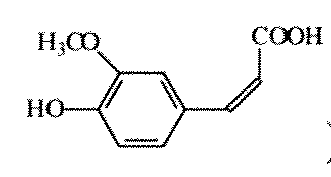
), isomers of ferulic acid (structure of iso-ferulic acid:
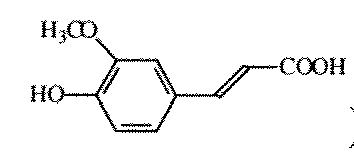
), inorganic salts of ferulic acid, and isomers of the ferulic acid salts.
), isomers of ferulic acid (structure of iso-ferulic acid:
), inorganic salts of ferulic acid, and isomers of the ferulic acid salts.
3. The composition as claimed in Claim 1, wherein the matrine compound has a basic quinolizin
ring structure (structure:
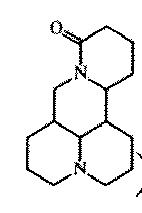
) and comprises one or more matrine compounds selected from the group consisting of matrine, iso-matrine, oxymatrine, sophocarpine, oxysophocarpine, sophoranol, cytosine, and isomers and inorganic salts thereof.
) and comprises one or more matrine compounds selected from the group consisting of matrine, iso-matrine, oxymatrine, sophocarpine, oxysophocarpine, sophoranol, cytosine, and isomers and inorganic salts thereof.
4. The composition as claimed in any one of Claims 1-3, wherein the matrine compound
is matrine, oxymatrine, sophocarpine, or a mixture of these three compounds.
5. The composition as claimed in any one of Claims 1-3, wherein the matrine compound
is matrine, oxymatrine, or a mixture of these two compounds, wherein a mole ratio
between the ferulic acid and matrine compounds within the composition is 1:0.1∼10.
6. A method of preparing a pharmaceutical composition, wherein the pharmaceutical composition
comprises a combination of ferulic acid and matrine compound, the method comprising
adding to the ferulic acid and matrine compounds (the mole ratio between the ferulic
acid and matrine compounds being 1:0.1 ∼ 10), a pharmaceutical excipient to produce
a pharmaceutical preparation.
7. The method as claimed in claim 6, wherein the pharmaceutical excipient is water (injection
grade), the method comprising adding the water to a mixture of the ferulic acid and
matrine compounds, stirring to dissolve the ferulic acid and matrine compounds to
produce a preparation for injection.
8. The method as claimed in claim 6, wherein the pharmaceutical excipients are starch,
10% starch aqueous solution, dry starch, and magnesium stearate, the method comprising
uniformly mixing a mixture of the ferulic acid and matrine compounds with the starch;
adding the 10% starch aqueous solution to the mixture to form a damp mass; drying
the damp mass; and mixing the dried mass with the dry starch and magnesium stearate
to produce an oral preparation.
9. The method as claimed in claim 6, wherein the pharmaceutical excipients are carbopol,
propylene glycol, methylparaben and purified water, the method comprising dispersing
the carbopol in the purified water; dissolving the methylparaben in the propylene
glycol; adding the dissolved methylparaben to the dispersed carbopol; adding the purified
water to swell; dissolving a mixture of the ferulic acid and matrine compounds in
the purified water; adding the dissolved mixture to the swelled carbopol; and adding
the purified water and mixing uniformly to produce a preparation for skin and mucous
membrane.
10. Use of the pharmaceutical composition comprising a combination of the ferulic acid
and matrine compounds as claimed in any one of Claims 1-3, wherein the combination
of the ferulic acid and matrine compounds used for preparing a pharmaceutical composition
for antifibrotic treatment, altering haemorheology, antivirus treatment, anti-inflammatory
treatment, inhibition of cholinesterase, relieving pains and itching, anti-Alzheimer's
treatment, antithrombotic treatment, antibacterial treatment, anti-tumor treatment,
anti-lipid-oxidation and hypolipidemic treatment, anti-atherosclerosis treatment,
antirheumatic treatment, enhancing immunity, antihypertensive treatment, and treatment
to increase sperm motility.
REFERENCES CITED IN THE DESCRIPTION
This list of references cited by the applicant is for the reader's convenience only. It does not form part of the European patent document. Even though great care has been taken in compiling the references, errors or omissions cannot be excluded and the EPO disclaims all liability in this regard.
Non-patent literature cited in the description
- Liu et al.Chinese journal of arteriosclerosis, 2005, vol. 13, 3305-308 [0056]