|
(11) | EP 2 162 194 B1 |

| (12) | EUROPEAN PATENT SPECIFICATION |
|
|
| (54) |
FIRE FIGHTING FOAMING COMPOSITIONS FEUERLÖSCHSCHAUMZUSAMMENSETZUNGEN COMPOSITIONS DE MOUSSE EXTINCTRICE |
|
|
||||||||||||||||||||||||||||||||
| Note: Within nine months from the publication of the mention of the grant of the European patent, any person may give notice to the European Patent Office of opposition to the European patent granted. Notice of opposition shall be filed in a written reasoned statement. It shall not be deemed to have been filed until the opposition fee has been paid. (Art. 99(1) European Patent Convention). |
[0001] The invention relates to methods of controlling or extinguishing fires using fire fighting foaming compositions.
[0002] Fire fighting foaming compositions are commonly used to control or extinguish burning flammable liquids. The foaming composition is normally diluted with water and then aerated to form a foam. The foam is distributed over the burning liquid to form a barrier which extinguishes the fire by excluding oxygen. Hithereto, the most effective foaming compositions contain a fluorine containing surfactant as described in GB 2311219. However, fluorine containing surfactants have a long lifetime in the environment and it is desirable to replace fluorine containing compositions with foaming compositions which are fluorine free or have only a low fluorine content.
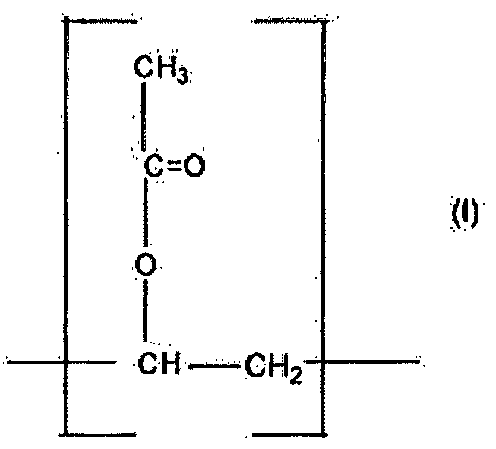
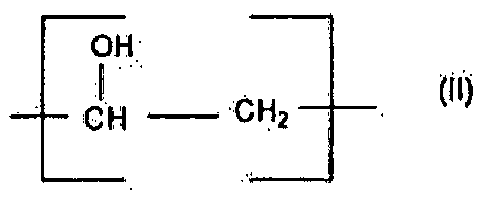
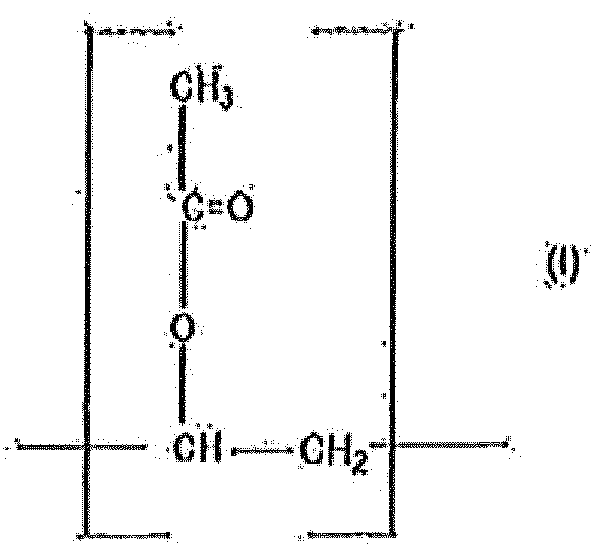
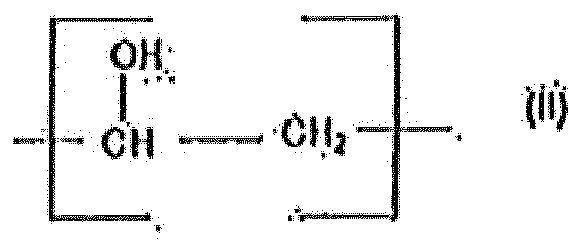
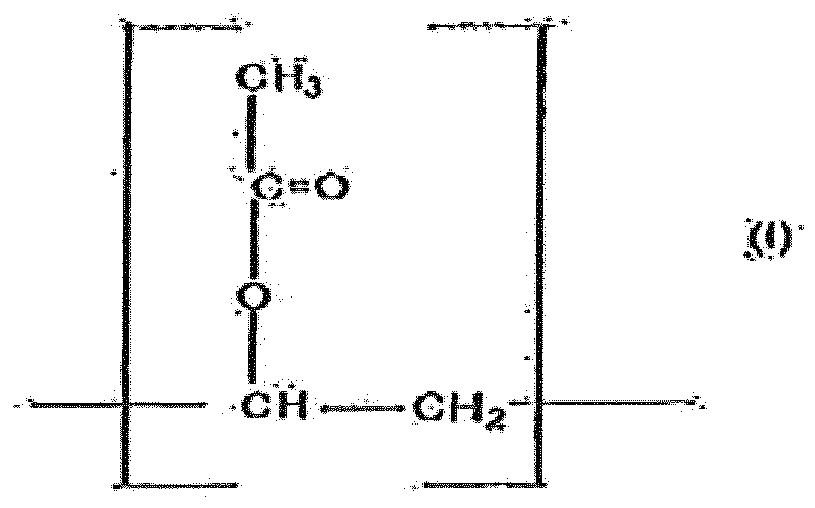
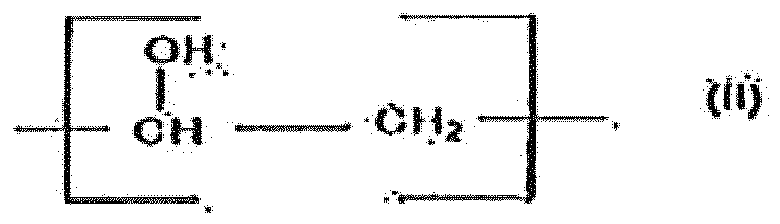
[0003] In accordance with a first aspect of the invention, there is provided a method of extinguishing or controlling a fire comprising: forming a foam from a fire fighting foaming composition, and applying the foam to the fire, wherein the fire fighting foaming composition does not contain any fluorine-containing compound and which comprises a partially acetylated polyvinyl alcohol comprising units of formula (I) and units of formula (II);
and applying the foam to the fire.
[0004] The fire fighting foaming compositions of the current invention normally comprise a liquid, which may be, for example, water or water with a water miscible non-aqueous solvent, and one or more components each of which may be in solution or dispersed in the liquid, so that the composition as a whole is generally fluid in nature. In this case, the term fire fighting foaming composition as used herein covers both concentrates which are most effective when diluted down before being aerated to form a foam, and also compositions which are at a suitable concentration to be aerated to form a foam without dilution. However, the fire fighting foaming compositions need not be in the generally fluid form described above. For example, the compositions can be in solid form, such as a powder, which can be dissolved and/or dispersed in a liquid prior to forming a foam.
[0005] With regard to the invention, polyvinyl alcohol is commonly manufactured by hydrolysis of polyvinyl acetate. During hydrolysis of polyvinyl acetate the acetylated, units of formula (I).
of the polyvinyl acetate are converted to hydroxyl containing units of formula (II)
[0006] However, hydrolysis does not always go to completion. When hydrolysis is incomplete the resultant polyvinyl alcohol is partially acetylated. That is to say, the partially acetylated polyvinyl alcohol contains both units of formulae (I) and (II).
[0007] It has now been found that partially acetylated polyvinyl alcohols containing both units of formulae (I) and (II) are useful foaming agents for fire fighting foaming compositions.
[0008] For the present purposes, a partially acetylated polyvinyl alcohol may be made by any suitable method, but is conveniently made by known methods of partial hydrolysis of polyvinyl acetate.
[0009] The amount of units of formula (II), that is to say the hydroxyl containing units, as a molar percentage of the combined amount of units of formulae (I) and (II) can vary widely in the partially acetylated polyvinyl alcohols that are suitable for use in the fire fighting foaming compositions. In general, this percentage will be greater that 5% and less than 95%. Preferably, the percentage will be from 71 % to 89 %. Even more preferably, the percentage will be from 78.5% to 83.5%. Percentages in these preferred ranges equate to maximum surface activity of the partially acetylated polyvinyl alcohol.
[0010] Suitable partially acetylated polyvinyl alcohols may also contain other substituents in addition to the units of formulae (I) and (II), so long as the other substituents do not substantially diminish the foaming properties. For example, the hydroxyl group of the unit of formula (II) can be reacted with acrylonitrile to form cyanoethyl ether groups, or reacted with ethylene oxide to form hydroxyethyl groups.
[0011] The partially acetylated polyvinyl alcohols used in the fire fighting foaming compositions may have any suitable molecular weight. However, molecular weights from 30,000 to 185,000 are preferred. Even more preferable are molecular weights from 125,000 to 185,000.
[0012] Suitable partially acetylated polyvinyl alcohols are commercially available under the trade names Celvol 523 ™ and Celvol 540 ™, manufactured by Celanese Chemicals, Gohsenol KP-08 ™ and Gohsenol KH-20 ™, manufactured by Nippon Goshei, and Mowiol 15-79™, manufactured by Kuraray Specialities Europe.
[0013] Effective fire fighting foaming compositions can be formulated using a partially acetylated polyvinyl alcohol as the only foaming agent. However, the addition to the composition of a protein derived surfactant may improve effectiveness of the composition. Suitable protein derived surfactants include those made by alkali hydrolysis of a keratin containing feedstock, such as bovine hoof and horn meal or chicken feathers.
[0014] Foaming of the fire fighting foaming composition may be enhanced by the addition of a water miscible non-aqueous solvent such as a glycol or a glycol ether. Examples of suitable solvents include hexylene glycol, butyl carbitol, butyl cellosolve, polyethylene glycol, metyl diproxitol, propylene glycol n-propyl ether and tripropylene glycol methyl ether. Of these hexylene glycol is preferred.
[0015] In view of the desirability of reducing the use of fluorine containing compounds, the fire fighting foaming composition preferably does not include any fluorine containing surfactant and more preferably does not contain any fluorine containing compounds at all. Surprisingly, even in the absence of fluorinated surfactants, fire fighting foaming compositions which include at least one partially acetylated polyvinyl alcohol may be used to produce foams which are effective against either combusting non-polar flammable liquids or combusting water- miscible non-aqueous flammable solvents.
[0016] Hydrocarbon surfactants (that is to say surfactants having a hydrocarbon hydrophobic group) are common constituents of fire fighting foaming compositions. Whilst they may be included together with a partially acetylated polyvinyl alcohol in fire fighting foaming compositions, the compositions preferably do not include any hydrocarbon surfactant. The inclusion of a hydrocarbon surfactant may undesirably reduce foaming activity of foaming compositions containing a partially acetylated polyvinyl alcohol. This is believed to be because of the enhanced surface activity of hydrocarbon surfactants which preferentially adsorb at the liquid/air interface compared to the less mobile partially acetylated polyvinyl alcohol molecules.
[0017] Fire fighting foaming compositions containing a partially acetylated polyvinyl alcohol are preferably buffered below pH 7.0 at a slightly acidic pH. The preferred pH range is from 5.8 to 6.2. Maintaining the fire fighting foaming compositions at slightly acidic pH values helps to reduce or prevent additional hydrolysis (i.e. the conversion of units of formula (I) to units of formula (II)) of the polyvinyl alcohol during storage. Such additional hydrolysis may render the polyvinyl alcohol less suitable by causing a reduction in surface activity and a reduction in effectiveness of the composition for fighting fires. The preferred buffer for maintaining a slightly acidic pH is a buffer based on an acetic acid/ acetate salt buffer couple, such as acetic acid/ sodium acetate.
[0018] The following examples illustrate fire fighting foaming compositions containing partially acetylated polyvinyl alcohol in accordance with the invention. These examples are not limiting.
Example 1
[0019] First and second fire fighting foaming compositions were made up from a 10% w/w solution of partially acetylated polyvinyl alcohol in water and the water miscible solvent butyl carbitol as shown in Table 1. The partially acetylated polyvinyl alcohol used in this Example was Gohsenol KH-20 ™ which is 78.5% - 81.5% hydrolysed (i.e. the amount of the unit of formula (II) as a molar percentage of the combined amount of the units of Formulae (I) and (II) is 78.5%- 81.5%). The molecular weight is approximately 150000. As shown in Table 1, Composition 2 also contained the hydrocarbon surfactant sodium decyl sulphate.
Table 1
| Composition 1 | Composition 2 | |
| 10% w/w Gohsenol KH-20™ aqueous solution | 90 parts | 89 parts |
| Butyl Carbitol | 10 parts | 10 parts |
| Sodium Decyl Sulphate (30% actives) | - | 1 part |
[0020] Compositions 1 and 2 were each diluted to 6% v/v solutions in water, and the diluted solutions were used to form respective aerated foam samples using a branchpipe following the procedure of UK Defence Standard 42-40.
[0021] Each aerated foam sample was collected in a 1400ml drainage pan according to NFPA 11. The expansion ratio and quarter drainage time (QDT) were measured. The expansion ratio is the ratio of the volume of the drainage pan to that of the volume of the 6% v/v diluted solution of the foaming composition that is required to generate the expanded foam sample needed to fill the drainage pan. The quarter drainage time is the time for 25% by volume of the foam solution to drain from the expanded foam sample. The results are shown in Table 2.
Table 2
| Composition 1 | Composition 2 | |
| Expansion Ratio | 6.2 | 4.5 |
| QDT (minutes) | 1.9 | 1.25 |
[0022] The results shown in Table 2 illustrate an undesirable reduction in both expansion ratio and QDT when the hydocarbon surfactant sodium decyl sulphate is added to the composition.
Example 2
[0023] In this example, the ability of a fire fighting foaming composition (Composition 3), containing partially acetylated polyvinyl alcohol, to control and extinguish burning heptane (a non-polar solvent), was compared to that of several commercially available fire fighting foaming compositions. The compositions were aerated and applied as foams under strictly controlled conditions.
[0024] Composition 3 contained partially acetylated polyvinyl alcohol in the form of Gohsenol KH-20 ™ and a protein derived surfactant in the form of commercially available Polyhydrotorque ™ (available from Kidde). Composition 3 comprised 6% v/v of Polyhydrotorque ™ solution as supplied by the manufacturer and 6% v/v of a 5% w/w aqueous solution of Gohsenol KH-20 ™. The balance of Composition 3 was fresh water. The composition was used without further dilution.
[0025] The comparative, commercially available foaming compositions consisted of a fluoroprotein containing foaming composition sold under the name FP70 ™ by Kidde and two fluorinefree foaming compositions sold as Syndura ™ (manufactured by Kidde) and RF6 ™ (manufacted by 3M Australia). Syndura ™ and RF6 ™ were used as 6% solutions in water whereas FP70 ™ was used as a 3% solution in water.
[0026] Each foaming composition was tested according to the informative protocol outlined in EN1568 Part 3 at an application rate of 3 litres/minute/m2 on a circular pan containing burning heptane. The results are shown in Table 3.
Table 3
| 90% Control | Extinguishment | Burnback | |
| Composition 3 | 31 s | 53 s | 9.1 mins |
| FP70 ™ | 34 s | 56 s | 13.1 mins |
| Syndura ™ | 29 s | Not achieved | 9.7 min |
| RF6 ™ | 46 s | 157 s | 11.0 mins |
[0027] Table 3 demonstrates that Composition 3 containing partially acetylated polyvinyl alcohol extinguished the burning heptane faster than the fluorine free compositions Syndura ™ and RF6 ™, and had a similar extinguishing performance to the fluoroprotein containing composition FP70 ™. Composition 3 demonstrated a similar fire control capability as compared to FP70 ™ and Syndura ™ and a better control capability as compared to RF6 ™. Burnback time was broadly comparable with that of the commercially available compositions.
Example 3
[0028] A fire fighting foaming composition (Composition 4) containing a partially acetylated polyvinyl alcohol, a protein derived surfactant, a water miscible solvent and a buffer was made by mixing materials set out in Table 4.
Table 4
| Composition 4 | Parts |
| 10% w/w aqueous solution of partially acetylated polyvinyl alcohol (Gohsenol KH-20 TM) | 60 |
| Protein liquor of refractive index 1.400 into which is dissolved 23g per litre of sodium acetate | 40 |
| Hexylene glycol | 10 |
[0029] The sodium acetate forms a buffer which maintains the composition at a slightly acidic pH. In view of this, Composition 4 may be stored for a significant length of time before being diluted for use. The preferred dilution ratio is 6 parts to 94 parts of water and Composition 4 was used at this dilution in the tests described below - fresh water being used as the diluent.
[0030] Composition 4 was tested according to the protocol outlined in UK Defence Standard 42-40 at an application rate of 3 litres/minute/m2 on both aviation gasoline (Avgas 100LL) and aviation kerosene (Avtur) fires. FP70 ™, Syndura ™ and RF6 ™ were used as comparative compositions and diluted as set out in Example 2 above. The results are set out in Tables 5 and 6 below.
Table 5 - Avtur Test Results
| 90% Control | Extinguishment | Burnback | |
| Composition 4 | 33 s | 46 s | 11.3 mins |
| FP70 | 31 s | 63 s | 22.3 mins |
| Syndura | 26 s | 81 s | 14 mins |
| RF6 | 40 s | 143 s | 12.7 mins |
[0031] As shown in Table 5, Composition 4 exhibited comparable fire control and faster fire extinction compared to the commercially available compositions. The burnback time for Composition 4 was comparable to that for Syndura ™ and RF6 ™ but shorter than that for the fluoroprotein composition FP70 ™.
Table 6 - Avgas Test Results
| 90% Control | Extinguishment | Burnback | |
| Composition 4 | 46 s | 58 s | 10.5 mins |
| FP70 | 41 s | 48 s | 13.2 mins |
| Syndura | 29 s | 205 s | 13 mins |
| RF6 | 80 s | 225 s | 15.6 mins |
[0032] As shown in Table 6, Composition 4 exhibited a faster fire extinction time compared to the fluorine free commercially available compositions Syndura™ and RF6™ and a comparable extinction time to FP70™. The burnback time for Composition 4 was comparable to that of the commercially available compositions.
1. A method of extinguishing or controlling a fire comprising forming a foam from a fire
fighting foaming composition and applying the foam to the fire, wherein the fire fighting
foaming composition does not contain any fluorine-containing compound and which comprises
a partially acetylated polyvinyl alcohol comprising units of formula (I) and units
of formula (II):
2. A method according to claim 1, wherein in the partially acetylated polyvinyl alcohol,
the units of formula (II) make up from 71 to 89% on a molar basis of the combined
amount of units of formulae (I) and (II), and preferably from 78.5 to 83.5% on a molar
basis of the combined amounts of formulae (I) and (II),
3. A method according to any preceding claim, wherein the partially acetylated polyvinyl
alcohol has a molecular weight from 30,000 to 185,000, and preferably from 125,000
to 185,000.
4. A method according to any preceding claim, wherein the composition also contains a
protein derived surfactant.
5. A method according to claim 4, wherein the protein derived surfactant is made by alkali
hydrolysis of a keratin containing feedstock.
6. A method according to any preceding claim, wherein the composition does not contain
any hydrocarbon surfactant.
7. A method according to any preceding claim, wherein the composition includes a liquid
comprising at least water, and the partially acetylated polyvinyl alcohol is dissolved
and/or dispersed in the liquid.
8. A method according to claim 7, wherein the composition is buffered and the pH of the
composition is below 7.0, preferably from 5.8 to 6.2.
9. A method according to claim 8, wherein the composition comprises acetic acid and an
acetate salt which act to buffer the composition at said pH.
10. A method according to any one of claims 7 to 9, wherein the liquid also contains a
water miscible non-aqueous solvent.
11. A method according to claim 10, wherein the water miscible non-aqueous solvent is
selected from the group consisting of glycols and glycol ethers, and preferably is
selected from the group consisting of: hexylene glycol; butyl carbitol; butyl cellosolve;
polyethylene glycol; methyl diproxitol; propylene glycol n-propyl ether, and tripropylene
glycol methyl ether.
12. A method according to any preceding claim, wherein the fire comprises a burning liquid.
13. A method according to claim 12, wherein the burning liquid is a water-miscible solvent.
14. A method according to claim 12 or claim 13, wherein said application of the foam to
the fire comprises distributing the foam over the burning liquid to form a foam layer.
1. Verfahren zum Löschen oder Steuern eines Brandes, umfassend Bilden eines Schaums aus
einer Brandbekämpfungschaumzusammensetzung und Aufbringen des Schaums auf den Brand,
wobei die Brandbekämpfungschaumzusammensetzung nicht irgendeine Fluor-enthaltende
Verbidung enthält und die einen teilweise acetylierten Polyvinylalkohol umfassend
Einheiten der Formel (I) und Einheiten der Formel (II) umfasst:
2. Verfahren nach Anspruch 1, wobei, in dem teilweise acetylierten Polyvinylalkohol,
die Einheiten der Formel (II) von 71 bis 89% auf einer molaren Basis der Gesamtmenge
der Einheiten der Formeln (I) und (II) ausmachen, und vorzugsweise von 78,5 bis 83,5%
auf einer molaren Basis der Gesamtmenge der Einheiten der Formeln (I) und (II).
3. Verfahren nach einem der vorhergehenden Ansprüche, wobei der teilweise acetylierte
Polyvinylalkohol ein Molekulargewicht von 30.000 bis 185.000, und vorzugsweise von
125.000 bis 185.000 hat.
4. Verfahren nach einem der vorhergehenden Ansprüche, wobei die Zusammensetzung auch
von einem Protein abgeleitetes Tensid enthält.
5. Verfahren nach Anspruch 4, wobei das von einem Protein abgeleitete Tensid durch alkalische
Hydrolyse von einem Keratin enthaltenden Ausgangsmaterials hergestellt wird.
6. Verfahren nach einem der vorhergehenden Ansprüche, wobei die Zusammensetzung klein
Kohlenwasserstofftensid enthält.
7. Verfahren nach einem der vorhergehenden Absprüche, wobei die Zusammensetzung eine
Flüssigkeit einschliesst, die wenigstens Wasser umfasst, und der teilweise acetyliert
Polyvinylalkohol in der Flüssigkeit gelöst und/oder dispergiert ist.
8. Verfahren nach Anspruch 7, wobei die Zusammensetzung gepuffert ist und der pH-Wert
der Zusammensetzung unter 7,0, vorzugsweise zwischen 5,8 und 6,2 liegt.
9. Verfahren nach Anspruch 8, wobei die Zusammensetzung Essigsäure und ein Azetatsalz
umfasst, die wirken, um die Zusammensetzung bei dem pH-Wert zu puffern.
10. Verfahren nach einem der Ansprüche 7 bis 9, wobei die Flüssigkeit auch ein mit Wasser
mischbares nichtwässriges Lösungsmittel enthält.
11. Verfahren nach Anspruch 10, wobei das mit Wasser mischbare nichtwässrige Lösungsmittel
aus der Gruppe bestehend aus Glykolen und Glycolethern ausgewählt ist, und vorzugsweise
aus der Gruppe ausgewählt ist, bestehend aus: Hexylenglycol; Butylcarbitol; Butylcellosolv;
Polyethylenglycol; Methyldiproxitol; Propylenglckol-n-Propylether; und Tripropylenglycolmethylether.
12. Verfahren nach einem der vorhergehenden Ansprüche, wobei der Brand eine brennende
Flüssigkeit umfasst.
13. Verfahren nach Anspruch 12, wobei die brennende Flüssigkeit ein mit Wasser mischbares
Lösungsmittel ist.
14. Verfahren nach Anspruch 12 oder Anspruch 13, wobei das Aufbringen des Schaums auf
den Brand Verteilen des Schaums über der brennenden Flüssigkeit umfasst, um eine Schaumschicht
zu bilden.
1. Procédé d'extinction ou de contrôle d'un incendie consistant à former une mousse à
partir d'une composition moussante extinctrice et à appliquer la mousse aux incendies,
où la composition moussante extinctrice ne contient pas de composé contentant du fluor,
et qui comprend un alcool polyvinylique partiellement acétylé comportant des unités
de la formule (I) et des unités de la formule (II) :
2. Procédé selon la revendication 1, où dans l'alcool polyvinylique partiellement acétylé,
les unités de la formule (II) constituent de 71 à 89 % sur une base molaire de la
quantité combinée d'unités des formules (I) et (II), et de préférence de 78,5 à 83,5
% sur une base molaire des quantités combinées des formules (I) et (II).
3. Procédé selon une quelconque revendication précédente, où l'alcool polyvinylique partiellement
acétylé a un poids moléculaire de 30 000 à 185 000, et de préférence de 125 000 à
185 000.
4. Procédé selon une quelconque revendication précédente, où la composition contient
également un tensioactif dérivé d'une protéine.
5. Procédé selon la revendication 4, où le tensioactif dérivé d'une protéine est fabriqué
par l'hydrolyse alcaline d'un produit de départ contenant de la kératine.
6. Procédé selon une quelconque revendication précédente, où la composition ne contient
pas de tensioactif hydrocarboné.
7. Procédé selon une quelconque revendication précédente, où la composition inclut un
liquide comprenant au moins de l'eau, et l'alcool polyvinylique partiellement acétylé
est dissous et/ou dispersé dans le liquide.
8. Procédé selon la revendication 7, où la composition est tamponnée et le pH de la composition
est inférieur à 7,0, de préférence de 5,8 à 6,2.
9. Procédé selon la revendication 8, où la composition comprend de l'acide acétique et
un sel d'acétate qui servent à tamponner la composition audit pH.
10. Procédé selon une quelconque des revendications 7 à 9, où le liquide contient en outre
un solvant non aqueux miscible à l'eau.
11. Procédé selon la revendication 10, où le solvant non aqueux miscible à l'eau est sélectionné
à partir du groupe consistant en des glycols et éthers de glycols, et de préférence
est sélectionnée à partir du groupe consistant en : hexylèneglycol ; butylcarbitol
; butylcellosolve; polyéthylèneglycol ; méthyldiproxitol; propylèneglycol n-propyl
éther ; et tripropylèneglycol méthyléther.
12. Procédé selon une quelconque revendication précédente, où l'incendie comprend un liquide
brûlant.
13. Procédé selon la revendication 12, où le liquide brûlant est un solvant miscible à
l'eau.
14. Procédé selon la revendication 12 ou revendication 13, où ladite application de la
mousse sur l'incendie consiste à répartir la mousse sur le liquide brûlant afin de
former une couche de mousse.
REFERENCES CITED IN THE DESCRIPTION
This list of references cited by the applicant is for the reader's convenience only. It does not form part of the European patent document. Even though great care has been taken in compiling the references, errors or omissions cannot be excluded and the EPO disclaims all liability in this regard.
Patent documents cited in the description