|
(11) | EP 2 825 172 B1 |

| (12) | EUROPEAN PATENT SPECIFICATION |
|
|
| (54) |
PARALYTIC SHELLFISH POISON FOR THE TREATMENT OF ITCH PARALYTISCHE SCHALENTIER GIFT FÜR DIE BEHANDLUNG DES JUCKREIZES POISON PARALYSANT DE MOLLUSQUE PUOR LE TRAITEMENT DU PRURIT |
|
|
|||||||||||||||||||||||||||||||
| Note: Within nine months from the publication of the mention of the grant of the European patent, any person may give notice to the European Patent Office of opposition to the European patent granted. Notice of opposition shall be filed in a written reasoned statement. It shall not be deemed to have been filed until the opposition fee has been paid. (Art. 99(1) European Patent Convention). |
[0001] The invention concerns paralytic shellfish poison for use in a method of treatment of a human being or another mammal and a pharmaceutical composition comprising that paralytic shellfish poison.
[0002] Itch is a principal symptom of skin disease and is an important skin manifestation of systemic disease. Microneurography technique has established the existence of dedicated slow-conducting unmyelinated C neurons which only transmit itch (and temperature changes) in response to histamine - thus disproving the notion that itch is merely a mild version of pain. These neurons, which represent only about 5% of the total, have also been shown to be selectively activated in chronic pruritic skin disease. Microneurography has also established that the contralateral transmission neurones which convey itch to the thalamus consist of an itch specific subclass of lamina 1 spinothalamic tract neurons, thus establishing that dedicated neurons transmit itch not only peripherally but also centrally.
[0003] Pruritus can be classified pathophysiologically into 4 categories:
- pruritoceptive - generated in the skin usually by an inflammatory or other visible pathological process, e.g., scabies, urticaria,
- neurogenic - generated in the central nervous system in response to circulating pruritogens as in cholestasis or in response to intraspinal morphine,
- neuropathic - due to anatomical lesions of the central or peripheral nervous systems, e.g., nerve entrapment, tumours and
- psychogenic, including delusional parasitosis.
[0004] For the treatment of pruritus antihistamines are usually poorly effective unless the pruritus is principally mediated by histamine, e.g., urticaria, although the sedative action of the first-generation H1 antihistamines may be useful in other cases of chronic pruritus.
[0005] Corticosteroids are not intrinsically antipruritic and are only effective in relieving pruritus occurring as a consequence of inflammatory changes in the skin.
[0006] Narrow band ultraviolet B phototherapy (311 nanometres) is beneficial in generalised itching due to most causes, and is especially useful in pruritus of end-stage renal failure.
[0007] Doxepin, a tricyclic compound, is a non-specific inhibitor of post-synaptic re-uptake of adrenaline and noradrenaline and is a powerful antipruritic, possessing greater potency as an H1 antihistamine than any other available H1 antagonist as well as being widely used as an antidepressant. It should be prescribed in low dosage initially, and be used with extreme caution in patients with liver or cardiovascular disease. It should not be withdrawn abruptly or prescribed concurrently with other antidepressants. It is not contraindicated in the presence of renal failure and is thus very useful in these patients. It is metabolised via the liver cytochrome P450 3A pathway and therefore should not be administered concurrently with macrolide antibiotics or imidazole antifungals.
[0008] Opioid antagonists, including oral naltrexone, are effective in some patients, especially in patients with cholestatic itching. This class of drug is contraindicated in patients with severe liver disease, patients addicted to opioids and patients receiving opioid analgesia. Opioid antagonists seem to cause withdrawal symptoms and signs in patients with itching due to cholestasis and dosage should start low and be increased gradually to avoid this complication.
[0009] Butorphanol, a combined µ-receptor antagonist and κ- receptor agonist, administered as a nasal spray, has showed considerable promise in the management of intractable pruritus. Gabapentin, a structural analogue of γ-amino butyric acid and an anticonvulsant, has been advocated as a potent antipruritic and has received support from at least 1 double blind placebo-controlled trial in haemodialysis patients. Other drugs that can be tried include mirtazepine, a serotonin type 3 receptor antagonist, paroxetine, a selective serotonin reuptake inhibitor (SSRI) and thalidomide.
[0010] The sodium channel blocker lidocaine and other local anaesthetics have been reported to cause side effects including itching and/or local hypersensitivity reactions. Other Na channel blockers such as local Novocain has also been reported to cause allergic reactions including itching.
[0011] From Villamil, A. G. et al., The American Journal of Medicine (2005) 118, pages 1160 - 1163 it is known to use lidocaine in the treatment of pruritus in patients with chronic cholestatic liver diseases. For the treatment the lidocaine is administered intravenously.
[0012] From US 2011/0086899 A1 it is known to use a spiro-oxindole compound for the treatment of pruritus by oral administration.
[0013] From Roberson, D. P. et al., Society for Neuroscience, Abstract Viewer and Itinerary Planner, vol. 39, 2009, 39th Annual Meeting of the Society for Neuroscience, Chicago, IL, USA, October 17 to 21, 2009 discloses that TRPV1 mediated delivery of the impermeant sodium channel blocker QX-314 into pruriceptors blocks itch. However, this requires a co-application of a TRPV1 agonist together with QX-314.
[0014] From WO 2011/098539 A1 the use of the sodium channel blocker saxitoxin and its derivatives for a method of treatment of a reduction or loss of superficial sensitivity or sense of touch is known. This application discloses that superficial sensitivity is so much enhanced by the treatment that the reduced or lost superficial sensitivity or sense of touch is at least partly restored.
[0015] From WO 2010/111777 A1 it is known to use tetrodotoxin galactopyranosides for the treatment of itching.
[0017] From Greaves, M. W., Curr. Allergy Asthma Rep. (2010), Vol. 10, pages 236 to 242 transmission of itch by dedicating afferent neurons and a systemic drug treatment of itch are known.
[0018] The problem to be solved by the present invention is to provide a further substance and a further pharmaceutical composition for use in a method of treatment of itching without a loss of sensitivity in an area innervated by nerves affected by the treatment in a human being or another mammal.
[0019] The problem is solved by the subject-matter of claims 1 and 11. Embodiments of the invention are subject matter of claims 2 to 10 and 12 to 16.
[0020] According to the invention a paralytic shellfish poison (PSP) for use in a method of topical treatment of itching in a human being or another mammal is provided. The PSP is saxitoxin or a tricyclic 3,4-propinoperhydropurine represented by the following formula (I)
wherein R1 and R5 are independently selected from the group consisting of -H and -OH; R2 and R3 are independently selected from the group consisting of -H, -OSO3- and -SO3; and R4 is selected from the group consisting of -H, -OH, -OC(=O)NH2, -OC(=O)NHSO3- and -OC(=O)CH3. The PSP may also be a salt of saxitoxin or the tricyclic 3,4-propinoperhydropurine.
[0021] The paralytic shellfish poison may be administered once, over a period of one to seven days, in multiple treatment cycles and/or in chronic treatment.
[0022] The inventors of the present invention have recognized that the PSP according to the invention has an anti-itching effect that differs from the effect of other sodium channel blockers such as lidocaine. Up to now none of the side effects of lidocaine and other non-PSP local anesthetics has been found for PSP. If itching is treated with lidocaine, sensitivity is lost in the area innervated by nerves affected by the treatment. This is not the case if itching is treated with PSP according to the invention in a concentration and an amount that is only sufficient for a reduction or elimination of itching but not sufficient to cause a loss in sensitivity. Such concentration and amount can easily be determined by testing different concentrations and amounts, e.g. by application to skin. The anti-itching effect of the PSP according to the invention is a complete new effect.
[0023] WO 2011/098539 A1 discloses the same sodium channel blockers as have been recognized by the inventors to be useful for the treatment of itching. However, the sodium channel blockers disclosed in WO 2011/098539 A1 enhance sensitivity of the skin such that a reduced or lost superficial sensitivity or sense of touch is at least partly restored. Enhancing sensitivity would be expected to enhance itching. Therefore, it is very astonishing that these sensitivity enhancing substances can be used to reduce itching.
[0024] In an embodiment of the invention either one of R2 and R3 is -OSO3- or R4 is -OC(=O)NHSO3-. The tricyclic 3,4-propinoperhydropurine may be one of the derivatives of saxitoxin or a gonyautoxin (hereinafter "GTX") according to formula I as set forth in the table below.
| Compound | R1 | R2 | R3 | R4 | R5 |
| Gonyautoxin 1 | -OH | -H | -OSO-3 | -OC(=O)NH2 | -OH |
| Gonyautoxin 2 | -H | -H | -OSO-3 | -OC(=O)NH2 | -OH |
| Gonyautoxin 3 | -H | -OSO-3 | -H | -OC(=O)NH2 | -OH |
| Gonyautoxin 4 | -OH | -OSO-3 | -H | -OC(=O)NH2 | -OH |
| Gonyautoxin 5 | -H | -H | -H | -OC(=O)NHSO-3 | -OH |
| Neosaxitoxin | -OH | -H | -H | -OC(=O)NH2 | -OH |
| Descarbamoylsaxitoxin | -OH | -H | -H | -OH | -OH |
[0025] In one embodiment the PSP according to the invention is in the form of its racemate, pure stereoisomer, especially enantiomer or diastereomer or in the form of a mixture of stereoisomers, especially enantiomers or diastereomers, in neutral form, in the form of an acid or base or in the form of a salt, especially a physiologically acceptable salt, or in the form of a solvate, especially a hydrate.
[0026] In one embodiment the PSP according to the invention is saxitoxin, neosaxitoxin, descarbamoylsaxitoxin, or GTX, in particular GTX-1, GTX-2, GTX-3, GTX-4, or GTX-5, wherein the saxitoxin, neosaxitoxin, descarbamoylsaxitoxin, or GTX, in particular GTX-1, GTX-2, GTX-3, GTX-4, or GTX-5, is synthetically synthesized or isolated from a biological source, in particular from cyanobacteria, from dinoflagellates or from contaminated shellfish, especially shellfish contaminated with A. catenella.
[0027] The saxitoxin, neosaxitoxin, descarbamoylsaxitoxin, or GTX, in particular GTX-1, GTX-2, GTX-3, GTX-4, or GTX-5, may be used in an amount of 0.01 µg/day to 1000 µg/day, in particular 0.1 to 100 µg/day, especially 1 to 10 µg/day.
[0028] The PSP according to the invention may also be the tricyclic 3,4-propinoperhydropurine, wherein the tricyclic 3,4-propinoperhydropurine is synthetically synthesized or isolated from a biological source.
[0029] The itching to be treated may be of pruritoceptive nature, of neurogenic nature, of neuropathic nature, of psychogenic nature, due to an inflammatory process, due to an insect bite, due to an inflammatory process, in particular an inflammatory process due to surgery or healing, due to infectious process, in particular an infectious process caused by a virus, bacteria, a fungus or prions, due to circulating pruritogens, due to a systemic pathology, in particular cholithiasis or acute or chronic renal insufficiency, due to any allergen exposure, due to tobacco exposure, in particular smokeless tobacco exposure, due to chemical exposure, or due to respiratory cause. The inflammatory process may be any inflammatory process regardless of the intrinsic cause of the process.
[0030] The PSP according to the invention may be for use by topical administration by use of a skin-patch, a cream, an ointment or a spray and/or by use of a physical transdermal delivery method, in particular by iontophoresis, phonophoresis, sono-macroporation, thermal modulation or magnetic modulation or by use of a physical device, in particular a respiratory device, in particular a nebulizer.
[0031] The invention further concerns a pharmaceutical composition comprising at least one paralytic shellfish poison according to the invention and a pharmacologically acceptable carrier for use in a method of topical treatment of itching in a human being or another mammal. The carrier may be any material suitable for topical, in particular superficial, drug administration. Carriers include any such materials known in the art which is non-toxic in the amount used, and does not interact with other components of the composition in deleterious manner.
[0032] In an embodiment the PSP according to the invention is contained in the pharmaceutical composition in an amount suitable for an administration of 0.01 to 1000 µg, in particular 0.1 to 100 µg, especially 1 to 10 µg, PSP per day. The PSP according to the invention may be contained in the pharmaceutical composition in a concentration of 0.01 to 1000 µg per ml, in particular 0.1 to 100 µg per ml, especially 1 to 10 µg per ml.
[0033] The pharmaceutical composition according to the invention is a pharmaceutical composition prepared for topical administration, in particular superficial administration.
[0034] The pharmaceutical composition prepared for topical administration can be a skin-patch, a cream, an ointment, or a spray.
[0035] According to an embodiment of the invention the pharmaceutical composition further comprises at least one antipruritic compound. The antipruritic compound may be, without being limited thereto, an antihistaminic compound such as chlorphenamine, loratadine or desloratadin, a corticosteroid such as betamethasone, clobetasol or mometasone, or a non-steroidal anti-inflammatory drug such as ibuprofen, ketoprofen or diclofenac.
[0036] The PSP in the pharmaceutical composition according to the invention may be contained in a liposome or a microemulsion. A microemulsion is a stable, isotropic liquid mixture of oil, water and surfactant, frequently in combination with a cosurfactant. The mixture is an emulsion with oil dispersed in water or water dispersed in oil the dispersed phase of which is forming such small domains that visible light is not scattered by the dispersed phase. Therefore, the microemulsion is clear.
[0037] Alternatively or in addition the pharmaceutical composition comprising the PSP may further comprise at least one substance facilitating the transport of the PSP through the skin. Such substances are known in the art as permeation enhancers. The substance may be a substance selected from the group consisting of: alcohols, amines, amides, amino acids, amino acid esters, 1-substituted azacycloheptan-2-ones, pyrrolidones, terpenes, fatty acids, fatty acid esters, macrocyclic compounds, tensides, sulfoxides, liposomes, transferomes, lecithin vesicles, ethosomes, anionic, cationic and non-ionic surfactants, polyols, essential oils, dimethylsulfoxide, decylmethylsulfoxide, diethylene glycol monoethyl ether, diethylene glycol monomethyl ether, sodium laurate, sodium lauryl sulfate, cetyltrimethylammonium bromide, benzalkonium chloride, a poloxamer, polysorbate 20 (Tween 20 = polyoxyethylene sorbitan monolaurate), polysorbate 40 (Tween 40 = polyoxyethylene sorbitan monopalmitate), polysorbate 60 (Tween 60 = polyoxyethylene sorbitan monostearate), polysorbate 80 (Tween 80 = polyoxyethylene sorbitan monooleate), lecithin, 1-n-dodecylcyclazacycloheptan-2-one, ethanol, propanol, octanol, benzyl alcohol, lauric acid, oleic acid, valeric acid, isopropyl myristate, isopropyl palmitate, methylpropionate, ethyl oleate, sorbitan sesquioleate, propylene glycol, ethylene glycol, glycerol, butanediol, polyethylene glycol, polyethylene glycol monolaurate, urea, dimethylacetamide, dimethylformamide, 2-pyrrolidone, 1-methyl-2-pyrrolidone, ethanol amine, diethanol amine, triethanolamine, alkanones, salicylic acid, salicylates, citric acid and succinic acid.
[0038] The poloxamer (polyethylene-polypropylene glycol, molecular formula HO(C2H4O)a(C3H6O)b(C2H4O)aH, wherein a and b are integers) is a synthetic nonionic triblock block copolymer composed of a central hydrophobic chain of polyoxypropylene (poly(propylene oxide)) flanked by two hydrophilic chains of polyoxyethylene (poly (ethylene oxide)). It is available in several types such as Poloxamer 231, Poloxamer 182, or Poloxamer 184.
Embodiments
[0039] To design a study where the effects of the PSP toxin on itching can be assessed, the two most commonly used itching models in rats were compared; subcutaneous injections of serotonin or histamine. Such injections have been reported to induce increased scratching in the injected zone.
[0040] The following preparations were used for animal tests:
- a) Serotonin-Solution: Serotonin hydrochloride 2,5 mg/Kg (Enzo Life Sciences) dissolved in saline (0,9% NaCl).
- b) Gel test formulation v1 234: GTX 2/3 (Cetiol SB-45, Panalene L-14-E, Ceteary Alc - Ceteareth 20, Glucamate SS, Glucamate SSE 20, Propylparaben, Methylparaben, Carbopol 2020, Glycerine, water, Trietanolamine, Silicone DC 345, Microcare PM5, Sepigel 305.
- c) 110214 PB GTX: GTX 2/3 in Saline (0,9% NaCl).
- d) Three GTX toxin preparations: GTX 2/3 + liposome (water, Persea Gratissima Oil, Propylene Glycol, Squalane, Petrolatum, Dimethicone, PEG-20 Methyl Glucose Sesquistearate, Cetyl Acetate (y) Acetylated Lanolin Alcohol, Diazolinidyl Urea (y) Methylparaben (y), Propylparaben (y) Propylene Glycol, Glyceryl Stearate, Methyl Glucose, Sesquistearate, Triethanolamine, Ozokerite, Carbomer Acrylates/C 10-30 Alkyl Acrylate Crosspolymer, Tocopherol (y) ascorbyl Palmitate (y) Lecithin, (y) Glyceryl Stearate (y) Glyceryl Oleate (y) Citric Acid). Composition as described before with GTX 2/3 5, 10 and 20 µg/g of cream.
- e) Vehicle: As "d", but without GTX 2/3 (Placebo).
- f) Lidocaine gel 4%: Lidocaine Clorhydrate LCH Gel 4% + excipients
1. Effects of the toxin in subcutaneous serotonin-induced itching
[0041] Rationale: The objective was to test the effects of the toxin in subcutaneous serotonin (5-HT)-induced itching, which is the most commonly used and effective method to attain itching in rats. As the toxin cream preparation shows only cutaneous effects, we decided to test the effects of the cream preparation on the skin and subcutaneous co-injection of serotonin with the toxin.
[0042] Methods: After acclimation and trimming male rats were divided into 3 groups. The first group was injected subcutaneously with serotonin (50 µl of 5HT (2.5 mg/kg). The second group had the gel test formulation v1 234 applied (between 80-100 mg) to the trimmed region 1 hour before subcutaneous injection of serotonin (same dose as above). The third group was co-injected with a mixture of the toxin (10 µg/kg 110214 PB GTX) and serotonin (2.5 mg/kg in 50 µl). Animal behaviour was measured for 30 minutes since the subcutaneous injections.
[0043] Results: Subcutaneous injection of serotonin in the neck induced an increase in scratches (5HT) which was mildly ameliorated by co-injection of the toxin and serotonin (5HT-toxin). The application of the toxin gel induced a non significant increase in scratches.
[0044] Conclusions: The data suggest that the toxin co-injected subcutaneously with serotonin has an effect in itching.
2. Effects of the toxin in cutaneous serotonin-induced itching
[0045] Rationale: The objective was to test the effects of the toxin in cutaneous serotonin (5-HT)-induced itching.
[0046] Methods: After acclimation and trimming (see above) male rats had the gel test formulation v1 234 applied (between 80-100 mg) to the trimmed region 1 hour before cutaneous application of serotonin (same dose as above).
[0047] Results: A significant reduction of the scratching behaviour in the animals is observed after cutaneous toxin application.
[0048] Conclusions: GTX in gel induces an over 60% reduction of itching in cutaneous serotonin-induced itching in rats.
3. Comparison with lidocaine
[0049] Methods: Male Sprague Dawley rats weighing between 250-300 grams were handled once a day for 5 days. On the test day rats were trimmed on a 2x2 cm region of their right side of the neck. Animals were divided into 6 groups (N=8 each). The first 4 groups were treated cutaneously by rubbing 80-100 mg on the bare skin either with GTX toxin preparations or the vehicle one hour before serotonin application. One group of rats was treated cutaneously with lidocaine gel 4% (80-100mg) 5 minutes before serotonin application. The last group did not receive any cutaneous treatment. Serotonin (100 µl, 2.5 mg/kg) was applied cutaneously to all animals. Rats were then placed in their individual homecages, and animal behaviour was recorded as the number of scratches within 30 minutes from serotonin application. Two consecutive scratches were considered different if a 1 second interval was present between them.
[0050] Results: As can be seen in the figure, the three concentrations of GTX (5, 10 and 20 µg/g of cream) produced significant decreases in serotonin-induced scratching behaviour (over 50% decrease for 20 µg/g cream; p<0.01). Neither the vehicle nor lidocaine gel had significant effects on serotonin-induced pruritus.
4. Therapeutic applications
[0051] The following cream composition was used for all therapeutic applications described below:
| Ingredient | Concentration |
| Aqua | 70.400 |
| Persea Gratissima Oil | 6.000 |
| Propylene Glycol | 5.000 |
| Squalane | 3.500 |
| Mixture of the epimers GTX-2 and GTX-3 | 1.000 |
| Petrolatum | 3.500 |
| Dimethicone | 3.000 |
| PEG-20 Methyl Glucose Sesquistearate | 2.500 |
| Cetyl Acetate and Acetylated Lanolin Alcohol | 2.000 (total concentration of the mentioned ingredients) |
| Diazolinidyl Urea and Methylparaben and Propylparaben and Propylene Glycol | 1.500 (total concentration of the mentioned ingredients) |
| Glyceryl Stearate | 1.000 |
| Methyl Glucose Sesquistearate | 0.500 |
| Triethanolamine | 0.300 |
| Ozokerite | 0.300 |
| Carbomer | 0.050 |
| Acrylate(s) | 0.200 |
| Perfume | 0.150 |
| Tocopherol and Ascorbyl Palmitate and Lecithin and Glyceryl Stearate and Glyceryl Oleate and Citric Acid | 0.100 |
[0053] A sixty year old man presented with a mosquito bite in his neck. He locally applied the cream composition with a relief of the itching within 10 to 15 minutes. He referred that he did not need further application.
[0054] A seventy year old man presented with a skin allergic reaction on both his legs with intense itching and mild to moderate swelling. He locally applied the cream composition with relief of the symptoms within about half an hour. He referred that he has applied the GTX preparation two to three times during 24 hours to obtain a complete relief of the symptoms.
[0055] A 79 years old woman with severe itching due to prurigo Hyde had immediate relief from itching from VAS-analogue scale 8 to 2 by application of the cream composition.
1. Paralytic shellfish poison (PSP) for use in a method of topical treatment of itching
in a human being or another mammal, wherein the PSP is saxitoxin or a tricyclic 3,4-propinoperhydropurine
represented by the following formula (I),
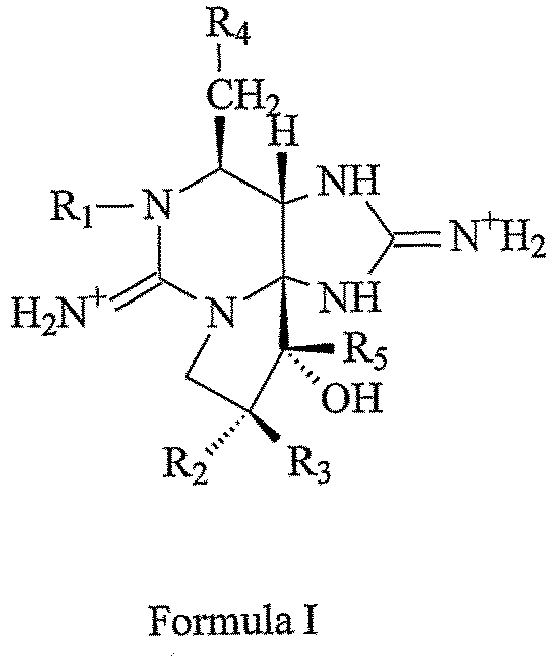
wherein R1 and R5 are independently selected from the group consisting of -H and -OH; R2 and R3 are independently selected from the group consisting of -H, -OSO3-and -SO3; and R4 is selected from the group consisting of -H, -OH, -OC(=O)NH2, -OC(=O)NHSO3- and -OC(=O)CH3, or wherein the PSP is a salt of saxitoxin or the tricyclic 3,4-propinoperhydropurine.
wherein R1 and R5 are independently selected from the group consisting of -H and -OH; R2 and R3 are independently selected from the group consisting of -H, -OSO3-and -SO3; and R4 is selected from the group consisting of -H, -OH, -OC(=O)NH2, -OC(=O)NHSO3- and -OC(=O)CH3, or wherein the PSP is a salt of saxitoxin or the tricyclic 3,4-propinoperhydropurine.
2. The PSP according to claim 1 for use in a method of topical treatment of itching in
a human being or another mammal, wherein either one of R2 and R3 is -OSO3- or R4 is -OC(=O)NHSO3-.
3. The PSP according to claim 1 or 2 for use in a method of topical treatment of itching
in a human being or another mammal, wherein the tricyclic 3,4-propinoperhydropurine
is neosaxitoxin, descarbamoylsaxitoxin, or a gonyautoxin (GTX), in particular GTX-1,
GTX-2, GTX-3, GTX-4, or GTX-5.
4. The PSP according to any of the preceding claims for use in a method of topical treatment
of itching in a human being or another mammal, wherein the PSP is in the form of its
racemate, pure stereoisomer, especially enantiomer or diastereomer or in the form
of a mixture of stereoisomers, especially enantiomers or diastereomers, in neutral
form, in the form of an acid or base or in the form of a salt, especially a physiologically
acceptable salt, or in the form of a solvate, especially a hydrate.
5. The PSP according to any of the preceding claims for use in a method of topical treatment
of itching in a human being or another mammal, wherein the PSP is saxitoxin, neosaxitoxin,
descarbamoylsaxitoxin, or GTX, in particular GTX-1, GTX-2, GTX-3, GTX-4, or GTX-5,
wherein the saxitoxin, neosaxitoxin, descarbamoylsaxitoxin, or GTX, in particular
GTX-1, GTX-2, GTX-3, GTX-4, or GTX-5, is synthetically synthesized or isolated from
a biological source, in particular from cyanobacteria, from dinoflagellates or from
contaminated shellfish, especially shellfish contaminated with A. catenella.
6. The PSP according to any of the preceding claims for use in a method of topical treatment
of itching in a human being or another mammal, wherein the PSP is saxitoxin, neosaxitoxin,
descarbamoylsaxitoxin, or GTX, in particular GTX-1, GTX-2, GTX-3, GTX-4, or GTX-5,
for use in an amount of 0.01 µg/day to 1000 µg/day, in particular 0.1 to 100 µg/day,
especially 1 to 10 µg/day.
7. The PSP according to any of the preceding claims for use in a method of topical treatment
of itching in a human being or another mammal, wherein the PSP is the tricyclic 3,4-propinoperhydropurine,
wherein the tricyclic 3,4-propinoperhydropurine is synthetically synthesized or isolated
from a biological source.
8. The PSP according to any of the preceding claims for use in a method of topical treatment
of itching in a human being or another mammal, wherein the itching is of pruritoceptive
nature, of neurogenic nature, of neuropathic nature, of psychogenic nature, due to
an insect bite, due to an inflammatory process, in particular an inflammatory process
due to surgery or healing, due to infectious process, in particular an infectious
process caused by a virus, bacteria, a fungus or prions, due to circulating pruritogens,
due to a systemic pathology, in particular cholelithiasis or acute or chronic renal
insufficiency, due to any allergen exposure, due to tobacco exposure, in particular
smokeless tobacco exposure, due to chemical exposure, or due to respiratory cause.
9. The PSP according to any of the preceding claims for use in a method of topical treatment
of itching in a human being or another mammal, wherein the PSP is for a single use
or for use over a period of one to seven days, for use in multiple treatment cycles,
and/or for use in chronic treatment.
10. The PSP according to any of the preceding claims for use in a method of topical treatment
of itching in a human being or another mammal, wherein the PSP is for use by topical
administration by use of a skin-patch, a cream, an ointment or a spray and/or by use
of a physical transdermal delivery method, in particular by iontophoresis, phonophoresis,
sono-macroporation, thermal modulation or magnetic modulation or by use of a physical
device, in particular a respiratory device, in particular a nebulizer.
11. Pharmaceutical composition comprising at least one PSP according to any of the preceding
claims and a pharmacologically acceptable carrier for use in a method of topical treatment
of itching in a human being or another mammal, wherein the pharmaceutical composition
is prepared for topical administration.
12. The pharmaceutical composition according to claim 11 for use in a method of topical
treatment of itching in a human being or another mammal, wherein the PSP is contained
in an amount suitable for an administration of 0.01 to 1000 µg, in particular 0.1
to 100 µg, especially 1 to 10 µg, PSP per day.
13. The pharmaceutical composition according to claim 11 or 12 for use in a method of
topical treatment of itching in a human being or another mammal, wherein the PSP is
contained in a concentration of 0.01 to 1000 µg per ml, in particular 0.1 to 100 µg
per ml, especially 1 to 10 µg per ml.
14. The pharmaceutical composition according to any of claims 11 to 13 for use in a method
of topical treatment of itching in a human being or another mammal, wherein the pharmaceutical
composition prepared for topical administration is a skin-patch, a cream, an ointment,
or a spray.
15. The pharmaceutical composition according to any of claims 11 to 14 for use in a method
of topical treatment of itching in a human being or another mammal, wherein the pharmaceutical
composition further comprises at least one antipruritic compound, in particular an
antihistaminic compound, in particular chlorphenamine, loratadine or desloratadin,
a corticosteroid, in paricular betamethasone, clobetasol or mometasone, or a non-steroidal
anti-inflammatory drug, in particular ibuprofen, ketoprofen or diclofenac.
16. The pharmaceutical composition according to any of claims 11 to 15 for use in a method
of topical treatment of itching in a human being or another mammal, wherein the PSP
is contained in a liposome or a microemulsion and/or wherein the pharmaceutical composition
further comprises at least one substance facilitating the transport of the PSP through
the skin, in particular a substance selected from the group consisting of: alcohols,
amines, amides, amino acids, amino acid esters, 1-substituted azacycloheptan-2-ones,
pyrrolidones, terpenes, fatty acids, fatty acid esters, macrocyclic compounds, tensides,
sulfoxides, liposomes, transferomes, lecithin vesicles, ethosomes, anionic, cationic
and non-ionic surfactants, polyols, essential oils, dimethylsulfoxide, decylmethylsulfoxide,
diethylene glycol monoethyl ether, diethylene glycol monomethyl ether, sodium laurate,
sodium lauryl sulfate, cetyltrimethylammonium bromide, benzalkonium chloride, a poloxamer,
polysorbate 20 (polyoxyethylene sorbitan monolaurate), polysorbate 40 (polyoxyethylene
sorbitan monopalmitate), polysorbate 60 (polyoxyethylene sorbitan monostearate), polysorbate
80 (polyoxyethylene sorbitan monooleate), lecithin, 1-n-dodecylcyclazacycloheptan-2-one,
ethanol, propanol, octanol, benzyl alcohol, lauric acid, oleic acid, valeric acid,
isopropyl myristate, isopropyl palmitate, methylpropionate, ethyl oleate, sorbitan
sesquioleate, propylene glycol, ethylene glycol, glycerol, butanediol, polyethylene
glycol, polyethylene glycol monolaurate, urea, dimethylacetamide, dimethylformamide,
2-pyrrolidone, 1-methyl-2-pyrrolidone, ethanol amine, diethanol amine, triethanolamine,
alkanones, salicylic acid, salicylates, citric acid and succinic acid.
1. Paralytisches Schalentiergift (PSP) zur Verwendung in einem Verfahren zur topischen
Behandlung des Juckens bei einem Menschen oder einem anderen Säuger, wobei das PSP
Saxitoxin oder ein trizyklisches 3,4-propinoperhydropurin, dargestellt durch die folgende
Formel (I) ist,
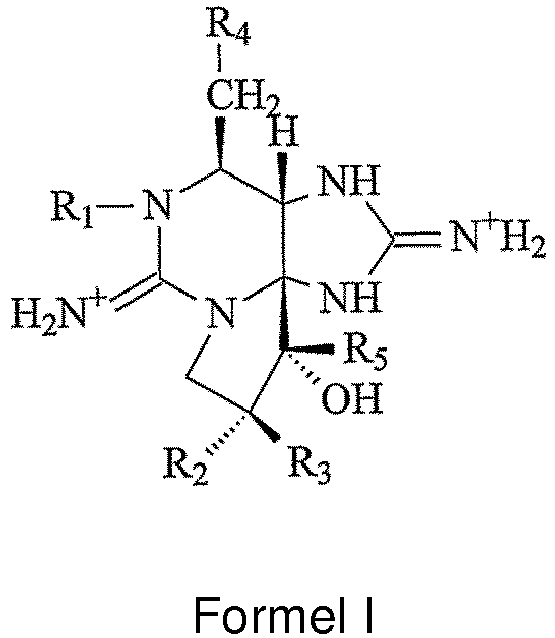
wobei R1 und R5 unabhängig ausgewählt sind aus der Gruppe, bestehend aus -H und -OH, R2 und R3 unabhängig ausgewählt sind aus der Gruppe, bestehend aus -H, -OSO3- und -SO3 und R4 ausgewählt ist aus der Gruppe, bestehend aus -H, -OH, -OC(=O)NH2, -OC(=O)NHSO3- und -OC(=O)CH3, oder wobei das PSP ein Salz von Saxitoxin oder des trizyklischen 3,4-propinoperhydropurins ist.
wobei R1 und R5 unabhängig ausgewählt sind aus der Gruppe, bestehend aus -H und -OH, R2 und R3 unabhängig ausgewählt sind aus der Gruppe, bestehend aus -H, -OSO3- und -SO3 und R4 ausgewählt ist aus der Gruppe, bestehend aus -H, -OH, -OC(=O)NH2, -OC(=O)NHSO3- und -OC(=O)CH3, oder wobei das PSP ein Salz von Saxitoxin oder des trizyklischen 3,4-propinoperhydropurins ist.
2. PSP nach Anspruch 1 zur Verwendung in einem Verfahren zur topischen Behandlung des
Juckens bei einem Menschen oder einem anderen Säuger, wobei entweder einer von R2 und R3 -OSO3- ist oder R4 -OC(=O)NHSO3- ist.
3. PSP nach Anspruch 1 oder 2 zur Verwendung in einem Verfahren zur topischen Behandlung
des Juckens bei einem Menschen oder einem anderen Säuger, wobei das trizyklische 3,4-propinoperhydropurin
Neosaxitoxin, Descarbamoylsaxitoxin oder ein Gonyautoxin (GTX), insbesondere GTX-1,
GTX-2, GTX-3, GTX-4 oder GTX-5, ist.
4. PSP nach einem der vorhergehenden Ansprüche zur Verwendung in einem Verfahren zur
topischen Behandlung des Juckens bei einem Menschen oder einem anderen Säuger, wobei
das PSP in der Form seines Razemats, reinen Stereoisomers, insbesondere Enantiomers
oder Diastomers oder in der Form einer Mischung von Stereoisomeren, insbesondere Enantiomeren
oder Diastomeren, in neutraler Form, in der Form einer Säure oder Base oder in der
Form eines Salzes, insbesondere eines physiologisch akzeptierbaren Salzes oder in
der Form eines Solvates, insbesondere eines Hydrates, vorliegt.
5. PSP nach einem der vorhergehenden Ansprüche zur Verwendung in einem Verfahren zur
topischen Behandlung des Juckens bei einem Menschen oder einem anderen Säuger, wobei
das PSP Saxitoxin, Neosaxitoxin, Descarbamoylsaxitoxin oder GTX, insbesondere GTX-1,
GTX-2, GTX-3, GTX-4 oder GTX-5, ist, wobei das Saxitoxin, Neosaxitoxin, Descarbamoylsaxitoxin
oder GTX, insbesondere GTX-1, GTX-2, GTX-3, GTX-4 oder GTX-5, synthetisch synthetisiert
oder aus einer biologischen Quelle, insbesondere aus Cyanobakterien, aus Dinoflagellaten
oder aus konterminiertem Schalentier, insbesondere mit A. catenella konterminiertem
Schalentier, isoliert ist.
6. PSP nach einem der vorhergehenden Ansprüche zur Verwendung in einem Verfahren zur
topischen Behandlung des Juckens bei einem Menschen oder einem anderen Säuger, wobei
das PSP Saxitoxin, Neosaxitoxin, Descarbamoylsaxitoxin oder GTX, insbesondere GTX-1,
GTX-2, GTX-3, GTX-4 oder GTX-5, ist zur Verwendung in einer Menge von 0,01 µg/Tag
bis 1000 µg/Tag, insbesondere 0,1 bis 100 µg/Tag, insbesondere 1 bis 10 µg/Tag.
7. PSP nach einem der vorhergehenden Ansprüche zur Verwendung in einem Verfahren zur
topischen Behandlung des Juckens bei einem Menschen oder einem anderen Säuger, wobei
das PSP das trizyklische 3,4-Propinoperhydropurin ist, wobei das trizyklische 3,4-Propinoperhydropurin
synthetisch synthetisiert oder aus einer biologischen Quelle isoliert ist.
8. PSP nach einem der vorhergehenden Ansprüche zur Verwendung in einem Verfahren zur
topischen Behandlung des Juckens bei einem Menschen oder einem anderen Säuger, wobei
das Jucken von pruritoceptiver Art ist, von neurogener Art ist, von neuropathischer
Art ist, von psychogener Art ist, durch einen Insektenstich verursacht ist, durch
einen Entzündungsprozess, insbesondere einen durch eine Operation oder Heilung verursachten
Entzündungsprozess, verursacht ist, durch einen infektiösen Prozess, insbesondere
einen infektiösen Prozess, hervorgerufen durch einen Virus, Bakterien, einen Pilz
oder Prionen, verursacht ist, durch zirkulierende Pruritogene verursacht ist, durch
eine systemische Pathologie, insbesondere Cholelithiasis oder akute oder chronische
Niereninsuffizienz, verursacht ist, durch eine beliebige Allergenexposition verursacht
ist, durch Tabakexposition, insbesondere Schnupftabak- oder Kautabakexposition, verursacht
ist, durch Chemikalienexposition verursacht ist oder durch eine respiratorische Ursache
verursacht ist.
9. PSP nach einem der vorhergehenden Ansprüche zur Verwendung in einem Verfahren zur
topischen Behandlung des Juckens bei einem Menschen oder einem anderen Säuger, wobei
das PSP zur einmaligen Verwendung oder zur Verwendung über einen Zeitraum von einem
bis sieben Tagen, zur Verwendung bei mehreren Behandlungszyklen und/oder zur Verwendung
bei chronischer Behandlung ist.
10. PSP nach einem der vorhergehenden Ansprüche zur Verwendung in einem Verfahren zur
topischen Behandlung des Juckens bei einem Menschen oder einem anderen Säuger, wobei
das PSP zur Verwendung durch topische Verabreichung durch Verwendung eines Hautpflasters,
einer Creme, einer Salbe oder eines Sprays und/oder durch Verwendung eines physikalischen
transdermalen Freisetzungsverfahrens, insbesondere durch lontophorese, Phonophorese,
Sonomacroporation, thermische Modulation oder magnetische Modulation oder durch Verwendung
einer physikalischen Vorrichtung, insbesondere einer respiratorischen Vorrichtung,
insbesondere eines Verneblers, ist.
11. Pharmazeutische Zusammensetzung, umfassend zumindest ein PSP nach einem der vorhergehenden
Ansprüche und einen pharmakologisch akzeptierbaren Träger zur Verwendung in einem
Verfahren zur topischen Behandlung des Juckens bei einem Menschen oder einem anderen
Säuger, wobei die pharmazeutische Zusammensetzung zur topischen Verabreichung zubereitet
ist.
12. Pharmazeutische Zusammensetzung nach Anspruch 11 zur Verwendung in einem Verfahren
zur topischen Behandlung des Juckens bei einem Menschen oder einem anderen Säuger,
wobei das PSP in einer zur Verabreichung von 0,01 bis 1000 µg, insbesondere 0,1 bis
100 µg, insbesondere 1 bis 10 µg, PSP pro Tag geeigneten Menge enthalten ist.
13. Pharmazeutische Zusammensetzung nach Anspruch 11 oder 12 zur Verwendung in einem Verfahren
zur topischen Behandlung des Juckens bei einem Menschen oder einem anderen Säuger,
wobei das PSP in einer Konzentration von 0,01 bis 1000 µg pro ml, insbesondere 0,1
bis 100 µg pro ml, insbesondere 1 bis 10 µg pro ml enthalten ist.
14. Pharmazeutische Zusammensetzung nach einem der Ansprüche 11 bis 13 zur Verwendung
in einem Verfahren zur topischen Behandlung des Juckens bei einem Menschen oder einem
anderen Säuger, wobei die zur topischen Verabreichung zubereitete pharmazeutische
Zusammensetzung ein Hautpflaster, eine Creme, eine Salbe oder ein Spray ist.
15. Pharmazeutische Zusammensetzung nach einem der Ansprüche 11 bis 14 zur Verwendung
in einem Verfahren zur topischen Behandlung des Juckens bei einem Menschen oder einem
anderen Säuger, wobei die pharmazeutische Zusammensetzung weiterhin zumindest eine
antipruritische Verbindung, insbesondere eine antihistamine Verbindung, insbesondere
Chlorphenamin, Loratadin oder Desloratadin, ein Corticosteorid, insbesondere Betamethason,
Clobetasol oder Mometason, oder ein nicht-steroidales anti-inflammatorisches Arzneimittel,
insbesondere Ibuprofen, Ketoprofen oder Diclofenac, umfasst.
16. Pharmazeutische Zusammensetzung nach einem der Ansprüche 11 bis 15 zur Verwendung
in einem Verfahren zur topischen Behandlung des Juckens bei einem Menschen oder einem
anderen Säuger, wobei das PSP in einem Liposom oder einer Microemulsion enthalten
ist und/oder wobei die pharmazeutische Zusammensetzung weiterhin zumindest eine den
Transport des PSPs durch die Haut erleichternde Substanz umfasst, insbesondere eine
Substanz ausgewählt aus der Gruppe bestehend aus Alkoholen, Aminen, Amiden, Aminosäuren,
Aminosäureestern, 1-substituierten Azacycloheptan-2-onen, Pyrrolidonen, Terpenen,
Fettsäuren, Fettsäureestern, macrocyclischen Verbindungen, Tensiden, Sulfoxiden, Liposomen,
Transferomen, Lecithinvesikeln, Ethosomen, anionischen, kationischen und nicht-ionischen
Tensiden, Polyolen, ätherischen Ölen, Dimethylsulfoxid, Decylmethylsulfoxid, Diethylenglycol,
Monoethyläther, Diethylenglycolmonomethyläther, Natriumlaurat, Natriumlaurylsulfat,
Cetyltrimethylammoniumbromid, Benzalkoniumchlorid, einem Poloxamer, Polysorbat 20
(Polyoxyethylensorbitanmonolaurat), Polysorbat 40 (Polyoxyethylensorbitanmonopalmitat),
Polysorbat 60 (Polyoxyethylensorbitanmonostearat), Polysorbat 80 (Polyoxyethylensorbitanmonooleat),
Lecithin, 1-n-dodecylcyclazacycloheptan-2-on, Ethanol, Propanol, Octanol, Benzylalkohol,
Laurinsäure, Ölsäure, Valerian Säure, Isopropylmyristat, Isopropylpalmitat, Methylpropionat,
Ethyloleat, Sorbitansesquioleat, Propylenglycol, Ethylenglycol, Glycerol, Butandiol,
Polyethylenglycol, Polyethylenglycolmonolaurat, Harnstoff, Dimethylacetamid, Dimethylformamid,
2-pyrrolidon, 1-methyl-2-pyrrolidon, Ethanolamin, Diethanolamin, Triethanolamin, Alkanonen,
Salicylsäure, Salicylaten, Zitronensäure and Bernsteinsäure.
1. Poison paralysant de mollusque (PSP) destiné à être utilisé dans un procédé de traitement
topique de prurit chez l'être humain ou un autre mammifère, dans lequel le PSP est
la saxitoxine ou une 3,4-propinoperhydropurine tricyclique représentée par la formule
suivante (I)
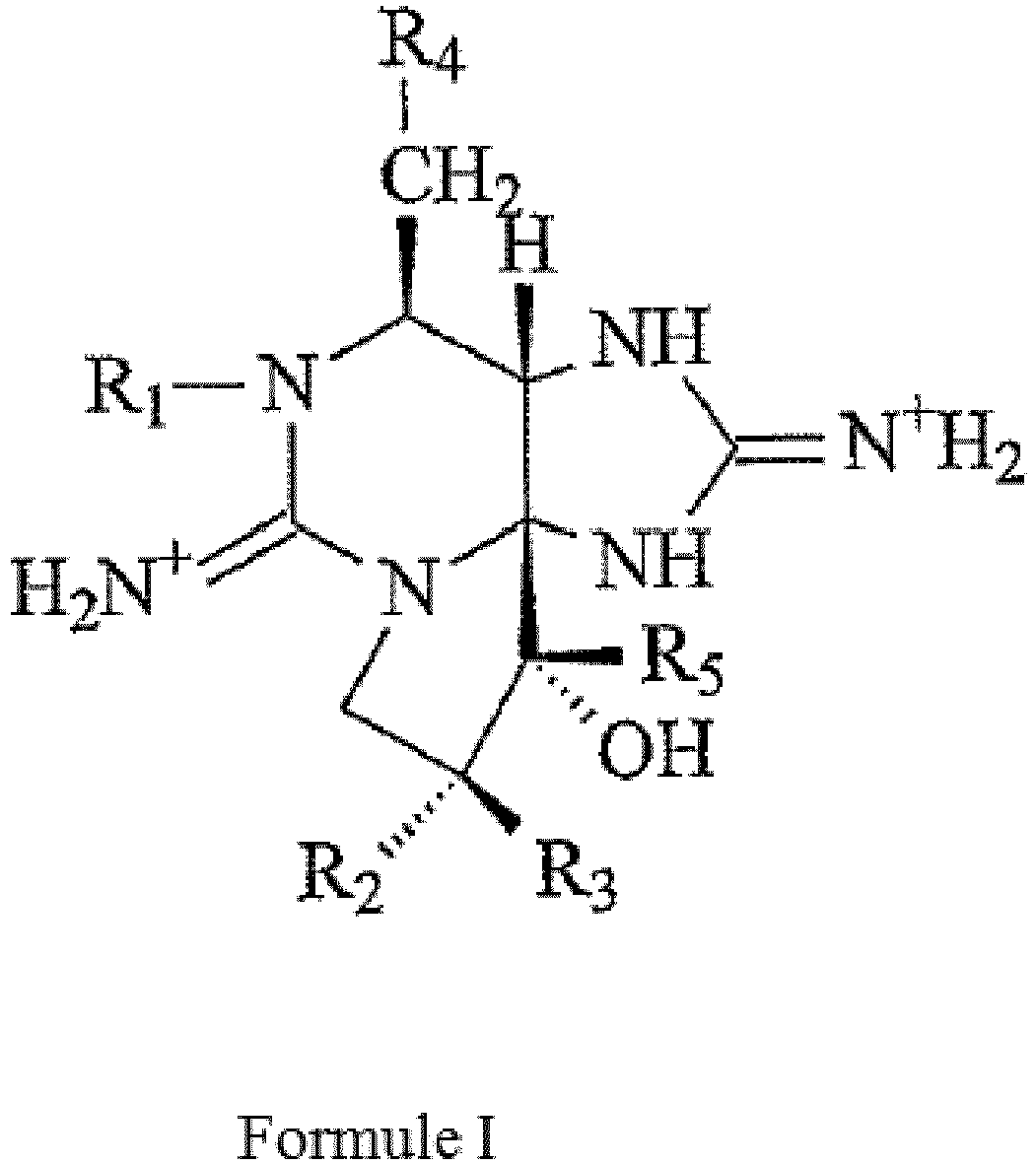
dans laquelle R1 et R5 sont indépendamment sélectionnés parmi le groupe constitué de -H et -OH; R2 et R3 sont indépendamment sélectionnés parmi le groupe constitué de -H, -OSO3- et -SO3; et R4 est sélectionné parmi le groupe constitué de -H, -OH, -OC(=O)NH2, -OC(=O)NHSO3- et -OC(=O)CH3, ou dans lequel le PSP est un sel de saxitoxine ou de la 3,4-propinoperhydropurine tricyclique.
dans laquelle R1 et R5 sont indépendamment sélectionnés parmi le groupe constitué de -H et -OH; R2 et R3 sont indépendamment sélectionnés parmi le groupe constitué de -H, -OSO3- et -SO3; et R4 est sélectionné parmi le groupe constitué de -H, -OH, -OC(=O)NH2, -OC(=O)NHSO3- et -OC(=O)CH3, ou dans lequel le PSP est un sel de saxitoxine ou de la 3,4-propinoperhydropurine tricyclique.
2. PSP selon la revendication 1 destiné à être utilisé dans un procédé de traitement
topique de prurit chez l'être humain ou un autre mammifère, dans lequel l'un ou l'autre
parmi R2 et R3 est -OSO3- ou R4 est -OC(=O)NHSO3-.
3. PSP selon la revendication 1 ou 2 destiné à être utilisé dans un procédé de traitement
topique de prurit chez l'être humain ou un autre mammifère, dans lequel la 3,4-propinoperhydropurine
tricyclique est la néosaxitoxine, la descarbamoylsaxitoxine ou une gonyautoxine (GTX),
en particulier GTX-1, GTX-2, GTX-3, GTX-4 ou GTX-5.
4. PSP selon l'une quelconque des revendications précédentes destiné à être utilisé dans
un procédé de traitement topique de prurit chez l'être humain ou un autre mammifère,
dans lequel le PSP est sous la forme de son racémate, stéréoisomère pur, notamment
énantiomère ou diastéréomère ou sous la forme d'un mélange de stéréoisomères, notamment
énantiomères ou diastéréomères, sous forme neutre, sous la forme d'un acide ou d'une
base ou sous la forme d'un sel, notamment d'un sel physiologiquement acceptable, ou
sous la forme d'un solvate, notamment d'un hydrate.
5. PSP selon l'une quelconque des revendications précédentes destiné à être utilisé dans
un procédé de traitement topique de prurit chez l'être humain ou un autre mammifère,
dans lequel le PSP est la saxitoxine, la néosaxitoxine, la descarbamoylsaxitoxine
ou GTX, en particulier GTX-1, GTX-2, GTX-3, GTX-4 ou GTX-5, dans lequel la saxitoxine,
la néosaxitoxine, la descarbamoylsaxitoxine ou GTX, en particulier GTX-1, GTX-2, GTX-3,
GTX-4 ou GTX-5, est synthétisée de manière synthétique ou isolée d'une source biologique,
en particulier de cyanobactéries, de dinoflagellés ou de mollusque contaminé, notamment
de mollusque contaminé par A. catenella.
6. PSP selon l'une quelconque des revendications précédentes destiné à être utilisé dans
un procédé de traitement topique de prurit chez l'être humain ou un autre mammifère,
dans lequel le PSP est la saxitoxine, la néosaxitoxine, la descarbamoylsaxitoxine
ou GTX, en particulier GTX-1, GTX-2, GTX-3, GTX-4 ou GTX-5, destinée à être utilisée
en une quantité de 0,01 µg/jour à 1000 µg/jour, en particulier 0,1 à 100 µg/jour,
notamment 1 à 10 µg/jour.
7. PSP selon l'une quelconque des revendications précédentes destiné à être utilisé dans
un procédé de traitement topique de prurit chez l'être humain ou un autre mammifère,
dans lequel le PSP est la 3,4-propinoperhydropurine tricyclique, dans lequel la 3,4-propinoperhydropurine
tricyclique est synthétisée de manière synthétique ou isolée d'une source biologique.
8. PSP selon l'une quelconque des revendications précédentes destiné à être utilisé dans
un procédé de traitement topique de prurit chez l'être humain ou un autre mammifère,
dans lequel le prurit est de nature pruritoceptive, de nature neurogène, de nature
neuropathique, de nature psychogène, dû à une morsure d'insecte, dû à un processus
inflammatoire, en particulier un processus inflammatoire dû à une chirurgie ou cicatrisation,
dû à un processus infectieux, en particulier un processus infectieux provoqué par
un virus, des bactéries, un champignon ou des prions, dû à des pruritogènes en circulation,
dû à une pathologie systémique, en particulier une cholélithiase ou insuffisance rénale
aiguë ou chronique, dû à toute exposition à des allergènes, dû à une exposition au
tabac, en particulier une exposition au tabac sans fumée, dû à une exposition chimique
ou dû à une cause respiratoire.
9. PSP selon l'une quelconque des revendications précédentes destiné à être utilisé dans
un procédé de traitement topique de prurit chez l'être humain ou un autre mammifère,
dans lequel le PSP est destiné à un usage unique ou un usage sur une période d'un
à sept jours, un usage en de multiples cycles de traitement et/ou un usage en traitement
chronique.
10. PSP selon l'une quelconque des revendications précédentes destiné à être utilisé dans
un procédé de traitement topique de prurit chez l'être humain ou un autre mammifère,
dans lequel le PSP est destiné à un usage par administration topique par l'utilisation
d'un timbre transdermique, d'une crème, d'un onguent ou d'un aérosol et/ou par l'utilisation
d'un procédé de livraison transdermique physique, en particulier par iontophorèse,
phonophorèse, sono-macroporation, modulation thermique ou modulation magnétique ou
par l'utilisation d'un dispositif physique, en particulier d'un dispositif respiratoire,
en particulier d'un nébuliseur.
11. Composition pharmaceutique comprenant au moins un PSP selon l'une quelconque des revendications
précédentes et un vecteur pharmacologiquement acceptable destinée à être utilisée
dans un procédé de traitement topique de prurit chez l'être humain ou un autre mammifère,
dans laquelle la composition pharmaceutique est préparée pour l'administration topique.
12. Composition pharmaceutique selon la revendication 11 destinée à être utilisée dans
un procédé de traitement topique de prurit chez l'être humain ou un autre mammifère,
dans laquelle le PSP est contenu en une quantité convenant à une administration de
0,01 à 1000 µg, en particulier 0,1 à 100 µg, notamment 1 à 10 µg, de PSP par jour.
13. Composition pharmaceutique selon la revendication 11 ou 12 destinée à être utilisée
dans un procédé de traitement topique de prurit chez l'être humain ou un autre mammifère,
dans laquelle le PSP est contenu à une concentration de 0,01 à 1000 µg par ml, en
particulier 0,1 à 100 µg par ml, notamment 1 à 10 µg par ml.
14. Composition pharmaceutique selon l'une quelconque des revendications 11 à 13 destinée
à être utilisée dans un procédé de traitement topique de prurit chez l'être humain
ou un autre mammifère, dans laquelle la composition pharmaceutique préparée pour l'administration
topique est un timbre transdermique, une crème, un onguent ou un aérosol.
15. Composition pharmaceutique selon l'une quelconque des revendications 11 à 14 destinée
à être utilisée dans un procédé de traitement topique de prurit chez l'être humain
ou un autre mammifère, dans laquelle la composition pharmaceutique comprend en outre
au moins un composé antipruritique, en particulier un composé antihistaminique, en
particulier la chlorphénamine, la loratadine ou la desloratadine, un corticostéroïde,
en particulier la bêtaméthasone, le clobétasol ou la mométasone, ou un médicament
anti-inflammatoire non stéroïdien, en particulier l'ibuprofène, le kétoprofène ou
le diclofénac.
16. Composition pharmaceutique selon l'une quelconque des revendications 11 à 15 destinée
à être utilisée dans un procédé de traitement topique de prurit chez l'être humain
ou un autre mammifère, dans laquelle le PSP est contenu dans un liposome ou une micro-émulsion
et/ou dans laquelle la composition pharmaceutique comprend en outre au moins une substance
facilitant le transport du PSP à travers la peau, en particulier une substance sélectionnée
parmi le groupe constitué de: alcools, amines, amides, acides aminés, esters d'acide
aminé, azacycloheptane-2-ones 1-substituées, pyrrolidones, terpènes, acides gras,
esters d'acide gras, composés macrocycliques, tensioactifs, sulfoxydes, liposomes,
transféromes, vésicules de lécithine, éthosomes, surfactants anioniques, cationiques
et non ioniques, polyols, huiles essentielles, diméthylsulfoxyde, décylméthylsulfoxyde,
éther monoéthylique de diéthylèneglycol, éther monométhylique de diéthylèneglycol,
laurate sodique, laurylsulfate sodique, bromure de cétyltriméthylammonium, chlorure
de benzalkonium, un poloxamère, polysorbate 20 (monolaurate de polyoxyéthylène sorbitane),
polysorbate 40 (monopalmitate de polyoxyéthylène sorbitane), polysorbate 60 (monostéarate
de polyoxyéthylène sorbitane), polysorbate 80 (monooléate de polyoxyéthylène sorbitane),
lécithine, 1-n-dodécylcyclazacycloheptane-2-one, éthanol, propanol, octanol, alcool
benzylique, acide laurique, acide oléique, acide valérique, myristate isopropylique,
palmitate isopropylique, méthylpropionate, oléate éthylique, sesquioléate de sorbitane,
propylèneglycol, éthylèneglycol, glycérol, butanediol, polyéthylèneglycol, monolaurate
de polyéthylèneglycol, urée, diméthylacétamide, diméthylformamide, 2-pyrrolidone,
1-méthyl-2-pyrrolidone, éthanolamine, diéthanolamine, triéthanolamine, alcanones,
acide salicylique, salicylates, acide citrique et acide succinique.
REFERENCES CITED IN THE DESCRIPTION
This list of references cited by the applicant is for the reader's convenience only. It does not form part of the European patent document. Even though great care has been taken in compiling the references, errors or omissions cannot be excluded and the EPO disclaims all liability in this regard.
Patent documents cited in the description
Non-patent literature cited in the description
- VILLAMIL, A. G. et al.The American Journal of Medicine, 2005, vol. 118, 1160-1163 [0011]
- ROBERSON, D. P. et al.Society for Neuroscience, Abstract Viewer and Itinerary Planner39th Annual Meeting of the Society for Neuroscience, 2009, vol. 39, 20091017- [0013]
- GREAVES, M. W.Curr. Allergy Asthma Rep., 2010, vol. 10, 236-242 [0017]